COOLING BRICKS
Basic information
Project Title
Full project title
Category
Project Description
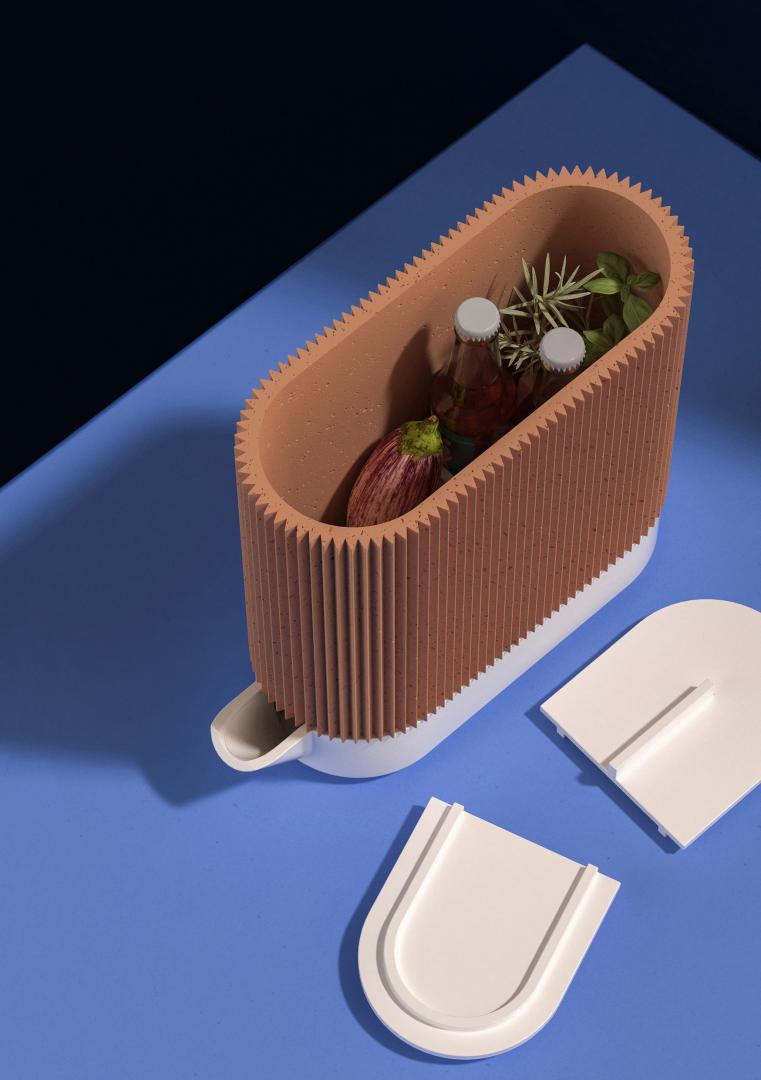
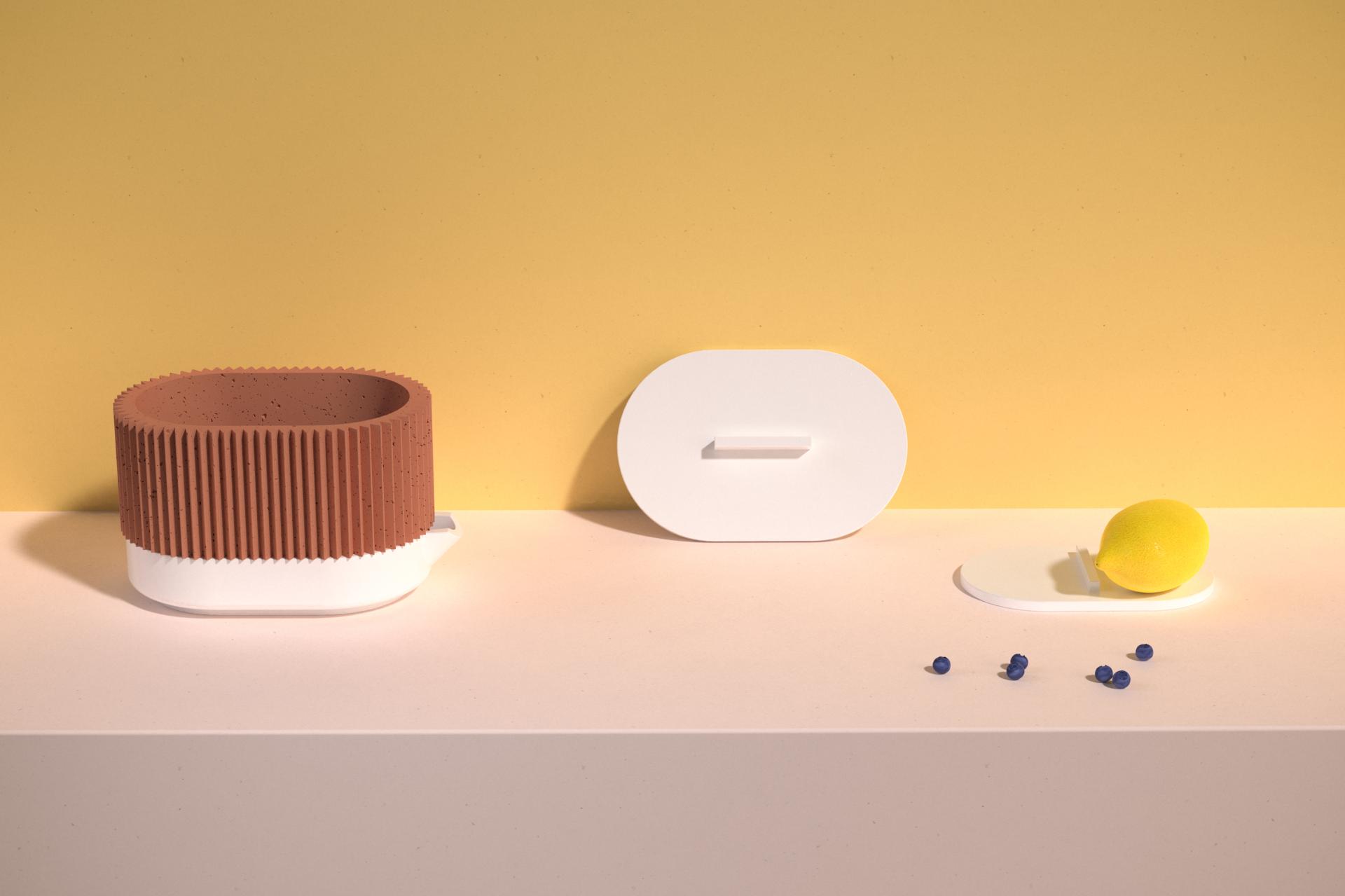
The COOLING BRICKS are a ceramic cooling vessel collection designed by Helene Lauppe. They bring the archaic principle of evaporative cooling into today’s kitchen. The high humidity and cool temperatures inside the containers keeps fruit and vegetables fresh, but yoghurt, butter and cheese can also be stored.
Project Region
EU Programme or fund
Description of the project
Summary
Kitchen appliances are multiplying in our households. But how much longer can we afford all these devices for resource reasons? How can the volume and complexity of an American refrigerator be reduced to what is necessary, and how can traditional cooling methods be made easier to use in contemporary kitchens?
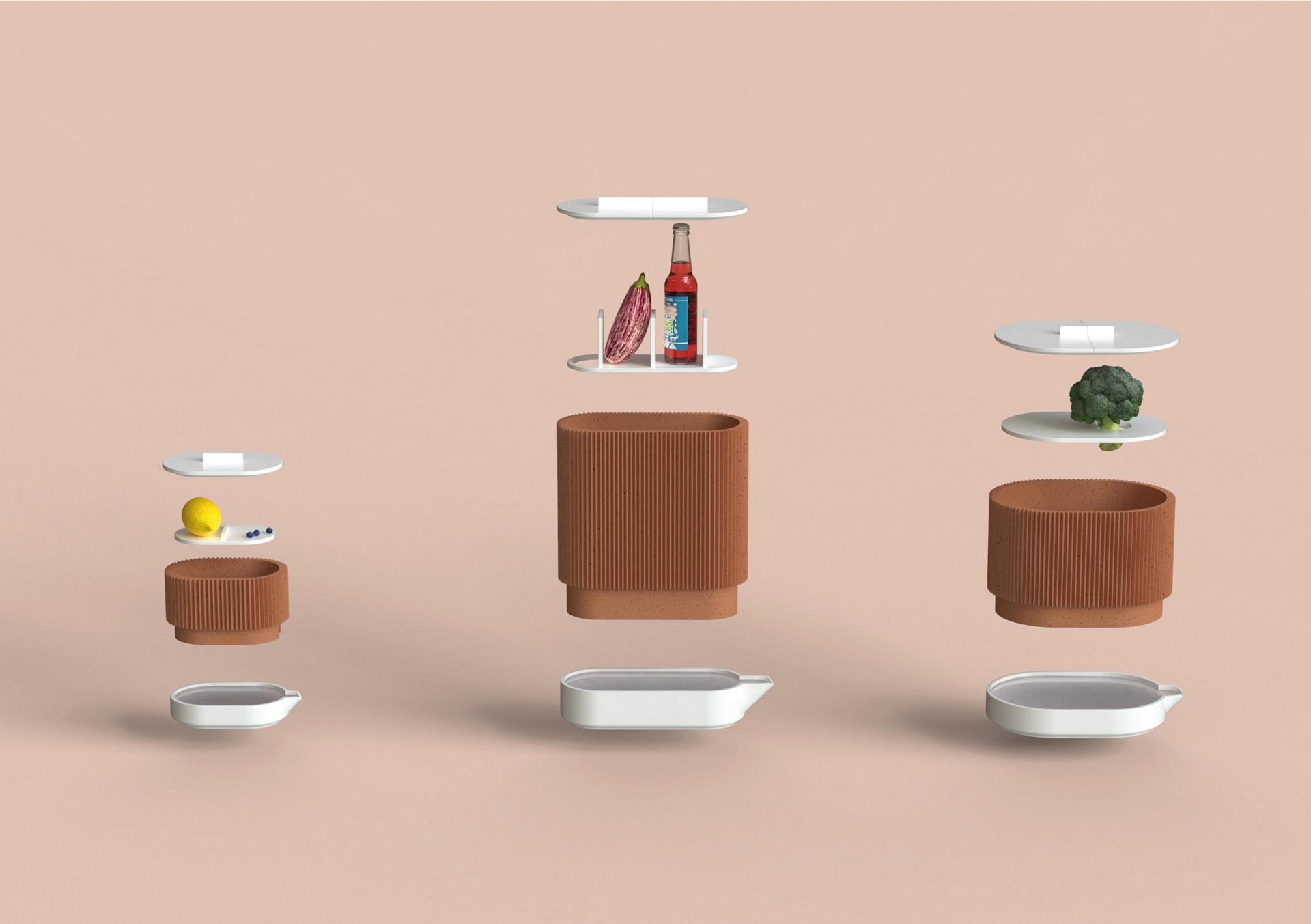
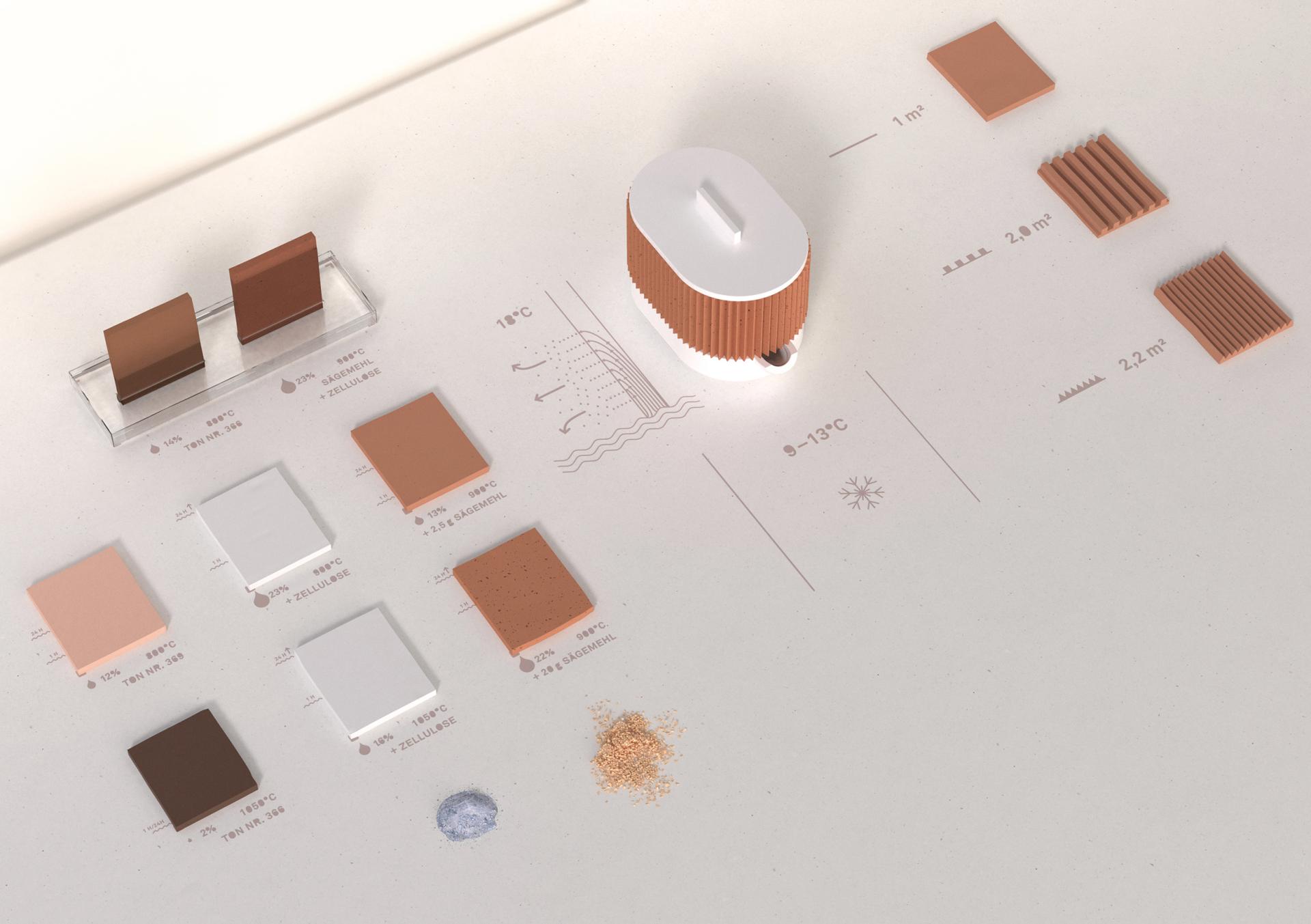
The COOLING BRICKS bring the archaic principle of evaporative cooling into today’s kitchen. In order to find the right material, different industrial waste materials are mixed with clay and when the clay is fired they leave capillaries that transport the water upwards. A suitable structure increases the surface area, which allows more water to evaporate. The cooling vessels lower the temperature, depending on the external humidity. Due to the cut-outs in the shelves, certain vegetables can be stored directly in the water. The high humidity inside the containers keeps fruit and vegetables fresh, but yoghurt, butter and cheese can also be stored.
Key objectives for sustainability
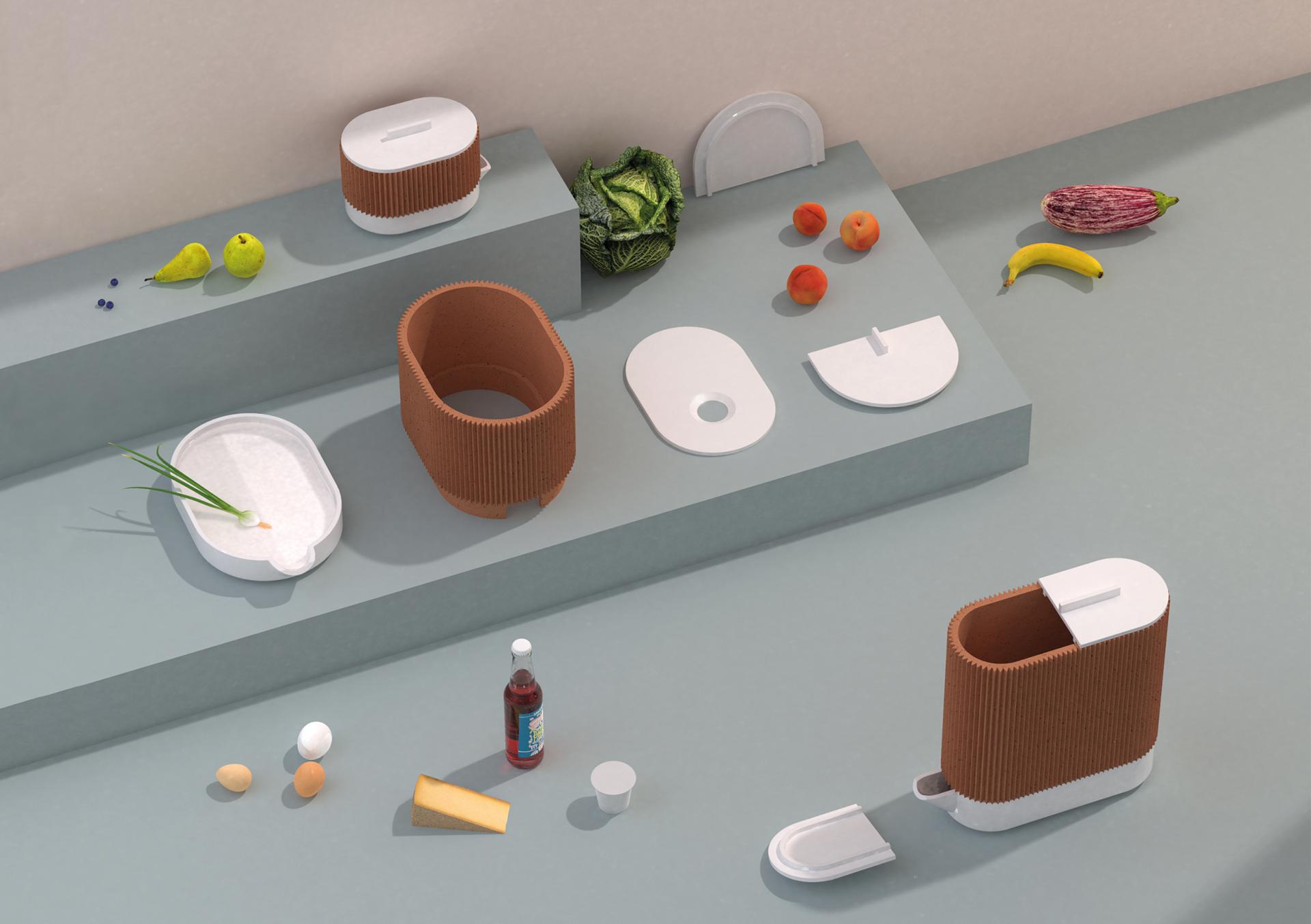
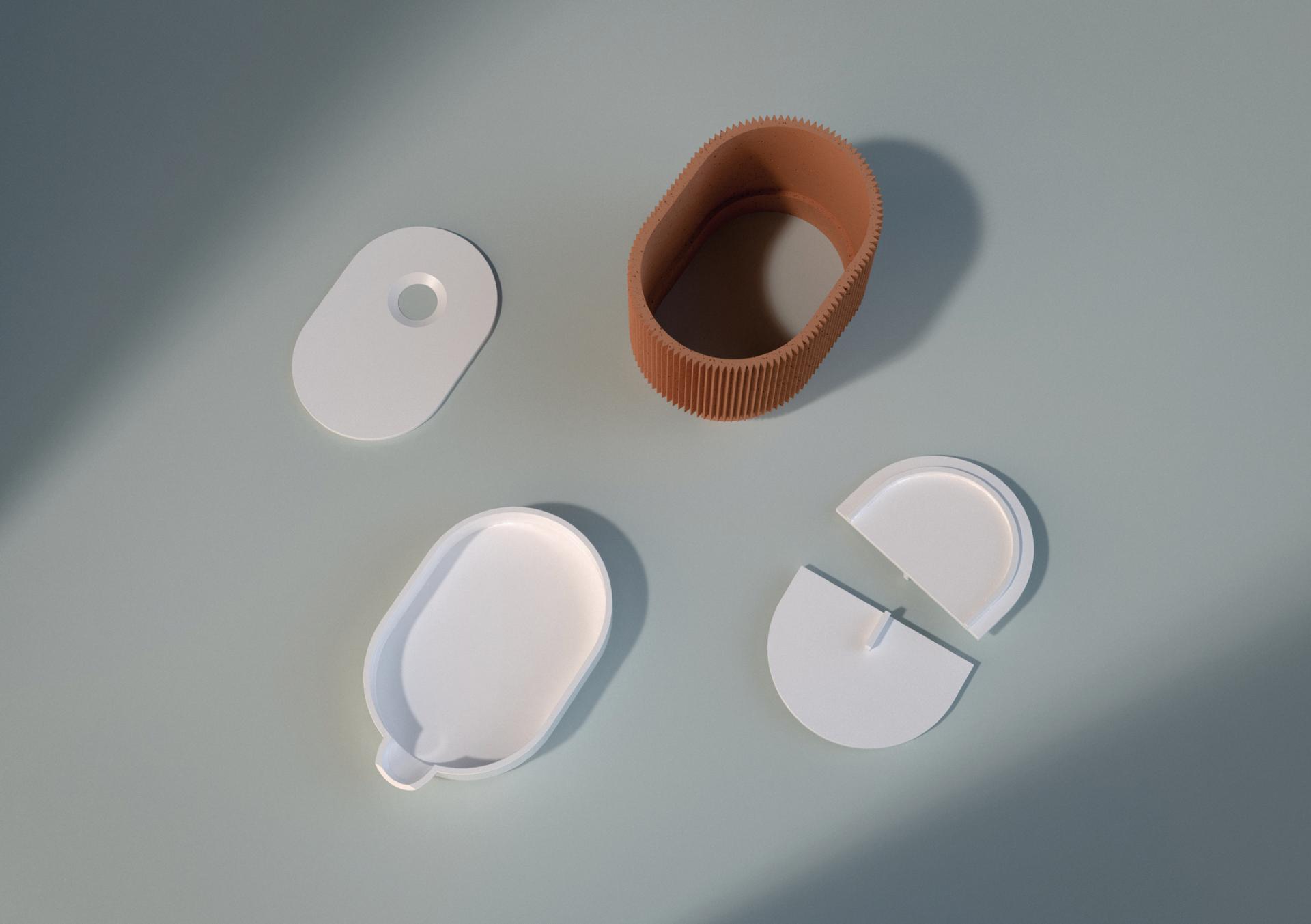
COOLING BRICKS consist of a water basin, a lid, shelves and the Poroton, which evaporates the water. Due to the modular design, broken parts can be replaced. In order to achieve a high capillarity, sawdust and papermaking sludge are used as clay fillers. Both are renewable raw materials that occur as waste products in the industry. They burn when the clay is fired, thereby reducing its weight while its volume remains the same. Clay from a regional clay pit is used to save transport distances.
When in use, the cooling vessels do not require electricity, only water. By reducing the amount of electrical devices, it is possible to avoid a large amount of electrical waste and the pollutants it contains, which endanger health and the environment if not disposed of properly. The ceramics can be recycled, returned to the environment or reused in other products.
Key objectives for aesthetics and quality
A special focus was given to how an ancient technology can be transformed in such a way that it can be both aesthetically integrated into a modern kitchen and easily used. In this way, residents of city apartments can bring a formerly often used storage cellar into the apartment in miniature form. The COOLING BRICKS series are three modular cooling vessels. They consist of a water bowl, which can be easily refilled with water via the spout every couple of days. The jagged red clay part, absorbs water, evaporates it and thus cools the vessel. The ribbed surface is aesthetically designed to resemble cooling fins and thus already visually indicates the cooling function to the user. The different shelves on which the cooled food is placed are subdivided by seperators and recesses which are used as handles at the same time. The water reservoir has the additional function of better storage and freshness of certain vegetables and herbs of which the stems or roots can be stored directly in the water and thus remain fresh longer. To prevent cold loss and to be easier to handle, the lids of the large vessels are divided into two parts. The white ceramic is glazed, waterproof and easy to clean and makes a fresh and clean impression. But above all, COOLING BRICKS impresses with the aesthetics of simplicity of this cooling technology that works simply with water and its evaporation.
Key objectives for inclusion
COOLING BRICKS is an easy-to-use cooling vessel, which can be used without any special prior knowledge.
The product can be used one-handed.
Results in relation to category
By using the COOLING BRICKS the user might reflect on a reduced and minimalist lifestyle. Ideally, COOLING BRICKS reduces the number of products that become electrical waste, shifting the production to products that can be recycled more easily and in a healthier way. By reinterpreting age-old methods, valuable resources can be saved and longer-lasting products can be created.
How Citizens benefit
While consumer products offer the maximum possible generic cooling volume, which is subsequently filled quantitatively, COOLING BRICKS promotes a conscious approach to the specific qualities of the stored food and the quantity of purchase. More conscious shopping and consumption creates a shift in thinking from quantity to quality.
The enlightened consumer engages with his or her purchases, enjoys well-stored foods, and learns how to manage temperature and humidity. Many vegetables keep better at warmer temperatures, for example, tomatoes, cucumbers and citrus fruits. Lastly, leafy greens benefit from high humidity levels. However, some foods need to be stored very cold to prevent them from spoiling, such as meat, fish, fresh milk, which would thus be stored separately, for example in a small refrigerator. In places without electricity supply (e.g. garden sheds), food waste is prevented because the vessels keep food fresh for longer.
But with a dense network of centralized refrigerators in supermarkets, isn’t it enough to be able to keep food fresh at home for a few days longer?
Innovative character
In what ways does an ecological paradigm shift affect private refrigerated containers? How was food stored in the past, and how can the pantry be translated into today’s kitchen? The principle of evaporative cooling is an alternative way of generating cold. In COOLING BRICKS, clay, sawdust, cellulose and water replace a complex structure of plastics, refrigerants, compressors, evaporators and electronics. To generate a larger surface area overall, three clay vessels are created that are adapted to their contents. These achieve a reduction in temperature depending on the external humidity. The recesses in the shelves allow certain vegetables to be stored directly in the water, keeping them fresh for longer.