Sándorfalva Rural Geometries
Basic information
Project Title
Full project title
Category
Project Description
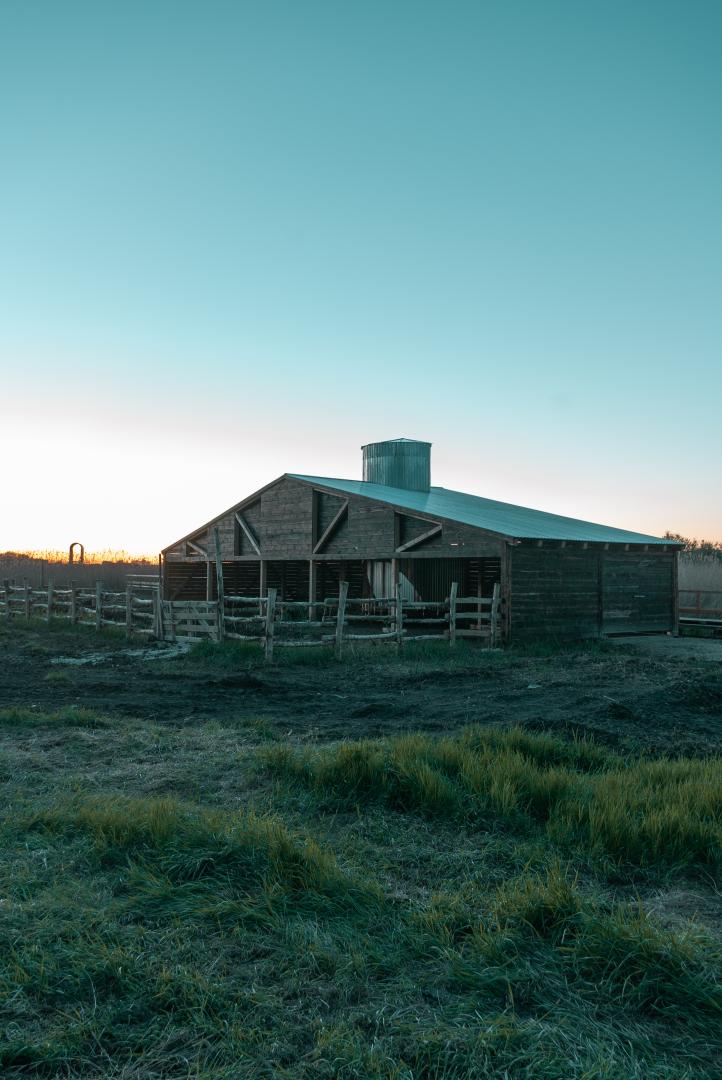
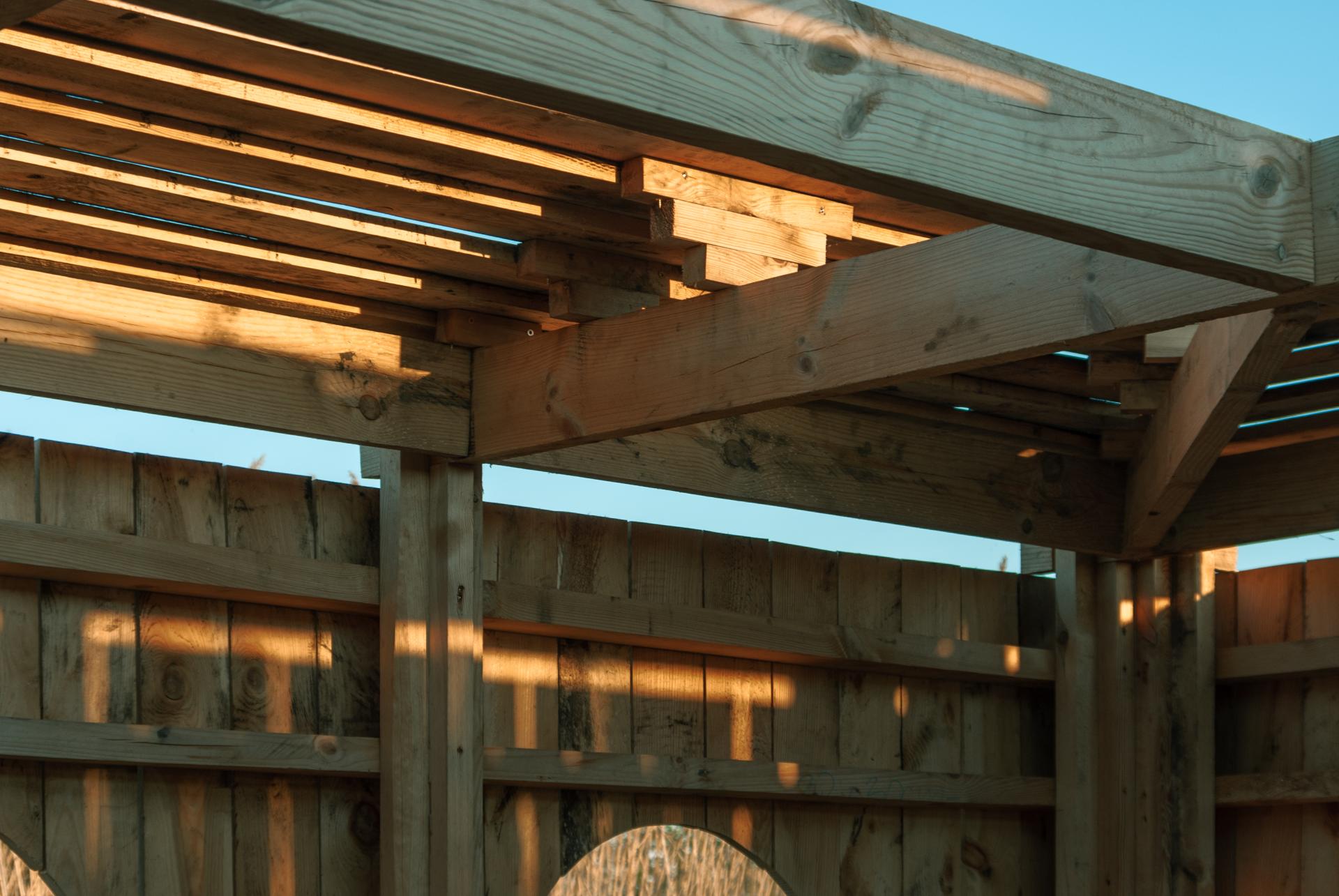
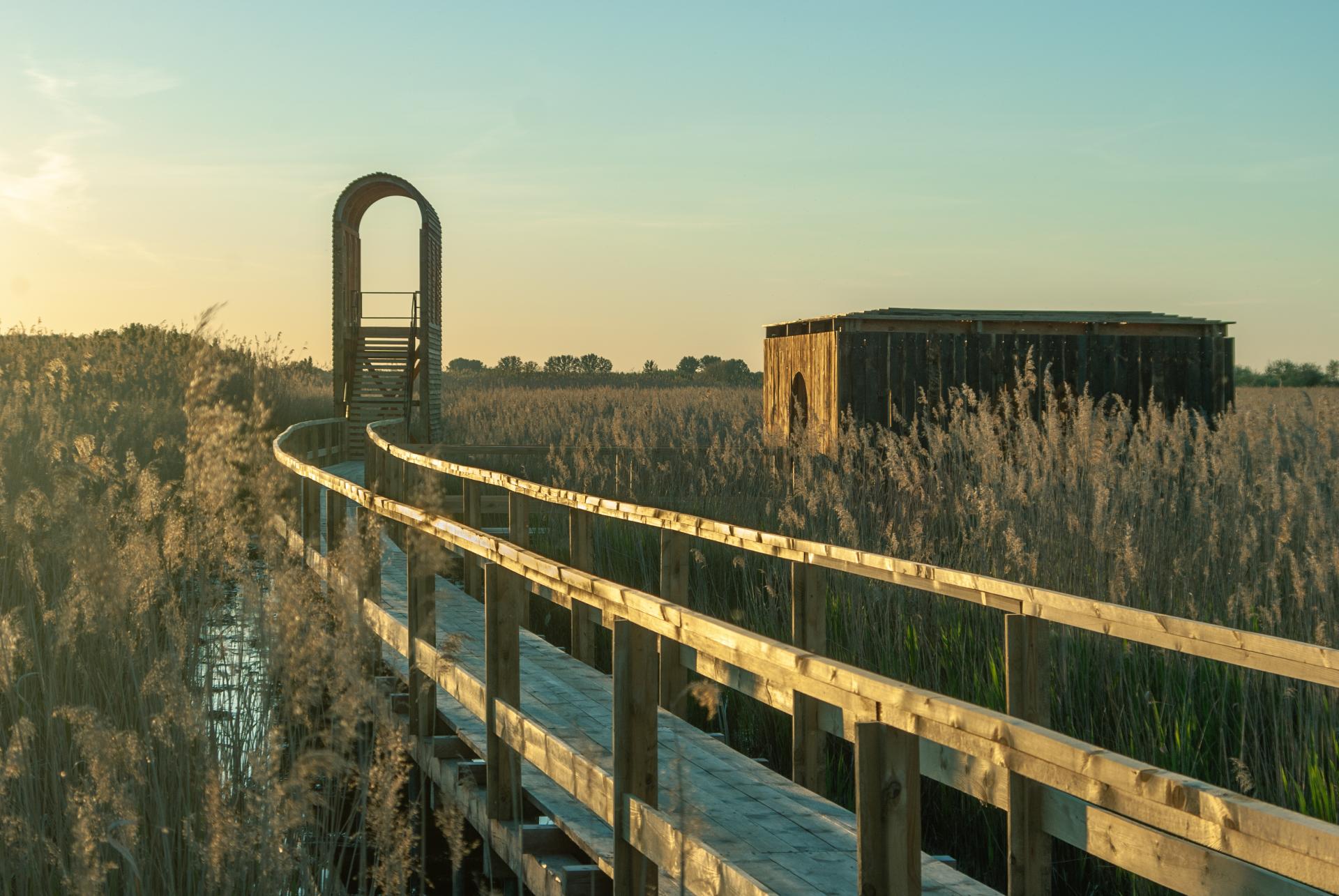
This project is a buffalo barn and an educational trail into their Natura 2000 land that is wholly covered with reeds. The aim of the representatives of Sándorfalva was also to immigrate buffalos to there, hence visitors would have the chance to visit the reeds and meet these wonderful creatures in their living environment at the same time. While it was a design task on one hand, it was more like a task to reinterpret the built environment in natural landscape on the other.
Project Region
EU Programme or fund
Which funds
Other Funds
Rehab NatCult Heritage
Description of the project
Summary
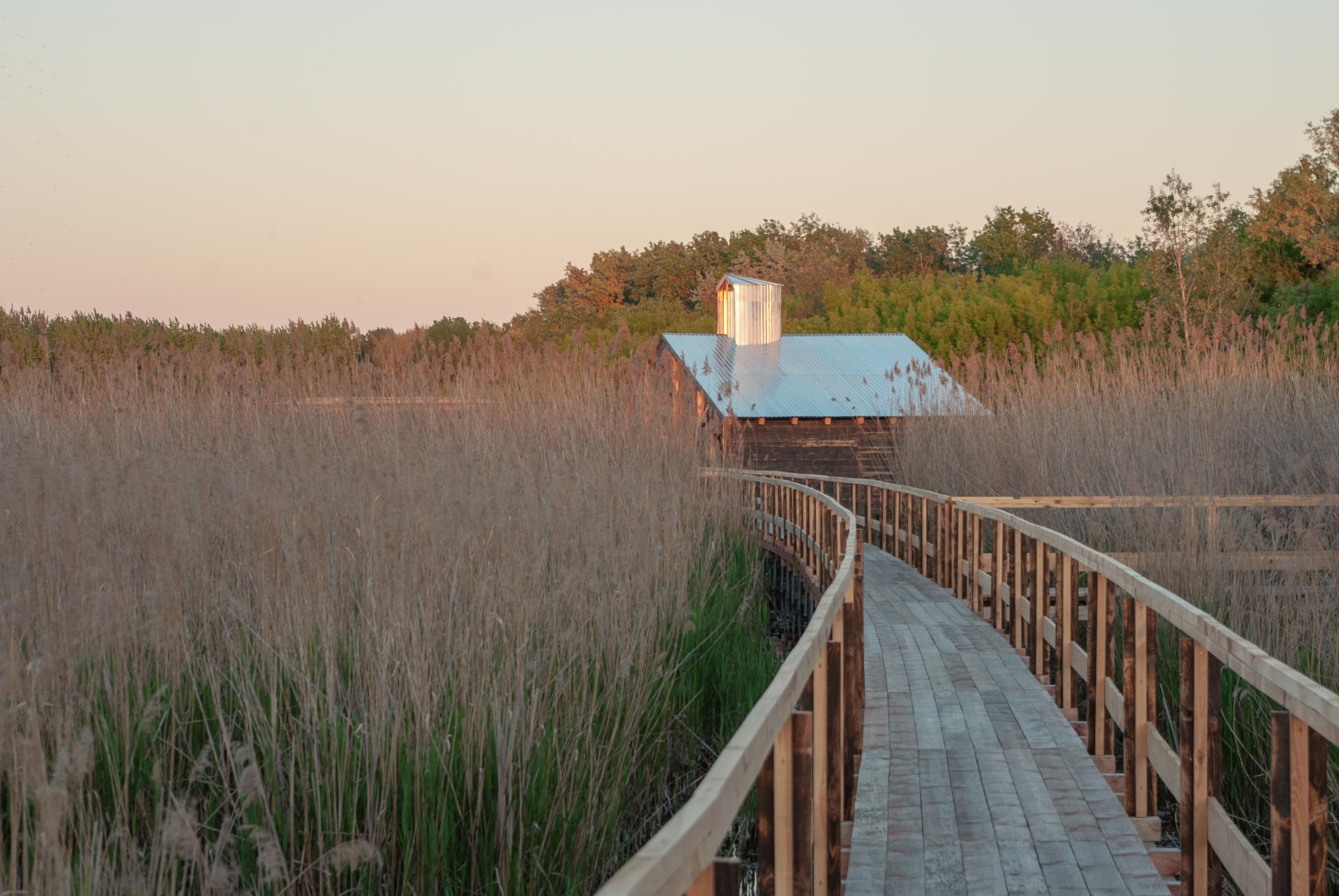
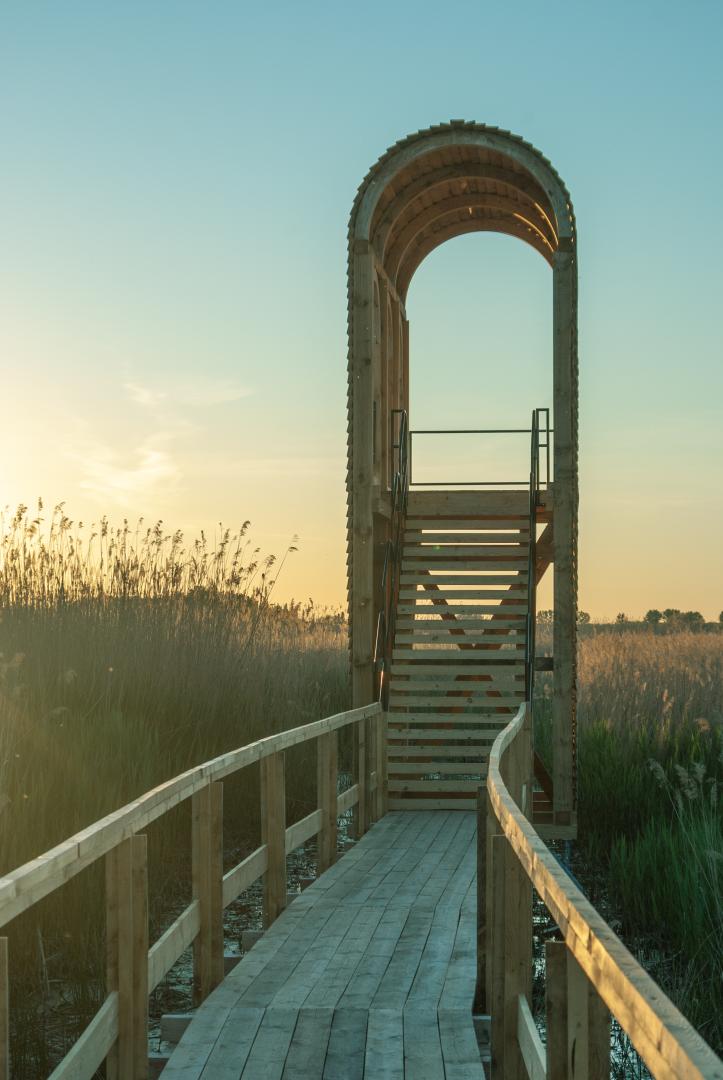
The project is a Natural and Cultural rehabilitation initiative and an educational trail in a small countryside town in south Hungary. The aim of the effort is to recultivate a used to be open-lake natural habitat with local buffalos and with their work on the landscape. We have defined a 500 meter long curved path with a 500 meter radius, on which we placed a few objects for observing nature: one buffalo barn, three little installations to enjoy the landscape through framing it, and a viewpoint at the end. Thanks to the giant curved shape of the path these objects can be revealed in a direct order for the visitors, while the whole structure can be observed only from the viewpoint.
Key objectives for sustainability
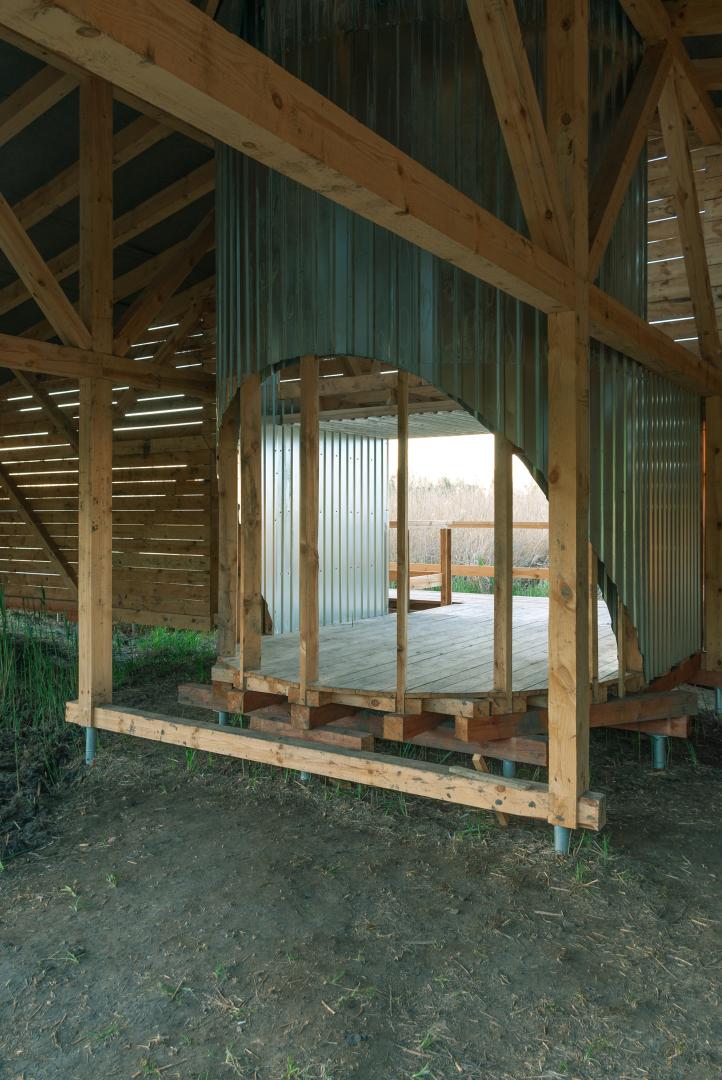
The key objective of the project in terms of sustainability was making as small impact on the natural environment as possible, using natural materials while we had to find to optimum of the low-tech.The whole built environment of the project is made by natural wood without any chemicals and paints, but using local techniques in order to preserve materials. In order to minimize the impact to nature and the land itself we used stakes and piles as foundations instead of concrete or other demanding technologies. The complex use a local well and local nutritions to fed the buffalos.
Key objectives for aesthetics and quality
The key objectives of the project in terms of aesthetic attributes and experiences was making a remarkable composition from local and vernacular traditions, while providing a new quality of experience to the visitors and locals to engage with nature itself. In this project we were interested in the understanding of agricultural buildings of the Central European landscape through the time of history. These buildings in the countryside are still a mixture of vernacular architecture and industrialized building technologies that refers to premodern periods of architectural production and to contemporary at the same time, while both kinds of architecture include big and simple geometries, that create unique character in the landscape.
Key objectives for inclusion
The key objective of the project in terms of inclusion was to make a new kind of public space in the countryside. Near to the town centre but still deeply in the nature the project is able to make connections in high quality in a modest way.
Results in relation to category
The educational trail and the whole complex are blending to nature while making a bold reference point to the importance of caring about our environment.
How Citizens benefit
The civic benefition of the project has two sides. On one hand during the design process the people were able to reframe and recontextualize their values about the close abandoned surrounding nature and implement these experiences to the process. On the other hand local society were able to participate in many civic conciliation, where the residents were able to criticize the process and the result as well. With the result of the project the locals as guest and tourist will be able to see and follow how nature will transform back to its own original form. During this process all the facilities can be used to hide and watch or spend time due they are all public functions. As the educational trail it holds information panels and small interactive elements to help understand and follow the local life of flora and fauna. These huts and the trail itself will be a part of the local schools’ education programs.
Innovative character
With the project we are able to make high quality public spaces and functions in quite a hard natural environment, make an access to the middle of an abandoned lake which were invaded by an aggressive reed that displaced the aboriginal nature. With the architectural geometric composition the route and the trail will be hidden for most part of the year it won’t affect the relocation of new bird population and makes as small impact on the natural environment as possible.