Horst: arts, architecture & music.
Basic information
Project Title
Full project title
Category
Project Description
Horst is a movement dedicated to developing talent, cities, and spaces. We blend & celebrate the worlds of art, architecture and music. We annually organise a Lab, Exhibition and Festival and shape them as momentums of transformative energy. In the past 7 years, Horst has grown into an internationally renowned platform for cutting-edge electronic music, in-situ artworks, inspiring workshops and inventive and circular architecture.
www.horstartsandmusic.com
Project Region
EU Programme or fund
Which funds
Other Funds
Youth in Action 2013: BEFL -12- E21-2013-R2
Youth in Action 2015: 2014-2-BE05-KA205-000757
Description of the project
Summary
Horst is a movement dedicated to developing talent, cities, and spaces. We blend & celebrate the worlds of art, architecture and music. We annually organise a Lab, Exhibition and Festival and shape them as momentums of transformative energy. In the past 7 years, Horst has grown into an internationally renowned platform for cutting-edge electronic music, in-situ artworks, inspiring workshops and inventive and circular architecture.
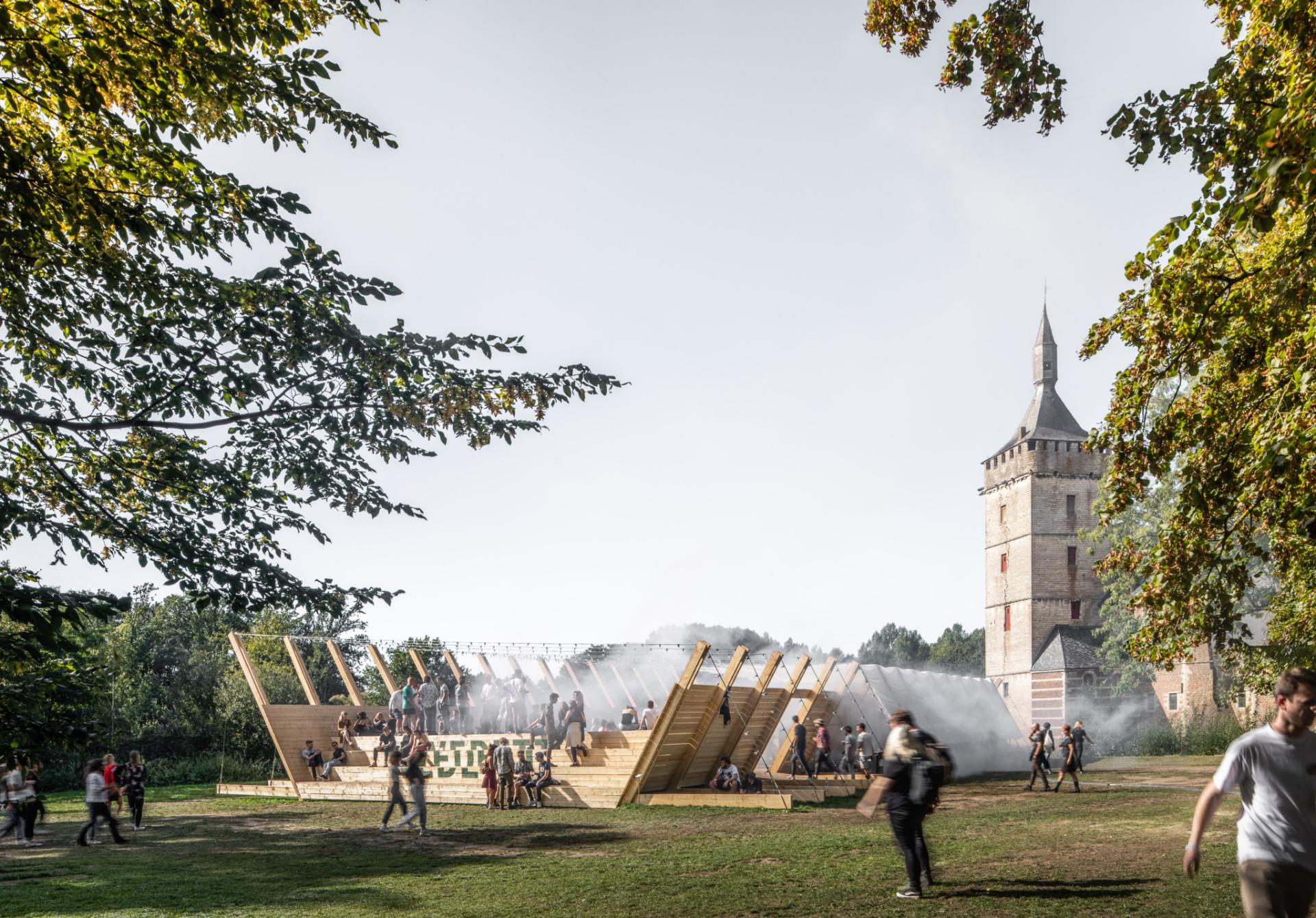
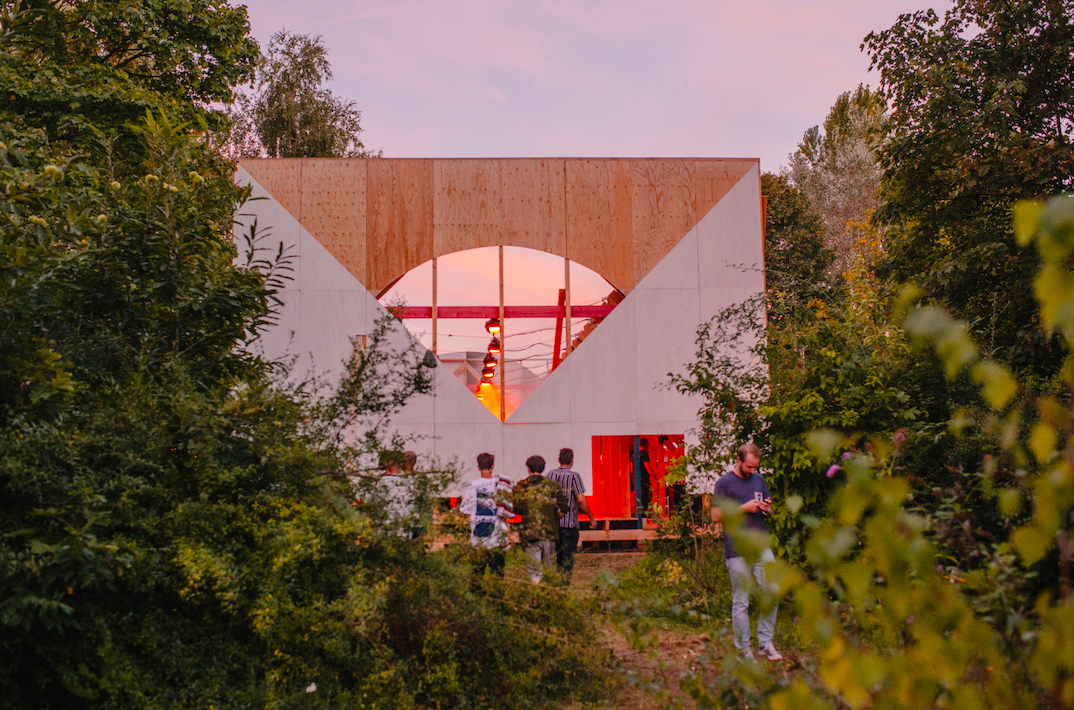
Horst was founded at the Horst Castle in Holsbeek in 2014. Horst aligns a three-day intense music festival with inspiring workshops and longer-term trajectories in which architects and artists are invited to invent dance floors, pavilions and stages, and to produce site-specific artistic installations - all in interaction with the environment and co-built with the next generation.
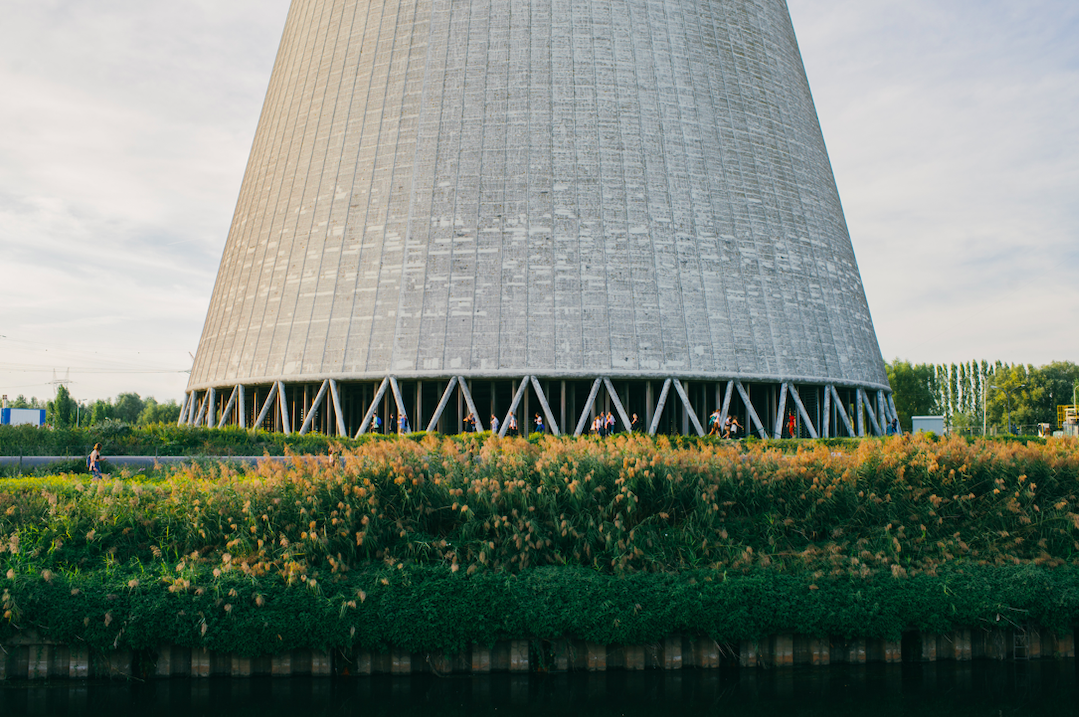
In 2019 Horst moved to Asiat in Vilvoorde. The former military site was bought by the city and is being developed into a new district, with Horst as its main partner. Thanks to its multi-layered potential, Asiat is an ideal context for Horst's research into how art, architecture and music can activate a city, its public space and inspire its inhabitants. And how in essence a festival can gain more societal value?
Horst fosters a shared, broadly supported bottom-up development. This results in collaborations with artists who work with an open view of the society in which they operate. Through the interaction between the concrete physical realisation of architectural and artistic interventions on the one hand, and theoretical self-reflexive research on the other, Horst aims to contribute to dynamic, attractive and accessible public spaces. Parallel to this artistic research, our field research focuses on the wishes and needs of Vilvoorde organisations, associations and residents in order to generate a shared authorship on the development of the site.
www.horstartsandmusic.com
Key objectives for sustainability
Horst manifests itself by organising events. However, events are not sustainable by nature. It was therefore important for Horst to design events from the start in a way they created social value and had a positive impact for our partners and stakeholders. In this way, a large degree of sustainability is incorporated into Horst's DNA: how we work together, how we try to shape a community around the project, how we try to work with our partners in the long term and look for a meaningful and positive impact on the place and context where we operate.
It is also important to point out that Horst has been around for 7 years now and has found a sustainable partner in the city of Vilvoorde. There is an agreement to remain active on the Asiat site for at least another 10 years and there's the intention to grow it into an operation that is active year round.
In the organisation of our events, we have also made a number of choices to limit the ecological footprint. For example, we do not serve meat, do not use single-use plastics and serve filtered tap water. We also performed an internal baseline measurement and formulated internal yards that have an impact on, among other things, our waste policy, material choices and mobility measures. For example, we have the ambition to become the first car-free festival in Flanders.
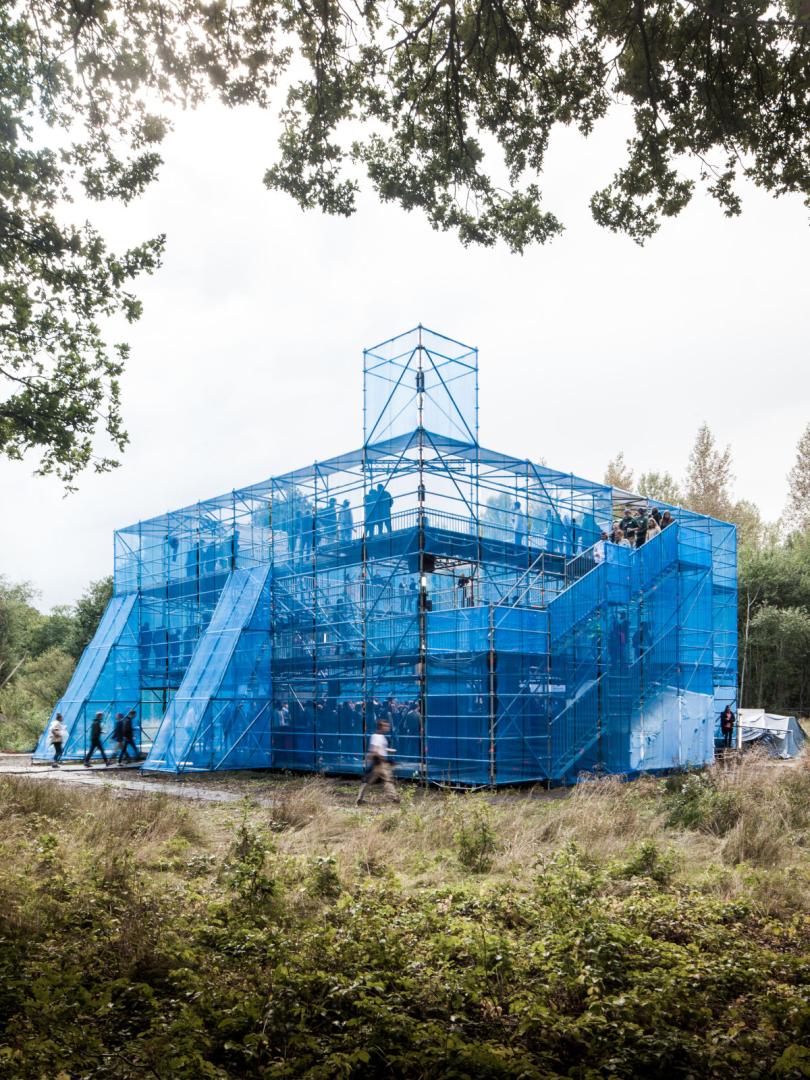
With Horst, we are driven to accelerate the transition from a linear to a circular economy. We do this, among other things, through the realisation of architectural, circular pavilions/stages that we construct by repurposing existing materials and also giving the constructions a new destination after our own events. They then become a part of the public space, and serve as new cultural infrastructure for the Vilvoorde community and our neighbourhood.
We believe that by continuously wanting to grow and learn, and also to communicate about this, we can be a positive source of inspiration for others who in turn can grow further as well.
Key objectives for aesthetics and quality
Horst brings quality visual art together with innovative, circular architecture and electronic music in a unique double festival (exhibition and festival) at a unique location in the heart of Europe. It is an innovative and relevant format in the existing, international arts landscape.
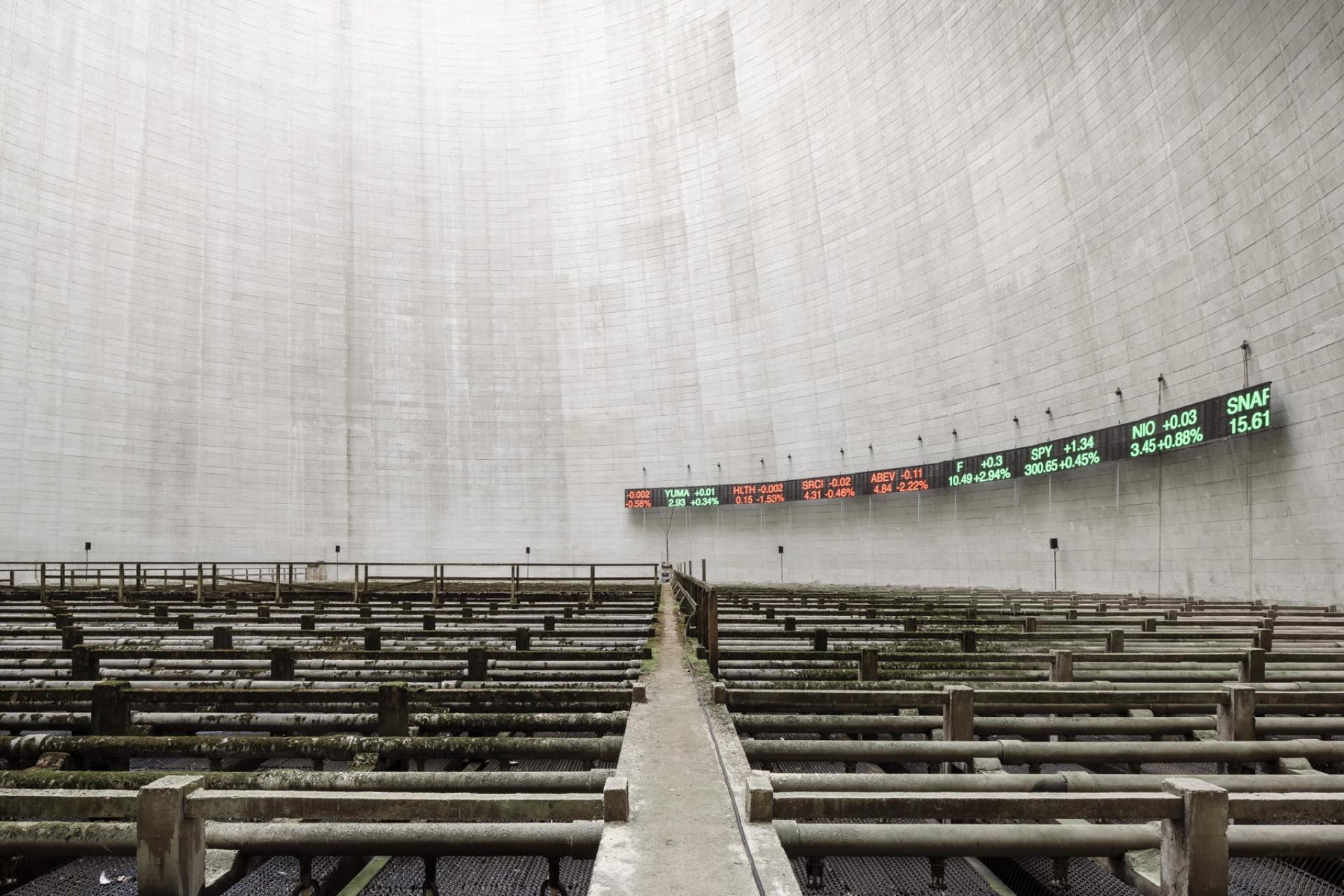
In recent years we have seen a tendency at festivals to present art, often this is reduced to a set serving the commercial logic of the festival. Horst resolutely opts for substantive and critical art and tries to make it as accessible as possible to a wide audience.
Horst brings together talented and/or leading Belgian, European and international artists in its annual music, visual arts and architecture programme. Through a worldwide selection of renowned artists and musicians, Horst aims for a high level of quality and a strong, European appearance. In addition, Horst has built up a tradition of inviting (inter)national artists, musicians and architects with an international reputation (e.g. Robbrecht & Daem, Floating Points, Jan De Vylder, Emeka Ogboh, Rashid Johnson, Marinella Senatore, Sonia Gomes, Gilles Peterson , Luc Deleu, Aline Bouvy and many others).
Our circular stages are the designers' business cards and serve as inspirational projects for the architecture and construction sector. Several of the architects we worked with have won awards in the past: Robbrecht and Daem (Nomination Mies van der Rohe Award, 2018), Assemble Studio (Turner Prize, 2017), Jan De Vylder (Silver Lion, Venice Biennale, 2018).
In addition, Horst received a Red Bull Elektropedia Award in 2019 for Best Middleweight Event in Belgium. In 2021 it received an Henry Van de Velde Gold Award for its graphic communication. This shows that not only the public, but also professionals from the industry recognise the quality of Horst.
Key objectives for inclusion
At Horst, inclusion is not about letting people into our club, because we think that’s just the same as the system we’ve had until now. We believe inclusion is about empowering others in their wants.
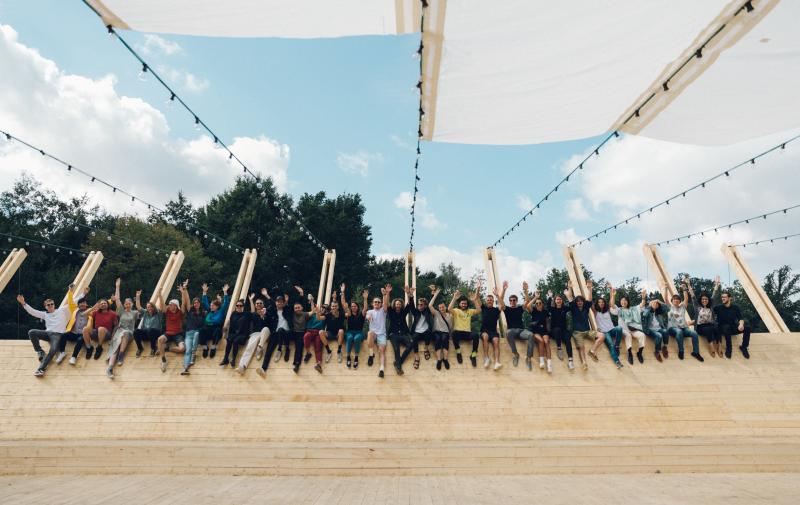
During a Horst year, more than 500 European volunteers participate in the realisation of the various projects. The Horst Lab grew out of the enormous motivation and commitment of these many volunteers. During the build-up of our events we noticed an incredibly inspiring energy among this community. An energy that we wanted to structure and format so that it could become even more meaningful.
The Horst Lab became a platform for experiment, co-creation, discussion and creative talent development. A setting where influential creatives inspire the next generation. Coaches and participants work together on an ambitious and concrete result that relates to Horst and often infiltrates the Exhibition or the Festival. That way the Lab has become a portfolio enriching and life-changing experience for every participant.
Horst strongly encourages applications from people of colour, people with disabilities, LGBTQ+ candidates and others who are underrepresented in the arts and culture sector to apply for the Lab. In addition Horst offers a limited amount of bursaries to Lab participants. The enrolment fee then is reduced to the amount of the food cost (15 euro per day).
In addition we're now working on a traineeship programme to offer a paid opportunity for two trainees every year to gain experience and insights in the arts and culture sector. Besides this we are setting up free community activities (soccer team, book club, …) to further develop our community, and create accessible moments to build a network, meet likeminded peers and organically involve into a movement where people get together and learn from each other by taking up various projects.
Results in relation to category
Horst was founded in 2014 and will enter its seventh year in 2021. It annually organises the Lab, an inspiring series of workshops in which 100 participants from all over Europe come together and work together in four different workshops (1 x Art Lab, 1 x Music Lab, 2 x Architecture Lab) on a concrete result that often infiltrates the Exhibition or the festival. During the Lab, around 30 inspiring, leading experts from these sectors gather. They act as coaches during this ten-day workshop.
The Exhibition is a summer exhibition, which lasts for two months each year. The summer exhibition is located in the public space of Asiat, and is open four days a week. In 2019, the exhibition attracted around 9500 visitors from different generations. The exhibition brings talented young artists together with established artists and architects from both Europe and Belgium.
The Festival is considered as the closing moment of the exhibition and lasts three days. In 2019, an average of about 5000 visitors per day came to Horst. For the 2021 edition, we expect around 6,500 visitors a day, resulting in a record number of almost 20,000 visitors. Horst has been strongly European oriented from the start and that reflects in the visitors, more than 20% of the visitors are non-Belgian. The vast majority of them come from all over Europe.
Horst received a Red Bull Elektropedia Award in 2019 for Best Middleweight Event in Belgium.
In 2021 it received an Henry Van de Velde Gold Award for its graphic communication.
Since moving to the new site in Vilvoorde, Horst has continued to grow. The result is a long-term agreement with the city of Vilvoorde for ten years, in which Horst will evolve from festival, exhibition and lab into a new kind of arts center on the site. One with a young dynamic and a community focus.
How Citizens benefit
In the context of organizing and designing Horst, many meetings and conversations arose with citizens and residents of Vilvoorde. These conversations triggered the realization that there is a lot of potential for and also a need for dialogue and local anchoring. We build relationships with local associations and communities to set a collective agenda for the further development of the site. With a view to a dynamic and shared place, we organize discussions with local actors (socio-cultural; the healthcare sector; organizations for vulnerable groups) to look at the existing needs and wishes. Subsequently, routes are determined for a long-term effect (e.g. a playground; outdoor furniture that facilitates access and circulation for the elderly; an urban vegetable garden; cultural infrastructure; a bridge over the canal, etc.). An artist or architect is invited for each trajectory, who can charge this functional need artistically and reflexively. These installations then exist partly as an artistic installation, partly as a permanent intervention that serves specific target groups.
We also aspire to meaningful employment and see Horst's various events as learning opportunities for ourselves, but also for volunteers and young people who want to gain knowledge and experience. Some of them move on in our organization and take on more and more responsibilities. Others learn and grow within the organization and then take up other commitments elsewhere based on the experience gained and their own learning path.
The Lab also offers an immediate impact on the CV of young people who are at thestart of their professional career, but often lack relevant experience. We try to help them in that way. KU Leuven, the most renowned and most innovative university in Europe, has been a partner of Horst since day 1 and more specifically in the creation of the Horst Lab. Their contribution to the educational value and credibility of the Horst Lab cannot be underestimated.
Innovative character
1. Horst brings together cutting-edge electronic music, in-situ artworks, inspiring workshops and inventive and circular architecture in a double festival (exhibition and festival) and a workshop series (Lab). This multidisciplinary approach is innovative in itself, and an important and relevant format in the existing European art, music & architecture landscape.
2. Horst sees itself as a community builder and a place maker. The unfilled character of the Asiat-site it calls home offers opportunities to co-imagine and co-build its future with local partners, inhabitants, neighbours and create a durable and positive impact.
3. We involve the next generation throughout the whole process of our events, and try to build event formats where they can learn as much as possible, meet like minded peers from around Europe and learn from the best in the worlds of arts, architecture and music.
4. Through these innovative formats, a broad and young audience is brought into contact with substantive works of art and architecture. An ambition that is not always easy for conventional institutes.
5. This unique format in Flanders and Europe offers valuable development opportunities for artists and architects. For example, autonomous artists who create applied work or applied designers who create autonomous work, cross-disciplinary exchanges, new developments in existing oeuvre. Artists at the beginning of their career who create valuable new work or renowned artists who can realise and present work in extraordinary places.
6. In recent years we have seen a tendency at festivals to also present art, often this is reduced to decor in the service of the commercial logic of the festival. Horst resolutely opts for substantive and critical art and tries to make it as accessible as possible to a wide audience.