Inclusive Future for Dissonant Heritage
Basic information
Project Title
Full project title
Category
Project Description
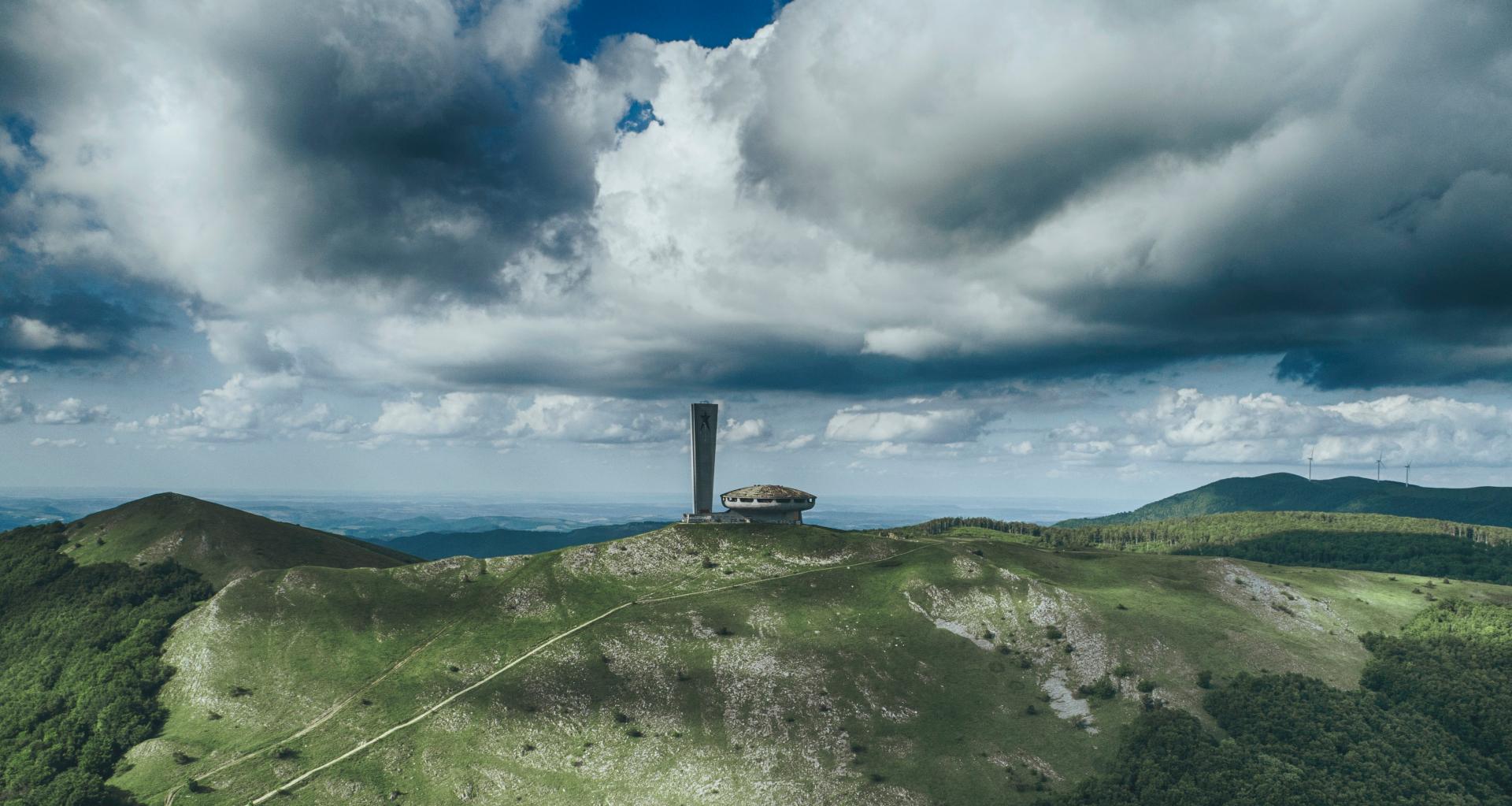
Buzludzha is a masterpiece of architecture, engineering and art. It is also one of the most iconic and significant buildings of post-war modernism in Europe. It was built in 1981 to celebrate Bulgarian communism, which was the reason to be abandoned and looted in the 90'ies. Today Buzludzha has the potential to transform the trauma of the past into a cause to unite people, allowing open dialogue and common understanding. It can educate, foster tolerance and develop sustainability.
Project Region
EU Programme or fund
Description of the project
Summary
Buzludzha is a masterpiece of architecture, engineering and art. It is also one of the most iconic and significant buildings of post-war modernism in Europe. It was built in 1981 to celebrate Bulgarian communism, which was the reason to be abandoned and looted in the 90'ies. Today Buzludzha has the potential to transform the trauma of the past into a cause to unite people, allowing open dialogue and common understanding. It can educate, foster tolerance and develop sustainability.
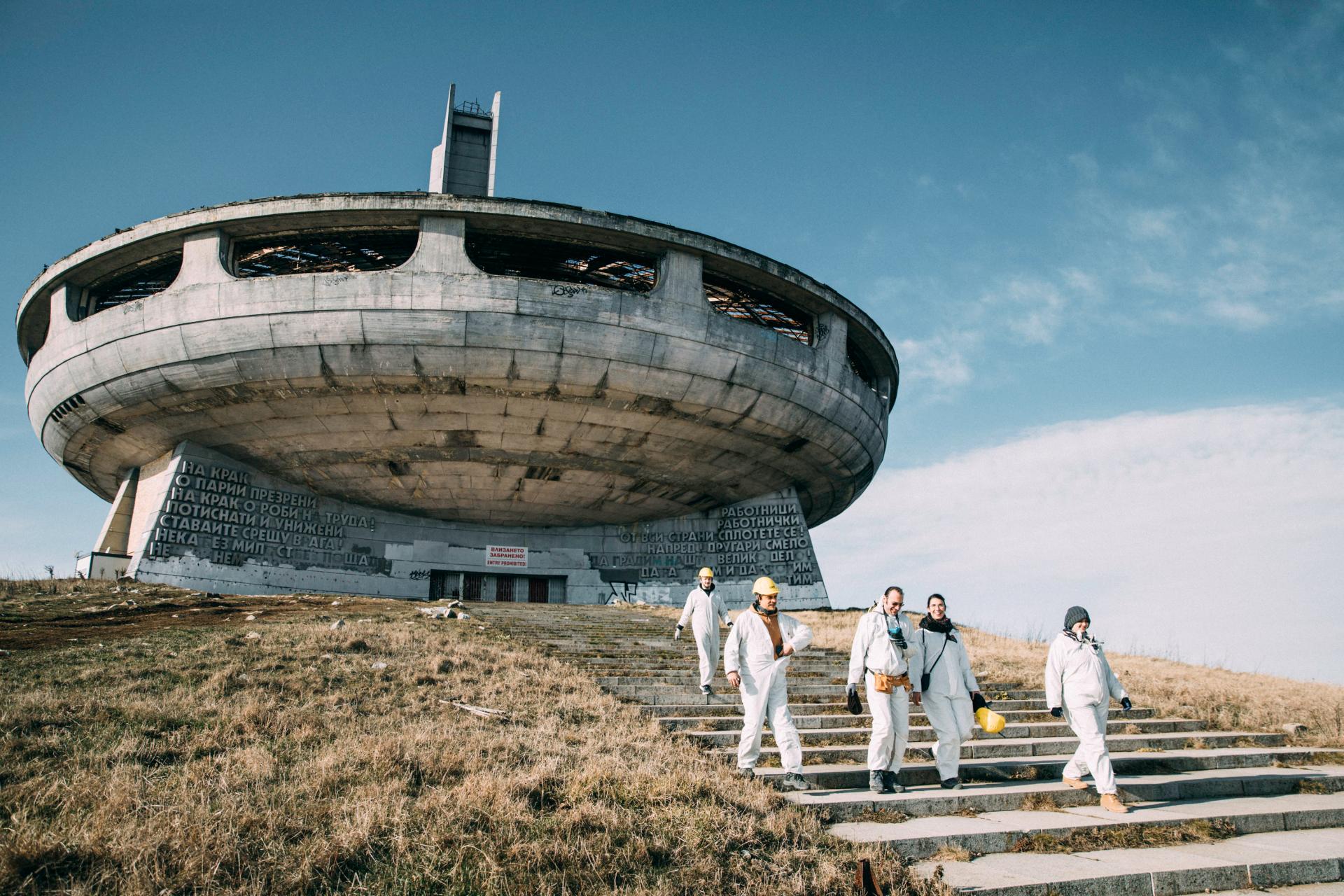
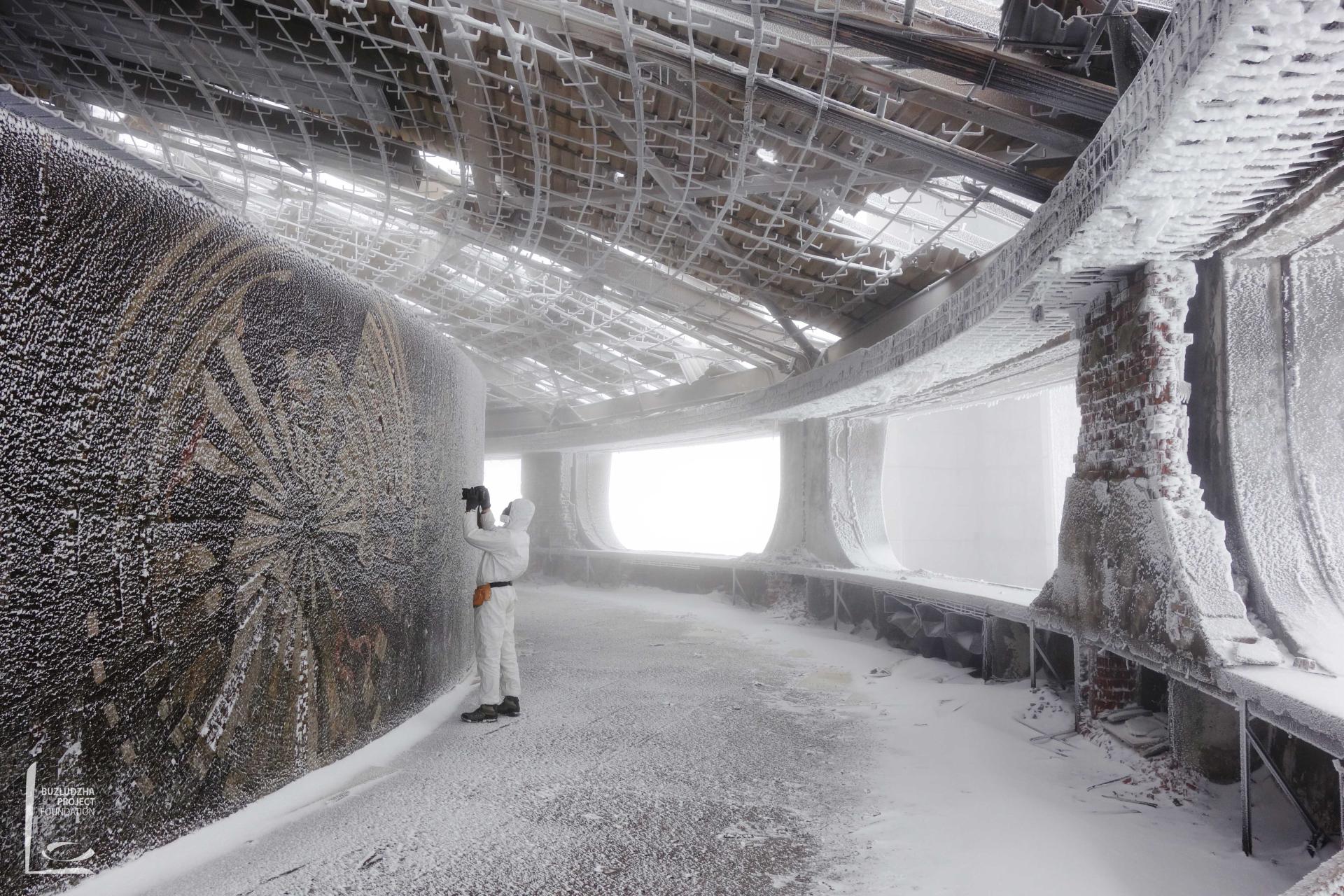
Мotivated by the tremendous potential for future reuse of Buzludzha monument and triggered by the lack of dialogue and maintenance for the place, as a citizen and an architect, I decided that action is urgently needed. First of all, I dedicated my Master thesis about it at the Technical University in Berlin in 2014. In 2015 I founded the Buzludzha Project Foundation, which started its work with a broad awareness rising campaign through exhibitions, discussions and conferences. After my nomination, in 2018 the monument was recognized by Europe Nostra, as one of the 7 Most Endangered heritage sites in Europe. In cooperation with ICOMOS Germany and through the support of the Getty Foundation, in 2019 I started the coordination of the Research, Conservation Planning and Adaptive Reuse Strategy for the monument. In 2020 I coordinated the implementation of the very first conservation measures to halt the decay of precious mosaic artworks inside with the project Emergency Stabilization of Mosaics.
The next steps include stabilizing the building, stopping the ongoing decay, and making it a safe place for visitors. In a second step, new functions could be introduced to the building to become a place for art, nature, history, culture and an open space for multilayered storytelling.
Key objectives for sustainability
Abandoned and neglected are hundreds of monuments and sites, built during the socialist regime in Bulgaria and the entire Former Eastern Bloc. The common young heritage in the post-socialist countries is often traumatic or unfamiliar to the broad public. This dooms to destruction great human tangible achievements. They are witnesses of a period that is not discussed, taught, or remembered by museums and schoolbooks in Bulgaria. This lack of open discussion and education regarding communism allows for speculation, political manipulation and deep social polarization. Buzludzha, as the most iconic and controversial artifact of Bulgaria’s socialist era, can become an example for the rational reassessment and preservation of Bulgaria’s and Eastern Europe’s difficult heritage.
Preserving and reusing the vast heritage of the 20th century means sustainability on a large scale, reducing the carbon footprint for new construction works. Moreover, it shows a constructive attitude, preserving the identity, allowing dialogue and supporting education, cultural tourism and community building. Preserving the tangible testimonies of the recent heritage, preserves the intangible common European history. Critical discussions of the past allow better understanding of the present and sustainable planning of the future.
In particular, the Buzludzha monument is located within a historical-natural reserve and is a great starting point for promoting nature-friendly and sustainable practices. Our aim is to revitalize it into a place for nature, history, art and culture. If Buzludzha is open for visitors, it will promote the tourism in the area, directly and sustainably supporting the local economy.
The strong winds at the location are already a recognized asset as there is one of the few wind parks in Bulgaria. The use of solar energy from the new roof of Buzludzha will be also considered. In this way the extreme weather could be utilized for a more sustainable future for heritage.
Key objectives for aesthetics and quality
Aesthetics
The significance of the Buzludzha monument includes both cultural and natural significance. Its cultural values are: Aesthetic, Historic, Social and Spiritual.
The aim of the project is to sustain its values for the next generations. The building complex displays the aesthetic characteristics of the socialist realism as influenced by post-war western modernism and is one of the most prominent representatives of the contextual Bulgarian architecture. The author sought the shape that would be the most appropriate end to a mountain peak. The integrity between nature and man-made is a brilliant example of highest aesthetic value. Moreover, Buzludzha contains a real gem of almost 1000 sqm of precious mosaics, which make it one of the largest mosaic artworks in Europe. Influencing art is one of the dimensions of the aesthetic value. Socialists’ art was deeply inspired by the place as well as contemporary art today. Artists from all over the world connect to the place and use it as a source of divine inspiration and creativity.
Analyzing the site’s research by applying international standards for cultural heritage assessment, it can be concluded that the Buzludzha Monument is not only of national, but of world significance.
Quality of experience
Although the Buzludzha monument is closed to the public and there is no information, interpretation and absolutely no services on-site, it is one of the most visited places in the region. There are thousands of visitors each month and the tourism interest it comparable or even higher to the only UNESCO heritage site in the area: the Kazanlak Thracian tomb.
Providing information, services and opening the building to the public will rise enormously the quality of the visit, the understanding of the site and the overall experience.
Key objectives for inclusion
Buzludzha monument was built in 1981 to be a symbol of Bulgarian communism. This is the reason to be abandoned in the 90's, right after the end of the socialist regime. In the intervening years it has been neglected and looted as have many other buildings, part of the vast unloved heritage of the 20th century. From the most it became the least important building in the country, becoming a symbol of the change in values, the change in society. Today, on one hand, it is a symbol of a conflict between people holding different views about the recent past and on the other, a symbol of free will, art and curiosity for the new generation and the unbiased visitors.
From a symbol of division and a conflict with the past, Buzludzha has the potential to unite people, allowing open dialogue and different perspectives. The monument represents not only an opportunity to learn from the past, but also an invitation to inspire and encourage new inclusive visions for the future.
The network of experts and institutional partners of Buzludzha Project Foundation is growing. Some of them are: ICOMOS Germany, Conservation-Restoration Department at the Technical University Munich, National Academy of Art in Sofia, University of Architecture, Civil Engineering and Geodesy in Sofia, Bern University of Applied Sciences, ICOMOS International Cultural Tourism Committee, and many more.
The process is entirely open and everybody is invited to become part of the project by enrolling to our volunteers’ team. Multidisciplinary international teams of architects, engineers, conservator-restorers, designers, scenographers, art-historians, tourism expert, etc. are united by the common cause of this grass roots initiative. People with completely different political, religious and social values work together for the heritage preservation. This is a great example of the inclusiveness of cultural heritage and especially of controversial sites like Buzludzha.
Innovative character
Innovative practice
Dissonant Heritage is an emerging new category of cultural heritage, which is represented all around the world. It is connected to social conflict and trauma.
It’s easy to recognize and acknowledge the significance of a clearly positively perceived heritage such as a church or a clearly negatively perceived heritage such as a prison. However, Buzludzha can’t be labelled with either of these categories. It is controversial and dissonant. By preserving the building, we don’t want to impose one or the other perception, we want to create a safe and open space for discussions, interpretations and different perspectives. The personal memories and feelings of the people can’t be labelled as right or wrong. To be able to communicate them in a constructive way and to be able to understand that there are also other perspectives is what Buzludzha wants to achieve with its preservation. Buzludzha with its condition today is a great metaphor for the time before and after the collapse of socialism. We don’t want to restore, but to preserve the building as much as possible in its present condition, leaving the pluralism of stories.
Innovative technology
For the building the most qualitative and innovative technologies of the 80’ies were used. Because of the extreme weather on the mountain top, Buzludzha is a great case study of accelerated destruction processes of modernist heritage and modern materials such as concrete. Innovative solutions will be developed to preserve the phenomena of highly degraded modern materials.
Moreover, its preservation will explore highly durable materials and building techniques that minimize the work-time on-site. Innovative conservation methods and materials are needed to be able to research and preserve modern architectural surfaces. As an example, for the mosaic stabilization measures, innovative counterforce system was developed and implemented. Further innovations are under development and will be implemented next.