Collaborative Design Studio TU Dublin
Basic information
Project Title
Full project title
Category
Project Description
The Collaborative Design Studio at Dublin School of Architecture, TU Dublin is an innovative multidisciplinary architectural design studio premised on a real-life wicked problem and focused on Whole Life Durability using a Servant Leadership collaborative working model.
Project Region
EU Programme or fund
Description of the project
Summary
The Collaborative Design Studio is an introductory module as part of the new Master of Architecture programme at the Dublin School of Architecture, TU Dublin. Paired with a module in Whole Life Design, it is designed to form a cognitive break with the ‘business as usual’ architectural studio model that has dominated pedagogic modes since the Weimar Bauhaus. The MArch team has worked on developing a programme that expressly aims to provide students with the means to reflect and re-direct if necessary their future pathway and facilitate their individual professional development as leaders.
Architecture is a dynamic system whose value is only measurable when measured. A building, contrary to impressions, is never complete or anchored in time and space. In architectural education we know that the process that gives rise to architecture is itself fluid and messy and often defies explication, but in responding to the climate emergency it must also be measurable. The pedagogical imperative of the Collaborative Design Studio module is the creation of a structured, scaffolded teaching and learning environment to allow future architectural practitioners to acquire skills in responsible decision making.
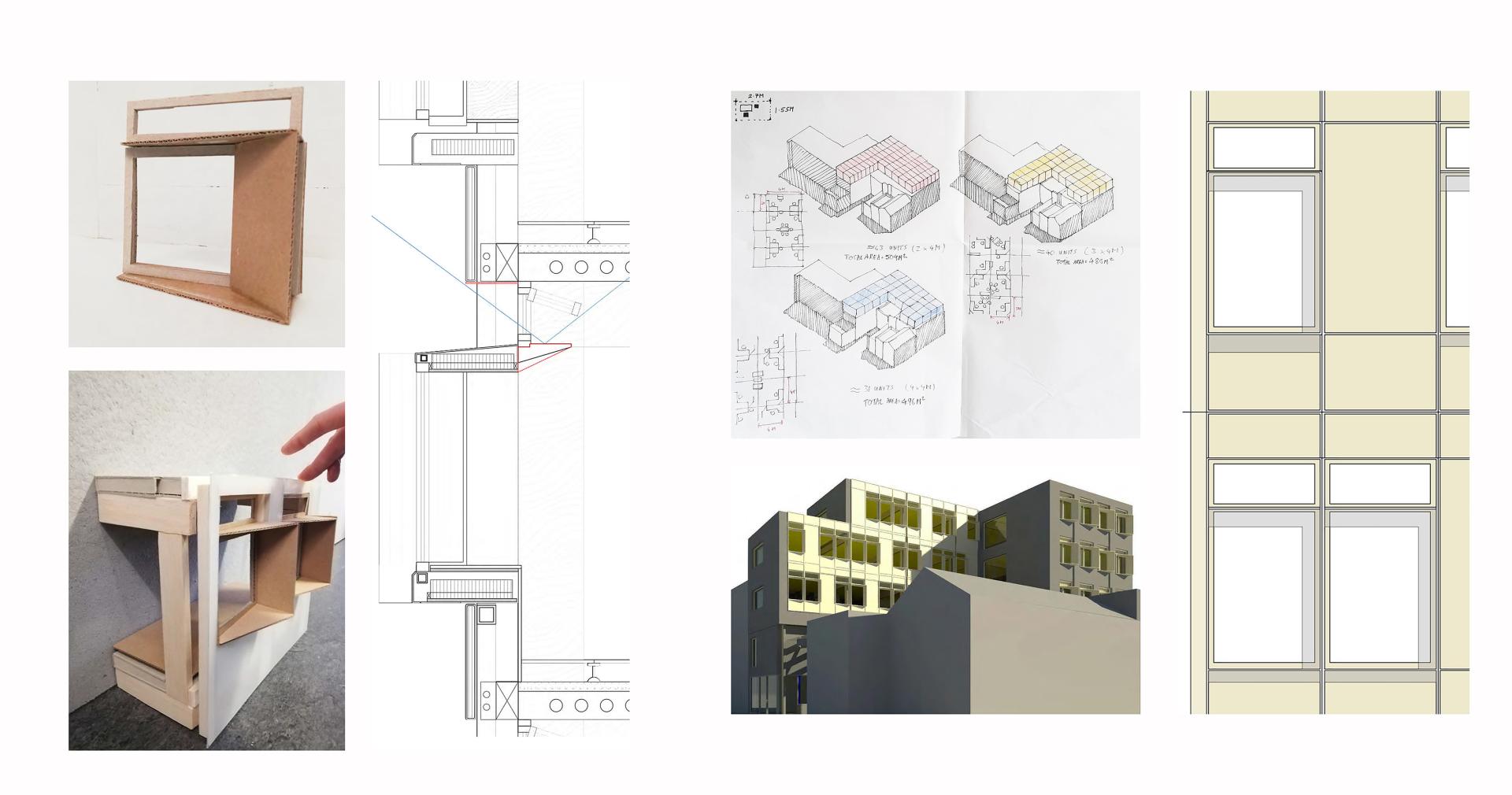
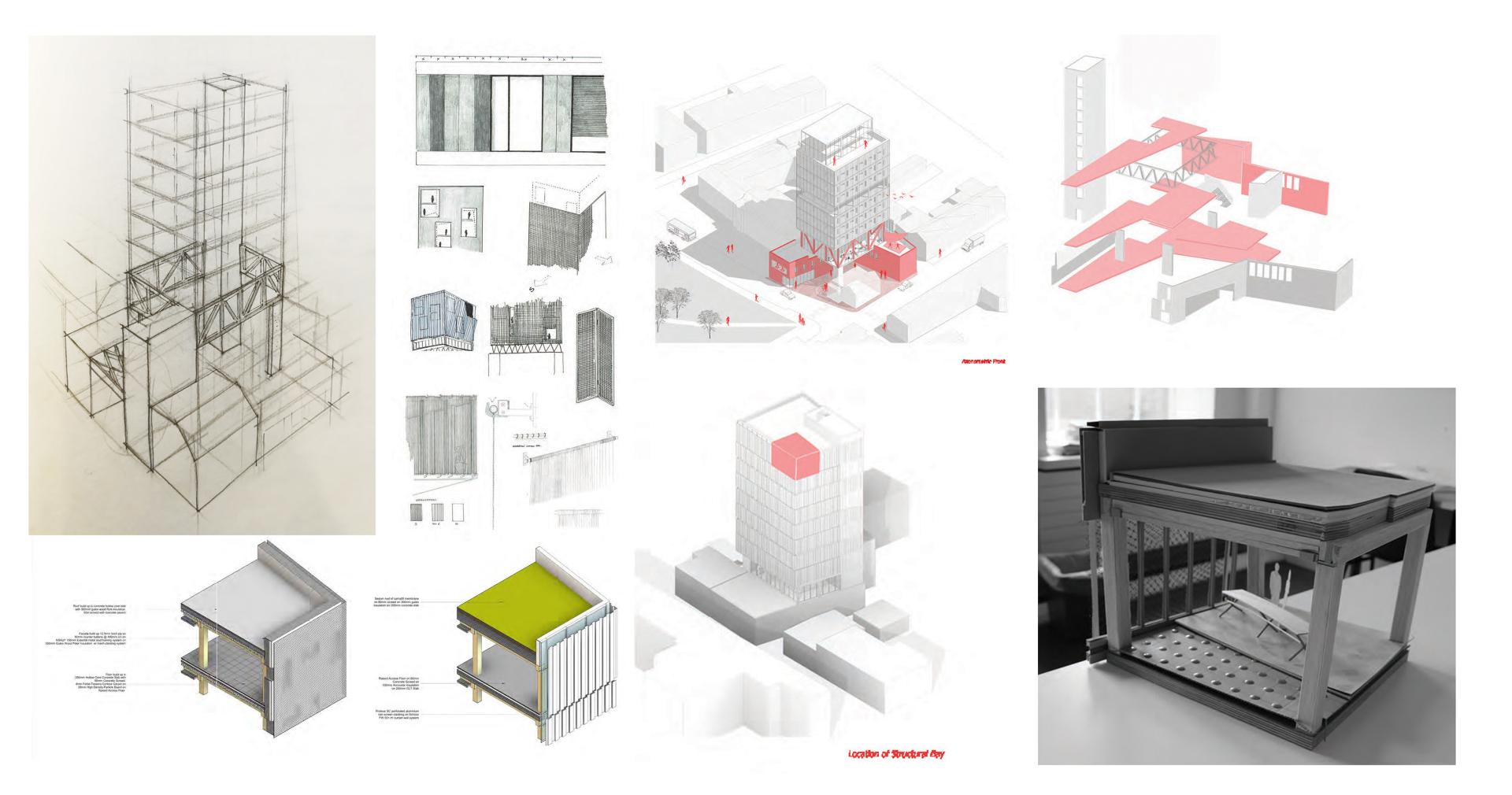
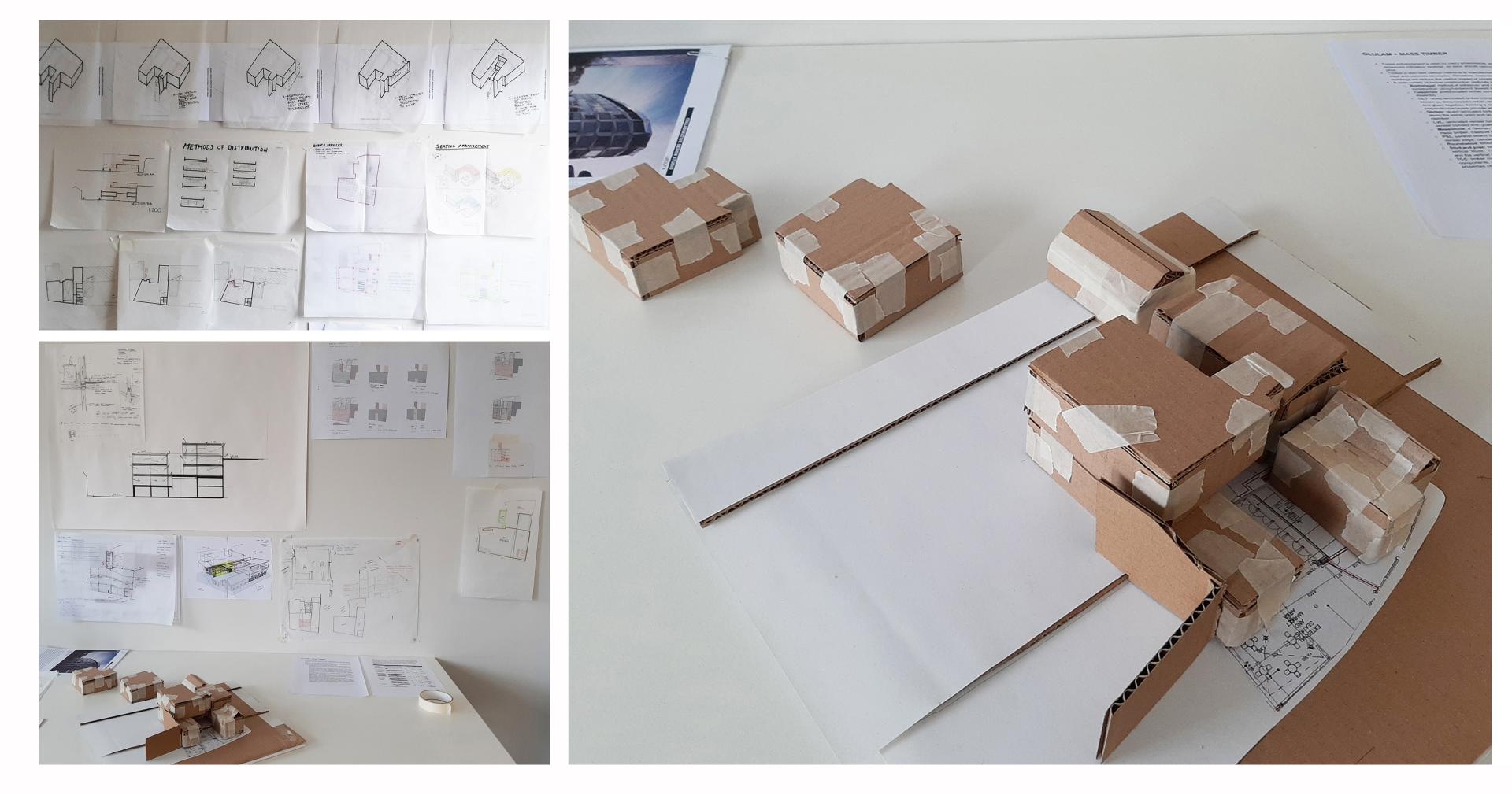
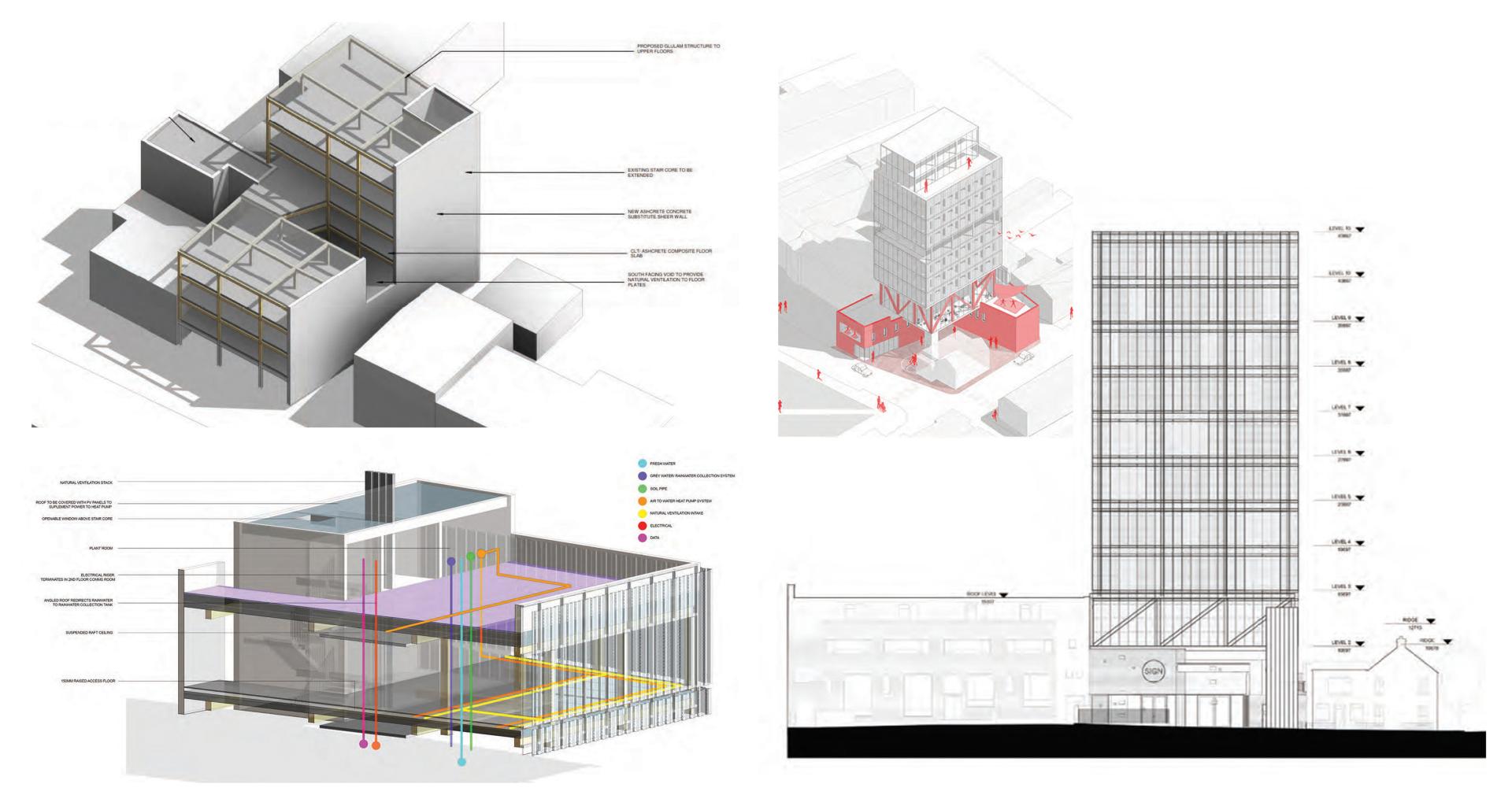
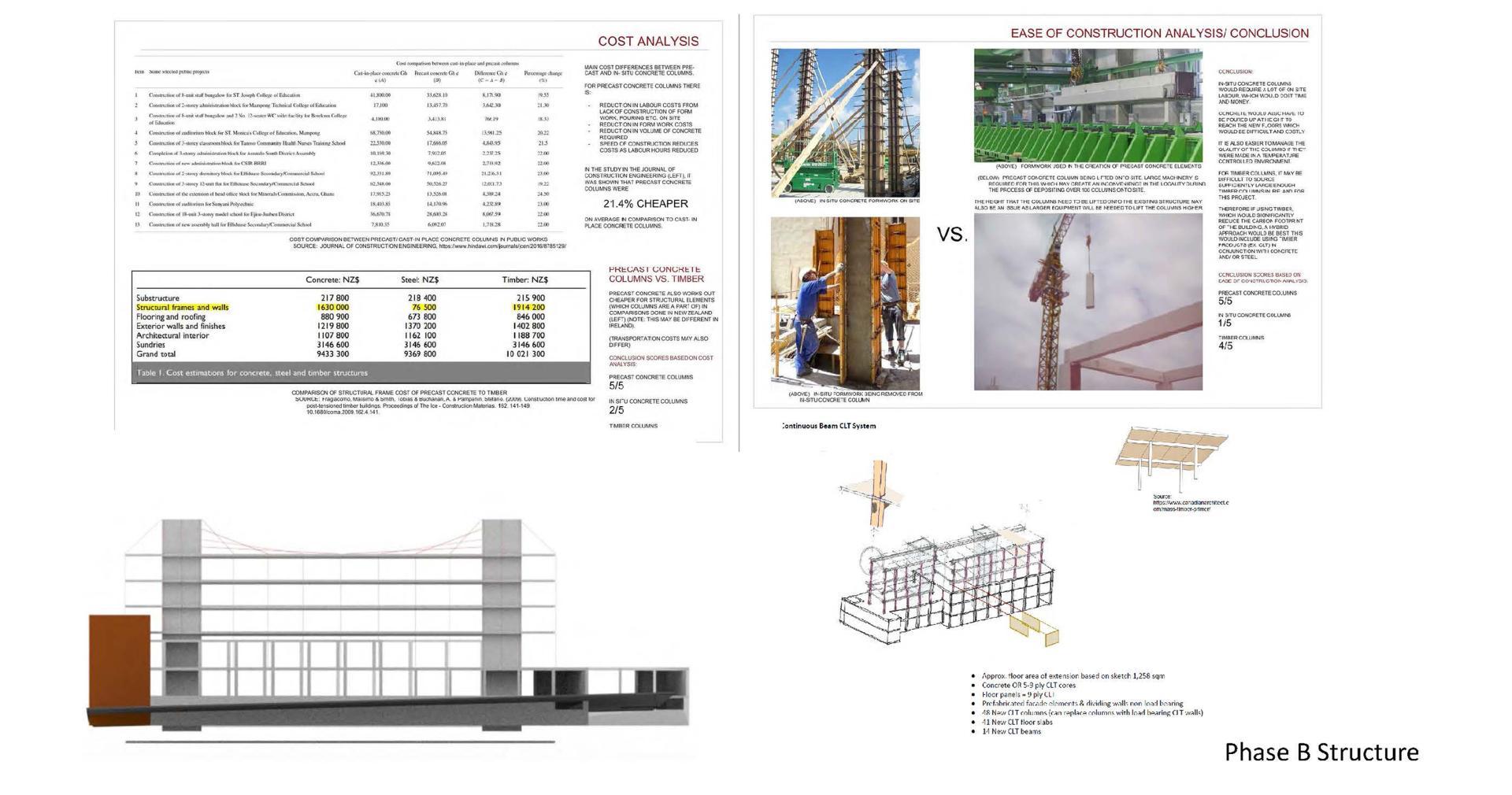
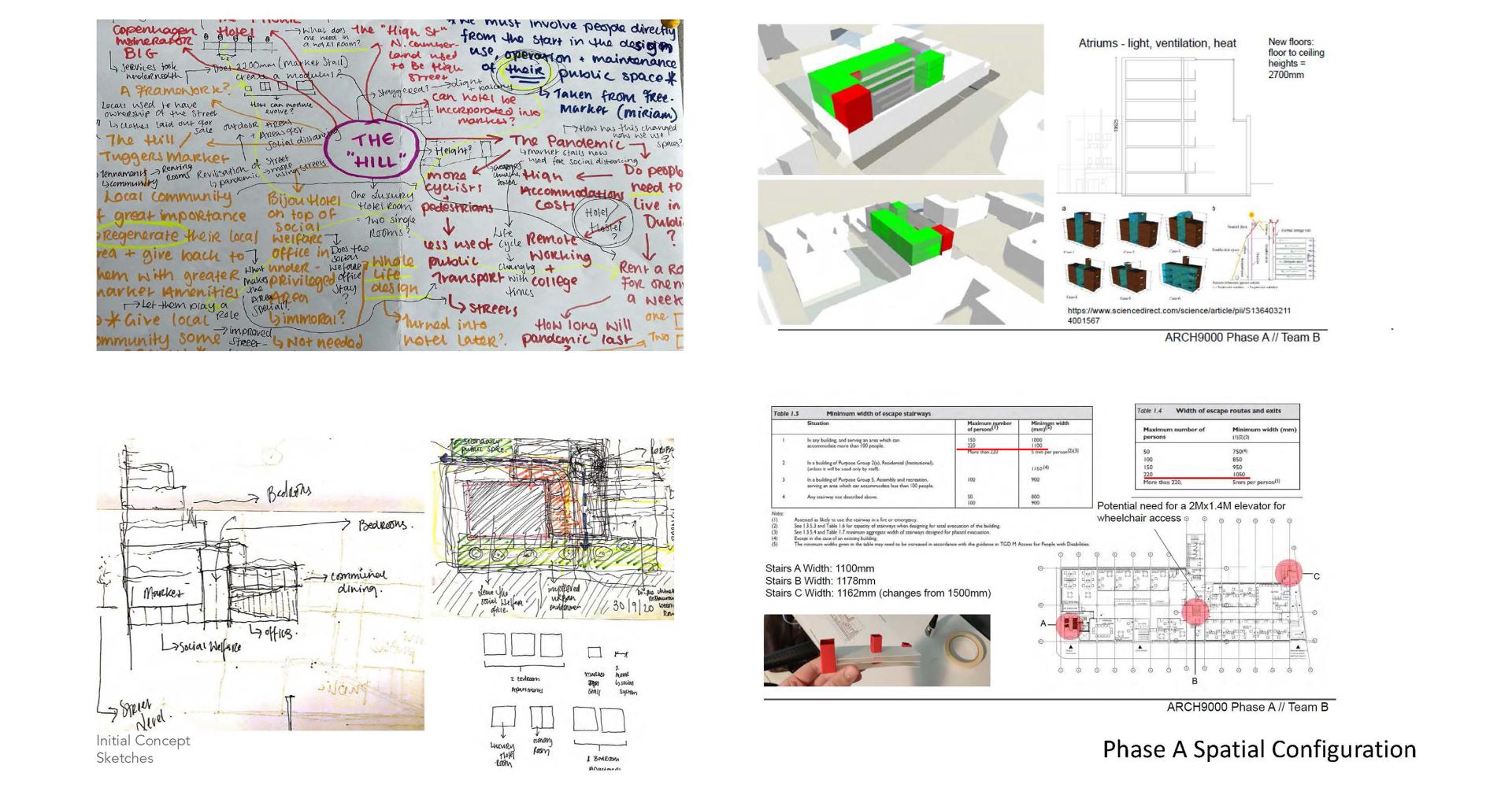
In the module students work in teams to collaboratively develop a comprehensive, well researched, evidenced and reasoned design response to the given brief. The studio brief positions the challenge on an existing building, and proposes a change of use as well as the expansion or significant adaption of the existing structure. The brief acknowledges that there is no one ideal response to the proposition and instead prioritises a scaffolded iteration of development through a series of prescribed design phases. As part of this iterative design process the original professional design team for the existing building are involved in reviewing and propelling the work at key project stages.
Key objectives for sustainability
The work is predicated on the aligned theoretical module Whole Life Design which provides the necessary theoretical and practice-based tools and techniques. The objective is the creation of a sustainable, carbon minimised model that is resilient and robust. The resulting projects are subject to a rigorous assessment across a number of empirical and aesthetic dimensions. Adaptability and Durability are core to the philosophical approach of the studio. Through innovative testing and prototypes the studio demonstrates options for future work, potentialities that may be followed and developed. With a focus on the environmental and economic cost of their decisions, students are made acutely aware of the implication of their decisions. The most innovative objective in this studio is the forced reassessment by students of their own work through the Change Order phase of the studio project. The shifting of the lens through which to view their work tests previously held assumptions revealing where their work has not been as resilient as it should be and where decisions have proven to be robust.
‘Cost Benefit Analysis proved to be an excellent learning mechanism and the definition of a wicked problem, and although our decisions of material were not always the cheapest, our commitment for Durability and Sustainability of the building’s whole lifetime caused us to lean on the side of Qualitive design decisions over Quantitative.’ Student A
‘In the spatial and structural phases, certain parts were completely subjective, in a sense they were neither correct nor incorrect… The support of data in solar studies and cost-benefit analysis in Systems and Durability respectively made me feel far more confident in the statements I was making. ……, there are multiple and iterations that need to be done and shown to find the robustness of a decision to a subjective problem.’ Student B
Key objectives for aesthetics and quality
The art of architecture is the successful integration and balancing of all the competing agendas that beset building. Recognising the situated complexity of this is a necessary part of this studio. Rather than either opposing these strains or accommodating these realms uncritically the studio is devoted to interrogating the why and how so that a new-found unity can be found. Aesthetic judgment, locked for a long time in 19th and 20th century aesthetic theory must now incorporate a broader sense of what constitutes architecture. The tools and methods applied in the studio are servant to the role architects play in delivering a beautiful and meaningful built environment.
Through the studio the students develop robust and carefully woven environments which prove that it is possible to create a beautiful architecture that seamlessly addresses energy efficiency, universal access, comfort and durability.
Key objectives for inclusion
The studio adopts a situated model of learning and requires students to take an inclusive approach in developing their design strategies. Projects are based in a real location with a real community that the design must respond to. This is particularly demonstrated by the Change Order phase which asks students to consider a programmatic brief that responds to the societal needs most prevalent in the context.
The studio emphasises a collaborative and inclusive approach to team working and implements a Servant Leadership model. This recognises that there is no one best way of identifying a leader and positions itself as an inclusive alternative to typical hierarchical models. By rotating the leadership role in each of the teams we have utilised the three dimensions of servant leadership, Sousa & van Dierendonck, (2015); 1) Empowerment – the encouragement of autonomous decision making, especially accountable informed and responsible decisions, 2) Accountability – providing direction while conscious of individual capability, needs and contribution and 3) Stewardship – concerning the common good.
Results in relation to category
An important and central pillar of this studio is the active engagement of a professional design team that offer critique, advice and support for the student work. The situational aspect of the wicked problem is an essential root to the studio. Embedding the original design team in the theoretical studio grounds the design activity, brings a realism to the studio and imparts a wealth of tacit knowledge to the students. As the work progresses the professional team moves from sharing to motivating and propelling behaviour as it underpins each of the student group’s speculative and reasoned presentations.
’I gained new insight at every stage while honing my skills on the areas where I contributed… The remote working helped to develop alternative communication modes, stronger team work all the while alternating the various leadership roles.’ Student C
‘I learned a lot about organisation and responsibility. Or rather the responsibility of being organised.’ Student D
‘I think the outcome of our building is something we can be proud of. It has certainly been an iterative process, but we have maintained the same objectives from the outset and we feel we have achieved them. I have no doubt that if we were to have undertaken this project alone, the outcome would have been very different. But I think the richness of our project comes in the collaboration...’ Student E
‘I felt more at-ease to offer my opinions or ideas as I was comfortable with my group members, in comparison to groupwork in other years. Student F
‘At the very start I didn’t think of it as a normal ‘studio project’, that somehow because it was more situated in the ‘real world’, that it didn’t have to be as creatively driven as our typical projects of the past. This process showed me the values of both sides of designing: the real, situated thing; and the imaginative, conceptual processes going on behind the scenes. Student G
How Citizens benefit
Not Applicable
Innovative character
This is the first collaborative design studio that has embedded a responsible design curriculum at its core. It is to our knowledge also a first in the manner in which it has embedded external professionals from a range of built environment disciplines into the pedagogic process.
The cognitive scaffold approach is not completely unique but in terms of its application is unusual in architectural design modules.
Furthermore, by embedding a servant leadership model into the process it also encourages a broader understanding of leadership modes helping to inculcate key personal skills in the student.