Transitions
Basic information
Project Title
Full project title
Category
Project Description
When we think of the Meridiana building, it comes to mind as a very quiet and reserved place which really speaks for itself with all its history and the particular events that happened there in the past. Our goal with our insertion at the Meridiana is to involve the user through the historical building, making as much of the complex visible, perceptible and flexible as possible, all without allowing its historical meaning and presence to get lost in translation.
Project Region
EU Programme or fund
Description of the project
Summary
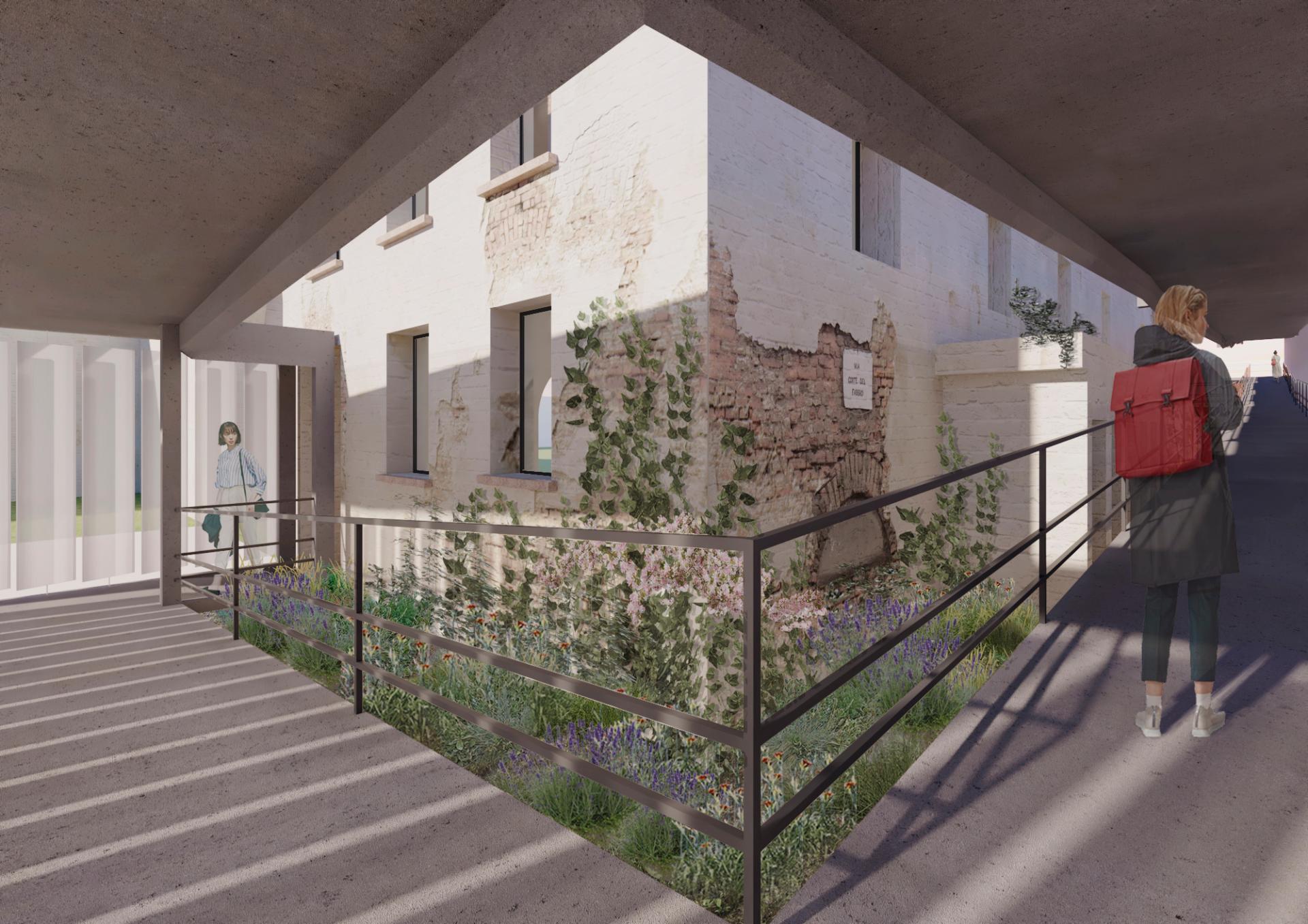
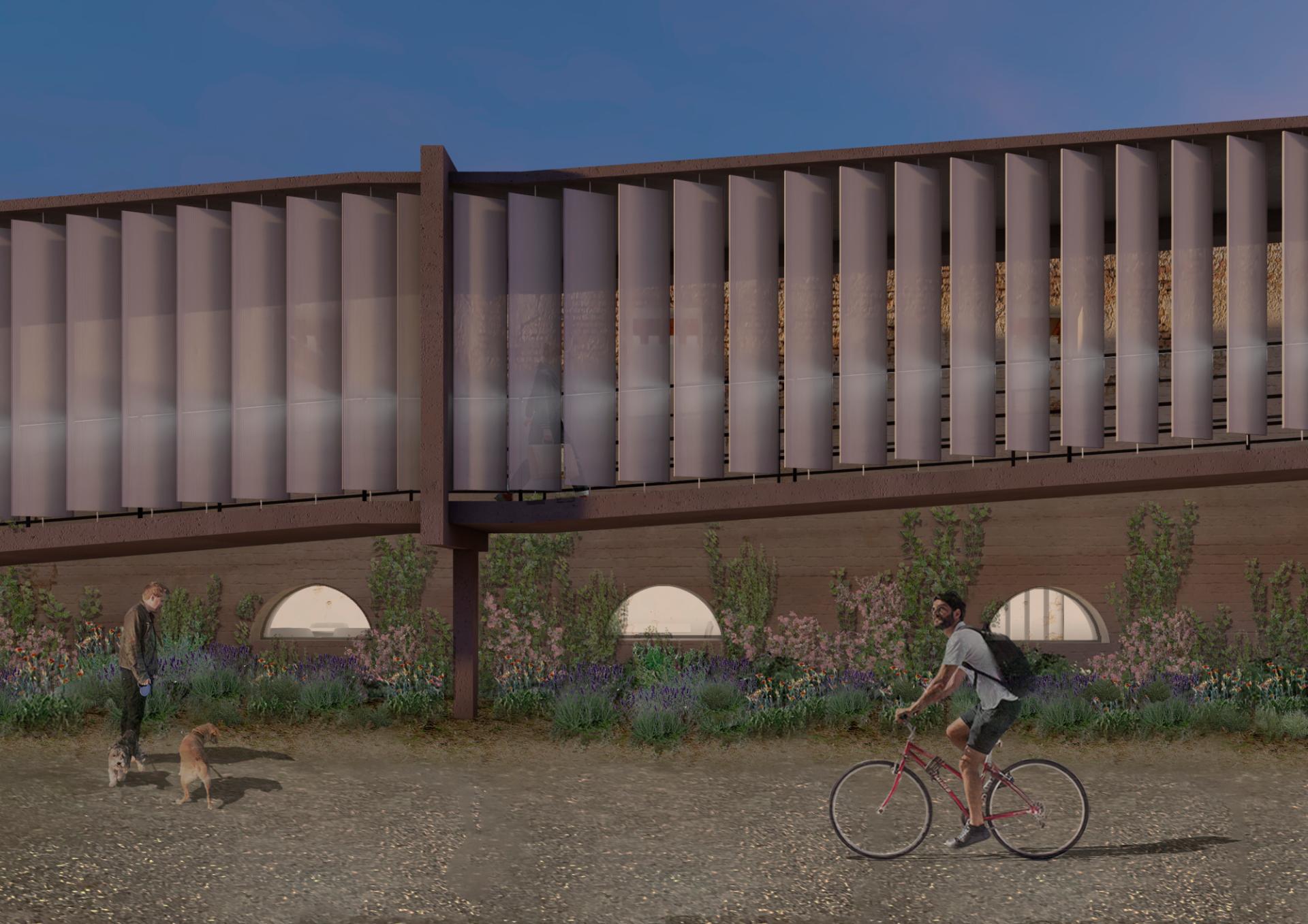
Our design takes place in the Meridiana building, which is part of an ancient Villa called ‚Villa Arconati’ in the outskirts of the north of Milan in Italy. When we think of this complex, it comes to mind as a very quiet and reserved place which really speaks for itself with all its history and the particular events that happened there in the past. Nowadays though, despite all its historical background, the Meridiana stands as an empty building which is just becoming more and more neglected over the years. The aim of our project at the Meridiana is to create an interesting and functional working place which involves the visitor through the actual historical building, highlighting it and making it as open and perceptible as possible. With this assumption in mind, we also actively decided to create a ramp along the whole north facade to connect the three levels of the project, instead of just using a common elevator, which was the actual task given, through our studio which took place at the Politecnico di Milano. The ramp is formed in its northern elevation by polycarbonate semi-transparent brise-soleils, placed slightly bevelled to allow or block the view, depending on the direction in which the visitor is walking. This ramp is therefore not only a useful tool to guide the visitor through the historical building in a respectful and utterly honest way, but it also represents an activator of a new experience in the whole complex and a key element in the design development of the project. The ramp is fully detached from the building, creating interesting details in the key points where the ramp and the building interact. That way, this absence of structural connections between the ramp and the body of the Meridiana highlights the respect shown towards the building, main aim of this project. The restoration of the existing structure was essential, but the intend was to keep the essence of the building alive, showing its uniqueness and strength.
Key objectives for sustainability
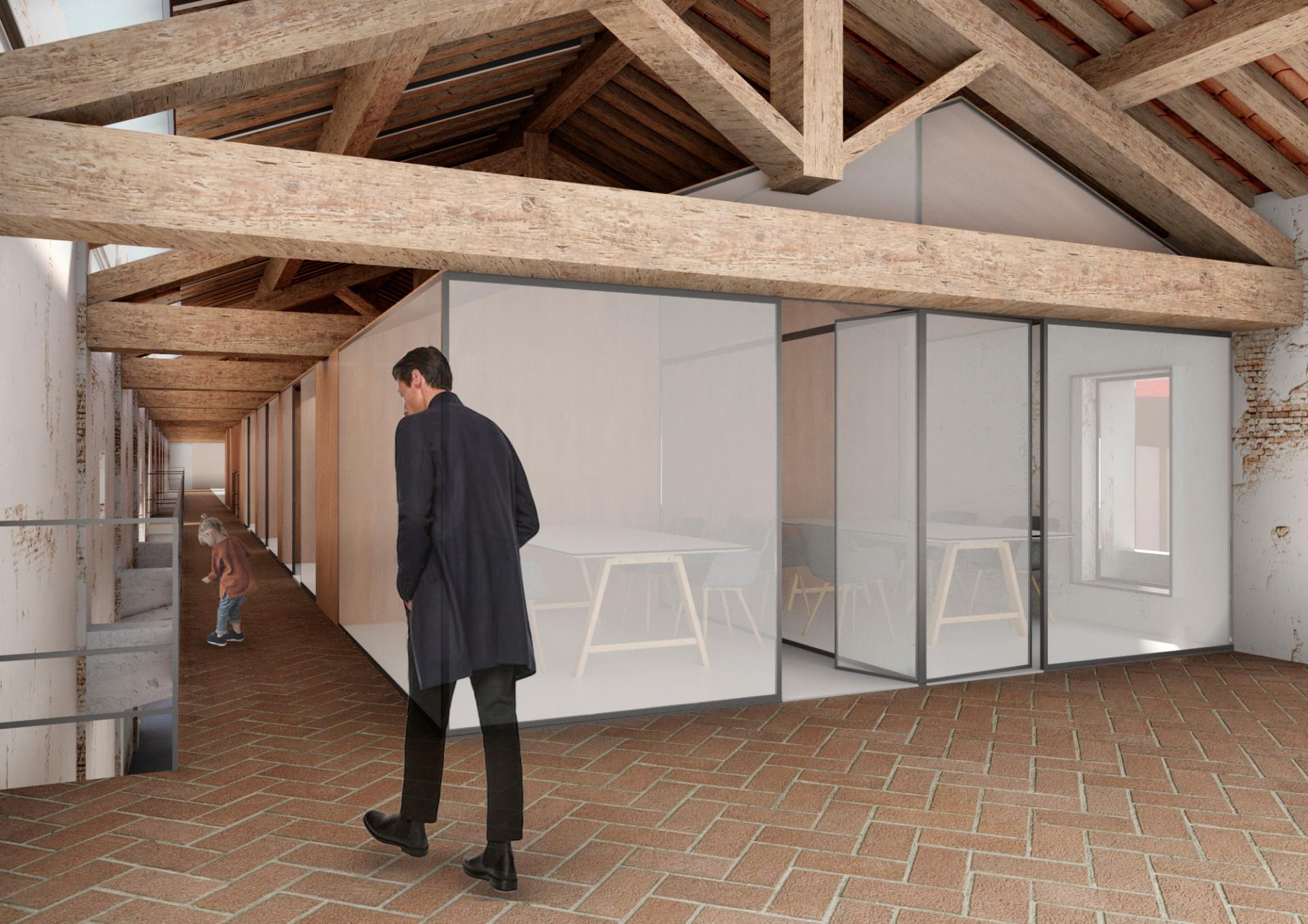
In our opinion, the use of sustainable materials is not the only way to achieve a responsible outcome, but moreover to rethink and to reuse an existing and apparently neglected building. Therefore it was very important for us to work with the existing building, respecting it by keeping most of the structure alive and maintaining its identity. For example restoring the existing facades, windows, flooring, wooden structure and plasters to keep most of the original characteristics alive.
Key objectives for aesthetics and quality
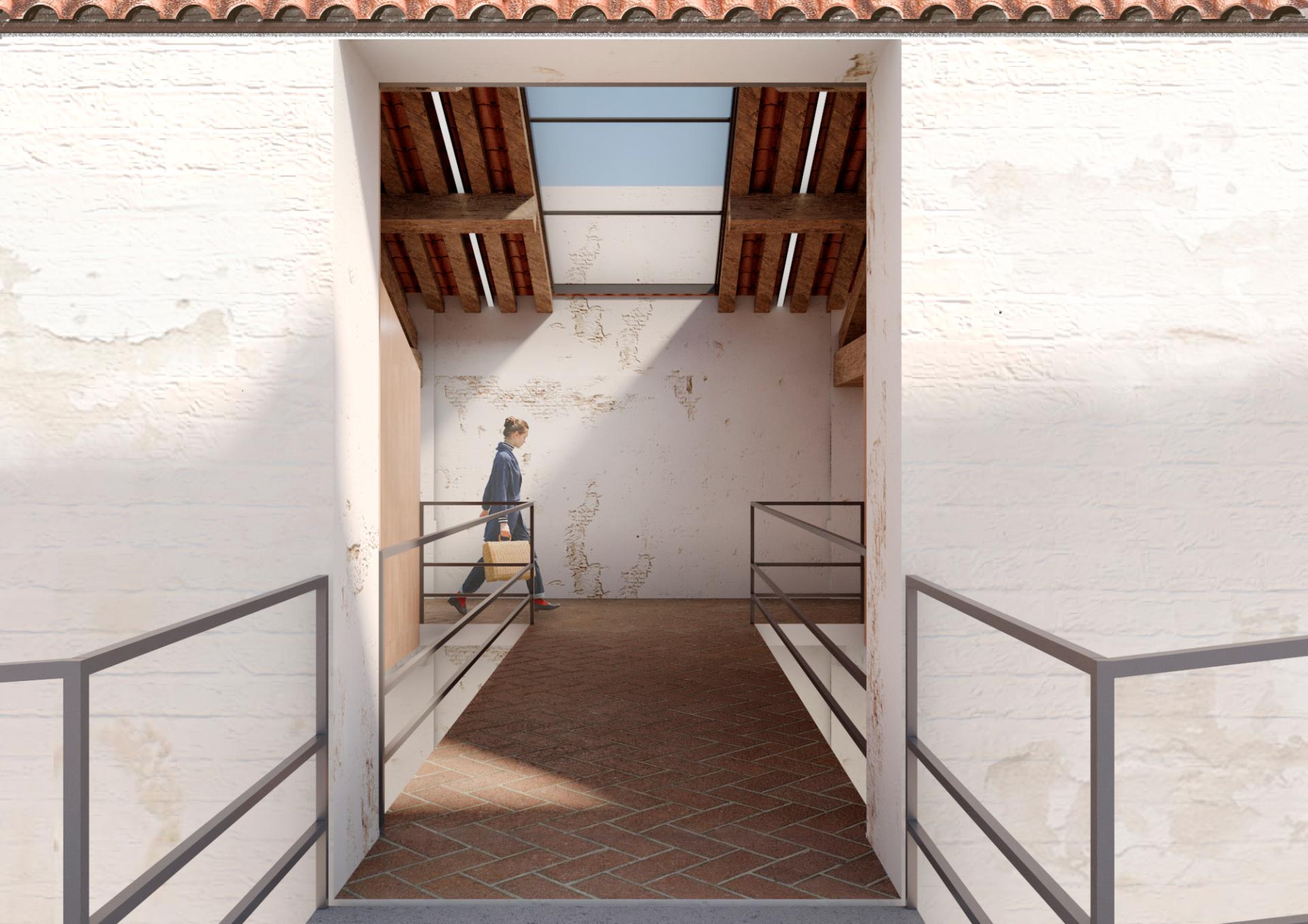
Our designed ramp is inserted in the pre-existing context, not only as a useful tool to guide the visitor through the historical building in a respectful and utterly honest way, but it also represents an activator of a new experience in the whole complex and is a key element in the design development of the project. We like to consider this new experience as a Corbusian ‘‘architectural promenade’’ composed of three essential elements: firstly, the creation of an entrance that arouses the curiosity of the visitor and pushes him to go beyond, secondly the production of multiple points of view along the path and finally, the continuity between the fragments and the architectural unity.
To achieve this strong and perceptible whole, different subtractions inside the building are generated to connect the levels, for instance the vertical subtractions along the corridor of the southern inner facade. These vertical cuts are creating not just a long continuity inside the building and allowing several visual connections, but moreover, they fill the building with natural light, since the original southern facade actually has very few openings towards the exterior.
Key objectives for inclusion
The ramp was the key point of the experiential and poetic aspect of the project, but moreover covers any kind of mobility necessities, including all social groups. As a result, the circulation in the interior is quite simple and highly supported by the presence of the ramp, since together they create a circular flow which allows different experiences inside and outside.
Innovative character
To ensure functional working and conference rooms, the ‘box-in-box’ concept is applied for the enclosure of these spaces. The boxes mimic the shape of the existing ceiling, establishing already a strong connection with the historical building. The semi-transparent divisions, made out of nylon scrim and framed by a subtle black metal structure, have a light appearance, while the wood chosen for the roofs and the inside walls ensure a warm and comfortable working environment. The flexible working areas can be enlarged and reduced according to its function and use by means of the internal wooden fins, which are clearly linked to the brise soleil in the ramp in form and function. In the end, this project aims to create a new functional and updated version of the Meridiana building that explores the various experiences connecting inside and outside and creates warm, comfortable and open working possibilities, in a very innovative manner.