BIO-INSPIRED CIRCULAR FACADE RENOVATION
Basic information
Project Title
Full project title
Category
Project Description
Using the respiratory system of cricket as inspiration for the facade renovation design and technique, this proposal improves the energy efficiency of social dwellings in the Netherlands by reusing wood materials from demolition.
Firstly, it will be performed the addition of wood fibre insulation throughout all the external wall; and secondly, the addition of a bio-inspired open-joint ventilated facade with a natural air circulation that cools the building during summer.
Project Region
EU Programme or fund
Description of the project
Summary
Nature creates sustainable environments and surrounds us with answers to most human challenges since it has been evolved for millennia into adequate solutions.
Therefore, using the respiratory system of cricket as inspiration for the facade design and technique, this study proposes improving the energy efficiency and thermal comfort of a common social dwelling typology in the Netherlands by reusing waste materials from demolition.
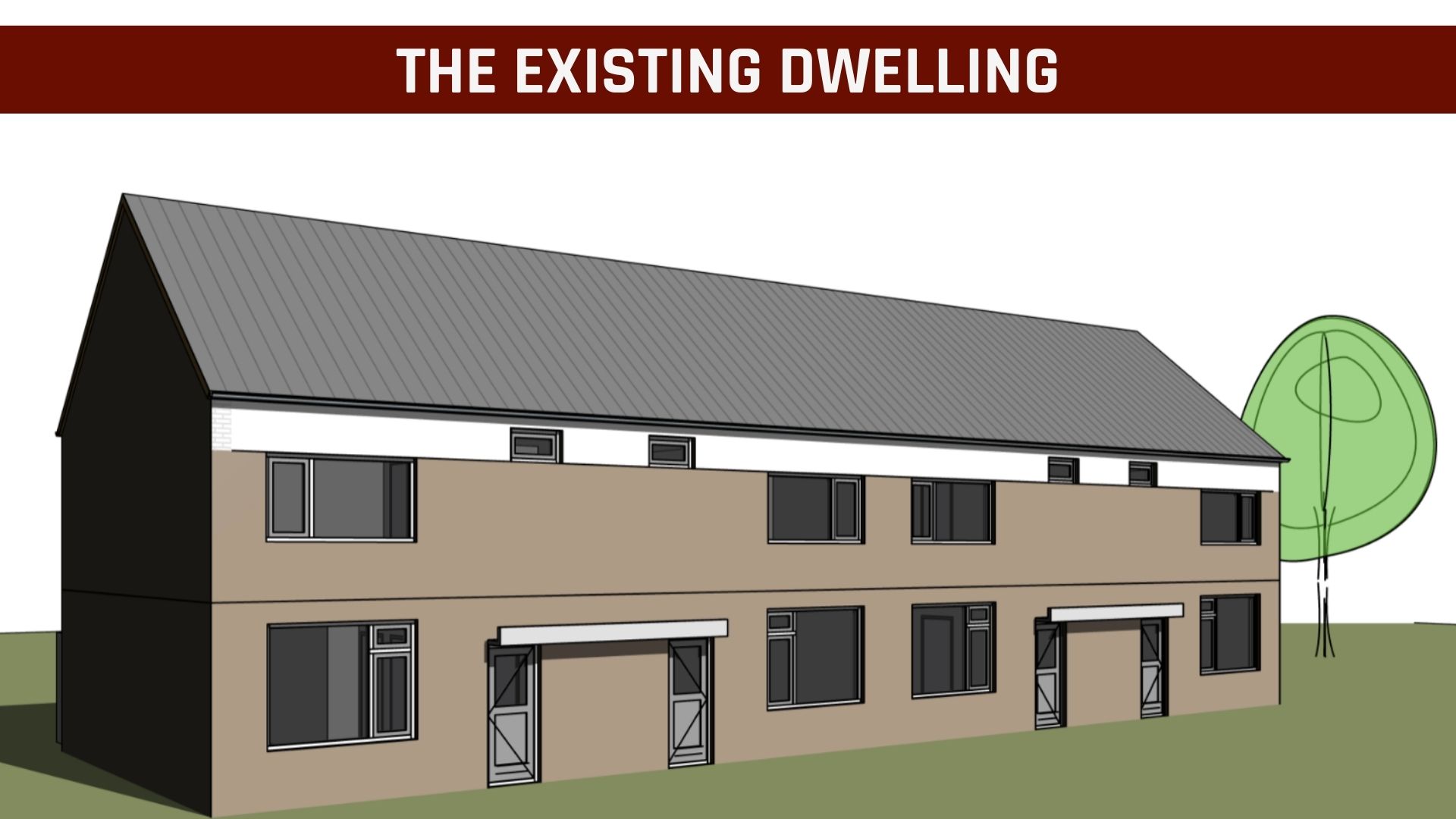
The studied social dwellings are characterised for poor energy performance, with a low insulation level. Therefore, focusing on improving these dwellings thermal and energy performance, the proposal is divided into two parts:
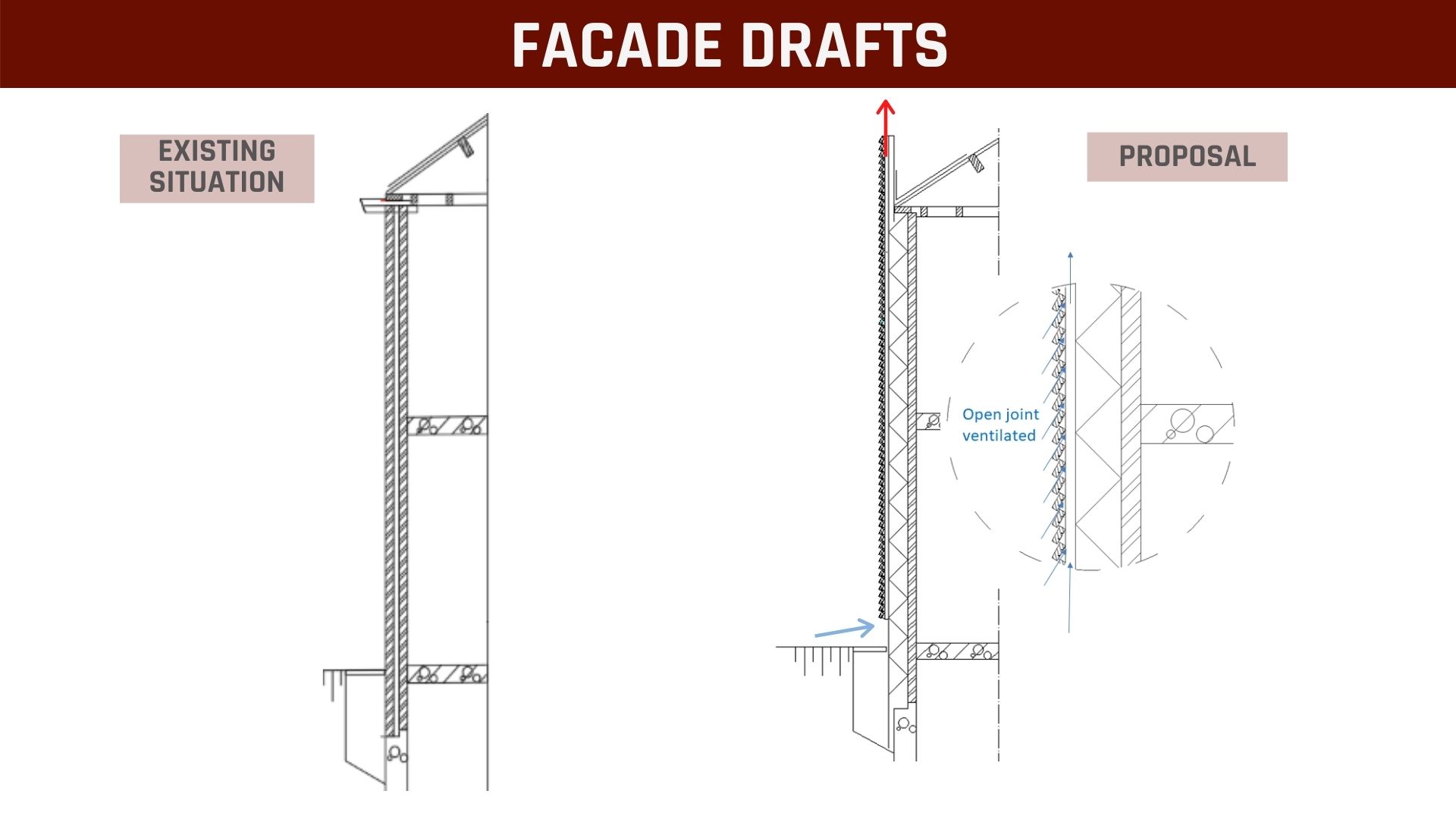
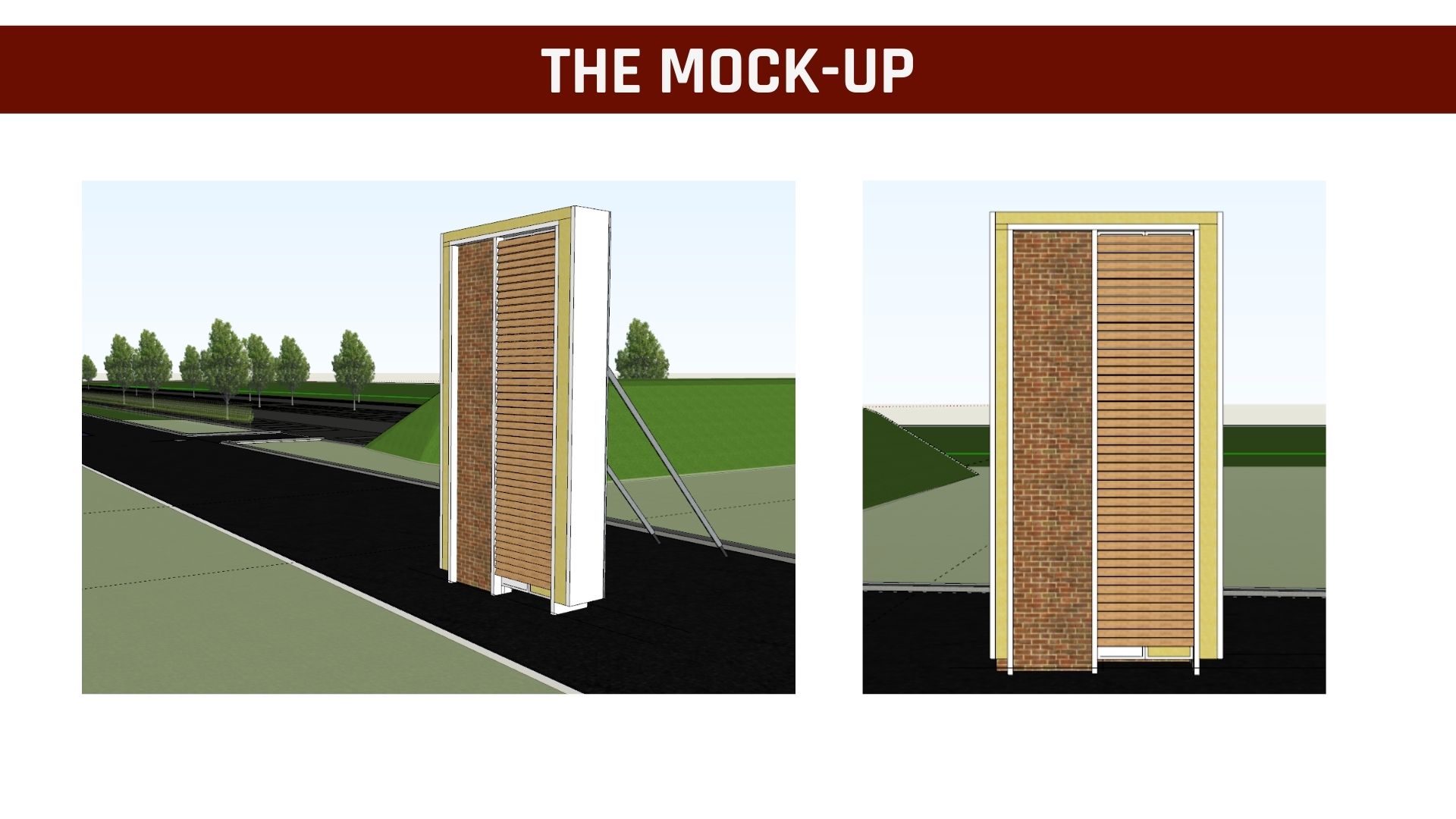
Firstly, the addition of insulation throughout all the external wall; secondly, the addition of a bio-inspired open-joint ventilated facade leading this insulation, with an air cavity between them where the air can circulate and cool the building during summer.
Due to climate change, average temperatures have increased by 1.7 °C in the Netherlands over the past century and already reached 40oC in 2019, with collateral effects on the indoor environment and energy consumption for cooling in summer.
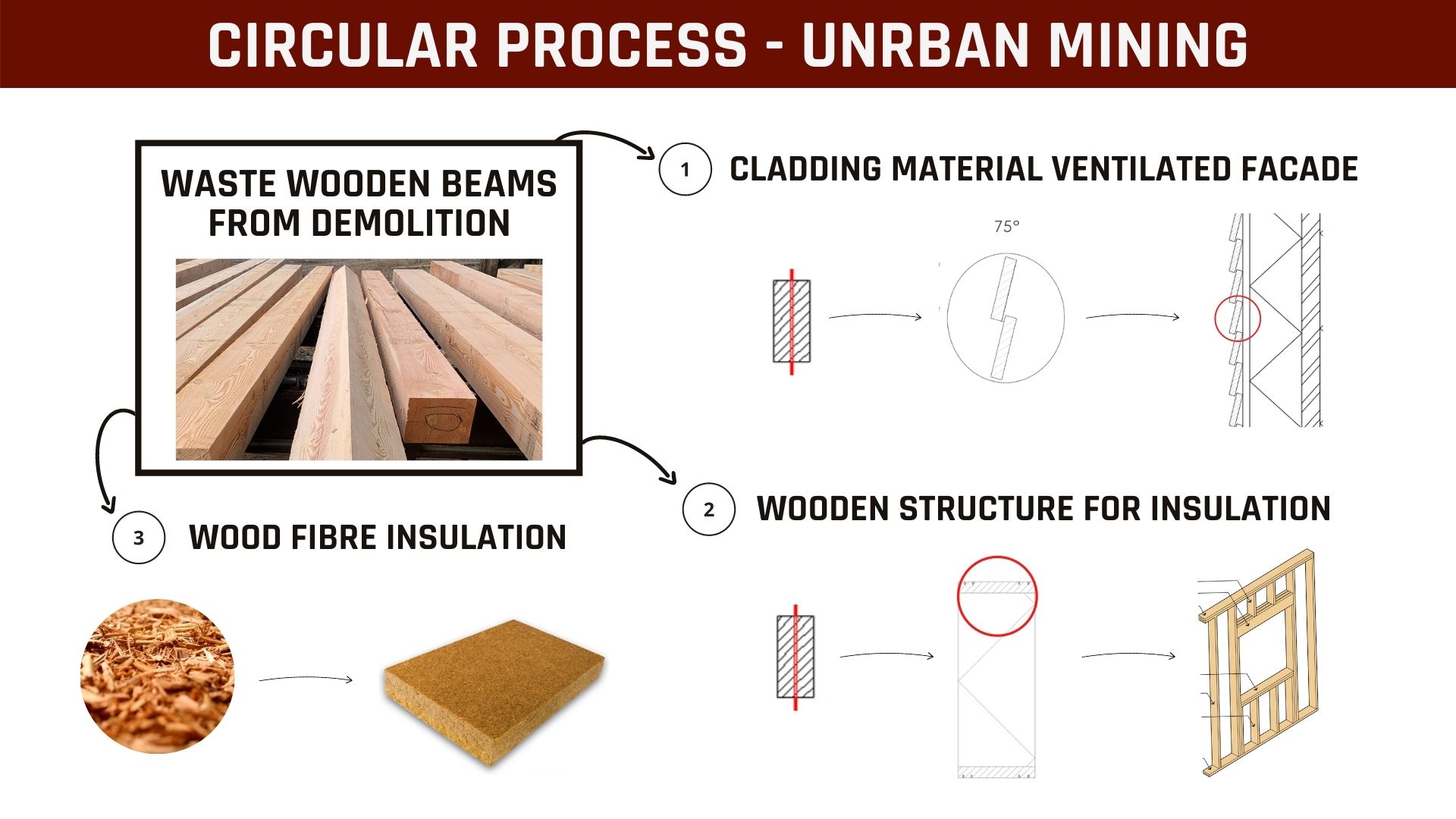
Besides improving the energy efficiency of those social houses, the proposal also focuses on making the built environment more circular. Therefore, all the renovation proposal was creatively designed using wood from demolition in three ways:
- Wood fibre insulation: reuse the wood from demolition as wood fibre insulation and add it throughout the exterior wall.
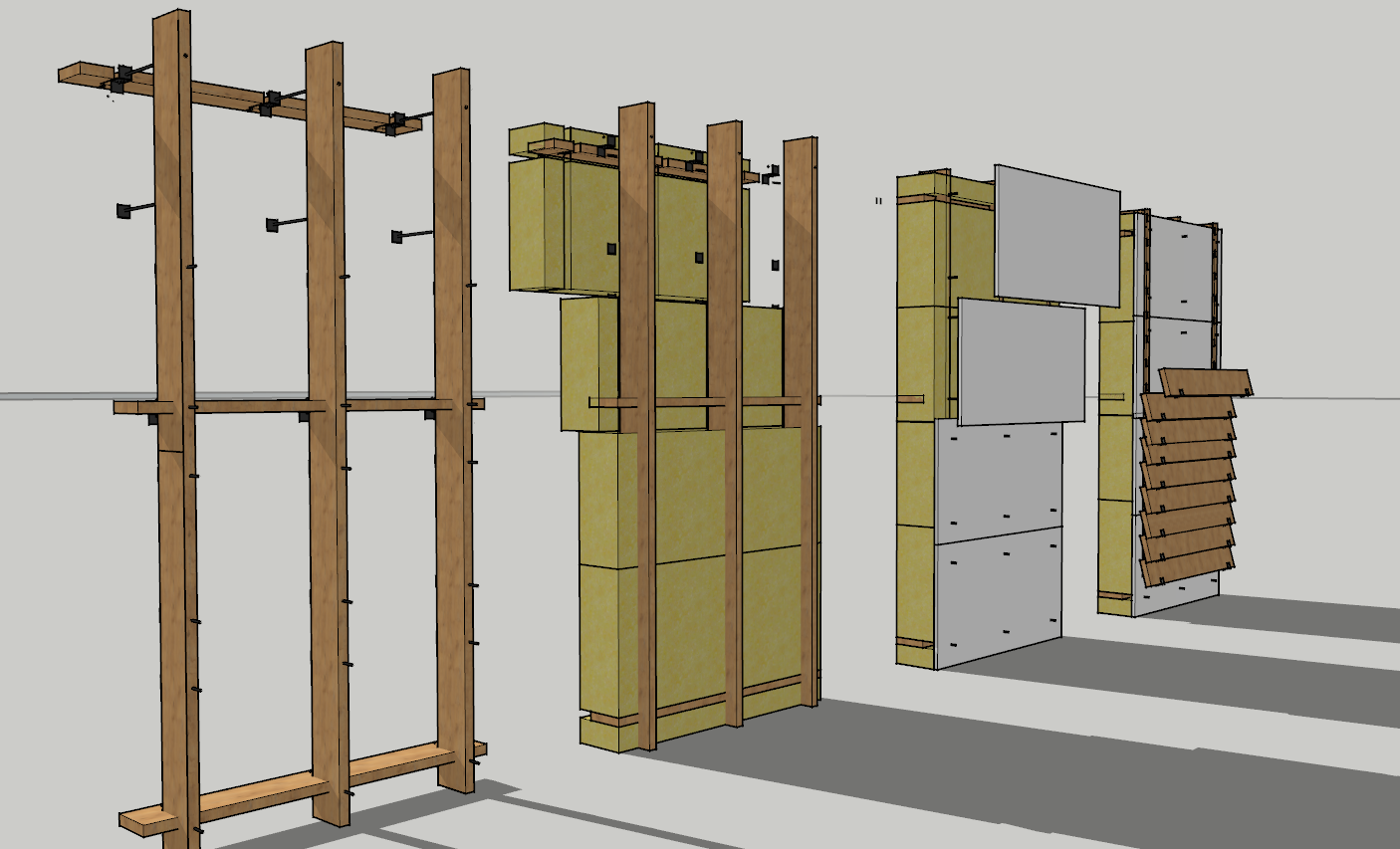
- Wooden structure: the proposal also includes a structure to support this insulation throughout the facade. Therefore, the wood beams from the demolition will be cut and reused (as less processed as possible) as a structure material for insulation.
- Cladding material for ventilated facade: the wooden beams will be cut, transformed into slabs, and used as a cladding material for the open-joint ventilated facade.
Key objectives for sustainability
Buildings are responsible for up to 40% of energy consumption in the European Union, and more than 60% of this energy comes out of fossil fuels, with an alarming collateral carbon emission rate. Moreover, construction waste accounts for up to 30% of all waste generated in Europe and 50% of all extracted materials are attributed to buildings nowadays. In some Dutch regions, like Parkstad, these challenges coincide with the challenge of a large demolition assignment with collateral material availability.
In face to this appalling scenario, the proposal consists of developing a solution to improve the energy efficiency of common typology dwelling in the Netherlands by facade renovation, reusing waste materials from demolition.
In this sense, the proposal reduces the energy required to maintain the inhabitants comfort conditions and reduces the energy required for materials extraction and manufacturing. All this energy reduction will also considerably lower the carbon emission in the built environment. Furthermore, the proposal also drives a solution to avoid the disposal of construction waste in landfills.
Finally, it is known that trees are an essential carbon sink by filtering CO2 out of the air and absorbing this in its biomass. Thus, the longer a wood material remains in the application, the longer the CO2 is removed from the atmosphere. Therefore, the proposal also presents a solution to extend the lifespan of wood and consequently improve the effectiveness of its carbon storage.
Key objectives for aesthetics and quality
One of the easiest and most effective ways to conserve energy in buildings is through insulation. Thanks to the high porosity of insulating materials and consequent low density, they can immobilise dry air and confine it inside, thus being characterised by high thermal resistance. The wood fibre insulation was the material chosen to be implemented in this study due to its remarkable thermal resistance (λ = 0,036 W/mK), low embodied energy related to the manufacturing and considering the wood availability in the demolition site. Thus, the main objective of implementing insulating material in the building is to reduce energy consumption for heating or cooling by increasing the thermal resistance of the building envelope. Therefore, the insulator contains heat loss in winter climates and excessive heat gain during summer.
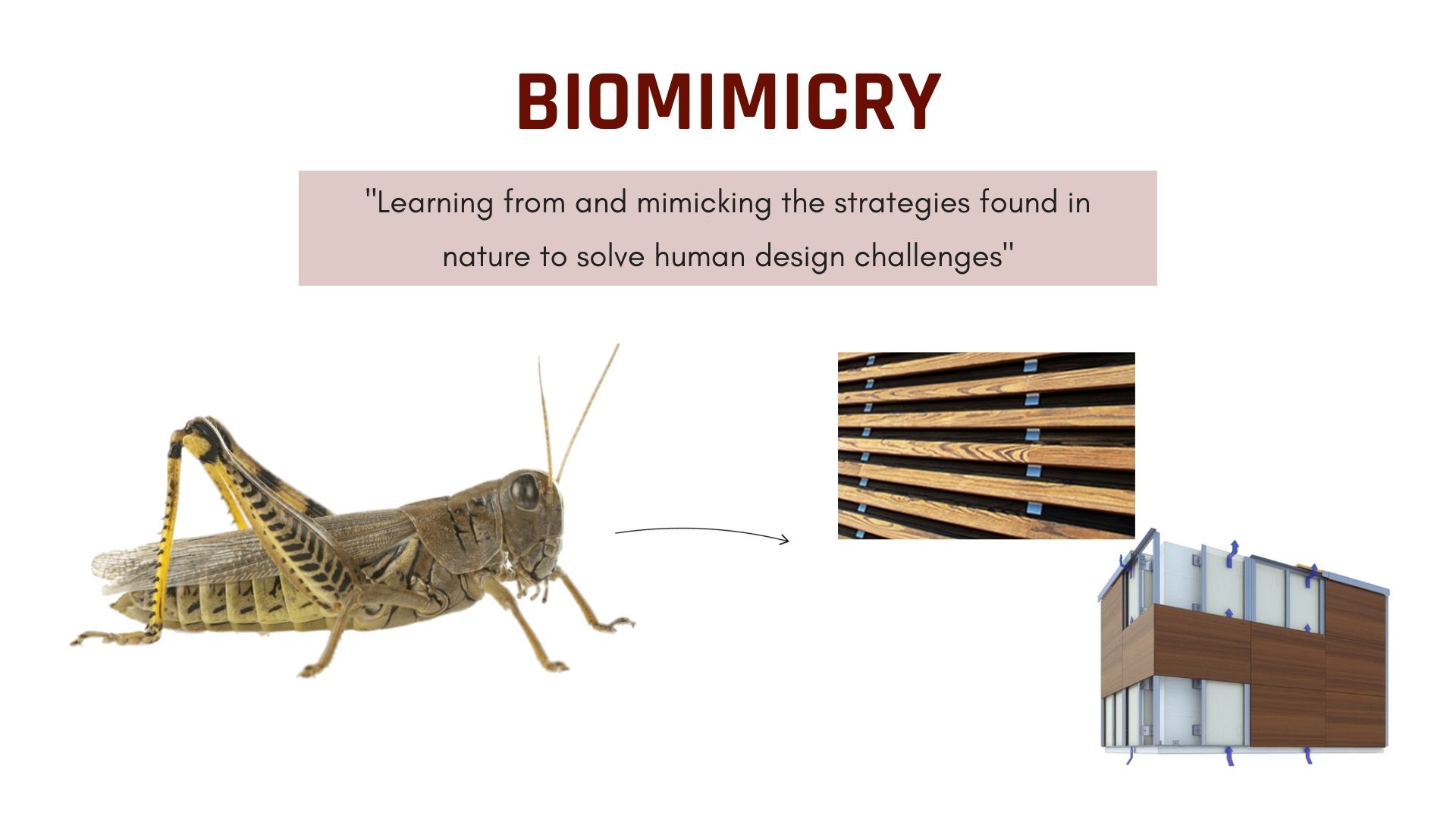
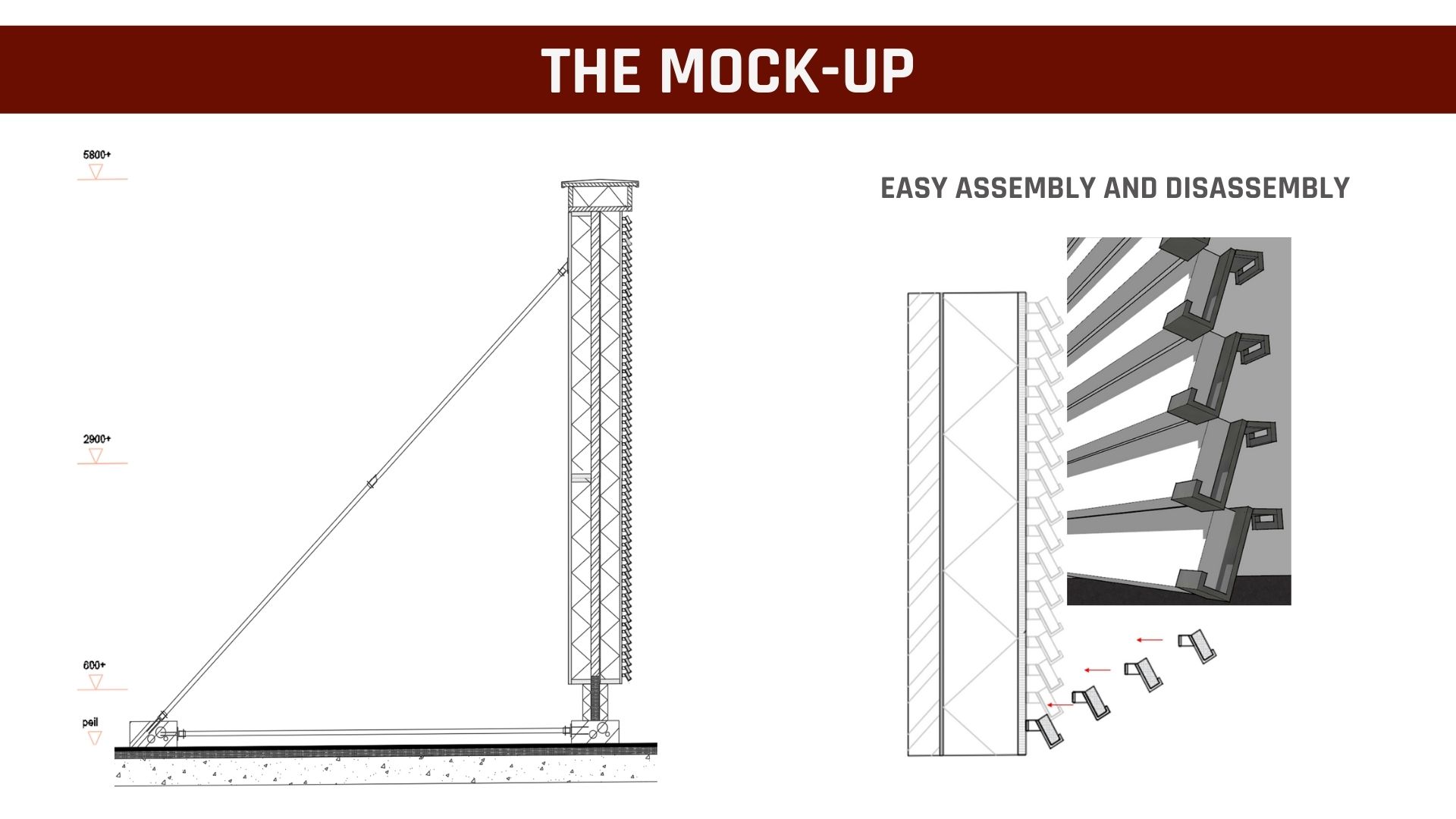
The second part of the proposal is the open-joint wooden ventilated facade inspired by the respiratory system of a cricket. Due to its opening and closing system in their abdominal pores, the cool air enters through its bottom vents, and the air pressure pushes out the hot air through the top vents, and the respiration performs. The proposed open-joint ventilated facade works similarly. The proposal consists of an original layer, an air cavity, and an additional external skin. The technique of the system works with the cool air entering through the bottom opening and the openings designed throughout the facade height, and the warm air is pushed out through the top opening, preventing overheating during warm periods. As previously mentioned, the cladding material of the external skin is also made from the wood beams discarded from demolition.
Key objectives for inclusion
Energy poverty refers to a situation where households do not have access or cannot afford to have the vital energy or energy services to achieve daily living requirements. Energy poverty is an alarming problem in Europe and worldwide, causing deaths and anger at the electricity suppliers' artificial and "absurd pricing structure" to increase their profits.
Moreover, it is known that the Netherlands has one of the largest social housing sectors in Europe, in which those social houses are mainly meant for people with lower income. In this sense, when reducing the energy consumption for heating and cooling proposes by renovating Dutch social houses, this proposal will consequently reduce the energy costs, benefiting this population with lower income. Thus, the proposal could not only contribute to avoiding families struggling with their housing expenses but also combat energy poverty and serve as an inspiration worldwide.
On the other hand, most dwellings in the Netherlands still do not have air conditioner systems, and consequently, the thermal comfort in the houses is becoming a big issue over the years. Therefore, by improving the thermal performance of the dwelling, the proposal also enhances the well being of the inhabitants, which is intimately related to productivity and health.
Finally, the proposal is based on an easy assembly and disassembly method to avoid tenants and neighbourhood disturbance as little as possible and guarantee a fast and clean construction. The strategy consists of using pre-moulded insulation structure modules, and the cladding material for the ventilated facade will be placed using a hook system.
Innovative character
The first innovative character of the concept is regarding "Biomimicry". This term can be described as "Learning from and mimicking the strategies found in nature to solve human design challenges". Nowadays, biomimicry is applied in many examples of human's daily life, such as velcro and aeroplanes. These strategies have also been extended to the built environment field and bring ample opportunities for innovation in the engineering and architecture design discipline. Thereby the following idea: using the respiratory system of cricket as a design to enhance thermal performance, flexibility and reduce energy consumption.
The second innovative character is the concept of "Urban mining" implemented in this study. This term is closely linked to the circular economy and brings an idea contrary to the classical "take-use-disposal" approach. It represents the process of reusing and recovering the waste materials from urban areas, based on the fact that most of the materials incorporated into cities are disposed in landfills, incinerated or downcycled into products of much lower value at the end of its lifespan. Therefore, the proposal focused on developing a creative reuse for the wood from demolition from a shirking area in the Netherlands called "Parkstad", where several buildings are being demolished.
Finally, several studies have been conducted related to buildings energy efficiency, but they barely cover the material aspects and the embodied energy. However, as the Circular Economy is gaining momentum and the balance between operational energy and embodied energy is shifting, this aspect is becoming increasingly relevant. Therefore, this proposal covers not only the operational energy and energy efficiency of the buildings, but also the materials aspect and the embodied energy related to the material manufacturing and the dwelling renovation.