El Corro
Basic information
Project Title
Full project title
Category
Project Description
"El Corro" is a collaborative artistic proposal from its own conceptual origin to its preparation and assembly for an authentic no place. An installation designed for inclusion that encourages people to meet, play and rethink public spaces and their multiple possibilities.
Project Region
EU Programme or fund
Description of the project
Summary
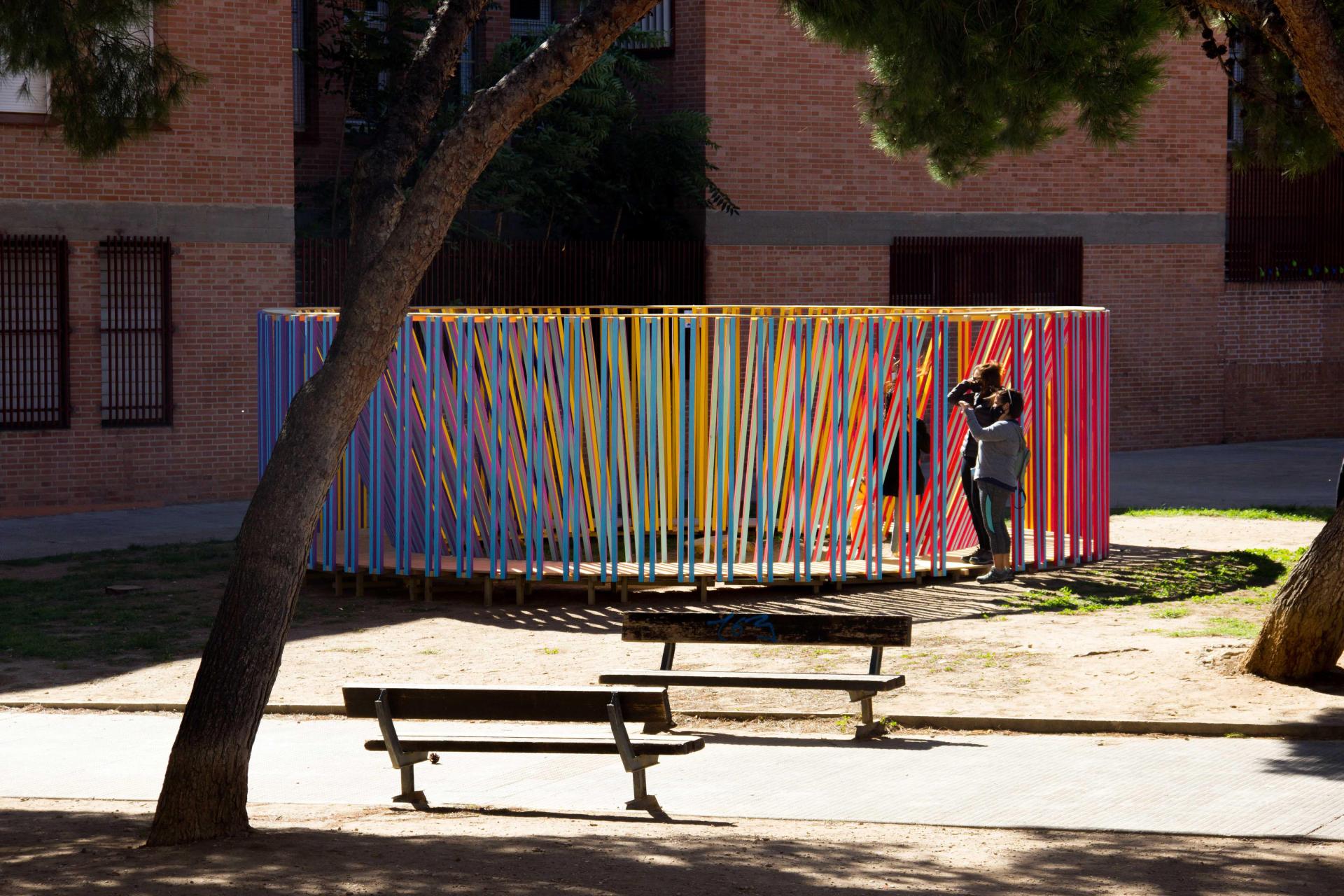
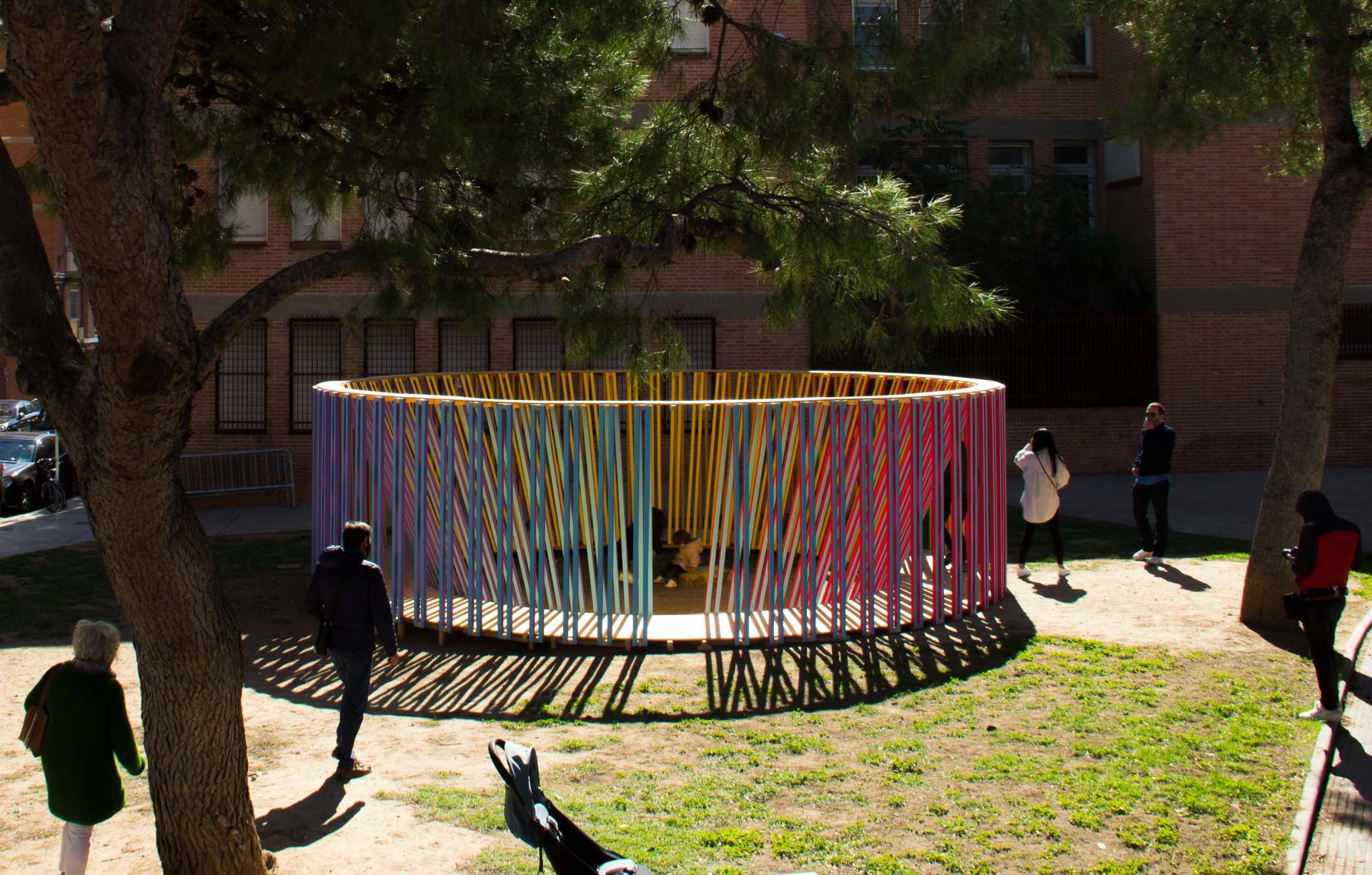
El Corro is the artistic installation created as a result of a process that incorporates the participation of people both in the design and execution phases.
Thanks to this, the work is coherent with the place and with the community that lives it, responding to the demands and wishes expressed by the neighbors in the design phase. This fact is a first step in the process of environmental recovery of the environment so that it ceases to be a "no place", lacking even an official name, and becomes a reference public space for the neighborhood.
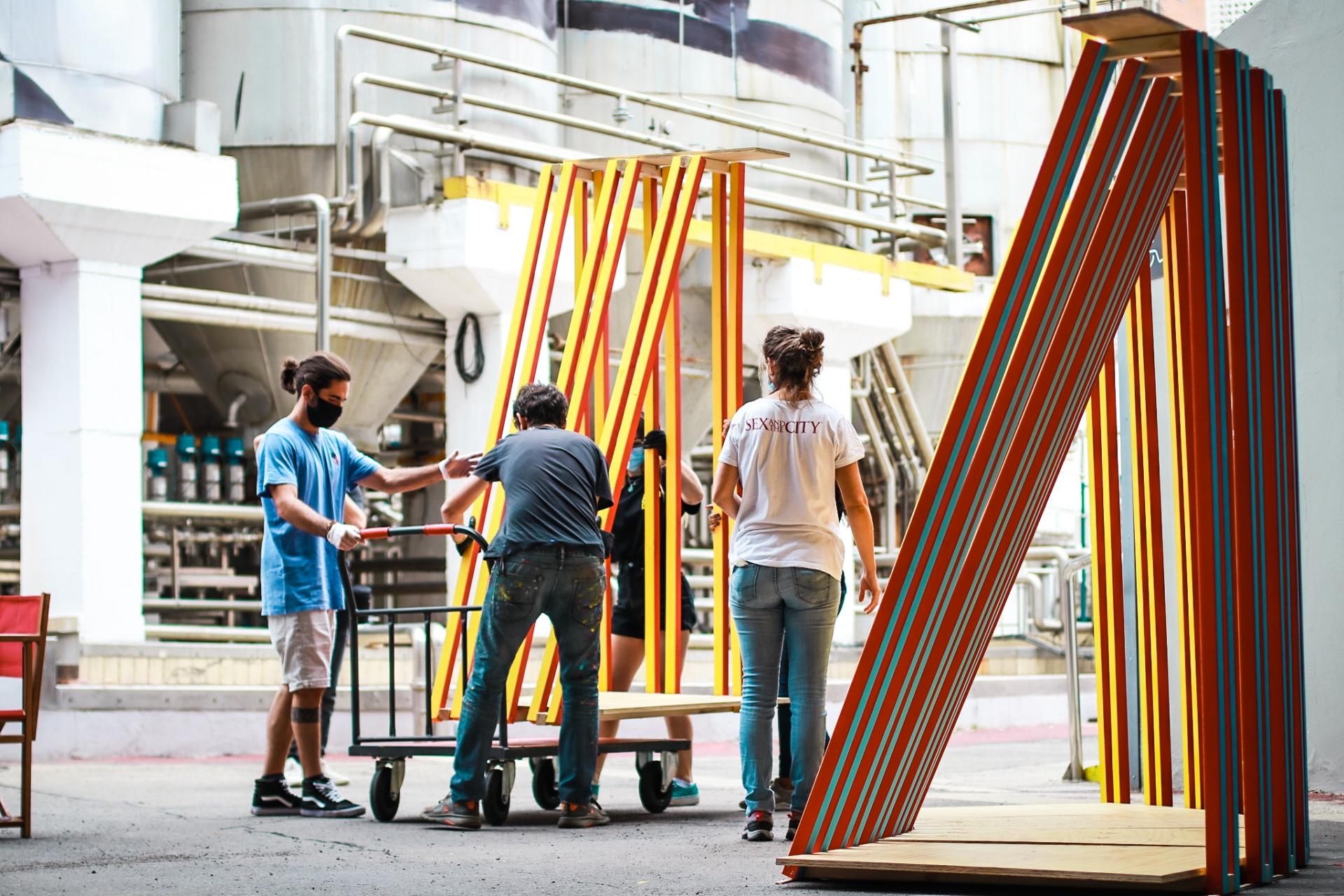
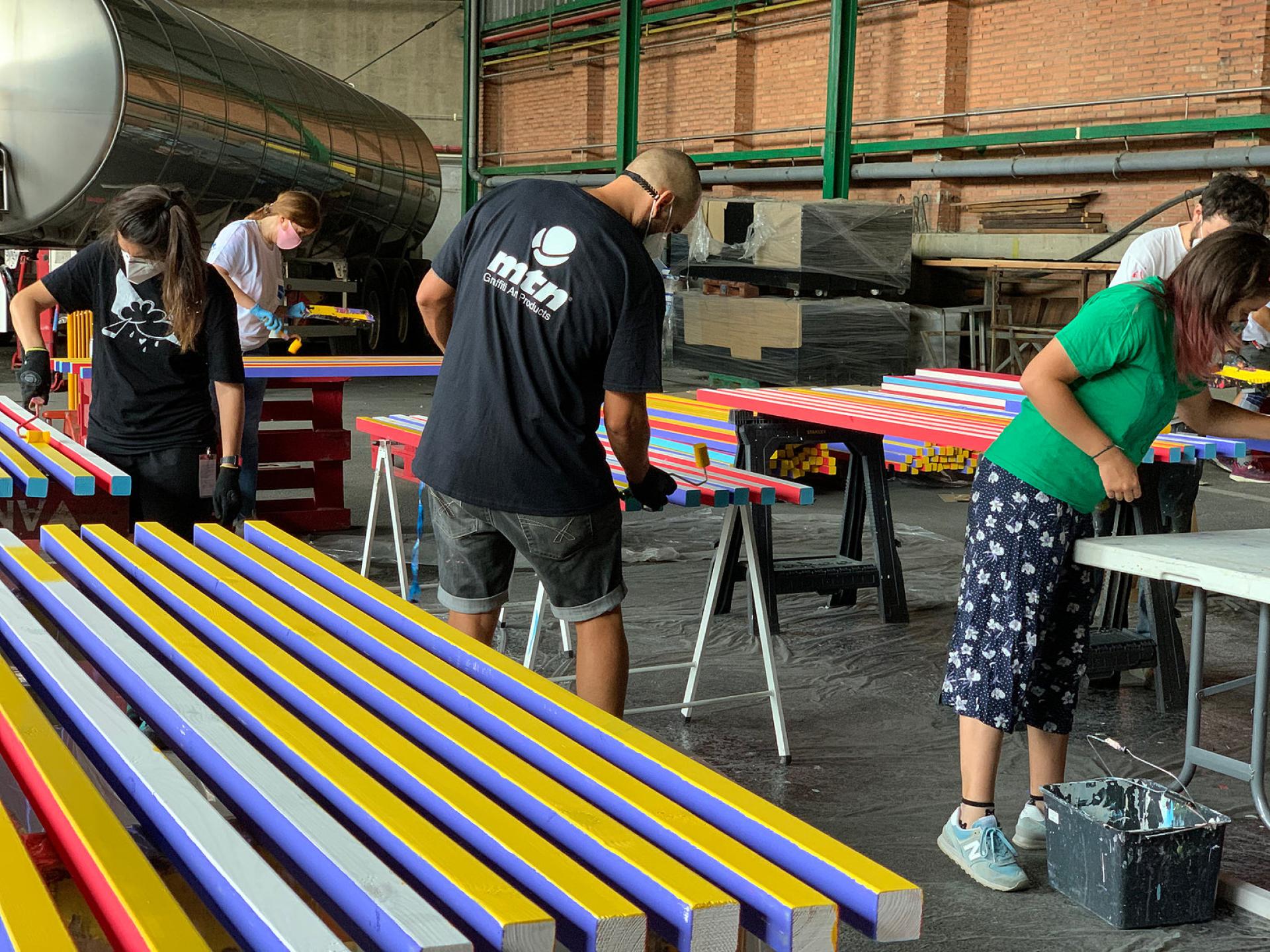
In this sense, incorporating people into the construction process allowed them to value the work and dedication that a work of these characteristics requires, for which they developed a very strong sense of belonging to the work. To achieve this, an execution process was designed in which all the tasks were very simple and anyone could perform them, only minimal guidelines and support were necessary.
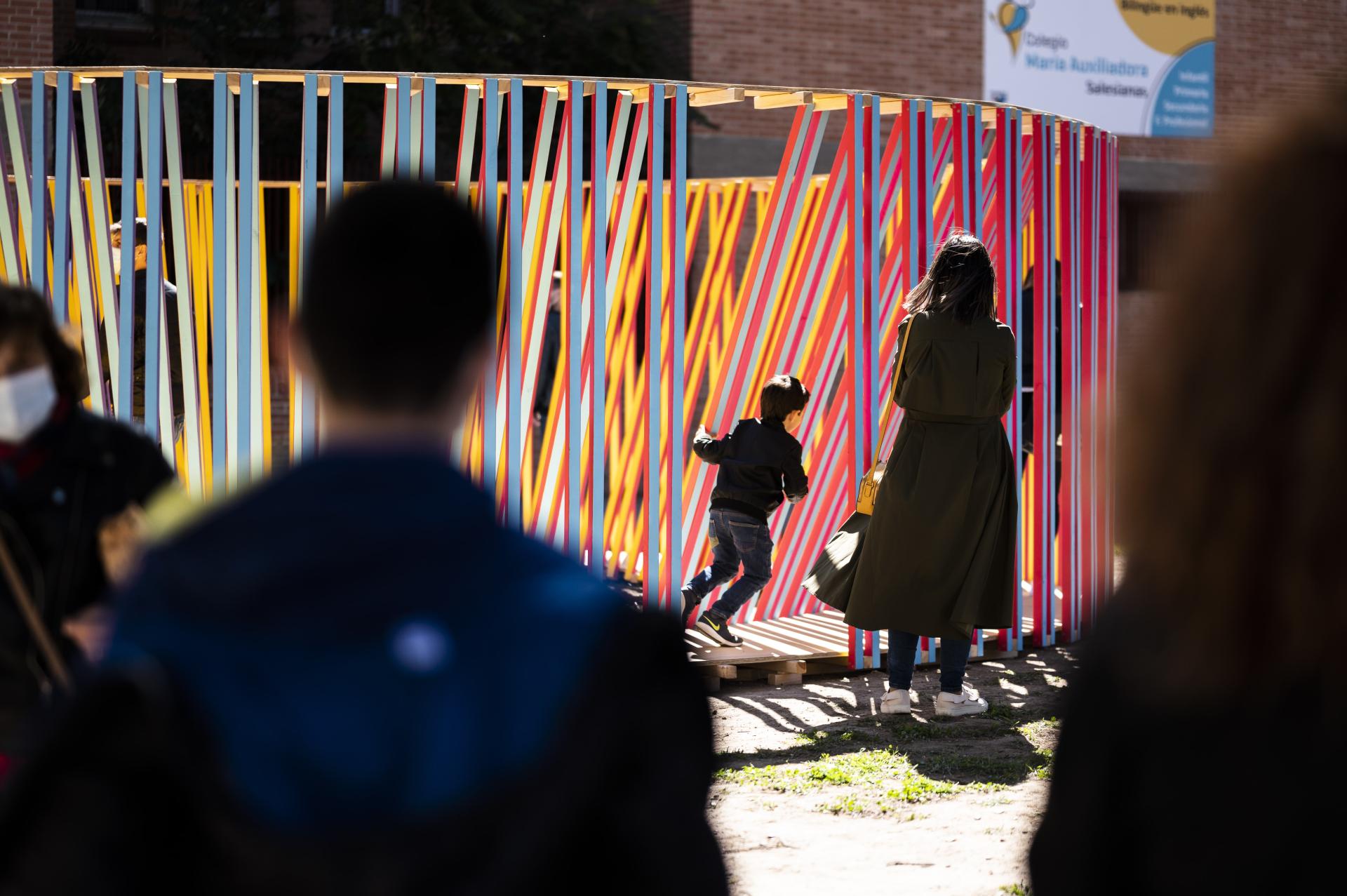
Once the work was installed in the nameless square, it became part of the life of the neighborhood and, in particular, of the school next to which it is located. In fact, both the form of the work and its title are inspired by the typical scene that takes place at the entrance and exit of schools.
The last learning that El Corro left us was that of its inclusive potential for people with neurodevelopmental challenges. For this reason, once the XV edition of the AsaltoEl Corro Festival ended, it was dismantled and assembled again at the Ángel Riviere School of Special Education in Zaragoza. There the work lives a second life in which its spatial, material and chromatic characteristics favor the pedagogical, therapeutic and recreational activities that are carried out.
This new reading of the work, as an element that enables the inclusion of people with neurodevelopmental challenges, allows us to see the potential it has for the right to a quality public space (a esthetic, symbolic) to be enjoyed by more and more collective.
Key objectives for sustainability
In El Corro there are three elements that define the project from the point of view of sustainability;
1- Budget and location: The commission consisted of a work in the public space. According to our way of understanding our work, this requires an adaptation in terms of scale that requires certain dimensions. In this case, the spatial and visual impact of the work was maximized through the choice of wooden slats as the main element, which allowed to get the most out of the budget.
2-Design: El Corro was designed optimizing the available resources so that hardly any waste was generated since different construction pieces were obtained from the same strip.
3-Second Life: The greatest virtue in terms of sustainability is that the construction system of El Corro allows it to be easily assembled and disassembled. Thanks to this fact, once the Asalto Festival was over, the work could be moved to its current location in the Ángel Riviere special education school.
4-Maintenance: The design of El Corro allows us to replace damaged elements with new ones in a very simple way, so that the work can always be in good condition.
Key objectives for aesthetics and quality
El Corro is a project designed from the contributions of the residents of the neighborhood combined with our own aesthetic language. In our view, this fact legitimizes the result obtained above other considerations.
That said, there are two aspects that we want to highlight in terms of aesthetics and quality ;
1-In a very personal way, we consider El Corro part of an artistic investigation in which we combine the spatial with the plastic to generate chromatic devices in which the light and the movement of the viewer generate infinite possibilities of experimentation with the work.
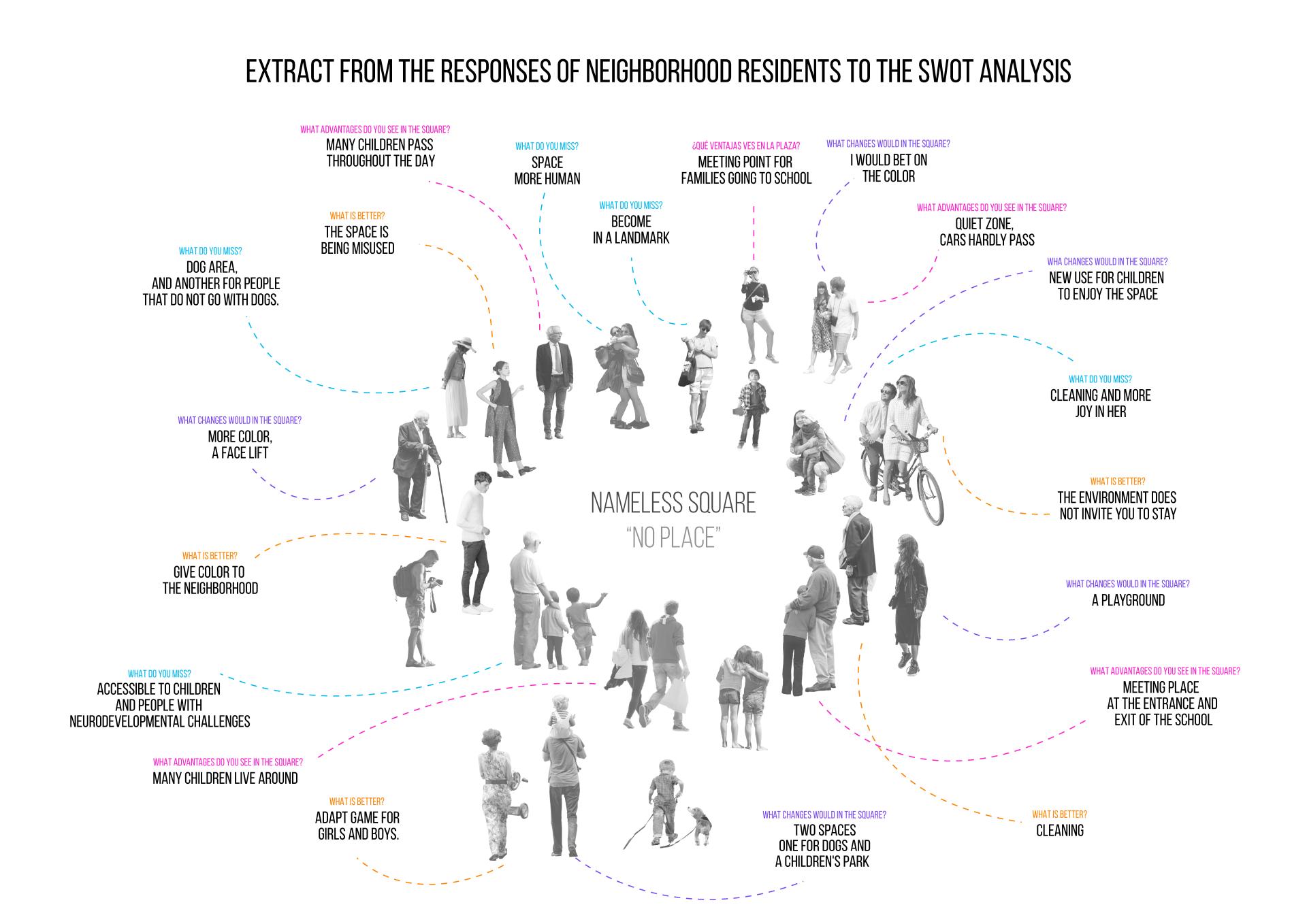
2-If we pay attention to what urban planning has traditionally offered to peripheral neighborhoods in aesthetic terms, we consider it a right and an urgent need to equate them with the most favored urban centers. Therefore, since we received the order, we had a clear need for a powerful aesthetic response in the proposal, which was accentuated when we received the responses to the survey and many of them pointed to the need for color, joy, visual references ... .
Key objectives for inclusion
Approaching the El Corro project in a participatory way allowed to achieve results in terms of inclusion from the beginning.
Thus, the entire process allowed different profiles of people to share spaces and activities. It also allowed us to recognize the need to equip the place so that children feel welcomed.
Therefore, adult neighbors, boys and girls, people from the neighborhood and from other parts of the city, artists who participated in the festival, etc ... at some point passed through the workshop or enjoyed El Corro.
However, the greatest potential in terms of inclusion is being achieved in the second life of the work. Thanks to the testimony of Yolanda (the neighboring director of the special education center) we knew that the aesthetic solution (the artistic language) that we had provided had value in itself to support the therapies and recreational activities that the students of the center carry out.
By way of reflection, we understand that an installation of this type is an open door for the inclusion of people with neurodevelopmental challenges in public space. In fact, we all have the right to use and enjoy a quality public space and in fullness and works like El Corro make it possible.
Results in relation to category
The co-creation of the project has helped neighbors get to know each other, dialogue and share their ideas, experiences and future expectations for the neighborhood.
The place where El Corro was located is a space between streets, without an official name, which has become a very deteriorated place due to its misuse and neglect by the administration. Neighbors lacked an adequate channel to convey their demands to the administration, so the El Corro project served as such.
The open design process made it possible to collect all the demands and make this situation visible (in the eyes of the administration). From this arose the commitment of the city council to give an official name to the place.
This process is a clear example of the reappropriation of the place and the redefinition of a space by a community. A consequence of this was the commitment made by the residents themselves to take care of the piece while it was installed in the unnamed square.
How Citizens benefit
This materialized in the design phase and in the execution phase, so that it can be said that the final work was designed based on the contributions of the people and the execution process was designed based on what could be done with the contributions of volunteers not necessarily trained in construction or plastic arts.
Participation in the design phase allowed us to incorporate the experiences and expectations of neighbors with the place, this gave us a much richer understanding of the environment and allowed us to adapt the proposal to the demands without giving up our artistic research.
Regarding the execution phase, having unqualified personnel for the materialization of the work led to the design of a work process in which each of the tasks to be carried out was very simple, so that with minimal instructions and a minimal accompaniment optimal qualities were achieved.
Innovative character
El Corro is an innovative project in two key aspects;
1-Open process: The entire process is open to citizen participation, so that both the final work and the execution process are designed to incorporate the knowledge, sensitivities, desires and capacities of the residents of the neighborhood.
2-Inclusion: With the formal response that was reached, in spatial, material and chromatic terms, a response was found to the needs for the use of public space for both boys and girls, without gender discrimination, and for people with challenges in neurodevelopment, without discrimination based on their physical or cognitive abilities.