SANDE THE HAPPIEST VILLAGE
Basic information
Project Title
Full project title
Category
Project Description
People need disconnection, well-being and sustainability. Meanwhile, our countryside is depopulated and abandoned, increasing the gap between rural and urban worlds. Sande is a village built around small Galician vineyards and which was known to be the happiest village in the area. We propose both a revival of these historic vines and a place for city dwellers seeking to resource. The aim is to ensure that rural activities in Galicia are socially, economically and environmentally sustainable
Project Region
EU Programme or fund
Description of the project
Summary
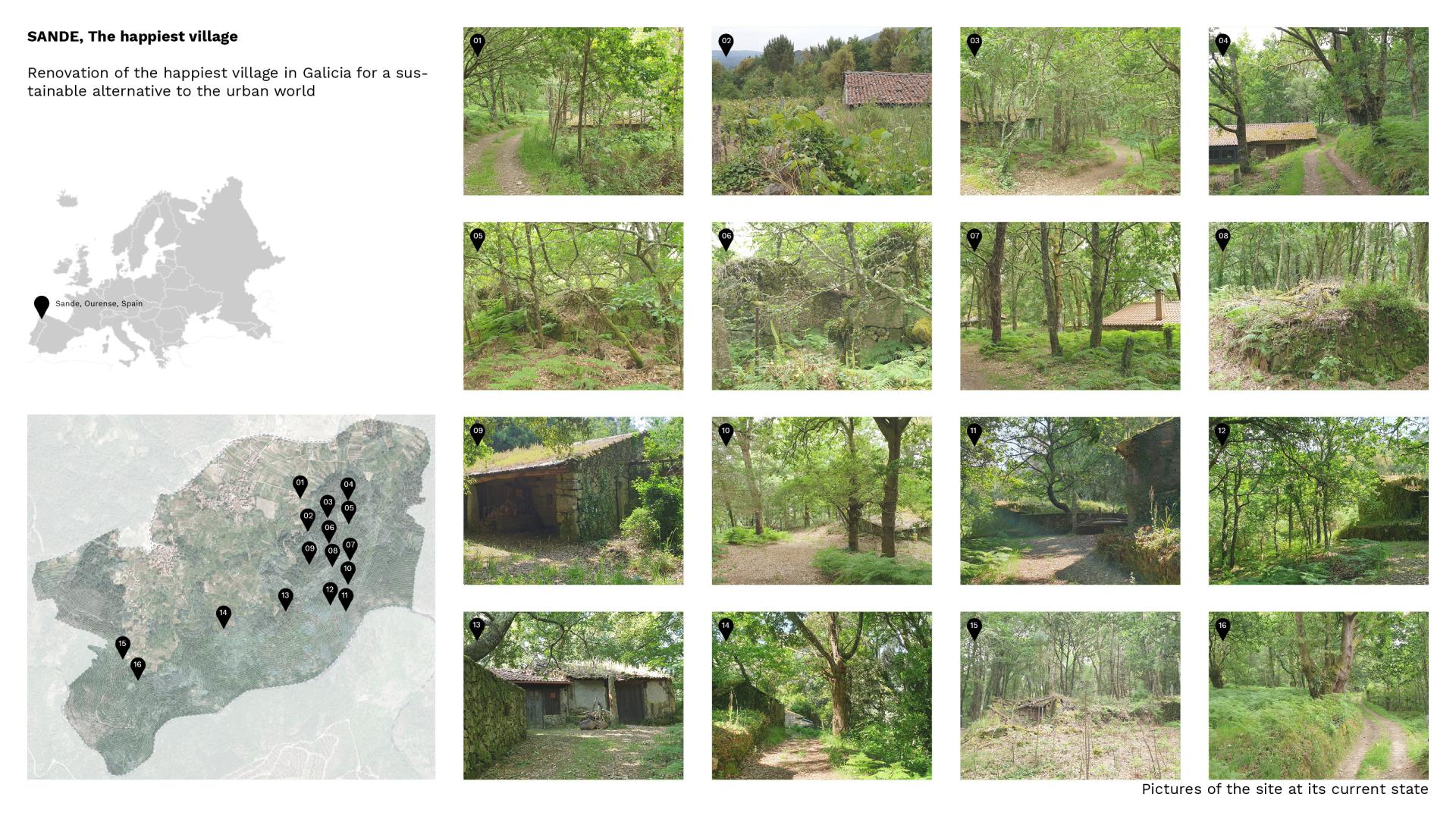
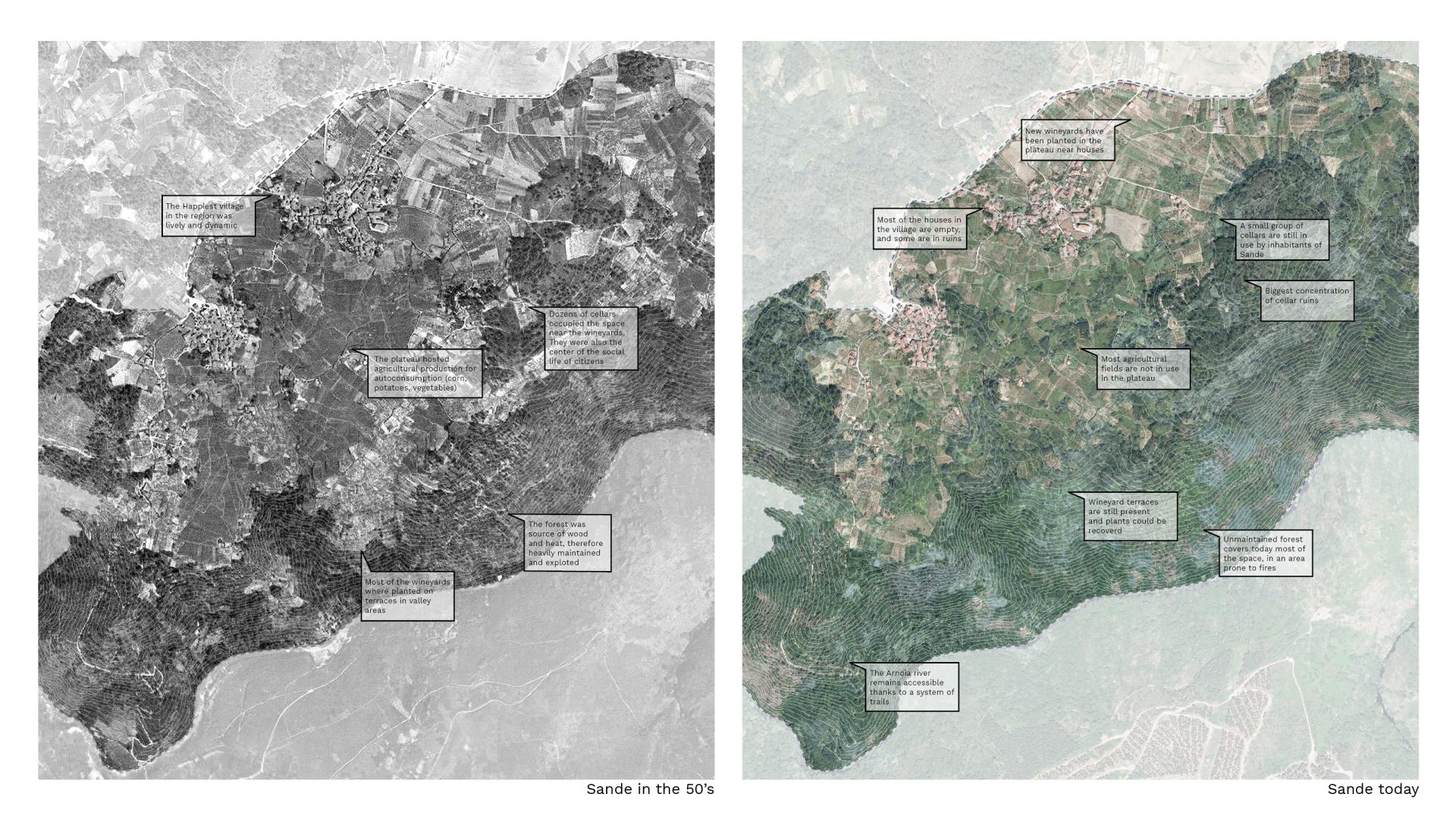
In Europe we are seeing our countryside disappearing. Yet Rural communities tell us the story of a thousand years of collaboration between nature, culture and humans. This is the case of Sande, the village known to be the happiest village in the region. Composed of dozens of small vineyards, this village welcomes visitors to discover the Galician land and especially the wine. Over the years, this image of a happy village has disappeared with the decline of its population and its activities. Today only a few vineyards are still maintained, the others have been covered by the forest. However, humans cannot contain everything in the city, as we saw with the pandemic where people rushed to the countryside.
It is true that, at present, the reality of the rural world makes it difficult for small farmers to be profitable. It is necessary to diversify activities and to propose a permanent or temporary alternative to urban life.
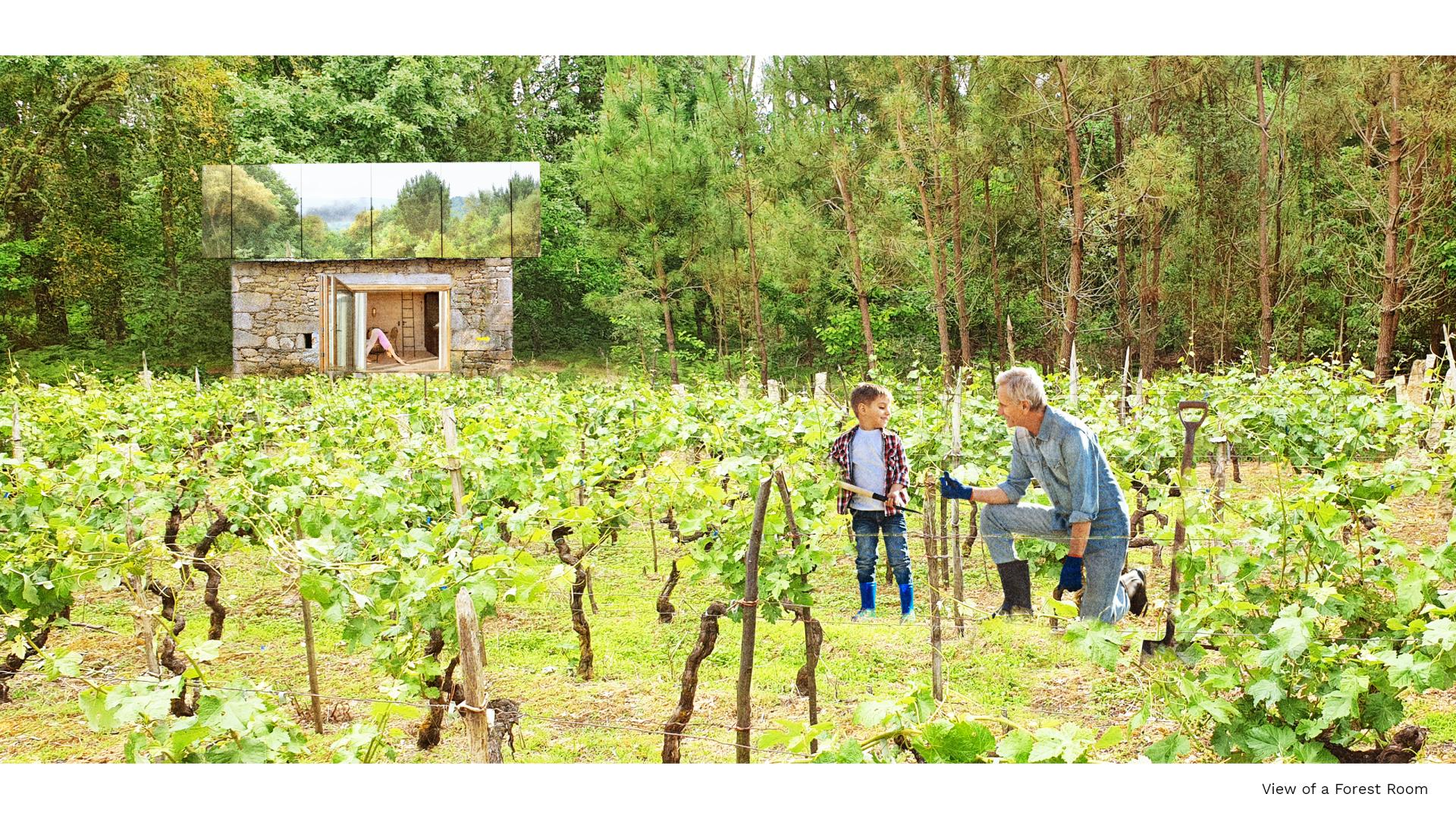
Sande consists of the restoration of an old Galician village. Rebuilding on the abandoned cellars to make places of refuge for people who want to change their lifestyle. This return to earth means participating in the different agricultural works in the middle of nature. For this purpose, some places will be rehabilitated to create refined and functional buildings, integrated in the landscape.
The idea is to recreate a small community around the production of agricultural products, social services (revitalizing retreats) and also ecosystem services. At the end, this will allow us to include and value the rural world in our society.
It is essential to surpass the idea that rural areas are simply a food production system and to call for a larger vision of rural communities as centers of development based on local heritage, natural resources, creativity and social inclusion, which are essential to regenerate rural areas and rapidly support their transition to a sustainable future.
Key objectives for sustainability
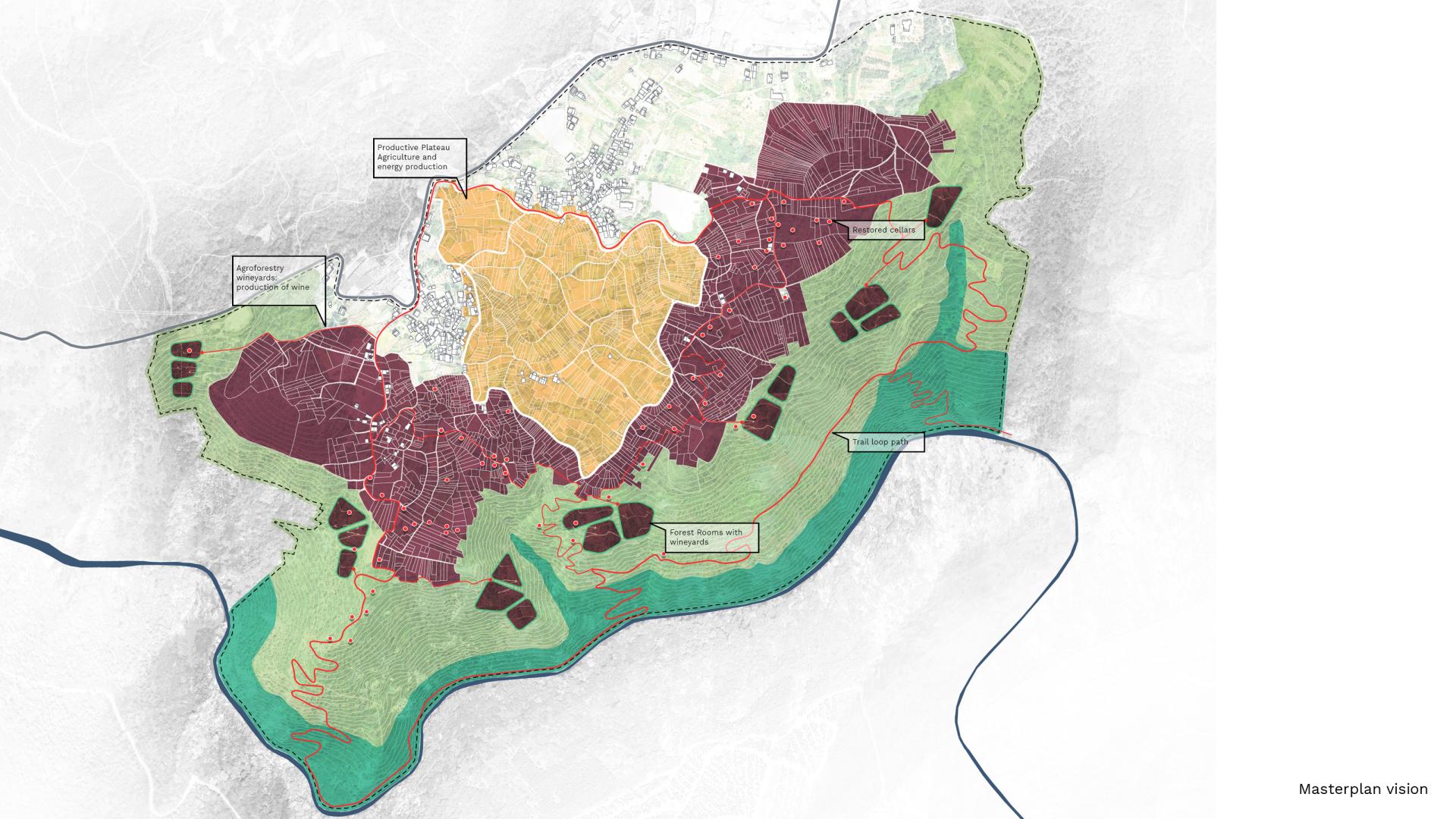
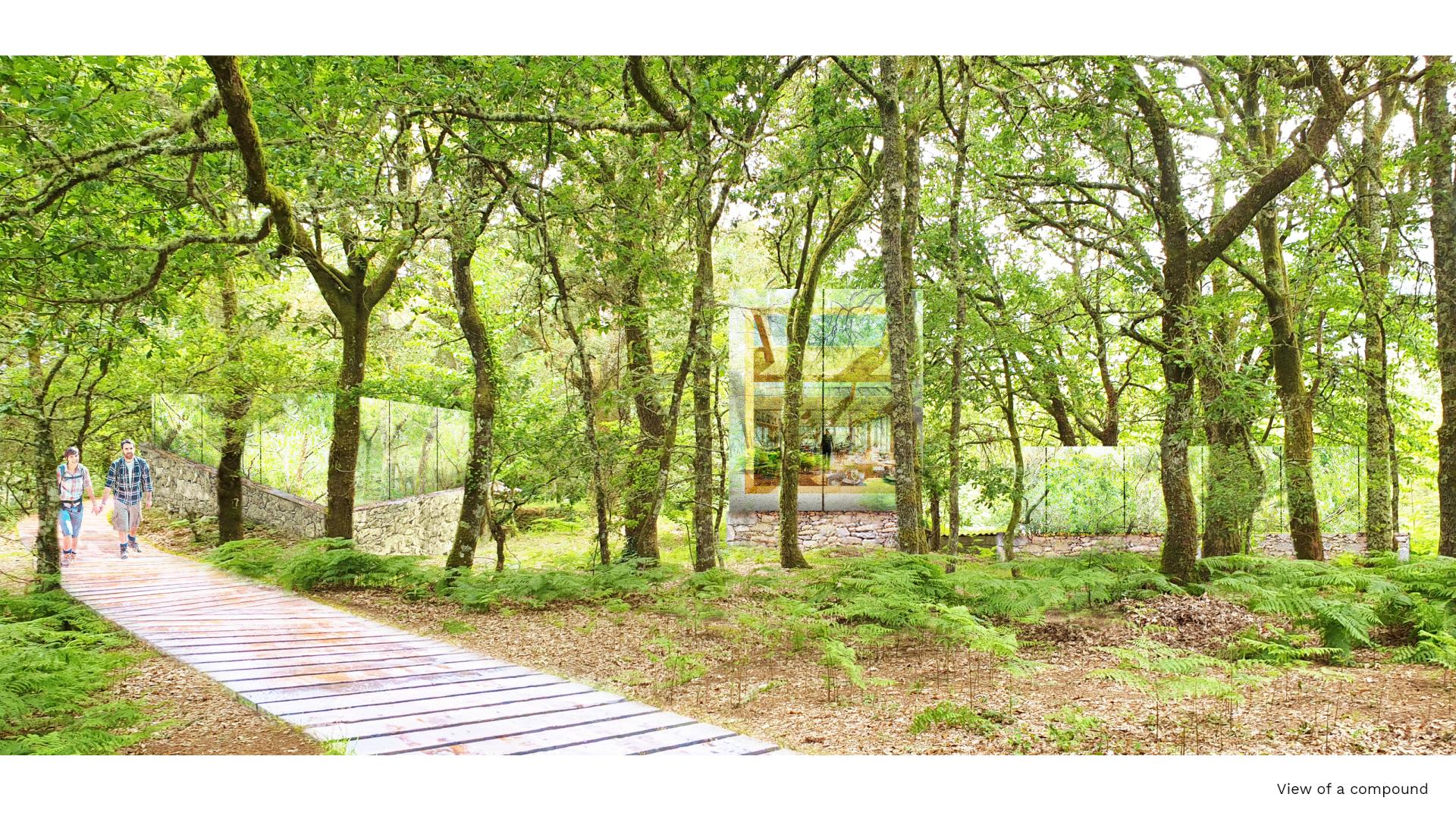
Vines, face external aggressions such as frost or parasites. Agroforestry applied to vineyards uses trees and more broadly the forest as a biodiversity booster, producer of a natural vegetal cover and climate regulator protecting the crops from external aggressions. For this, rather than integrating trees in the vineyards, we propose to design a forest landscape with forest rooms in which, among other things, vineyards will be created.
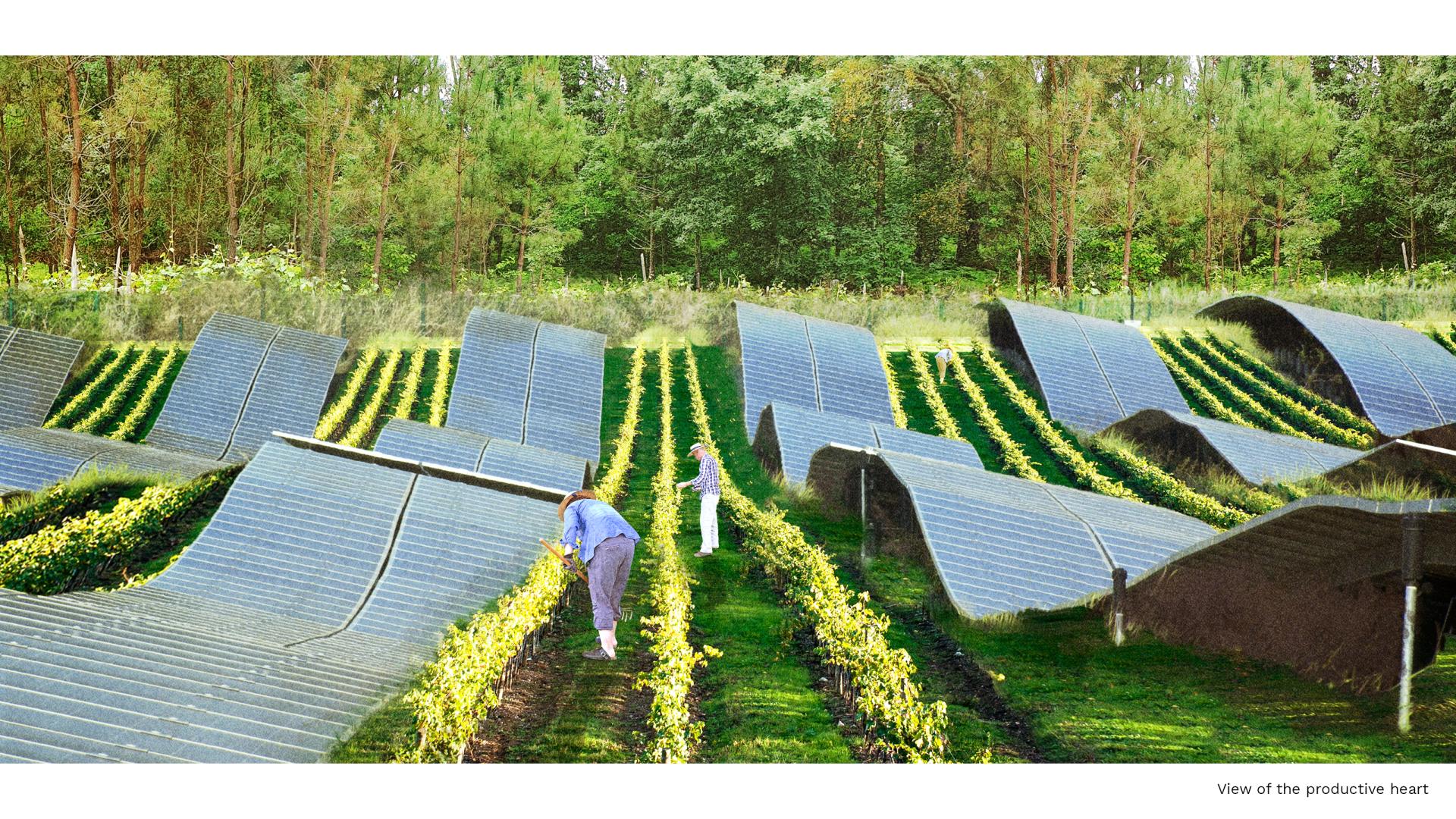
Another sustainable agricultural practice that will be implemented is agrivoltaism. This consists of using solar structures as auxiliaries to agriculture. For example, there are agricultural solar shades for breeding and for crops that can create microclimates. In addition to these advantages on the agricultural side, solar panels will produce clean energy.
On top of that comes the protection of the forest and the landscape through an inclusive design and nature-based solutions. The Galician forests, often ravaged by fires, are becoming CO2 emitters instead of carbon consumers. The maintenance and protection of the forest is not only crucial for biodiversity but also to limit the production of CO2 and preserve our carbon sinks.
Finally, as the driver of an economy that will remunerate both ecosystem and social services, ecotourism will be part of one of the sustainability foundations of the Sande community. Indeed, in addition to offering eco-lodges founded on old wineries, the attractions of Sande will be oriented on sustainable agriculture; maintaining and observing the forest; discovering the manufacture of agricultural and forestry products using low tech and green energy. All these activities are implemented in the village but also in the forest rooms where the landscape and the architecture have been designed to ensure a perfect integration into nature.
Thus, Sande can be integrated into different policies of the European Green Deal like the “Farm to Fork", biodiversity, building renovation, and clean energy.
Key objectives for aesthetics and quality
The regeneration of Sande is inspired both by the historical heritage of the village, viniculture, but also by the evolution and the reappropriation by Nature of certain areas in decline of activities. Thus, part of the vineyards was invaded by the forest which gradually recreated a natural balance and beauty on these exploited lands. Now, from an aesthetics point of view, Sande is magnificent with a magical aspect of an enchanted forest where humans used to live and produce rare wine. In the process of restoration, it is therefore necessary to be inspired by this, promoting sustainable, inventive and biodynamic architectures. The idea is to keep this natural landscape but integrated human and sustainable activities in this ecosystem.
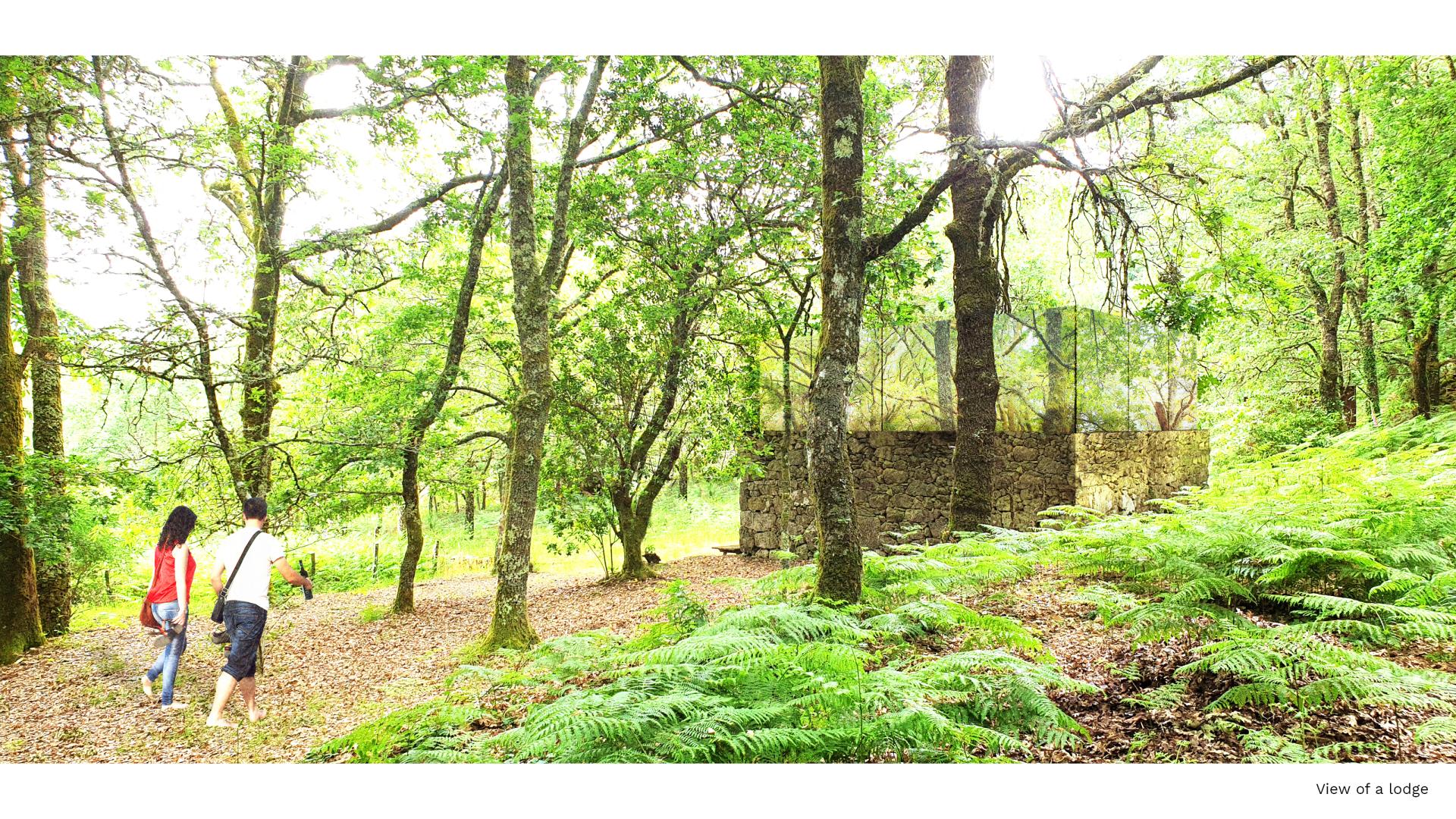
Also, to illustrate the Galician heritage, the architectural language will be based both on noble materials like the granite used for the old wineries and also modern design fitting in the natural environment. For this, the pattern will be simple and modular: on each granite foundation of wineries will be inserted a refined reflected structure or glass to ensure a reflection of the nature or preserve the depth of the forest. This simple and adaptable design allows planning coherence while keeping a specificity for each building renovated according to the history of the chosen place.
Keeping a granite base also ensures the image of the wine cellar, a closed space that gathers all the characteristics to preserve and age wines. Above, the glass or reflected space, exposed to nature, enables the penetration of natural light and also permits an impregnation into the forest spirit. The visitor, therefore, remains in a mystical dimension of an abandoned place between the historic stones and the game of light that allows him to blend in nature.
This mix of universes also guarantees an alliance between a more urban design and a rural architecture that is also translated into the wine, an almost raw product and already so prestigious.
Key objectives for inclusion
Thousands of European villages are disappearing and becoming ghost villages. Especially in Spain while 85% of the territory is made up of rural areas, only 20% of the population live in them (AEIDL, 2019). This depopulation of the countryside is mainly due to the decline in economic activities and the decrease in agricultural income. This economic decline leads to a decrease of inhabitants and subsequently the loss of essential services such as access to health and education, making rural areas unsuitable for development and empty. This migration to bigger cities creates inequalities between the urban and rural worlds. However, rural areas play a crucial role in preserving nature and cultural heritage, local development and mental wellbeing.
The objective of Sande is to valorize all these services that the countryside can provide. Through an economic system on the territory of Sande, it will be possible to remunerate all the inhabitants who make Sande the happiest village in the region. This economic system is based on the principle of paying for the preservation of ecosystem services and social services. This financial complement values the globality of the work in the rural environment allowing the inhabitants of Sande to develop a life in the village reducing the inequalities with the urban world.
These services are remunerated especially by visitors. Indeed, the "return to the land" offers resourcing, maintenance of physical and mental well-being. For the inhabitants of Sande it is also very gratifying to know that other people are interested in their pace of living, work and knowledge. This direct contact between the consumer and the producer reduces the social gap created by the marginalization of the countryside.
Opening up the rural world and showing its benefits to the more urban population makes it possible to limit the gap between the countryman and the city dweller and to avoid the exclusion of the countryside in the world of tomorrow.
Innovative character
Sande is innovative in several aspects, whether in terms of agricultural techniques, development of well-being, but also economically. The choice of an adequate architectural and landscape language is important to link these innovative concepts and to highlight them.
First, the abandoned vineyards replaced by forest will be recovered introducing forest rooms (selective cleaning of the forest) and agroforestry. The idea is to use the already rich soil of the forest, its microclimate and its protection against external aggressions to ensure good production. In addition, agrivoltaism which mixes solar energy production with agricultural production will make Sande a village also innovative from a technological point of view breaking some myths about the countryside.
From a wellness perspective, the concept of retirement through agricultural practices is a strong point of Sande. In recent times attention has been given to social and therapeutic agriculture. It relies on the natural and relaxing environment to reduce stress, anxiety, and depression. In addition, engagement in a useful and productive activity procures personal satisfaction. The feeling of belonging to a community promotes social interaction.
The economic innovation resides in valuing the countryside and the services other than food production. This will not only benefit rural areas but also create a new green economy bringing new inhabitants. For this, a cooperative of all Sande’s actors (restaurant owners, hosts, farmers, foresters...) could be created to guarantee that, according to the ecosystemic and social services maintained (beekeeping, therapeutical forest landscape, preservation of hydraulic resources), a remuneration is attributed. This remuneration comes from a percentage taken from each product and services sold by the village of Sande.
At the end, Sande will be a village that will reflect the indispensable contribution of the rural areas for the Earth, the ecosystems and humans.