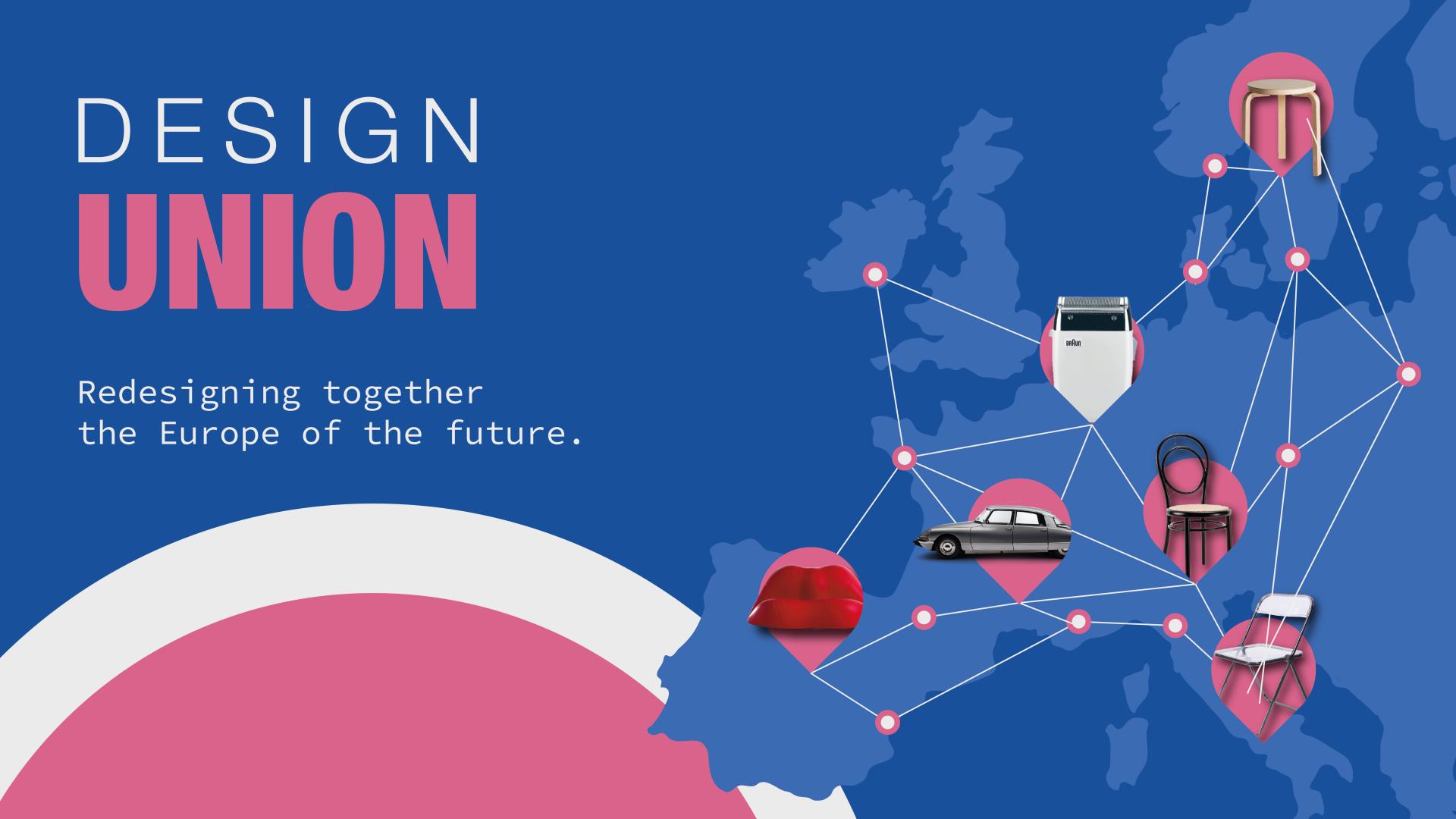
The Design Union Project
Basic information
Project Title
Full project title
Category
Project Description
Taking inspiration from the Bauhaus school, the idea is to create a European digital design archive that can become a touchpoint between all the various actors in the design process and that will collect the materials on an open platform. The real objective is to build a European exchange community with the aim to create a univocal cultural system that is able to enhance the diversity of each member state and shape a future Union that makes this diversity its wealth.
Project Region
EU Programme or fund
Description of the project
Summary
A risk of the digital world is to lose track of the historical heritage and of everything that is analogue. In particular, design culture has a great tradition of manual drawing that is in danger of being lost, also due to physical and organisational characteristics. What if there was a way to help not only companies digitise their resources, but also professionals and students to make use of these materials?
In the same way that the Bauhaus created relationships between companies and students, the idea is to create a European digital design archive that can become a touchpoint between all the various actors in the design process. The digital archive will collect the materials (history, blueprints, 3d models and printable files, design and productive methods) on a platform open to anyone who wants to consult it for professional, study or in-depth study reasons, free of charge.
This project, called Design Union, is realised with the collaboration of European companies that join in a partnership, participating with materials that have contributed to the history of European design.
The European Union takes on a fundamental role in this scenario, namely that of a body for the protection and safeguarding of design and data, preserving and creating cultural value that can set in motion the innovation of the future. This is done through the establishment of a coordinating association made up of industry professionals and representatives of member companies.
To stimulate and activate this design network, students will be involved through calls for ideas where they will be asked to work on the objects in the archive in order to develop a dynamic platform with a community that embraces the vision of the New European Bauhaus.
In addition to the digital platform, it is planned to create a museum across Europe where the results produced by the network will be collected, to be realised through crowdfunding in order to make European citizens an integral part of the process.
Key objectives for sustainability
On an environmental level, the Design Union project is strongly linked to sustainability thanks to the concept of redesign, i.e. redesigning design icons taking into account new methods for greener production and the use of eco-sustainable materials with particular attention to the product life cycle.
It also aims to reduce the carbon footprint by focusing much of the project digitally, thus avoiding travel and waste of physical resources. Users can use the platform and be part of the network from anywhere in Europe, having the same kind of training and opportunities.
All this contributes to a future vision that is increasingly oriented towards the redesign and conscious use of resources leading to a European democratisation of culture.
Key objectives for aesthetics and quality
The real objective is to create a training and working method at continental level, creating a large European exchange community made up not only of students but also of a solid network of experts, professionals and amateurs. Starting from the Erasmus method, the aim is to create a univocal cultural system that is able to enhance the diversity of each member state and create a future Union that makes this diversity its wealth. The vision of the project is projected towards the future growth of the new generations that will form the Europe of 2050.
Key objectives for inclusion
Speaking of inclusion, the Design Union project unites various design personalities, from professionals to students, from engineers to artisans, giving everyone the opportunity to take part in the innovation process.
The project is supported through the creation of a European association formed by professionals (designers, economists, architects, engineers, craftsmen, etc.), universities and bodies recognized as associations of professionals and students, who coordinate events, administer and monitor the proper functioning of the project, the respect of the mission and founding principles.
The project aims to enhance the principles of the European Union where diversity (social, cultural, religious) and heterogeneity are a strength. With this premise we want to continue in this direction, paying particular attention to gender policies, multiculturalism and the promotion of opportunities for the disadvantaged.
Forms of communication will be studied and the promotion of the project will be aimed to accessibility, applying the principles of the New European Bauhaus to marginal and peripheral areas of European cities. The goal is to use design as a factor of urban regeneration and as an engine of participation through co-design and active participation.
Representatives of the companies collaborating with the project will also be part of it. This joint venture of different legal entities with different purposes together cooperate as a CSR creating a transnational network, which coordinates in a mix of skills and visions.
Innovative character
The proposal is based on the creation of a digital place which, through the creation of a network and the cooperation of several players, becomes a hub of design innovation, in which the principles of European design are carried forward in the same way as the Bauhaus, which, after the closure of the school, was able to continue to spread its design culture, making it immortal and timeless.
The originality of the materials and their traceability is guaranteed through the new technology of the non-fungible token (NFT): in this way the users are sure to work on authentic files and at the same time the intellectual and corporate properties are protected.
The involvement of the network is a crucial part of the project that not only contributes to creating a sense of European belonging, but also activates a system of production of new valuable content for European design culture, resulting in a physical place where the project takes physical form.