TAM TAM
Basic information
Project Title
Full project title
Category
Project Description
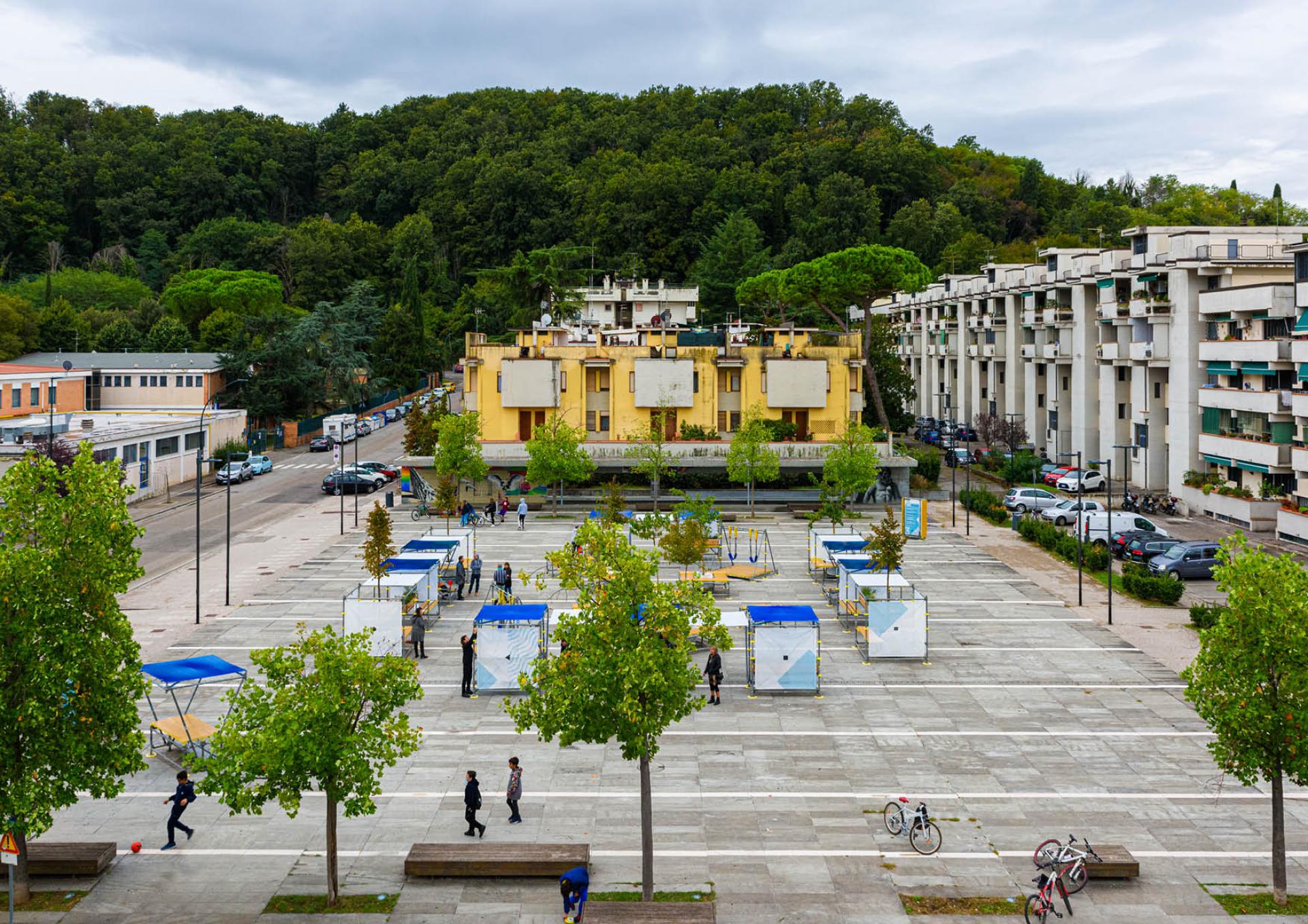
Tam Tam is an architectural temporary project with the aim to activate a regeneration process of/on public space, experimentig innovative ways of intervention based on principles of reuse, adaptability and active citizenship.
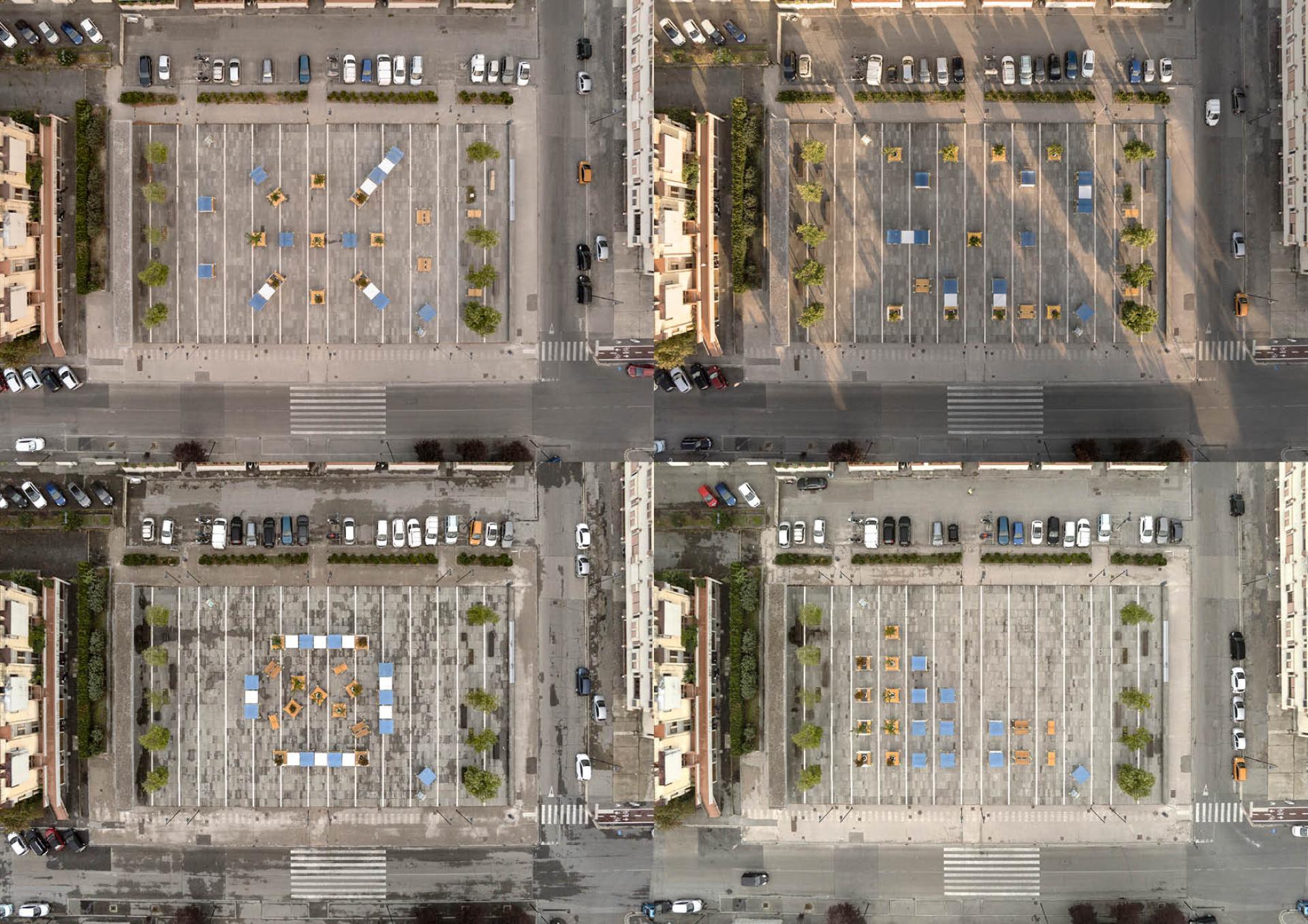
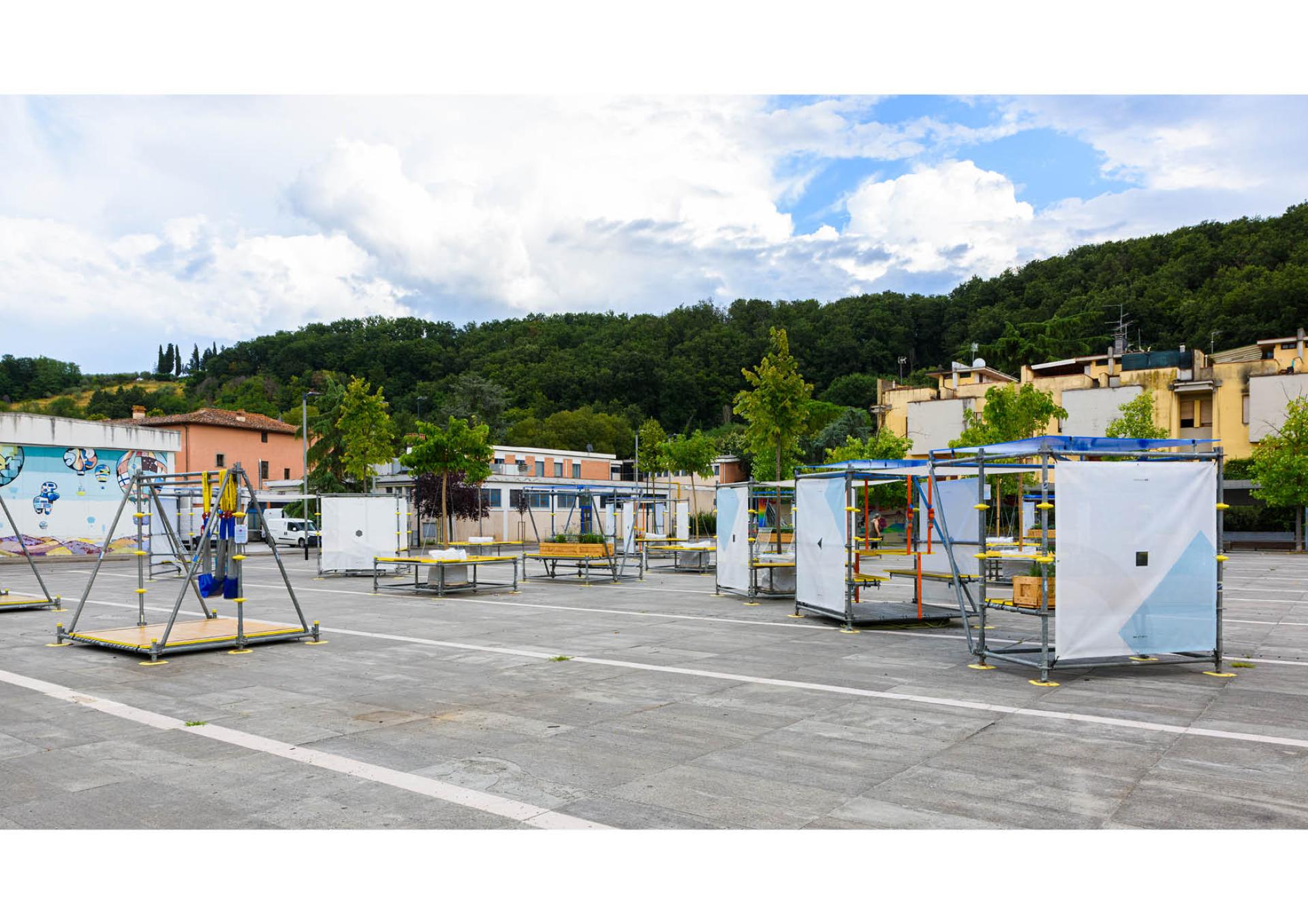
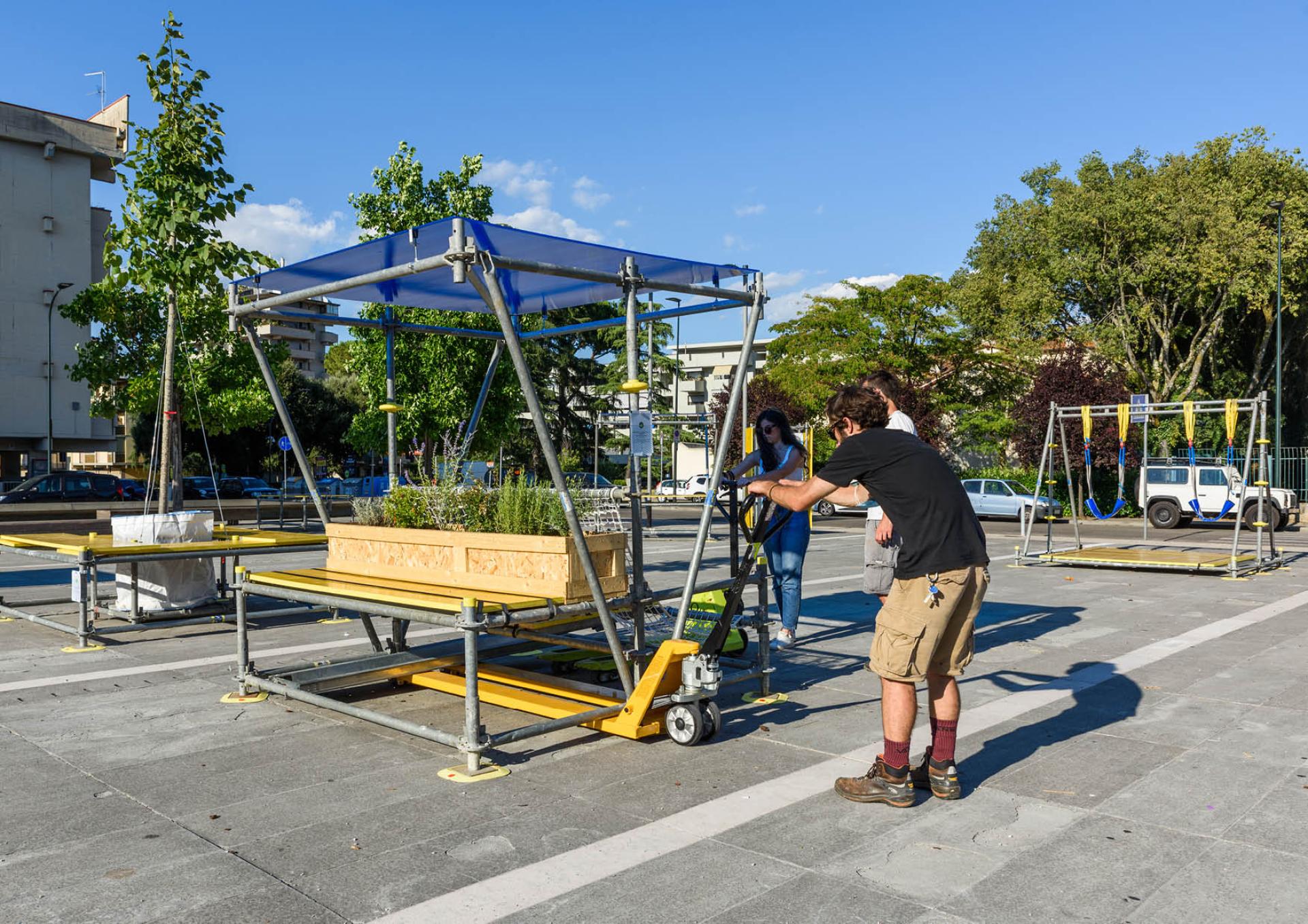
It consists of 20 modules used to functionalize public space, they are movable and modifiable by shape and function, basing on citizen’s feedbacks.
Project Region
EU Programme or fund
Which funds
Other Funds
DESINGSCAPES “Design-Enabled Innovation in Urban Environments”
H2020-SC6-CO-CREATION-2016-3 Prog. n° 763784
Description of the project
Summary
Tam Tam is an architectural temporary project with the aim to activate a regeneration process of/on public space, experimentig innovative ways of intervention based on principles of reuse, adaptability and active citizenship.
The project is consisted of 20 temporary architecture modules, based on principles of material’s reuse, characterized by the possibility to modify their shape, function and position in the space, basing on citizen’s feedbacks. It tested a temporary intervention model on public space, capable of pre-figure solutions and functions defined through preferences expressed by citizens.
It activated a participatory process of 6 co-creation events for the functionalization of the square, based on concrete experiential activities and direct debate with the places aim of the civic attention. It made citizens protagonists in the functional, positioning and shape modification process of the elements, contributing to create an opportunity for discussion between users on public space definition.
TAMTAM has been the practical and concrete application of space modification, it permitted to translate in a physical form those co-creation and participatory processes that are usually theoretical aimed at the redefinition of spaces, allowing citizens to observe live changes.
Key objectives for sustainability
TAMTAM project is rooted on three Sustainable principles: Social, Environmental and Economical. From the Social point of view, it puts public space at the center, in particular suburban areas. According to project principles, sustainability is reached when public space instead of being static, it is dynamic and capable of representing a reference point for citizens, becoming a community place. The project aims to achieve this goal through direct involvement of citizens and users in the definition of spaces, and their subsequent use by them.
Through temporary architecture, is provided a physical translation to co-creation and participatory processes of the area where citizens are main actors. Later, the changing and adaptable nature of architectural devices allows to continue designing and transforming positions and elements, supporting a participatory process that, also, aims citizens to get used again to dialogue and discussion on themes such as shared and flexible spaces rather than static and privatized ones.
The project, due to its own characteristic, gives to Public Administration two advantages:
From the technical point of view, it allows to collect datas and informations through feedbacks study related to functions and locations in space, usefull to direct future and long term interventions. From the Social point of view, being a practical tool supporting citizens participation, it consents to strengthen participatory processes, sensitizing citizens on the topic of care and management of public space making them main actors.
From the Environmental and Economical point of view, the project is based on Circularity, on reusing of materials made for other purposes and on reversibility. The choice of materials and their finding is included in a new Circular Economy model, through which, once used, materials are put again in their usual productive process. It has been developed dry technological solutions that consider assem
Key objectives for aesthetics and quality
TAMTAM is charcterized by a simple and “work in progress” aesthetic. This is a precise choice of ND Studio, because architecture modules have the purpose also to communicate. The provisional nature of the intervention, instead of being hided, is exalted, in order to become an engagement tool to users that you want to involve in the modification. The assembly simplicity is useful to create a familiar perception on people and “rough” materials are used to make the population aware about the second life of objects. In synthesis, the project based its aesthetic and quality on principles of:
Modularity - The technology used is the same of service structure for festivals, stages and buildings. The lahyer is characterized by easiness of assembly and building modularity that allows scalability of the project according on dimensions and functions.
Economic Sustainability - Because the low cost of the intervention make it accessible to variable and incremental planning ability.
Environmental Sustainability - In reducing ecological impact thanks to circular economy principles and use of dry technologies that aw reversibiity.
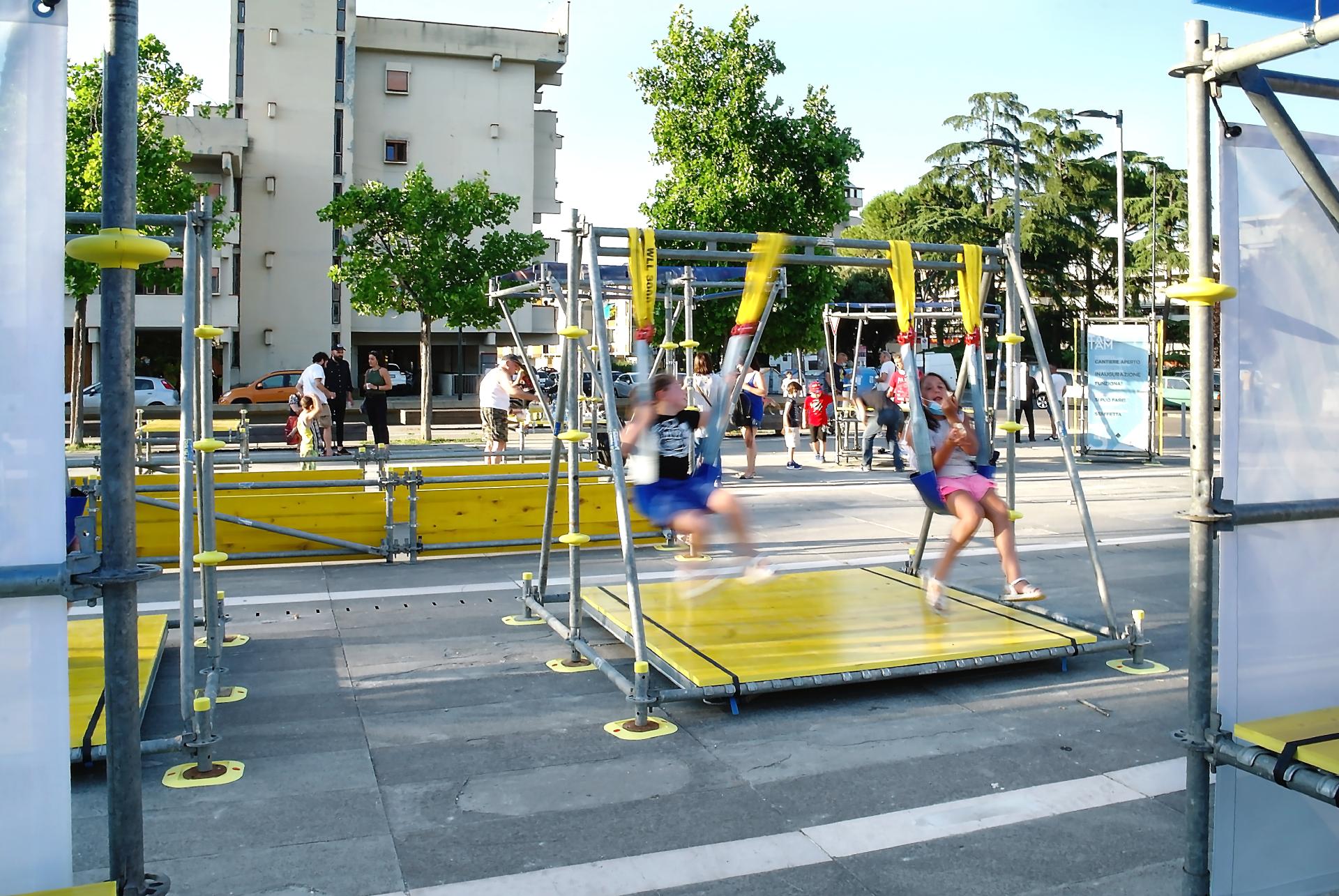
Customizable - The functionalization of architecture modules is totally customizable according to needs and contest, enabling the realization of devices able to perform very different function, from bench to swing
Communicative - Shape and assembly simplicity enable users to understand functioning and encouraging interaction.
Interactable - The possibility to move and modify elements encourage a playful approach to design, allowing an easy engagement of users.
Key objectives for inclusion
TAMTAM project, from the inclusivity point of view, established the development of a programme of events and actions aimed to promote participation of citizens in the definition of public space based on their needs and taste. Starting from arised needs, the intervention has been adapted step by step to physical and social context.
The preset goals were valorization of an underused urban area like Piazza Istria, the implementation of a local community, the promotion of participatory decision, productive and relational processes.
The user experience becomes main vector for development process: coherent tool compared to the context, to their social, behavioural and relational models, allows to optimize economic resources and share capital investment thanks to concrete and continued feedback from the community.
The “adaptive” method, in a social community context, considers the citizen as an active subject in the modification of his own daily and surrounding reality. The citizen, megaphone of knowledge, memories and cultural values, is main actor of choices that communicate, share, realize and evaluate in the designing. In this way is possible to verify, comprehend and analyze cause and effect of various phenomena of social conflict, with the aim to transform them into pacification and discussion dynamics, of participation and cooperative mutualism.
The dialogic and interactive debate enabled to define transformation scenarios of places, social dynamics, relations and services, exploring directly and empathetically people dynamics that live there and addressing our acting on reality. Various interactive instruments can be used as observation, interpretation and screening tools of interactions between inhabitants, places and dynamics that make them alive.
Results in relation to category
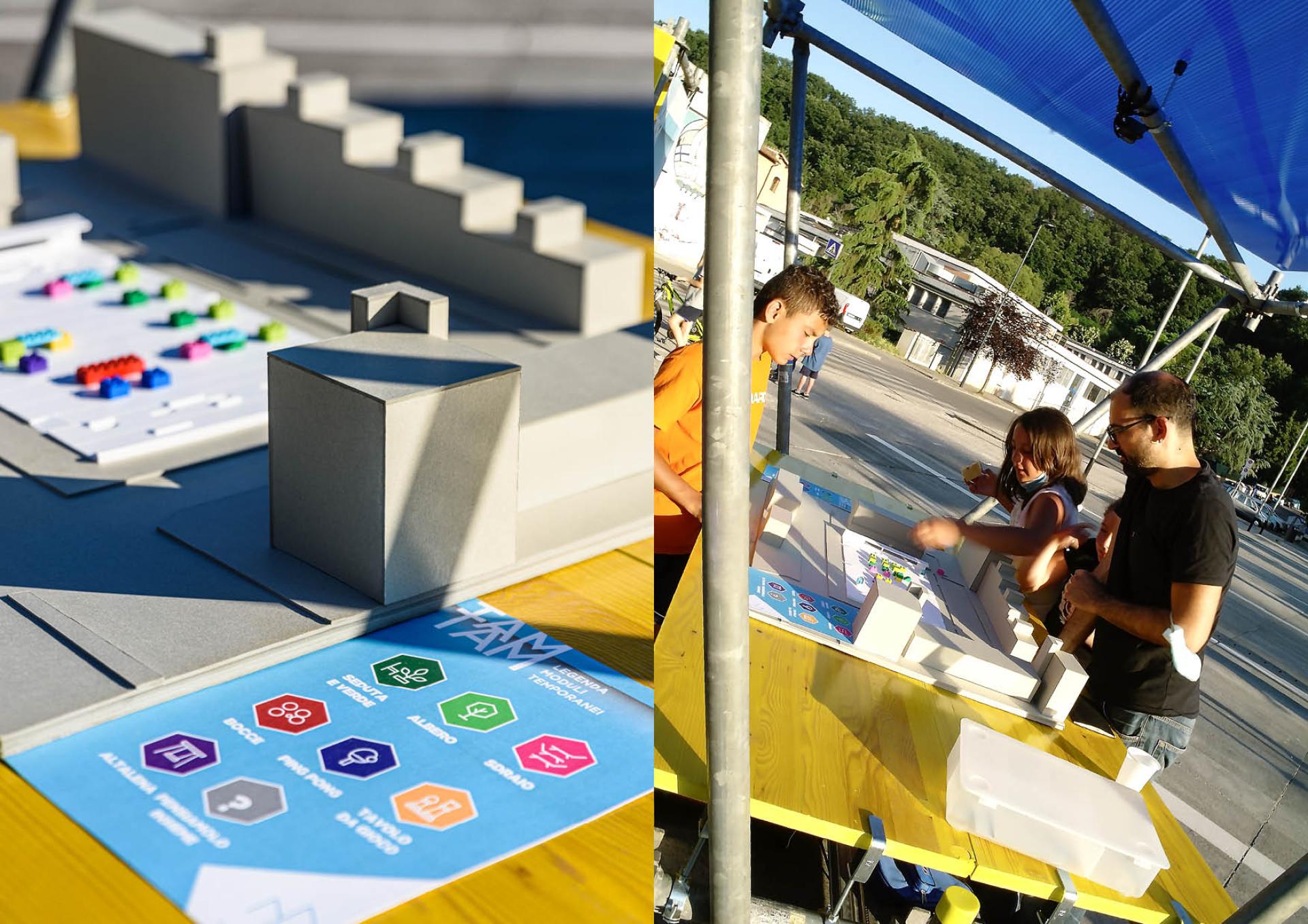
ND Studio decided to apply the project TAMTAM to Piazza Istria, Sorgane, Florence, due to its history. The square has been the object of a participatory process in 2010, lasted two years, but the selected project for public tender didn’t took in consideration citizen’s requests. The context highlighted also some urbanistic criticisms related to the isolation of the neighbourhood in relation to the city. The goal of TAMTAM has been the engagement and involvement of inhabitants, make them main actors of the project through a series of listening, designing and modification events on a public space that they felt like a stranger. Two presentation events to the citizen were organized with the participation of 100 people. Two creative mapping events were organized with the aim to collect stories and experiences of the area. During the realization event of the first configuration of the square, were built play and furniture modules, organized according to a regular grid located in the centre of the square. In order to collect informations, ideas and suggestions from inhabitants, it was built a table on which there was a maquette of the square; some Lego bricks with different colours were located on the maquette representing different function of the real modules present on the square. It has been collected 25 different configurations of the square. In summary, the goals achieved are:
- Testing a temporary intervention model on public space, capable of prefigure solutions and functions defined through citizens multiple preference
- Activate a participative process based on experiencing activities and direct debate with the places object of civic attention
- Make citizens participant in the elaboration and execution of modifications, collecting suggestions and indications, observing use and relational behaviour with devices, underlining which elements were appreciated and which not, understanding and executing suggested modifications
- Supporting free and creative use of publ
How Citizens benefit
The project has taken to a temporary functionalization of an underused area and has attracted attention of the Public Administration, taking to them a series of instances, collected during designing, and a series of functional prefigurations that could lead to a future intervention of the examined area. Inhabitants had acquired confidence and knowledge in management of public spaces. After the period of the temporary square, 5 citizen committees had presented projects for the requalification or the simple care of public spaces of the neighbourhood. One of them has been financed in the wake of TAMTAM.
The tendencies for the improvement of Piazza Istria, collected thanks to the preferences and ideas expressions of citizens that lived and used the square during the three months in which temporary modules were made available, has been delivered through a report to Public Administration.
In summary, the tendencies can be returned as follow:
- Requested of more trees on the perimeter in order to intensify shadowed areas
Public Administration has undertaken to use resources in order to provide for tree planting by the end of mandate
- Relocation and renovation of seatings and chilling area in correspondence of new trees
Public Administration guaranteed an effort in studying a requalification plan of the square starting from the instances
- Request to welcome in the space cultural and promotional events of the neighborhood associations
The area has been identified from the Administration as one of the areas that can host events from Estate Fiorentina
- Request of the reactivation of the drinking fountain
After the project realization it has been allowed the reactivation of the fountain
Innovative character
- Temporarity: The practical and concrete implications in modifications of space that gives, to active realities and bodies on territory, the possibility to transform in a physical form theoretical processes with the aim to redefine places. Single temporary devices are easily movable and/or removable, allowing, from bureaucratic point of view, to act in an easier way on spaces while following slimmer procedure and regulations.
- Environmental Sustainability: because it reduces ecological impact thanks to a circular economy approach and thanks to the use of materials made for other purposes, so already present on the market
- Communicability. Simple shapes and assembly systems allow the user to understand functioning and simplify possibility of interaction
- Incrementality and Scalability: The process consider the development of an action program that, starting from arised needs, adapts itself step by step to physical and social context where it fits. The areas of applications vary according to goals and specific situations that wants to face: from the valorization of an underused or abandoned area, to the implementation of a local community; from the promotion of a typical local production to decisional, productive and relational processes innovation. Choosing its own timing and starting with a low working initial input, the evolution varies according to feedbacks and to the level of involvement of users.
- User experience becomes the main vector of process development: coherent tool according to the context, its social, behavioural and relational models, allows to optimize the economic resources and social capital invested thanks to continuous and concrete feedback from the community itself.
- The support that the project gives to interactive and dialogic debate allows to define spaces transformation scenarios, social, relational and services dynamics, exploring in a direct and empathic way in order to redirect our acting on reality