FORESTA ACOUSTIC SYSTEM
Basic information
Project Title
Full project title
Category
Project Description
Biodesign company Mogu has partnered with design and built environment consultancy Arup to develop an interior fit-out system, made entirely of natural, renewable materials with significant acoustic qualities. The FORESTA system brings Nature back into the spaces we inhabit. Inspired by the unique sensation of walking through the woods, this product combines timber with the radical innovation of Mogu Acoustic panels, made from mycelium - the living organisms of mushrooms - and waste materials.
Project Region
EU Programme or fund
Description of the project
Summary
Biodesign company Mogu has partnered with leading design and built environment consultancy Arup to develop an interior fit-out system for the design driven market, made entirely of natural, renewable materials that offer significant acoustic qualities. The FORESTA system aims at helping businesses transition towards a circular economy, away from the “take-make-waste” system. It specifically targets office and hospitality spaces, where the need of acoustic comfort and a sustainable approach to renovation is increasingly perceived.
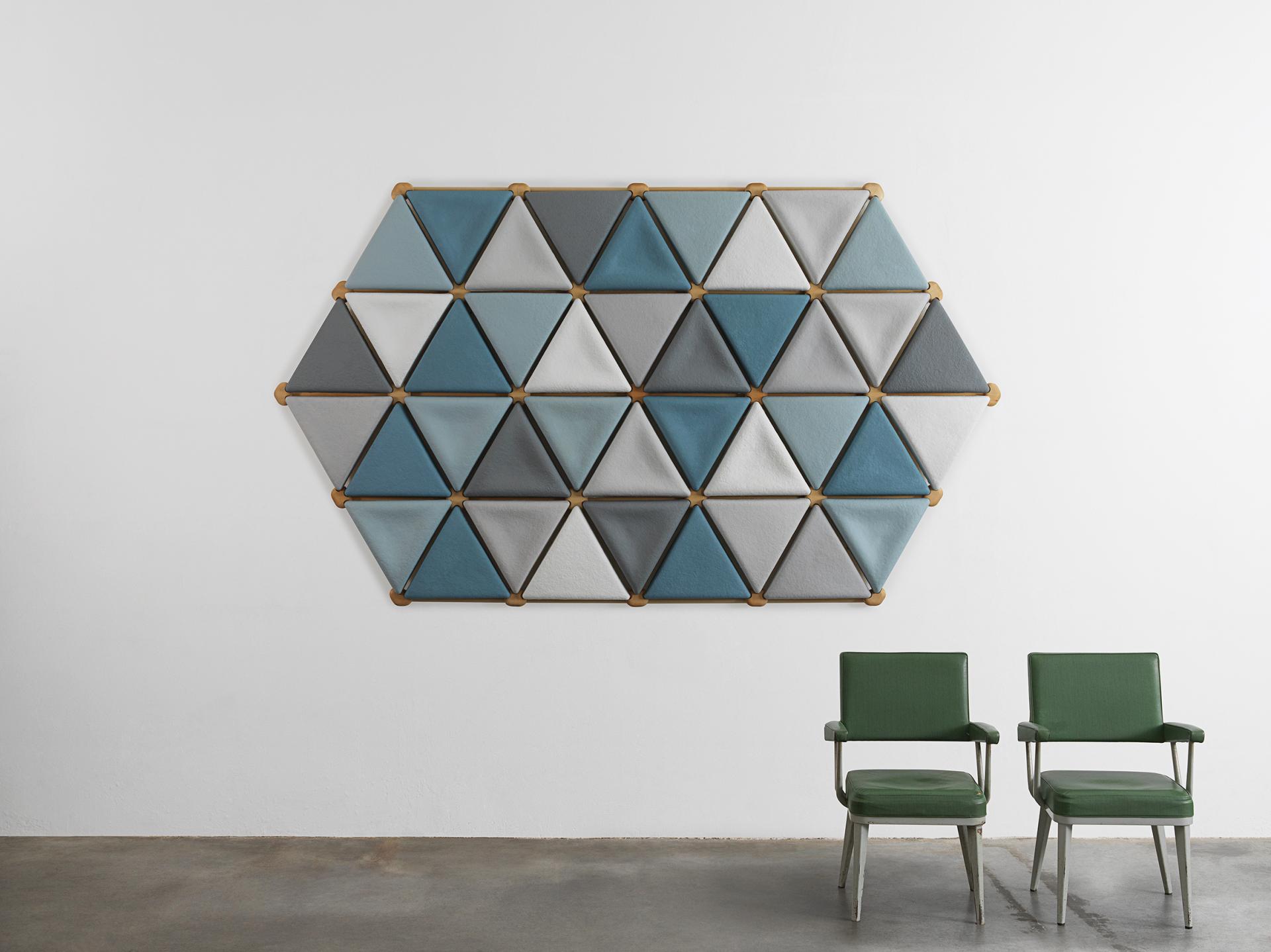
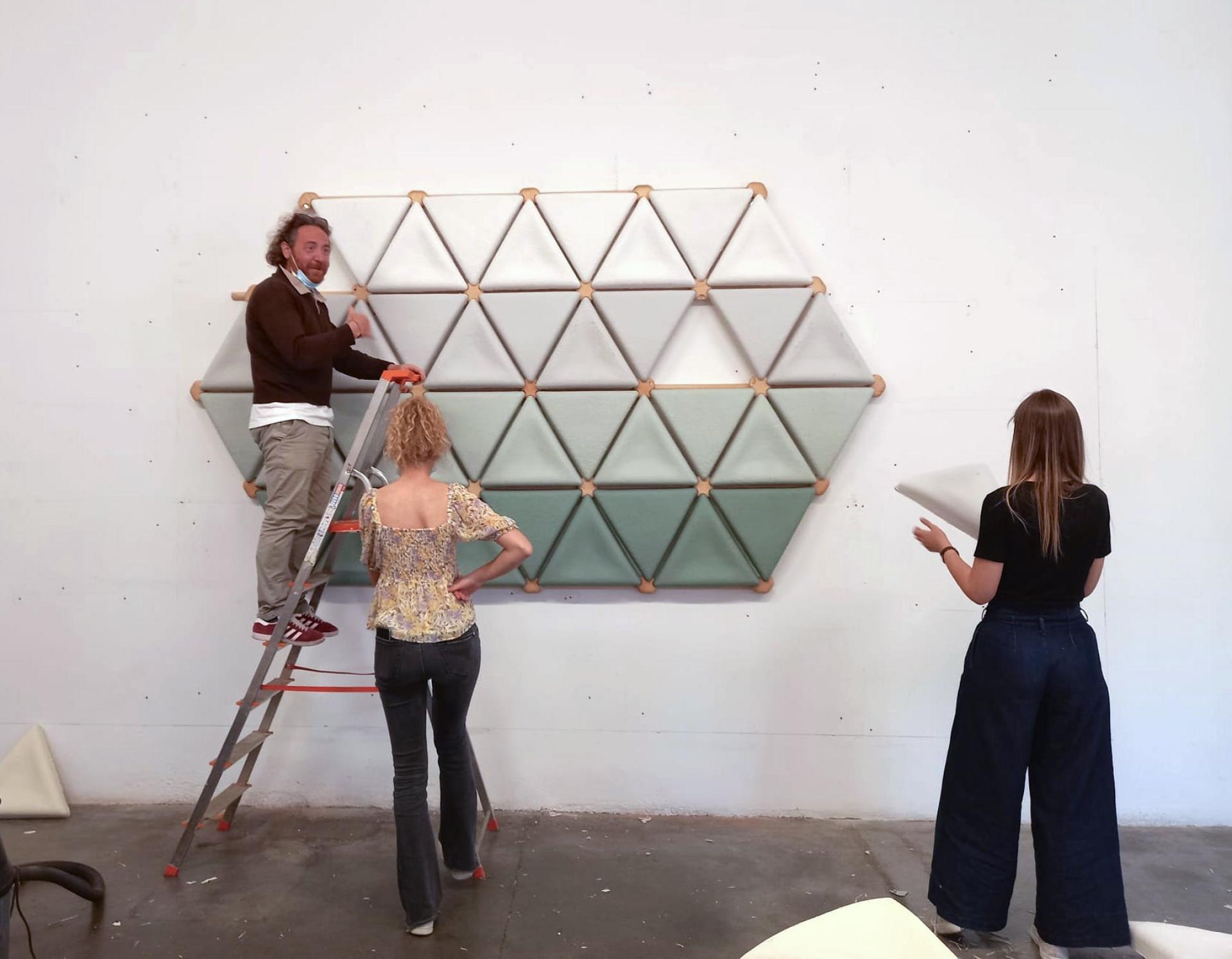
FORESTA is composed of Mogu’s unique acoustic panels, which are made from mycelium – the vegetative stage of fungi - cultivated using residues from European textile industry – supported by a framing of regional beech wood. These mushroom cultures combine and interlink with the natural fibres of the textile residues, and after a final heat treatment, they create a new, durable bio-composite material with advanced sound-absorbing properties. The modular system is designed for assembly and disassembly, with the wooden frame simplifying the installation and allowing easy configuration in every interior space. Businesses will be able to customise the panels by colour, size and texture. Thanks to the unique and highly responsible technology embedded in the product, FORESTA represents today the most innovative and truly sustainable solution dedicated to acoustic comfort, offering high performance without compromising aesthetics.
The FORESTA system showcases the beauty of combining rapidly renewable materials with high-quality design, bringing together advanced digital fabrication technologies - for the wood components - with biofabrication processes, introducing a notable paradigmatic shift in the way acoustic products are traditionally manufactured.
Key objectives for sustainability
Biomaterials, such as the FORESTA system designed by Arup and Mogu, can help businesses sustainably reconfigure their offices for these new ways of working, improving the appearance and the acoustic quality of collaborative workspaces. By using the mycelium panels rather than traditional materials, businesses can reduce their carbon footprint. Almost 40% of carbon emissions are created by buildings and construction and there is a focus on looking at how natural materials such as timber and other natural materials can be used to move away from traditional materials such as plastics, metal and concrete. The industry also contributes to around 40% of the world's total waste and with many office blocks, commercial buildings and hospitality premises being refitted approximately every five years, replacing the interiors is particularly wasteful.
Thanks to the unique and highly responsible technology embedded in the product, FORESTA represents today the most innovative and truly sustainable solution dedicated to acoustic comfort, offering high performance without compromising aesthetics.
Mogu’s acoustic panels are made from hemp and cotton waste using mycelium technology and can be composted at the end of their life, while the supportive timber framing can be reused, reducing the waste produced both by individual businesses and by the construction industry.
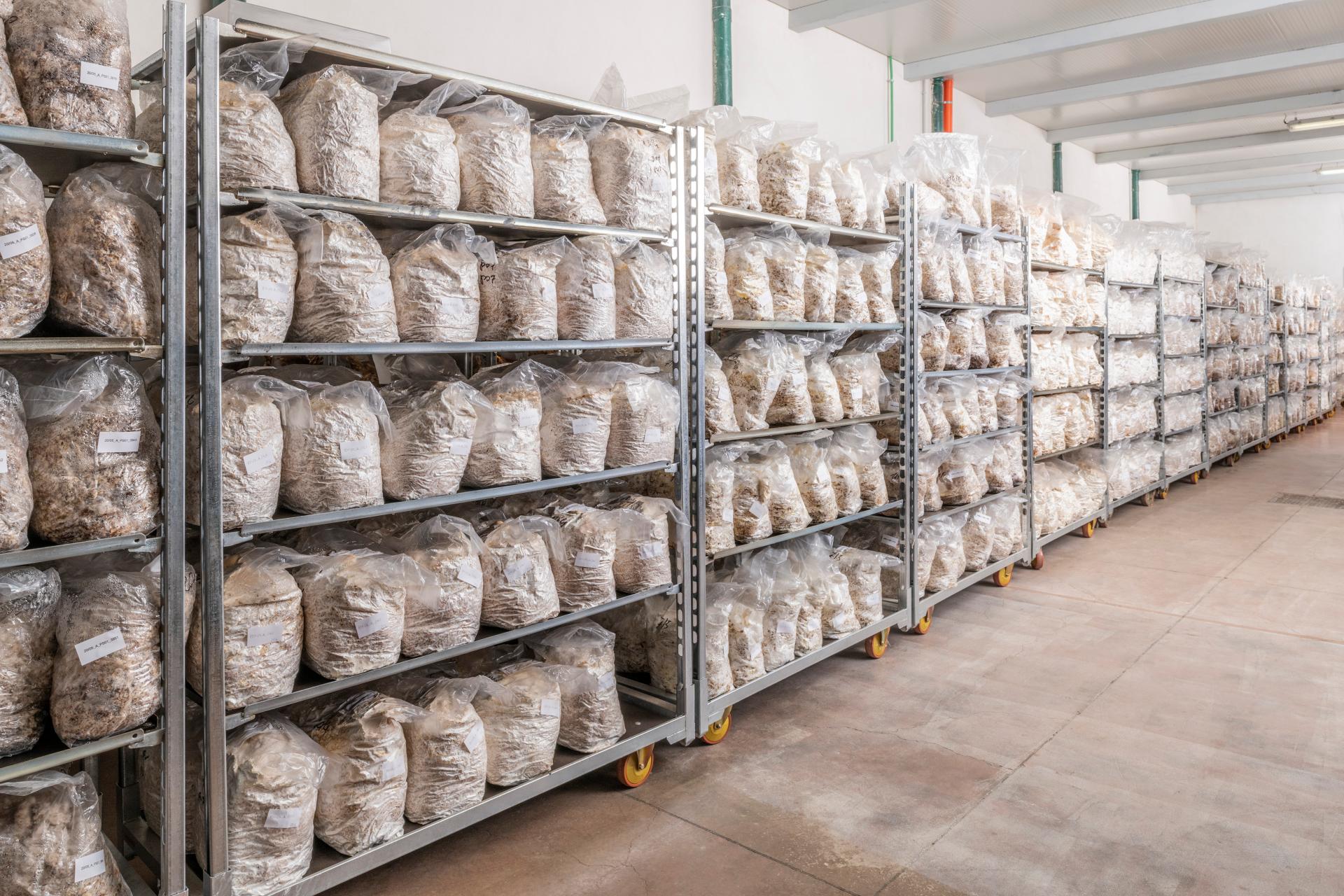
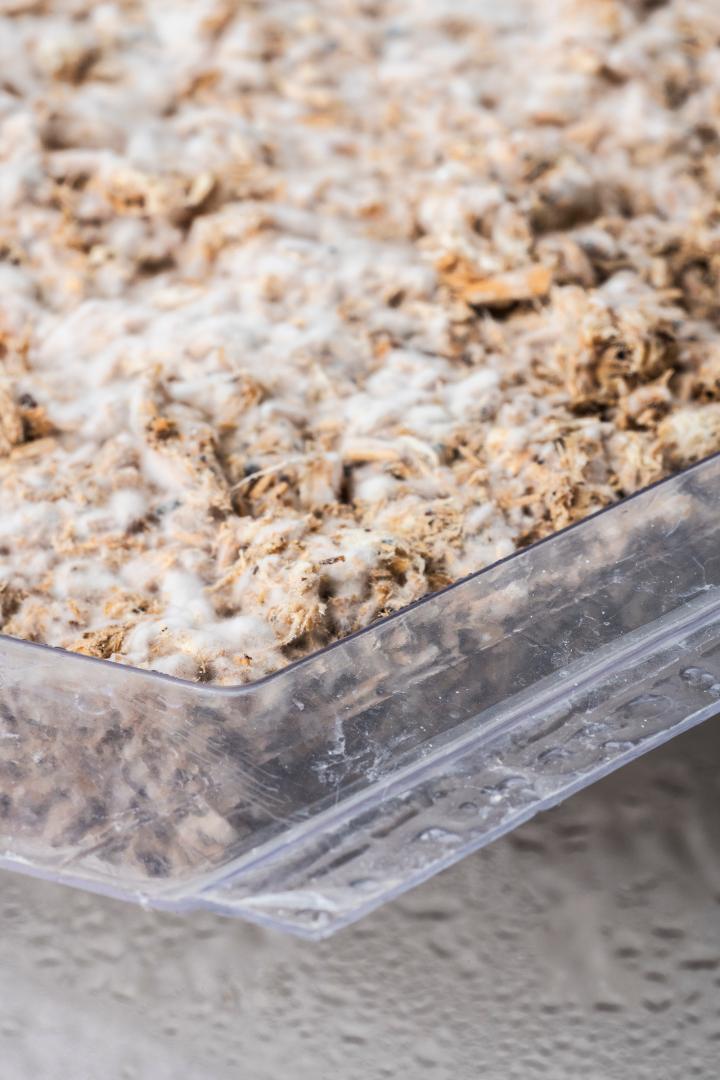
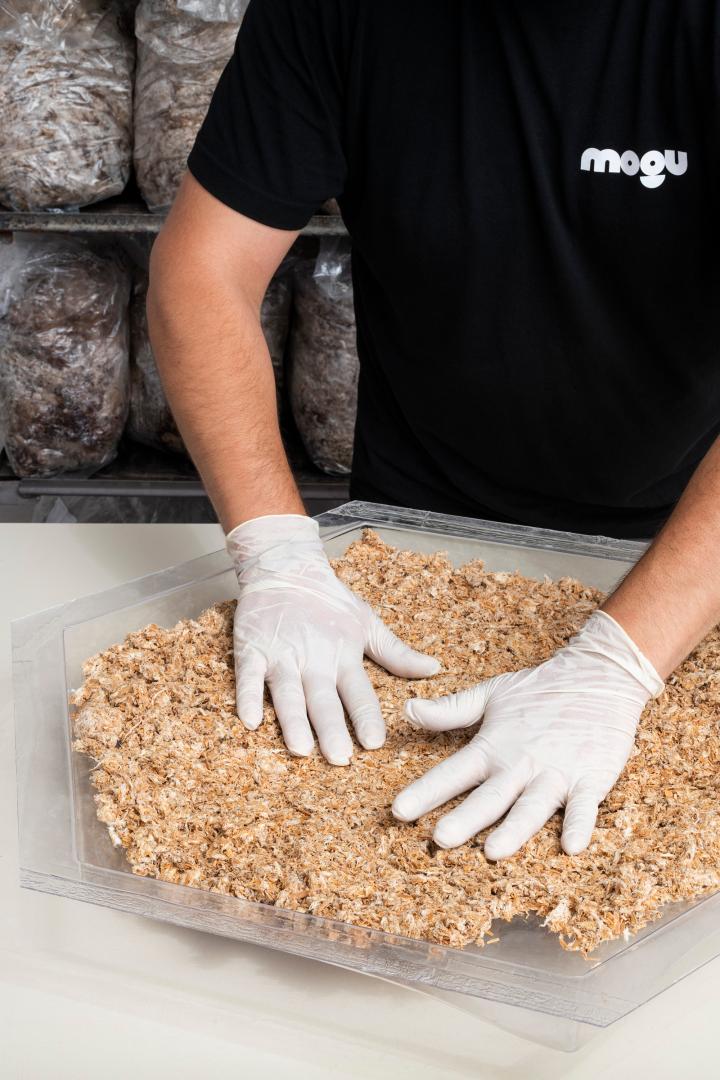
Mogu’s unique technology is based on activating the growth of mycelium, the living microorganisms of mushrooms, on agro-industrial waste. By degrading the natural fibers, mycelium grows and binds the loose fibers together, acting as a natural binder and creating a 100% plastic-free and coherent material composite. The resulting products are completely stable, safe and durable - and biodegradable too!
The full system is 99% bio-based and biodegradable, it is delivered flat-packed, and can be fully disassembled at the end of the product life cycle, to support regenerative recycling.
Key objectives for aesthetics and quality
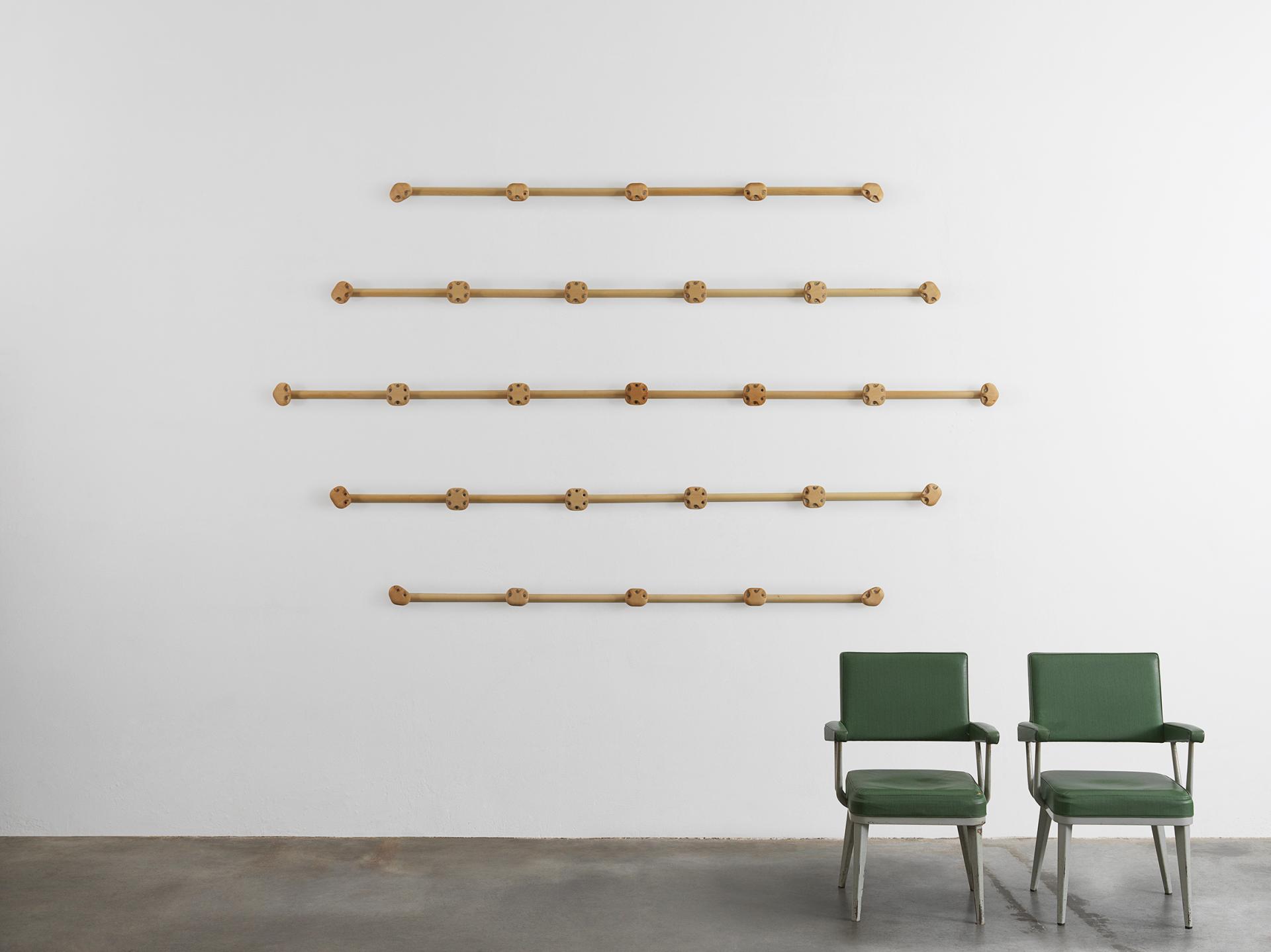
The key objective for the design of the system and its components was to compose a visual dialogue between the rationality of the panelized, technical structure and the organic softness of living nature. The overarching principle of the design was that geometry, arrangement, size and spacing of panels, nodes and framing speak a common language. Aesthetically this common language and narrative is the materiality. All visible components are made from rapidly renewable, biogenic materials produced by Nature and procured in Europe. The beech wood of nodes and battens and the biofabricated panels grown on a substrate of hemp chives relate to each other and visually create a symbiosis – one needs the other to create a whole.
The triangular panels feature soft corners and in cross-section display gentle undulations reminiscent of the forest ground. The surface of the panel is covered with a homogenous layer of pure mycelium, hiding the fibrous substrate, strengthening the abstract quality of the dialogue of materials, forms and colours. The machined nodal connectors with its sculptural form connecting the corners of panels to the timber frame are also visually the fix points of each installation. The nodes define the position of panels and with it create the triangular network of joints that can be read as a web or network that in an abstract way captures the network that mycelium creates during growth.
With the nodes establishing a consistent formal language, translating between the substrate of the wall and the panels, the modular system allows and encourages to (re)configure and customize the pattern. The colour palette based on natural based pigments allow to choose from a range of colour themes featuring soft shades and variations of intensity, which is characteristic for natural environments. Through the snap-fit fixing detail the user can re-arrange modules easily – following the seasons of use, the mood of the habitants or the natural cycle outside the window.
Key objectives for inclusion
The recent pandemic outbreak across Europe led the design community to discuss how to transform offices into future workplaces of collaboration and interaction. Acoustic and interior design comfort of open, inclusive, and creative workplaces is key to enable semi-private or semi-public spaces for people to meet and engage across hierarchy and age. The FORESTA system is designed to improve interior comfort in several aspects - from VOC emissions to acoustic comfort.
The whole manufacturing process of the FORESTA system is based on the ethical commitments of both Mogu and Arup. Mogu has developed its technology led by an inner respect and appreciation for the rhythms of the larger ecosystem, only employing micro-organisms that are non-GMO, non-allergenic and do not release any spores throughout the whole production process, thus being totally harmless to humans and to the environment.
FORESTA is co-designed and co-fabricated by partnering with Nature. The manufacturing process is based on a deep understanding of natural microorganisms to bio-fabricate the material. Plants provide the substrate, humans the processes, micro-organisms the agents to make the material and replace current industrial materials with a large environmental footprint.
Lastly, Mogu is proudly collaborating with non-profit local organizations, externalizing parts of its manufacturing process to companies that employ and train fragile employees (disabilities and recovering people), integrating them in the productive value chain.
Results in relation to category
For the transition to a net zero carbon world, we need to re-consider the materials we use to build our habitats. Biogenic and biobased materials naturally store carbon and are key to reduce carbon emissions. In current discourse, timber has been highlighted as a key material for the transformation towards bio-based materials. But as most timber species in Europe need decades to grow, and re-forestation is slowing down due to climate change and increasing demand, we need to complement the bio-based material palette with rapidly renewable species across sectors. The agricultural sector is based on fast growing crops, with the waste being burned or decomposed in short cycles, releasing the carbon back to the atmosphere. By turning waste materials from the agricultural sector into building products, we can make significant net carbon savings. To unlock this potential, these materials need to be turned into proven building systems with high performance that compete on the market with traditional systems based on non-renewable material.
This is the space that the FORESTA system is creating impact – bringing novel biofabricated materials from waste materials to market as a scalable product. To date biofabricated materials have been used in niche applications, outside the awareness of the main design community. FORESTA targets the commercial market, providing a high performing, beautiful solution responding to the need of developers and owners to reduce the overall carbon footprint of their portfolio. It specifically targets office and hospitality spaces, where the need of acoustic comfort and a sustainable approach to renovation is increasingly perceived.
The FOESTA system aims at helping businesses transition towards a circular economy, away from the “take-make-waste” systems. The infinite shades of colors, the play of lights and multiple configurations offered by F allow for maximum design flexibility, matching and valorising every interior space.
How Citizens benefit
Citizens of Europe will benefit from the sustainable impact that FORESTA will create in the mid and long-term to battle climate change. The system targets to decarbonize architectural fit-out that accounts for ca. 15% of the total embodied carbon footprint of a building across its life cycle. By introducing the material into the market and creating a growing demand, bio-manufactured materials from natural waste materials storing carbon will become more affordable and replace carbon and resource intensive material.
During the product development, many interviews were run by Arup to involve designers, architects but also end-users. These interviews were meant to understand desires but also concerns to be in a working or living environment fitted with materials made from mycelium. The feedback from these conversations with the wider design community (e.g. during the Final of the Sustainability Challenge 2019 by German Green Building Council DGNB) influenced the modular, configurable fixing system that allows the “growth” of the installation over time depending on the needs of the users.
The product is a stepping stone to bring bio-fabricated products to a wider market and strengthen scalable lean, clean and green value chains. The approach and results are shared with all stakeholders of traditional value chains. The successful launch of the product will strengthen cross-industry collaboration with established providers of building systems and building materials to accelerate the transformation to a circular economy.
Innovative character
The FORESTA system features two of the most cutting-edge technologies in industry: Advanced Digital Manufacturing for its wood components and Biofabrication for Mogu’s acoustic panels.
Mogu’s acoustic modules are made of soft, low-density mycelium materials, grown on upcycled agro-industrial residues. Over the years, Mogu identified effective protocols to monitor the growth of Nature’s finest technology - mycelium, the root-like structure of mushrooms - to engineer sustainable and functional products for interior design. Mogu manufactures responsible and certified products by growing selected strains of mycelium on pre-engineered substrates made of agro-industrial residues. Along growth, the mycelium transforms the fibres while acting as reinforcement to the matrix structure, creating a 100% plastic-free and coherent material composite. At the end of the production process, mycelium materials are made inert by slow drying, for reduced energy consumption. The resulting products are completely stable, safe and durable - and biodegradable too.
Beside the cutting-edge innovation embedded in biofabrication, the FORESTA system’s European sourced wood components are also highly innovative as they are manufactured by means of the latest technologies in wood processing. FORESTA hybridizes the vernacular materiality of wood with advanced digital fabrication approaches, unlocking the potential of innovative manufacturing processes based on product parametric modeling, robotized production lines, and advanced manufacturing. The design of FORESTA valorises the infinite possibilities given by digital fabrication and parametric modelling, while minimizing the number of components and achieving a simple, yet flexible system that allows multiple configurations. Thanks to its unique and highly responsible technology embedded in the product, the FORESTA system represents today the most innovative and truly sustainable solution dedicated to acoustic comfort.