Saxony State Exhibition 2020
Basic information
Project Title
Full project title
Category
Project Description
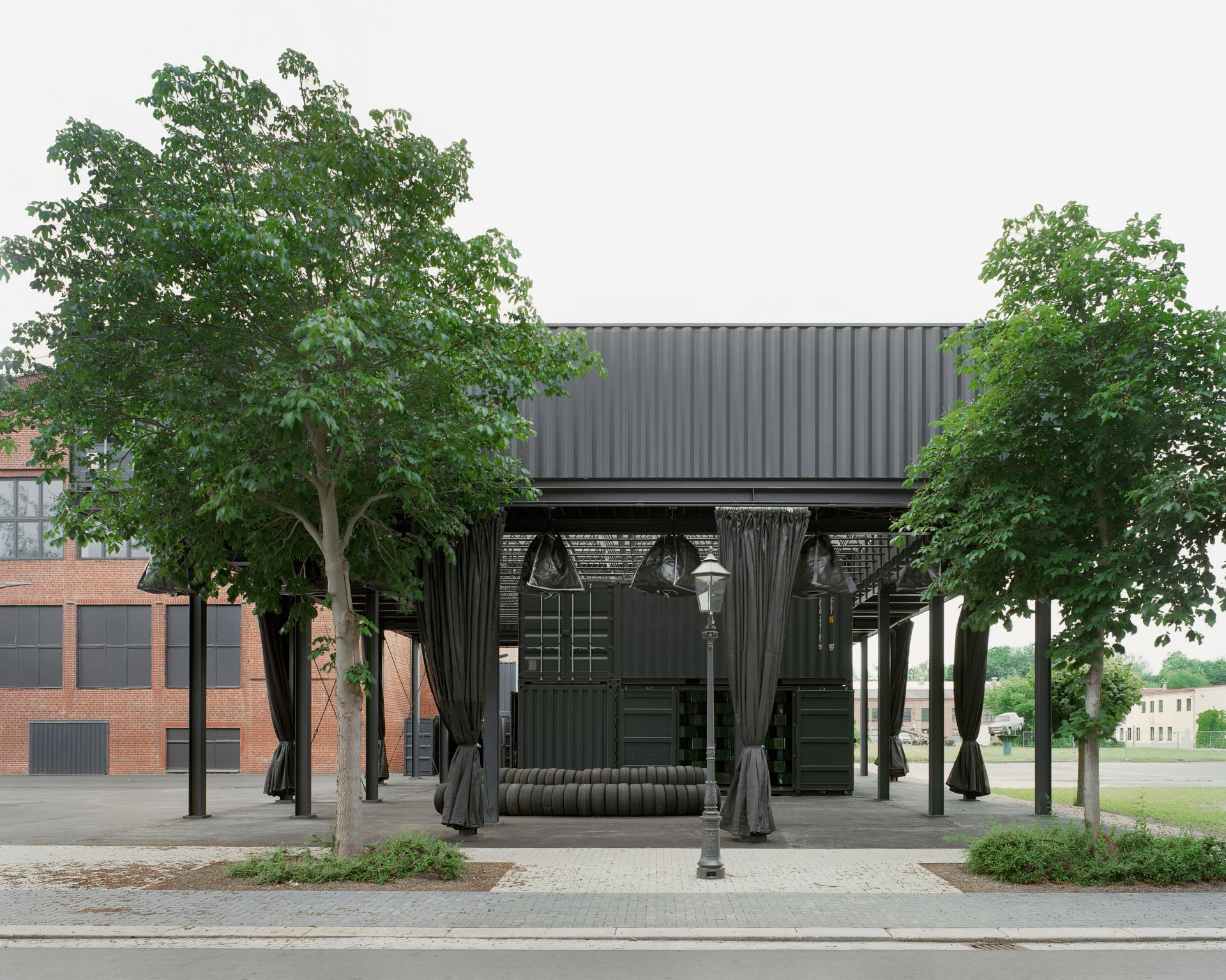
A temporary entrance building for the saxony state exhibition created with a fully circular approach. Including the process of disassembly and the re-usage of all materials afterwards, the concept uses existing industrial goods and combines them into a building with an inclusive ramp system, to welcome visitors to the exhibition and lead them into the former assembly and production hall. Topics such production circles and recycling processes become legible as design-determining aesthetics.
Project Region
EU Programme or fund
Description of the project
Summary
Saxony is the cradle of industrialization in Germany. With the decision to host the flagship exhibition on the 500-year history of industrial culture in the historic Audi-Hall in Zwickau, a concept for a temporary entrance building was sought, which would not only meet the technical requirements of high visitor flows, but also meet the questions of sustainability in our time. The implemented design concept of AFF Architekten goes beyond this, as it includes the process of disassembly and the re-usage of all materials afterwards. It uses existing industrial goods and combines them into a building with an inclusive ramp system, to welcome visitors to the exhibition and lead them into the former assembly and production hall.
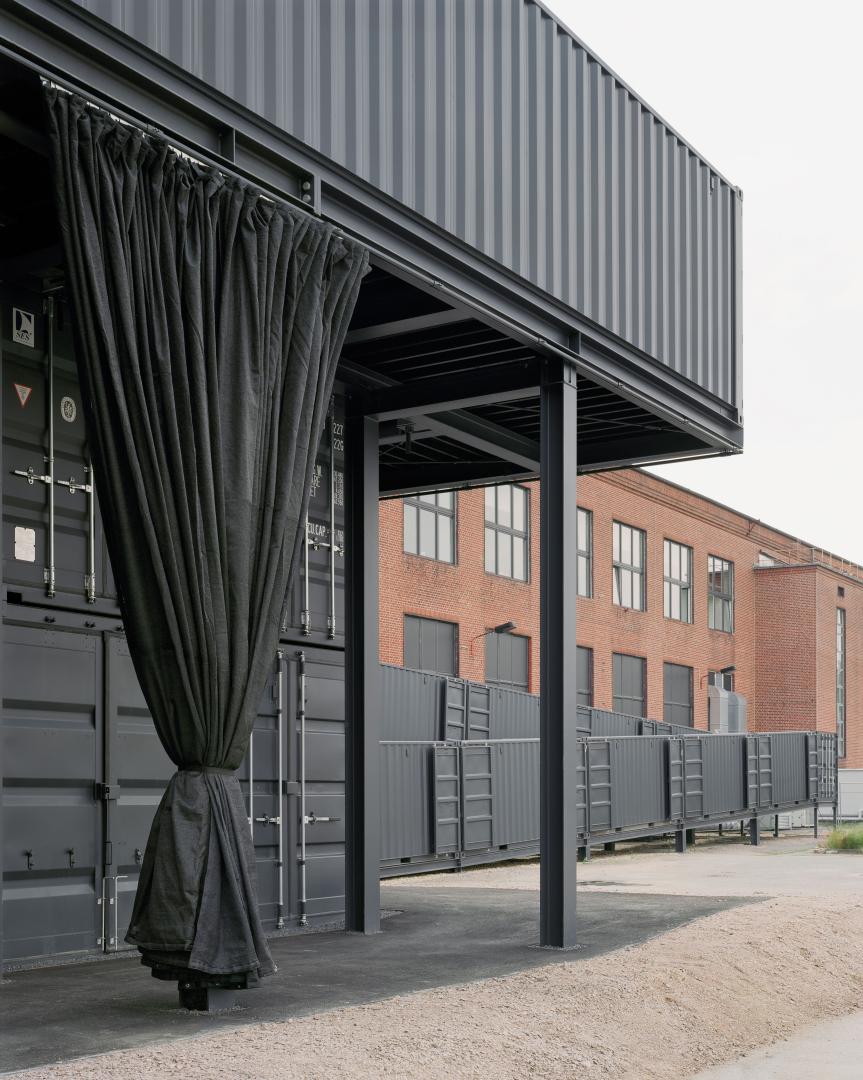
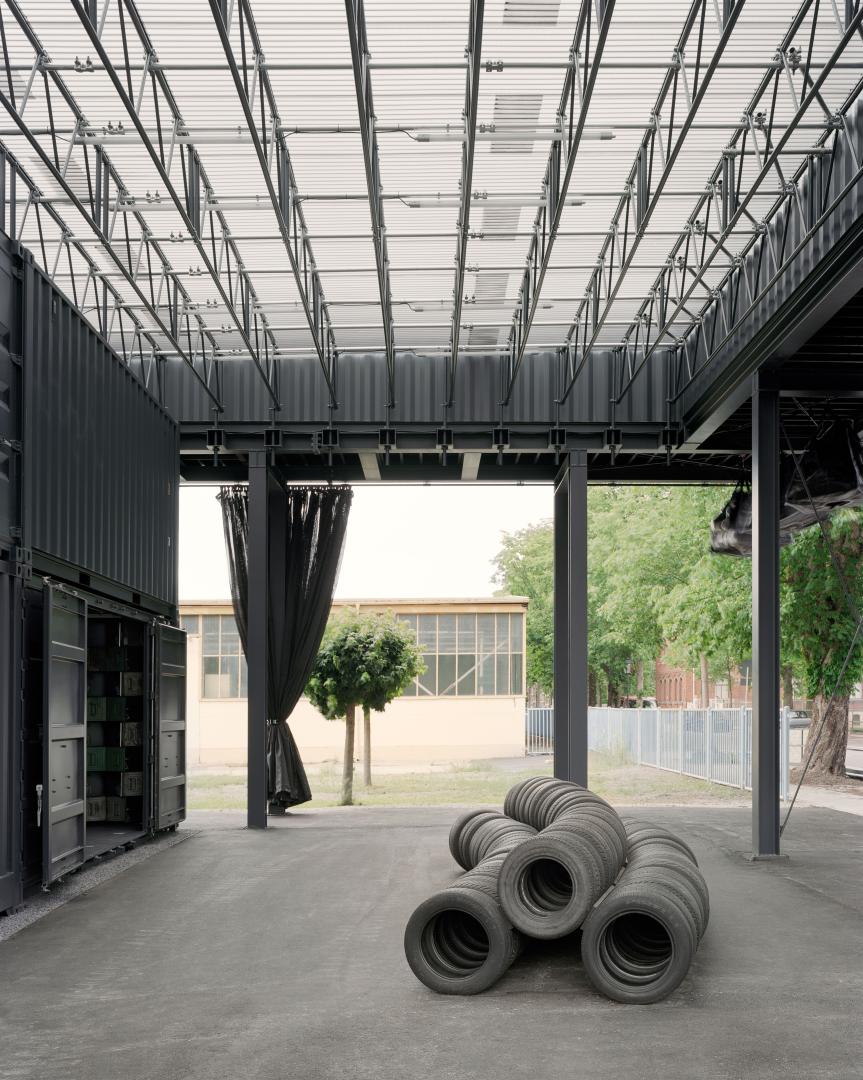
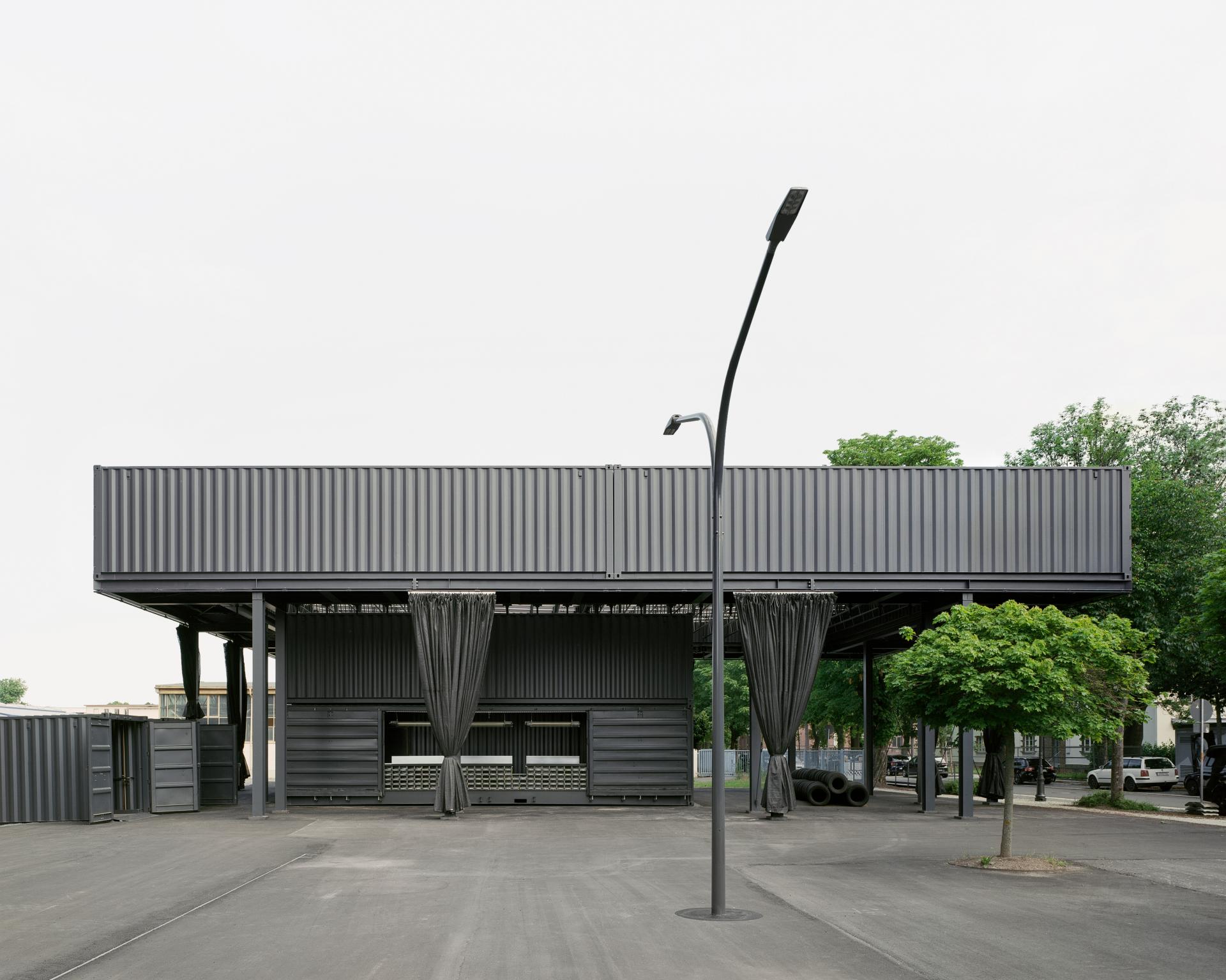
All new building volumes are made from used sea containers, which will be brought back into circulation after the disassembly. All supporting structures are made from reusable scaffolding trusses, reusable steel construction modules, or wood as a sustainable material. The furnishing elements, such as counters and lockers made from toolboxes or seating furniture made from car tires, consistently follow a holistic design concept of re-use. Topics such as industrial heritage, product exchange and recycling processes thus become legible as design-determining aesthetics.
The entry ramp provides a barrier free entry and a guide path for the blind aesthetically included in the overall design, provides further accessibility.
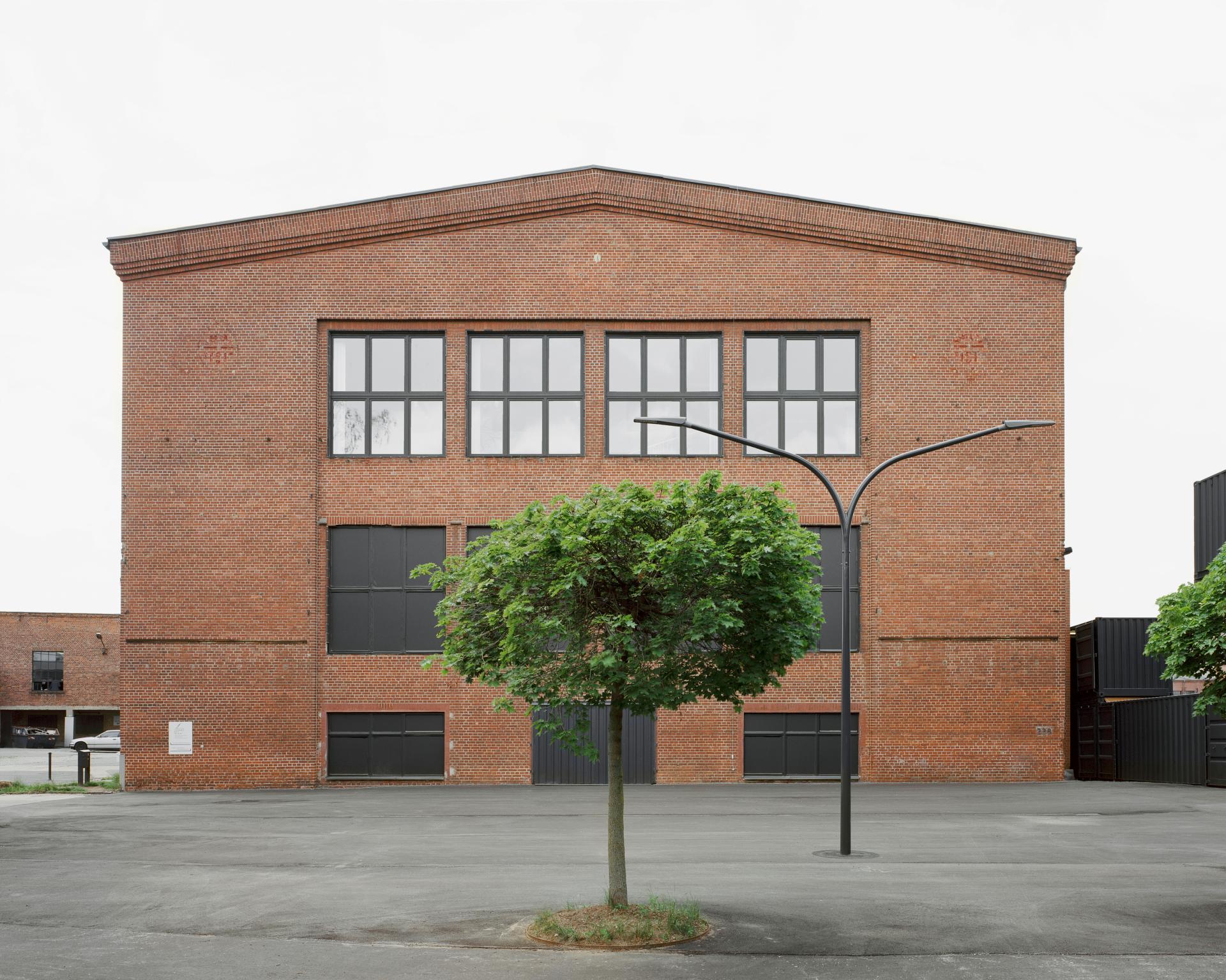
The existing building designed for Audi-Union AG 1938-39, was built with the aim of greatest possible savings and the goal of a construction with as little iron as possible. Thus, all of today's renovation works were made with the same principle in mind, in order to emphasize the original character and value of the building and to not use more material or energy than really needed.
The whole building, all of its components and the refurbishment of the existing building, follow a circular concept of re-use, zero-waste and inclusion.
Key objectives for sustainability
KEY OBJECTS:
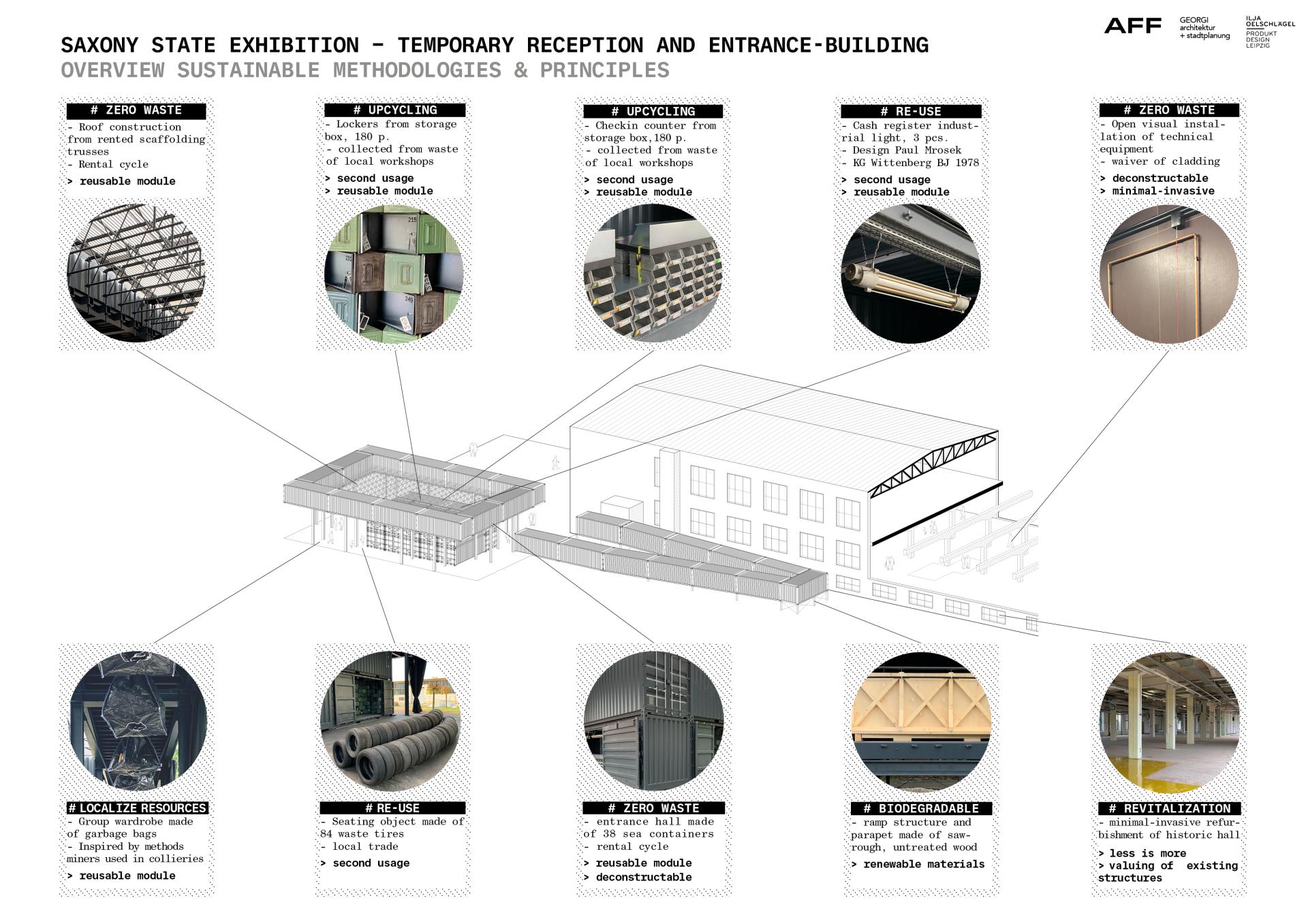
FULL CIRCULARITY AND ZERO WASTE: By only using already existing products which also can be reused after the disassembly of the temporary building, the goal of a full circularity was reached. By using only existing products in a way they can be brought back into a commodity circuit, the zero waste concept could be implemented. For example the containers were used as they are and not modified so they can go back into circulation. When a supporting structure was needed, like for the roof or the ramp, rented scaffolding trusses or wood as a sustainable material was used.
DESIGN FOR DISASSEMBLY: Goal met by using construction methods, which had an easy disassembly in mind, like screwing and not glueing, or for example construction out of scaffolding trusses.
RE-USE AND UPCYCLING OF EXISTING PRODUCTS: by reusing or upcycling existing products or waste, the usage of new materials was reduced to a minimum. The checkin counter is made of old storage boxes, as are the lockers, the seating area out of old car tires, all found in local workshops.
REVITALIZATION OF EXISTING BUILDINGS: Sometimes less is more and in order to strengthen the existing structures and it’s context, only minimal invasive methods were used for the renovation of the historic Audi-hall. Needed technical equipment was left open without cladding, in order to guarantee a possible disassembly and to safe material and energy use – while still being integrated and strengthen the historic industrial aesthetics. For the historical Audi-hall, the goal was, to bring the old production hall to life by the resolution that "everything that does not disturb should remain“.
LOCALIZING RESOURCES: By using historic contexts as an inspiration for sustainable methods and searching for local material resources, construction energy could be reduced to a minimum. The group wardrobes for example were inspired by methods of miners and the storage boxes for the counter came from local workshops.
Key objectives for aesthetics and quality
The key objectives in terms of aesthetics were to strengthen the existing historical building, provide a welcoming entrance experience for the visitors, to reference historical contexts as well as contemporary sustainable approaches and make them tangible. By giving the new entrance building a clear individual and contemporary look, it strengthens the aesthetics of the historical existing Audi-hall while still establishing a strong connection between the new and old building.
Even though a lot of individual and readymade products were used as building elements, the goal was to visually unify the new building as a whole.
The monochrome coloring unifies the separate elements and allows to highlight parts like the checkin counter made of re-used elements at the same time. The defining black of the building comes from the standard RAL-coloring of the containers – this way the surfaces to be painted could be reduced to a minimum. The materials reference the overall historic industrial context of the area while representing cultural values as well as a contemporary sustainable approach of circularity. By the holistic approach of construction and aesthetics, the temporary entrance hall provides a warm, welcoming and accessible experience of the exhibition and makes a circular design approach tangible for the visitors.
Key objectives for inclusion
As architecture is always a collaborative process, we collaborated with architects Georgi Architektur + Stadtplanung and product designer Ilja Oelschlaegl. In regards to inclusion, the aim was above all not simply to accommodate the necessary elements for accessibility, but to integrate them, or rather to use them as a design element as well. The ramp for barrier-free access thus became a design element, both inside and outside. The orientation elements for the blind were integrated into the overall aesthetic in such a way that they can also be perceived as a design element.
Results in relation to category
With the decision to host the flagship exhibition on the 500-year history of industrial culture in the historic Audi-Hall in Zwickau, a concept for a temporary entrance building was sought, which would not only meet the technical requirements of high visitor flows, but also meet the questions of sustainability and accessibility. At the same time it was important to underline the value of the existing Audi-hall and its cultural heritage. This goal was not only met by the overall design and construction approach of the entrance building, but by keeping the interventions to a minimum while renovating and refurbishing the historical building.
The re-use and upcycling of materials for the construction of the entrance building also represents an approach in which used products are not seen as waste, but as a multidimensional source of values – by re-imagining their purpose, re-contextualizing them or emphasizing their cultural or symbolic value. And last but not least, to use materials in a circular way, so that they can be reinjected into a product or building chain – or in other words, to appreciate their original value.
The placement of the entrance building furthermore creates an inviting place which not only leads into the historic building and exhibition, but gives the possibility for visitors and local citizens to spend time in front of the atmospheric industrial heritage building.
How Citizens benefit
Architecture always is a form of exchange, dialogue and interaction. With that in mind, the entrance structure is placed in a way so it creates an inviting forecourt situation, leaving the view of the old (renovated) factory halls unobstructed and thus building a bridge from the former industrial plant to an exciting exhibition with café, store, etc. Furthermore the openness of the entrance situation with aforementioned place character, creates an open space for design and actions by citizens and revitalizes the whole area with being a community magnet. By making a sustainable and circular building approach tangible, impulses for exchange and discussions about values for the future are given.
Innovative character
The innovative character of the project is in it’s holistic circular approach with a zero-waste concept and it’s minimal invasive character of treating the existing historical buildings and strengthen its structures – as well as it’s fluent implementation of high quality aesthetics and barrier free accessibility. The key was to not only include the construction process of a new building into the zero waste design concept, but also the dismantling and re-use of the materials after that. That means, that products and materials were not only re-used or upcycled for this building, but so they can be used in other contexts after the disassembly again as well. The design concept of using mainly ready-made, re-used or upcycled products – and how they were used – reduced energy consumption and production of new materials to an absolute minimum. The only element made out of „new“ material was the structure for the barrier-free ramp-system – which then again was not only made out of wood as a sustainable material, but assembled in a way it can be re-used after disassembly. The project shows that re-using materials and a circular mindset can lead to innovative typological solutions, as well as tangible sustainable and inclusive architecture approaches.