Creating a garden with upcycled debris
Basic information
Project Title
Full project title
Category
Project Description
The dismal site resulting from the careless demolition of a former convent in Vinaroz, a valuable architectural monument beloved by local residents, has been transformed into a garden. This was born from the archaeological remains, creatively upcycling the debris with a very low carbon footprint to evoke the historic memory of the building, aiming to restore dignity to the site and transform it into a place for meeting, relaxation and amusement, recovering a living space for the community.
Project Region
EU Programme or fund
Description of the project
Summary
The Convent of San Francisco de Vinaroz (Castellón, Spain), built in 1653, was confiscated in 1837 and was used successively as a prison, courthouse, police headquarters, office for social services and maternity hospital.
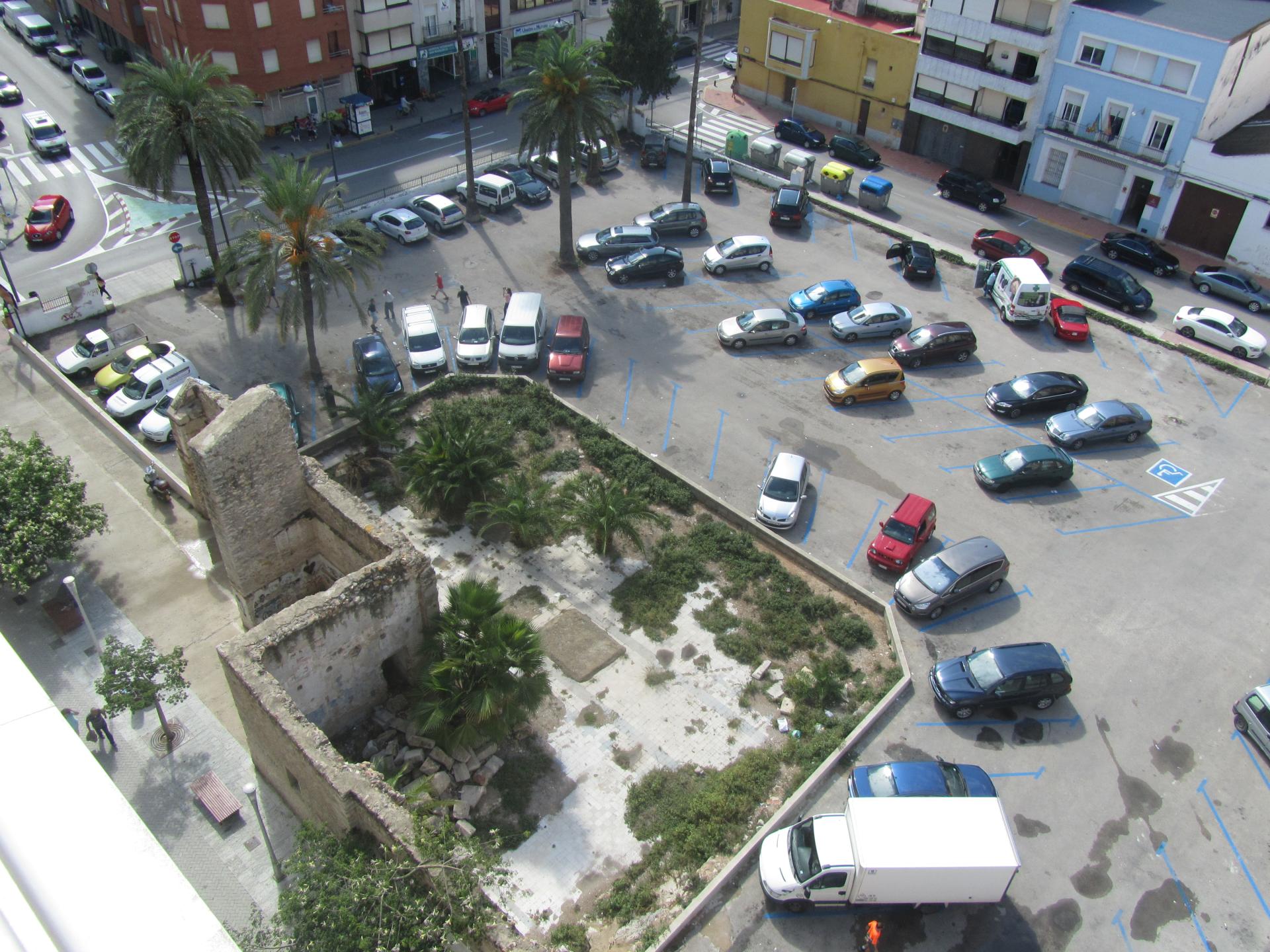
Despite its significance, in 2001 the complex was torn down to make way for apartments, and only part of the north outer wall and the indoor church flooring were left standing. The scandal generated by its destruction caused such a stir that and the local administration halted this real estate operation. The resulting lot was asphalted and used as a parking space, and over the years the remains of the outer wall and flooring greatly deteriorated due to natural causes and vandalism.
After 15 years, the Town Council of Vinaroz, owner of the land, eventually commissioned the authors to design the construction of a garden on the ruins of the convent to evoke the former presence of the missing building and establish a dialogue with the existing ruins.
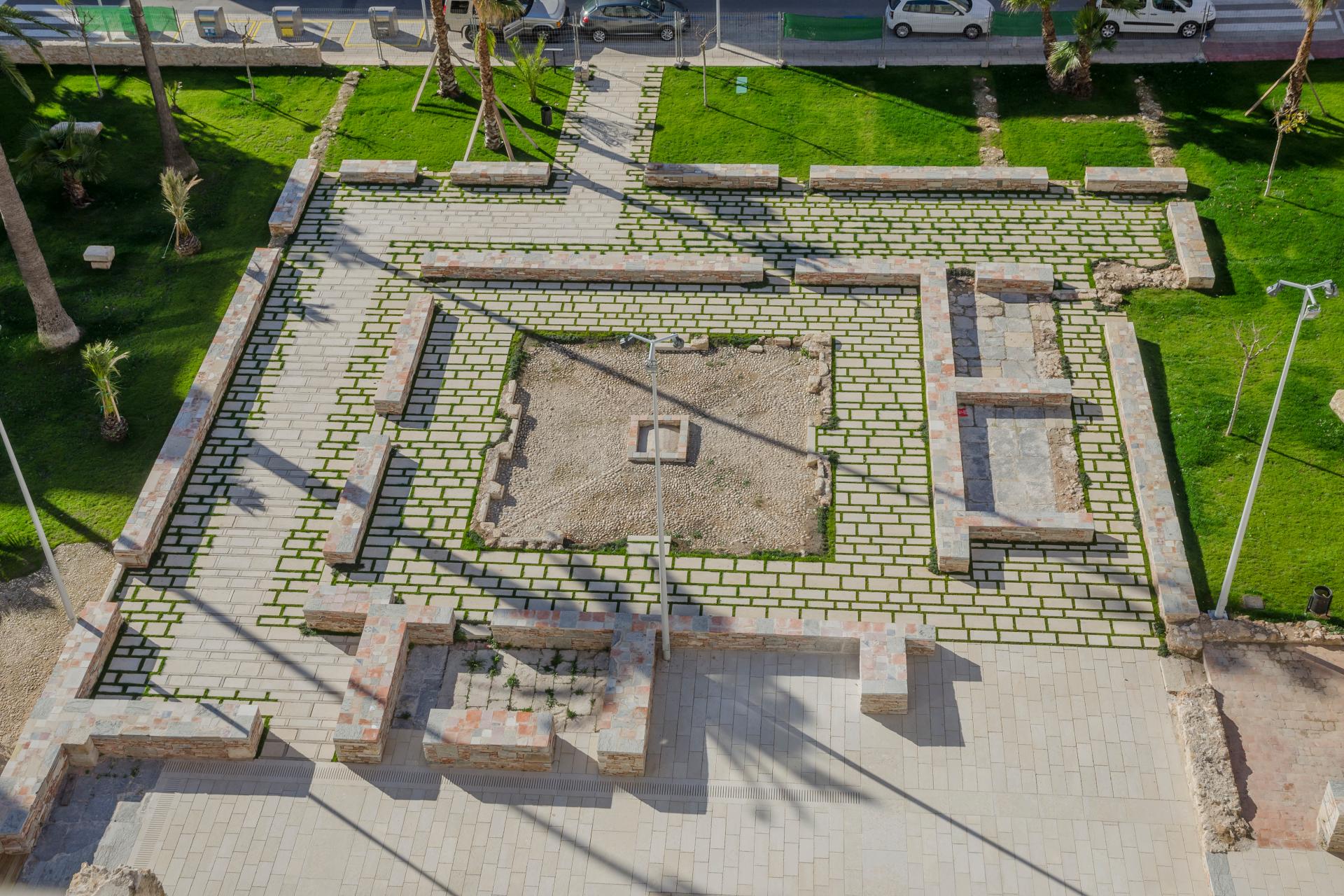
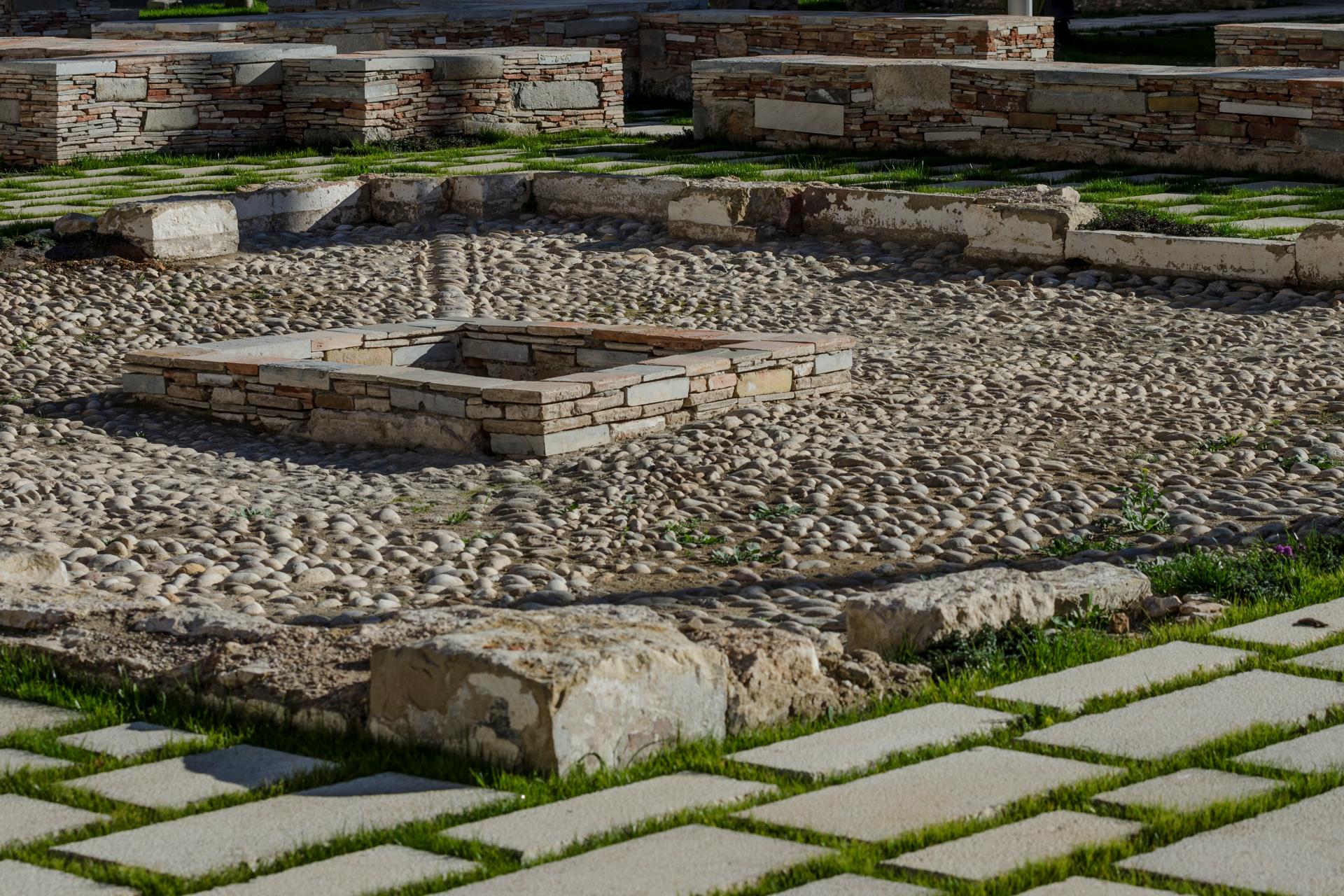
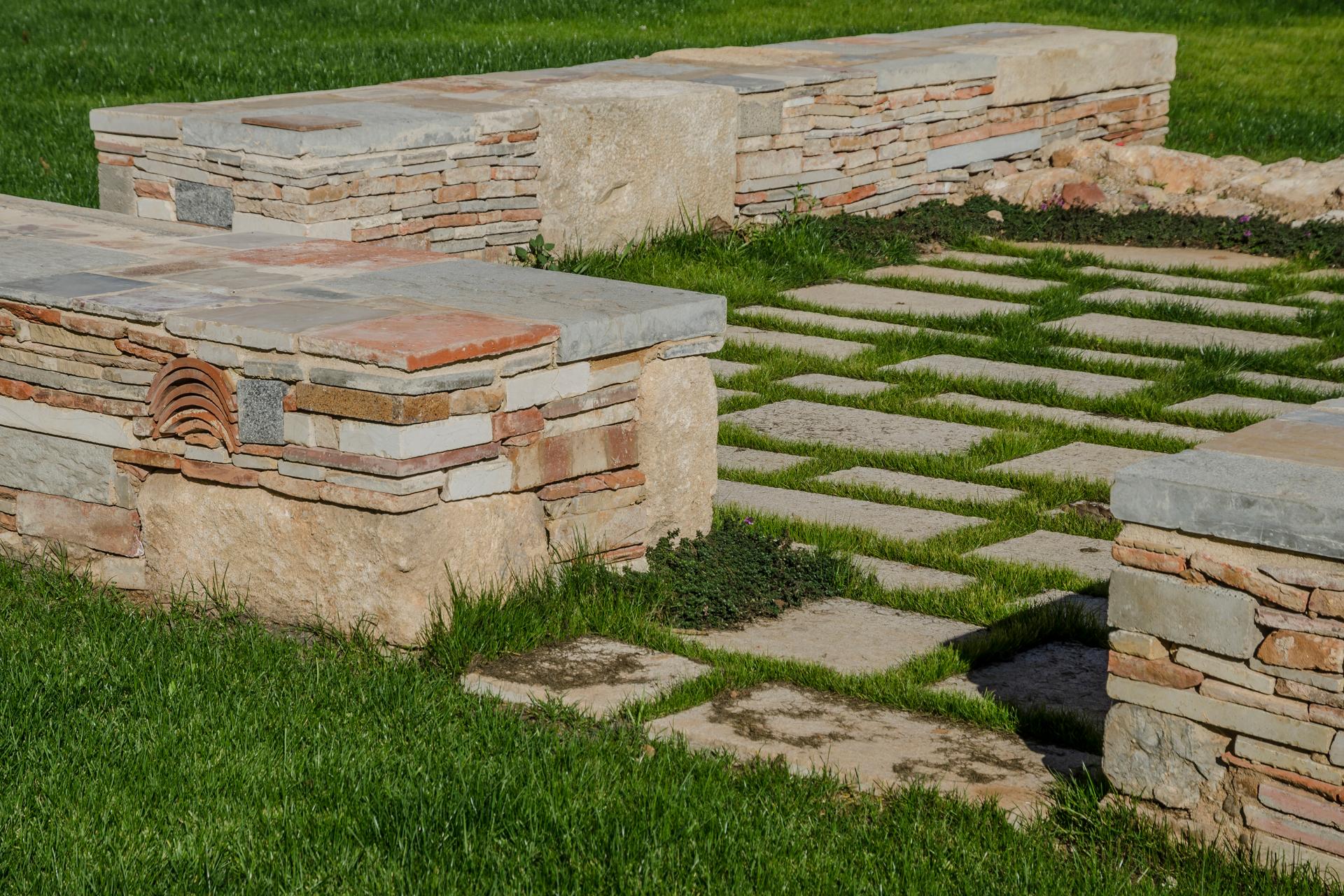
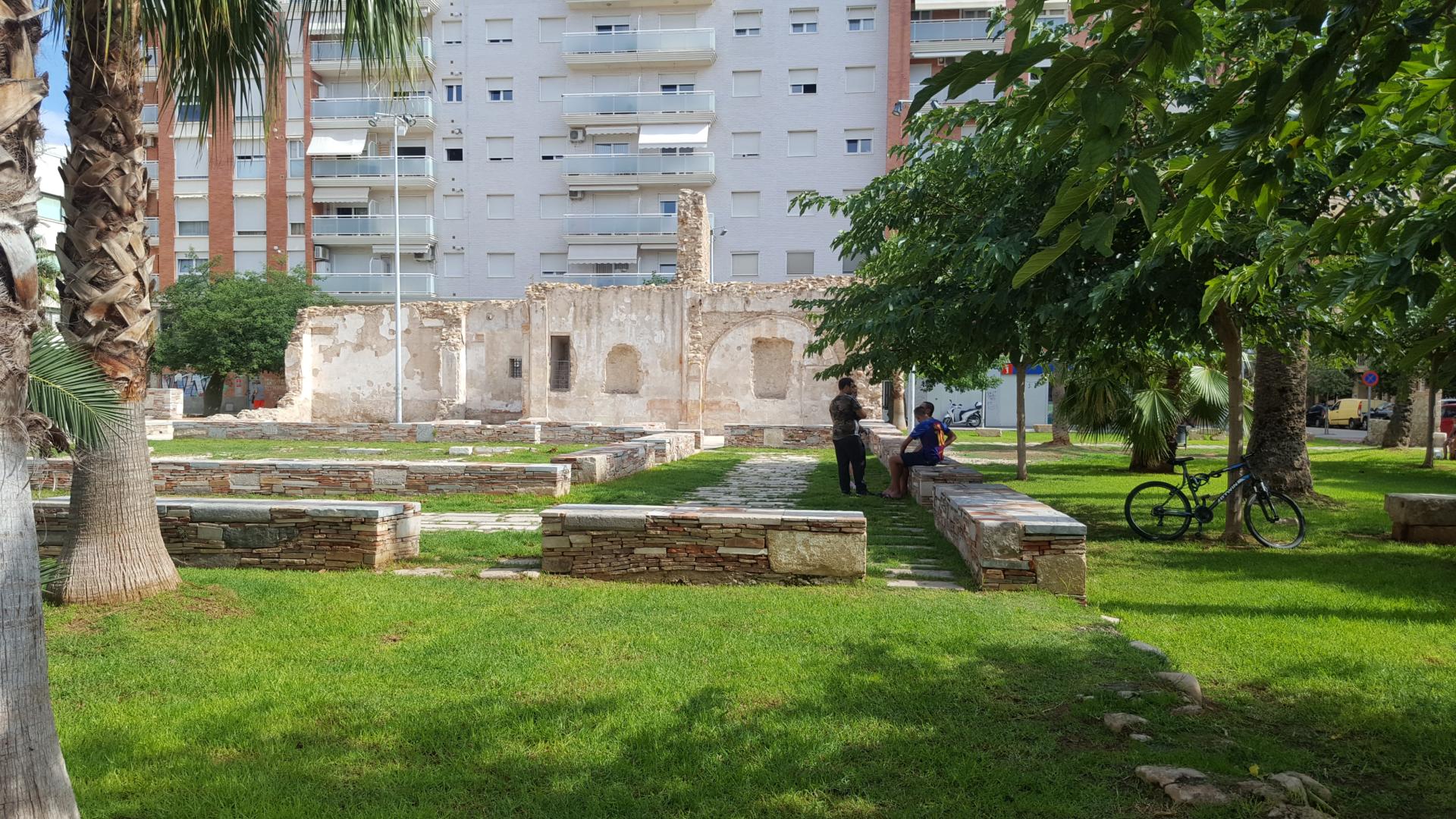
After unveiling the archaeological remains of the convent under the asphalt, the garden seats were designed, creatively upcycling the debris found during the excavation in order to evoke the missing convent. A hardy lawn was planted in the green area surrounding the former convent, the existing palm trees were preserved and new palm trees and large trees were added for shade, following a study of the solar radiation in the garden. The wall remains built up with upcycled debris, slab and pebble paving from the convent found on the ground and the new pavement with grass-covered open joints interact with the vegetation of the garden, blending into it.
Through these choices nature and artifice are merged smoothly, perfectly incorporating garden and architecture as a new harmonious whole, as was once the case with the church and orchards. The garden retrieves the memory of what seemed lost, restoring dignity to the site and returning it to the local community.
Key objectives for sustainability
This garden has been proposed as a multi-faceted sustainable architectural intervention. In environmental terms, efforts have been made to prevent any debris from being wasted, or at least to limit this as much as possible, also respecting any existing trees and palm trees, incorporating them into the new garden. When new elements had to be used, stone slabs were quarried locally, saving on transport, and local plant species were added.
From a sociocultural perspective, the memory of the convent that was there has been recovered for use as a public space to encourage social cohesion, also promoting the conservation of the traditional local technique of dry-stone walling, transformed into a “dry-rubble walling” technique, stimulating the creativity of the builders on the site with the reuse of the archaeological remains.
In socioeconomic terms, attempts have been made to optimize available means, saving on resources, and to use solid materials and simple constructive solutions to guarantee long-term durability of the garden.
This was not a case of recycling or transforming waste into new products or new raw materials through processing, but rather of upcycling, a creative reuse of waste material for the direct creation of higher quality materials with a greater environmental and economic value, avoiding intermediate processing.
Thus, the debris which otherwise would have just added to the municipal landfill becomes useful objects, the reserve for local memory with artistic value and great appeal. This has resulted in a more affordable intervention, saving on the purchase of manufactured materials, and has benefited the local economy and builders as a higher amount could be allocated to manual labour.
Key objectives for aesthetics and quality
The aim was therefore to create a garden space for public use, preserving part of the wall of the north façade of the remaining church. In addition to its conventional use as a park the Town Council requested the inclusion of a space for occasional use as an open-air auditorium.
The plans, which were drawn up prior to breaking up the existing asphalt and were based on some archaeological sample tests, assumed that following excavation remains of the outlines of the convent would appear, remains which we wished to preserve and restore to recover the historic memory of the town.
In its design the garden was to incorporate all the large palm trees, protected or otherwise, any small palm trees spontaneously growing, and other trees in the plot, as well as the old wall near the convent, brutally transformed by an intervention in the 1960s yet still one of the few remaining architectural vestiges of the original construction.
The garden seats built up using dry rubble were designed by the participants in the construction of the garden, through a gradual joint creation process with a few basic rules to be followed in the execution of the walls. These rules, usually applied to the traditional dry stone construction, use assembly, spontaneity, asymmetry and uniqueness, avoiding repetition, to ensure the walls are solid enough.
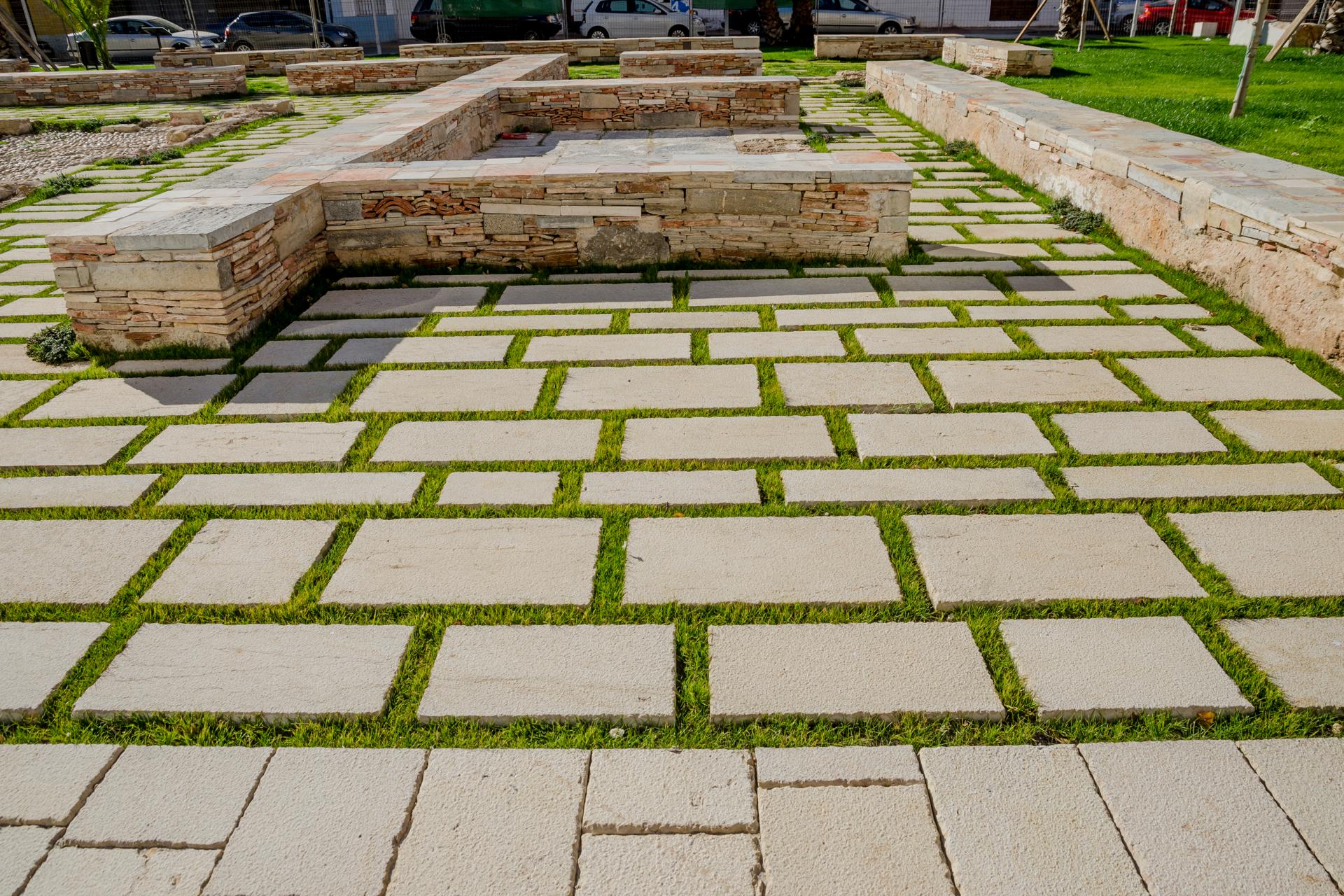
The paving installed consisted of Cenia stone slabs with a bush-hammered finish, in different lengths and widths, quarried with irregular edges, with open joints between slabs and from the remains of the walls of the convent, so that grass could be planted between slabs.
Key objectives for inclusion
Through the use of the archaeological remains and reuse of demolition rubble which evokes the missing convent, the garden has reasserted the memory of the residents, who had a special fondness for the building. Many of them had worked in it or visited its offices when it was used for administration, while some had even been born there when it was a maternity hospital. Moreover, local residents and associations took part in the design process, choosing the types of trees and improving disabled access to the garden.
Falling back on traditional trades in the area, especially for dry stone, used here with the rubble from the demolished convent, enabled this local vernacular construction technique to take on a new creative life, thus attaching a greater part of the budget to labour, with savings in machinery and the purchase of materials, elements and the construction of additional furniture. Local gardening professionals were put in charge of gardening tasks using local species.
Furthermore, any new material added to the garden, mostly stone slabs, was locally sourced from a quarry 15 km away, to sustain and promote the economic development of local quarries and industries, while also helping defend the local identity through these historic materials and finishes typical of the region. Thus, the design of the work, which has taken advantage of the rubble and occasionally used materials locally available, has been affordable for the municipality as it guaranteed great savings with the least damage to the environment, as well as a lower carbon footprint from materials and transport.
In short, the garden has successfully included the town and its memory and inhabitants, local identity, associations, vernacular techniques, local labour and a proximity economy. It has been both accessible to its citizens and affordable for the town council.
Results in relation to category
The aim was to invert the negative nature of the deliberate demolition of a convent which was part of the collective memory of its residents and its ill-fated architectural remains, transforming them into a garden for rest and relaxation. This garden, for the rest and relaxation of the entire community, was to be an example of continuity in memory, sustainability, low-carbon footprint and hope for the future.
The traces of the former walls of the convent were discovered when the asphalt was broken up and have been built up to form garden seats using the original building ashlar, stone, tiles and roof tiles found during the excavation. The aim was to evoke the missing convent using its debris and archaeological remains for construction, instead of adding these remains and their unique background to the municipal landfill condemning them to be mixed up with other waste, to finally become environmental waste.
The remaining wall of the church was carefully preserved using remains and traces of rendering, paintwork, joinery, etc., as well as the imprints of the residential buildings which had been built onto the external wall and which were the sole reason for this wall being preserved until the present day. In addition, the surviving vegetation, palm trees and a cypress, have been preserved and used as the basis for the new vegetation in the garden areas.
While the flooring for the church area was set closely together and followed the bays of the original building, that of the convent featured a space between the pavement tiles allowing vegetation to grow perfectly and incorporating them into the greenery as part of it. The remains of the masonry walls and pebble paving of the convent found on ground level would establish a dialogue melting into the green spread of the garden. The immediate co-existence of nature in the form of grass and fragrant groundcover and the ruins of the convent encourages our understanding of these, integrating them into the new g
How Citizens benefit
Following the initial scepticism prompted by the dismay at witnessing the demolition of a well-loved architectural heritage, the perplexity of the local residents gave way to enthusiasm and pride in the finished work. The high involvement of local labour and the active cooperation of workers from the local town council meant that local residents were involved from an early stage. Visits to the site were organized for local residents, representatives and local associations to discuss options and various finishes and access solutions.
The imprints of the convent and church were kept and recovered, as were the original accesses from calle San Francisco through the outer fence, and perpendicular access from calle Hospital. The reasons for this were historical but also took into account the wishes of the local population, who had requested disabled access through the main gates and also throughout the garden. A notice explaining the history of the site and the creation and the memory the garden was designed to evoke was also added at one of the garden entrances.
At present, the garden is always in use, and its greenery provides shade from the sun. The convent could not be rebuilt, but people have got over their distress at this demolition and their desperation at the arid car park in the blazing sun. This was replaced by optimism for the garden and a positive evocation of the memory of the convent.
It subsequently received awards both nationally and internationally, and the garden was included in an exhibition in the College of Architects on the best projects carried out in the region over the last 40 years. Together with publications in national and international press and journals and digital platforms, this has increased local pride in the finished garden, reflecting and reaffirming their own personal satisfaction in the project’s impact in technical and specialist media.
Innovative character
This project has mostly used the rubble and recycled debris found during the archaeological excavation, with several objectives:
- To evoke the missing convent, bonding again the original materials in a different way
- To warn against future demolitions of this type
- To creatively reuse the debris to prevent pollution in the surroundings
- To apply the concept of proximity architecture to the construction of the garden
In addition, the new paving has included Cenia stone slabs from quarries near the site, and Mediterranean plant species native to the municipality. Thus, 95% of the construction materials are the remains of the debris found in the site or have been sourced from a quarry 15 km away, an extraordinary example of savings for the local economy, respecting the environment.
The project also achieves a balance between the memory of the convent and the vegetation, resulting from an equal consideration of the conservation of historic architecture and nature. The is not due to a different approach, but to an overall vision which has successfully combined archaeological remains and original paving, the existing historic palm trees and the former entrances and perimeter wall of the convent, rediscovered under a layer of cement and ceramic tiles from the 1960s, with recycled debris, new paving and new plants.
The garden is a painstaking combination of history and modernity, memory and progress, archaeology and nature. At the same time, it reclassifies a run-down site, returning it to the population as a new place of socialization, of memory, relaxation and leisure time. This space which seemed lost has now been brought back to life and, though deeply transformed through the years, it still evokes a past time while fully anchored to the present.