Accademia sull'arte del gesto
Basic information
Project Title
Full project title
Category
Project Description
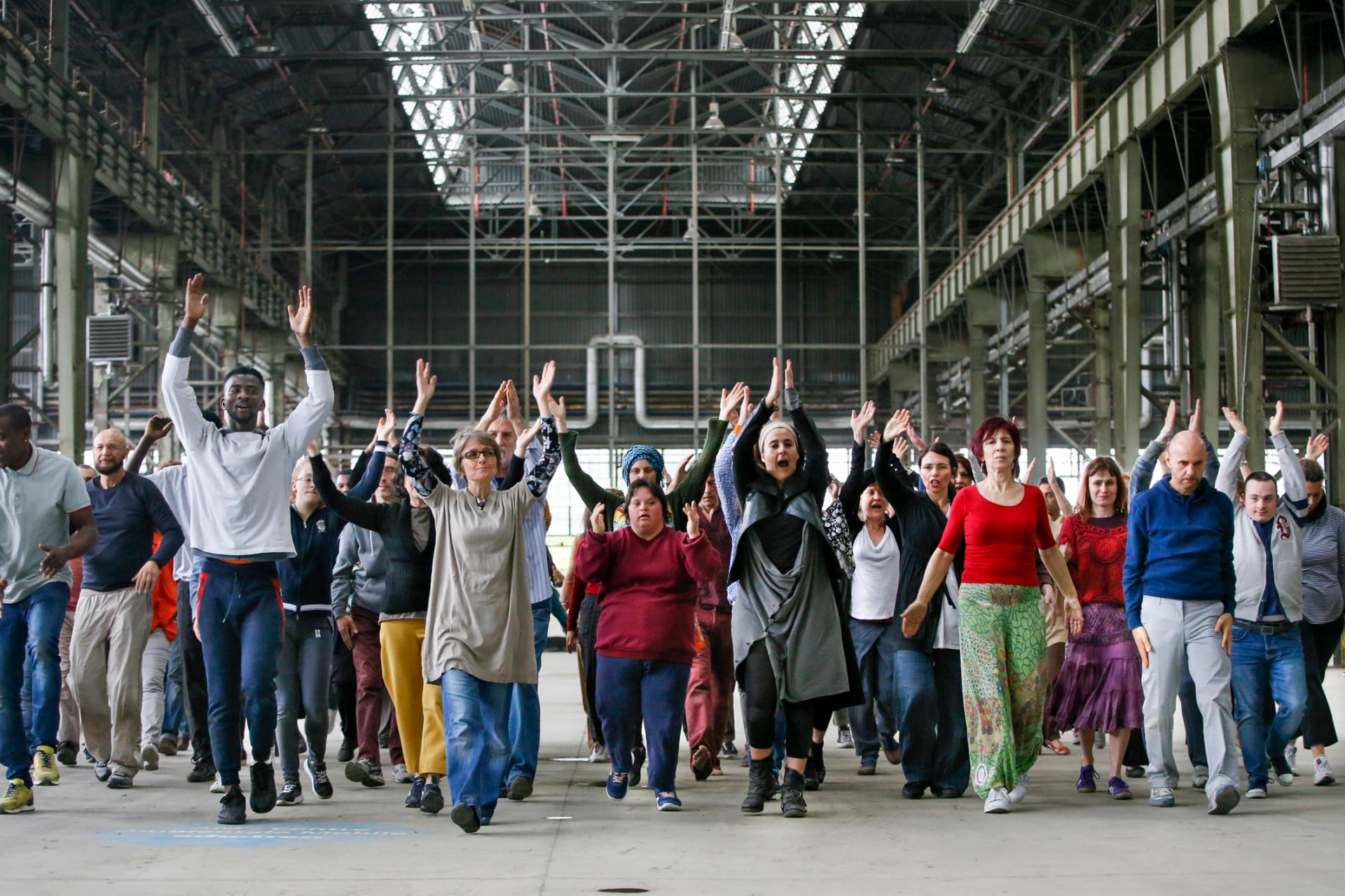
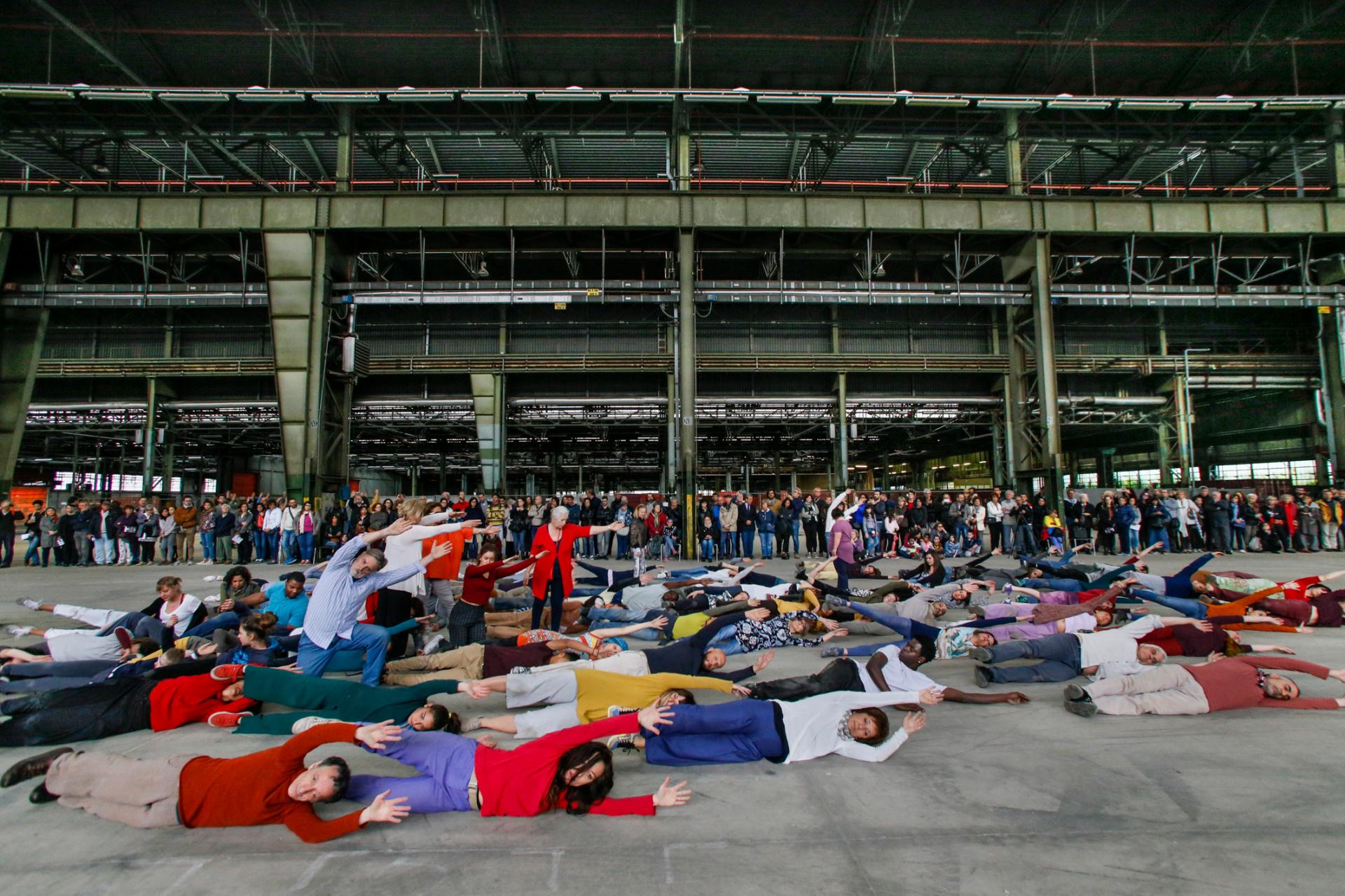
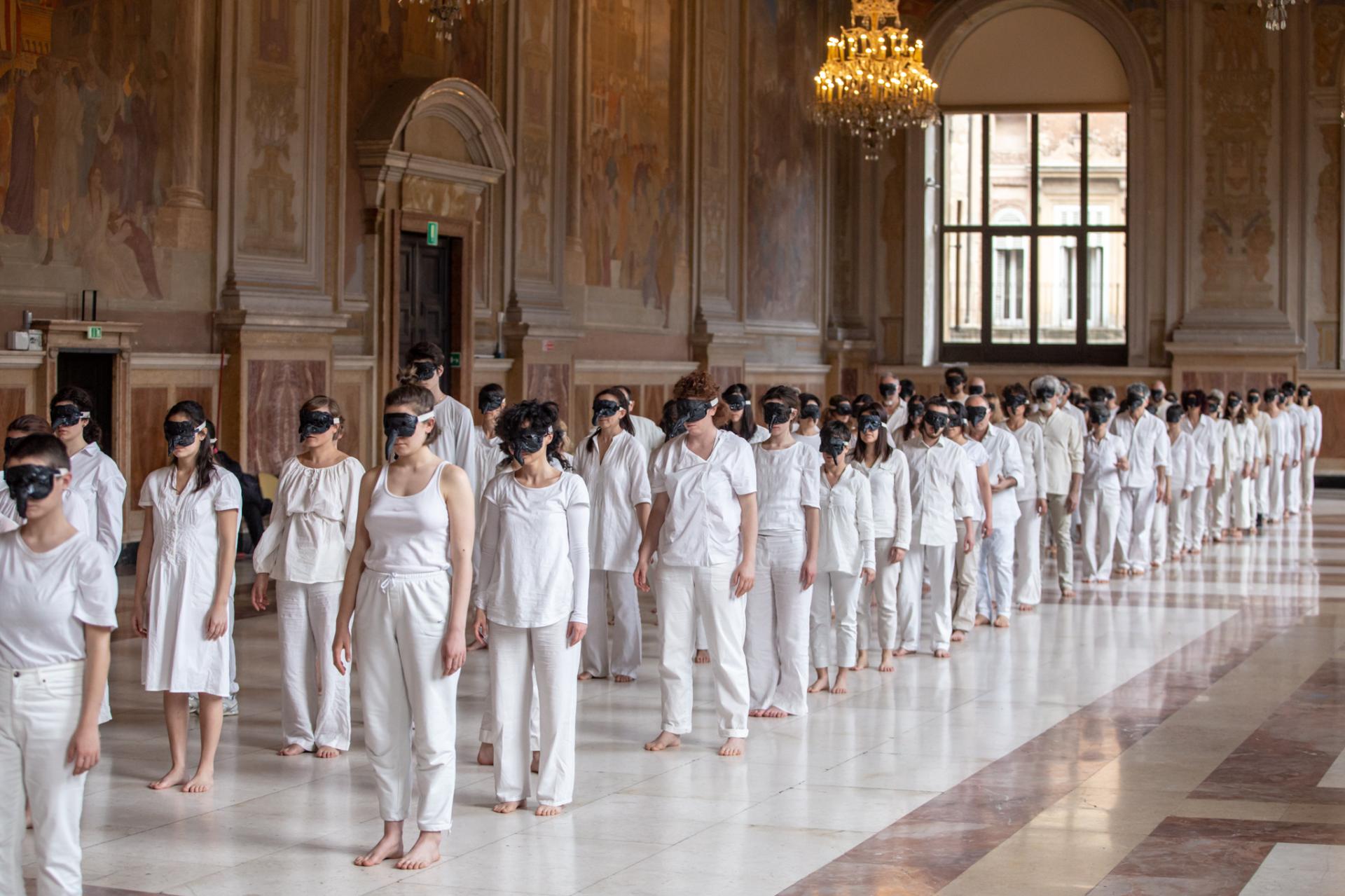
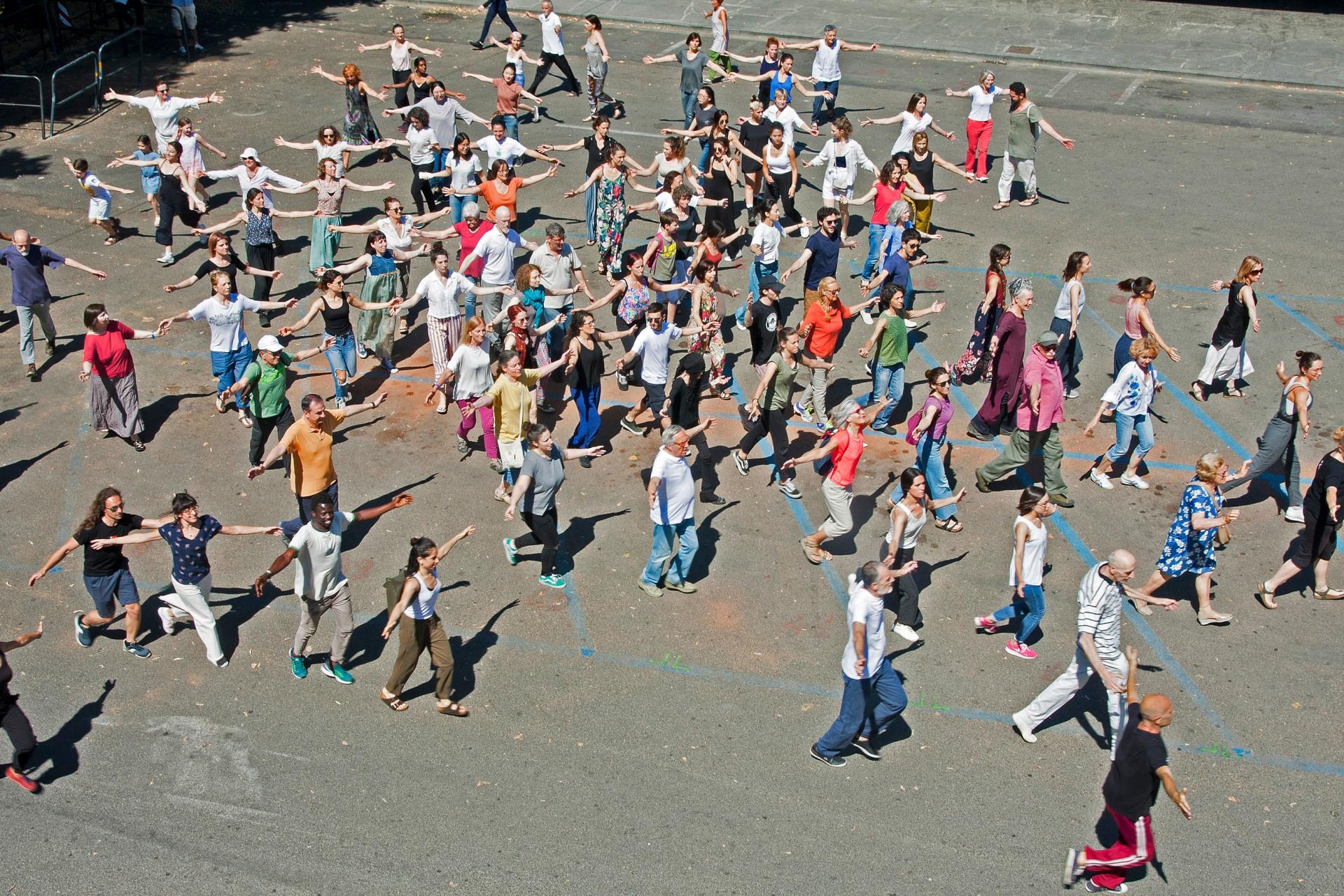
The Accademia sull’arte del gesto presents itself as an original project of research, creation and artistic awareness, based on a wide range of cultural actions addressed to people of all ages, abilities and backgrounds. It focusses on participatory artistic paths using the possibilities of contemporary languages, with particular attention to body and movement, as tools for individual growth, community capacity building, self empowerment and cultural welfare.
Project Region
EU Programme or fund
Description of the project
Summary
The Accademia sull’arte del gesto, promoted by the Centro Nazionale di Produzione della Danza Virgilio Sieni, is an inclusive context based on participatory projects that, starting from the characteristics of places and communities, act as means of regenerative processes of the person and the community and cultural innovation.
Every project develops four main assets of intervention:
- Attention to environment, body and landscape is implemented with actions based on the sense of care and active participation stimulated by artistic languages.
- Culture, memory and traditions: elements that stimulate the creation of collective works aming to elaborate traces from the past, recomposed in the complexity of the present.
- Relationships, well-being and care are understood as key-words for the creation of communities able to cooperate for a new interpretation of the shared space.
- Regeneration and innovation, two themes that, in the urban and cultural sphere, have in the artistic creation the fulcrum of citizen involvement.
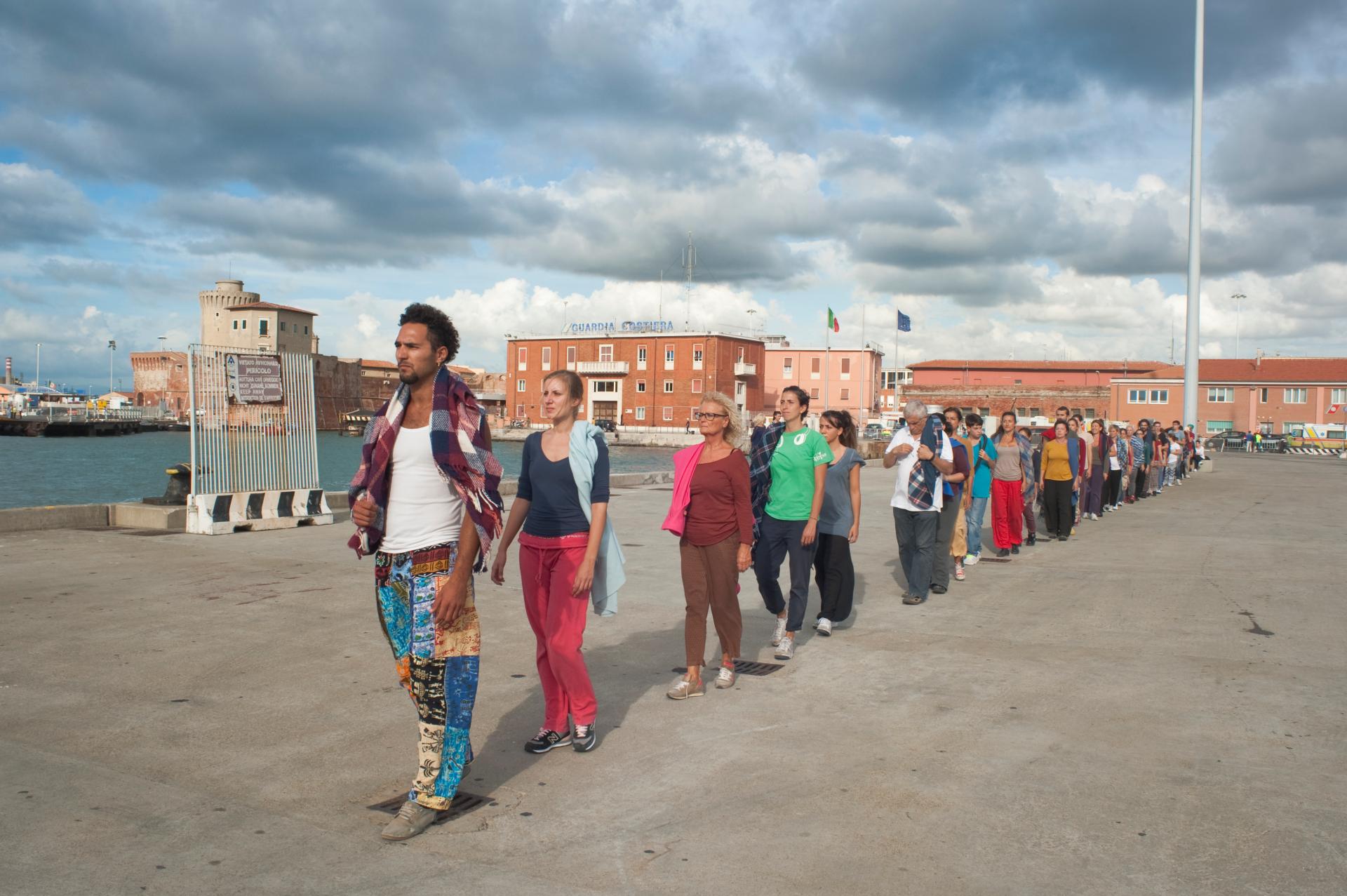
The projects are carried out in different environments and places (national and international), each time reshaping the process and the dynamics of interaction with the stakeholders. Every single project develops in an original way thanks to the sharing between the Centro Sieni and the institutions that open their spaces, giving headquarters and generating the geography of the artistic path between encounters, visions, practices of transmission and creation of site specific actions in cities.
The vision is based on Manifesto 111, a booklet born from a participatory writing process on the relationship between living and operating in territories through the art of gesture. It is a poetic and political tool, made by numerous citizens, with the aim of creating dialogue within the framework of cultural policies and to recognize the importance of the development of social practices through the languages of art, body and dance.
Key objectives for sustainability
The project, far from pre-established models, invents participatory formats and art works in different spaces. Working indoors and outdoors means to stimulate a sense of belonging that is the basis of ecological and environmental education. Creative processes act as drivers of a sustainable ideal that favors the conditions for development, capable of ensuring the learning of people involved without compromising or damaging the chosen place.
In this perspective the first action is to choose the place (a road, a tree or a monument) that will become the seat of the community and at the same time will shape the uniqueness of the project. The dance practice stimulate observation and awareness of the elements that compose the environment, thus leading the participants in the learning of movement sequences in relation to it, observing and incorporating the constitutive characteristics an experience that invites to assume a new posture, new way of perceiving the distant space between oneself and the surrounding and finding creative and cultural possibilities in the characteristics of the space. This sensitivity and this invitation to use the body as a medium for learning and producing new ecological habits, that invites to model the dichotomy between body and place, re-establishing a vision in which bodies are included within landscapes and as landscapes.
Our goal is to act efficiently, opening and democratizing both art and public spaces and structuring interventions aimed at reducing the environmental impact of cultural structures and activities, through investment in clean energy, using circular economy and building strategic alliances with other sectors. Involving citizens personally in the choices of the city is the first step to protect by educating about the beauty and potential of our natural environment, expanding practical models of strengthening human and ecological health, driving innovation without compromising our way of life.
Key objectives for aesthetics and quality
In the Arts Education scene the Accademia stands out as a context oriented on experience and active participation in processes based on the enhancement of the individual, of the place, of the community, working for the diffusion of a contemporary artistic ideal, based on co-creation models that look at the innovation of cultural, artistic, educational and welfare practices.
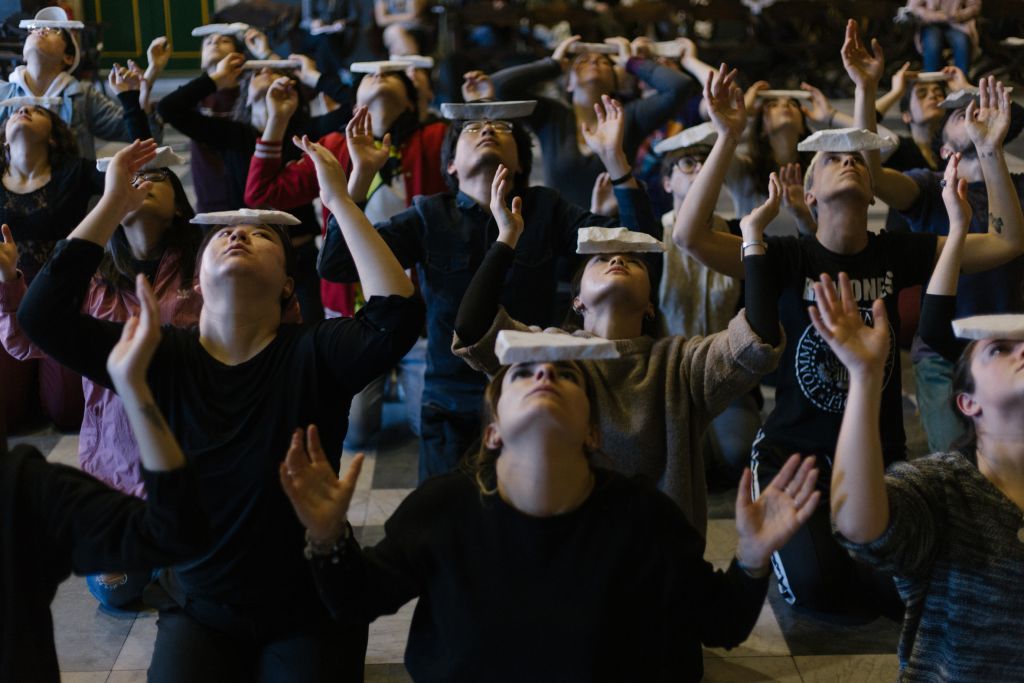
The projects, oriented towards choreographic actions, are anticipated by paths in which people are invited to practice gestural awareness exercises aimed at a rediscovery of the body as a place of knowledge and relationship with the environment, a space for meeting others and empathic knowledge of the world. The fulcrum of the aesthetic experience is configured in the transmission and shared experience of some elements that make up both the art of dance and the individual and biological experience of the human being, conceived as the one who inhabits and defines the space for action owning and valuing the meaning of things.
The artistic way becomes the intermediary of values that show the transformative power of art. Acting carefully and slowly, enhancing the existing, looking for the postures and gazes that already belong to our culture, are the basis for involving people in “idle actions”. It’s from this common gaze that are created communities which, regardless of previous experience, recognize themselves in a search for the unusual, for hidden detail, for fragility and therefore for care.
The aim is to create moments of meeting and sharing that provide concrete examples and shared solutions on the problems to be faced in building a responsible and participatory environment. In this way it is possible to generate an atlas of affinities and resonances, differences and repetitions, in which a glance on the others and the gesture of proximity become the concrete action that let to the rediscovery of the democratic sense of body.
Key objectives for inclusion
Starting from the definition of participatory paths, the project sees the fundamental principles of action in the inclusion and democratic vision of the body and space. The projects are open to people of all ages, abilities, gender and origin, and promote care dynamics with the aim of tracing new and renewed relational geographies, finding in sharing the key to giving life to social and territorial regenerative processes. Each project is composed of active citizenship actions that contribute to the quality of life of the inhabitants generating closeness and belonging, fostering sharing knowledge and practices, skills and different tools. Starting from the idea of gesture as an element of cohesion, connection and encounter, the projects developed by the Accademia aim to:
- Promote health and well-being by developing attention paths for the individual and the community.
- Create opportunities for quality, equitable and inclusive education open to intergenerational and intercultural encounters.
- Activate practices of exchange and comparison, favoring the creation of lasting and supportive human relationships between the people involved.
- Promote proximity generative welfare paths by creating spaces for socializing and confrontation through the activation of active citizenship practices.
- Researching new solutions and new habits to counter the effects of the pandemic era.
All goals are structured to connect institutional art places (theaters, museums, associations, foundations) with private and independent ones, public places (green areas, roads, parks, urban areas) to private ones with the idea of democratizing and constantly including more places, people and contexts.
Results in relation to category
The Accademia has been able to activate policy processes, acting into an interstitial space between art and social life. Through participatory artistic practices, projects are developed in terms of good practice for the creation of sustainable communities, as they stimulate and involve citizens in renewal and territorial proximity processes. We call this groups of participants “community of gesture” and in the last 10 years we have reached a participation ranging from 50 to 200 participants for each project carried out, involving over 1000 people in one year.
The concept of dissemination of culture is reached thanks to the consolidation of transversal organizational contexts between artists, operators, citizens, administrations and local associations. Cultural work extends from the creation of performances to structural works in the city, which in both cases stimulate a complex and active vision of the territory. Over time, our experience has expanded itself, trying to increase the accessibility of its proposals. Starting from the sense of necessary sharing of experiences on the body and through the collective awareness of living, born La Scuola sul Gesto e il Paesaggio, a school for the training of operators, new professionals able to act in the territories to which they belong, generating processes of legacy.
The Cantieri Culturali Festival, on the other hand, is an example of how artistic processes can enter into city construction. It is a festival that develops projects and performances starting from the characteristics of Florence suburbs, finding the key-action in involving citizens: they are participants, observers, host and help artists to experiment with solutions for habitability.
To this day, the next goal is to create a project conceived on a national scale which, by relating entities and associations from all over the Italian territory, intends to increase the sense and long-term impact of proposals already active or in the process of evolution.
How Citizens benefit
Through diversified actions such as workshops, meetings, performances, choreographic actions, exhibitions, installations, artistic residencies, videos, documentaries and itineraries, the project acts redefining the parameters of cohesion through transversal organizational processes.
Citizenship is involved at various levels: the first is concerning the active participation of citizens and professional figures such as operators, artists and representatives of the institutions involved. The second is based on cultural fruition, inviting people to conceive art as an inclusive and open collective practice, suitable for wider contexts. The experiences spread in the territories evolves as participatory flows, creating a new cultural and social geography of proximity capable of enhancing the distinctive cultural elements and identities of each place.
The discourse on the origin of the gesture has grown thanks to continuous and expanded work with different target audiences, such as:
- couples of mothers and children in which the observation and formalization of the filial gesture and the rituals emerge as a privileged observation point on the birth of relationships.
- communities of craftsmen in which their actions arise from a continuous manipulation, modeling of matter in a visible and necessary connection between hands and head. From these concept work on the body inherits: the dimension of time, always aimed at slowness, rituality and repetition, all indications that refer to a circularity and precision of the gesture which, when performed, generates change and novelty; problem solving & finding or the ability to elaborate, crumble skills and knowledge for the ever new and coherent creation of possible solutions; the practical and reflective role of doing, producing a language that comes from experience, an action that leaves room for imagination and freedom of action.
Innovative character
The project stands as a cultural innovation platform for the construction of communities and territorial geographies, consisting of practices and relationships that connect artists and citizens, places and cities. Through collective practice on the language of the body as an innovative response to the need for sociality in relation to caring for the environment, experiences build an "emotional map", an interpretative approach that is based not only on objective territorial elements, physical or social, but on the subjective and sensitive perception that individuals and collectives have of them.
The innovative character lies in the transformative power of the individual experiences that make it up: Through gesture and movement the individual and the community are invited to attend a stage of physical and cognitive presence that necessarily keeps listening with the open, with nature and with each other. Dance is proposed as a research platform open to all, a primary tool of cohesion, understood as the conscious appropriation of the body’s heritage and its applications through the languages of art. In this sense, the project, in its organic nature and diversity of proposals, aims to stimulate and contribute to the development of innovative experiences on local knowledge and the beauty of collective action.
Each stage represents a space of connection that welcomes the passages, the transmigration from a place of the body to a place of the city, generating the growth of a shared vocabulary that branches out into the acting and daily living. Furthermore, it becomes crucial to give as many citizens as possible access to the assets of the nation's living culture, enabling them to contribute to its enrichment by fostering cultural democracy.