Le Comptoir des Saisons
Basic information
Project Title
Full project title
Category
Project Description
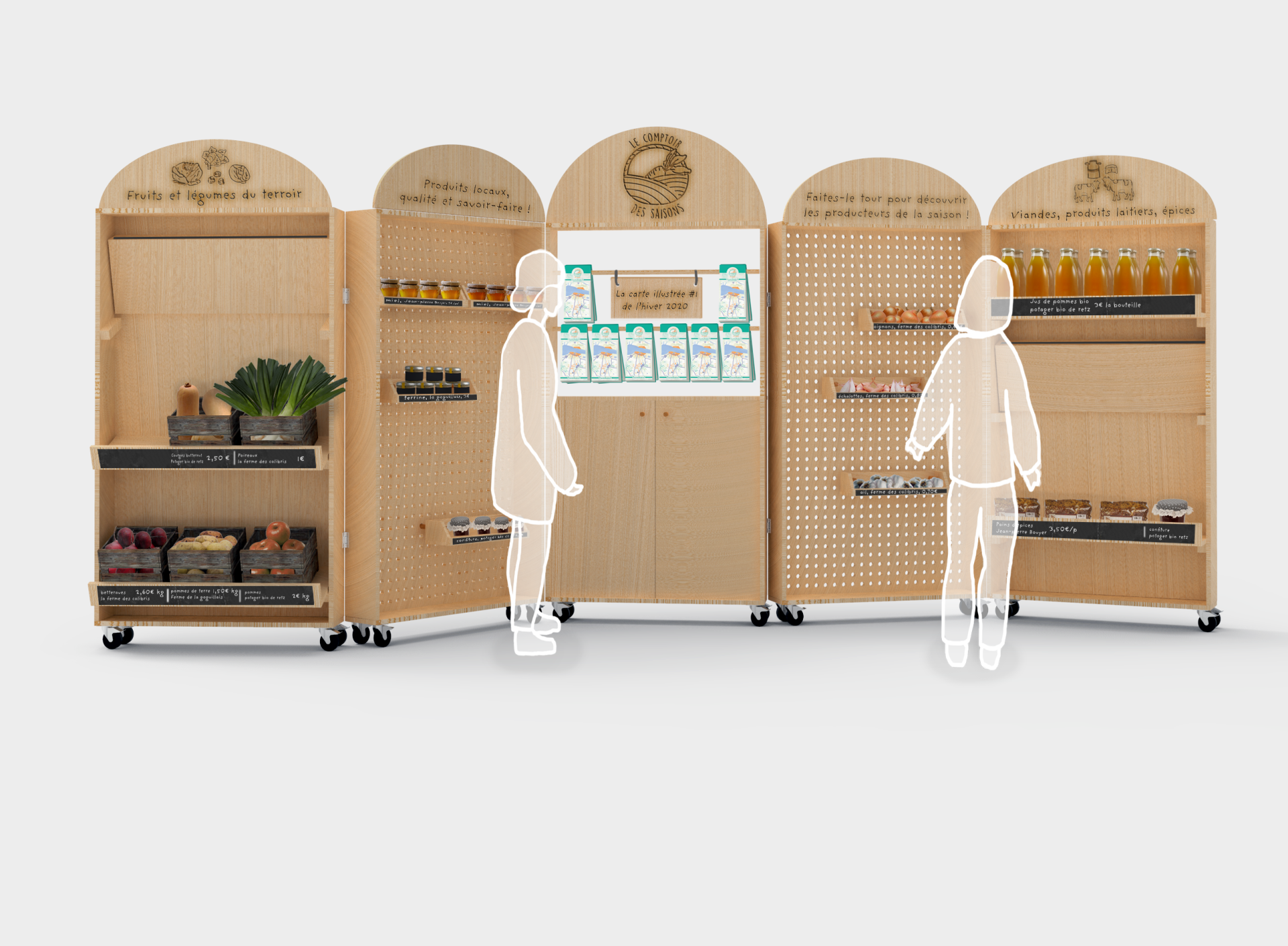
Le Comptoir des saisons offers a new kind of food service business. Intended for villages with few or no food shops, it offers inhabitants the opportunity to enjoy a variety of local products on the spot. It can accommodate a whole range of products such as fruits and vegetables, dry products, etc ...
Project Region
EU Programme or fund
Description of the project
Summary
End of studies project in Master Design at the Food Design Lab, Nantes Atlantiques School of Design
Regional and culinary identity and the food of tomorrow.
Do you remember the bakery where your parents sent you to get bread? Or the grocery store where you used to buy candy on your way home from school? Between 1980 and 1990, in rural areas, one-third of these small businesses closed. Little by little, the large supermarkets caused desertification and isolation of villages.
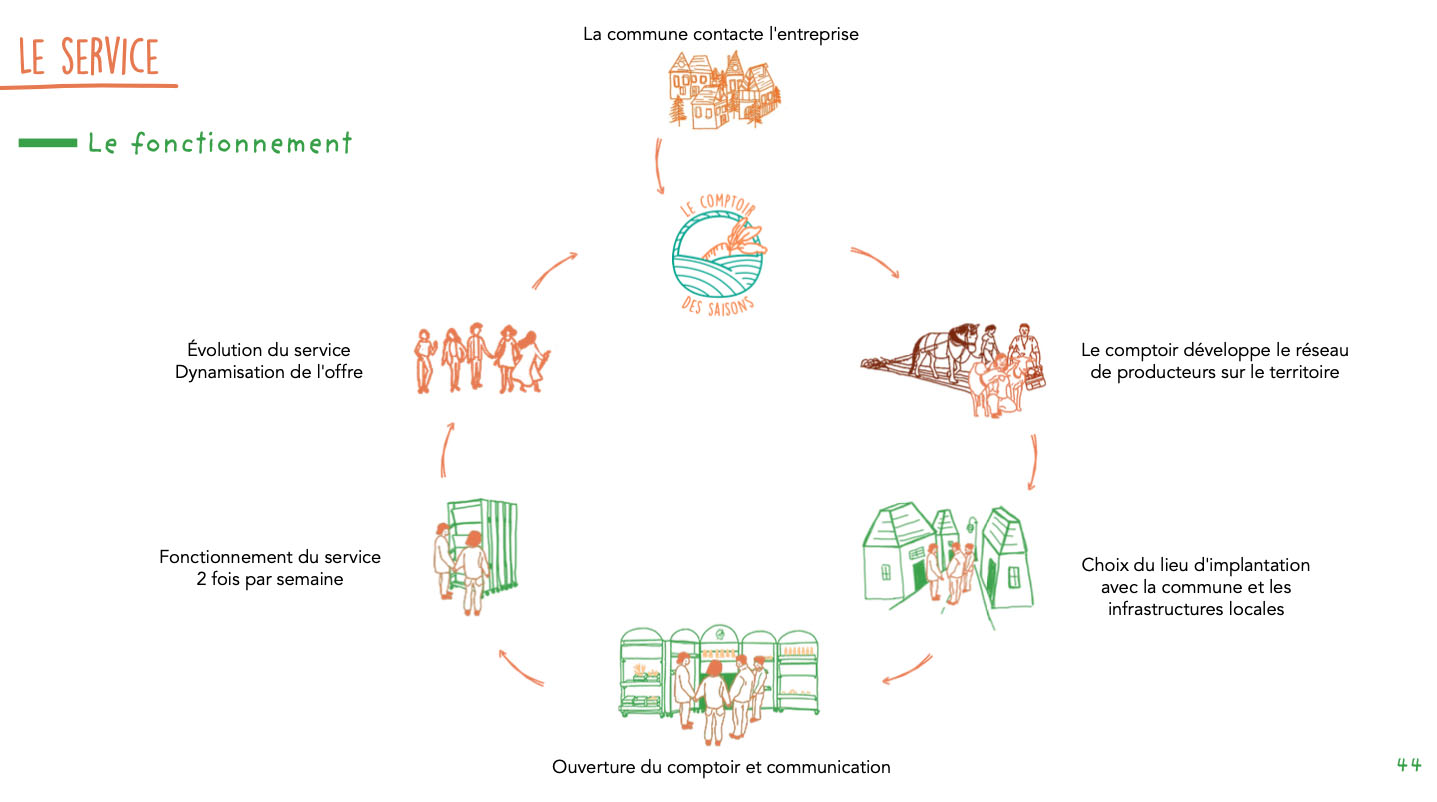
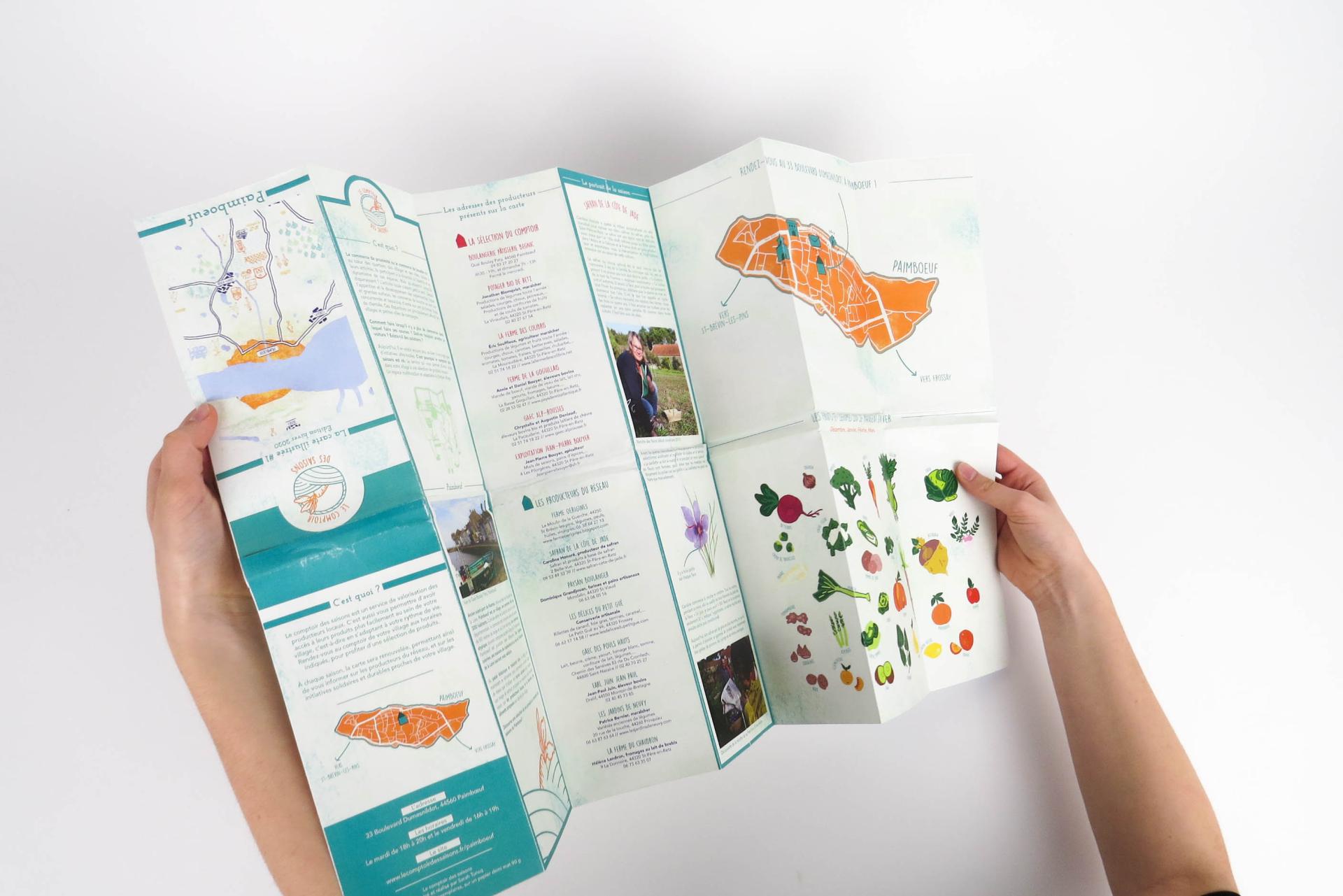
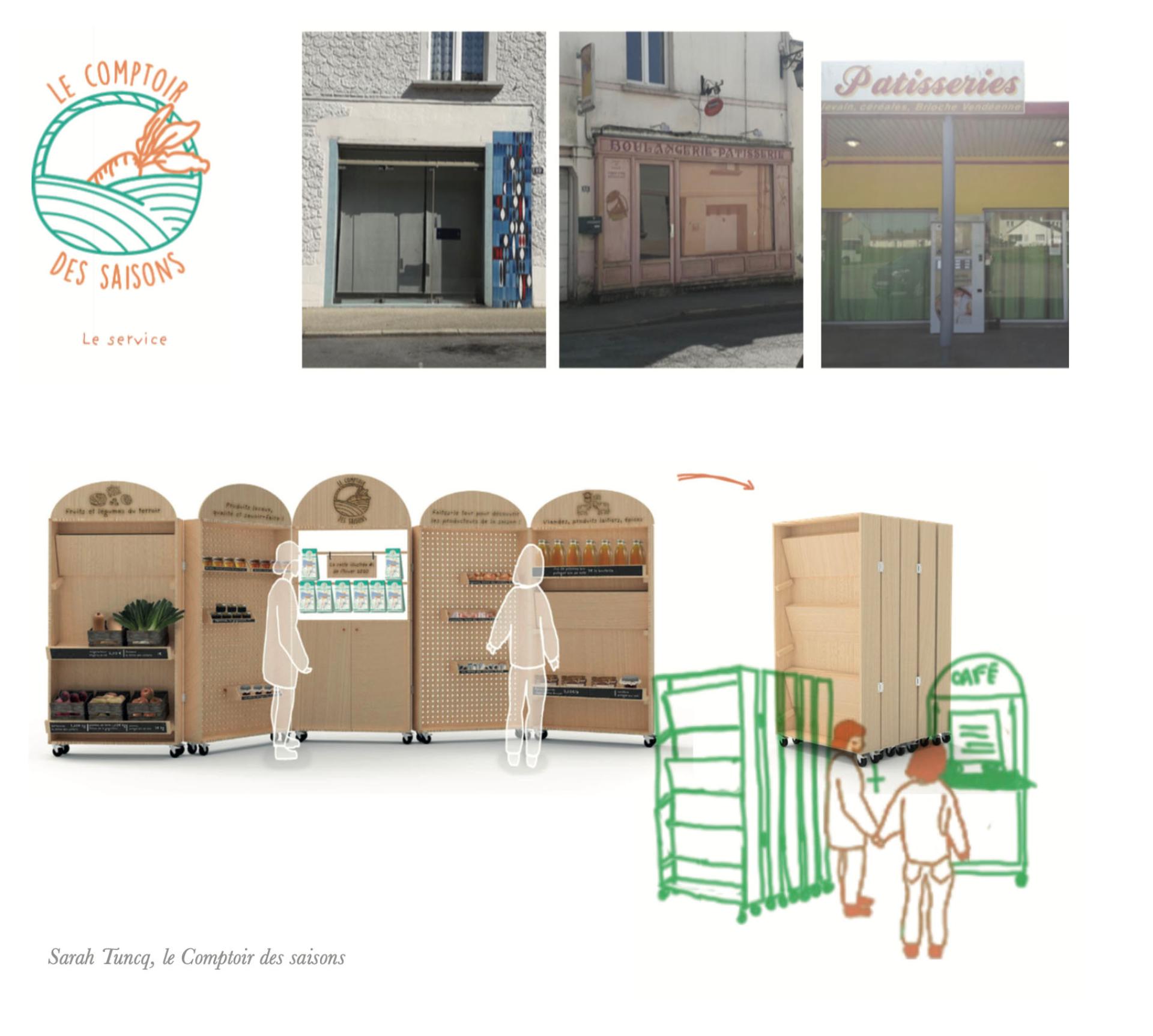
Le Comptoir des saisons offers a new kind of food service business. Intended for villages with few or no food shops, it offers inhabitants the opportunity to enjoy a variety of local products on the spot. It can accommodate a whole range of products such as fruits and vegetables, dry products, etc ... Using a system of modular panels, it adapts to its location and offers flexible time slots. In addition to that, a illustrated map will allow the distribution of the service to the inhabitants and will be published with each new season to promote local products and producers. Finally, to fully respond to accessibility issues, the service will open twice a week adapted to the resident working times and different lifestyle needs or outside traditional opening hours. This project is not a ready made answer, it is an invitation to reflect on an evolving device, which can stay in tune with the lives of its users.
Key objectives for sustainability
End of studies project in Master Design at the Food Design Lab, Nantes Atlantiques School of Design
Regional and culinary identity and the food of tomorrow.
Do you remember the bakery where your parents sent you to get bread? Or the grocery store where you used to buy candy on your way home from school? Between 1980 and 1990, in rural areas, one-third of these small businesses closed. Little by little, the large supermarkets caused desertification and isolation of villages.
Le Comptoir des saisons offers a new kind of food service business. Intended for villages with few or no food shops, it offers inhabitants the opportunity to enjoy a variety of local products on the spot. It can accommodate a whole range of products such as fruits and vegetables, dry products, etc ... Using a system of modular panels, it adapts to its location and offers flexible time slots. In addition to that, a illustrated map will allow the distribution of the service to the inhabitants and will be published with each new season to promote local products and producers. Finally, to fully respond to accessibility issues, the service will open twice a week adapted to the resident working times and different lifestyle needs or outside traditional opening hours. This project is not a ready made answer, it is an invitation to reflect on an evolving device, which can stay in tune with the lives of its users.
Key objectives for aesthetics and quality
End of studies project in Master Design at the Food Design Lab, Nantes Atlantiques School of Design
Regional and culinary identity and the food of tomorrow.
Do you remember the bakery where your parents sent you to get bread? Or the grocery store where you used to buy candy on your way home from school? Between 1980 and 1990, in rural areas, one-third of these small businesses closed. Little by little, the large supermarkets caused desertification and isolation of villages.
Le Comptoir des saisons offers a new kind of food service business. Intended for villages with few or no food shops, it offers inhabitants the opportunity to enjoy a variety of local products on the spot. It can accommodate a whole range of products such as fruits and vegetables, dry products, etc ... Using a system of modular panels, it adapts to its location and offers flexible time slots. In addition to that, a illustrated map will allow the distribution of the service to the inhabitants and will be published with each new season to promote local products and producers. Finally, to fully respond to accessibility issues, the service will open twice a week adapted to the resident working times and different lifestyle needs or outside traditional opening hours. This project is not a ready made answer, it is an invitation to reflect on an evolving device, which can stay in tune with the lives of its users.
Key objectives for inclusion
End of studies project in Master Design at the Food Design Lab, Nantes Atlantiques School of Design
Regional and culinary identity and the food of tomorrow.
Do you remember the bakery where your parents sent you to get bread? Or the grocery store where you used to buy candy on your way home from school? Between 1980 and 1990, in rural areas, one-third of these small businesses closed. Little by little, the large supermarkets caused desertification and isolation of villages.
Le Comptoir des saisons offers a new kind of food service business. Intended for villages with few or no food shops, it offers inhabitants the opportunity to enjoy a variety of local products on the spot. It can accommodate a whole range of products such as fruits and vegetables, dry products, etc ... Using a system of modular panels, it adapts to its location and offers flexible time slots. In addition to that, a illustrated map will allow the distribution of the service to the inhabitants and will be published with each new season to promote local products and producers. Finally, to fully respond to accessibility issues, the service will open twice a week adapted to the resident working times and different lifestyle needs or outside traditional opening hours. This project is not a ready made answer, it is an invitation to reflect on an evolving device, which can stay in tune with the lives of its users.
Results in relation to category
End of studies project in Master Design at the Food Design Lab, Nantes Atlantiques School of Design
Regional and culinary identity and the food of tomorrow.
Do you remember the bakery where your parents sent you to get bread? Or the grocery store where you used to buy candy on your way home from school? Between 1980 and 1990, in rural areas, one-third of these small businesses closed. Little by little, the large supermarkets caused desertification and isolation of villages.
Le Comptoir des saisons offers a new kind of food service business. Intended for villages with few or no food shops, it offers inhabitants the opportunity to enjoy a variety of local products on the spot. It can accommodate a whole range of products such as fruits and vegetables, dry products, etc ... Using a system of modular panels, it adapts to its location and offers flexible time slots. In addition to that, a illustrated map will allow the distribution of the service to the inhabitants and will be published with each new season to promote local products and producers. Finally, to fully respond to accessibility issues, the service will open twice a week adapted to the resident working times and different lifestyle needs or outside traditional opening hours. This project is not a ready made answer, it is an invitation to reflect on an evolving device, which can stay in tune with the lives of its users.
How Citizens benefit
End of studies project in Master Design at the Food Design Lab, Nantes Atlantiques School of Design
Regional and culinary identity and the food of tomorrow.
Do you remember the bakery where your parents sent you to get bread? Or the grocery store where you used to buy candy on your way home from school? Between 1980 and 1990, in rural areas, one-third of these small businesses closed. Little by little, the large supermarkets caused desertification and isolation of villages.
Le Comptoir des saisons offers a new kind of food service business. Intended for villages with few or no food shops, it offers inhabitants the opportunity to enjoy a variety of local products on the spot. It can accommodate a whole range of products such as fruits and vegetables, dry products, etc ... Using a system of modular panels, it adapts to its location and offers flexible time slots. In addition to that, a illustrated map will allow the distribution of the service to the inhabitants and will be published with each new season to promote local products and producers. Finally, to fully respond to accessibility issues, the service will open twice a week adapted to the resident working times and different lifestyle needs or outside traditional opening hours. This project is not a ready made answer, it is an invitation to reflect on an evolving device, which can stay in tune with the lives of its users.
Innovative character
End of studies project in Master Design at the Food Design Lab, Nantes Atlantiques School of Design
Regional and culinary identity and the food of tomorrow.
Do you remember the bakery where your parents sent you to get bread? Or the grocery store where you used to buy candy on your way home from school? Between 1980 and 1990, in rural areas, one-third of these small businesses closed. Little by little, the large supermarkets caused desertification and isolation of villages.
Le Comptoir des saisons offers a new kind of food service business. Intended for villages with few or no food shops, it offers inhabitants the opportunity to enjoy a variety of local products on the spot. It can accommodate a whole range of products such as fruits and vegetables, dry products, etc ... Using a system of modular panels, it adapts to its location and offers flexible time slots. In addition to that, a illustrated map will allow the distribution of the service to the inhabitants and will be published with each new season to promote local products and producers. Finally, to fully respond to accessibility issues, the service will open twice a week adapted to the resident working times and different lifestyle needs or outside traditional opening hours. This project is not a ready made answer, it is an invitation to reflect on an evolving device, which can stay in tune with the lives of its users.