E-WERK: Power Station and Art Centre
Basic information
Project Title
Full project title
Category
Project Description
E-WERK Luckenwalde (EW) is the first renewable power station and contemporary art centre in the world to be powered by its own production. EW generates electricity using the building’s historic infrastructure but 100% renewably, which powers the building, cultural programme and national grid. As a not-for-profit institution, all sales of electricity supports the art programme and is thus an exemplary project concerned with circularity - ecologically, economically and philosophically.
Project Region
EU Programme or fund
Description of the project
Summary
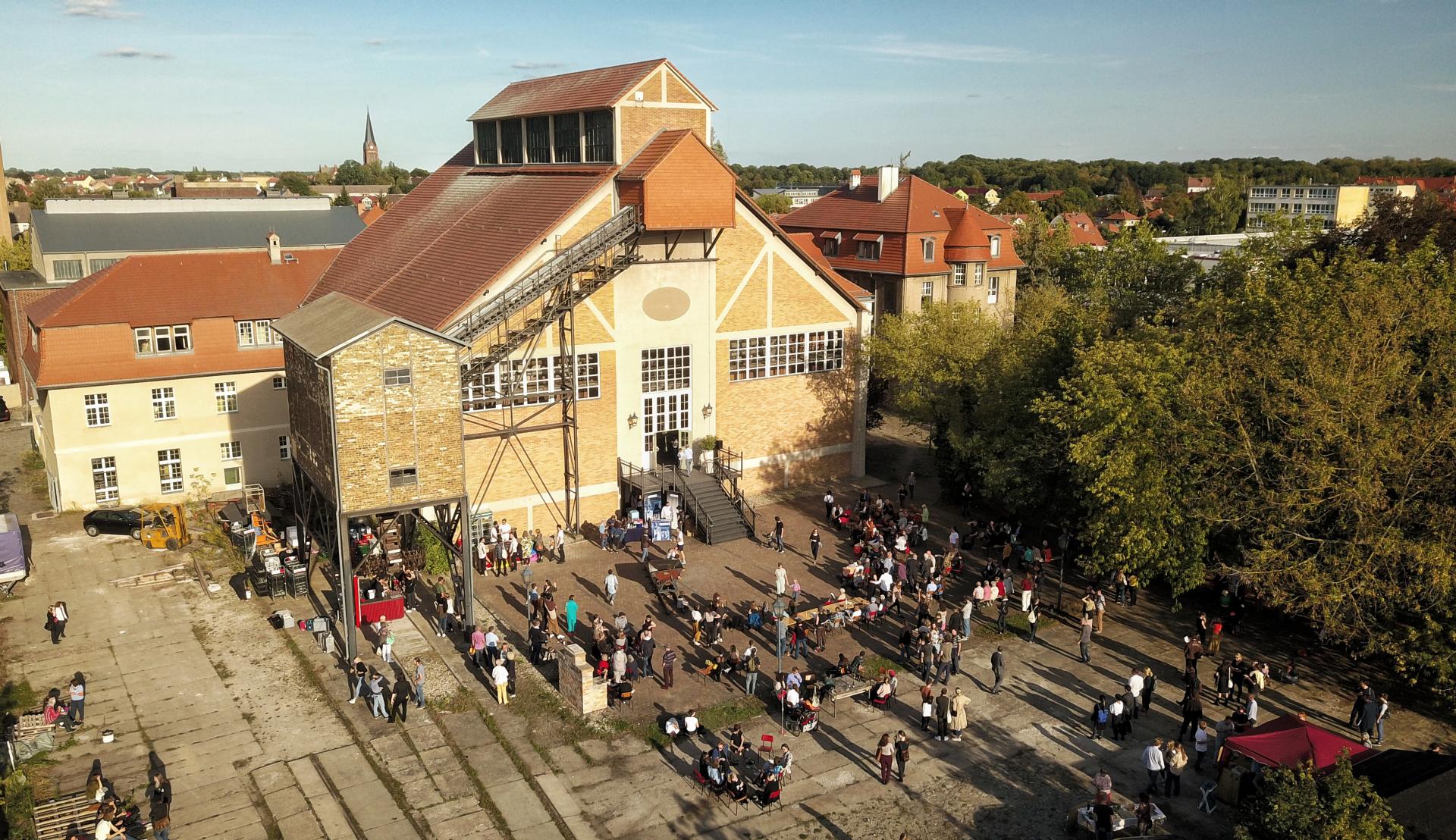
In Luckenwalde, a small post-industrial city south of Berlin, a concrete utopia is being built by artist collective come energy provider Performance Electrics. E-WERK Luckenwalde opened in 2019 as a Kunststrom Kraftwerk and Contemporary art centre with the concept of utopia, autonomy and experimentation at its heart. Since 2017 Performance Electrics has been working to reinstate the former coal power station’s original purpose to produce energy, but this time sustainably through C02-neutral “Kunststrom’ production. Performance Electrics has combined the historic power station’s infrastructure with highly modern pyrolysis technology. Built in 1913, E-WERK Luckenwalde was one of the first power stations to produce and supply coal-based energy to the region of Brandenburg. After the Berlin Wall fell in 1989, the East German power station was forced to close. In 2017, art collective Performance Electrics acquired the former brown-coal power station with the vision to reanimate it as a sustainable power station. At the end of 2019, amidst a climate of unprecedented environmental concern, Germany closed down its last hard coal mine yet remained the largest producer of brown-coal the former brown-coal station in Luckenwalde reopened as a sustainable power station feeding innovative art-powered electricity into the national grid; thus bridging the gap between industrial heritage and innovative technology. ‘Kunststrom’ directly powers the building, contemporary art programme and the local community; fostering the transition to a circular economy.
Key objectives for sustainability
E-WERK Luckenwalde (EW) endeavours to close the circuit by keeping the building’s 19th century infrastructure alive. Working with the building’s grey energy EW continues to take direct action by powering its activities with renewable energy: Kunststrom. By making Kunststrom commercially available through the national grid, EW subversively explores how it is possible for the creative industry to lead innovative ecological and economic change for the cultural sector. As a large-scale experiment, EW is constantly pushing at the boundaries of what is possible, welcoming failure, in order to find new utopian paths and realign culture with political change. EW pursues sustainability in all facets of working and living, from what we eat to where we travel and how we consume in an effort to transform climate change into a cultural movement. Beginning with a process of deceleration, EW encourages sustainable travel methods and further work towards eliminating waste and closing the circuit. These goals manifest curatorially with longer consignment agreements of art works, inter-seasonal collaborations between exhibitions and legacy projects, rather than quick successive programming. In the spirit of collaboration not competition, EW broadens and strengthens its cross-border alliances to develop long term partnerships. At home, EW nurtures its relationship with local communities, to access their knowledge and share its own, forming transdisciplinary knowledge banks. Whilst remaining ambitious and international in its outlook, EW will always choose local and ecological suppliers first. Through creative innovation EW works towards making ecological transformation fun.
Key objectives for aesthetics and quality
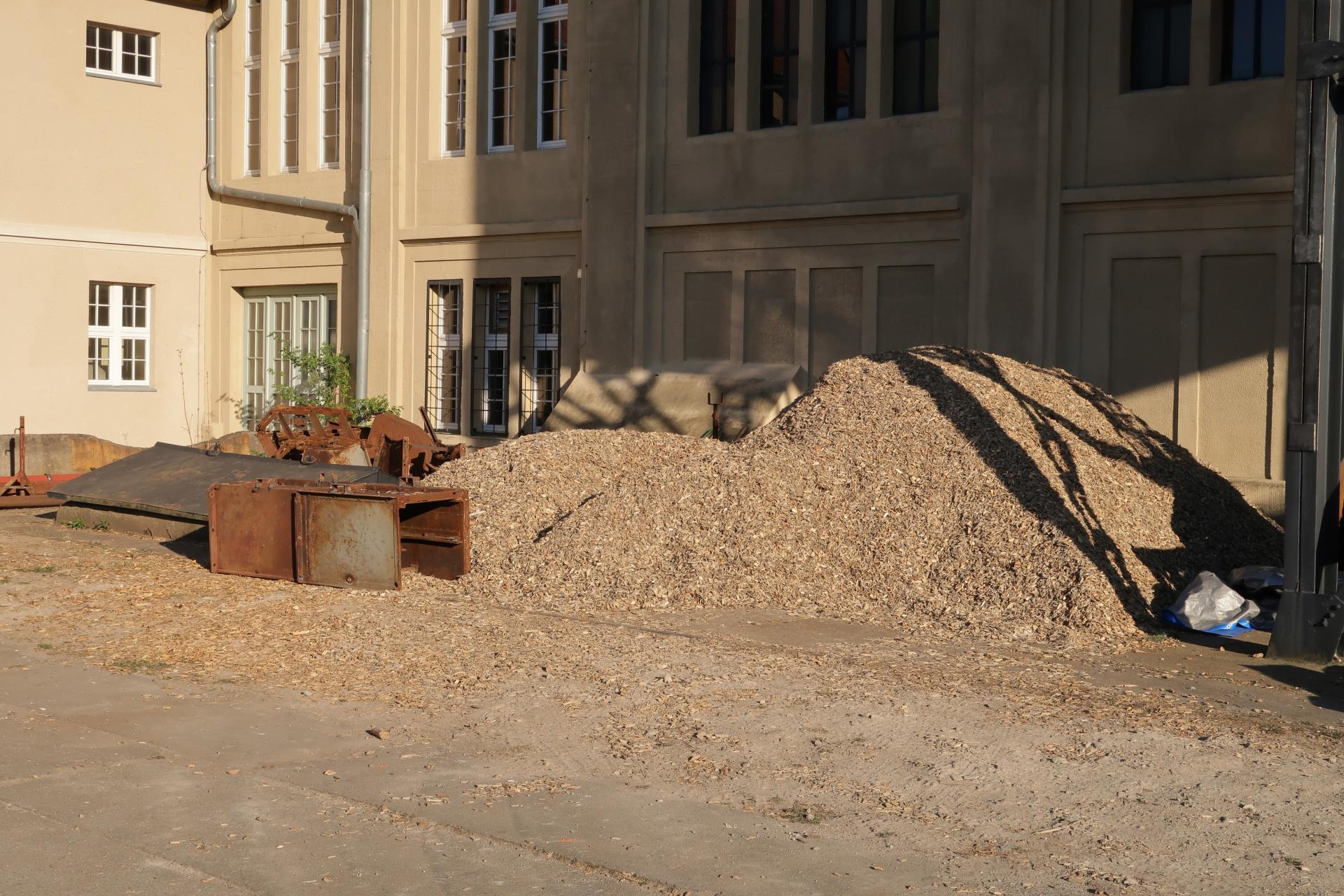
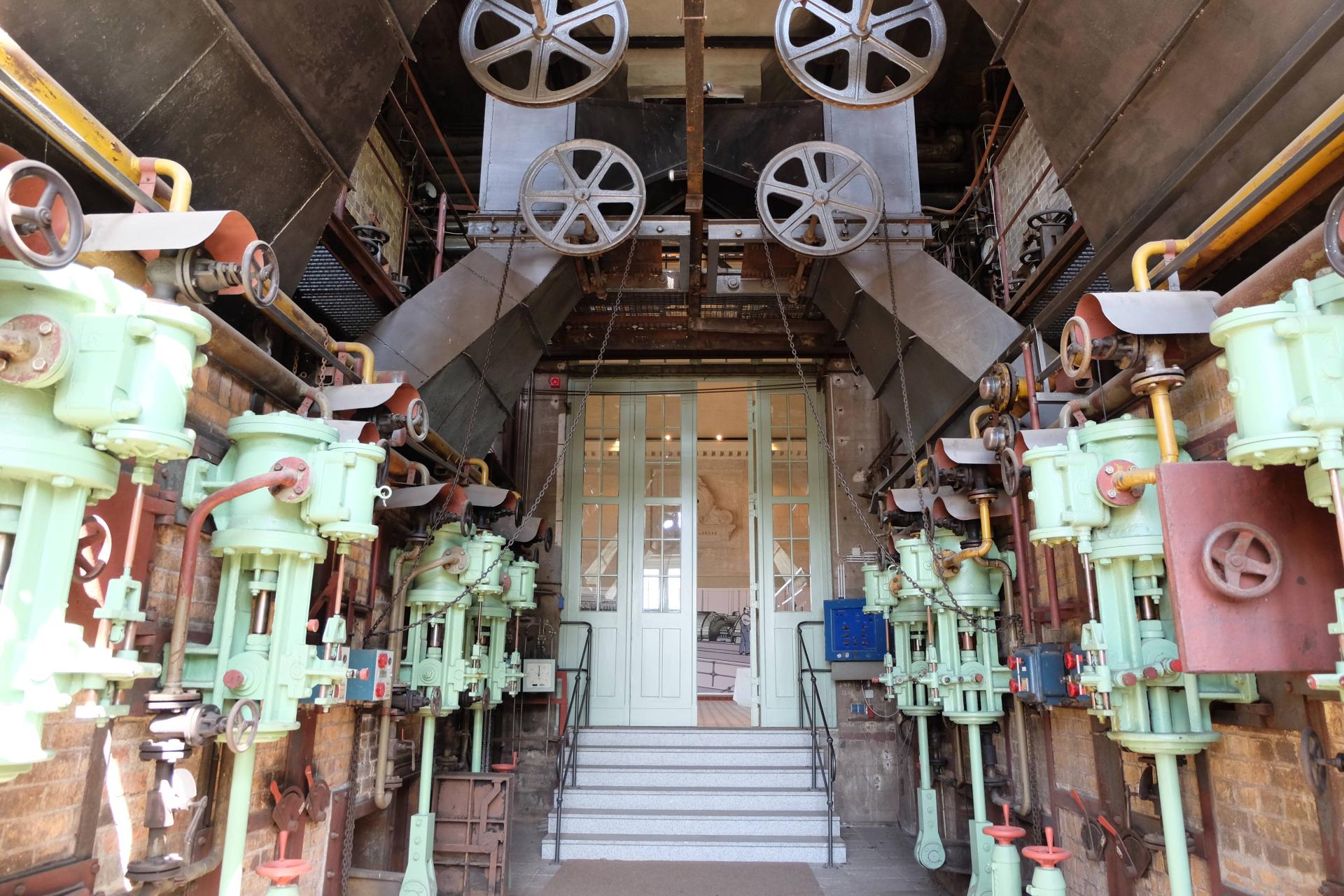
As a functional Kraftwerk and Kunstzentrum E-WERK Luckenwalde stands on the periphery of the city as a platform for dreaming and creative research - exactly the terrain art and the artist should be occupying. Dreaming functions as the main catalyst for artistic production. 30 minutes away from Berlin E-WERK Luckenwalde operates as a not-for-profit energy producer and cultural enterprise seeking to usurp the idea of capital and cultural production through subversion from within. Today energy, industry and innovation are heralded as tyrants of efficiency, but here at E-WERK Luckenwalde efficiency is evaded, if not to say thwarted. Camouflaged in the professional wardrobe of industrial entrepreneurialism, Performance Electrics proudly produces and distributes art-power electricity to the national grid anti-efficiently. Rather than demolishing the building to build a new efficient Kunststrom power station, Performance Electrics decided to painstakingly reanimate the building’s pseudo-neolithic conveyor belts, coal bunkers and pistons dating back to 1913. The ‘Dinosaur’ as Pablo Wendel, Artistic Director and CEO of Performance Electrics, lovingly calls the machine, creaks and groans as it slowly transports locally sourced spruce wood-chips through the tunnels and shafts, which have all been carefully restored. Slow and steady, Kunststrom powers the building and is distributed to clients throughout Germany. Although Kunststrom is only a homeopathic dose in the deep electric ocean, it is a start. This homeopathic dose is key to Performance Electrics, where the aesthetic experience, rather than technological efficiency, is an utmost priority.
Key objectives for inclusion
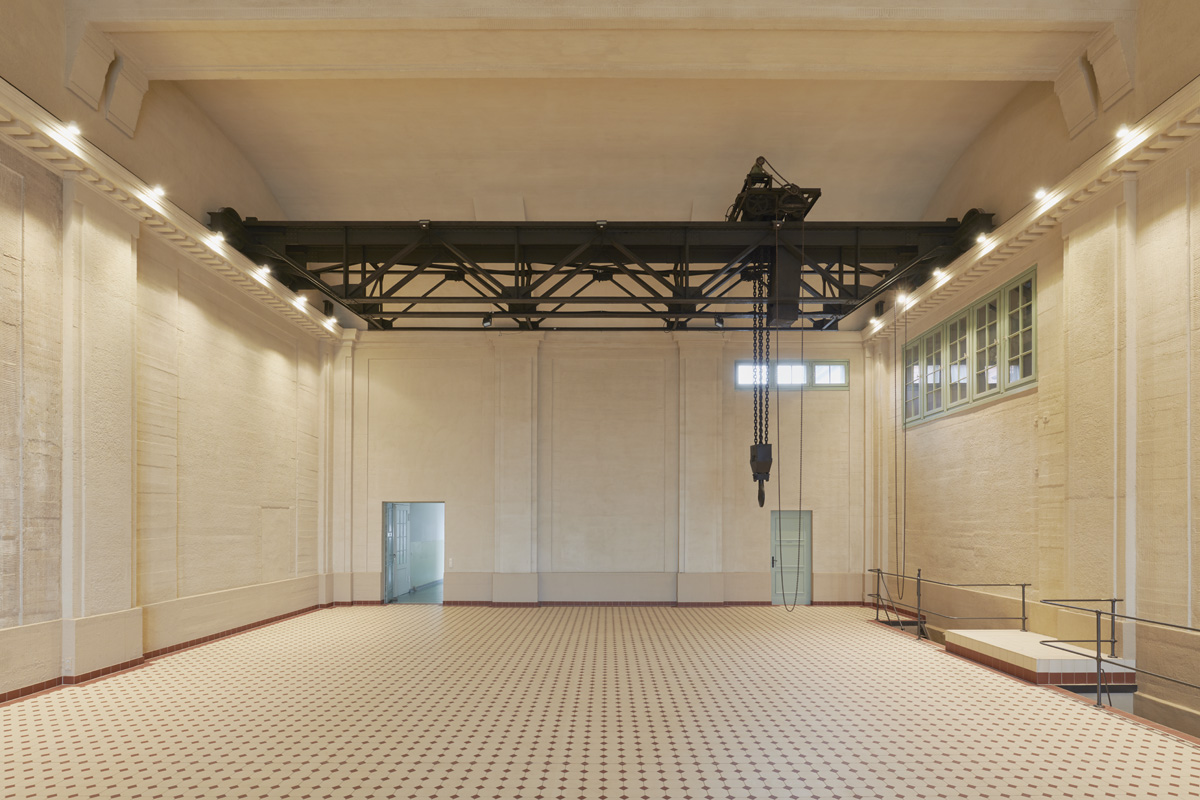
It is of high importance that we as a not for profit institution make our programme accessible to the local community, whilst also delivering a challenging and thought-provoking programme of contemporary art. Our programme is often site-specific to the geography, community or history of Luckenwalde as a way to respect the rural community and their past, and to create accessible entry points. Our worst fear is that the local community does not feel welcome and E-WERK Luckenwalde becomes a contemporary art island in Luckenwalde for audiences from Berlin and internationally. We take care to nurture the interdisciplinary nature of the project (energy, architecture, culture, food, history) to create various access points for diverse audiences. One example of inclusivity from the contemporary art programme is ‘Electric Blue’ by Lucy Joyce. Inspired by the history of EW, ‘Electric Blue’ discussed ideas of power, protection, action, hope and celebrated the inauguration of EW. In order to gain access to local attitudes Joyce invited seven Luckenwalde residents to participate as “arrow bearers;” each of them selected for their significant relationship to EW, historically, presently and in the future. Collectively these participants, including EW’s former Production Manager Herr Schmiedl, Kunststrom Consultant Achim Sauermann and EW’s pregnant Artistic Director Helen Turner. Another example is the site-specific commission by artist Nina Beier, who worked closely and sensitively with the local Luckenwalder Sportsclub. Her staged intervention was choreographed in close collaboration with members of the wrestling club and foresaw the participation of 15 freestyle wrestlers from various age groups (10-65 years) to realise a powerful performative work in the Turbine Hall. With Class (2019), Beier shed light onto Luckenwalde’s Olympic past where many of the local athletes participated in World and European Championships and the Olympic Games.
Results in relation to category
E-WERK Luckenwalde has been resurrected in the spirit of circularity. To do this Performance Electrics (PE) first reactivated the historic conveyor belt which had laid dormant for 30 years, but once transported the brown coal into the furnace in order to transport locally sourced, waste wood chips. This was a huge result - the heart of the power station was beating once again - proving resurrection was possible and the dream of a building built in the spirit of circularity one step closer. PE was now able to transport tonnes of wood chips via the 1913 conveyor belt, into the bunker. The original 150 cubic metre concrete bunker, where the wood chips now resided, was designed for brown coal, and so also had to be re-engineered with motion sensors and large scale spiral transport systems. These self-built engineering parts helped to constantly shift the wood chips. The wood gas machine was then built under the original furnace, where the coal ash used to go. To create a pathway between the furnace with the wood-gas machine, PE used second hand pipes and the historic building pipes to connect the two areas in an effort to reduce their primer grey energy. Once this was established PE built an automatic spiral transport system to remove the ash created from burning the wood chips in the wood-gas machine. This ash is now used to create nutritious soil in the terra pate process, again, in an endeavour to waste nothing. Now the house was heated, PE then began the process of producing electricity for the house with woodchips. PE then decided to repurpose the waste heat, produced via the exothermic reaction, to warm the building and dry woodchips. As explained, through the process of wood-gas it is necessary to cool down the mechanical engine, which produces a lot of waste heat. Creating further circular systems, PE decided to use this waste heat to heat the building in the winter and dry wood chips in the summer.
How Citizens benefit
As a way to elucidate the site, Wendel needed first hand help from the people who knew the building the best - the former workers of the functioning power station in the GDR. The local newspaper, MAZ, caught wind of Performance Electrics’ ambitious plans to reanimate the building and visited Wendel to hear more. At the end of the interview Wendel announced he was looking to hear from anyone who had ever worked in the power station - requesting their help to understand the building and its challenging history. Luckily several of the men, including Herr Schmiedl, E-WERK’s former Production Manager, Herr Wagner, E-WERK’s Head Technician and Herr Bolz, E-WERK’s former Director, were still alive and thrilled to hear of Performance Electrics’ plan to reanimate the building, coming forward with souvenirs, stories and knowledge of the building. Having worked in the power station for over 30 years, these men had priceless information about the practicalities of how to operate the power station - an essential key for reactivating the machinery from 1913, which had lain dormant since 1989. Wendel spent days with the different men, befriending them to piece together a huge power station puzzle. They figured out solutions on how to fix machinery, such as the coal conveyor belt in the basement area, which had been underwater for 30 years and in a really bad state. Once all the water was pumped out it looked like a shipwreck, and Wendel recounts how he was close to giving up. But as active participants, these incredible zeitzeugen’s knowledge and confidence gave Wendel the courage to continue. In addition, they helped understand how the building was used after its decommissioning.
Innovative character
After discussing environmental concerns for many years, E-WERK Luckenwalde is a utopian example of how it is possible to take direct action through innovation, experimentation and play. E-WERK Luckenwalde reaches beyond the limits of the contemporary art world by feeding art-powered electricity into the grid; fusing function with metaphor by connecting electricity with art. In a utopian stroke energy is perfectly analogised as art, and vice versa at E-WERK Luckenwalde. This concrete utopia is, however, not about creating the perfect utopian dream, but about starting something - embracing failure along the way in the pursuit of change. E-WERK’s utopian model is not the illusory perfect utopia, but utopia in the more radical sense of enacting what, within the existing social relations, appears as ‘impossible’. As an artist, failure and play should be a necessary byproduct to production, but as economic support for the arts wanes, so does artistic courage. Therefore today, it is more urgent than ever to support those innovative projects which try and fail for if we don’t, nothing will change. The resurrection of the dinosaurus power station in the spirit of circularity is the result of artist Pablo Wendel identifying the impossible and chasing it, regardless of its impossibility. This is exactly what Wendel allowed to happen - he allowed the impossible dream to percolate, for change will not come if we cower in the face of rules and regulations or retreat from impossibility.