Vire-volt
Basic information
Project Title
Full project title
Category
Project Description
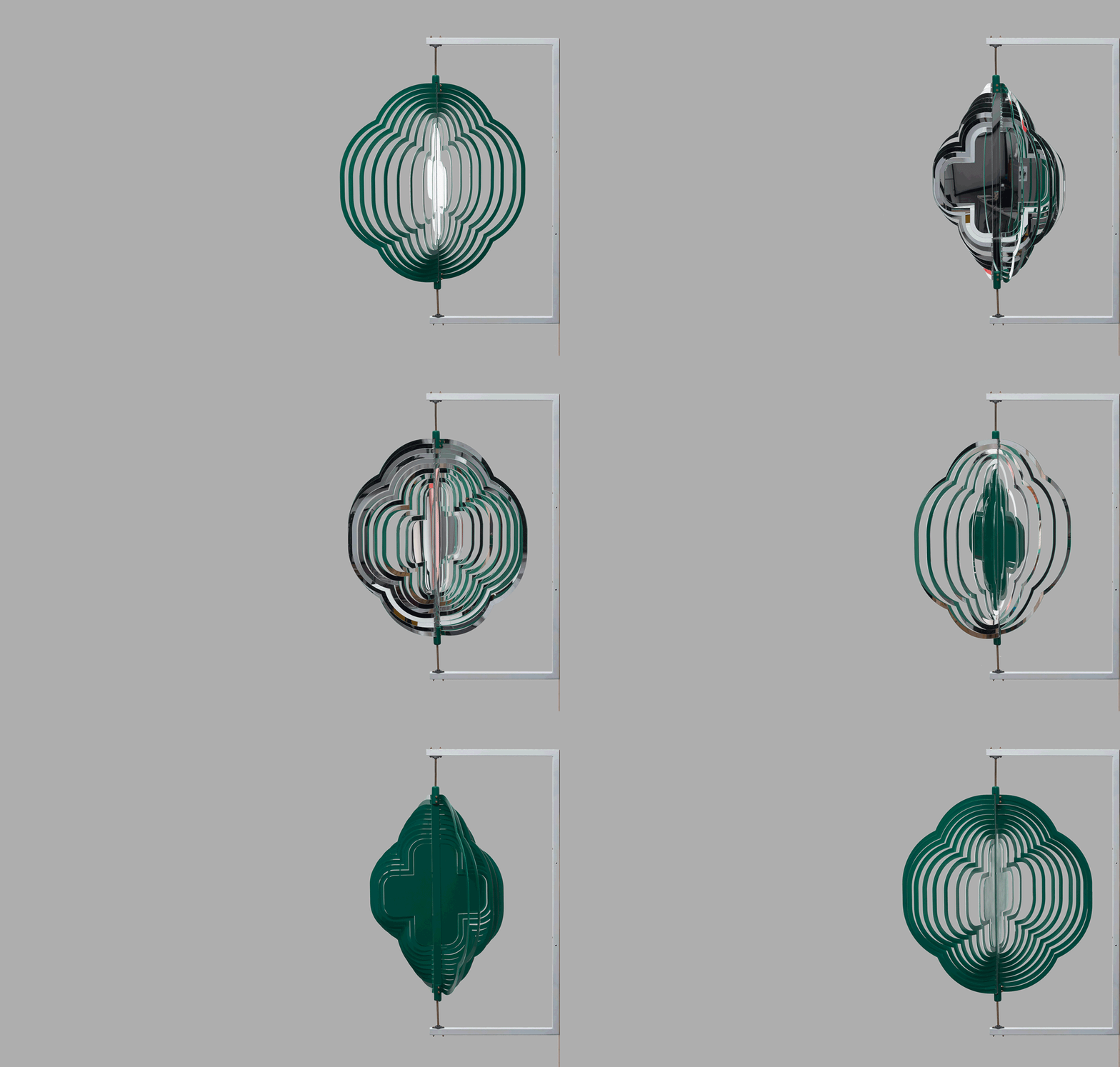
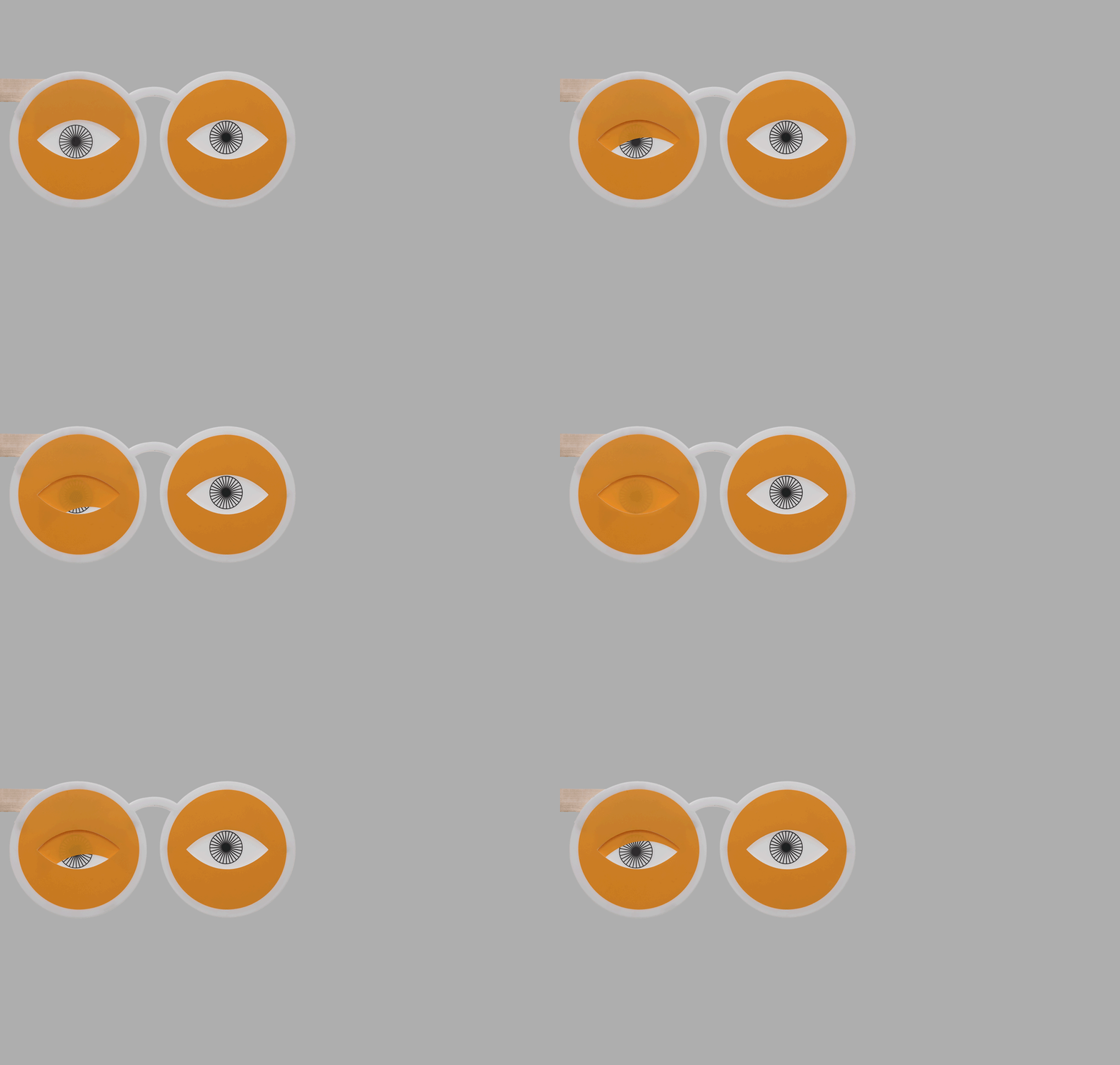
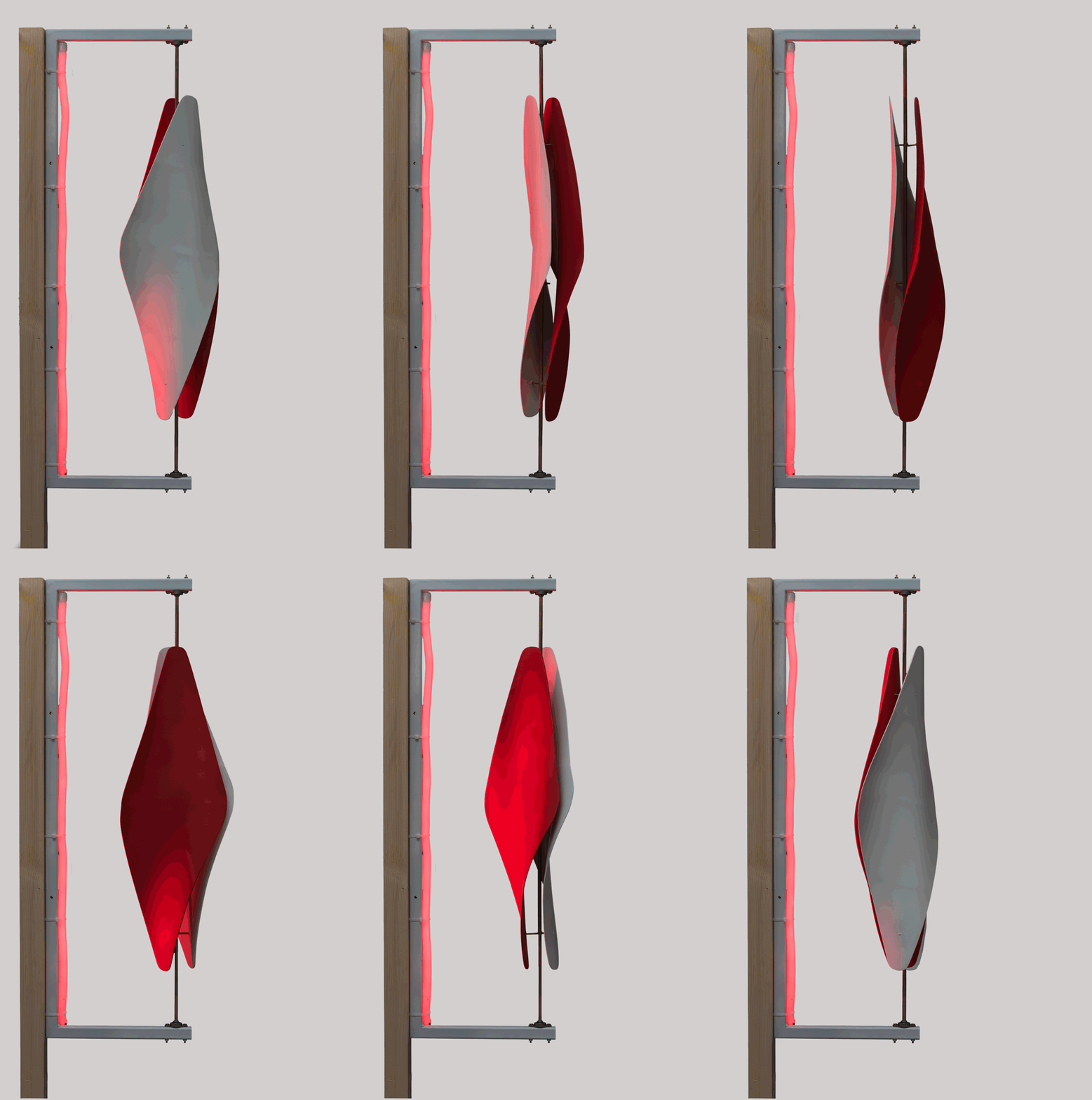
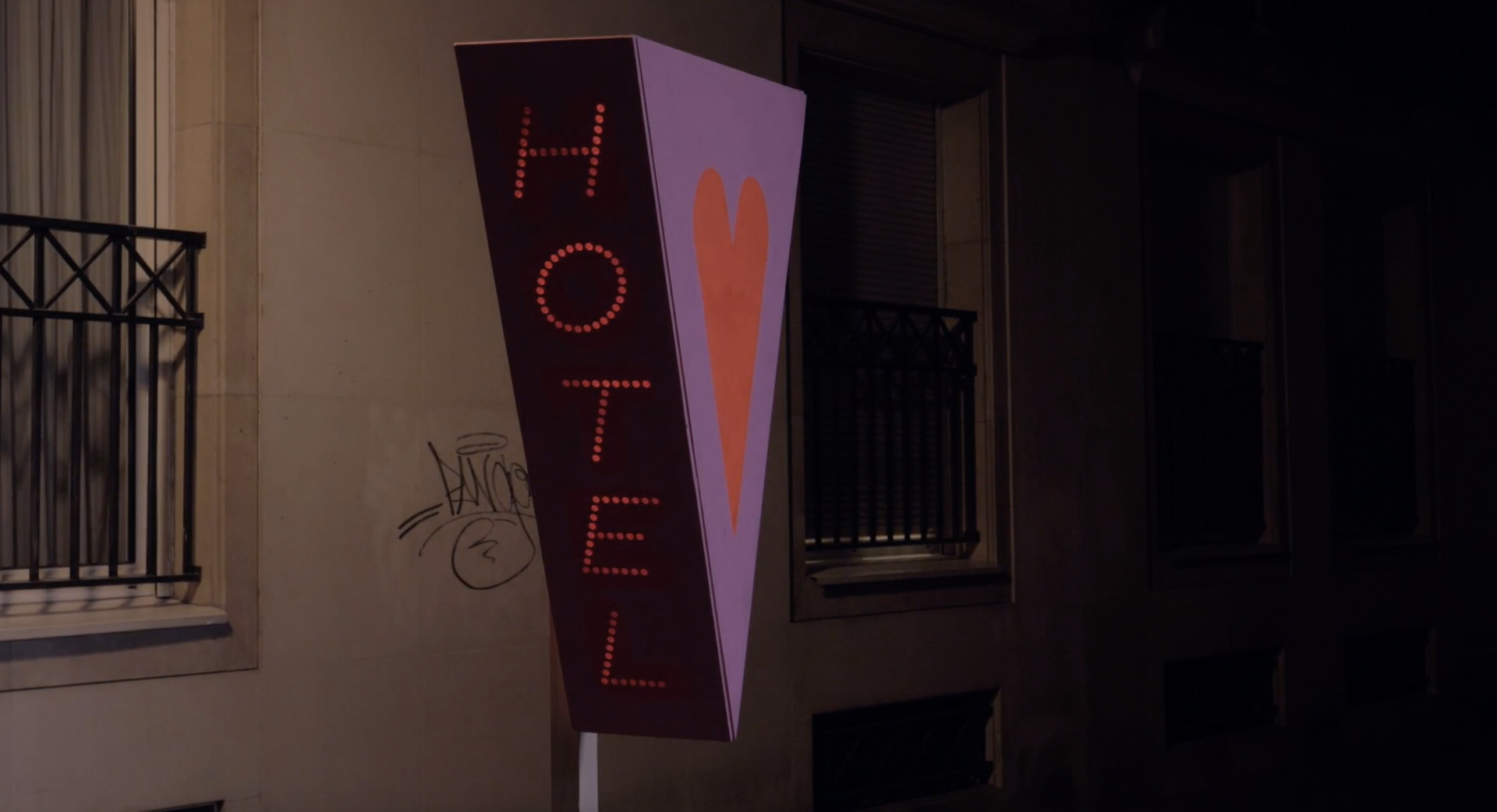
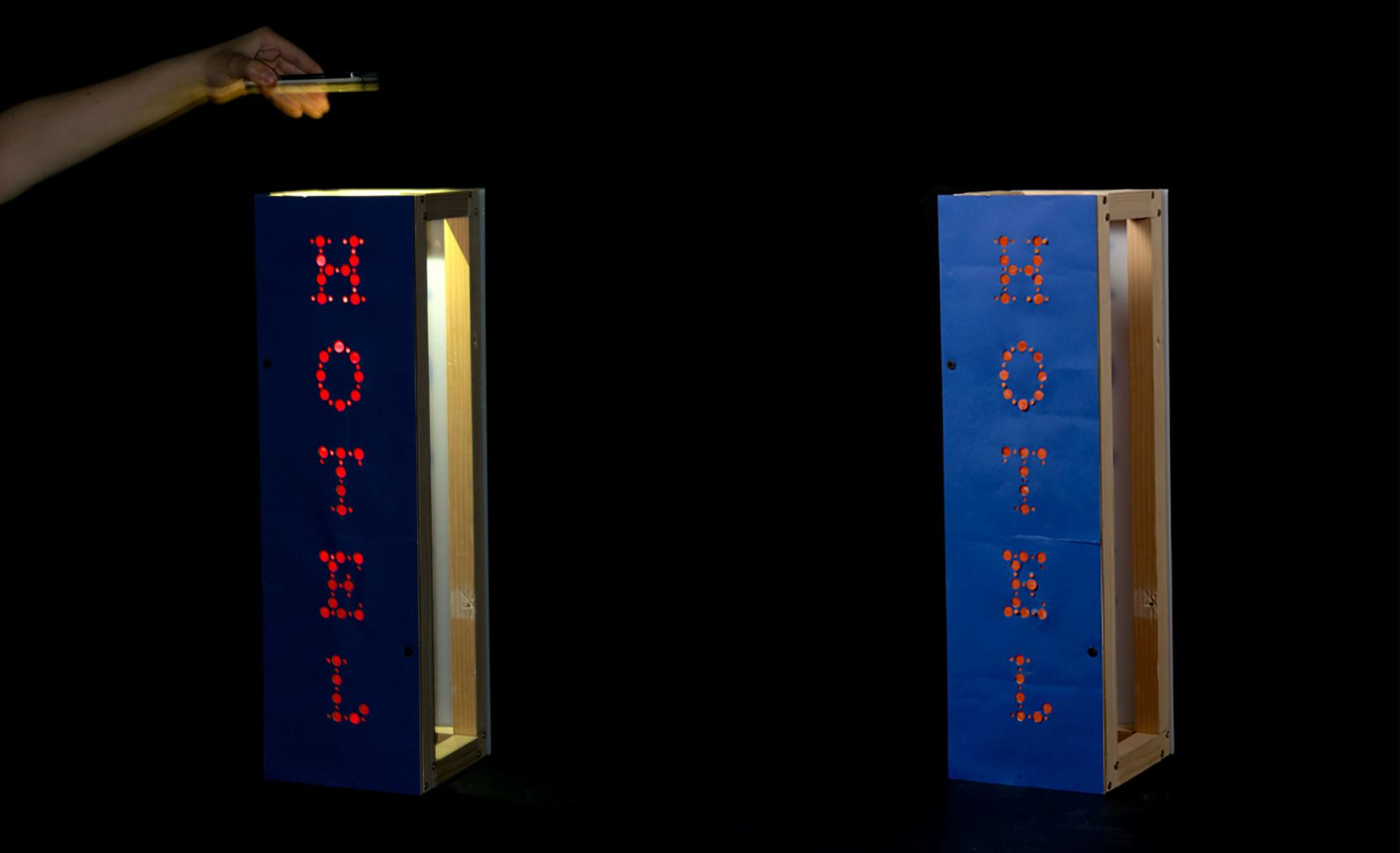
Vire-Volt is a series of self-sufficient signs that work with the energy sources that already surround us.
Many of these energies are today far too underestimated: natural light, wind, mechanical movements and electricity that the city already mobilises,
and whose use can be optimised. How can we make a different sign, with humour and astuteness, in the luminous jungle that solicits our attention night and day?
Project Region
EU Programme or fund
Description of the project
Summary
Since the appearance of the neon tube, the world of illuminated signs has been rushing towards all-electric solutions, a symbol of modernity. In this luminous hubbub, it seems that the floor is given to those who illuminate the strongest. However, the energy consumption generated by this escalation, and the endangerment of biodiversity in cities are alerting scientists: it’s time to turn off the lights a little. Some bills, in this direction, have tried to impose restrictions. However, without desirable alternatives, shopkeepers are reluctant to disappear into the night. As a designer, I ask the following questions: how can design accompany and encourage the ecological transition? How can it support societal, urbanistic and civic issues?
As part of my research that focuses on light pollution and signage devices in the urban environment, I’m proposing a series of self-sufficient signs that operate using the energy sources that already surround us. Many of these energies are today far too underestimated: natural light, wind, mechanical movements and electricity that the city already mobilizes, and whose use can be optimised. How else can we signal, with humour and cleverness, in the luminous jungle that demands our attention night and day? I offer several types of signs. Some turn with the wind, others are activated by the movement of the shop doors. Still others play with the natural or artificial light that illuminates our cities.
Key objectives for sustainability
The ethical and technical bias that I envisage for the design of my objects is all about a «low tech» design of high quality. That is to say: made to last outdoors in all weathers, without its mechanisms or appearance being altered. For me, a good technology is not necessarily an armada of sensors. It is first and foremost a technology that knows how to provide an unalterable, high performance, helping service, while consuming as little energy as possible. A small, light and clever intervention seems to me to be a great innovation, opening up a whole range of perspectives in terms of replicability. The relationship with the energies that surround us also allows us to question the energy resources of the city of tomorrow: urban wind power, solar energy, etc. and the scale of the innovative devices that we have yet to imagine.
The ecological and economic stakes are high: according to the ADEME (French National Agency for Environment and Energy Control), a better control of the application of the law « could make it possible to save nearly 1,000 gigawatts per hour, which corresponds to the equivalent of the consumption of 370,000 households. According to the French Ministry of Ecological and Solidarity Transition, this could generate almost 200 million euros in savings ». But beyond a legislative control, we must propose other ways of doing things that allow us to perceive this transition in a different way. The classic catalogue needs to be extended. Switching off the lights does not mean «no longer being attractive» or «no longer being visible». On the contrary, it means that by thinking out of the box, we can find both attractive and innovative ways to continue to make our mark in the environment.
Key objectives for aesthetics and quality
My signage project, beyond its obvious aspect, proposes to think about other visual systems for these objects. I’m passionate about looking for other ways of attracting attention, because it is understood that shops and institutions must signal themselves, for reasons of publicity, information or safety. It is rather the modalities that are interesting.
I’m deeply inspired by the long history of signage that happened before the 80’s (when computers started to spread the same typefaces and colours everywhere). Nowadays, it is very rare to encounter signage that would not be just an extruded logo or a sticker over a lightbox. As a product designer, I enjoy looking at signs, graphics, and imagine what energies, material, could animate in order to give them shapes that would respect their identifications but also make them exist as thought objects, projected into a specific environment.
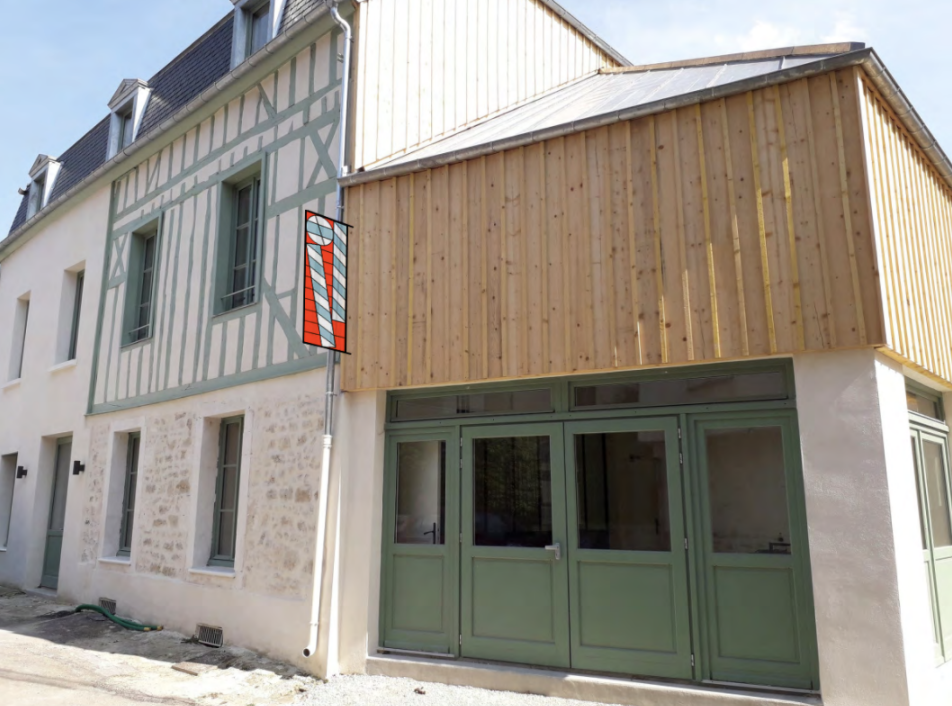
The pharmacy sign that I’ve imagined is the most representative object from my collection. For this object I also have been really inspired by kinetik artists like Georges Rickey or Alexander calder.
Also, as a product designer, I conceived this object in terms of technical know-how and quality of materials. Form follows function and intention: a fine sheet of mirror-polished steel, laser-cut and folded, gives a sophisticated finish that gives interesting aesthetics. This is my manifesto positioning.
In my creation process, I think that a material, a technique, a situation, a piece of art, an old signage, have equal power to bring new ideas and help me to give them shapes and materiality.
Key objectives for inclusion
I wish to approach the question of signage more broadly, with the idea of a better logic, a better synergy between graphic signs, their support, their location and their direct climatic environment, which does not always imply movement. Looking at the signs of the city seems to me to be of prime importance, because they are innumerable. Put together, they represent an enormous volume of matter and energy. However, in case the adoption of an ecological approach may seem unattractive to the most irreducible, we all must absolutely propose alternatives that demonstrate the opposite. In this way, we must be interested in all the small devices that seem insignificant in terms of their individual size, but which have a non-negligible sum of impact on a daily basis. Illuminated signs are one category of devices among others, and it is by making a multitude of small transitions in this way that we will strengthen the overall ecological transition.
Today, many professions are undergoing a transformation linked to the evolution of techniques and manufacturing processes. Letter painters, neonists, mirror makers, specialised carpenters and other craftsmen are giving way to contemporary signmakers, who manage the entire production chain for LED signs. How can we make an energy transition while at the same time enhancing the value of crafts whose know-how is in danger of extinction? We need to gather a community by linking designers and craft professionals in the City, in order to create a vernacular approach of urbanistic creation.
Results in relation to category
My project involves technics, materials, buildings that already exist. The strength of this project lies in the fact that design is used here as a vehicle, an organiser of these elements in order to create a new system that is more beneficial to the environment, the professional actors and the local residents.
The project takes into account the social and commercial issues of shop owners, as well as those of legislators and environmentalists.
The solution provided, using natural elements as a source of energy, based on a network of professionals already in place, is viable and quick to put in place.
From a more poetic point of view, humans have always been fascinated by mechanical movements, and when the wind animates the leaf of a tree, the eyes are fascinated by this graceful movement. The wind, the light, sculpt these signs, animate them and give them a poetry, sculpt them.
How Citizens benefit
My aim is to produce a catalogue of signs as a start point, plus a bespoke design service. My objective is to interact directly with local problematics. I wish to widen the possible fields of intervention and I am in the process of specifying the technical drawing of the products with the help of engineers, craftsmen and industrialists. I’m aiming to obtain eco-design labels and studying the legal and economic framework that could encourage interested potential customers to opt for these solutions (registering our products for tax exemption, energy transition tax credit, financial aid from Ademe.... ) I’m also questioning the territorial anchoring and know-how traditionally associated with the world of retail, creating a more social-responsible and contemporary way of interacting with contractors and makers.
Among the collection of signs I designed, I truly believe that this pharmacy sign can have a great impact and possible future developments. In order to ensure its possibilities to grow and meet the right persons to make it happen, the opportunity of this prize would help me move forward to a real prototype in stainless steel. This includes the price of construction but also the technical study to improve its capacity to rotate with a small breeze. Those steps would take six to eight months before having this new prototype in my hands and all the material to communicate about it.
The prize would also help me to take more time to create new signs examples that demonstrates my proposal, to try more possibilities and to discover more probable links between signage and water, solar energy or wind!
Innovative character
First, my project is innovative because it’s thinking long-term. I bring a solution that will last way longer than the contemporary pharmacy signs, that contains computers and whose systems go obsolete in a few years. Lasting is an important ecological aspect, and I believe it’s all about being “joyfully degrowthing” in techniques and materials. Which really doesn't mean being less attractive.
Then, it’s also innovative for it’s mixing a social approach, by promoting technical know-how and dying out Arts and Crafts, and a territorial and cultural approach. Computer-made signs are all the same, everywhere on the planet. Cultural identities are wiped off. Making creative signs is a new opportunity to express a culture, promote skills and cleverness.
Many countries in Europe have the most protective laws in the world on the conservation of architectural and natural heritage. Urbanism is submitted to those complex bills that ensure that our cities will always be the reflection of many eras that built them. When we speak about signage, we speak about public spaces. How can shops and institutions take a position in this space that belongs to everyone, and take part of a global change?
How can design support the creation of local particularities or ideas that would push us forward in terms of aesthetic or technics?
To sum-up, I’d say the most innovative part of this project is the way it’s answering a sociological, ecological, urbanistic and cultural problem with design’s tools.