Quarter up two
Basic information
Project Title
Full project title
Category
Project Description
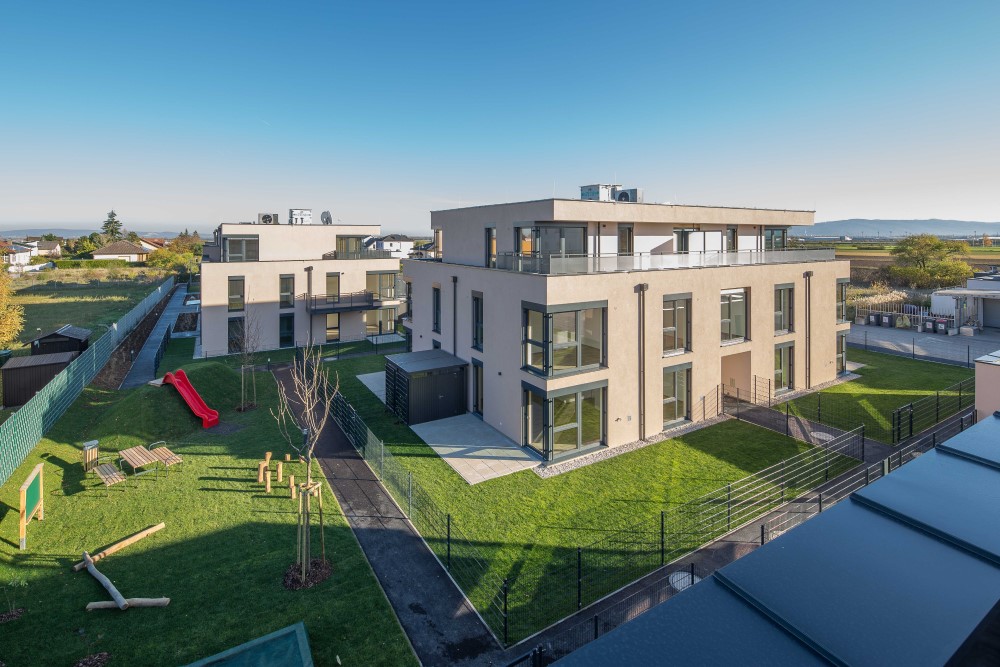
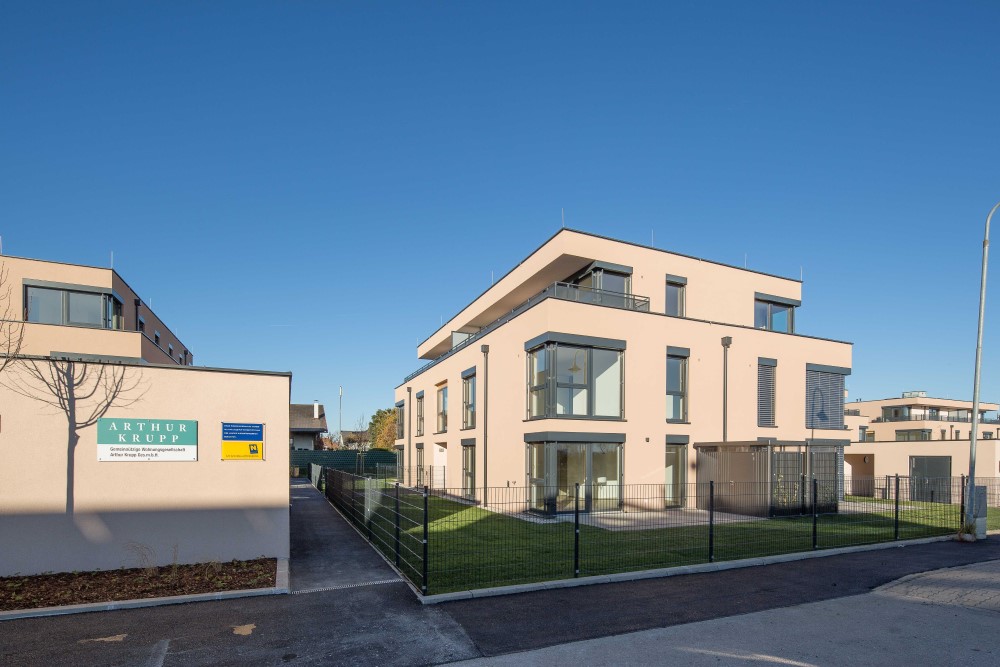
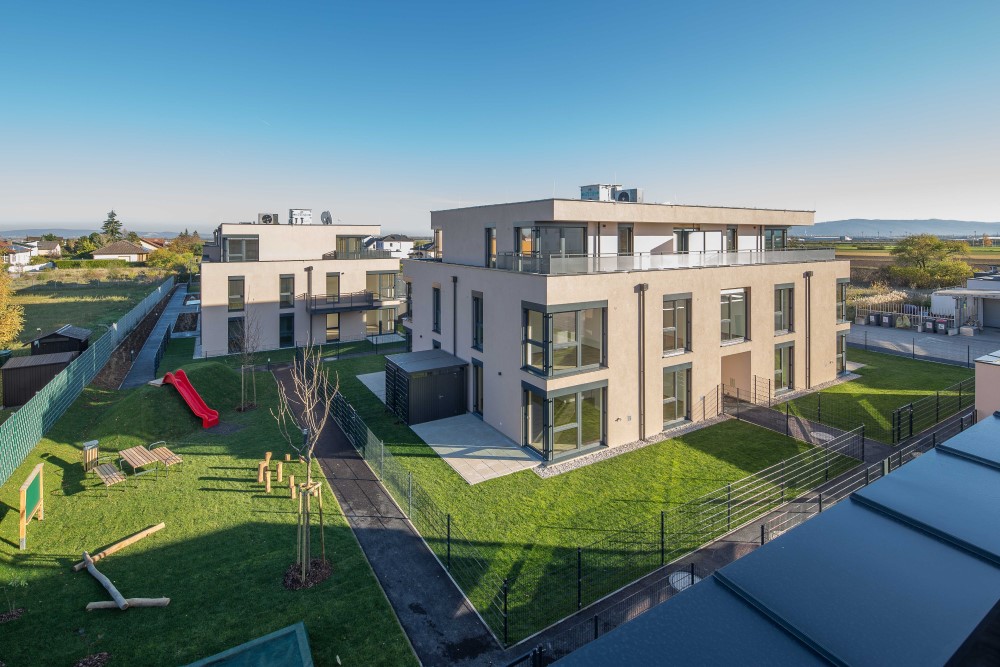
In the south of Viena, the non-profit developer Arthur Krupp built a pioneering residential building. The "Viertel Hoch Zwei" project is a showcase example of a new flexible housing typology and demonstrates that component activation is a simple, cheap measure that saves heating costs, eliminates moisture problems, and ensures comfortable indoor climate in social housing.
Project Region
EU Programme or fund
Description of the project
Summary
The non-profit housing company Arthur Krupp worked intensively on a completely new concept for social housing, which in terms of energy technology as well es in terms of life cycle is considered a showcase project. The social housing “Quarter up two” with a total of 28 apartments amazes with its simple technology and proves that affordable housing with climate-neutral and long-lasting apartments can be realized. The secret of the success of the "adaptable" apartments is the flexibility in the life cycle and the separability of the floors. With little effort, a five-room apartment can be turned into two two-room apartments: as a starting apartment for the children, for childcare in the third phase of life or for the pension.
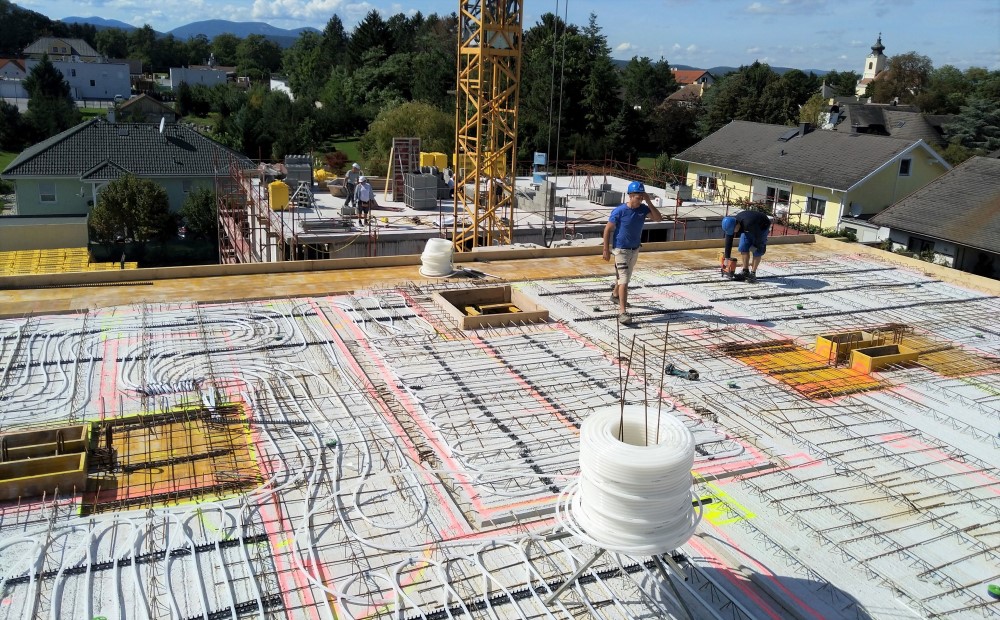
At an average of around 60 euros per month, energy costs are 50 to 70% below an average household with the same size. All system decisions were made based on life cycle calculations. Following components were realized: heating and cooling by means of component activation, massive building envelope in passive house quality, air water heat pump, photovoltaics to cover around a quarter of the annual electricity consumption (including household electricity), use of excess wind power in cooperation with WEB Windenergie AG. Project research partner Wolfgang Amann, IIBW, explains: “The Vorarlberg Energy Institute tested a total of around 20,000 variants of construction, building materials and thermal insulation, heating, building services and energy generation, not only in relation to today's construction costs, but also in relation to the lifecycle of the building. "
The managing director of the developer Arthur Krupp GmbH Christof Anderle is convinced:" The future of heating is the cooling in summer”. In the future, summer cooling will become more and more important. Here, component activation is an economical solution that, in cooperation with the energy industry, can represent a win / win situation for all parties involved.
Key objectives for sustainability
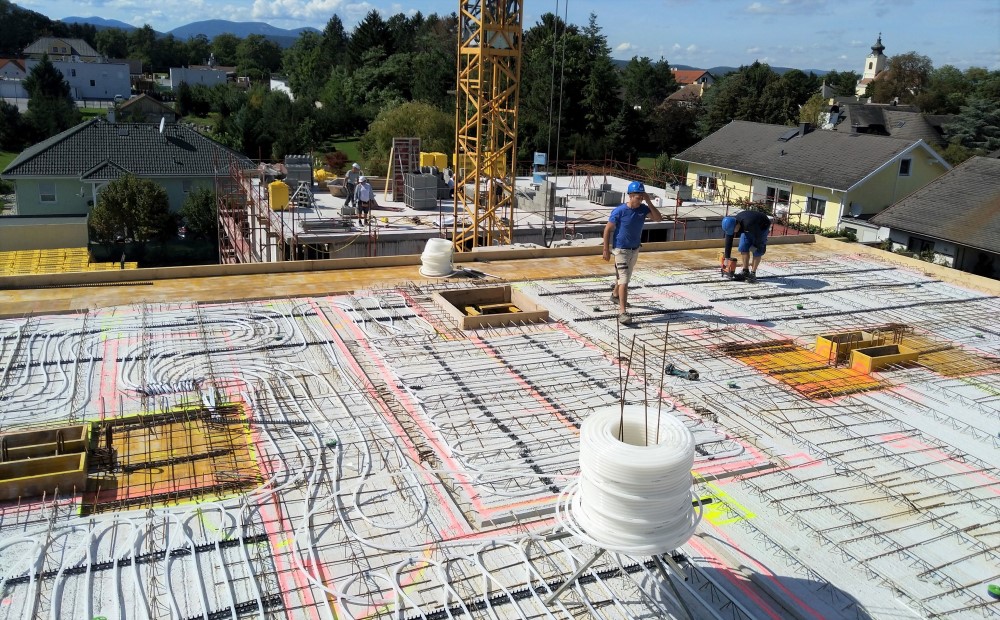
All system decisions were made on the basis of life cycle calculations. The planned low-tech buildings are energy-efficient, resource-saving and economical. They are robust and designed for a long service life. During the planning process, a total of about 20,000 variants of construction, building materials and thermal insulation, of heating, building services and energy generation were tested. This was done not only in terms of today's construction costs, but also in terms of the costs over the entire life span of the building. This "life cycle assessment" opens up completely new perspectives for technology selection. New technologies, such as building component activation, suddenly have the edge over conventional heating systems. This involves cooperating with wind farm operators who send electricity into the house when the wind generates more electricity than is consumed in the grid. This drives heat pumps, which then heat the concrete ceilings or cool them in summer. Because of the thermal inertia of the concrete, the heat (or cold) can enter the building at some point during the day or night and it maintains a completely constant temperature. In the future, summer cooling will become more and more important. Here, building component activation represents an economic solution that, in cooperation with the energy industry, can represent a win/win situation for all parties involved. Immediately after the occupation of the residential building, technical monitoring and an evaluation of the occupants' satisfaction with regard to the component activation, human-ecological aspects and, of course, the costs will begin.
Key objectives for aesthetics and quality
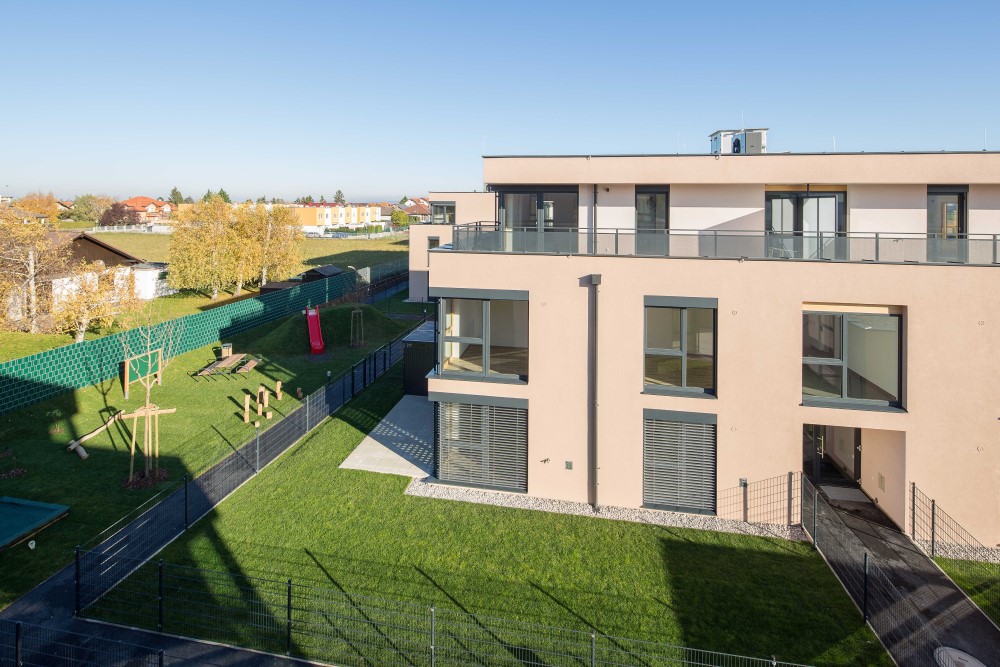
A large proportion of Austrians would like to have a house in the countryside. If everyone fulfils this wish, there won't be much green left in a few years. The Arthur Krupp concept study "Viertel hoch Zwei" provides the answer. It combines four neighbourhood houses with gardens and two roof terrace apartments and requires only a fraction of the building land needed for a private home. Municipalities benefit from better utilization of the remaining building land because they save costs for roads and sewage systems, because public transport is easier to finance with more residents, because more people reach the town centre on foot or by bike and bring customers to the stores there, and also because social life in the town is refreshed as a result.
Key objectives for inclusion
We need affordable housing that meets the needs of our residents today as well as those of the future. Lifestyles are becoming more diverse. Life phases are changing more frequently, even into old age. At the same time, uncertainty is increasing, in terms of personal vicissitudes, in terms of income. The answer is affordable housing that responds to the unpredictable developments that life brings. "Viertel hoch zwei" offers two-storey compact five-room flats, but with just under 100m². The special feature is the separability of the two floors. With very little effort, the five-room flat can be turned into two two-room flats: as a starter flat for the children, for care in the third stage of life or for subletting to make up for it in retirement. The possibilities are as diverse as the life plans that can be discerned today.
Results in relation to category
We need new answers to the complexity of technology. The smart phone became so successful because the complex technology inside remains invisible and can be controlled via simple and intuitive interfaces. Today's buildings face a similar challenge. The degree of complexity has increased enormously. But housing customers want "low tech" - easy-to-use feel-good flats. In "Viertel hoch Zwei", this approach was consistently thought through to the end. All aspects of construction and building services were optimised down to the last detail, but always following the principle of installing reliable, long-lasting technology in the simplest possible way.
Behind the lifelong practical and affordable homes are complex processes for optimising construction and energy management. A total of about 20,000 variants of construction, building materials and thermal insulation, of heating, building services and energy application were tested, not only in terms of today's construction costs, but also in terms of the costs over the entire life span of the building.
This "life cycle assessment" opens up completely new perspectives. New technologies, such as building component activation, suddenly have the edge over conventional heating systems. This involves cooperating with wind farm operators who send electricity into the house when the wind generates more electricity than is consumed in the grid. This drives heat pumps, which then heat the concrete ceilings or cool them in summer. Because of the thermal inertia of the concrete, the heat (or cold) can enter the building at some point during the day or night and it maintains a completely constant temperature.
How Citizens benefit
The new building typology "Viertel hoch Zwei" is particularly suitable for rural communities with growth potential. The buildings, each with six residential units and strong greenery, can be integrated well into single-family home areas and thus allow for compatible densification. "Viertel hoch Zwei" can be realised on plots from approx. 900m². The innovations in energy supply are particularly effective in areas without district heating.
Immediately after occupation of the residential building, technical monitoring and an evaluation of occupant satisfaction with regard to component activation, human ecological aspects and, of course, costs will begin.
Innovative character
We need climate-neutral buildings. This is not done with well-insulated houses alone. We also need optimised heating systems and should use energy wherever it is available. One immensely interesting source is green electricity. Wind turbines produce electricity even at times when it is not needed. Such electricity peaks can be used for heating and cooling in residential buildings. Buildings can become storage facilities for surplus electricity. Of course, all roofs are equipped with photovoltaics. Smart meters make it possible for each individual tenant to also use electricity from their own roof and thus save money.
"Viertel hoch Zwei" is green. The low construction costs allow for extensive measures in the open space, from tall trees, support for residents in gardening, to unsealed parking spaces. In this way, the quality of living can be increased and summer heat islands can be avoided.