Jyväskylä Kangas - urban trailblazer
Basic information
Project Title
Full project title
Category
Project Description
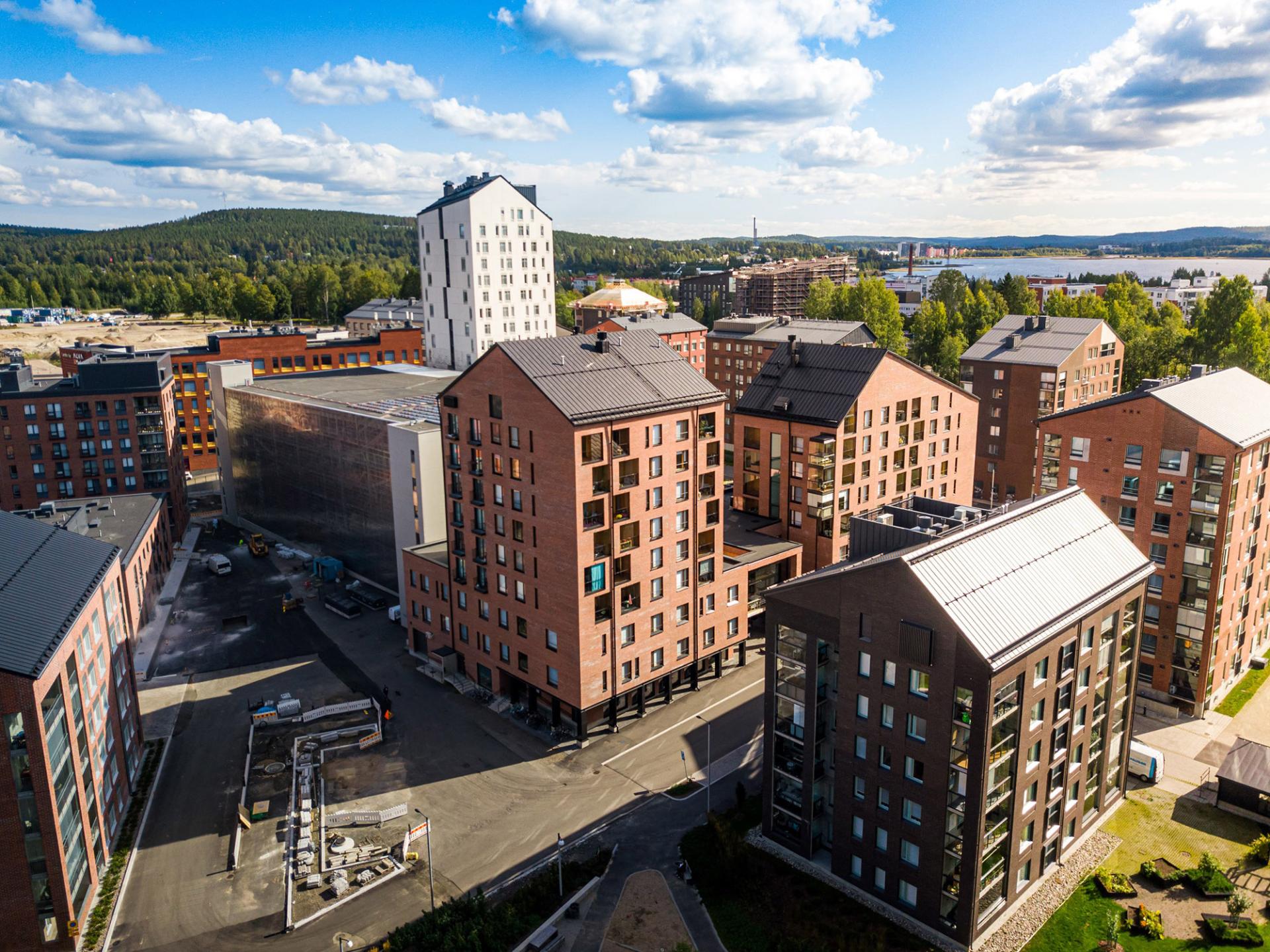
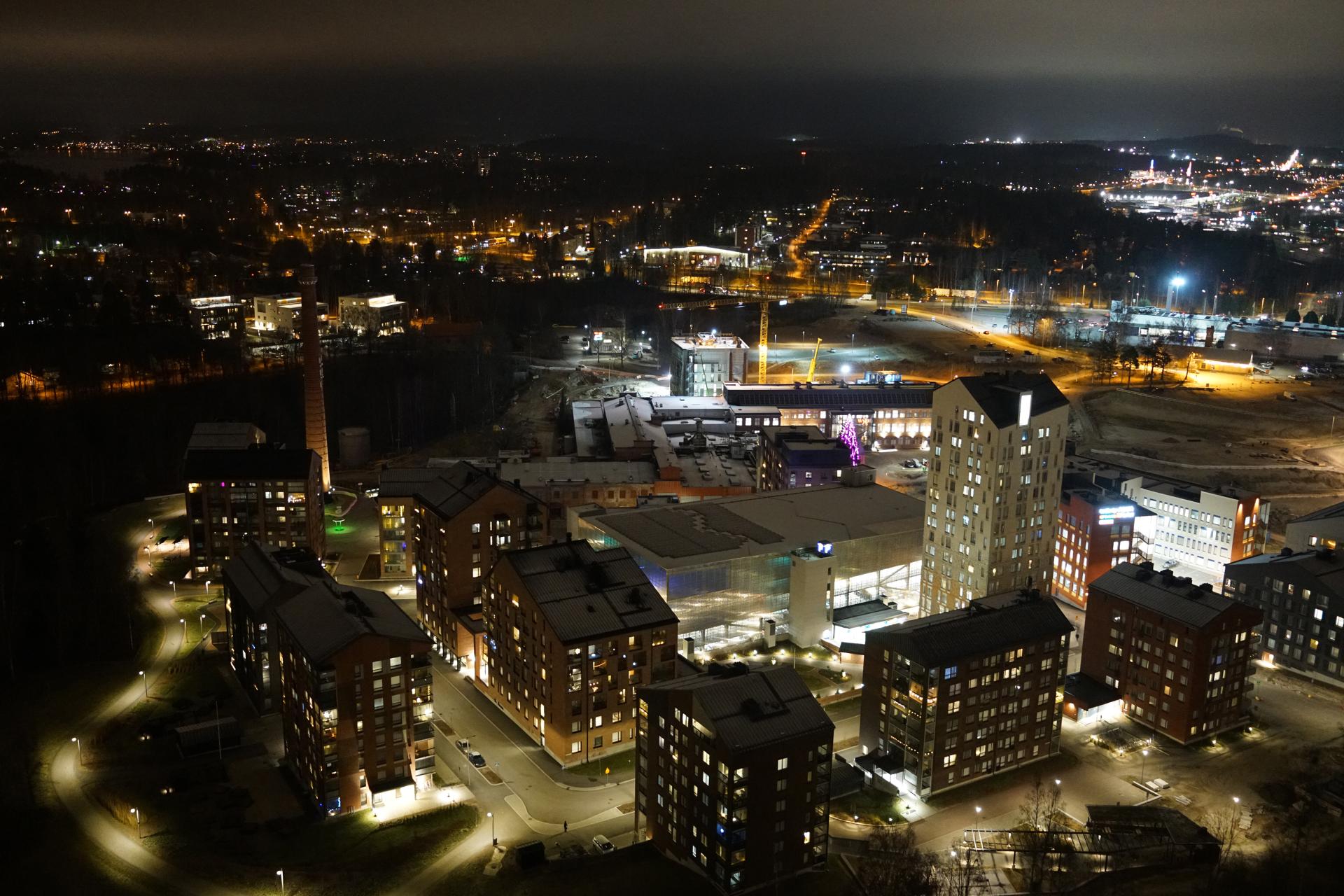
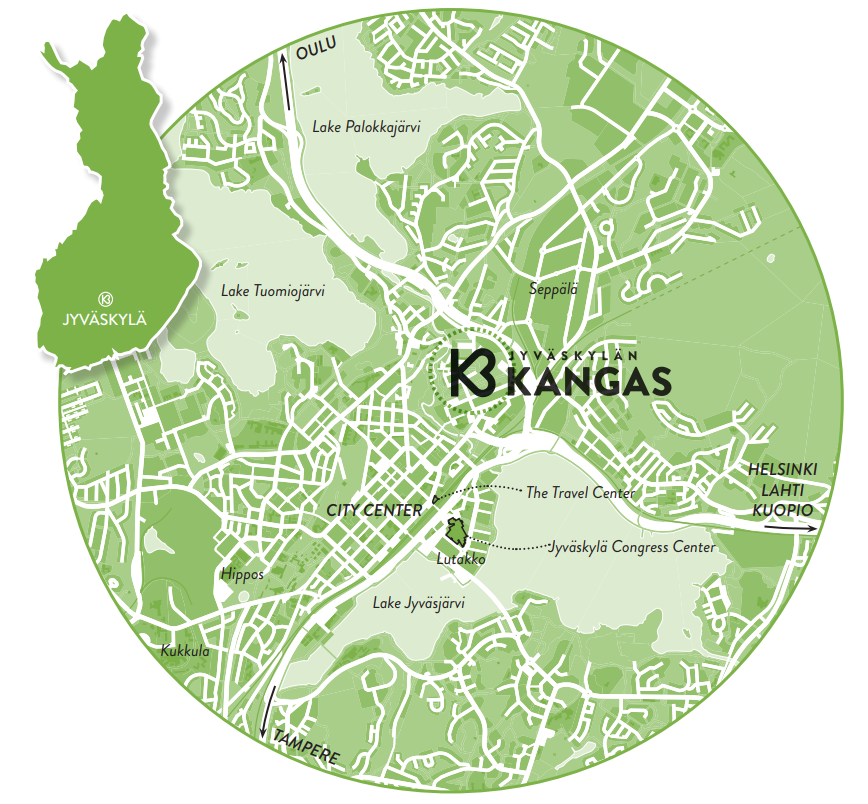
Kangas is an oasis born out of one of the most traditional industries in Finland: paper. An old paper mill has been transformed into a sustainable, green and smart oasis capable of housing over 5000 residents and over 2000 jobs. Kangas rests at a core transition hub, linking the south of Finland to the North, by the city center of Jyväskylä. Moreover, despite its historical roots in industry with iconic red-brick buildings, Kangas is bordered by the conservation area of Tourujoki- valley.
Project Region
EU Programme or fund
Which funds
Other Funds
CIRCWASTE LIFE IP E FI004
C.13 and C. 14
2017 - 2023
Description of the project
Summary
Kangas was a brown field area, old paper mill area dating back to the 19th century located by the heart of Jyväskylä. As the city has expanded and mill activities seized, the area has become a part of the vibrant center of Jyväskylä. The history of Kangas, modern architecture and nature values of Tourujoki- valley connect with a green, urban city scape and culture in a unique way. Kangas is a forerunner in urban planning. The development of Kangas began by participating citizens of Jyväskylä, to share their vision and dreams of the future of Kangas. As a result, four key themes were identified: Sustainable, Heart, Green, and Foot, approved by the city board as core themes for developing Kangas. The themes summarize the principles of sustainable development, community, experience and percentage-culture related objectives, quality construction and architecture which respects the area’s heritage. As a foundation for developing the area, the city has formed a joint public-private partnership with private investment and construction companies which will last until current development is completed in 2035. Smart city elements at the core of development are smart digital solutions and resource wisdom, which complement innovative urban planning in Kangas.
Key objectives for sustainability
Jyväskylä Kangas is an old paper mill area next to the Jyväskylä city center. Once this city center extension will be complete, the area will inhabit approximately 5500 residents and 2000 workers of various businesses. As the first phase of Kangas is complete, there are an estimated 1000 residents and 1000 jobs currently occupying Kangas. The area is over 30 hectares and will continue to be developed until its planned completion in 2035. From an urban planning perspective, Kangas is a gem. Kangas is situated at an essential transition hub for the city and Kangas rests on the border of the nature-rich Tourujoki valley (a conservation area). The identity of Kangas draws from the area’s long industrial history and its heritage protected red-brick buildings. Kangas combines high quality urban planning and architecture, ambitious sustainable goals and innovations from smart city solutions to construction and maintenance. Kangas is a forerunner in many ways. The partnerships formed between the public and private sectors as well as the stage-by-stage implementation ensure that the area’s development coincides with societal change. At the beginning of development, a long participatory period was conducted for citizens. This confirmed the interest they had towards the area and acted as a first step for actively engaging in the development of Kangas in the future too. As a result of the participatory period (and related research projects), several objectives were established to drive sustainable development, smart use of resources, carbon neutrality, community, experience, quality and environmental friendliness. These emerge through daily needs, such as common and efficient waste management solutions and garden areas, which reduce excess maintenance traffic. Common green areas represent community spirit, the quality of implementation and smart use of resources. Centralised parking in parking houses frees space for gardens and enables a compact and urban town-structure.
Key objectives for aesthetics and quality
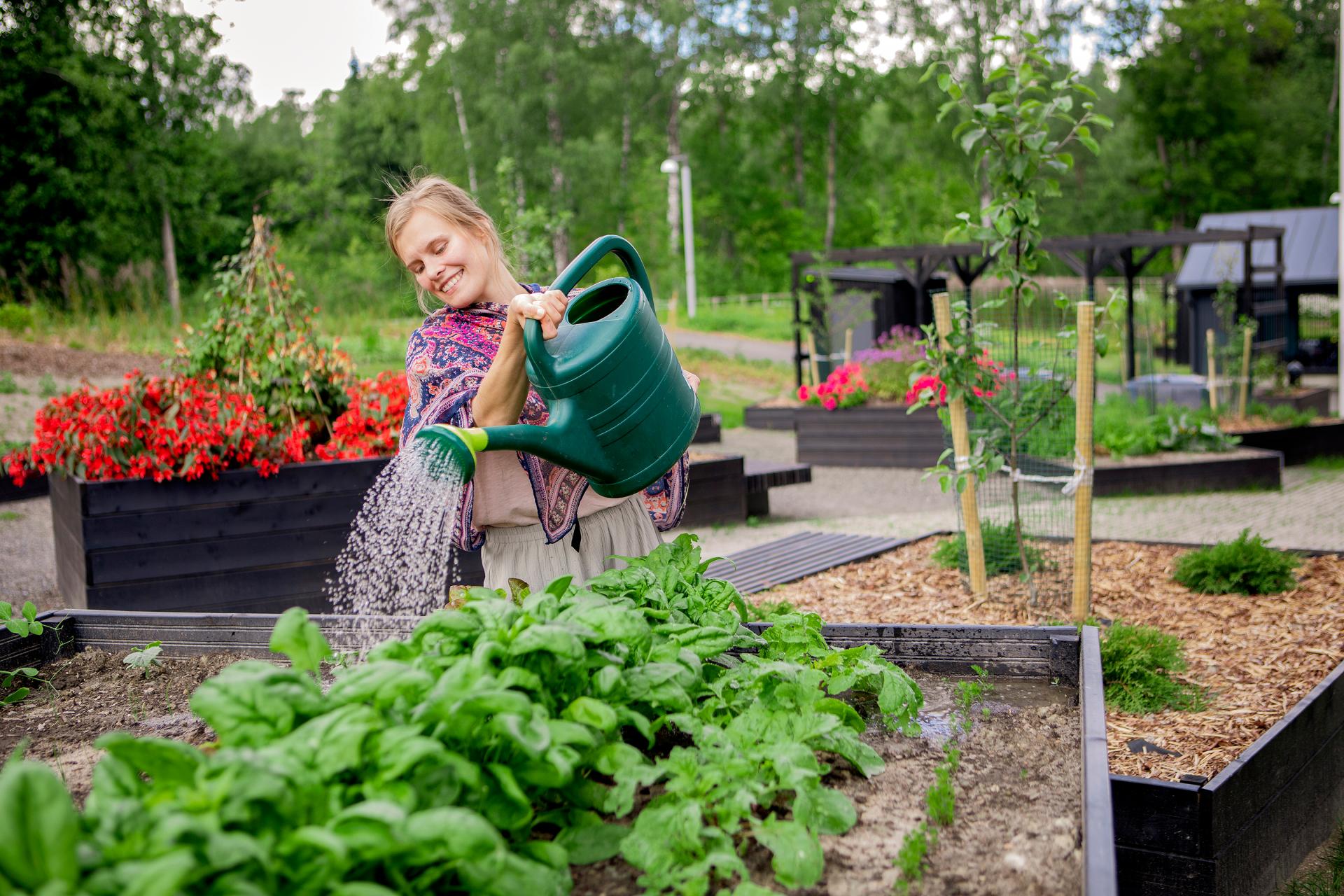
Common infrastructure arrangements supporting daily life are at the core of the sustainable city structure. A centralized parking system for the whole area enables efficient, structural parking, which frees space for the green areas. At the first phase, the centralized parking system has 400 parking spaces less than a regular parking system. This helps create a more compact city structure without compromizing the quality of the environment. Common green areas are organized as residential block-specific entities, each with varying themes. Common grounds are thus part of complementary entities, instead of each separate grounds receiving the same equipment and playground structures. A centralised and common waste management solution saves space and decreases maintenance traffic compared to a system where each building has their own waste area. Through common arrangements, the city structure has generous room for urban, constructed green areas and parks. Additionally, there is a preserved wooded-area (Tourujoki- valley with its own conservation area). Green area construction aims to enable diversity in nature: natural treatment of urban run off- and rainwater, useful plants, honeybee- habitation and meadows. Common grounds also enable city-farming for residents living in the area. The area also utilises other environmentally-friendly approaches in its development. Roofs are designed to house solar panels. Developers use recycled construction material comprehensively in constructing local infrastructure. Building automation solutions, as part of the aim to make Kangas a smart residential area, enable remote monitoring water and energy consumption with ease. The Kangas area also has its own fibre-optic infrastructure which teleoperators can rent and use to offer their services to the residents: a resource-wise way of offering local residents a broad range of service-providers while preventing further hindrance caused by later adding new fibre-optic cable connections.
Key objectives for inclusion
Much of the progressive nature and quality of urban planning in Kangas relies on empowerment and open architectural competitions. The base of Kangas is built on the participation of the area’s residents and key stakeholders. Views and ideas are given substantial weight in decision-making. This has been enabled by an urban development project equipped with sufficient resources. A quality handbook and quality assurance processes regarding architectural designs were drafted for Kangas to achieve the goals for construction and the environment. The significantly progressive architecture is achieved also through several architecture-competitions, wich are held at the launch of a new phase. The industrial-style building approach respects the area’s historical roots projecting and strengthening the areas unique identity. Alongside architecture, the percentage culture in Kangas portrays quality and willingness to make Kangas a unique residential area. By combing public art projects and cultural activities the %-principle enables the living environment to become rich with experiences for inhabitants. Big and small events contribute to the vibrant, interesting nature of this uptown neighborhood. Large common grounds connecting several apartment blocks together strengthen social inclusivity in the area. Kangas is a non-discriminatory and diverse living area, supporting activities and encounters across all age groups. The quality of Kangas as a housing area also rests on unaltered natural elements. The conservation area of the Valley of Tourujoki, lush with greenery and different species of animals, complement green urban construction. Despite its industrial history, Kangas has managed to preserve its characteristics uncommon to typical uptown areas and uniquely combine them with architecture, arts and culture.
Results in relation to category
Kangas is a demonstration of how an old industrial area can be transformed into a part of an evolving town structure through successful participatory action, city-planning, partnerships, continuous development and implementation. Kangas has also managed to successfully incorporate entirely new approaches to urban development (previously mentioned) and living area digitalization. A central achievement is that residents and developers have taken ownership of the area. This is seen in the way residents and developers engage in external communication. Residents in the neighborhood have developed a strong identity: “Kangas-ians”. The Kangas area is portrayed and known as an area with ambitious goals for sustanainability, resource-efficiency, quality, history and environmental values, which drives significant demand for employers and residents alike to relocate there. Kangas is viewed as an attractive residential area, and its ongoing development and incompleteness generally receive a positive response. Development, as well as various projects involving collaboration attract active participation from residents. Kangas is viewed as a model urban development project drawing attention from towns around Finland. This contributes to broader applicability and interest in using Kangas as a benchmark for urban development. Challenging both traditional municipal and building customs, Kangas focuses on questions relating to life cycles with regards to planning, implementation and maintenance. Impact is measured through the long term, with monitoring and development activities taking place on the short term. In addition to architecture and construction, digitalization had a substantial impact in shaping the residential environment. It has offered new ways of offering residents accessability to culture and art. For example, an augmented reality application allows residents to experience Kangas through art and culture.
How Citizens benefit
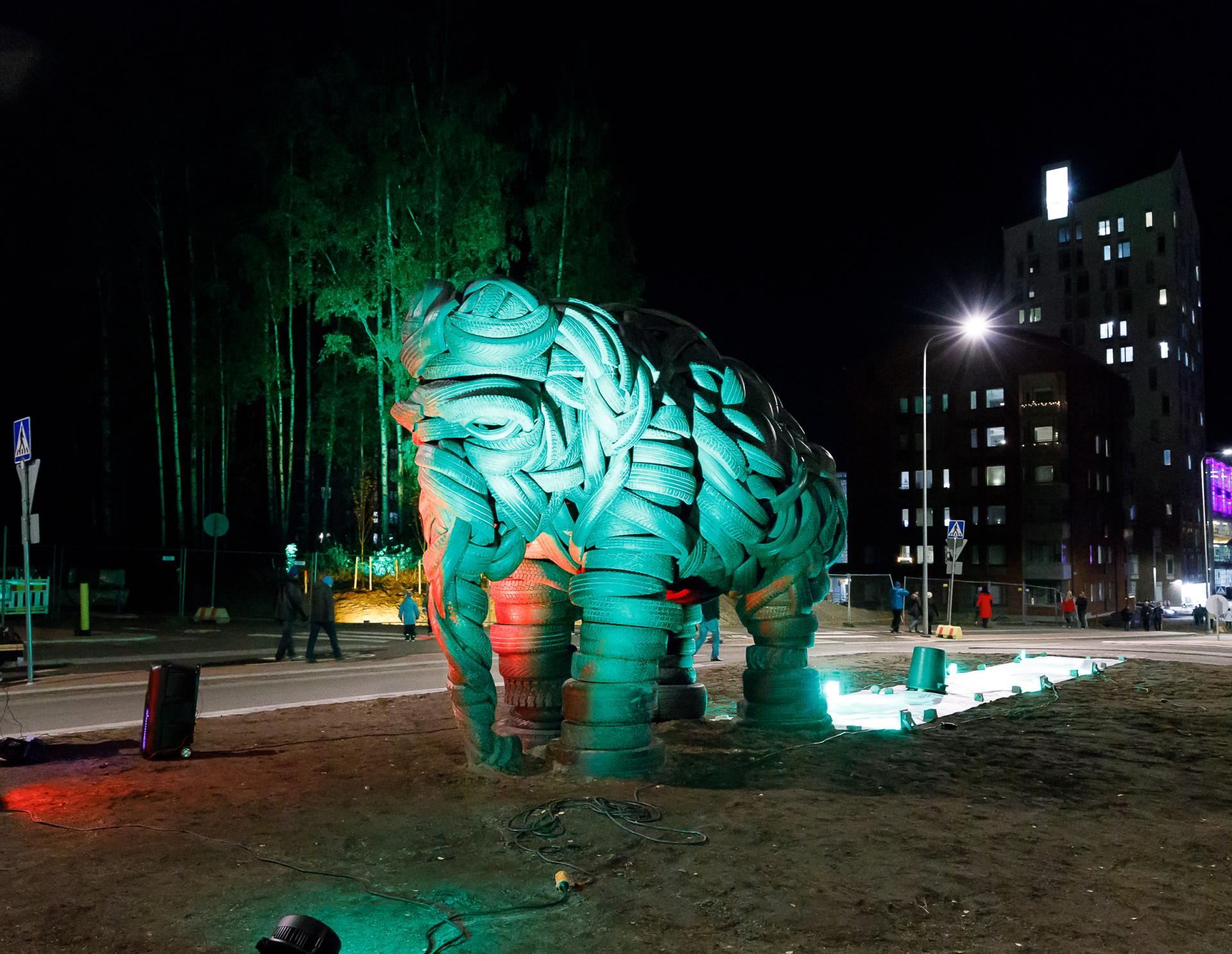
The city of Jyväskylä bought the old mill area to expand the city center and to provide attractive housing and working environments for the needs of the growing population. The planning process in Kangas started in an unusual order, before architects started town planning, over 600 people participated in the process. Citizens wrote, drew and told their dreams and hopes for the new area. An innovative group of young professionals facilitated the process. New methods like a digital story “a happy day in Kangas” and other digital tools were used to have as wide participation as possible. Teams also went to pubs, retirement homes, shopping centers and daycare centers to activate discussions and drafting participatory visions. Based on the visions and materials from the participation process, the city council approved the strategic goals for Kangas in 2011. Four different themes, Green for common areas; from urban playgrounds to nature reserve area by the river, Foot for fluent pedestrian and bicycle traffic, cycle-parking and smart traffic, Sustainable for being able to live a sustainable, resource wise life in the city center and Heart for strong sense of community and history in the red-brick heart of the area. Housing programs in Kangas aim for demografic diversity. At least 30 % of housing is directed for social or subsidized housing. At the first phase, Kangas has now housing for families, students, and elderly, non-subsidised and subsidised rental and owner-occupied dwellings. The Kangas project constantly analyses and takes action to ensure a balanced housing strategy in Kangas. According to 1 %-principle the art and culture is fun, surprising and made together. So the citizens can take part in arranging the events and happenings and also in the process of choosing the art projects to the area.
Innovative character
The innovative character of Kangas is based on the questioning of the traditional methods and ways of thinking. To enable innovative thinking, mutual trust in longtime partnerships with the private sector actors must be achieved. Kangas-project established a new model of partnership agreements. With these partnerships it has been possible to encourage the investors and contractors to innovate new solutions and commit to creating high quality urban architecture with architectural competitions, developing centralized systems and piloting the smart city solutions in housing projects. In the process, the people`s participation evolved to involment and activism. People living and working in Kangas feel, that they can actively be involved and make a difference to their surrondings and quality of life in Kangas. This shared innovation also helps the planning processes procede without delay. There can be no smart city without cybersecurity. Kangas-project drafted the first ever Cybersecurity plan to urban area and infrastructure. The work continues with several companies using Kangas as a digital living lab. Furthermore, the digital services developed at Kangas are aiming to “Smartness by Experience”, which means that the end user value is one of the most important impact expected when these are developed and deployed. Sustainable values are integrated to planning and execution in every level from using recycled building materials from the old mill and minimizing the maintenance traffic, to a unique solar town plan, where the structure of the area was planned for optimal conditions to utilise solar power. The small practical details include a solar powered bench, that charges also the locking systems in the garden tool sheds. All actors in Kangas are commited to the same strategic goals, we do not settle for old ways, but look for new innovative way to build the city of the future.