TREETOP WALK OF SERRALVES
Basic information
Project Title
Full project title
Category
Project Description
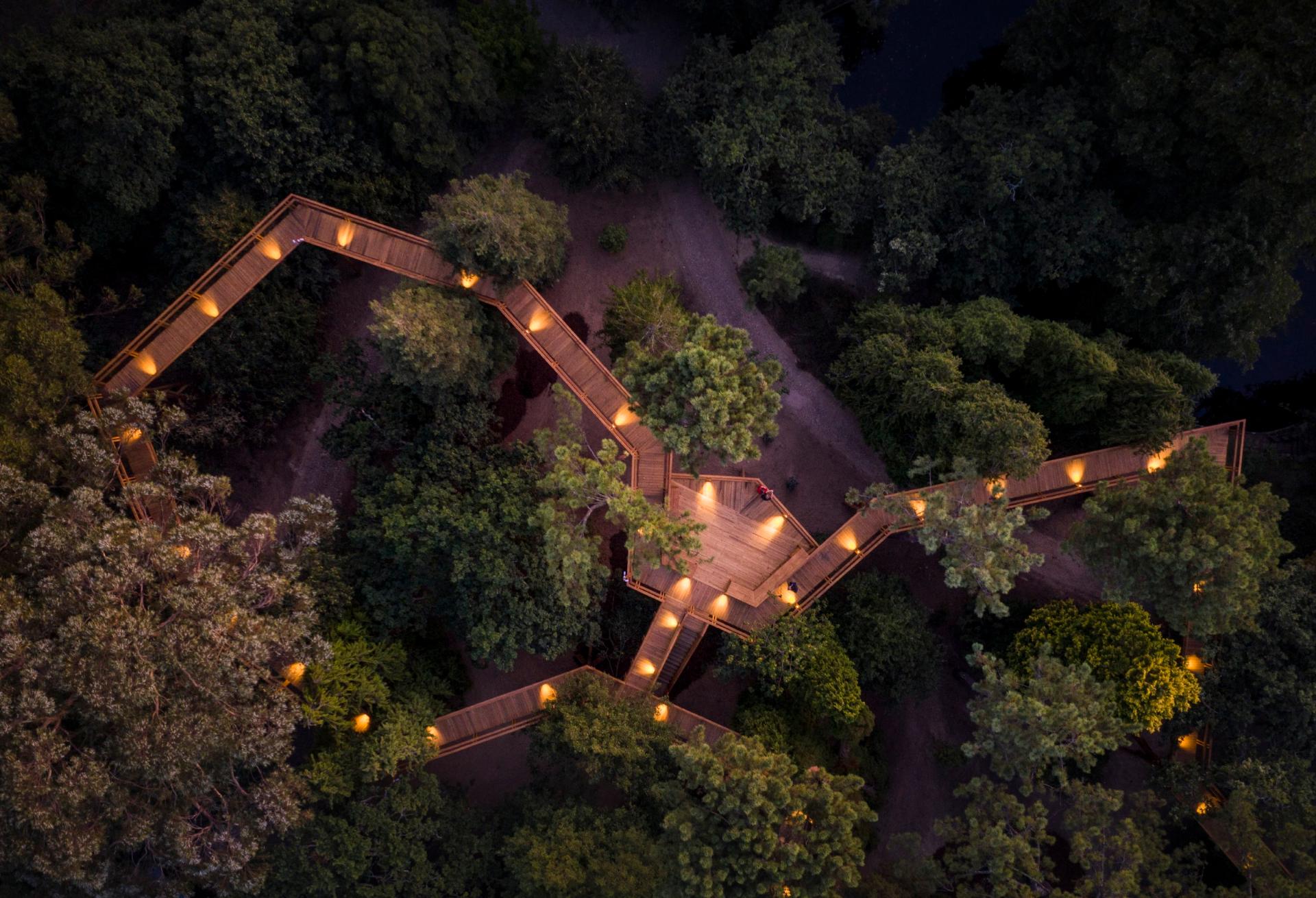
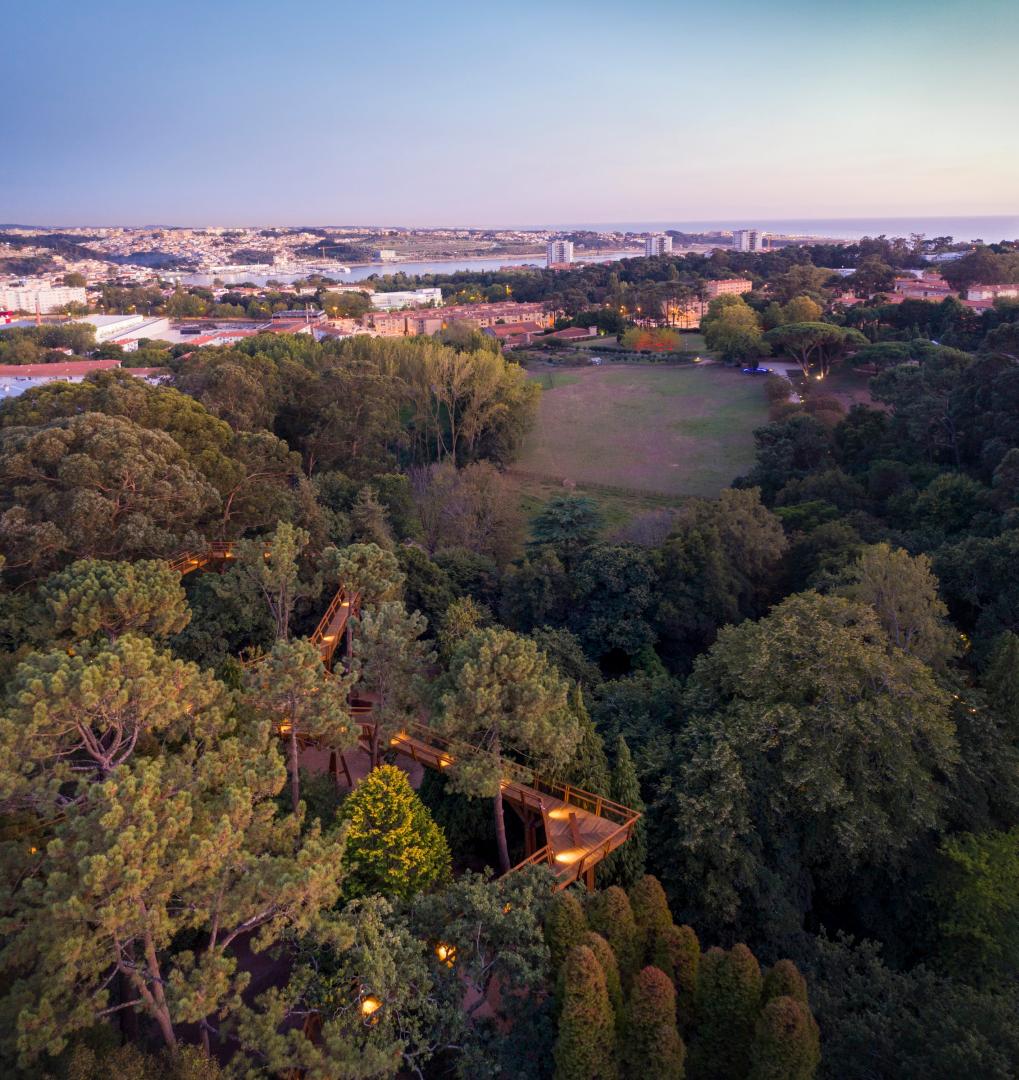
The Treetop Walk of Serralves Park, in Porto, offers an innovative way to enjoy this unique natural heritage, promoting awareness of nature conservation, developing educational programmes and scientific research – in particular, related to the carbon cycle and climate change – and hosting artistic events. It is a beautiful example of sustainable contemporary architecture!
Project Region
EU Programme or fund
Description of the project
Summary
The Serralves Foundation is a non-profit entity, of public utility, which results from an innovative partnership between the Portuguese State and civil society.
It is an international cultural institution at the service of the community whose mission is to stimulate interest and knowledge in contemporary art, architecture, landscape and critical issues facing society and its future. This is achieved in an integrated manner, using an exceptional heritage site that has been classified as a National Monument: which consists of the Park, (art deco) Villa, Museum of Contemporary Art and the Cinema House Manoel de Oliveira.
In 2019 the Foundation installed a treetop walk, based on a comprehensive, interdisciplinary vision, that constantly values cultural and natural heritage, promoting contemporary art and architecture, in close relationship with the values of environmental sustainability and social inclusion. The walkway permits a vibrant experience of observation and study of the biodiversity of Serralves Park.Designed by the architect Carlos Castanheira in co-authorship with Álvaro Siza Vieira, the project is a classic example of architecture and sustainable construction, due to the way that it has been designed and implemented, considering, in particular: huge respect for the existing flora in the site where the walkway has been implanted; reuse of wood; full accessibility for persons with reduced mobility. The project encourages the development of techniques and the use of new technologies through mastery of accumulated and complementary knowledge.
It is a beautiful structure that is particularly relevant in an urban context, such as Serralves Park, since it provides an innovative way to enjoy this unique natural heritage, promoting awareness of nature conservation, fostering the development of educational programmes and scientific research activities – in particular, related to the carbon cycle and climate change – also framed in the context of artistic events.
Key objectives for sustainability
The objectives underpinning creation of the TTW include:
- To create an overall example of sustainable construction, in particular:
- Respect for the site and the existing biodiversity, minimising its environmental impact;
- Reuse of materials, in this case of recycled wood;
- Promote awareness of nature conservation, by stimulating aforementioned reuse, fostering vibrant proximity to flora and fauna and the development of new pedagogical initiatives;
The TTW has been designed and built in such a manner that precluded any tree being felled, since the micropile foundations reduce the intervention area in the ground, thereby preserving the tree roots. High resistance metallic pillars made from carbon steel and low alloy reduce the structural volume and guarantee the necessary adjustment to the uneven terrain.
The metallic elements have been lined with radiated, solid or laminated pine (certified, from plantation forests), treated in an autoclave, for greater integration in the natural surroundings, including trunks that support the branches that meander through the landscape.
The floors and guardrails are made from reused solid wood (also certified), with a suitable strength class, in order to guarantee the sustainability of the construction and reuse of the wood.
All of the wood used in the TTW, in turn, may be reused in the future, in line with circularity principles. The wooden construction elements are suitable for the environment in terms of their tone, texture and material.
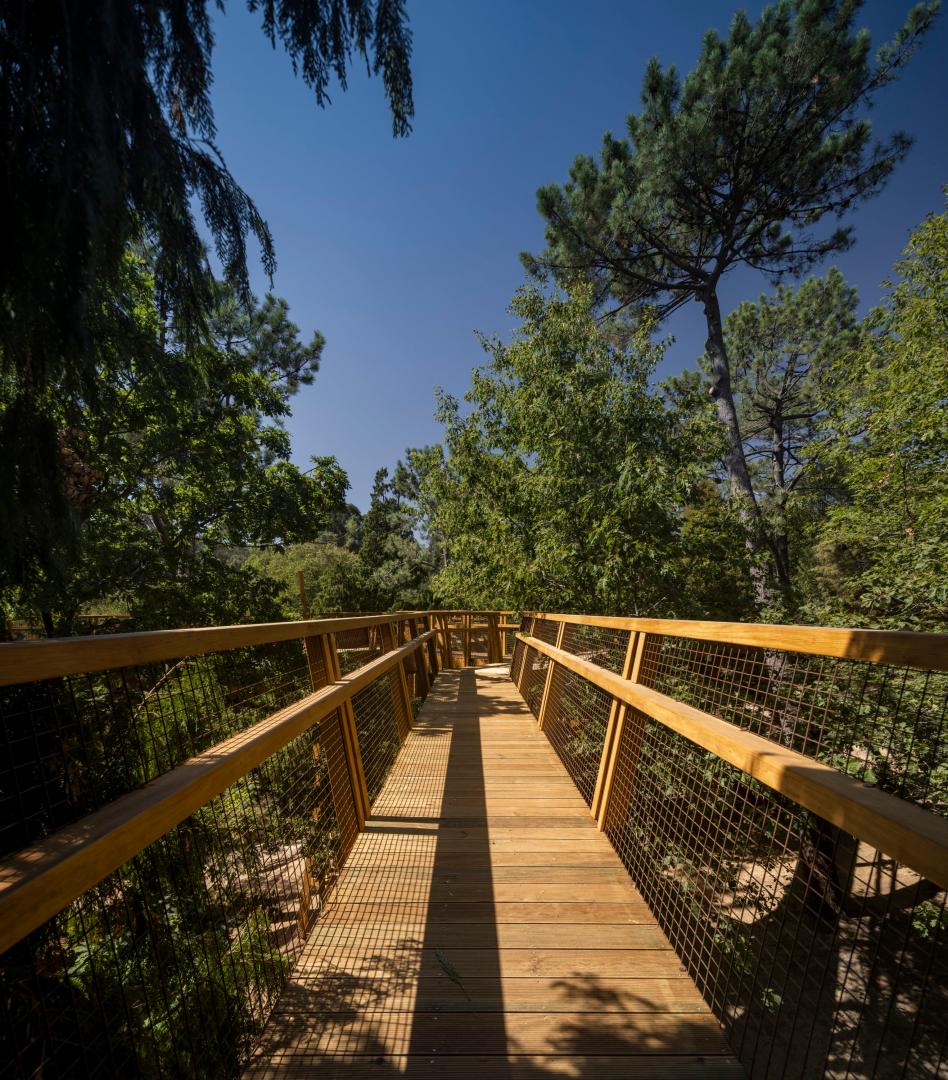
The structure is volatile, light and reversible, as if it has been placed and generated from the environment itself, without any conflict or antagonism with the existing surroundings. The walkway seems to offer continuity with the natural environment, preserving the landscape. A low maintenance cost solution has been proposed, that does not require future interventions.
Key objectives for aesthetics and quality
In harmony with, and inspired by, the remarkable Park, which harbours striking buildings and sculptures by renowned artists, the Treetop Walk is a beautiful example of contemporary architecture.
Like the surrounding trees, the pillars resemble trunks, as if the horizontal platforms were canopies where, instead of birds, people stroll around, offering a unique experience.It is a wooden construction that is aesthetically integrated into the naturally sloping land that invites serenity. Despite the fixed horizontal elevation of the route, it provides the experience of varying heights, due to the slope of the terrain.
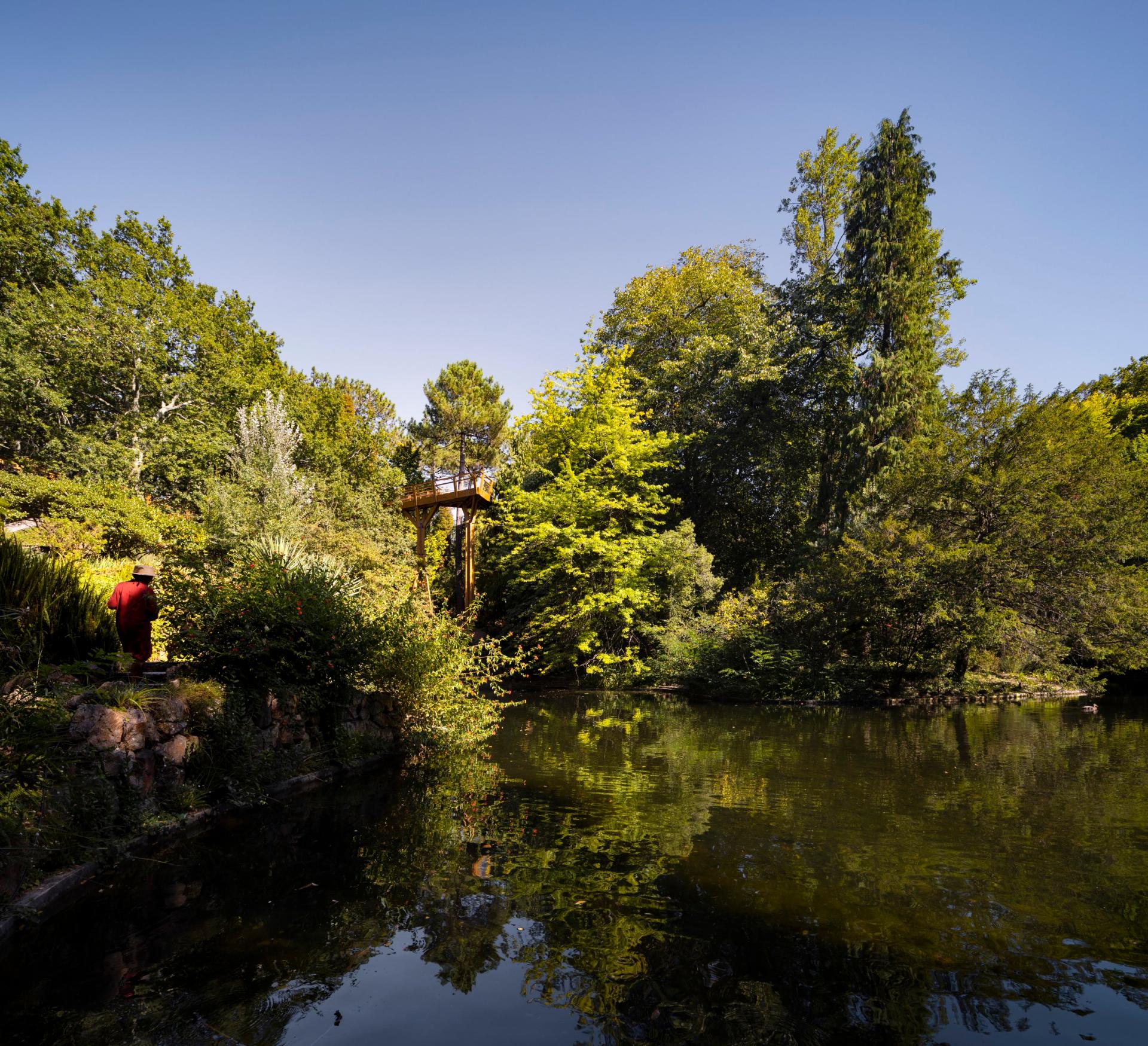
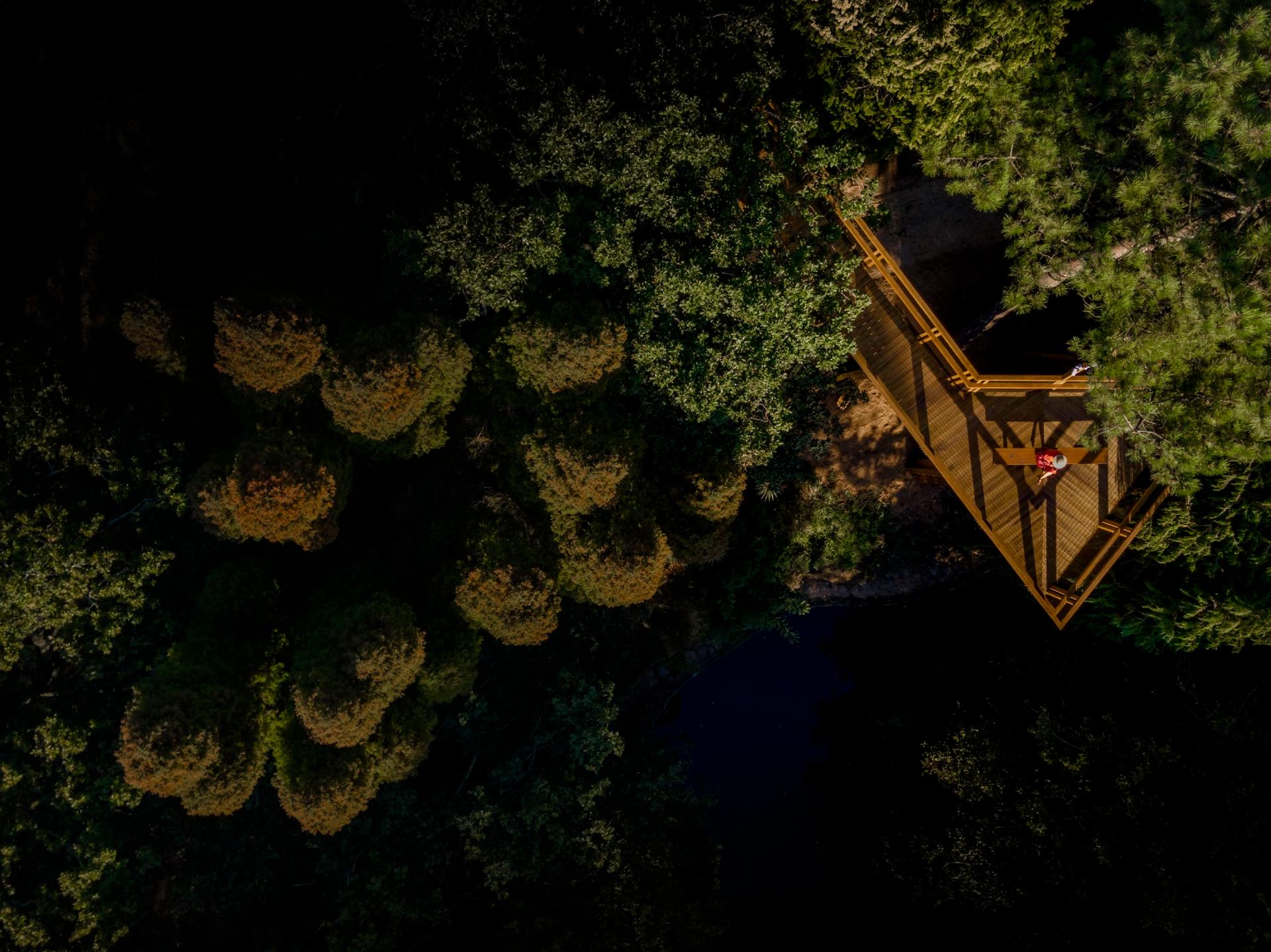
The structure is divided into two spaces: the upper and lower spaces. It is as interesting to pass beneath the walkway as it is to walk along it.When exploring the Treetop Walk, visitors never have a global perspective of the entire walkway and it is possible to make alternative routes. This creates the feeling that it is bigger than it really is (it is about 250 metres long). By providing different viewing angles - over the lake, farm and woodland area - it creates various different environments.
The route associated with the TTW also offers a close way of looking at and admiring the trees, appreciating their size and magnificence, enjoying continuous interactions with other forms of life, especially the diversity of birds that seek food or perches in this zone.
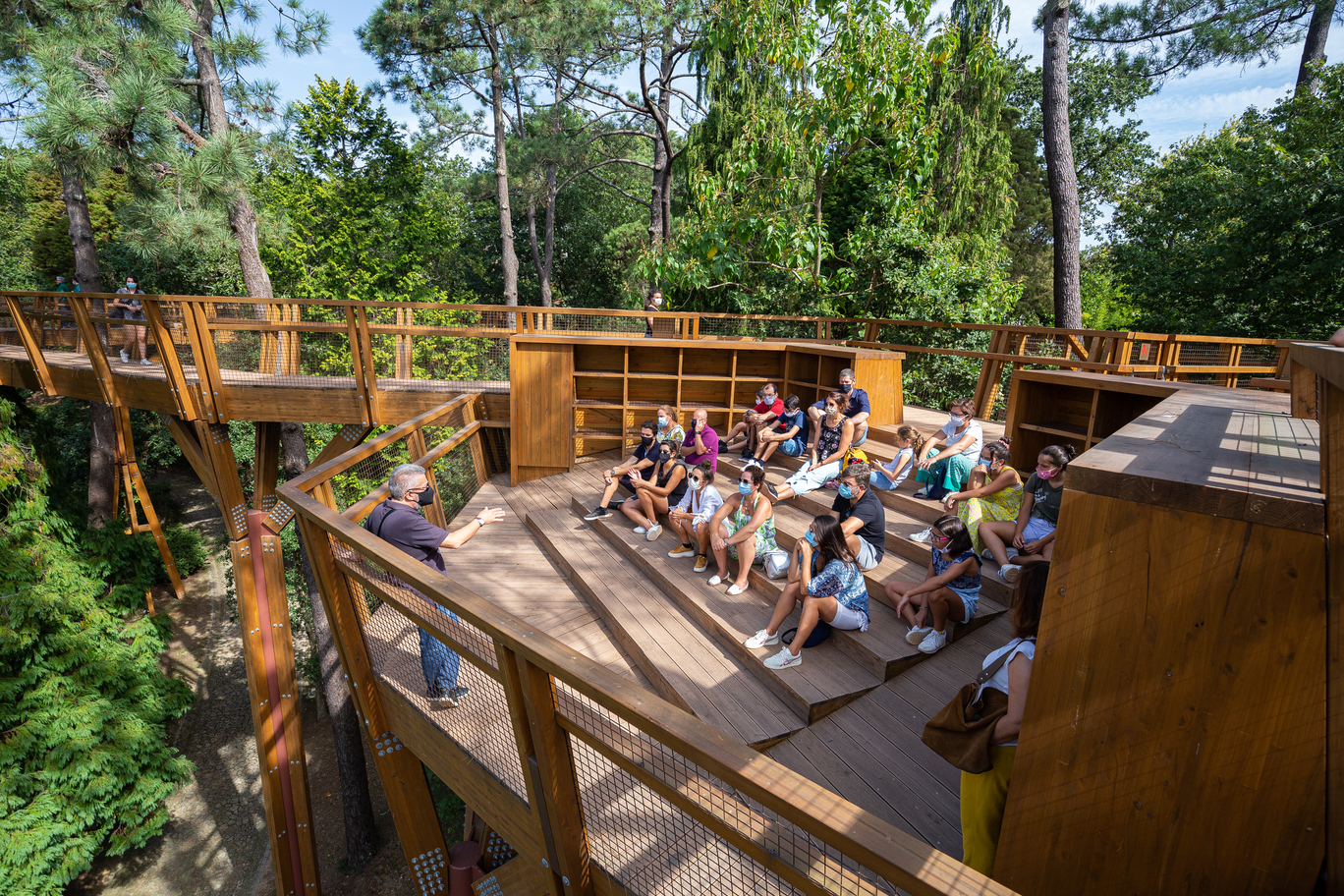
This walkway includes rest and contemplation areas and a small amphitheatre that permits different uses, such as a short stop during a tour or a group educational activity. To ensure greater comfort, movable cork bases have been designed.
The lighting system is subdued, enabling a fantastic sensation of walking through the treetops at night, listening to the sound of the birds and the croaking of frogs in the lake. TTW has been designed to integrate lighting design events promoted by the Foundation, such as Há Luz no Parque (There’s Light in the Park) or Serralves em Luz (Serralves in Light).
Key objectives for inclusion
The way that the places have been conceived and designed affects visitors’ ability to move around, and to see, hear and communicate effectively. In this context, the Treetop Walk has been conceived with inclusive design, avoiding barriers that will create separation and undue effort, thereby allowing all visitors to participate equally, with confidence and independence.
The walkway is flat and maintains the same elevation over its entire length, in order to guarantee good accessibility for persons with reduced mobility, without the need for any other means of intervention for these visitors.
The accessibility of the space has also been conceived at the intellectual level. Autonomous visiting of the route is supported by interpretive signs that indicate the species of fauna and flora that can be found in the park. It is also possible to access mobile applications offering educational content about the space.
In addition, ever since the launch of the Treetop Walk, a specific programme aimed at the educational community and the general public has been considered, based on communication and dissemination of the Park's biodiversity and landscape. In this context, the programme includes projects such as Con(s)CienciArte (ArtConscience) - a free and multifaceted project, aimed at students from pre-school to secondary school, which aims to promote scientific literacy, drawing close to the arts and success in schools, in a process of democratisation of opportunities - and Olhares Inclusivos (Inclusive Gazes) - a project aimed at persons with disabilities, providing emotional, personal and social skills with a view to ensure adequate social integration.
Care has been taken to provide, once a month and on certain occasions, a free visit to the TTW, so that everyone can have access to the walkway, regardless of their financial conditions and as a stimulus to raise the general public’s awareness of the inherent values of this cultural and natural heritage.
Results in relation to category
The Treetop Walk (TTW) is a structure planned to blend into the surrounding environment, helping to protect and conserve nature and biodiversity, at a practical and educational level.
A wooden construction has been developed, integrated into the living natural habitat, without felling a single tree. It is an ephemeral, volatile, light and reversible structure, as if it were placed, generated from the environment itself, without conflict or antagonism with the existing surroundings. The TTW has been designed and built in such a way that it did not require any tree to be felled, using micropile foundations to reduce the intervention area in the ground, thus preserving the tree roots. The wood is long-lasting and the structure can easily be adapted to meet new needs, extending its useful life. After decades or even centuries of use, if necessary, the wood used in the construction of the Treetop Walk can be reused for new constructions - requiring little or no energy.
The flooring and guardrails are made of solid wood from burnt forests, or from other uses, with an adequate strength class in order to guarantee the sustainability of the construction and reuse of the previously treated wood.
During the planning and construction of the structure, the community’s cultural and social needs were considered. Inserted in an 18-hectare park, the TTW permits close involvement with schools, senior citizens, persons with special educational needs and families. Serralves offers its own programme for these groups, based on the communication and dissemination of the Park's biodiversity and landscape. The TTW's proximity to the treetops, provides the opportunity for a fuller understanding of the water and carbon exchanges, relating these functions to the importance of trees.
The building also has an inclusive design, avoiding any barriers that create separation or undue effort, thereby enabling all visitors to participate equally, with confidence and independence.
How Citizens benefit
The Serralves Foundation establishes partnerships with different entities, including scientific institutions. This has enabled us to understand the potential of new ways of enjoying nature, in particular through typologies such as the TTW. Given that Architecture is one of the Foundation's core areas of intervention, it organised a workshop entitled the Arch International Challenge, which spawned the initial fortuitous encounter and discussion with the architect Carlos Castanheira about creating such a structure. The project’s inherent principles, in terms of aesthetics, inclusion and sustainability, derive from the different initiatives that the Foundation is developing in order to promote reflection on these issues, involving artists, scientists, sociologists, thinkers in the most diverse subjects and the general public. Theoretical reflection and projects are sometimes developed around a specific theme, while others foster crossing of different disciplines, in particular, between art, science, technology, architecture and sustainability.
The idea of an elevated walkway and an associated programme thereby began to be consolidated. It was then presented to political decision-makers and to hundreds of Serralves’ founders – representing about 300 public and private entities.
The design and implementation teams included the involvement of people from different areas - architects, engineers, landscapers, various technicians, environmental and pedagogical strategists, etc.
Since the inauguration, there has been a surprising level of participation of citizens in general and of specific groups (students, scientists, architects, educators, etc.). As mentioned above, special care has been taken to provide free visits to the TTW, on a regular basis, thereby democratising the respective access and stimulating the general public's awareness of its inherent values.
Innovative character
Facilitating a different way to enjoy nature, the Treetop Walk seeks to raise visitors’ awareness of the importance of valuing natural and cultural heritage, environmental preservation and promotion of science in the relationship with different types of audience. This architectural work respects the surrounding natural landscape, keeping the treetops intact and preserving the tree roots, through a careful system of micropiles. In the entire structure, space has been left that enables the branches to grow. Great care has been taken to adapt the walkway to the surrounding vegetation, the slopes of the terrain, with almost surgical care taken when installing the structures. The flora was respected, and no trees were felled.
With a length of about 250 metres, the wooden walkway varies between 1.5 and 15 metres above the ground and its layout creates different environments, thereby suggesting a scale that is larger than it actually is.The Treetop walk is an innovative project in its field because, unlike the experience that is typically offered by walkways, it enables visitors to enjoy nature in a way that was not hitherto impossible: walking among the trees at the level of the canopies.
The walkway has an inherent sustainable dimension. The structural parts are made from new certified wood, derived from plantation forests. On the other hand, the non-structural parts, such as the guardrails and the flooring, have been made from recycled wood, helping to mitigate climate change and protect the environment.New methods have been studied and applied in terms of the woodworking and design techniques - whether by architects, engineers and builders – ranging from topographic surveys that use sophisticated laser technology to surgical constructive interventions in order to avoid felling trees.
The horizontal elevation of the route permits access for citizens with reduced mobility and provides the experience of a rising height above the ground, due to the slope of the terrain.