Maakplaats 021
Basic information
Project Title
Full project title
Category
Project Description
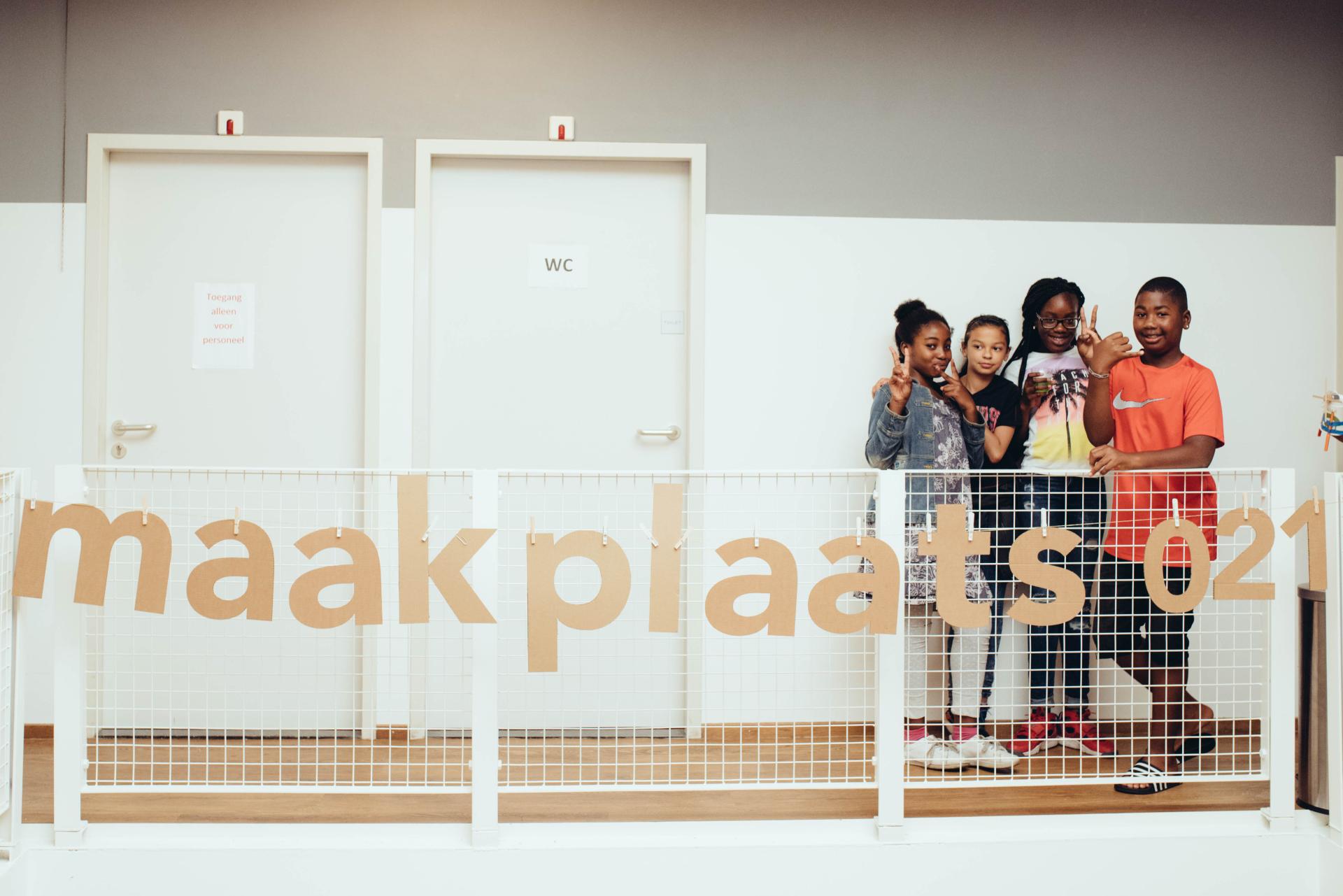
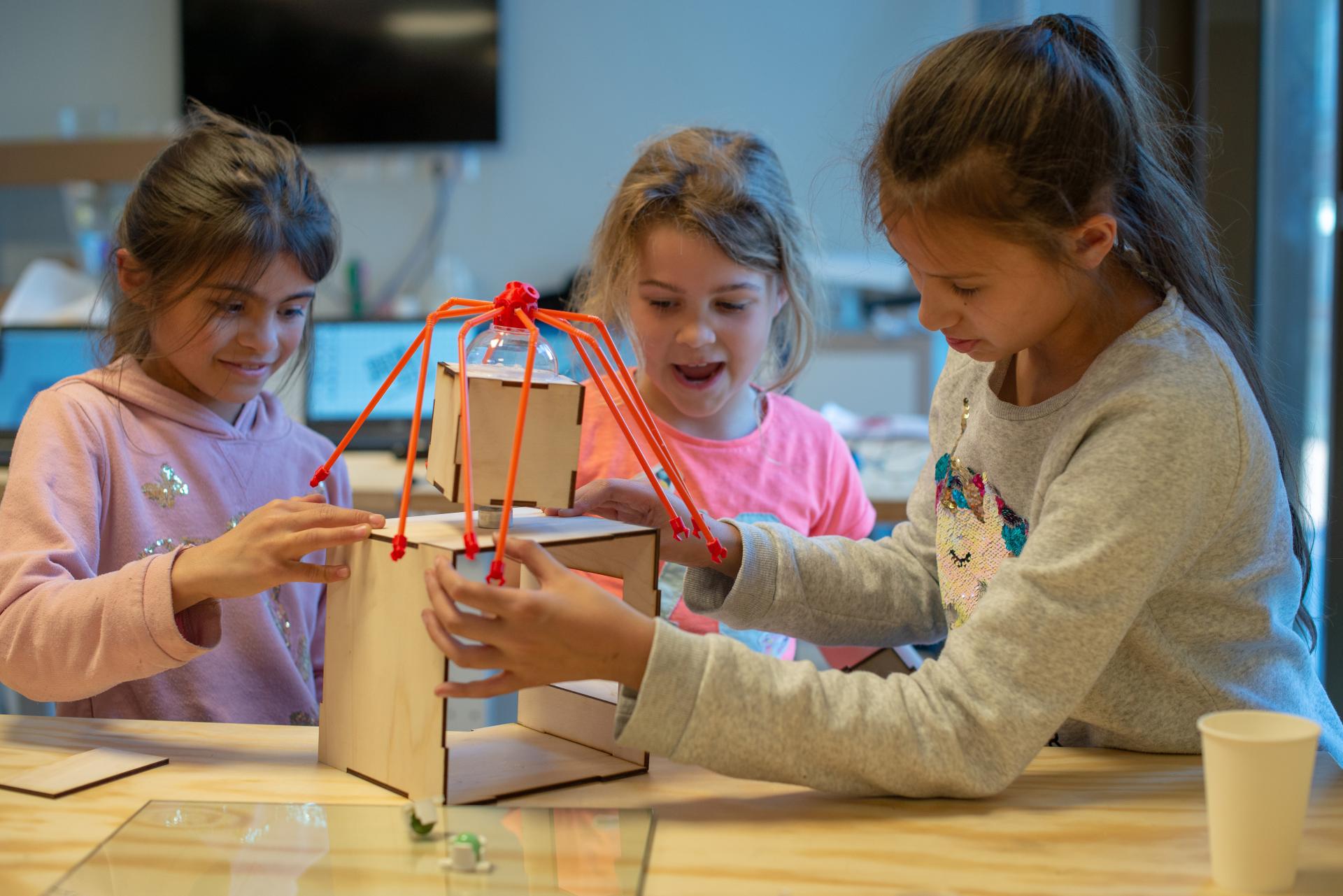
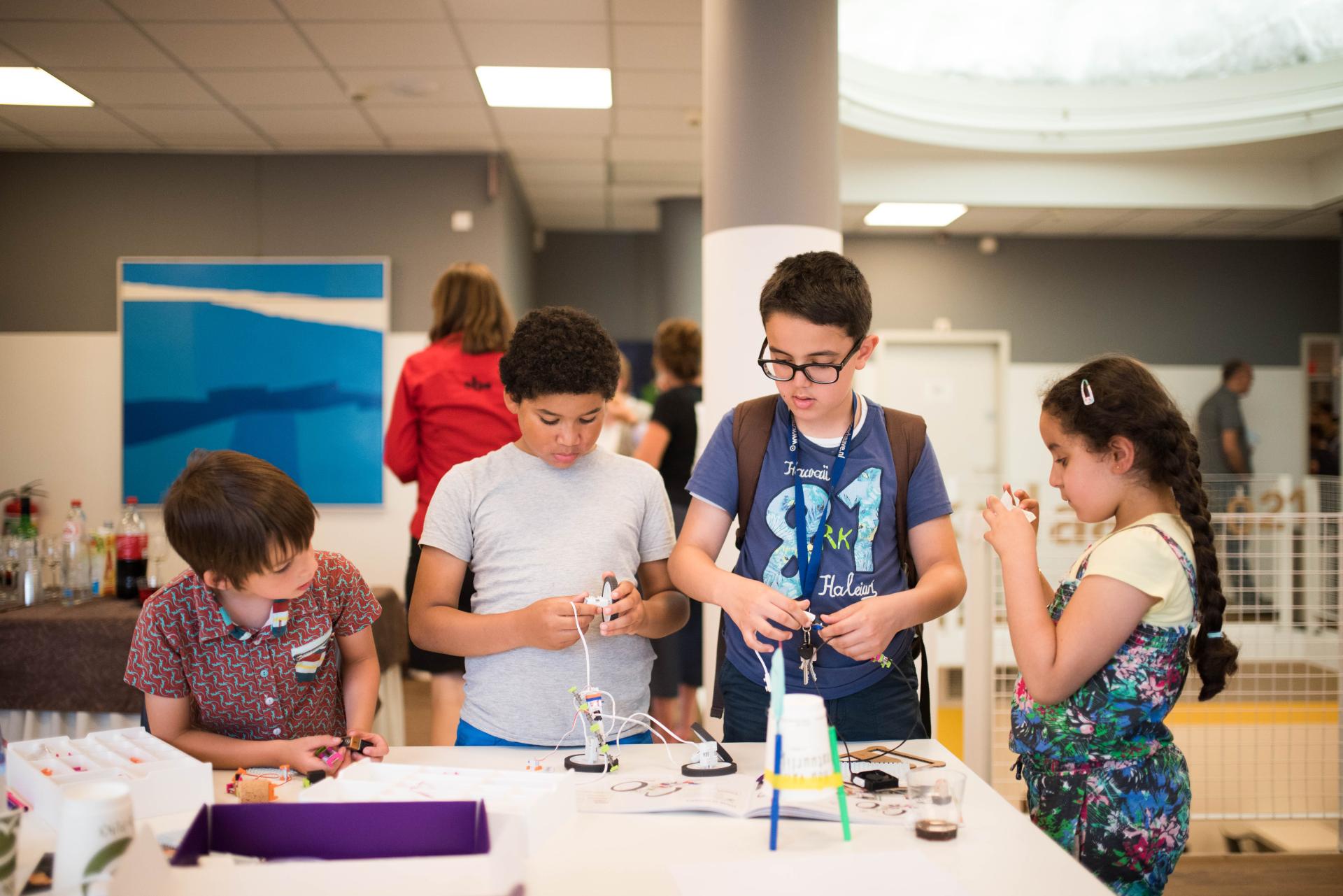
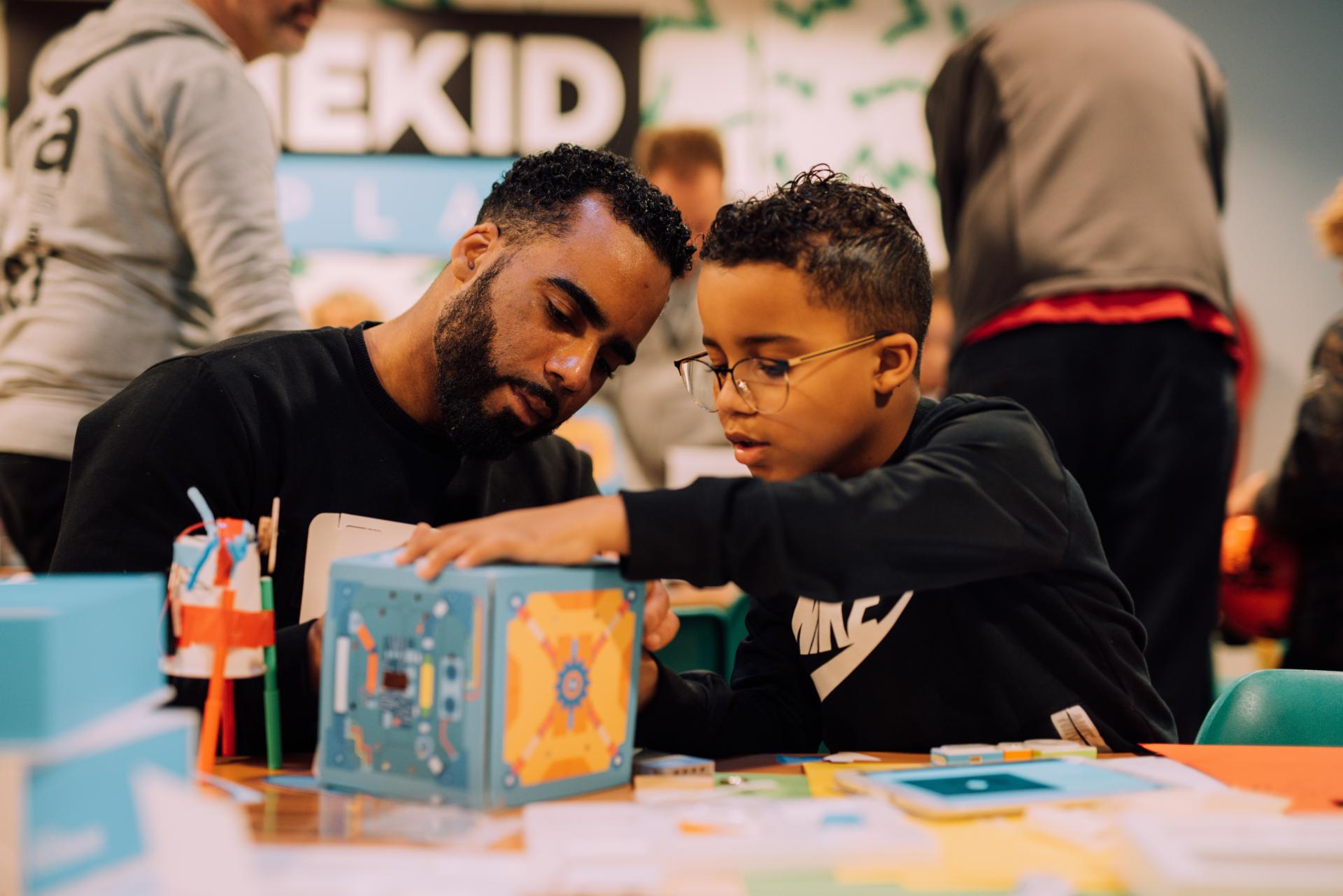
Maakplaats 021 is a program and a network of public makerspaces, in various branches of the Amsterdam Public Library. Young people learn to design, create, discover and experiment. The number 021 symbolizes 21st century skills. The activities focus on digital fabrication and city making: together we discover Amsterdam and devise smart solutions for the city. The library thus becomes a place where everyone has the opportunity to develop the skills that are appropriate for our time.
Project Region
EU Programme or fund
Description of the project
Summary
The origins of Maakplaats 021 can be traced back to the development of the first Fab Lab in Europe, founded by Waag in Amsterdam in 2007. In these years the international maker movement was coming up with the ambition to democratize technology by open hardware and access to digital fabrication. After opening up the Fab Lab, Waag started Fab School, an afterschool programme for children, and co-founded the national Platform Maker Education.
Maakplaats 021 was initiated in 2016 by the Amsterdam Public Library (OBA), Waag, Pakhuis de Zwijger and Amsterdam University of Applied Sciences and is supported by the Municipality of Amsterdam. There is a need for places for the young generation to learn the skills and mindset that are appropriate for this time. Maakplaats 021 established a network of makerspaces in ten branches of the OBA where children from the neighbourhood can develop their creative, social, digital and technical skills. Craftsmanship and creativity are central. It's all about curiosity, inventing and acquiring skills to tackle today's challenges and challenges of the future, the so-called 21st century skills.
By designing, building and using new technologies themselves, children develop a "maker mindset". A mindset with which children explore and discover their own living environment, learn to think critically and to put themselves in somebody else’s shoes. Children learn that they can use tools and machines such as 3D printers, laser cutters and electronics to design solutions to problems. And experience that by inventing and imagining they can arrive at new and creative ideas. The makerspaces thus become a place in the neighbourhood where everyone gets the chance develop skills appropriate to our times.
Together, the partners ensure that all children and youngsters in Amsterdam can participate in the information society and no one is left behind. Everyone should have the opportunity to develop the skills that are appropriate for this time
Key objectives for sustainability
Maakplaats 021 focuses on new educational models and methods that integrate values such as sustainability, inclusion and aesthetics in curricula and in the learning process. The project is a scale-up of the partners’ years of pioneering activities and efforts in the maker movement, maker education and the development of 21st century skills. The maker movement started as a community-based, socially-driven bottom-up movement. Much of the success of the maker movement comes from the continuous incorporation of new digital tools and technologies alongside low-tech tools and a diverse range of creative activities, which has invited broader participation and is strongly tied to the arts and crafts movement. In this context making is considered a culturally, socially, and historically inscribed mode of participatory learning.
Maker education (a term coined by Dale Dougherty in 2013), closely associated with STEM learning, is an approach to problem-based and project-based learning that relies upon hands-on, often collaborative, learning experiences as a method for solving authentic problems. People who participate in making often call themselves "makers" and develop their projects in Makerspaces, or development studios which emphasize prototyping and the repurposing of found objects in service of creating new inventions or innovations.
Maker movement and maker education have also strong ties to the Fab City movement. Fab City is a global initiative founded on the idea that Fab Labs and maker spaces could potentially make anything locally (https://fab.city/). In that context sustainability and circularity has gotten a much stronger focus in the last few years, which also translates back into the Maakplaats 021 initiative in terms of its curriculum, activities and materials. In programmes of Maakplaats 021 such as future monster lab and fabschool: from waste to invention children explore ecological issues and design sustainable solutions.
Key objectives for aesthetics and quality
Learning in maker spaces is characterized by a wide range of activities. First of all, children and young people develop their creative and technological skills: it is about learning by doing. Second, children learn to cooperate and share their knowledge. Third, making is about developing motivation and self-confidence in relation to technology. The makerspaces are designed accordingly, as a place where children can develop their creative, social, cultural, digital and technological capabilities and become a maker. A maker creates tangible objects and objects using technology and craft tools. Characteristics of making are: (i) use of technology for digital fabrication and programming, (ii) knowledge sharing, collaboration and community building, (iii) an attitude towards growth and the ability to act (the maker mindset), and (iv) learning by doing and stimulating creativity.
The learning approach in the makerspaces can be defined as STEAM-learning, the combination of Science, Technology, Engineering, Arts, and Mathematics. To include artistic practices in the makerspaces Maakplaats 021 collaborates with organisations in Amsterdam from the field of digital arts and culture and artist and designers are part of the core team of facilitators that offer the activities.
Maker education activities therefor include elements of design, design thinking, visual thinking, and artistic research. Though DIY creation can be beautiful in a lot of ways, the aesthetics of the results are not the main focus, the focus is on developing creative confidence. The project empowers primary and secondary school pupils (6-16 years) alongside educators to apply open innovation methods, digital maker tools and collaboration skills to tackle locally embedded societal problems in the neighbourhood.
Key objectives for inclusion
The Maakplaats 021 program is available for children from 8 to 16 years old, for free. Activities include:
● Fabschool: getting started with digital fabrication
● CodeTeam: programming with Python and the Raspberry Pi
● CodeTeam Junior: learn to program with Scratch and the micro:bit
● Design your neighbourhood: how can you improve your neighbourhood? Together we work on solutions for your neighbourhood.
Research shows that the act of making can be seen as a means to emancipate minorities. This emancipatory function of the maker spaces presents itself particularly in a metropolitan environment. The maker spaces are located in neighbourhoods where many families with a lower socio-economic status live, in order to reach precisely those children. The added value of these locations therefore lies on the one hand in increasing access to educational programs for more difficult to reach groups and on the other hand in making the programs more inclusive in terms of vocabulary, methods and activities.
Amsterdam is the home of people of 180 different nationalities. The makerspaces are based in neighbourhoods with an enormous cultural diversity. Libraries in general are regarded by all cultural groups as "safe" places where boys and girls are allowed by their parents to go there on their own. By consciously linking the maker activities to local situations, the project partners become more sensitive to local problems and solutions, which continuously influences program development. The diversity of the children’s cultural vocabulary is also visible in the variety of approaches they take in designing solutions for social issues.
Results in relation to category
Maakplaats 021 has become a permanent programme and is financially and strategically secured within the OBA. So far ten makerspaces have been realized and two more will open in 2021. 23,816 children participated in after-school activities between 2017-2020. And 5,535 visitors participated in school visits in that same period.
A group of library professionals has been trained as makerspace coach by Waag. Waag was involved in the first public initiatives in the field of digital fabrication in Europe and is one of the founders of the Platform Maker Education Netherlands. In Fablab Amsterdam, the first fablab in Europe, Waag developed the initial Fabschool programme.
Between 2016-2020, OBA employees participated in training & coaching sessions 1,151 times. In total 80 employees participated in introductory training and 30 employees completed in-depth training. A permanent core team of 15 coaches and 3 staff members has been established who are permanently employed by the OBA to ensure the offer of services in formal and non-formal education in the future.
The team works closely with schools in the neighbourhood. Pakhuis de Zwijger connects city makers to the programs in the makerspaces. The Amsterdam University of Applied Sciences started offering a minor in Maker Education and researches the effectiveness of learning the makerspaces.
Maakplaats 021 also informed new projects. From 2017 to 2020 Waag participated in the EU funded DOIT project (https://doit-europe.net/) and developed programmes in entrepreneurship and social innovation for young children in Maakplaats 021. Waag is also involved in the FabLearn network and the EU project SYSTEM 2020 (https://system2020.education/) on extra-curricular STEAM-learning. Recently, the European open schooling initiative Make it Open has started (https://makeitopen.eu/).
Local collaborations such as Maritime Maker Lab with the National Maritime Museum continuously work on adding new elements to the curriculum.
How Citizens benefit
Children from Amsterdam, including vulnerable children, are given the opportunity to develop in the field of creative technology. By making parents part of the process and involving them in the presentation of progress and results, we also take them along in the developments in creative technology. By linking to locally embedded issues from the neighbourhood, we involve the children's own living environment, including local residents and local businesses, in addressing a design issue.
Formal education is also taking an interest in making, in line with the learning objectives for digital literacy and cross-curricular education. In the Netherlands, the Platform Maker Education was founded with the aim of raising the profile of maker education in the Netherlands. Platform Maker Education is an organization of partners from education, business, libraries, the maker movement, media and festival organizations. The platform brought the FabLearn conference to the Netherlands in 2018 and, together with Maker Faire Eindhoven and other parties, organized this creative festival for young and old.
Under the name Mokum Maakcoalitie, the Amsterdam Maker Coalition, a larger number of local and regional partners are now joining forces and maker education is being firmly established in the city, at schools and in makerspaces, thus significantly expanding and strengthening the learning community of makerspaces.
Innovative character
The project is innovative in its theme - creative technology and maker education - and its format – bridging formal and non-formal education in a city-wide network of public libraries. Non-formal learning environments can make a difference to the development of children, not only through education of knowledge and skills, but also as a place where young people can experience new social roles and develop their identity. Makerspaces offer opportunities for cooperation, education, citizen participation and resilience.
Internationally there are many examples of makerspaces at libraries and museums, such as the Exploratorium (San Francisco) and the Pittsburgh Makeshop. Maakplaats 021 also builds a learning ecosystem around each makerspace. An ecosystem of community organizations, schools and businesses. For example, there are organizations that offer creative activities for children or after-school care in the area. Collaboration with entrepreneurs can, for example, consist of recycling waste material from local market traders. Schools are looking for collaboration with the makerspaces as an extra technology workshop where they can use the machines and technical expertise. A learning ecosystem build around makerspaces in the city is unique and is seen as an example by many of our partners in Europe.
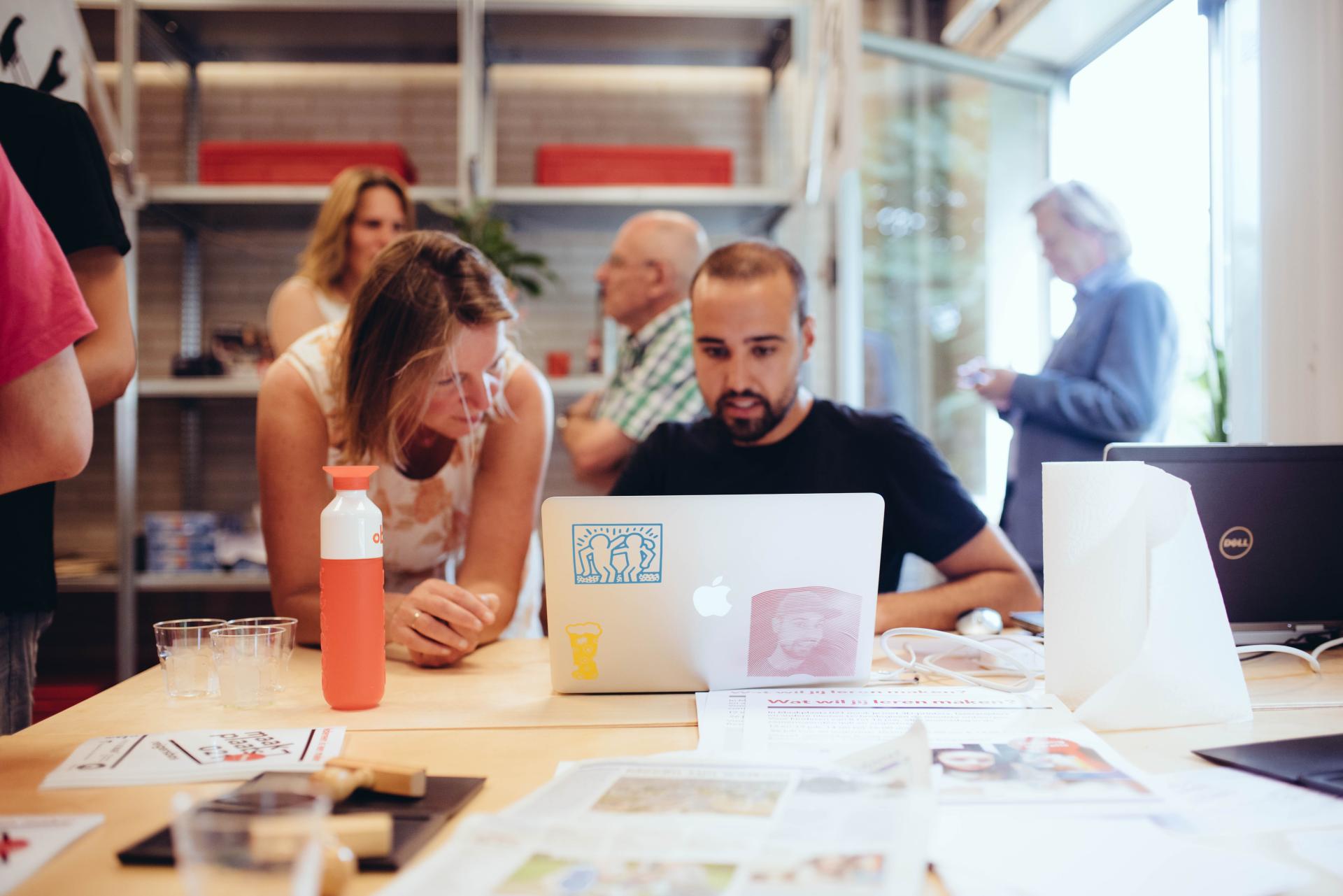
Providing machines alone is not enough, the success depends on the people who can guide the learners. The library staff had to develop new capabilities in order to successfully host a makerspace. Supervisors in the workshop, so-called makerspace coaches, facilitate the programmes and develop new activities. In this they are trained and guided by Waag. Makerspace coaches are both employees of the OBA who previously worked in other library departments, and designers and artists recruited from outside the OBA. The training program to become a makerspace coach starts with a two-day crash course in maker education and continues with monthly meet-ups and on-the-job-training.