Play in Historic Sacred Spaces
Basic information
Project Title
Full project title
Category
Project Description
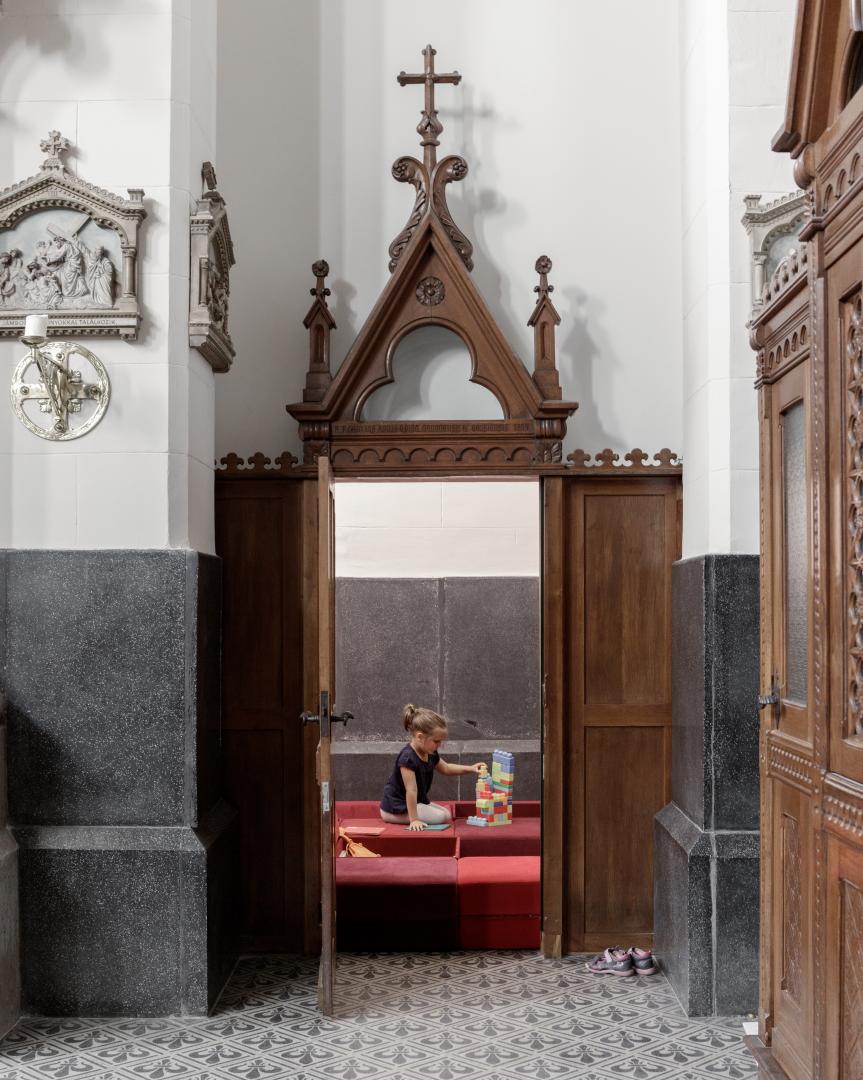
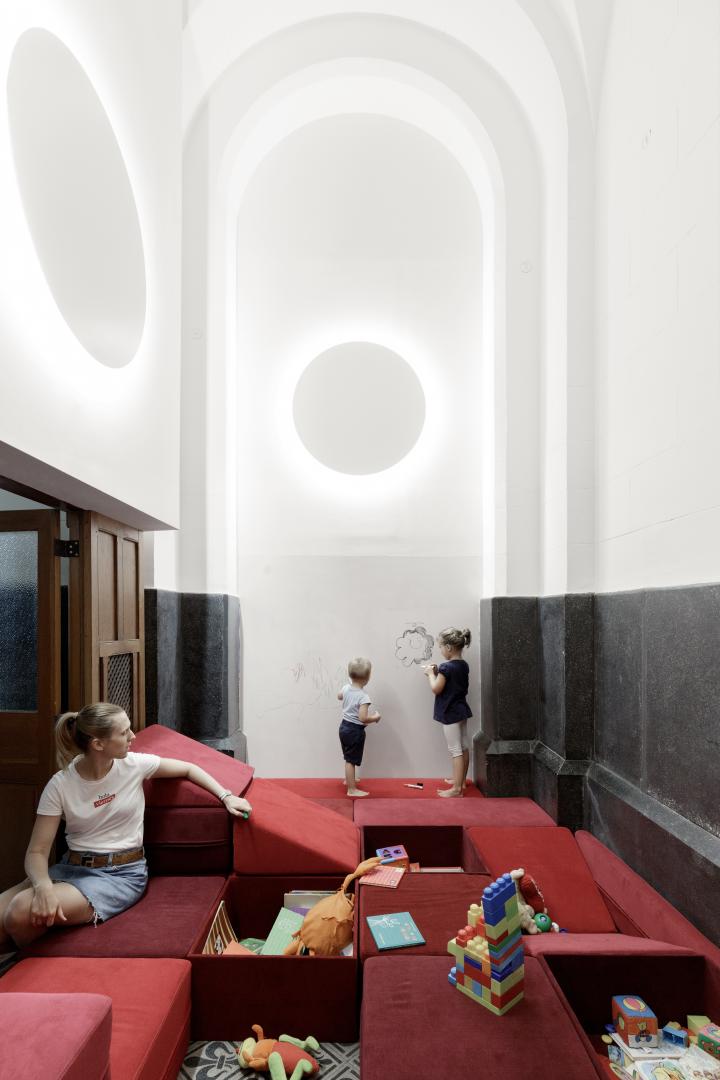
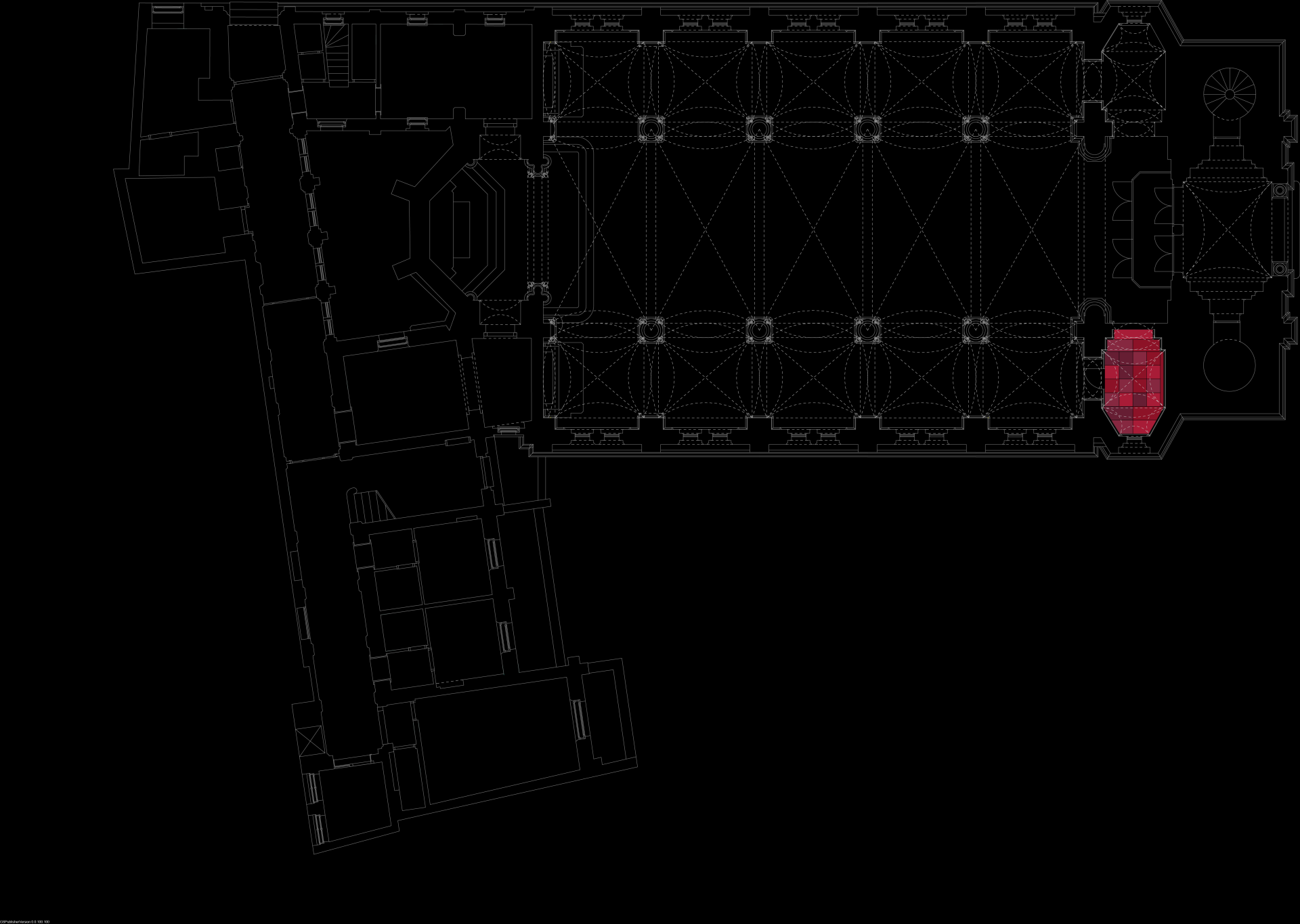
The Sacred Heart Jesuit Church in Budapest responded to the needs of young families, when they decided to set up a room in the southern aisle of the church, where children can play during holy masses. Our studio was commissioned to design the interior of this space that was intended to be able to adapt to the representative architecture of the monument and serve the freedom of play at the same time.
Project Region
EU Programme or fund
Description of the project
Summary
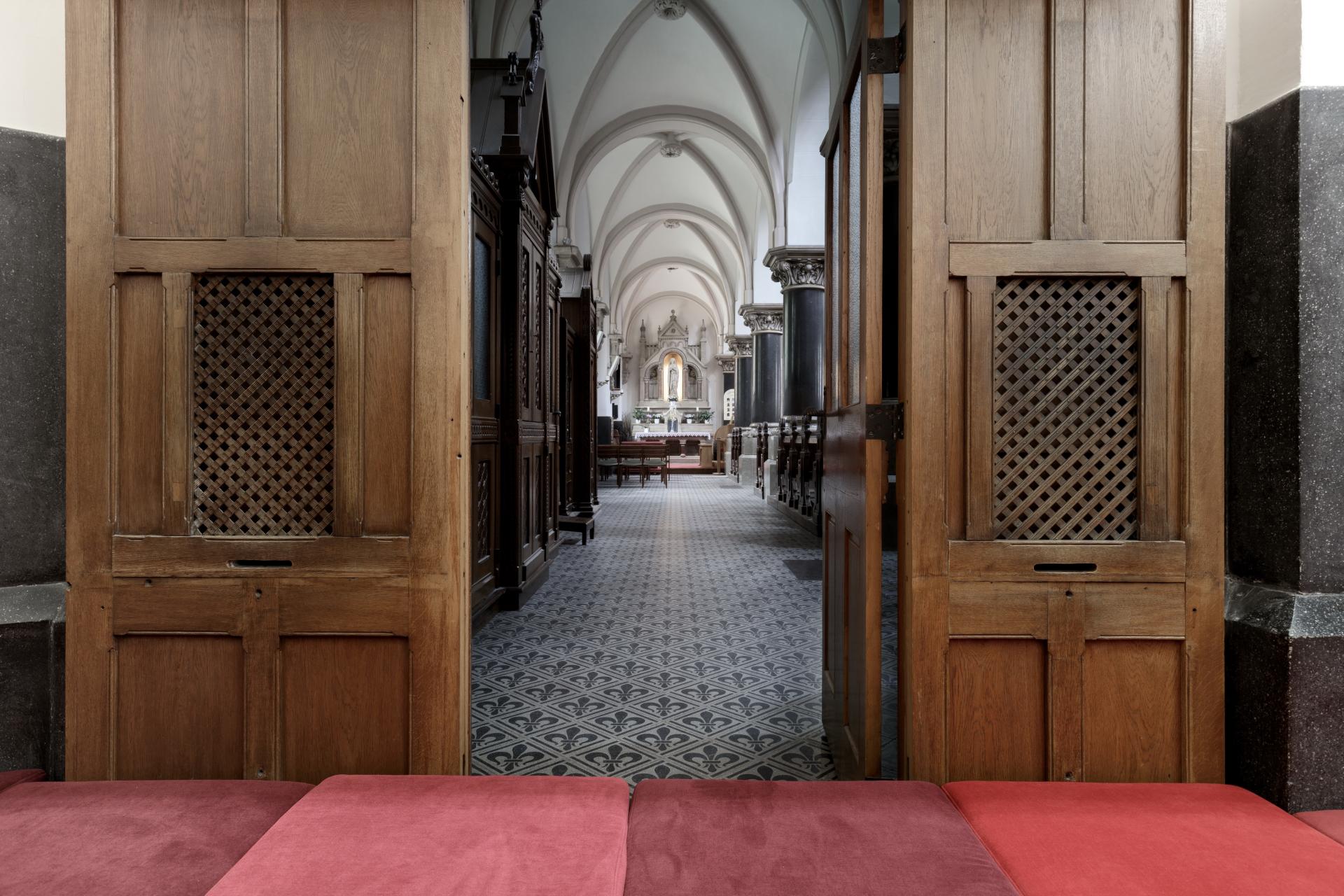
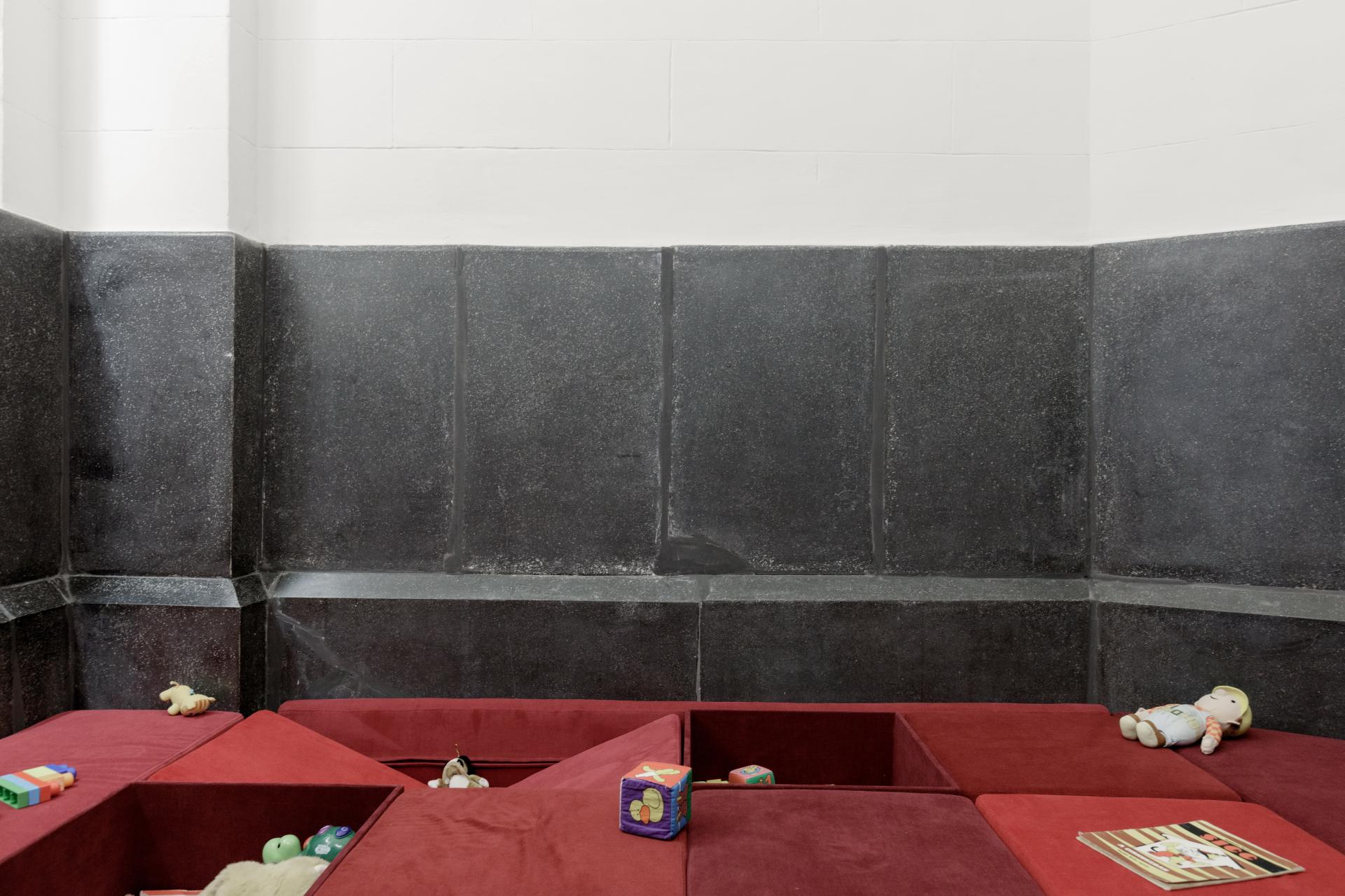
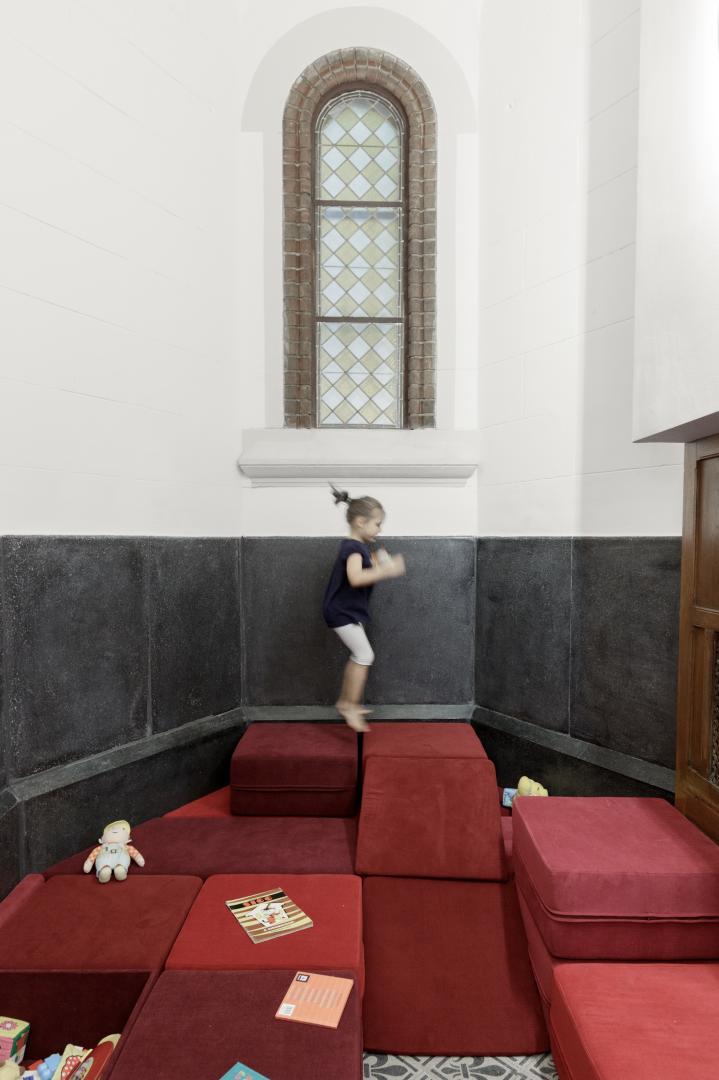
The scene is the Sacred Heart Jesuit Church located in the historic city centre of Budapest. Hundreds of people visit the church regularly, many of them are young parents who willingly attend holy mass services with their little children. The leadership of the Society of Jesus decided to transform a tiny room in the southern end of the western aisle, previously used as a storage space, into a place where kids can play during liturgical events.They commissioned our studio to suggest a refurbishment effectively adaptable to the needs of its users and the environment represented by the temple. With our proposal we wanted to ensure the comfort of the children and their parents as well as the storing of the toys without implementing conventional furniture, but let the architecture of the historic church prevail. We designed a surface of use that filled the whole floor area of the room that consisted of upholstered cuboids made of foam and storage boxes with the same outfit. The hardness of the foam elements provided adequately solid surface for playing with toys, while their dimensions of width, length and height made them suitable to function as sitting furniture as well. The units are easily movable, so various arrangements can be built simply. So the intervention provided not only a new elevated floor level, where kids can play, but the installation itself became a toy as well. The landscape made of foam elements aims at balancing between the eternal stability of the building and the ever changing dynamic space of play.
Key objectives for sustainability
Since the project consists of mobile upholstered foam blocks, the whole intervention is demountable and can be rebuilt in a new form at another location and is easily adaptable to another purpose in the future. This means that in case of a refurbishment the intervention does not produce waste, but can be completely recycled. The intervention creates space without transforming the structures of the church, no construction works were needed for its application: it acts like a mobile piece of furniture.
Key objectives for aesthetics and quality
Preserving the original architectural atmosphere of the historic church while ensuring the comfort of children and their parents was a key objective. Standard domestic pieces of furniture usually found in childcare rooms would have been out of scale here and those would have diminished the monumental architectural character of the interior. We also wanted to preserve the original floor that was unsuitable for children to play on, since it was too cold. This is why we created a continuous flat surface made of upholstered foam blocks: the intervention preserves the original flooring, while creating a surface where children can move freely. While playing on the flat, soft surface, the complex geometry of the vaulted ceiling can be well experienced.
Key objectives for inclusion
The presence of the intervention makes the liturgical and other community events accessible to families with babies and small children. Thus the project helps the elimination of the social isolation of young parents.
Results in relation to category
The intervention is located in a historic monument: the Sacred Heart Jesuit Church was built more than one hundred years ago. The building itself is an important cultural heritage of Budapest. With this intervention we wanted to show respect to the existing architectural character. Thus we did not want to implement permanent changes that would have come with structural transformations. We wanted to create as light intervention as possible. We managed to preserve both the original covering structures and the spatial arrangement. While achieving preservation we also managed to expand the usability of the building, since it became an interesting and comfortable place for a new audience: children.
How Citizens benefit
The project is accessible for everyone who visits the events of the church. Young families benefit the most, since they can take care of their children, practice their cultural habits, and live social life in a community at the same time. The intervention was financed by the donations of the community.
Innovative character
Innovation in relation to this project should be mentioned from two aspects: technical and social. The technical innovation of the project can be found in its design: the intervention is modular, it can be easily rearranged, and it is rapidly mountable and demountable. These features make the intervention recyclable, extending its possible lifespan while adapting well to the given location.
The project is innovative socially as well: it makes a place with strict behavioural norms accessible for an extended audience without disrupting those norms.