IN LOCO. Museum of Abandonment
Basic information
Project Title
Full project title
Category
Project Description
IN LOCO is a museum without walls or gates, it is a space of exploration that connects and passes down the memory of marginal places transporting you, on site, through a guide in continuous evolution. The museum interweaves places, memories and people, triggering patrimonialization and regeneration processes, aggregating around the places the communities that want to bring them into the future. Because IN LOCO is a space for exploration and action.
Project Region
EU Programme or fund
Description of the project
Summary
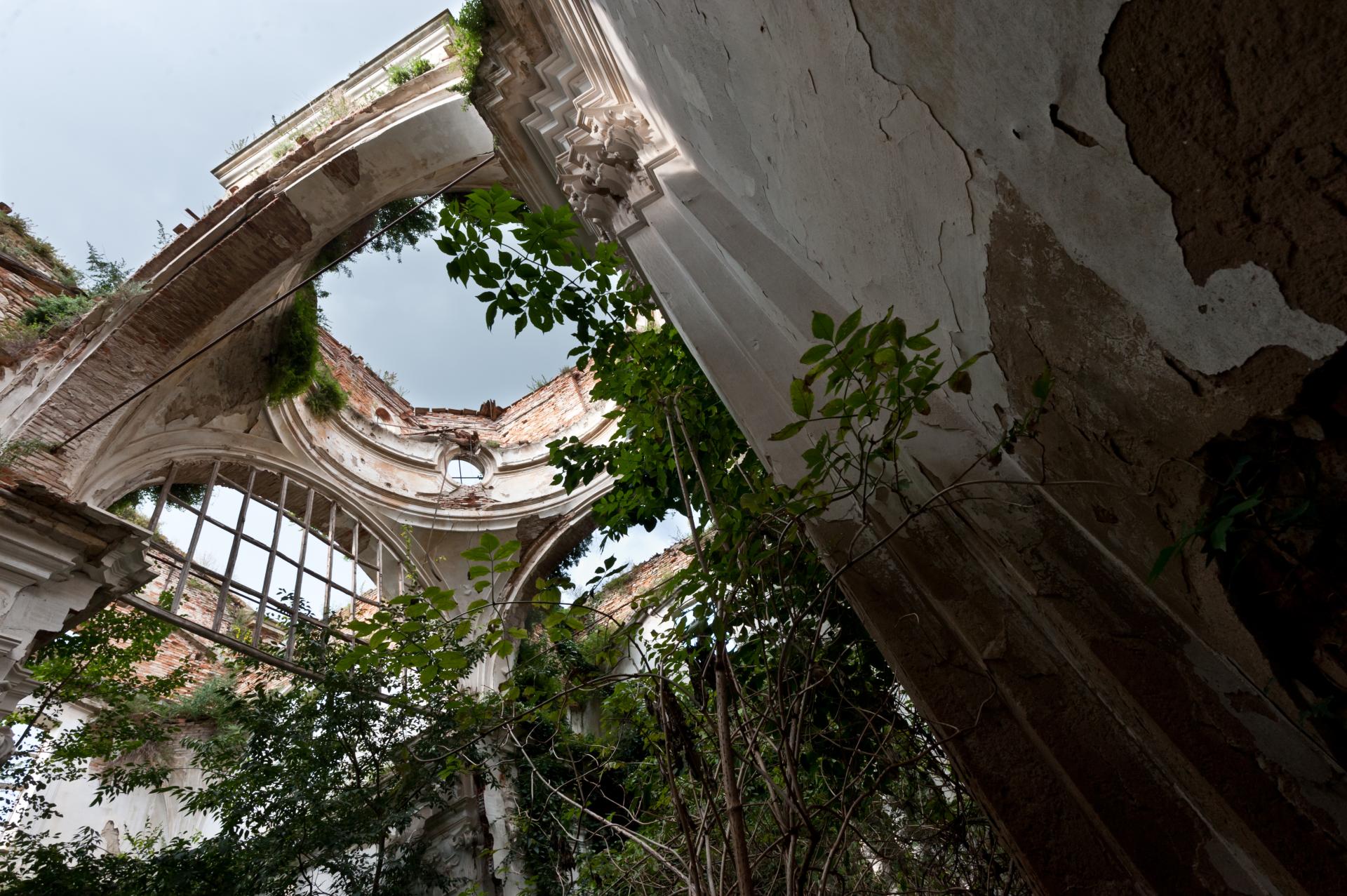
IN LOCO. Museo diffuso dell’abbandono [The Widespread Museum of Abandonment] by the Collective Spazi Indecisi, offers a process of urban and cultural regeneration of abandoned cultural heritage that follows several steps, from mapping and field research, to direct exploration and involvement of citizenship, to temporary reactivation events and long-term regeneration projects. The main aim is to raise awareness and cultural knowledge on these forgotten places, and to connect them through a series of itineraries that testify the social, cultural and economic evolutions of a territory and a society in a permanent state of transition. The contents and tools of IN LOCO, in addition to being an instrument of knowledge, conservation and enhancement of urban and cultural heritage, have the ambition to build a platform capable to trigger effective processes of place-making, participation and finally regeneration, aggregating around a network of neglected spaces a heterogeneous community of groups, with the main aim to translate the "case by case" solution into more structured and lasting regeneration and reuse strategies both for commoners, local communities and public administrations. Since 2010, the collective Spazi Indecisi [Undecided Spaces] has been exploring the neglected places of the Romagna area (Italy) by crossing gates, taking photographs, interviewing people, sifting archives, organizing events, collecting memories and data of an immense cultural heritage that is in danger of being lost.The locution IN LOCO has been chosen to name the project for its three different meanings: on site, at the location itself; in a determined moment, in a certain circumstance; (in medicine) sick spot in which one acts therapeutically. The ambition of this project is to establish horizontal forms of cooperation between public institutions and formal groups or informal communities of citizens, for the regeneration and re-activation of the abandoned cultural heritage.
Key objectives for sustainability
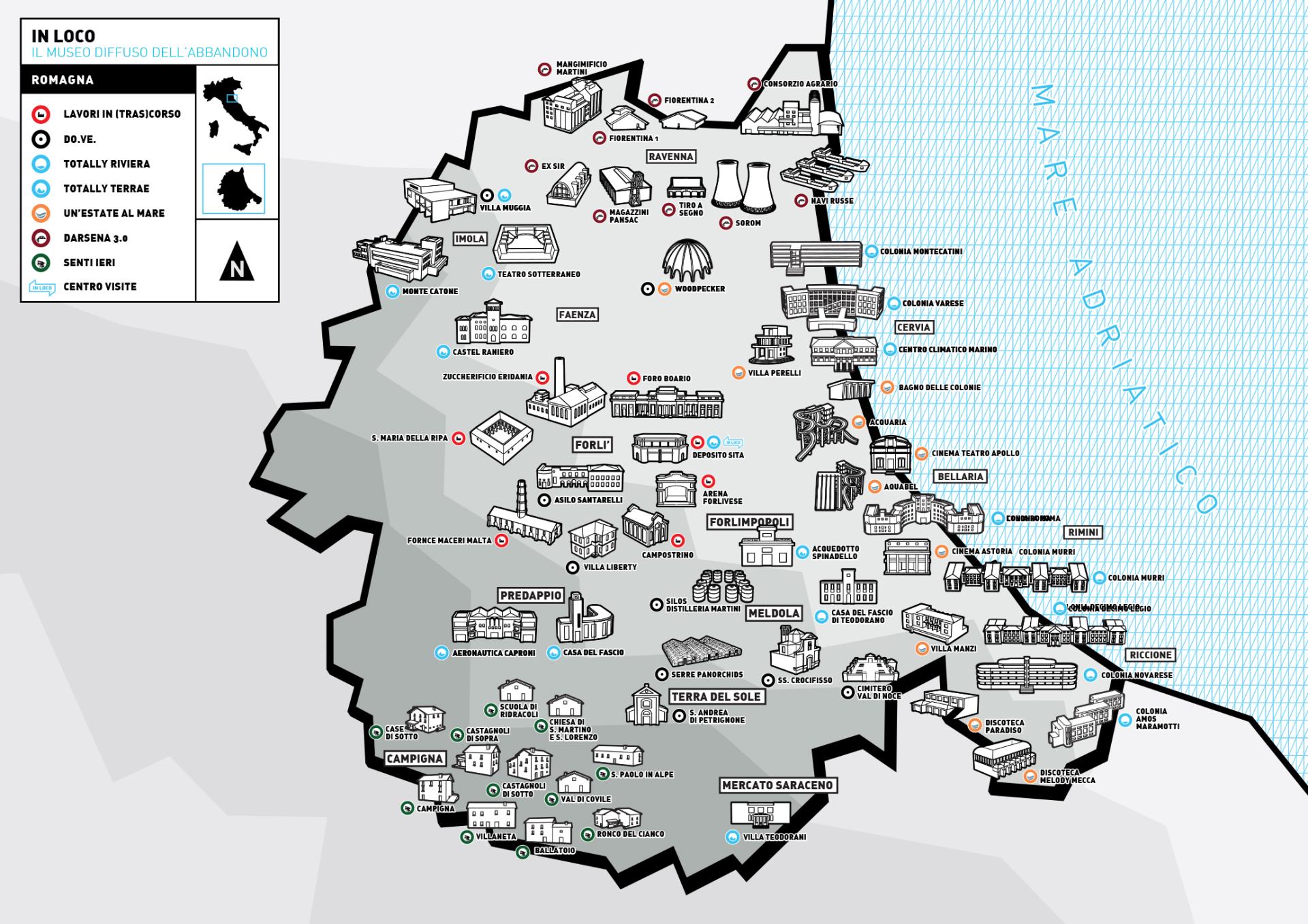
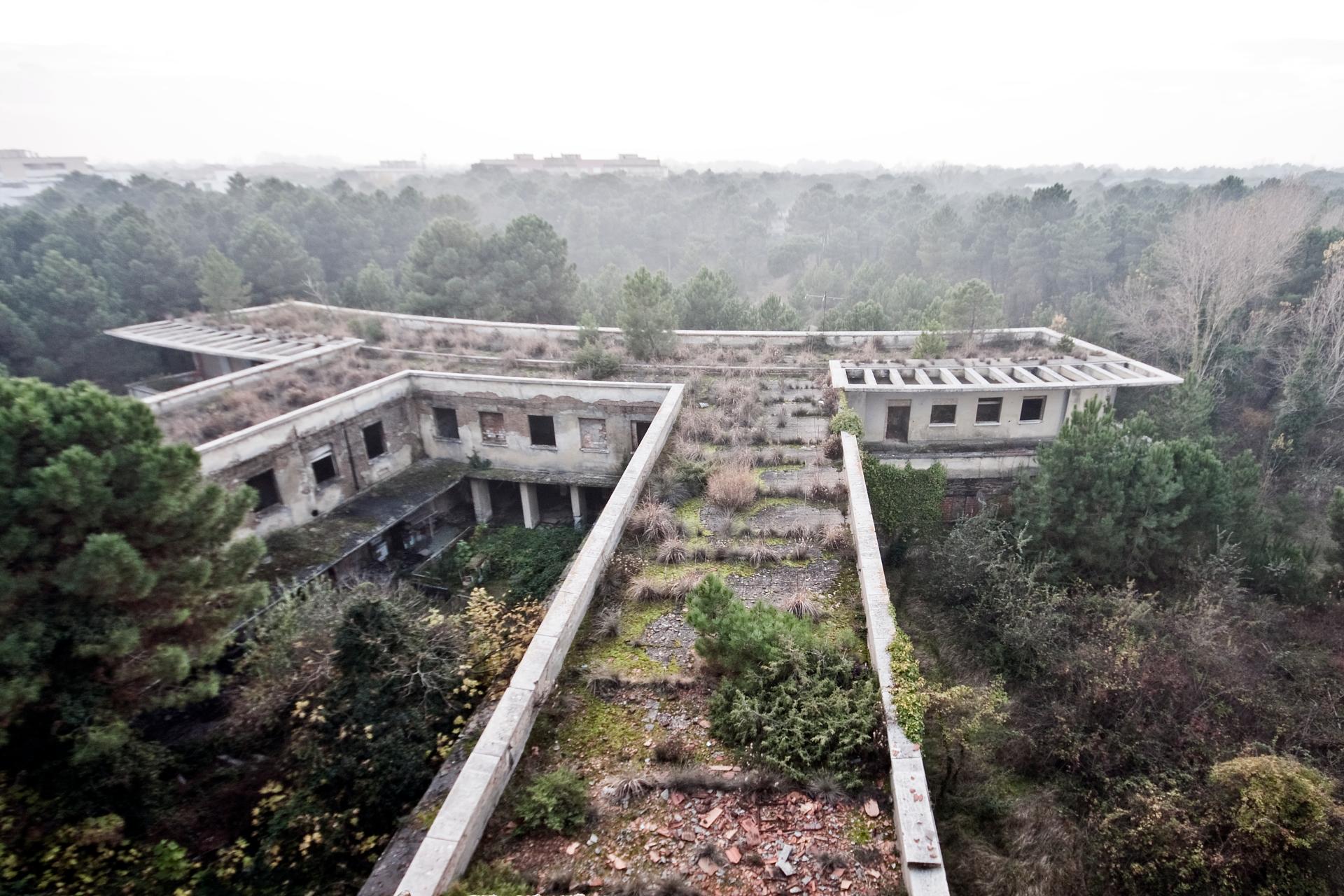
The abandoned landscape crossed by IN LOCO is connected through a plurality of thematic travel itineraries that intersect unusual places for discovering the social, cultural and economic evolutions of the Romagna area. These itineraries touch the most varied spaces: from the workplaces of the '900s, which have transformed the growth and the form of the cities, to the symbols of Romagna summer entertainment (the Riviera), up to the holiday camps of the Adriatic coast of the Fascist regime.
In line with the “Recommendation on the Historic Urban Landscape” (UNESCO, 2011), where the idea of “heritage safeguarding” is strictly combined with that of “liveability of urban areas“ and “economic development and social cohesion”, main aims of IN LOCO are to integrate and frame temporary adaptive reuse strategies for historic and contemporary ruins within the larger goals of overall sustainable development, by:
_Experimenting new forms of territorial enhancement and valorisation of abandoned cultural heritage, with special regards to the so-called “minor” heritage that has meaning for local communities but which may not be formally recognized by protection in law for its economic/touristic or artistic value;
_Contributing to the improvement of a sustainable, slow and creative form of tourism, which can stimulate “minor” cultural landscapes knowledge, strengthen place-based identities and engage people in the connection with unique local pasts moving towards "secondary" routes and stimulating innovative projects;
_Fostering the development of cultural and social cohesion through collaborative and participative approaches for the promotion, valorization and regeneration of abandoned cultural heritage;
_Triggering a network of local stakeholders through the active involvement and engagement of diverse groups or communities such as students and scholars, citizens, associations, artists, tourists in the enjoyment of the itineraries.
Key objectives for aesthetics and quality
IN LOCO has been conceived as a participatory reactivation process where the abandoned cultural heritage becomes at first a field of research for architects, artists, urban explorers, photographers etc. A diversified group of creative professionals have been engaged through the years for producing, at first, a series of events and performances with the ambition of showing the abandoned places from different perspectives and uses possibilities; secondly an array of site-specific multimedia contents with the aim of opening new points of view and thoughts on the past, present and future of abandoned places. These resources, which have a different nature (short documentaries, video art, site-specific artistic creations, interviews and sound projects), have become special content packages for the Museum plan through the digital app IN LOCO. Besides offering an overview of the abandoned places and of the itineraries of the widespread museum, giving details and information on places, providing historical images and drawings, allowing visitors to easily reach the places through the link to Google Map, the app is the tool that allows visitors to enjoy these special contents on their device, once on site.
In addition, Spazi Indecisi has developed a collection of special maps as a “unique design guide” to discover the 7 itineraries of the museum. They are in effect geographic maps in scale, graphically coordinated to the theme of each itinerary, enriched by miniatures of the spaces in style; on the back there is all the info on the cultural heritages. The maps also highlight other places of interest and all the other IN LOCO spaces that can be encountered along the itinerary.
The overall objective is to create a different sense of place that has more to do with experience for turning these sites, although initially in a conceptual way, from derelict areas to desirable environments to preserve, live and regenerate.
Key objectives for inclusion
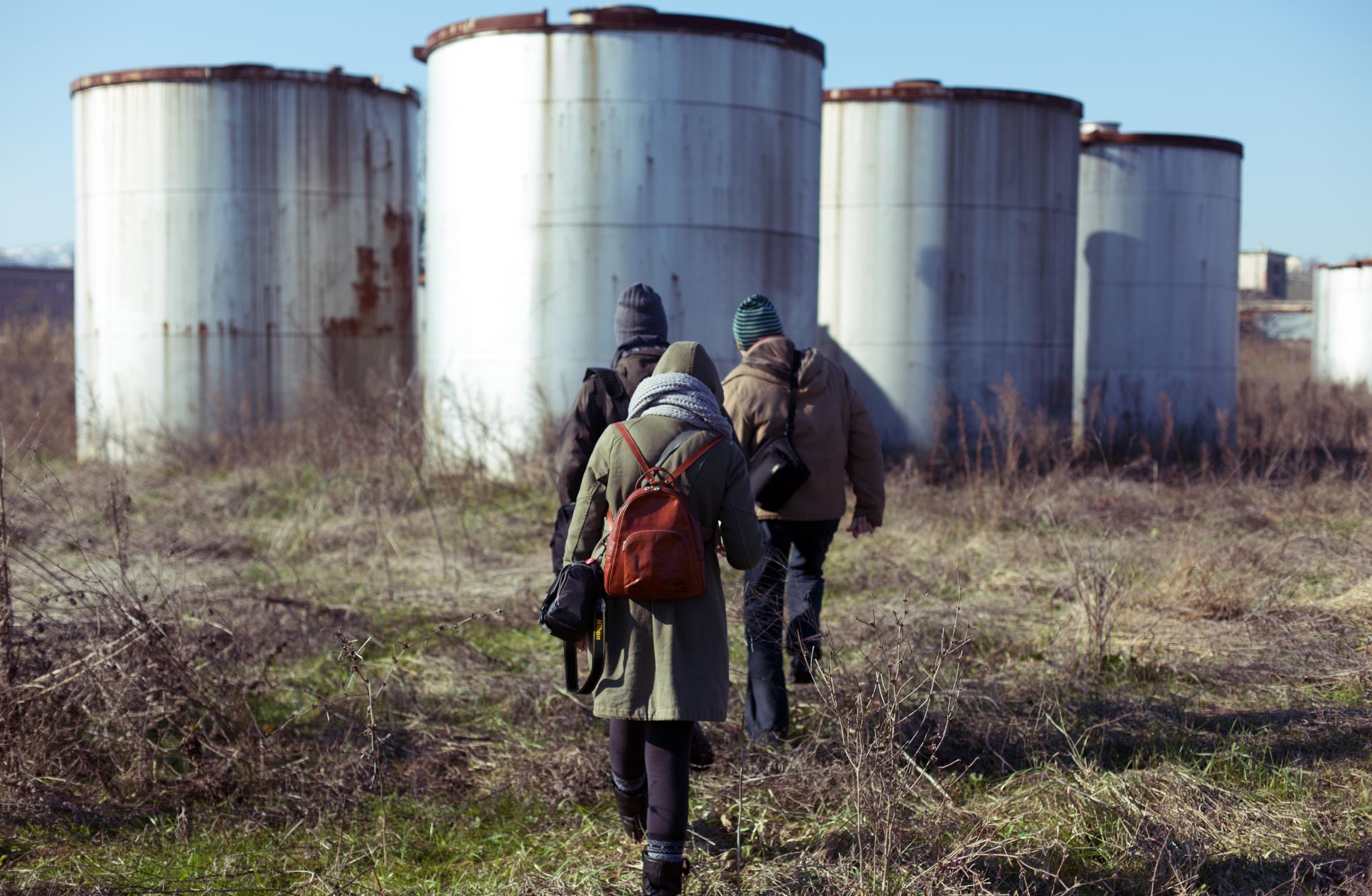
To include the wider range of public and actors, IN LOCO fosters urban exploration, a practice that opens up new spaces for a reflection on the deep transformation occurring in our contemporary territories and cities. Through the experience of discovery, citizens can empathize with the spirit and the history of a place; furthermore, exploration is the first opportunity to discover neglected cultural heritage architectures and to start imagining new uses and functions.
This phase is two-folded: to produce an open-source database of abandoned cultural heritage places, with the possibility to offer information and knowledge about these neglected heritage to city actors at all levels (from citizens to city planners); and to create a first opportunity for raising awareness and commitment to urban regeneration issues among the local community, through diverse forms of engagement such as guided walks or open photography calls.
Thanks to the open-source mapping, not only local communities have the opportunity to report the abandoned places who belong to their local identity but also Spazi Indecisi has the chance to collect first important indications for understanding which of them can be assumed as cultural heritage to protect and value.
This phase helps IN LOCO in attracting forces and gaining new resources and strategic partnerships which guarantee the sustainability of the project over the years. Networking facilitates the organization of citizens, the creation of new communities and the simplification of their decision-making procedures in order to develop innovative reactivation or reuse solutions that can be immediately compatible with the existing legal framework. But for forgotten and abandoned heritage, networking means also to explore new connections which are able to interpret the social, cultural and economic metamorphosis of the contemporary landscape.
Results in relation to category
The tools of IN LOCO are: 7 thematic itineraries,, a special collection of design maps, a visitor center, an app multimedia contents and a website. These tools are a means for developing a regeneration platform for the adaptive, inclusive, sustainable and innovation-driven re-use of abandoned cultural heritage architectures. IN LOCO acts in fact not only as a strategy for knowledge, conservation and enhancement of the traces and memories of derelict urban and rural environment, but it is above all a tool capable of triggering processes of active reading, participation and finally regeneration of abandoned heritages by involving heterogeneous communities for the care, share management and reactivation actions. By acting as a platform, IN LOCO aims to foster and facilitate the generation of temporary reactivation projects and paths that can experiment new uses and functions to spontaneously reintroduce the rehabilitated places into the urban cycle.
The adaptive temporary reuse of former Spinadello Aqueduct, an original architecture of the 1930s which is part of Itinerary TOTALLY TERRAE, is a first output of the platform and an example of how temporary reactivation practices can function as a test of more permanent adaptive reuse solutions. The reactivation was achieved by a temporary adaptive reuse process that, over the years, has allowed the testing of new function by means of incremental levels of regeneration which at present involves partners at all scales (from the Cultural Heritage Institute of the Region Emilia-Romagna, to the Local Municipality, to lassociations like Spazi Indecisi). The calendar of events – including exhibitions, workshops, guided tour and trekking, birdwatching, concerts and other cultural activities – involves local associations and active citizens with professionals and researchers in order to protect the site and its surrounding natural area, create work opportunities and thus contribute to the economic development of the region.
How Citizens benefit
IN LOCO is an example of how temporary adaptive reuse practices can be proposed as effective urban regeneration tools and processes at the territorial scale, for the preservation and valorization of neglected urban and cultural heritage. In particular, the approach tested by IN LOCO in the Romagna area follows few incremental steps: an open source and interactive mapping action (which recorded and catalogued more than 250 abandoned spaces through field research, direct exploration and involvement of citizenship); more than 50 temporary events (guided walks, bike tours, exhibition, photo contests..); 7 alternative travel itineraries that testify the social, cultural and economic development of a territory and a society in a permanent state of transition.
The success of regeneration practices depends at first on the capacity of understanding the potential of abandoned places: from the characteristics of the location (accessibility, services, connections, etc.) to the qualities of the architecture and the landscape. However, the approach proposed by IN LOCO is based on the assumption that all these aspects, although important, are subordinated to the need of linking abandoned heritage to a powerful memory. As witnesses of the social, cultural and economic aspects that are connected to the rising and decline of the process of industrialization over the years, most of the abandoned heritage of today have shaped the civic identity of local communities and are thus pieces of a cultural legacy that needs to be evaluated by new narratives and expressions. This analytical phase requires in-depth work, which aims to get the necessary insights to a better understanding of the places, like their history, their historical and cultural context and the testimonies of the people who lived or worked in them. At present the museum have collected hundreds of original documents, have recorded dozens of interviews and collected more than 1000 original pictures.
Innovative character
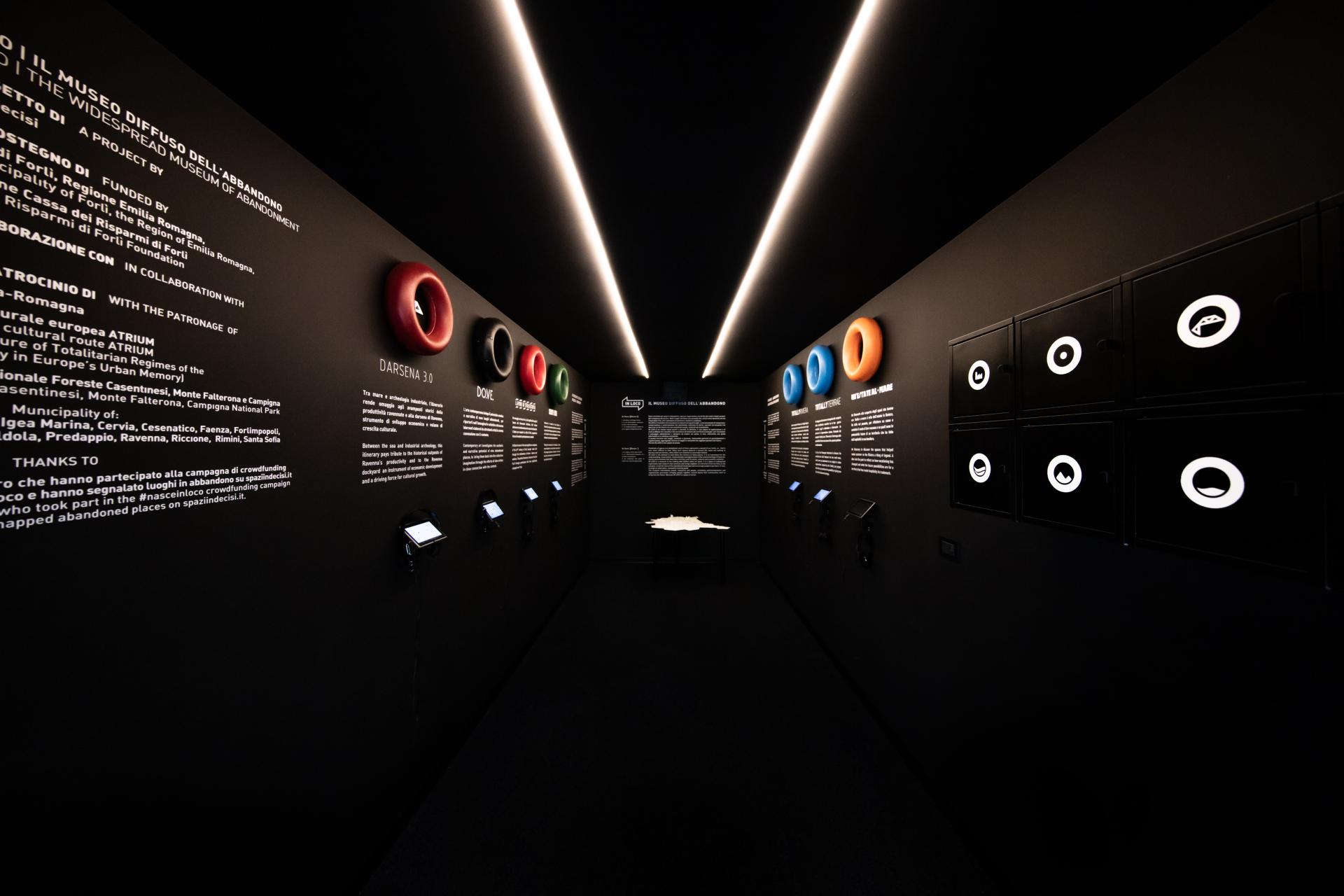
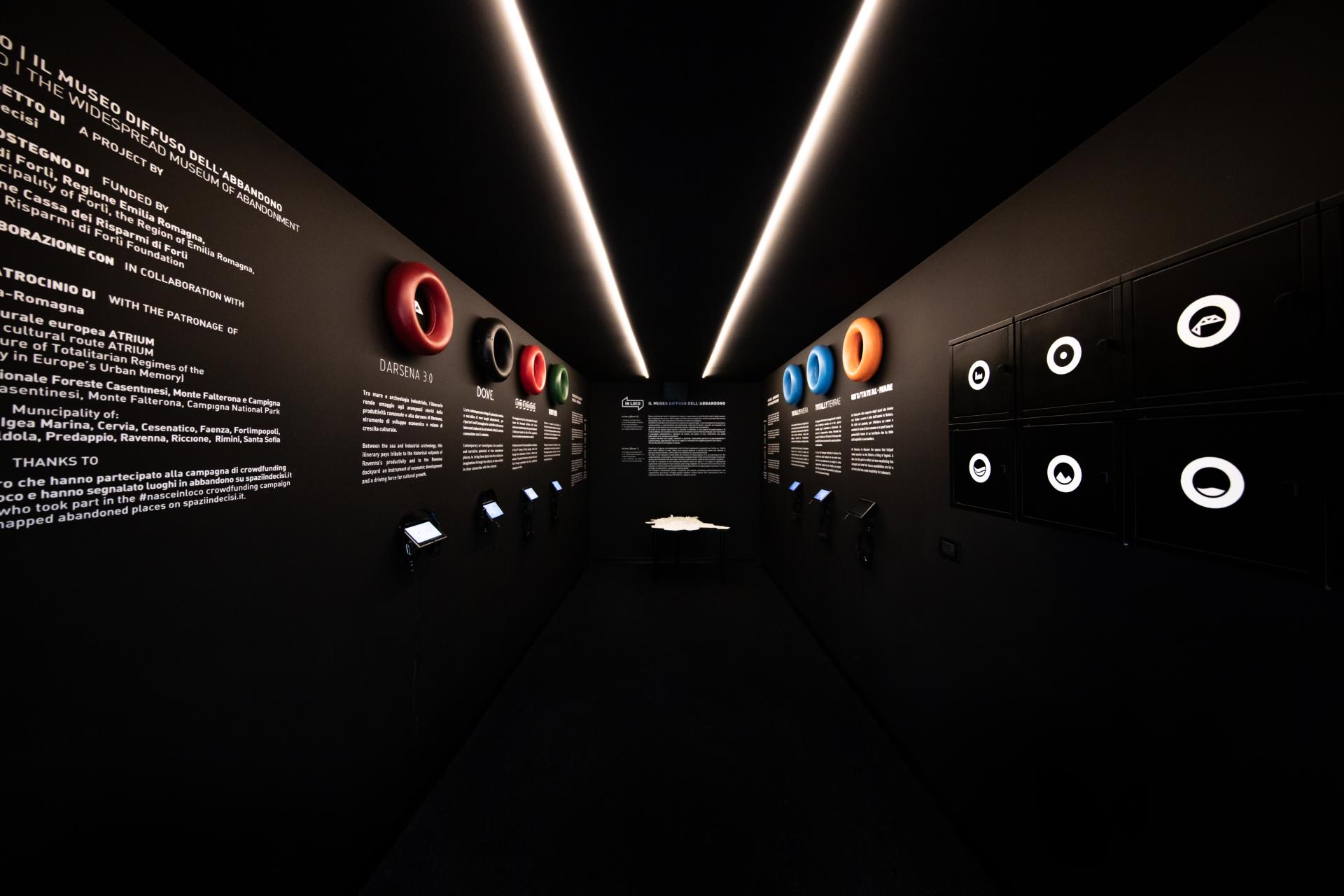
The purpose of the seven itineraries of IN LOCO is to push the exploration of marginal cultural places of the Romagna area. The former bus depot in Forlì EXATR, an example of adaptive temporary reuse project and headquarters of the association Spazi Indecisi, host the visitor center of the widespread museum, with maps and technological devices to give useful directions and information to the visitors. Unlike traditional visitor centers, the aim here is only to suggest themes and give a brief background for pushing the widespread museum explorers to lose themselves in the urban and rural landscape in search of abandoned places. Once in the vicinity of the places, they will be able to enjoy site-specific multimedia contents .
Through the itineraries, IN LOCO aims to foster a diverse form of tourism, proposing sustainable activities that allow the knowledge of a particular and unique heritage thanks to unknown but creative routes, or that simply encourage the autonomous creation of ad hoc itineraries using the resources on the dedicated website (www.inloco.eu).
Another mission of IN LOCO is the re-activation (and/or diversification) of the economy of the cities that host them; a pivotal for a museum which it is linked to the objective of involving local communities, artists, city-makers, local governments and other important actors for generating temporary reactivation projects and paths that can prototype effective cultural and economic re-activators. In this respect, IN LOCO works as a regeneration platform that can help citizens in defining temporary uses of abandoned spaces, organizing self-building activities and collaborating with public institutions for legally carrying out these activities. Through the museum, local communities are thus actively involved not only in raising awareness of the potential of their local heritage but also in taking care of them by driving them to become active members of their preservation.