Fluxus Labas! Courtyard
Basic information
Project Title
Full project title
Category
Project Description
Fluxus Labas! Courtyard project’s goal is to enable people of a certain residential area who share the same courtyard to improve their living environment. The residents with the help of local (and/or foreign) creators/artists tackle the infrastructural, social and cultural challenges.
Project Region
EU Programme or fund
Description of the project
Summary
“Fluxus Labas! Courtyard” project’s goal is to enable people of a certain residential area (who share the same courtyard) to improve their living environment. The residents with the help of local (and/or foreign) creators/artists tackle the infrastructural, social and cultural challenges that arise in their neibourghood.
In 2019 and 2020, six “Fluxus Labas! Courtyard“ projects took place Kaunas city and district, where local communities, together with the help of artists/creators. Some of the projects were:
-
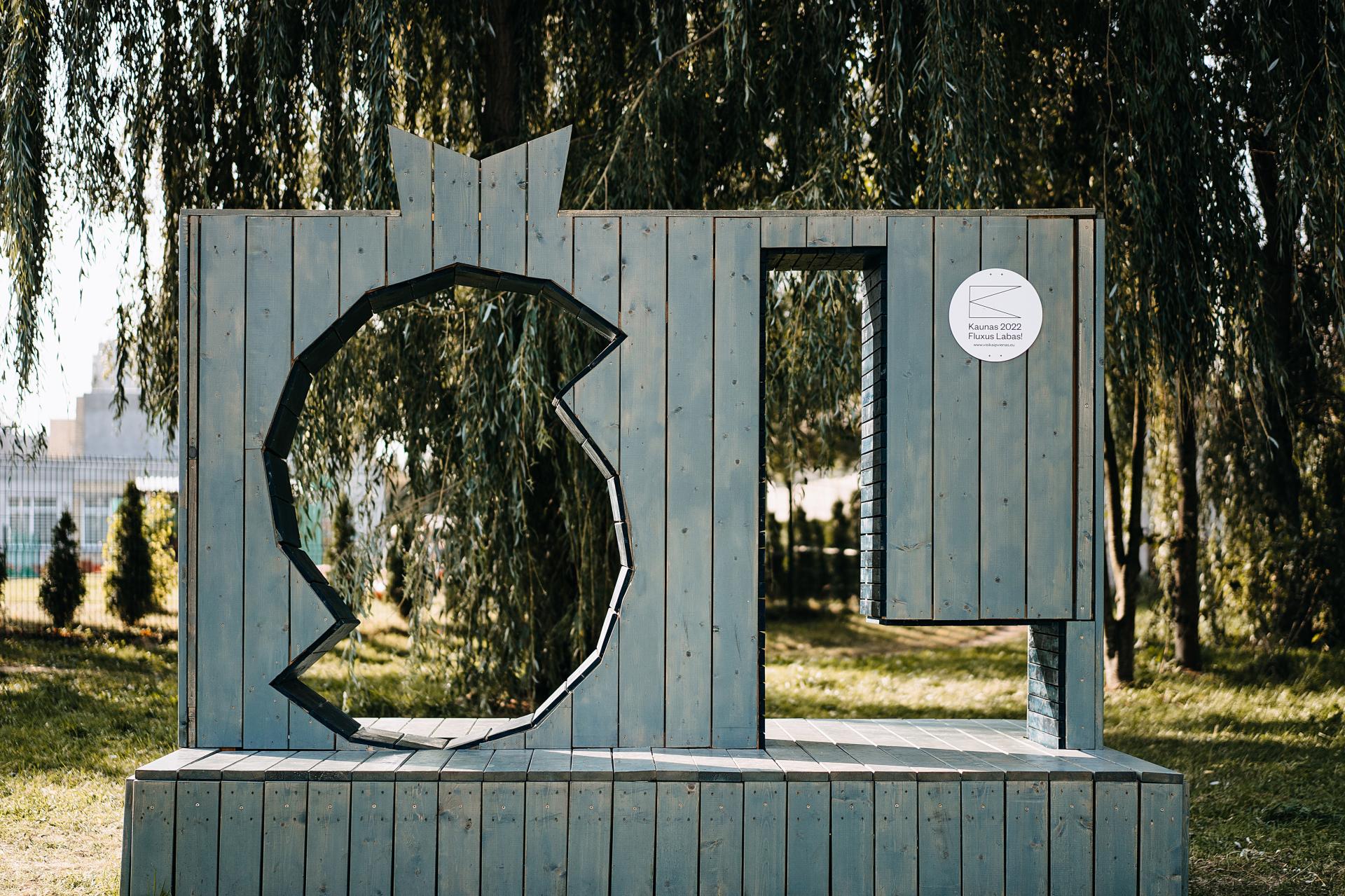
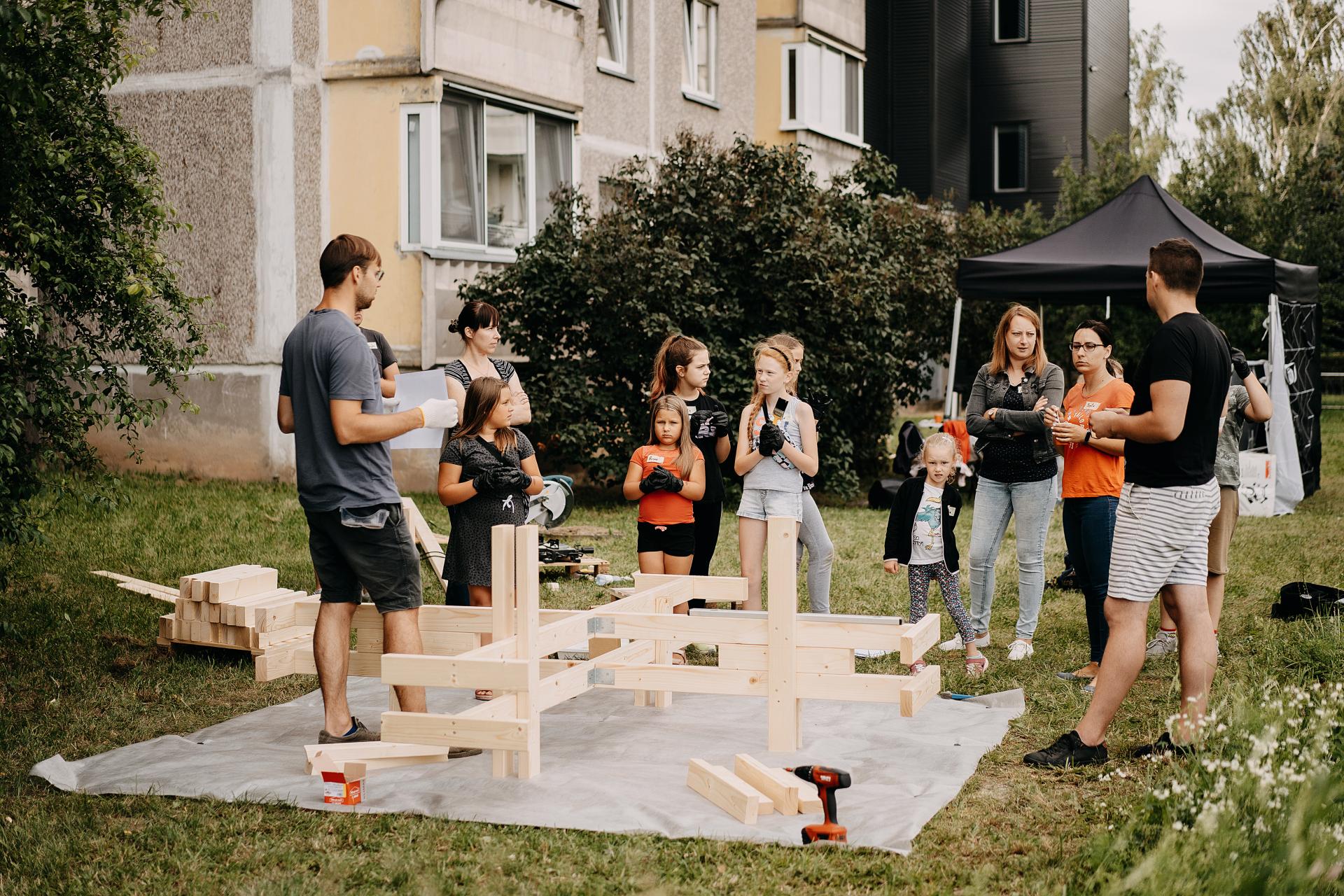
Residents of a courtyard shared by seven 12-story apartment blocks on Kuršių Street had a dream - to transform a large courtyard surrounded by apartment blocks into a green community space. The courtyard's challenge was the unmaintained yard and the lack of recreational spaces for adults. Residents turned three old sports slots into benches with canopies.
-
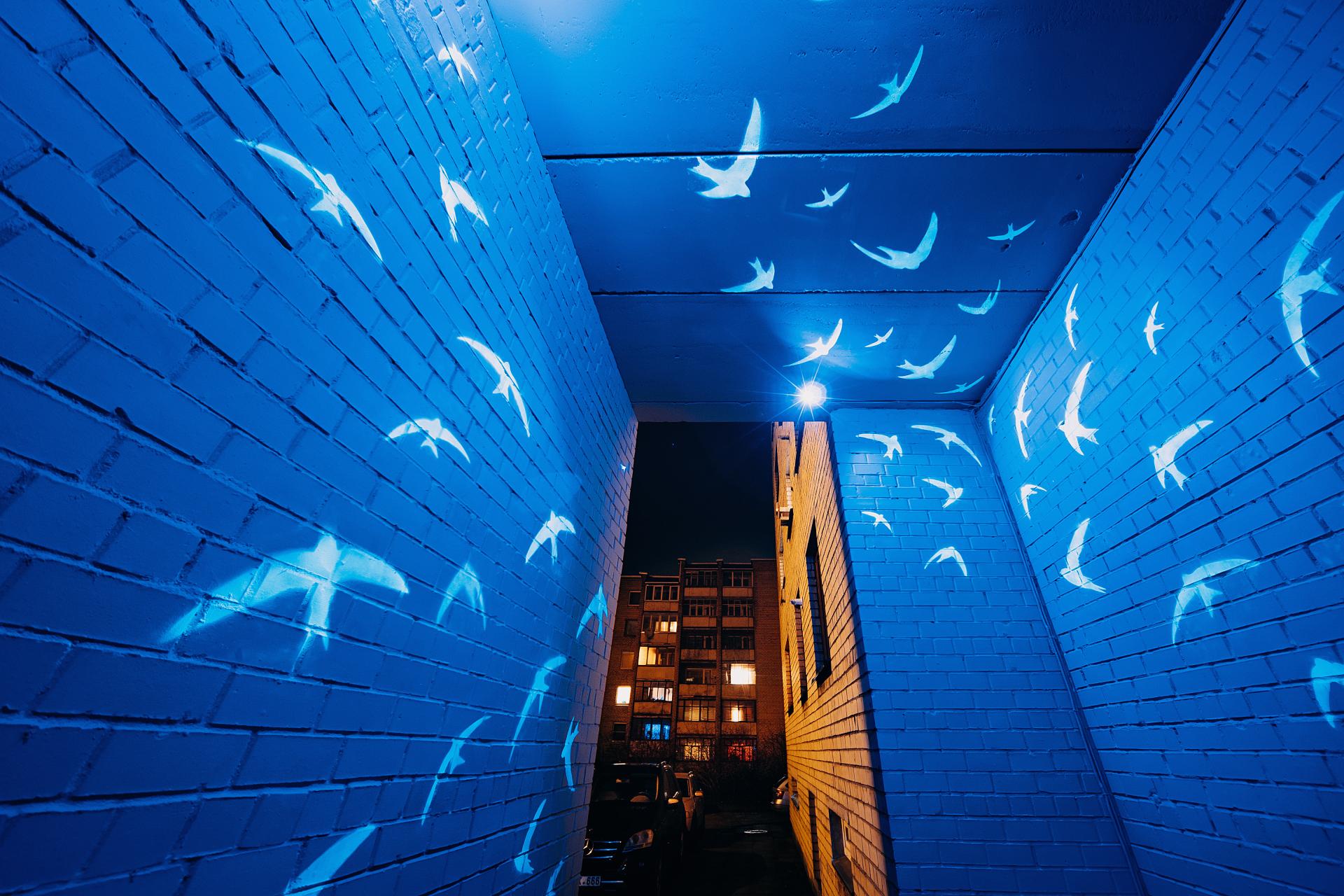
The community of the apartment block in Akademija town in Kaunas district aimed to strenthten the community, discover common ground (identity), and solve a problem - to turn a dark passageway of the house into a safe and creative space.
Key objectives for sustainability
Strengthening community and building stronger connections between people: “Fluxus Labas! Courtyard” project aims to empower communities to build relationships with each other and thus be able to solve both infrastructural challenges and social problems that arise in their communities. The human connections created by the project also foster a circular economy, where neighbors turn to members of their own community to ask for help.
Use of secondary raw materials: secondary raw materials that the community members found in their own storerooms were often used in the projects. Moreover, residents were cooperating with companies that provided scrap materials free of charge or at a very low price to be used for construction. Businesses around the yards contributed their resources to help the communities.
Sustainability education: during the workshops, the artist and the accompanying facilitator talked to the community about the recycling of objects and raw materials, about climate change, about sustainable models of urban living. A lot of attention was paid to the reduction of car parks and the expansion of green spaces.
Key objectives for aesthetics and quality
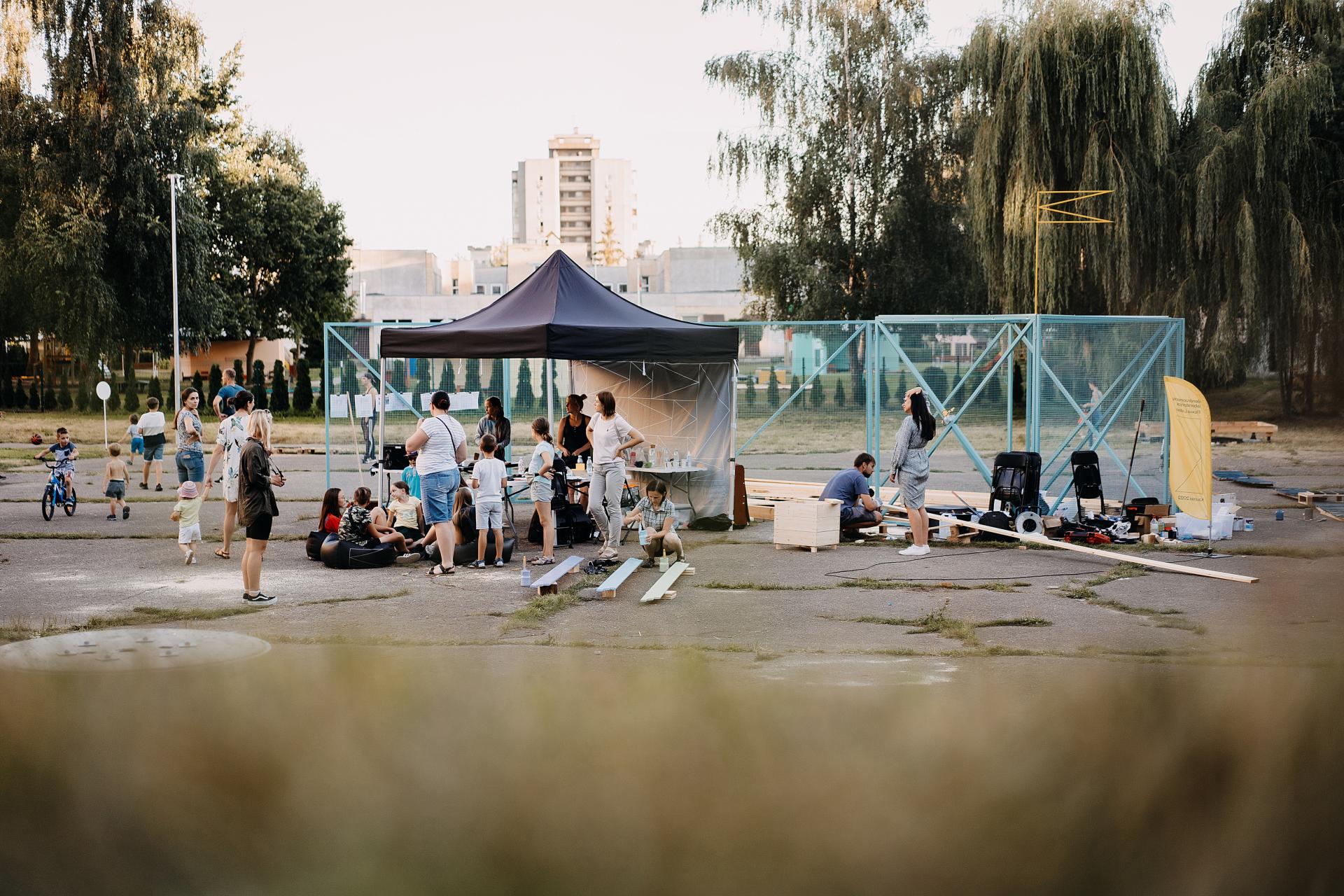
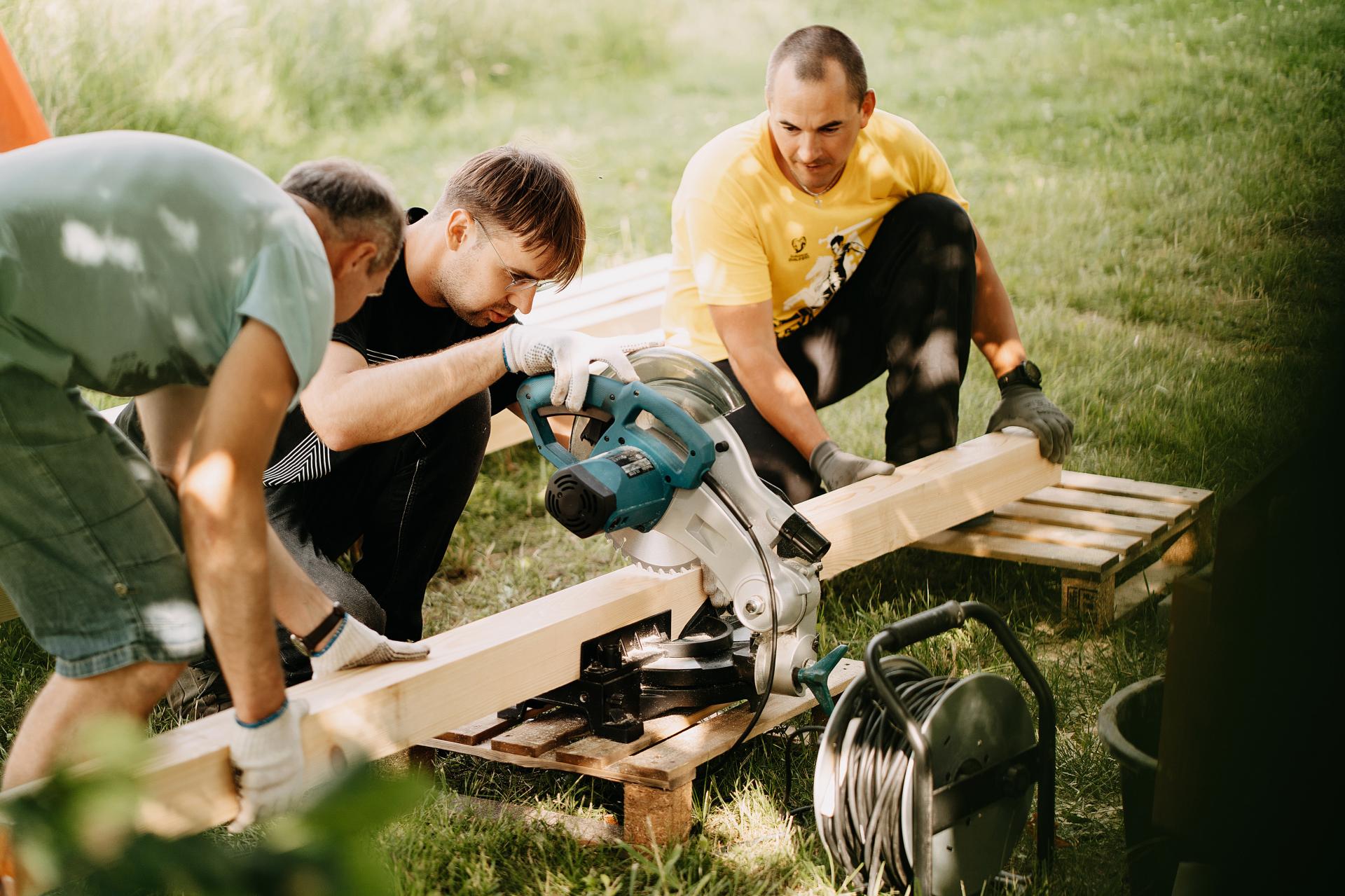
“Fluxus Labas! Courtyard" project is not focused on the outcome, but on the process of creation and the needs of the community. "Fluxus Labas! Courtyard” aims to help people in the neighbourhood to get to know each other, to know who to turn to for help, to initiate new activities. At the beginning of each project, a space is created for the neighbours to meet in the courtyard and play getting-to-each-other games, sharing stories, food, remembering the history of the building and its residents. As a result, local problems are identified and a solution is decided. The residents and the allocated artist dive into a workshop where the neighbours face a number of challenges, such as cutting boards, digging holes, etc. In terms of aesthetics, the artist/creator involved in the project contributes a lot to the project - his shared vision and experience makes the project more unique and distinctive. The residents themselves choose the shapes, colours and materials of the objects, which encourages them to be more appreciative and proud of their own work and to take responsibility for their living environment.
Key objectives for inclusion
This project aims to:
- foster a paticipatory culture, that includes all members of a particular courtyard; People from all social backgrounds, age groups, minority groups take part in the project that happens in their courtyard. Because of the location (the courtyard), the residents that would not otherwise meet or go to the same events, are encouraged to get to know each other and share creative experiences with each other. As a result, people see each other as equal despite their differences and social boundaries.
- decentralize cultural activities (move them further away from the city centre); The project gives equal access to opportunities and resources to the people who might otherwise be excluded or marginalized. The residential areas chosen for the project are often less prestige and have some people living under difficult economic conditions. Hence, the fact that the activity is happening in the walking distance from their apartment makes it a lot more accessible compared to cultural events happening in the city centre.
Results in relation to category
-
Communities are empowered to make changes in their own environment: as residents got to know each other and each other's strengths, they started to organise concerts, workshops, picnics and courtyard parties. They no longer need any encouragement or artistic input; they find resources and motivation in their own community.
-
A change in attitude towards community and creativity: residents who didn’t believe in community, creativity and culture have found that it is not difficult to get together, it does not require a lot of financial or time resources, and the changes are very visible.
-
Involvement of different social groups: it is important to note that courtyard communities are heterogeneous, often with people of different economic classes, education, age or social status. The project is unique in that it invites everyone to join in, as it seeks to clean and revitalise the spaces that are important to them all - the courtyards where they all share.
How Citizens benefit
The project helped to develop a civil society, where residents make decisions for themselves and understand that they have the power to initiate change in the community.
Throughout the project, residents shared their resources: knowledge, talents, skills, tools, time. They volunteered in creative activities and workshops. They created small architectural (and other) objects for the common good and without personal gain.
The civic-minded residents who contributed sincerely to the project motivated and inspired others by their example.
The DIY workshops meant that everyone could get involved in the activities, and the greatest discovery was the good will of the neighbours.
Residents' trust in their neighbours increased. In addition, the workshop involved those residents who are often left out or are more withdrawn from community.
After the workshops, the residents continued courtyard activities, organising bonfire nights, community meetings and other initiatives to improve the environment. They all happened with the thought that it is necessary to consult with the rest of the residents and get their opinion.
Innovative character
In Lithuania, the concept and analyses of community arts emerged only 30 years ago, so it is a relatively new field. "Fluxus Labas! Courtyard" project is unique because of its approach to the local community as a process rather than as a clearly defined entity. This allows for more flexibility in the project as it takes away the focus from the number of participants (tthe activity does not require registration which significantly increases the number of people who want to contribute). All members of the community can contribute where they are interested, where they see meaning and where they can use existing competences. Current practice in Lithuania and Europe is to work more with organisations that have single-interest communities and have formal and informal membership lists. Our project aims to work with groups of people who do not have any legal status, but want to act and create for their community.
Sustainability education is promoted through practice, by showing the communities what can be done with recycled materials through creativity with the help of an artist.