THE STRENGTH OF WATER
Basic information
Project Title
Full project title
Category
Project Description
The fundamental objective of the project is the enhancement of medicinal mineral waters and the recovery of a river environment of great beauty. The project sought to enhance all the heritage and ethnographic elements of the environment, clarifying the routes and recovering that river landscape that was invaded by nature and neglect. But the memory of the place was there, and the illusion of many neighbors and institutions to see it recovered was the engine of the project.
Project Region
EU Programme or fund
Which funds
Other Funds
.
Description of the project
Summary
Lérez River is a structuring element of the territory. Its meandering orography reveals a very powerful landscape that is full with heritage and ethnographical elements, as a result of its wide historical memory.
The dialogue between the riversides and its water become clear as we find royal paths, roman bridges and cereal mills that used to take advantage of the river’s strength to develop a self-sufficient economy. Their use lasted until the fifties, coexisting in time with industrialization and, at the beginning of the twentieth century, with the use of the river energy to develop two of the first mini-hydro in Galicia.
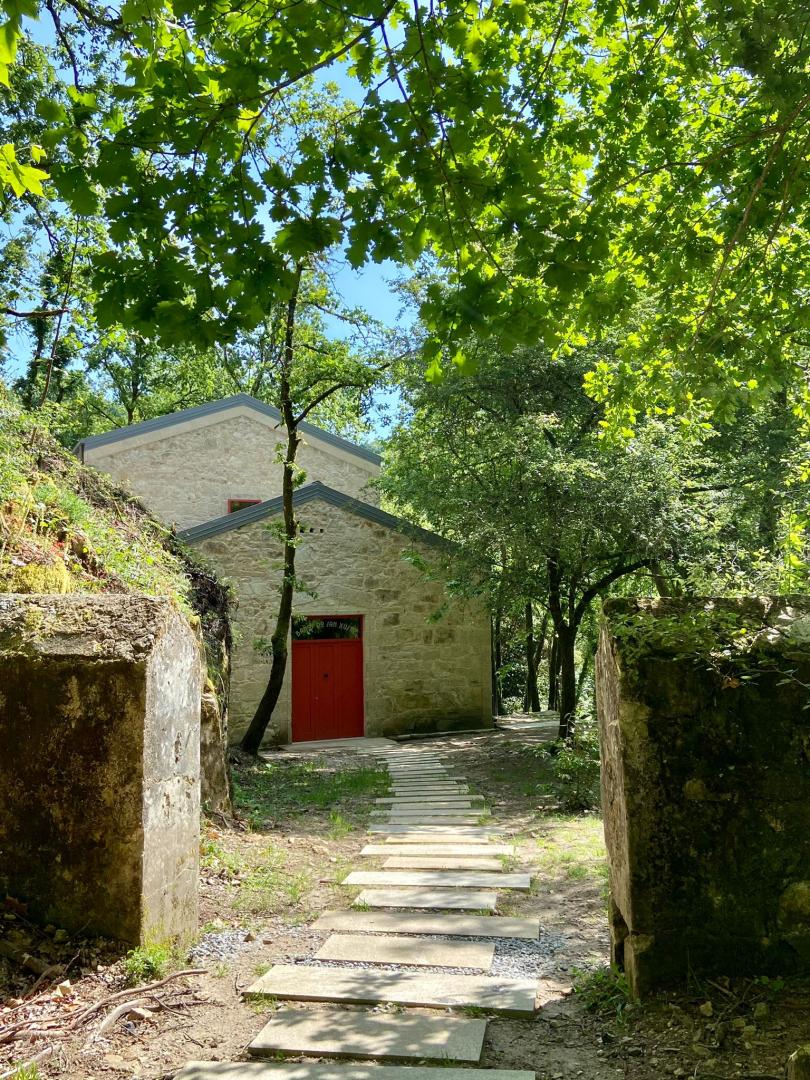
The mini-hydro that provided energy for the entire city of Pontevedra is located in San Xurxo de Sacos, Cotobade, coexisting in the same riverside with four cereal mills, connected to the villages through an old roman path. New connecting roads appear alongside the old territory prints, and a great pipe diverts the river water from a higher level, extending its way for hundreds of meters with a gentle slope, to finally fall over the mini-hydro turbines. In the seventies it fell into disuse.
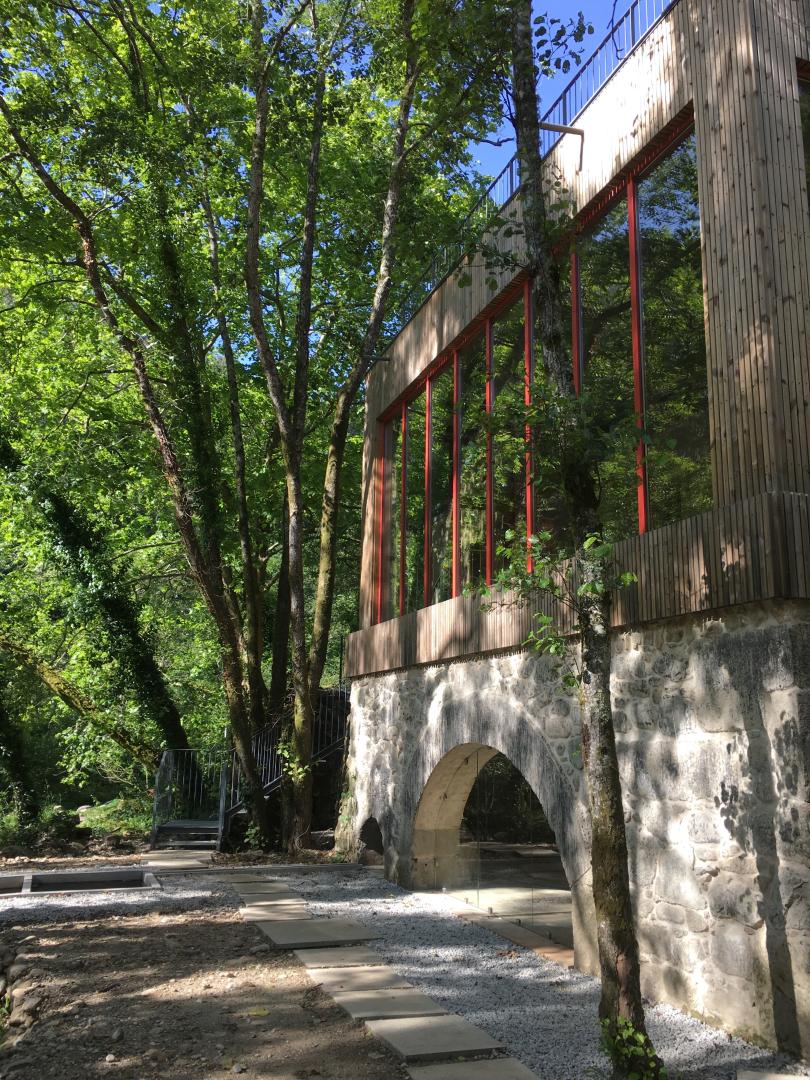
The revitalization of a building of this architectural and heritage value, is an important revaluation of the history of electricity in Pontevedra. In this project in which we recover mini-hydro spaces, keeping its original industrial essence.
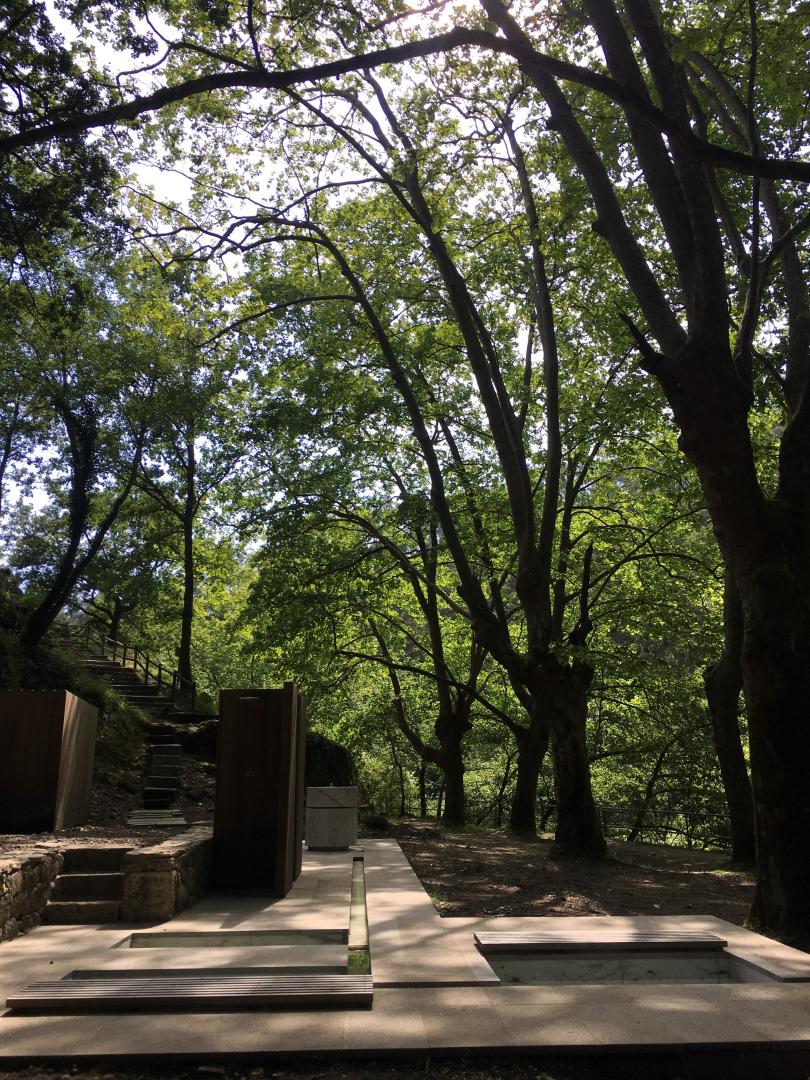
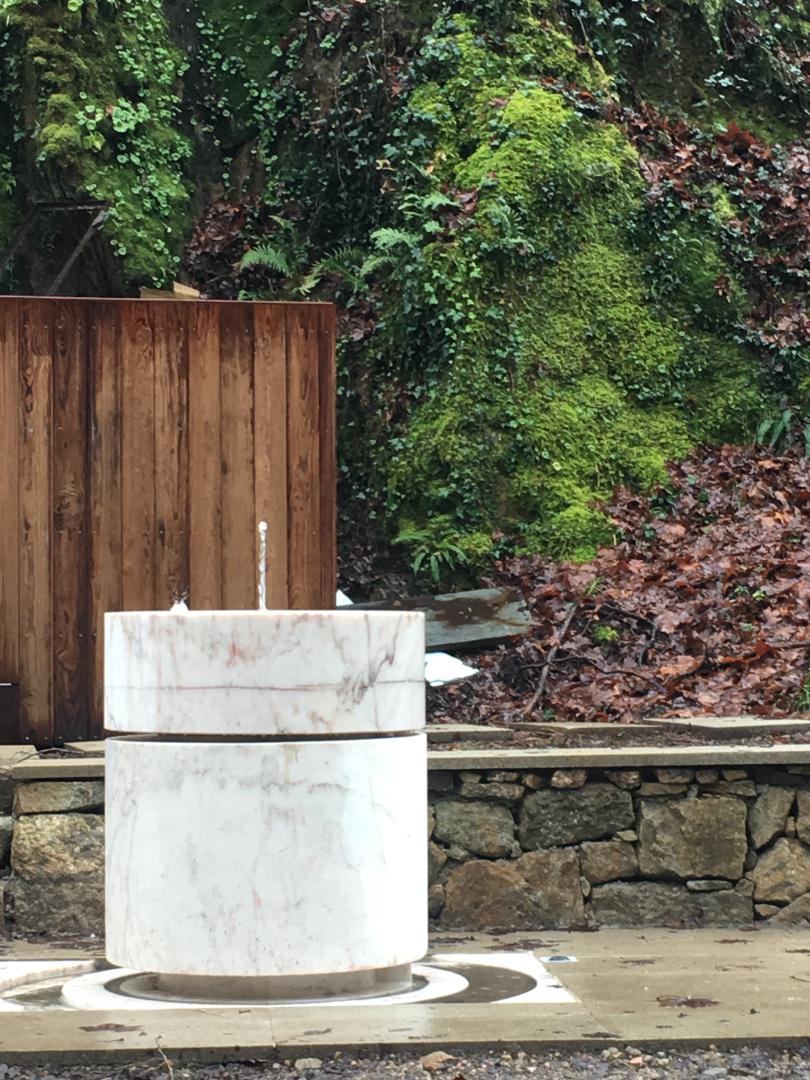
The new uses maintain water as the story line. The strength of Lérez River gives way to the softness of the sulfur-fluoridated waters (that have therapeutic properties) that flow from different points of the river slopes.
The recovery of this industrial heritage converges with many cultural and natural values of the environment, leading to a various scales project, including the development of a Landscape Charter among various institutions and neighborhood associations, in order to achieve the protection, management and planning of the “Lérez River meanders” landscape system.
Key objectives for sustainability
Economical
A thermal use that worked in the past is recovered and is increased with the adaptation of the main building of the mini-power plant for spa use. The fact of associating the intervention with an activity that raises its economic sustainability and helps to energize the surrounding territory is one of the main axes of the project.
The signing of the pact was a boost for this economic activity.
Environmental
From the environmental point of view, a measured action has been promoted that respects the environmental values of the surroundings of the Ecosystems of the Lérez River:
In the space closest to the river there are specimens of the Galician riverside forest, these plant formations have a great ecological value. In the arboreal stratum the species with more copies is the Alnus glutinosa, accompanied by several Corylus avellana and some Fraxinus excelsior. Salix atrocinerea and Laurus nobilis also appear in the surroundings of the ruins of the mills. In the herbaceous stratum we find ferns and mosses. The conservation of this riverbank vegetation is considered a top priority.
Regarding the rehabilitation, use has been made of materials such as wood, stone, and marble that have come from the nearest suppliers. Trying to minimize the carbon footprint of construction.
Low energy consumption and the use of biomass as a source of energy has been another of the fundamental axes of the project.
Social
An attempt has been made to make an accessible space, since it was not before, and the participation of all agents has been promoted from the beginning of the project process. The pact for the landscape is a voluntary instrument of participation, agreement and mediation between public and private agents, focused on acquiring explicit commitments in favor of the landscape. These commitments recognize the patrimonial character as a public good that contributes to stimulate the economic and cultural development of the territory.
Key objectives for aesthetics and quality
The recovery of the landscape
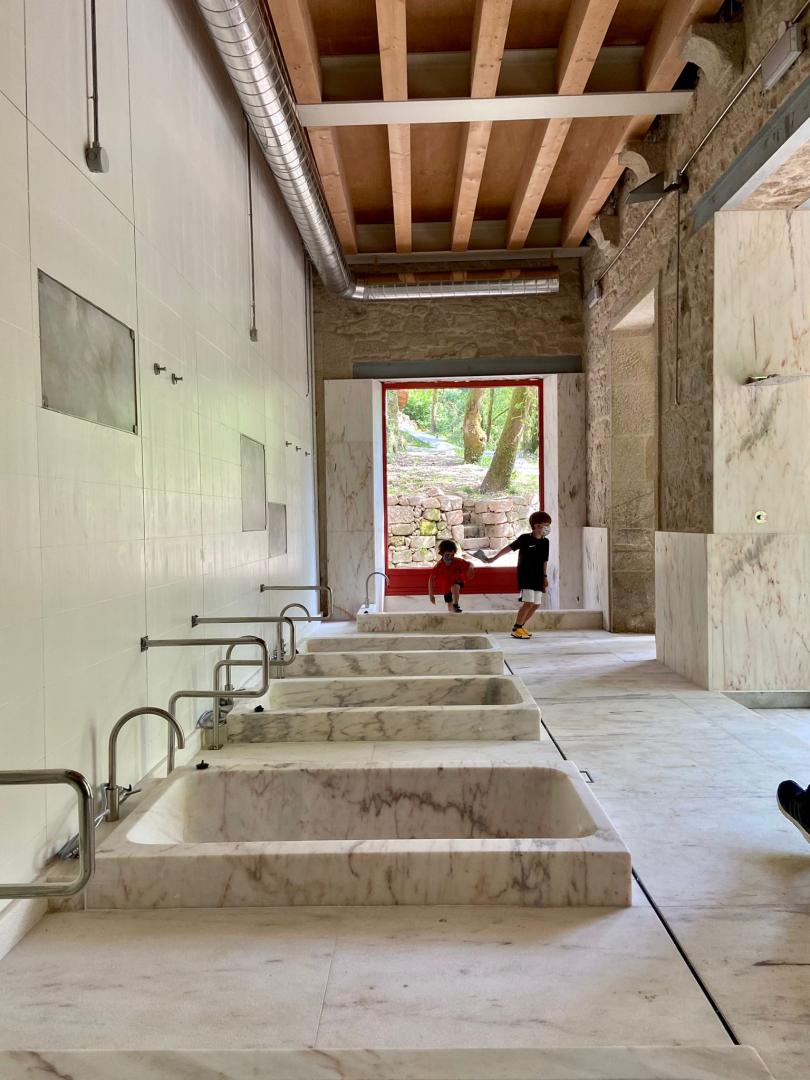
The typology of mini-power plant was perceived in a way that was as particular as it was suggestive when implementing new uses. The structural elements define the starting point of the intervention, without undergoing modifications and taking a leading role in the new spaces. In this sense, the conservation of an element of the original building stands out: a complex metal beam formed by triangulated profiles. It is the only structural element, without being stone or concrete, that has resisted the passage of time in its state of abandonment. Another part to highlight is, on the ground floor, the different water evacuation arches of the old turbines, which will go directly to the river. The bathroom program is used to condition that part of the building, of double height, like a humid zone where jets of mineral-medicinal water arise from the wall to leave the building by the arcs flowing until the river. The character of the ruin, its materiality, the partial views of the river and the surrounding vegetation, the entry of light from the top… all these elements already present form a space with a certain "dramatic" or "spirituality" which harmonize with a program that seeks rest, contemplation, tranquility. The concept of bathroom has been worked on in a way that seeks to prioritize the user experience in relation to the space around it.
All existing elements related to electrical industrial architecture are preserved, as well as partially preserved finishes such as tiles and moldings. When planning the pavement, the existing perforations that connect the ground floor and the basement (water outlet and machinery) was solved through the use of a glass floor , in such a way that its past function is evidenced.
Key objectives for inclusion
The project has a marked public character, recovering a public space for citizens. A place of inclusion and more accessible allowing the shared use of all elements, bathtubs, fountains, access to the river, public picnic areas, wooded areas, mills, etc.
Results in relation to category
Taking as a starting point the enhancement of this important natural resource, a study of its immediate environment is made to give meaning to the whole intervention. This study of the area in which it is located involves seeing all the possibilities of the enclave in which it is located, this being an opportunity to recover not only the memory but an abandoned landscape that had an intense use as a tourist place in the late nineteenth century and more intensely in the early twentieth century.
The fundamental objective of the project is the enhancement of medicinal mineral waters and the recovery of a river environment of great beauty. The project sought to enhance all the heritage and ethnographic elements of the environment, clarifying the routes and recovering that river landscape that was invaded by nature and neglect. But the memory of the place was there, and the illusion of many neighbors and institutions to see it recovered was the engine of the project.
How Citizens benefit
The recovery of the memory of the place has been something highly valued by the neighbors. This place preserves many layers of history, the mills, the mini-power station, the experiences of the river water, the fishing, the generation of energy. The abandonment of the last 50 years had turned it into a neglected place and where all the identity of what had been built with history was being lost. This territory had a past that was being erased, the project allows it to become an accessible place with an activity program based on well-being that will benefit the aging population of the environment and promote tourist activity to energize the area.
Neighbors contributed a large amount of historical information such as photographs and interviews where they recounted their experiences. They were also present throughout the project process in which 4 presentations were made to neighbors and a workshop.
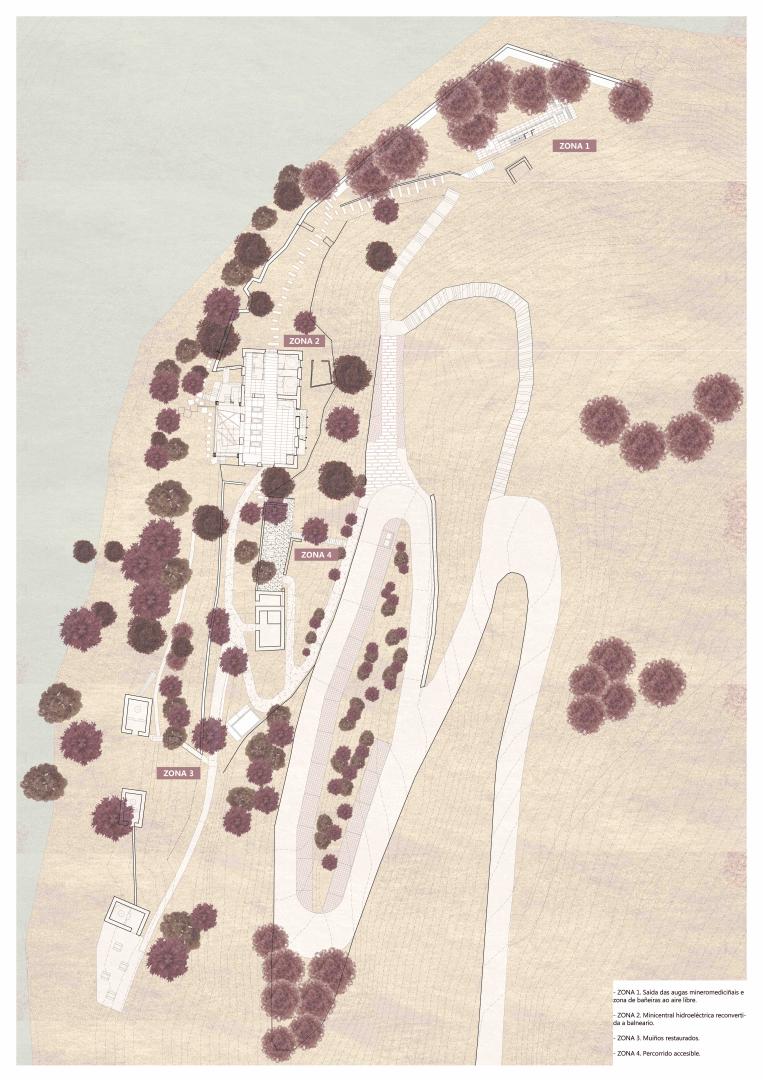
The action in the building responds to the analysis of the place from a territorial scale, to the enhancement of the various types of existing heritage and to the connection between them. The ruin of the mini-power station is currently the only point that allows the passage between the old spa area and the old cereal mills. Thus, the intervention aims to value this "passage" through the ruin, connecting the various landscape interventions in the surroundings, and organizing the operation of the building. In this way, the mini-central works as a hinge that articulates the public routes, forming an active part of the dynamics of the place.
Innovative character
The innovative nature of the proposal is considered to be the joint treatment of a heritage rehabilitation project and a landscape rehabilitation project, making it a unique project. The marked social character and the importance of the participation of all the agents who signed the first agreement for the landscape of Galicia, make this project have followed a unique process. The objective of joining all forces and having made the process possible is a success in itself, due to the complexity.
The action in the building responds to the analysis of the place from a territorial scale, to the enhancement of the various types of existing heritage and to the connection between them.