Ogrody Krakowian - green city acupunctur
Basic information
Project Title
Full project title
Category
Project Description
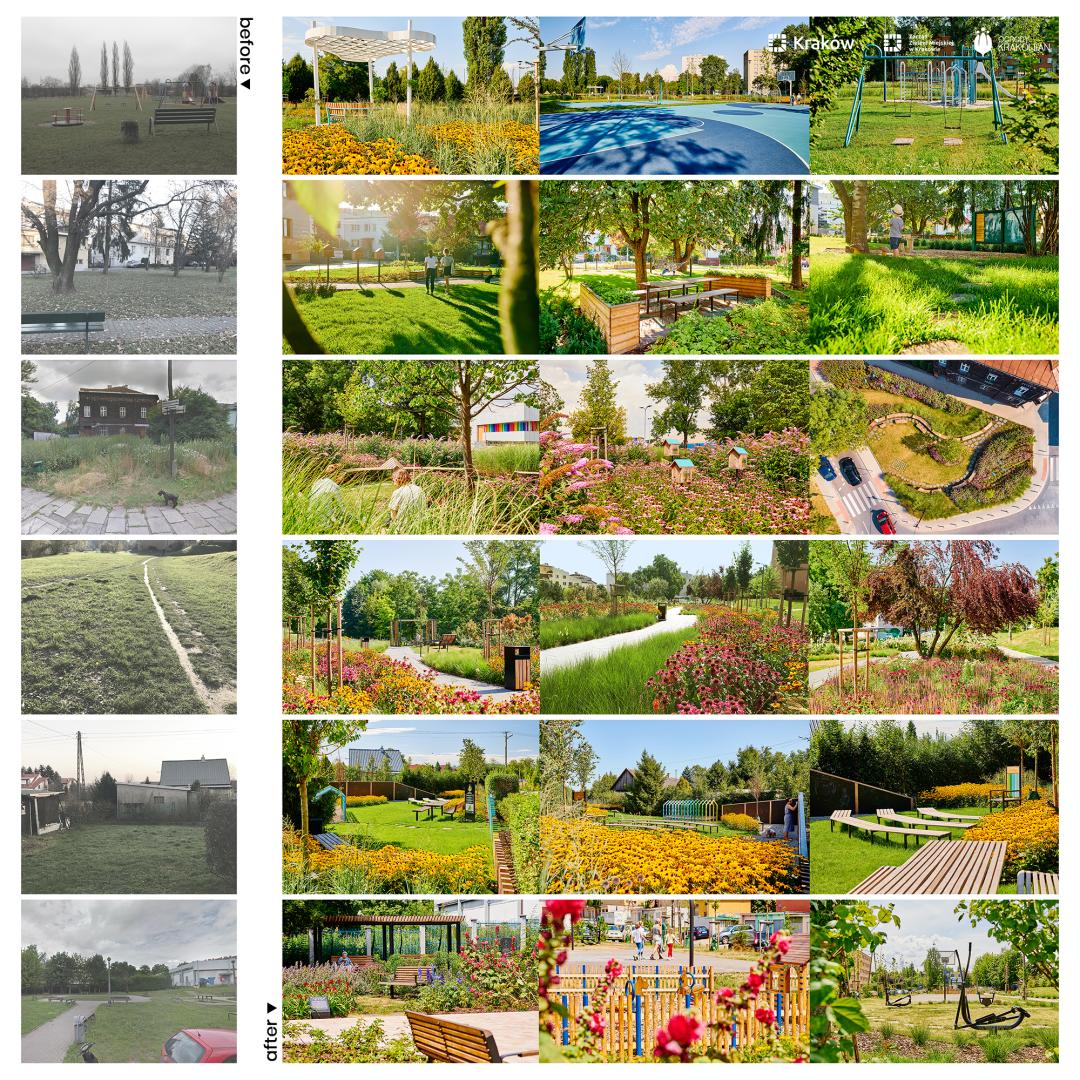
Krakow's pocket parks (known as the Gardens of Krakowians - "Ogrody Krakowian") are relatively small public spaces that provide recreational opportunities for all residents - regardless of age or need. They are not only vibrant, multi-generational centers of local communities, but also habitats for plants and animals that improve biodiversity in the city.
The implementation of the project proved that thanks to comprehensive land development, reclamation of abandoned
Project Region
EU Programme or fund
Description of the project
Summary
The lack of a home garden, balcony or even a view of greenery from the window is one of the problems of urban agglomerations. Gardens of Cracovians (Ogrody Krakowian) is a recipe for satisfying the needs of inhabitants in the constantly developing city.
Krakow pocket parks are created in the direct vicinity of residential buildings. The main objective of the project is to build strong social ties and local communities. Thanks to pocket parks residents more often leave their homes to spend time surrounded by greenery and the scent of flowers. Because of their intimacy, pocket parks build local identity and allow residents to identify with the neighborhood.
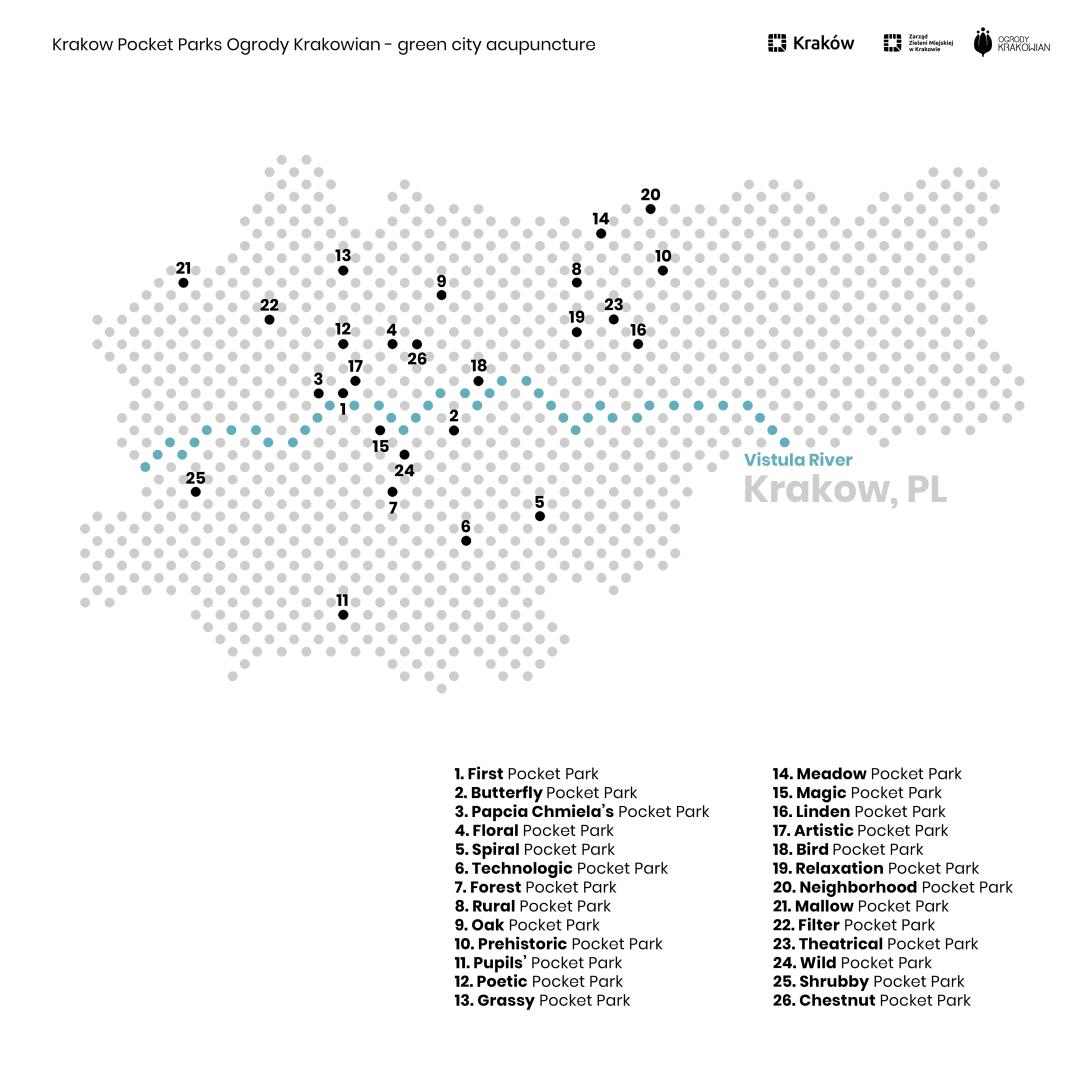
Prior to the project, high quality public spaces were located mainly in the center of Krakow. Green areas outside the city center were often neglected and forgotten, which discouraged people from using them. The project aims to change this situation by creating pocket parks scattered throughout the city, democratizing access to a well-kept, modern urban environment. The first pocket park was created in late 2016, and a year later there were two more. After the first two years, the idea of creating pocket parks became very popular, and the Krakow Urban Greenery Board received a much higher budget to accelerate investment. Fourteen new pocket parks were created in 2018, and by the end of the first half of 2021, residents have access to twenty-six different pocket parks. The project stipulates that every resident should have access to a pocket park within 500 meters of their home.
Transforming inaccessible neighborhoods and streets into pocket parks has also helped to eliminate undesirable behavior, thereby increasing residents' sense of security.
As part of a larger green strategy to create and maintain parks, green streets, forests, riverside areas and meadows, the Gardens of Krakowians has become an important element of the city's green policy.
Key objectives for sustainability
Krakow is committed to develop the city in a sustainable way at every level of city management - both as part of large projects to reduce air pollution or the development of public transport, as well as small projects that contribute to improving the quality of the environment, and as a consequence the quality of life, both for the present and future generations.
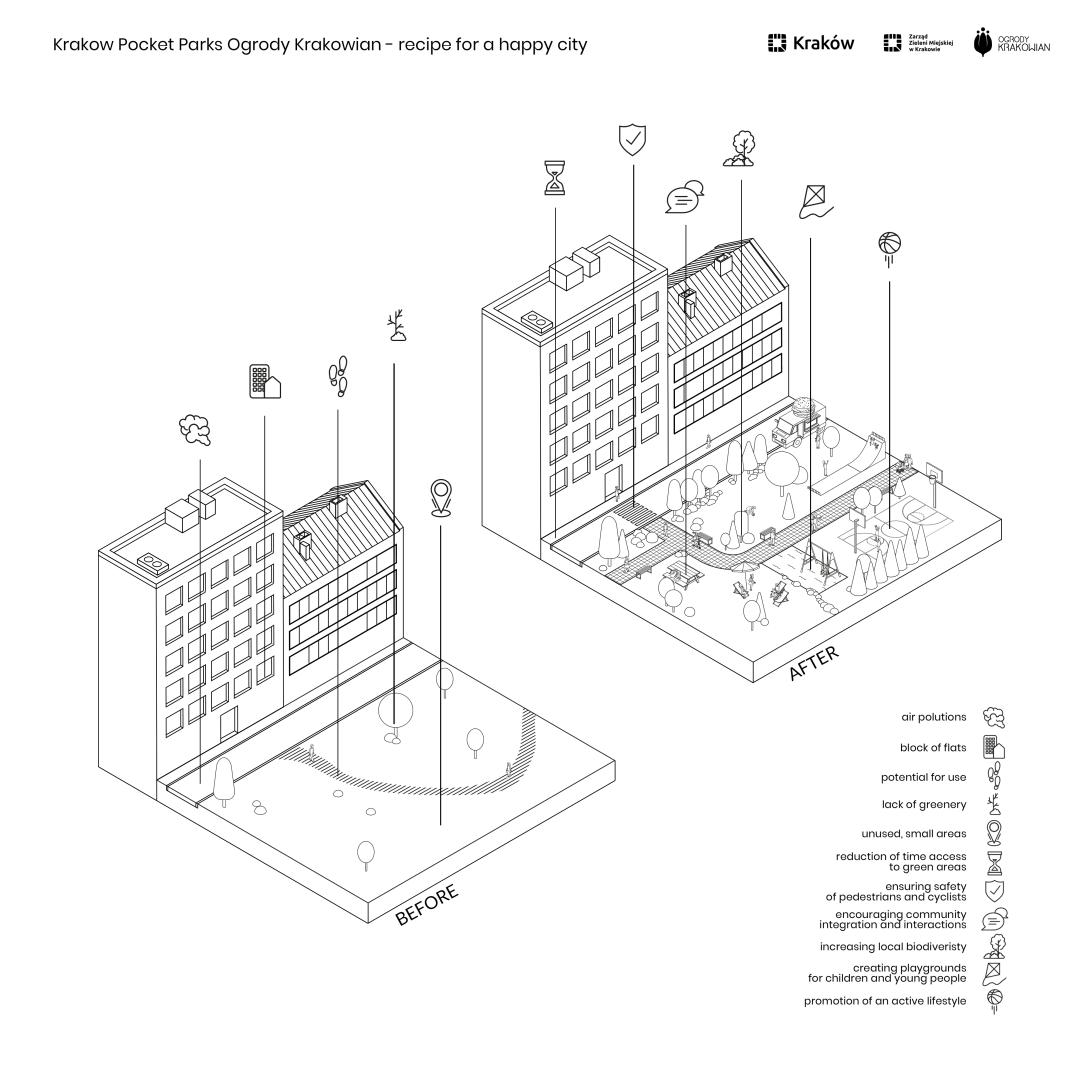
Climate changes lead to inevitable challenges such as droughts or sudden downpours and cities need to prepare the best possible way for combating those. Cities must use every square meter to increase green spaces, plant trees and honey plants that increase biodiversity. Krakow pocket parks are created in forgotten spaces often used as illegal parking lots or garbage dumps where existing vegetation was destroyed and the soil contaminated. Ogrody Krakowian turns such spaces into green oases by clearing the ground and planting trees, shrubs, perennials, climbing plants and bulbs.
In addition to the positive impact on the city's microclimate by increasing the retention of rainwater and biodiversity, it also lets city residents build closer connections with nature. Sustainable development of cities is often associated with changes which are often negatively perceived by some people, for example Krakow has recently banned coal heating and introduced new car restrictions. The role of pocket parks as intimate green areas located in local neighborhoods was also to develop an ecological awareness and daily contact with nature, observing insects and birds, makes residents to be more likely to accept solutions aimed to improve the environmental situation. A single pocket park is not going to change the environment of Krakow, however, the network of pocket parks has a significant impact on the climate and biodiversity of the entire city.
Key objectives for aesthetics and quality
The key assumption of the project is to create more democratic access to high quality, modern, environment friendly public spaces which previously has been predominantly reserved to touristic parts of the city. To achieve that the project puts big focus on the ascetics of the design, street furnitures and materials used to emphasise the importance of less touristic residential areas.
The high quality space in a neighborhood influences people's behavior by making them feel distinguished and cared about. Automatically people reciprocate it and care more about their surroundings. Despite initial concerns, acts of vandalism of pocket parks are marginal and damages are quickly repaired. Number of children and seniors visiting pocket parks is a sign people feel safe there.
The project also aimed to keep great variations in terms of form by introducing a unique theme for each. This theme is decided together with local communities taking into consideration history, surroundings and other local factors. Following this principle, the area with trees and bushes was transformed into Forest Pocket Park with hammocks and picnic tables and Rural Pocket Park inspired by an old woman’s request to create space which would reminded of her village from her youth. Each pocket park is different and each hides its own unique story behind.
Leading themes and locations of pocket parks (31.05.2021):
First, Floral, Chestnut, Bird, Oak, Grassy, Poetic, Mallow, Filter, Artistic, Papcia Chmiela’s, Magic, Shrubby, Forest, Pupil’s, Technologic, Butterfly, Spiral, Butterfly, Wild, Relaxation, Meadow, Rural, Prehistoric, Linden and Theatrical Pocket Park.
Key objectives for inclusion
Implementation of the project has proved that through comprehensive land development, being an answer to the needs of residents, forgotten spaces can become lively multigenerational centers of the local communities. It could only be achieved by keeping an open dialogue with residents during all stages of the project from design to construction works. It was also important to get feedback not only from usually privileged, more active residents but also older people who often feel forgotten and voiceless due to the pace of the current world.
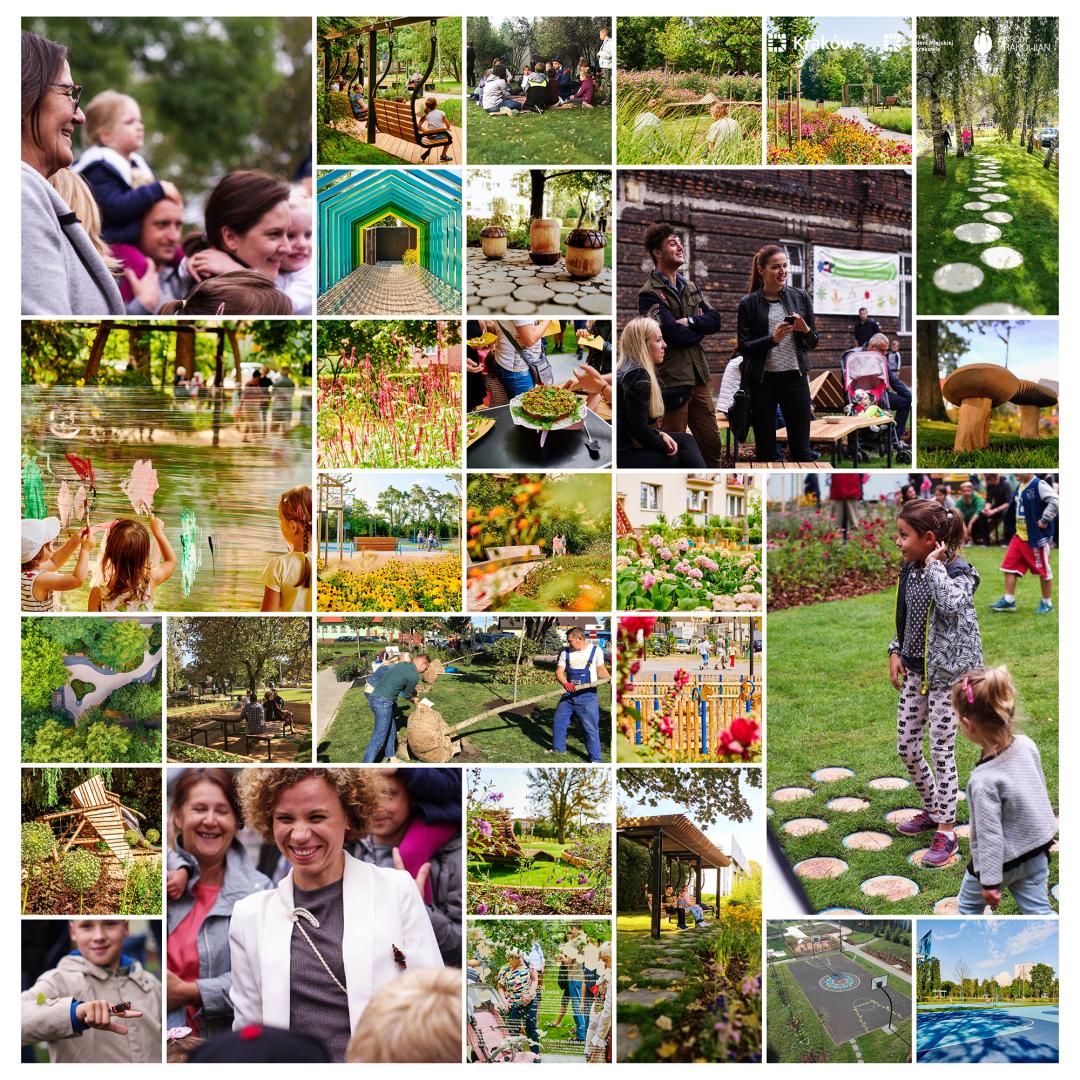
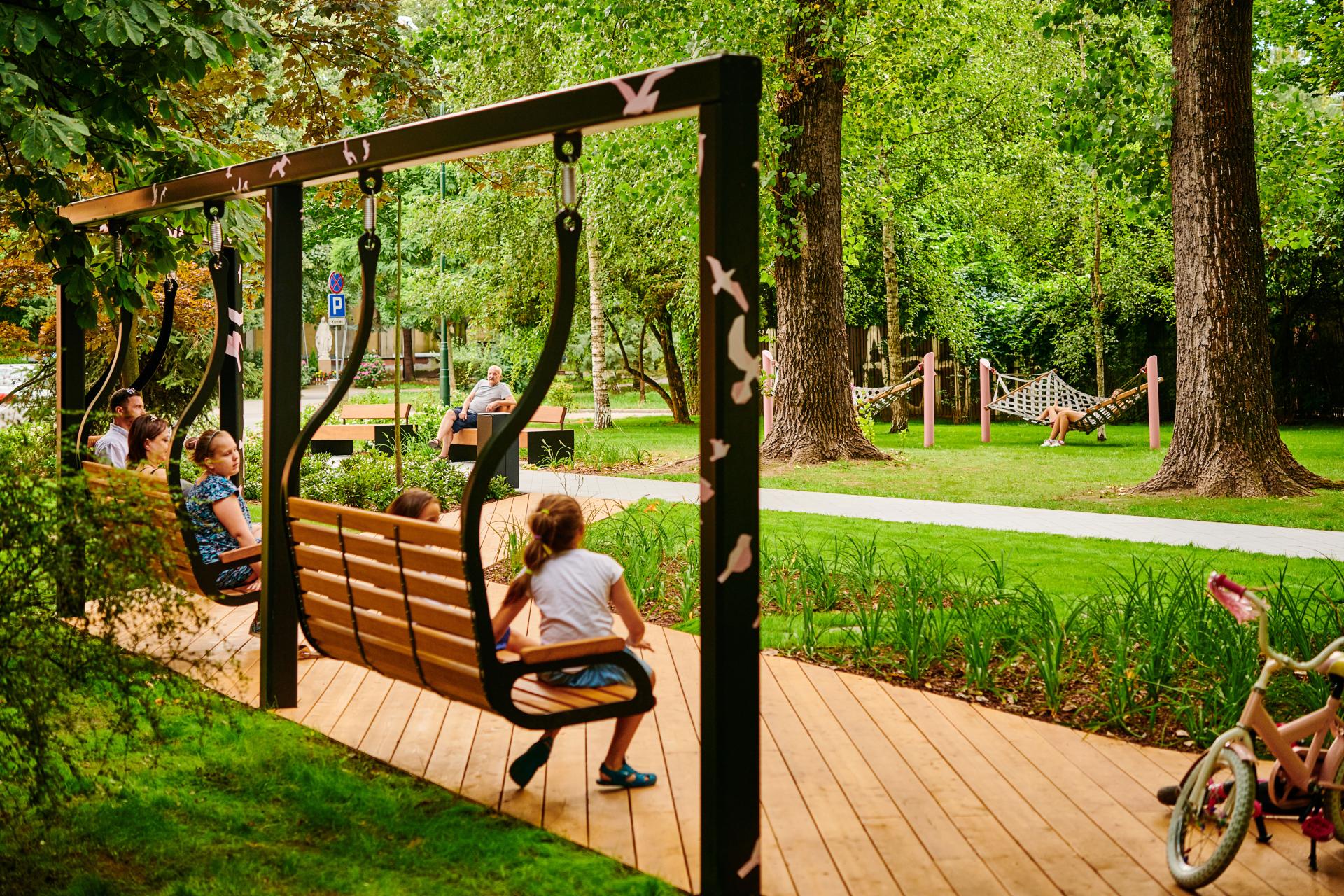
Krakow Pocket Parks are designed to be accessible to disabled and elderly people. There are no stairs and the furniture is comfortable for people of any age. Swing-benches, which have become a hallmark of the Ogrody Krakowian are a perfect example - they can be used by seniors, children, teenagers and couples in love (before that, swings in Krakow were located only at playgrounds). Thanks to the placement of unusual street furniture, such as swing-benches or rotating loungers, pocket parks are an attractive place for all residents, regardless of gender, age or disability.
Being able to relate to public spaces helps to build social integrity, increases a sense of security and awareness of the local area leading to a better quality of life. People go out more often, spend more time outside and interact with each other more willingly by organizing ad hoc events, workshops and parties. A principle that motivated the project was making people feel like it’s their own garden - a safe, green oasis, a place designed for and by the people.
Results in relation to category
Krakow pocket parks are usually created in places where nobody wanted to stay before, not to mention meeting neighbors or relaxing. In the past decade Krakow has significantly increased its population with more and more residents each year. If Krakow wants to be perceived by its inhabitants as a good place to live, it has to create new, attractive public spaces.
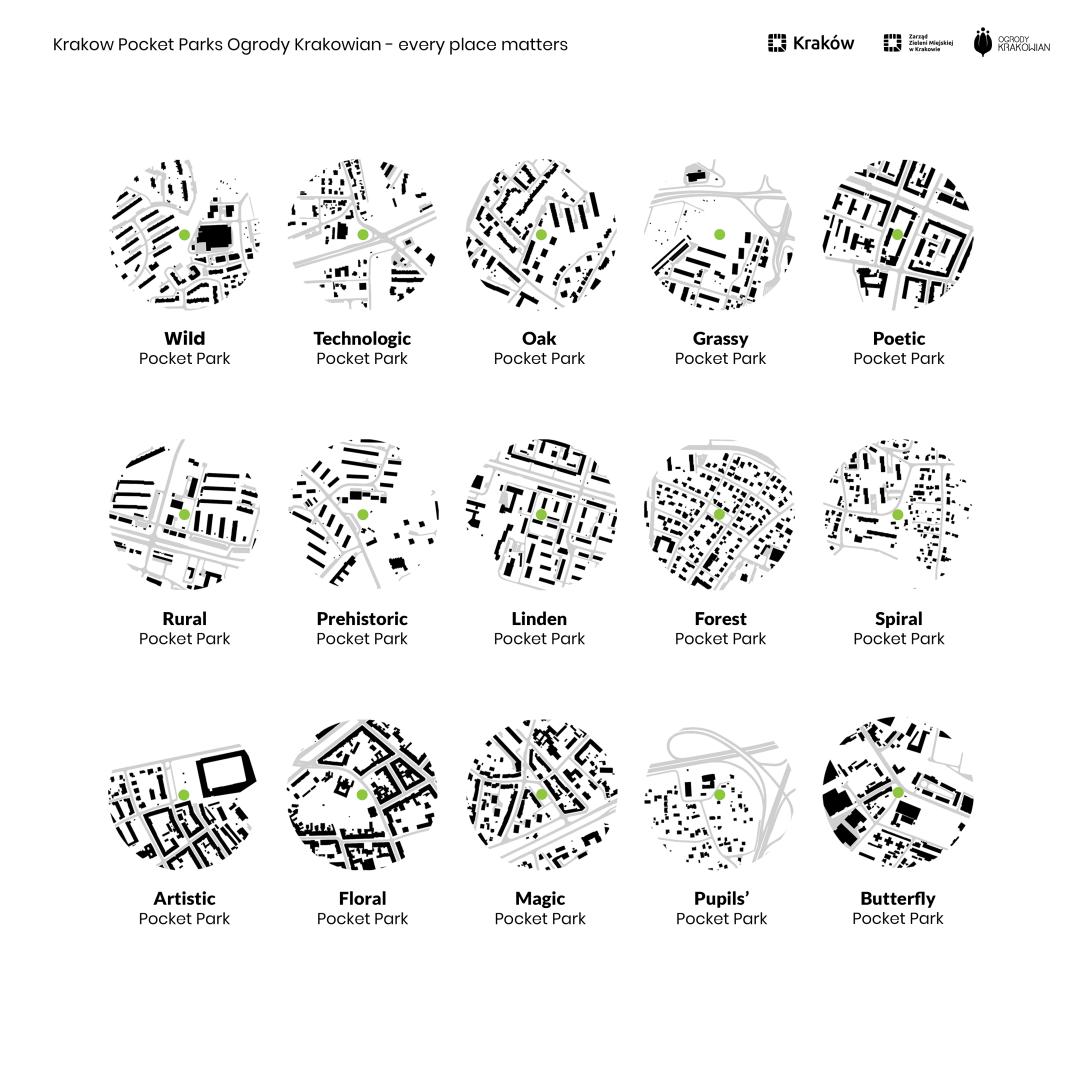
The implementation of the project shows that every place in the city matters. No matter how small, simple or important change may seem – all of them count. The more people want to do something good, the better the city (and the world!) can become. It’s crucial to show that people have an impact on what surrounds them now and how it will look like in the future. Creating a new, quality public space makes residents feel happier, especially on the outskirts of the city, inhabited by less wealthy people who often did not have access to high quality public green infrastructure in their neighborhood.
How Citizens benefit
When the first pocket park was opened in 2016, none of the residents and journalists knew what that actually was. The undisputed success of this project - the neglected area turned into a lively garden - directly contributed to the interest of residents and journalists in the possibility of transforming even the smallest forgotten space into a new pocket park. All pocket parks are designed together with the residents and the locations of the next Ogrody Krakowian are chosen by them. Pocket park projects are based on the results of public consultations, which often take the form of design workshops. As part of the meeting, the residents indicate what problems are occurring in the place and what are their needs, expectations and dreams regarding the pocket park. Then a conceptual design is created, which is again consulted with the local community. After applying any changes, a construction design is created and construction begins. The entire process takes about 1 to 2 years. If possible, opening a new pocket park takes the form of a neighborhood picnic.
Currently, the list of locations reported by residents for the creation of new pocket parks reaches several dozen places and it is constantly growing! Residents not only select locations but play an active role in creating new ones by running online fundraising or voting for pocket parks in the annual Participatory Budget.
Innovative character
The project Ogrody Krakowian is an example of urban acupuncture - simple, quick actions that have a disproportionately large impact on the city in relation to the costs. Large projects are very of course important too but they naturally must take more time. Cities, on the other hand, change rapidly, so it is necessary to introduce a programme where the change can happen quickly. It is extremely important in order to encourage and inspire the residents.
Due to the simplicity and versatility of the idea, it can be easily adapted and introduced in any city in Poland, Europe and the world. An average cost of building a pocket park is approximately 120 000 euros making it affordable also to less wealthy, smaller cities.