Traditional Architecture Summer School
Basic information
Project Title
Full project title
Category
Project Description
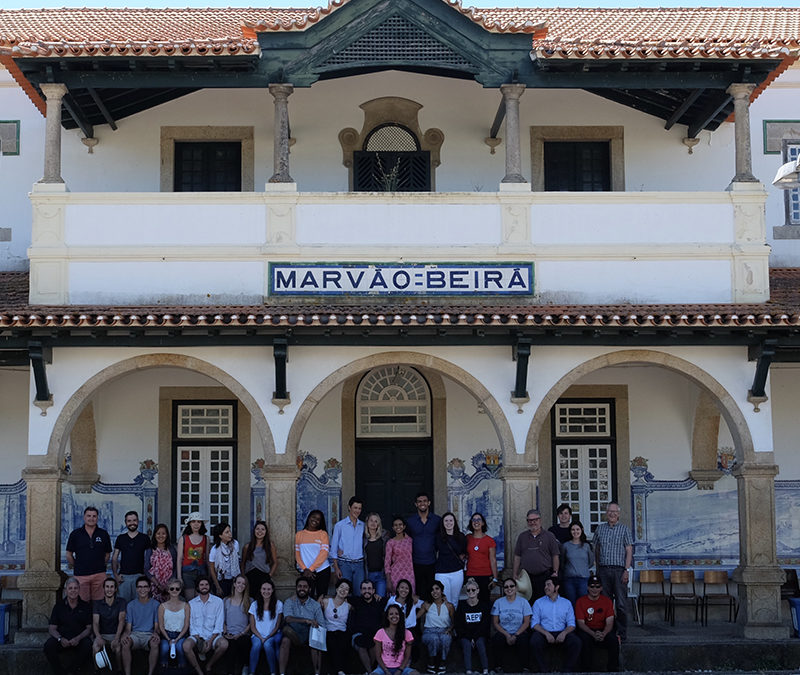
The 2018 Marvão Architecture and Urbanism Summer School consisted in a team of 40 participants from multiple universities, practices and countries (Phillippines, Portugal, Spain, Germany, England, Guatemala, Mexico, India, Brazil and United States), who came together to discover the town of Beirã and its significance to Marvão and the Alto Alentejo region of Portugal. It join also several local institutions and will improve the construction sector in order to preserve european cultural heritage.
Project Region
EU Programme or fund
Description of the project
Summary
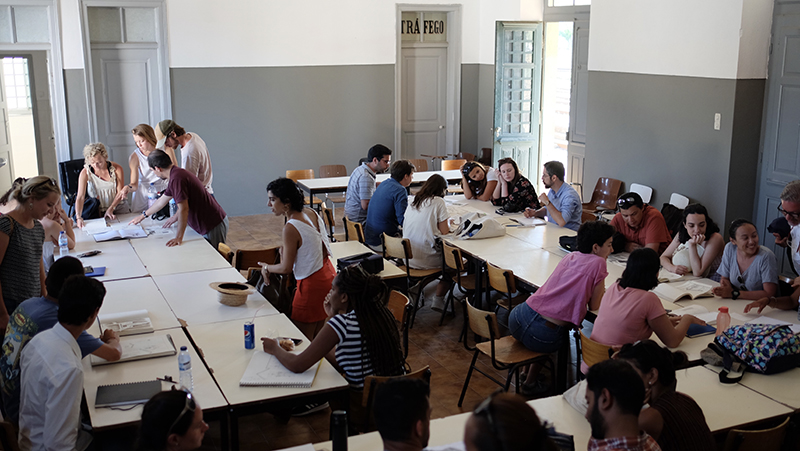
The area of Beirã, belonging to the municipality of Marvão, hosted during the last two weeks of July 2018, the Architecture and Urbanism Summer School. There, teachers and students coming from all over the world studied the traditional construction, architecture and urbanism of the region and took them as the basis to develop different design proposals for the future development of this place.
The 2018 Marvão Architecture and Urbanism Summer School consisted in a team of 28 students and more than 10 professors, from multiple universities, practices and countries (Phillippines, Portugal, Spain, Germany, England, Guatemala, Mexico, India, Brazil and United States), who came together to discover the town of Beirã and its significance to Marvão and the Alto Alentejo region of Portugal. It join also several local institutions and will improve the construction sector in order to preserve european cultural heritage.
Many of the participants were architecture students from the collaborating universities, however, many others came from other schools of architecture from different countries. There were also among them young professionals and teachers, who provided the team with their own experience. This is the context where our Summer School could contribute much beyond its main educational purpose.
Key objectives for sustainability
To condense the building, architectural and urban traditions of such a rich region as the Alentejo in a two-weeks program is always a challenge. To do it while teaching a frequently neglected kind of design, one based on the lessons written in local architecture
and urbanism, and on the analysis of the very place, and trying to meet local needs, becomes an endeavour only feasible when having, apart from the appropriate faculty, a wonderfully committed and engaged team of participants, and a strongly welcoming and supportive local community.
The initial meetings with the Marvão authorities soon highlighted there was a location especially fitting in the kind of work we tought for developing: Beirã. This little freguesia (detached parish) of Marvão, not as spectacular as the old town itself, which can be seen from there, watching the border from the top of a high rocky hill, was in exchange offering us a wide range of opportunities for making a worthy contribution to the local community.
Though being an inhabited place since the dawn of civilization in this region, Beirã as it is today has a relatively recent history. Formerly not more than a grouping of several shelters for shepherds, with its traditional round plans, stone walls and thatched roofs (a sample of them was recently built within the town as a memory of this relatively recent past), its current urban form and architecture was born with the initiative of building a railway to connect Portugal and Spain right at this point.
The many possible architectural and urban design challenges to meet those opportunities brought up from the earliest meetings and discussions before the Summer School till the very last days of it, by the Marvão Municipality, the Junta de Freguesia of Beirã, the Portuguese Infrastructures Department, and the local associations and entrepreneurs, were all perfectly fitting in those educational goals.
Key objectives for aesthetics and quality
During the first week we visited different towns (Elvas, Castelo de Vide, Marvão, Évora, Portalegre) to observe their relationship to one another as countryside towns. Through drawings and sketches of each place, it was noticed the towns had their own distinct characteristics yet shared a common theme of urban organization and architectural syntax. This was used to assist with the design and development of Beirã during the second week of the program.
After learning of the geography and social history, we honed in on the smaller details that bring life to Beirã. We spent countless hours on foot observing the community – we explored, sketched and photographed. We recorded the vernacular architecture that characterizes the town along with the urban fabric of the community. In the process we noticed distinct local patterns that gives Beirã its character: chimneys, porches and balconies, windows, doors, corner treatments, local colors, steps, gates and fences, symbols, vegetation. While surveying we also became comfortable with the spatial structure of the town and began to record activity spaces, transitions and public seating.
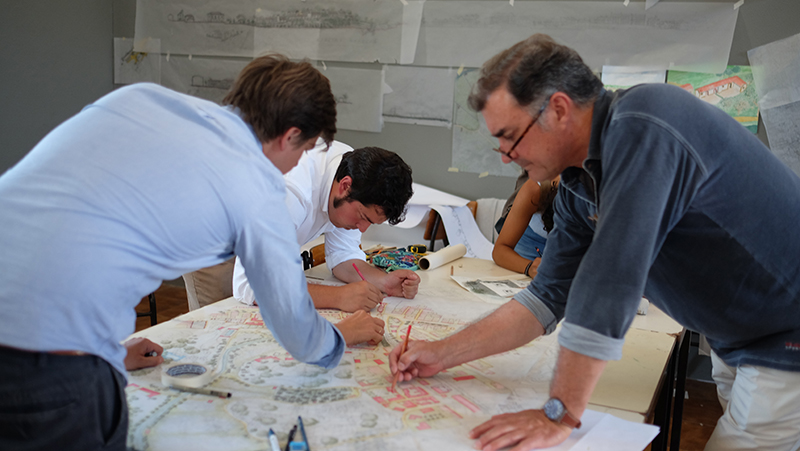
Our designs worked on the principles of creating a holistic place that naturally grows from its characteristics. The design was based on an understanding of not only what happens at the centre of Beirã but also what happens around its outer edges.The design of Beirã was split between four character areas (publication to be released soon) that together created the full vision of the place. Based in a studio, students worked in designated groups to collaborate and physically draw design options that were presented and shared by the community.
Key objectives for inclusion
The Summer School was organized by INTBAU and by the Rafael Manzano Prize for New Traditional Architecture. It was possible thanks to the support provided by the Richard H. Driehaus Charitable Lead Trust (through a contribution to the Chicago Community Foundation for the Richard H. Driehaus Charitable Fund), the Fundação Serra Henriques and Kalam.
Equally important was the collaboration of the Câmara Municipal de Marvão, the Junta de Freguesia de Beirã, the A Anta Association, also from Beirã, and the Infrastructures of Portugal, all of which provided constant advice and commitment.
A large number of Portuguese and foreign universities also took part, providing teachers, lectures and students: the Escola Superior Gallaecia, the Instituto Universitário de Lisboa (ISCTE-IUL), the Universidade do Algarve and the Universidade de Évora (Portugal), the Pontifical and Royal University of Santo Tomas (Philippines), the Schools of Architecture of the Judson University, the University of Miami and the University of Notre Dame (USA), the Universidad Alfonso X el Sabio, the Universidad de Castilla-La Mancha and the Universidad Politécnica de Madrid (Spain) and the Centro de Investigación de Arquitectura Tradicional (CIAT-UPM).
There was always the concern of keeping our identity, preserving our history and respecting our ancestors - only this way could we keep our traditions alive... and our habits. This initiative allowed for the sharing of new knowledge, not only with the local population but also with the young people working in the project, due to a difference in age, the different experiences lived and also the diversity of cultures found within this group.
Results in relation to category
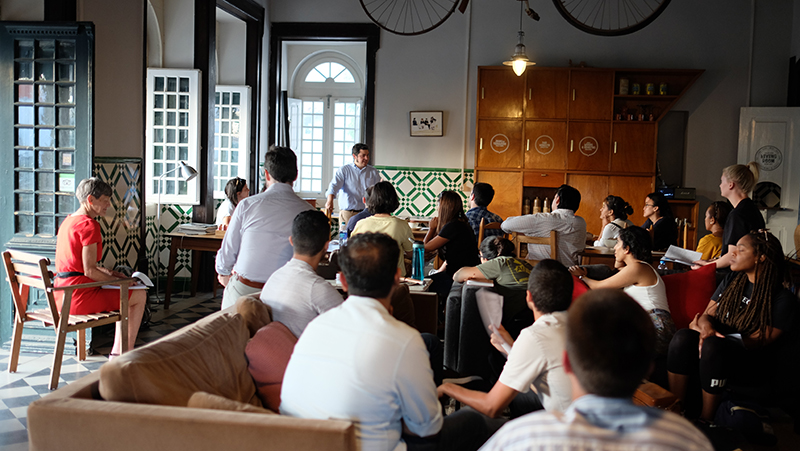
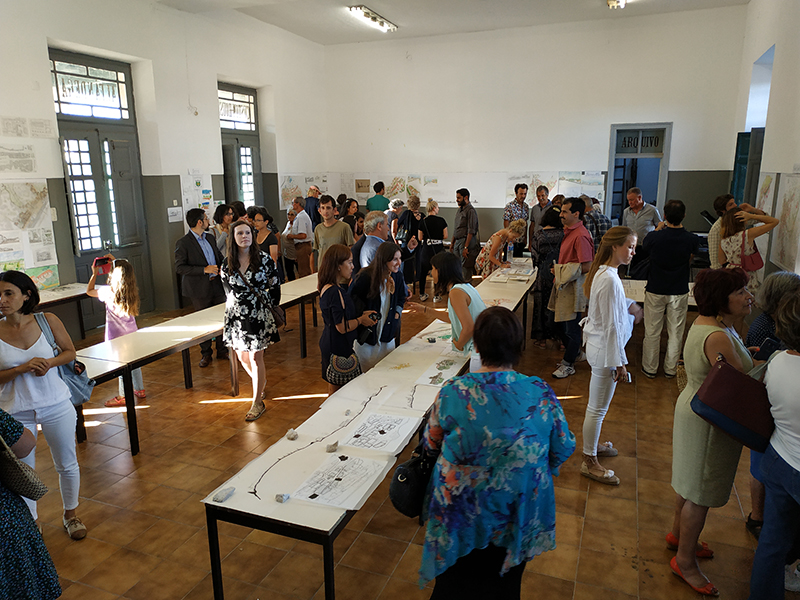
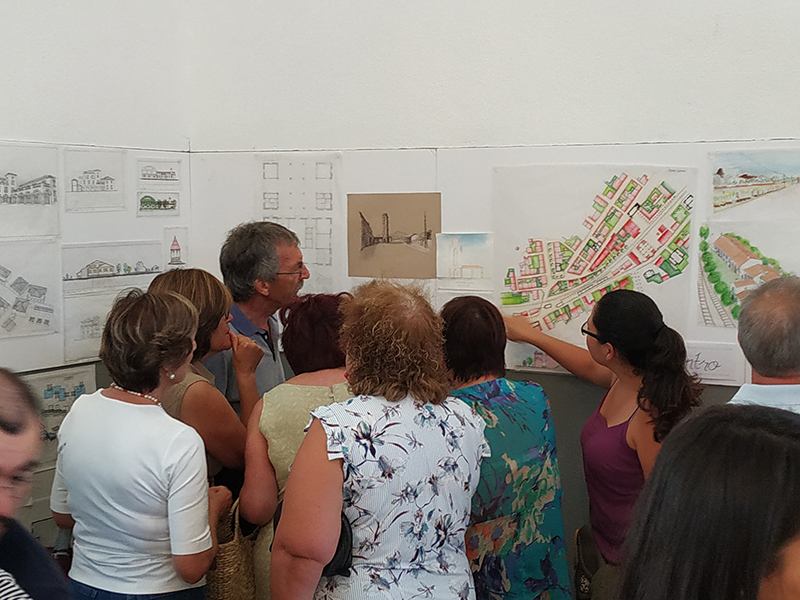
In the words of two participants, that were shared and published in the web site of the school, "we exhibited our observations and designs to the community on our final night. Dozens gathered to view our work and discuss Beirã’s potential. The intent was to include the community in its enhancement and encourage its inhabitants to be an active part in implementing a greater vision, even through small steps such as continuing the pattern language."
After that a publication was released showcasing the work completed during program, with the support of the Serra Henriques Foundation, in english, spanish and portuguese. The elements they found to be especially helpful were:
• Diversity of students in age, culture, academic/professional backgrounds and overall expertise.
• Quality of teachers and presenters which ranged from architects to builders, conservators and historians.
• Diverse skill sets, providing opportunities for some to take on leadership roles and mentor younger participants.
• Appropriate timeframe (two weeks) allowed for reflection and skillful listening to one another, along with immediate feedback from people of expertise.
• Program structure provided enhanced opportunities for learning, especially for young professionals/university students; also good for mid-career people who are looking to enhance their knowledge outside of the workplace.
• We are happy to share our experience in more detail and hope to take part in the Premio Rafael Manzano Summer School (https://www.premiorafaelmanzano.com/en/) in the near future.
• Something that has stuck with us and has lead to many subsequent conversations is a statement from one of the lecturers: “the best way to preserve culture is to practice it”.
How Citizens benefit
Based on all the previously developed study on the building, architecture and urbanism of the Alentejo, we started facing the already explained design challenges Infraestructuras de Portugal (Portuguese Infrastructures), the Municipality of Marvão and the Freguesia de Beirã proposed us to address.
The need to connect the two halves of the town, using infill proposals and multiplying the ways to cross the former railway lines, while keeping a reduced stripe of them, ready for a hypothetical future return of its lost activity, was also pointed out by all of them. And the Portuguese Infrastructures Department kindly provided its assistance and support in order to find the most feasible and successful ways to undertake it. In general, it was agreed to use our design efforts during those days for providing Beirã with a number of architectural and urban designs not longing for its past, but seeking for a bright future, while not renouncing local culture and identity, the keys for its recent signs of revival.
These are not easy goals for a group coming from all over the world and needing to use just two weeks for meeting them. An intense immersion in local building, architectural and urban traditions, assisted by the best local experts in them, and a remarkable commitment from all participants to get the best out of those lessons and to pour it in their designs are needed.
During the last days of the Summer School, while the rest of the group was working in our design proposals for Beirã, two students worked together in further gathering local details in Beirã for the catalogue of regional urban, architectural and building patterns we developed during those two weeks, as well as in getting more information on the local history. Some of the pictures present the final sessions with the envolvement of all the community.
Innovative character
The motivation of the majority of the participantes to attend this course, coming from places, on occasions, located so far away, was clear: having the chance to learn along with other experts and people interested in the subject, many of the lessons that traditional
construction, architecture and urbanism in Alentejo treasures.
We are talking about lessons which find its replica, adapted to the peculiarities of each place, in the traditions of all the regions which still keep them, or which at least, still keep the results of having designed a series of buildings and enriched its surroundings with
them during the former centuries. Thus, they are of universal utility, relevant to broaden the knowledge of any professional or future professional. However, there are barely no architecture schools which pay the attention this field deserves, and, for many of the participants, it is an interest which cannot be fulfilled in any or almost any of the official programmes to which they could have access in their respective countries.
Though the work developed during such a short educational program can only get to gather part of the local codes a more extensive study would allow to discover, we have considered its outcome interesting enough as for including it in the book, given it could be used by those coming after us as a base, addition or starting point for their own research.
This last effort was very useful to complete the wide palette of references we had been gathering during this brief but intense immersion in the character of the Alentejo, needed for successfully imbuing that character in the subsequent designs.