Renovation of Monte do Gozo hostel
Basic information
Project Title
Full project title
Category
Project Description
This project deals with the regeneration of a facility and the attached public spaces. The equipment was created in the 90s promoting the pilgrimage to Santiago de Compostela and it was a very important milestone in this pilgrimage route because it is located on the Monte del Gozo but the las 10 years it was abandoned. The aim of this project is to reduce the carbon footprint to the maximum by rehabilitating an existing space and it has tried to reduce its energy consumption as much as possible.
Project Region
EU Programme or fund
Description of the project
Summary
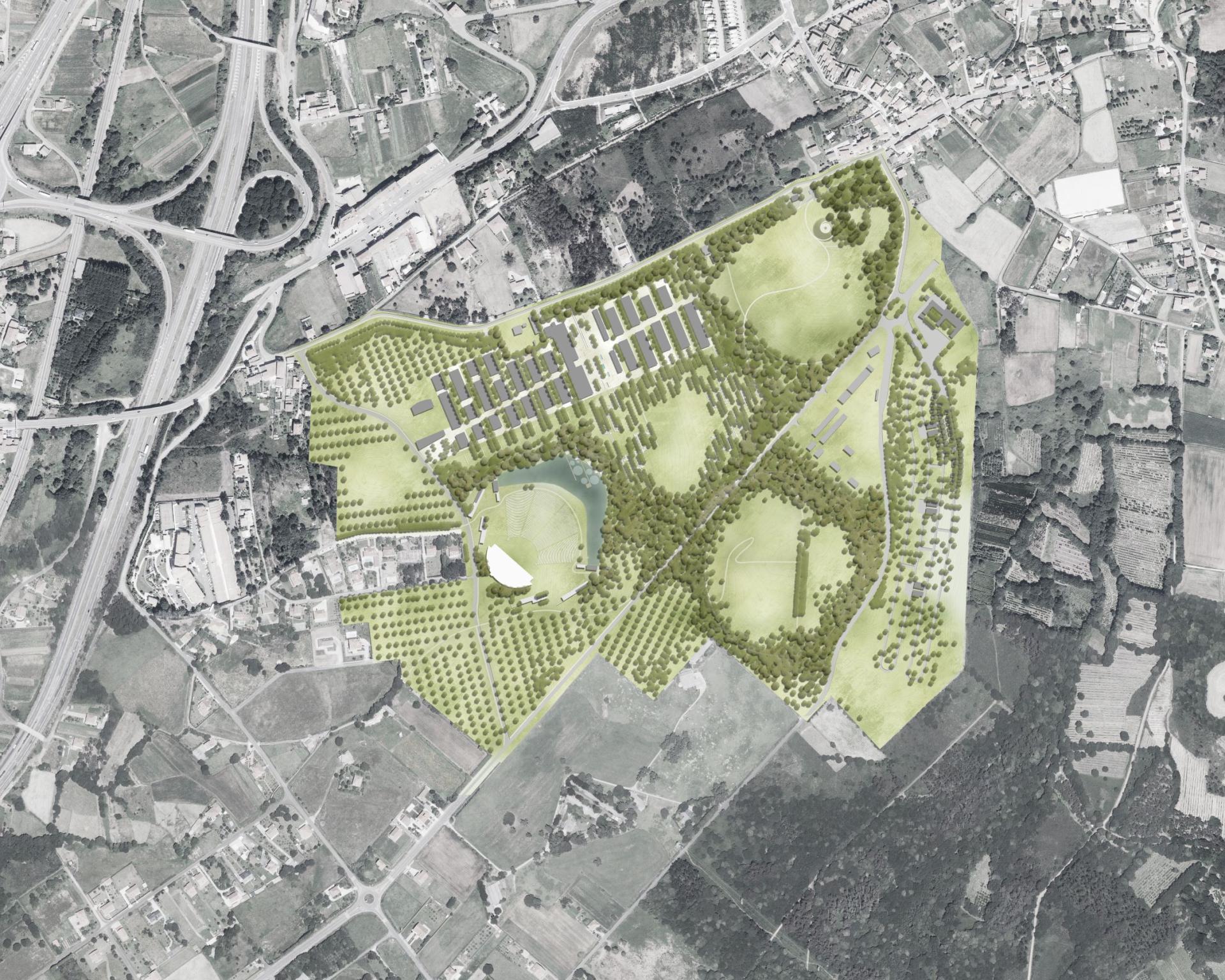
The extension and characteristics of Monte do Gozo make this place a key space in the structure of parks and green areas of the city. A fundamental objective is to recover the feeling of belonging of the citizens with the park, recovering the connections and creating green itineraries and pedestrian routes that bring the park closer to the city, integrating it into the network of urban green spaces.
Due to the large size of the area, a global action plan is carried out, a series of phases is programmed to proceed to the regeneration. The initial programming contains 8 phases of action.
The Monte do Gozo host complex was built in 1993 under a Special Plan. After years of exploitation, it was in a situation of inactivity for years and that is part of the cause of the pathologies and deficiencies that presented.
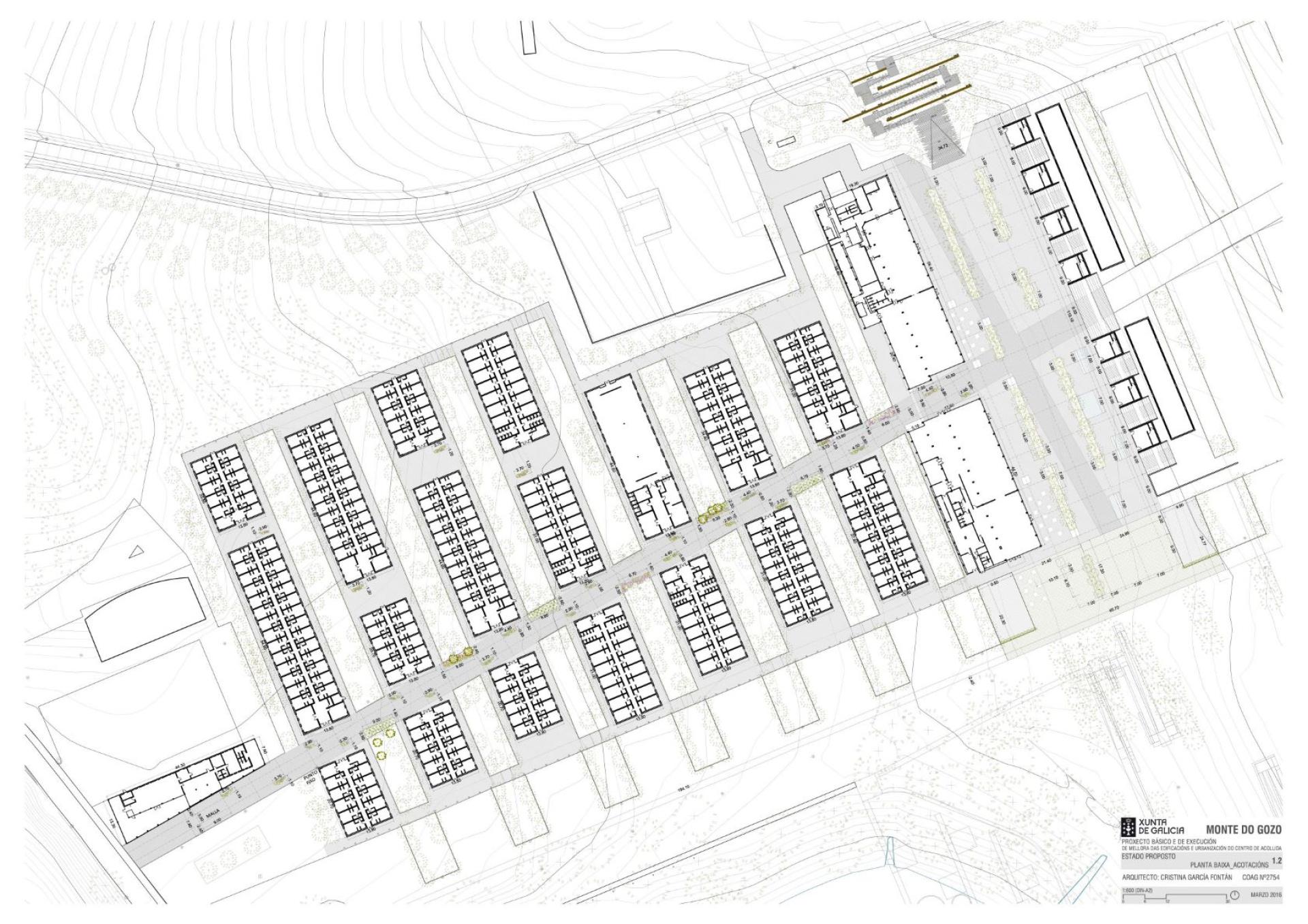
In this context, this projects covers three of the phases mentioned above: Rehabilitation of the Pavilions, exterior urbanization and conditioning of the central square.
This project deals with the regeneration of a facility and the attached public spaces. The equipment was created by the administration in the 90s promoting the pilgrimage to Santiago de Compostela and it was a very important milestone in this pilgrimage route because it was located on the Monte del Gozo.
The last 10 years there has been an abandonment and a process of deterioration that left it in very poor condition.
The Galician tourism agency made an important commitment to the regeneration of this space that is framed in a park in the city of Santiago.
The aim of this project is to reduce the carbon footprint to the maximum by rehabilitating an existing space and it has tried to reduce its energy consumption as much as possible, creating a very efficient district heating.
Regarding the introduction of nature and improvement of biodiversity, the central square has been renovated by introducing native tree species, introduce SUDS and improving all the lighting.
Key objectives for sustainability
The transformations were organized in three main blocks: on the one hand, the resolution of constructive problems; on the other, restitution of items of facilities and equipment, and finally, the conversion into a more sustainable system.
This reconvertion involves different types of intervention:
- Improvements in the urbanization and central square. Sustainable Urban Drainage Systems (SUDS) were introduced to improve rainwater management of the central square.
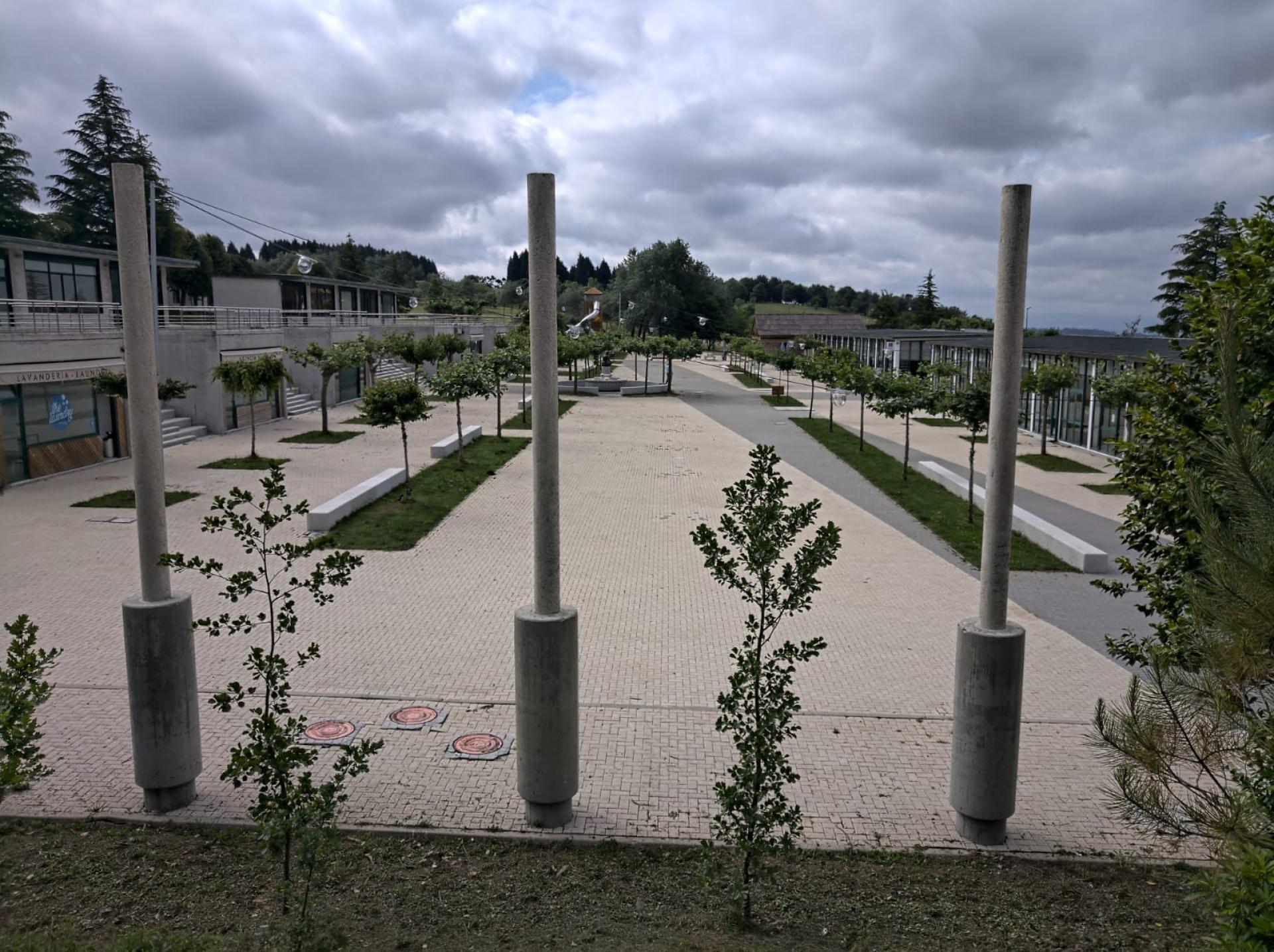
- Two linear flower beds were made and oak trees were planted to give the plaza more leafiness and greenery. Hanging lighting, stone benches and children's games were added. The commercial premises with wooden facades were adapted.
- In the urbanization of the pavillions’ middle street, the vegetation was reinforced with medicinal and aromatic plants associated with the Camino de Santiago, such as rosemary, lavender, elderberry, etc.
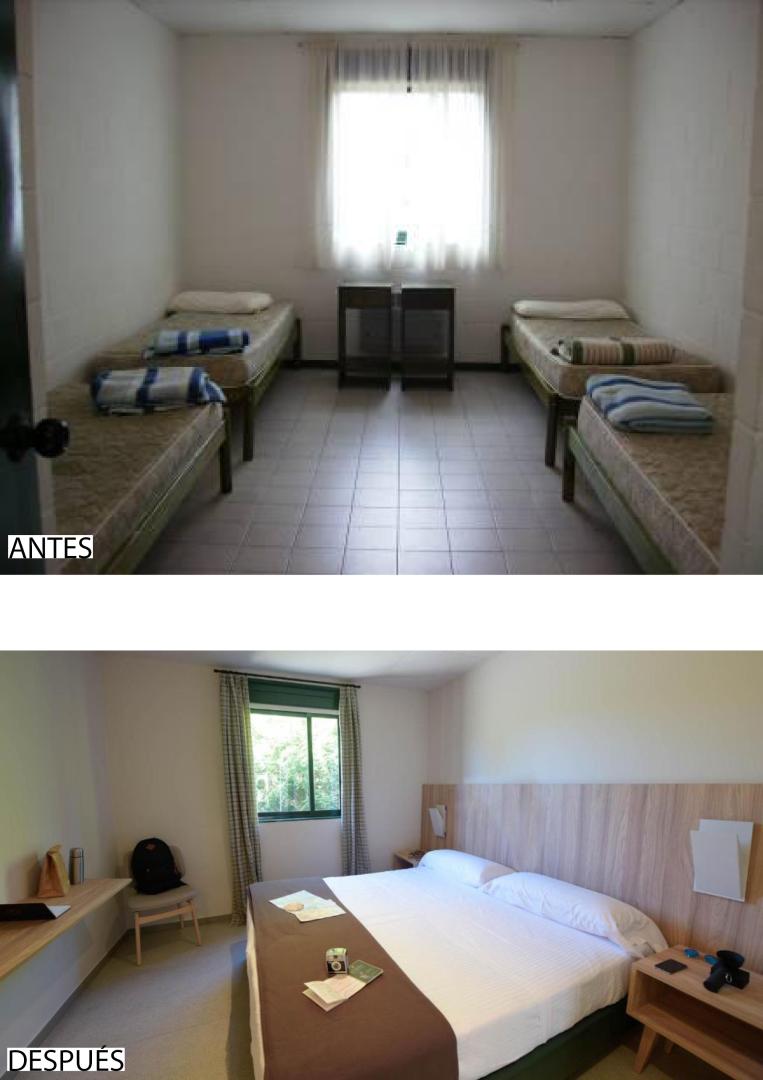
- One of the most important parts is the renovation of the facilities and improvement of the energy efficiency of the group of buildings that make up the pilgrims' hostel of Monte do Gozo. With this purpose the thermal insulation of the roofs was completely renovated, the hot water production system and heating were renewed as well, opting for a more efficient one such as the biomass boiler. In addition all the covers and false ceilings, LED lighting, furniture, painting, and forced ventilation (so necessary in times of COVID) were repaired as well.
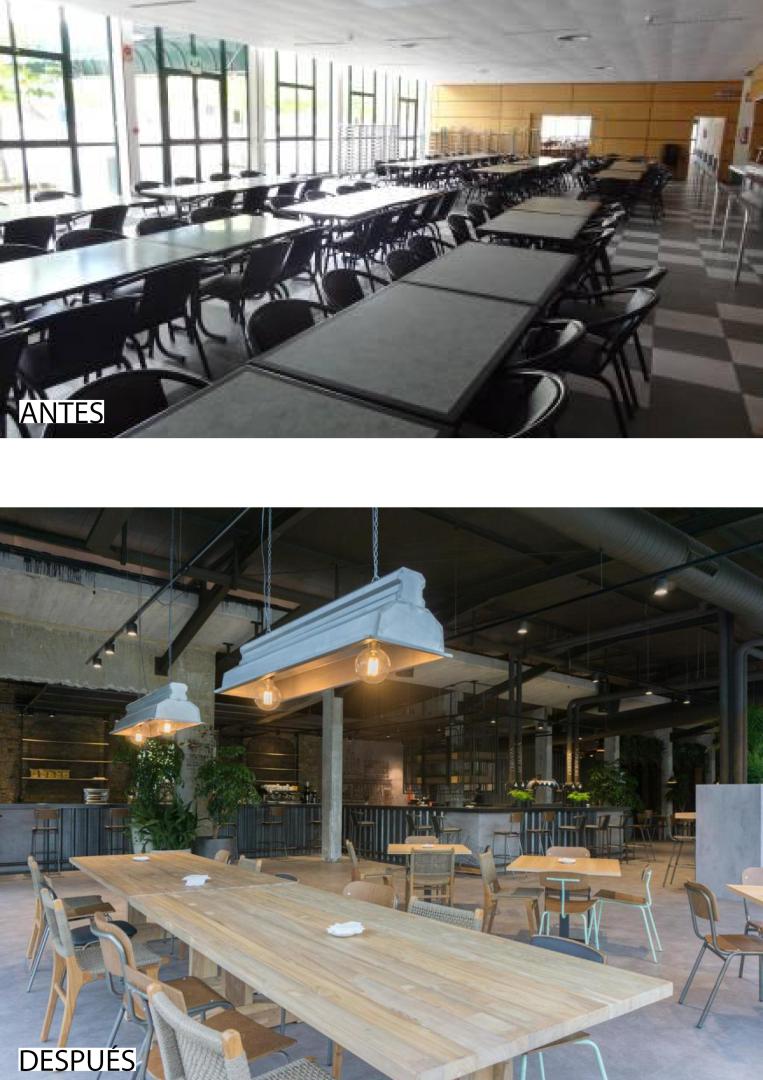
- The cafeteria was completely renovated with an interior design project that includes the interior vegetation and the total renovation of the furniture and facilities.
- Regarding the electricity installation, the complex was equipped with an autonomous generator
Key objectives for aesthetics and quality
The greatest effort of the exterior urbanization is focused on acting on the main street to which it is they face most of the pavilions. Space is understood as an extension of one's own Camino de Santiago, as a stop on the route that pilgrims make before arriving at the cathedral. For this reason, street revitalization seeks to introduce elements that break the monotony of the eight meters of continuous section it currently has, giving it a less urban and kinder character.
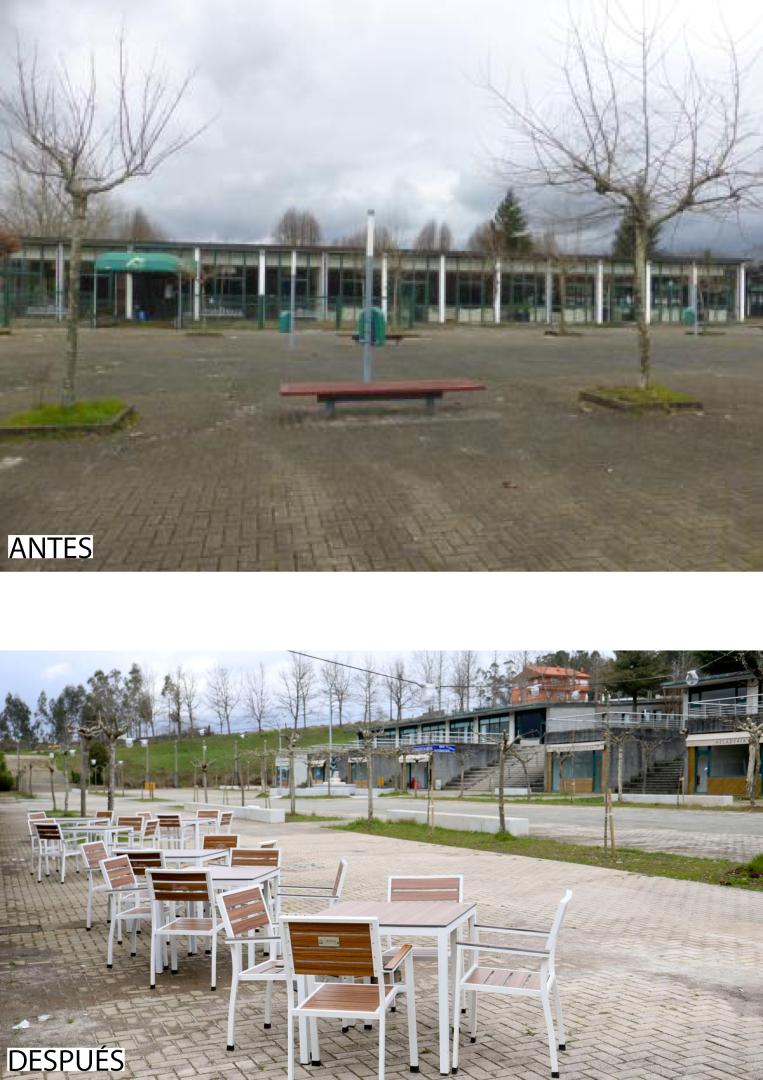
The central square of the reception center is the communication space between Monte do Gozo Park and Rúa do Gozo. It also has a direct connection with the road that marks the limit of the project in the northern part, where the Camino de Santiago runs. It therefore has a vocation of meeting place and stay, being the space to which the cafeteria and restaurant buildings are turned, to the west, and a series of shops that solve the existing unevenness to the east.
The transformations are focused on enhancing this character as a place to stay, introducing furniture elements and shaded spaces in which different activities are encouraged.
It seeks to promote the connection between the Camino de Santiago and the Monte do Gozo Park, so the furniture and parterres will be arranged following a trace that affects this line of motion.
At the same time, a series of sculptures belonging to the history of the Camino de Santiago will be placed, currently located in the gardens and warehouses of the Xacobeo building.
Key objectives for inclusion
It was important during the project, to preserve the accessibility that the space already had. The buildings, as well as the urbanization and the plaza were already designed with accessibility in mind. The distribution of the spaces helps and provides universal access for anyone to any part of the enclosure.
In terms of diversity, the central plaza aims to be a meeting point were people of different backgrounds and ages can stay, play and discuss. For this reason, there are a lot of services related to the Pilgrims’ hostel as well as others more related with Santiago citizens that face to the central square such as the cafeteria and some small shops. Also a playground is built next to the plaza to bring even more diversity here and make it a centre of attraction for pilgrims as well as for any neighbour in Santiago.
Results in relation to category
With the renovation of the facilities of the pavilions for greater energy efficiency, it has been possible to lower the consumption of the entire complex as well as to improve the quality of the interior spaces through the renewal of air and ventilation in general.
Having renovated a completely disused building has meant savings in materials and energy that in no other way, even with a really sustainable construction, would have been achieved. The first point to take into account in the fight to reduce waste is recycling, and in this case the recycling of existing buildings in disuse.
In addition, this use of a well-endowed hostel, but differentiated by pavilions, allows energy to be focused where and when it is only necessary, avoiding wasting energy in heating or conditioning pavilions that are not in use. This has been taken into account in the design of the technical installations to make them completely independent, allowing for a very adequate sectorization.
How Citizens benefit
There were many parties involved:
The Galician tourism agency, the municipality of Santiago de Compostela, Pilgrims associations, Neighbourhood associations. Because the aim was to create a colective space for the citizens of Santiago, not just a touristic milestone.
There were many presentations to the parties and presentations also to the local journals to comunicate also the process of regeneration of the whole space.
Innovative character
The innovation of the project is based on the revolutionary act of just doing what is necessary, of carrying out the interventions needed, without the addition of useless elements. The beauty of the project is based on the reuse of spaces and their conversion into new meeting places, with better environmental and built conditions.
The renovation of the facilities creates a suitable interior environment for the pilgrims' stay and ends up constituting the gateway to the city of Santiago, converting this place into what it was once: the last stop on the Camino de Santiago for many people. .
In addition, the Jacobean symbols are brought back to restore its cultural character to this mountain.