Figino Borgo Sostenibile
Basic information
Project Title
Full project title
Category
Project Description
Borgo Sostenibile Figino is a social and collaborative housing complex developed by FHS in an historic neighbourhood located in Milan’s western fringe. It provides not only affordable apartments but also community spaces, a linear park, a system of pedestrian paths and public spaces with shops and hybrid services. It is considered a pioneering project in the social housing sector, as it introduced experimental features that are now being replicated in housing projects around the country.
Project Region
EU Programme or fund
Description of the project
Summary
Borgo Sostenibile Figino is one of the first social and collaborative housing projects developed by Fondazione Housing Sociale in Italy through the Integrated Funds System (SIF). Together with its twin project Cenni di Cambiamento, it was recognized as a leading project of what has been defined a new season of social and affordable housing in the country.
Indeed, the experimentation undertaken for the design and creation of Borgo Sostenibile contributed to characterizing the social housing sector in Milan by not only creating affordable housing districts, but also helping develop collaborative and sustainable communities. The project was innovative and experimental on multiple dimensions: from the funding system to the development of a public-private partnership; from the overall architectural design to the introduction of new housing typologies; from the development of a community start-up path to the social management and evaluation models.
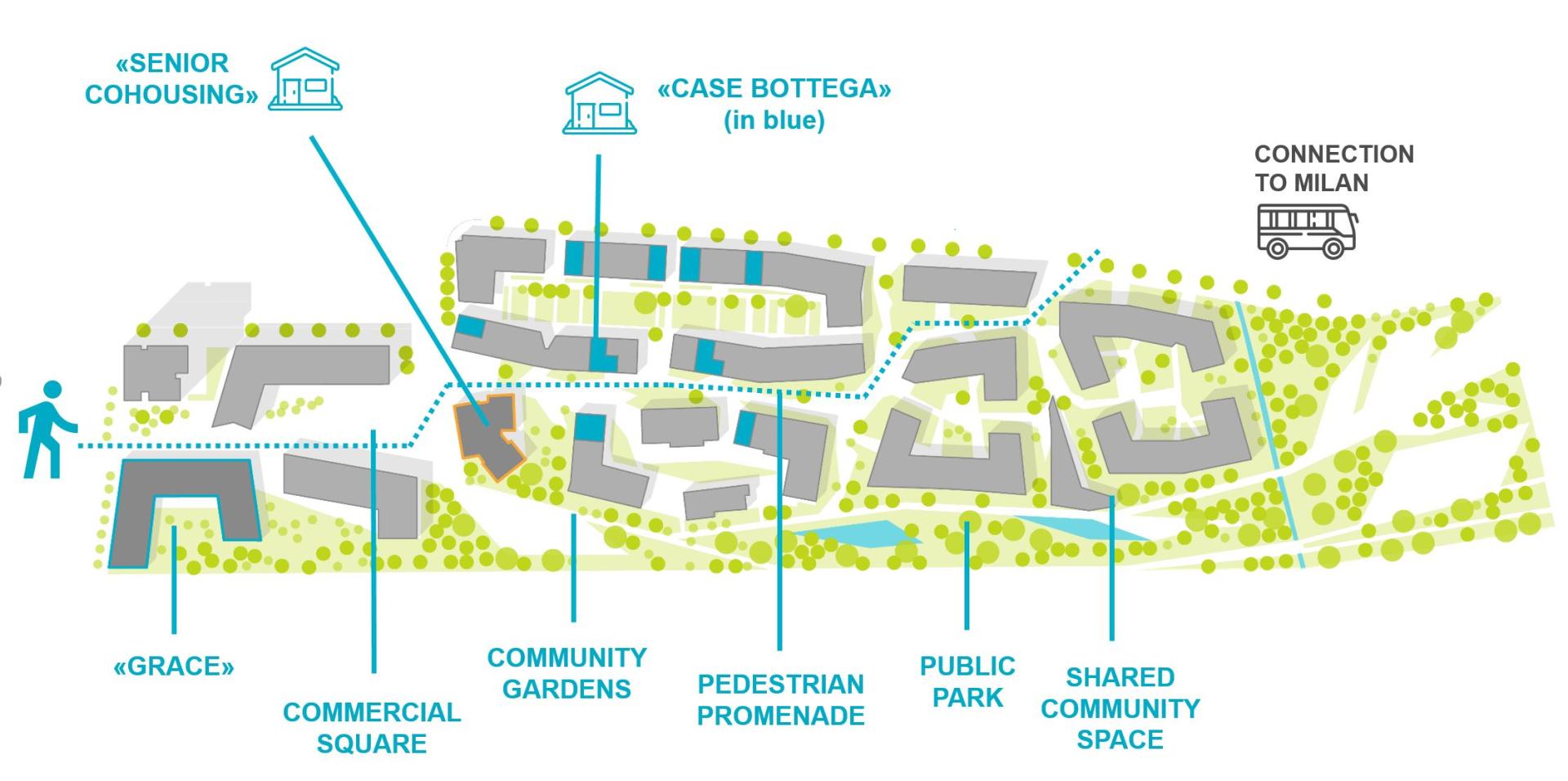
The project is located in the historic neighborhood of Figino, in the western fringe of Milan, and it has been inhabited since 2015. Borgo Sostenibile provides a total of 321 apartments, with a wide range of typologies and affordable rental options (such as social rent, affordable rent, rent-to-buy and third sector residential services for fragile targets). In addition to the apartments, there are common spaces available to the residents, a linear park, an internal promenade connecting the new complex to the existing neighborhood and a public square with shops and services.
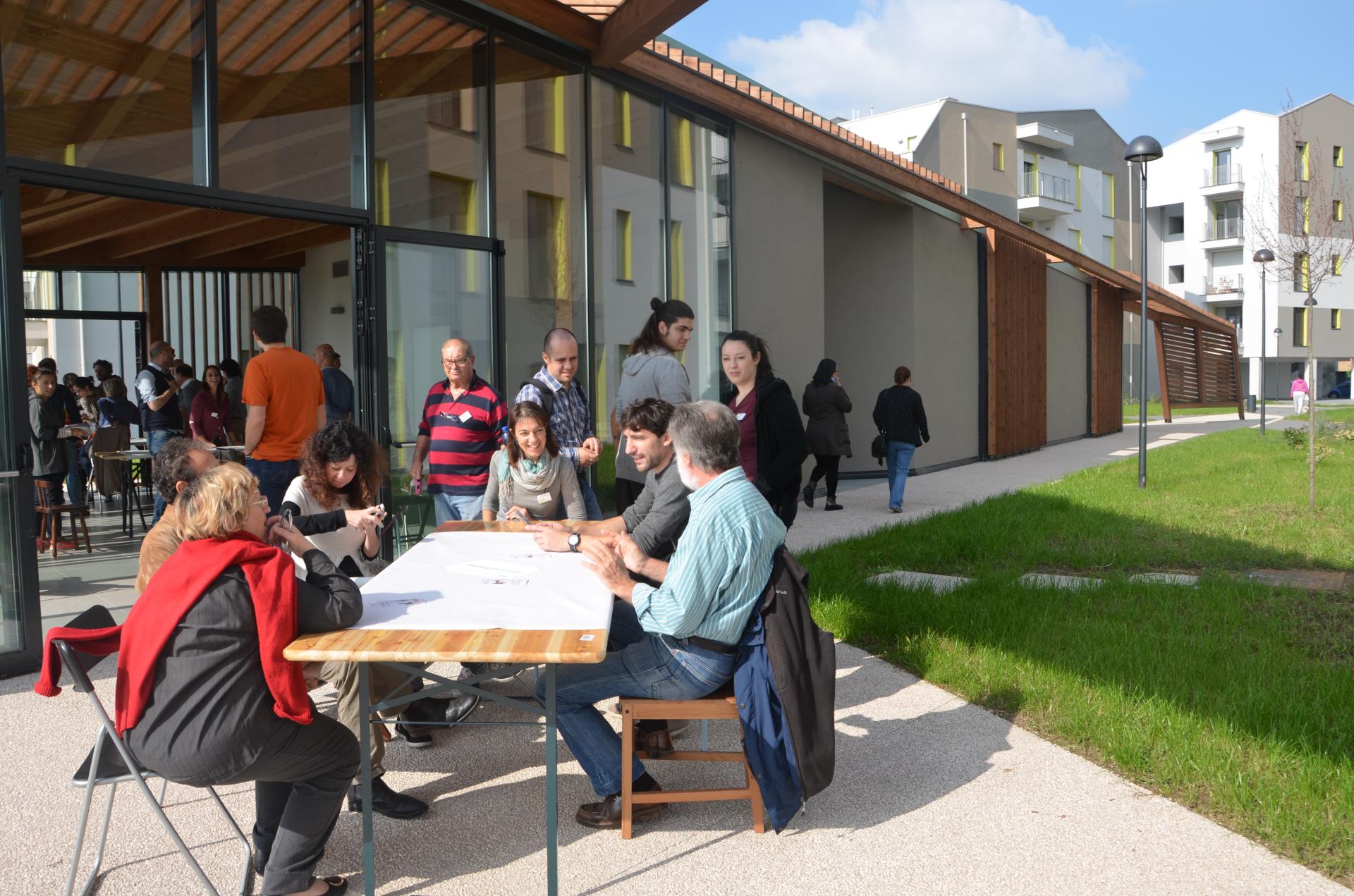
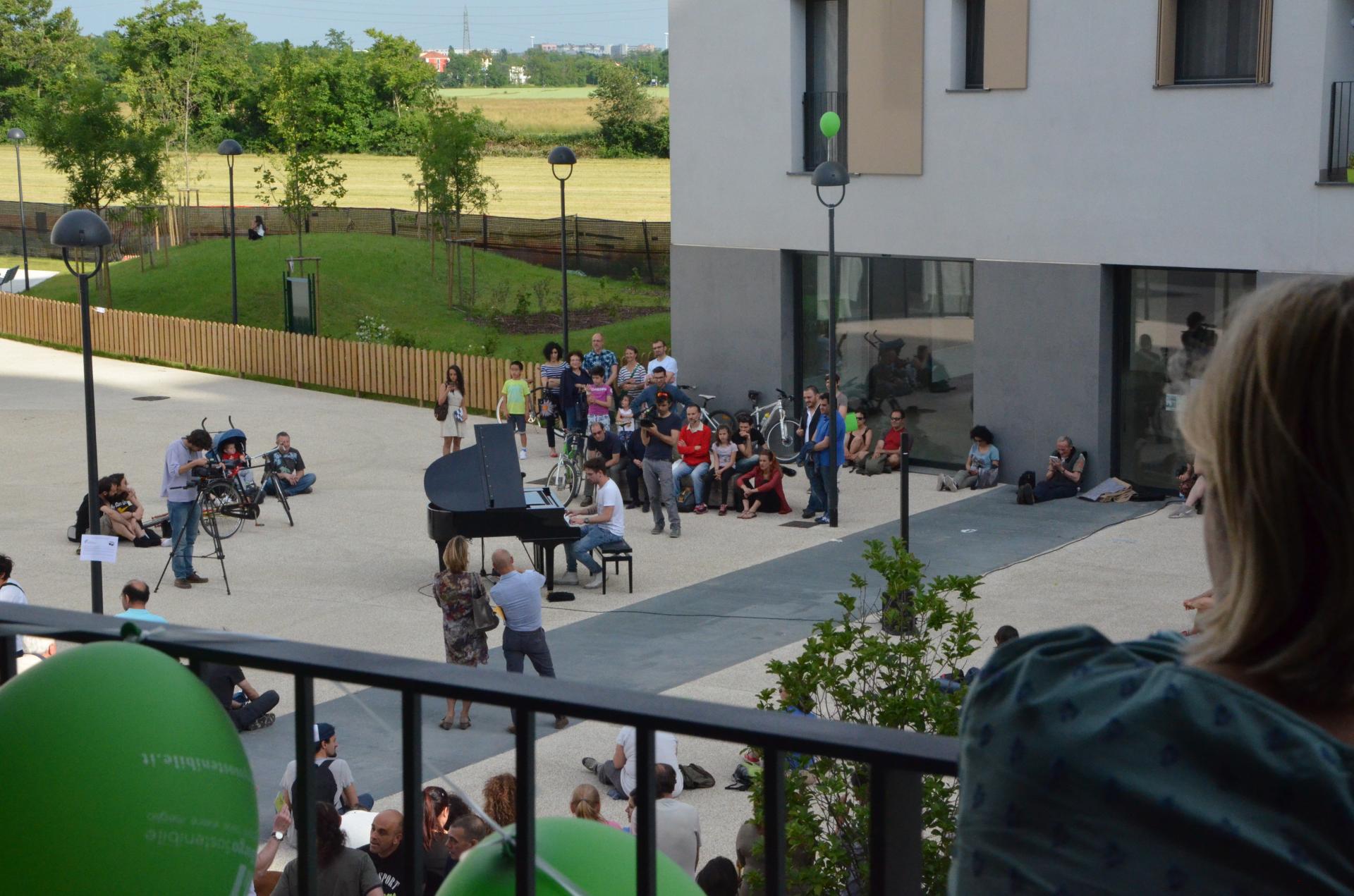
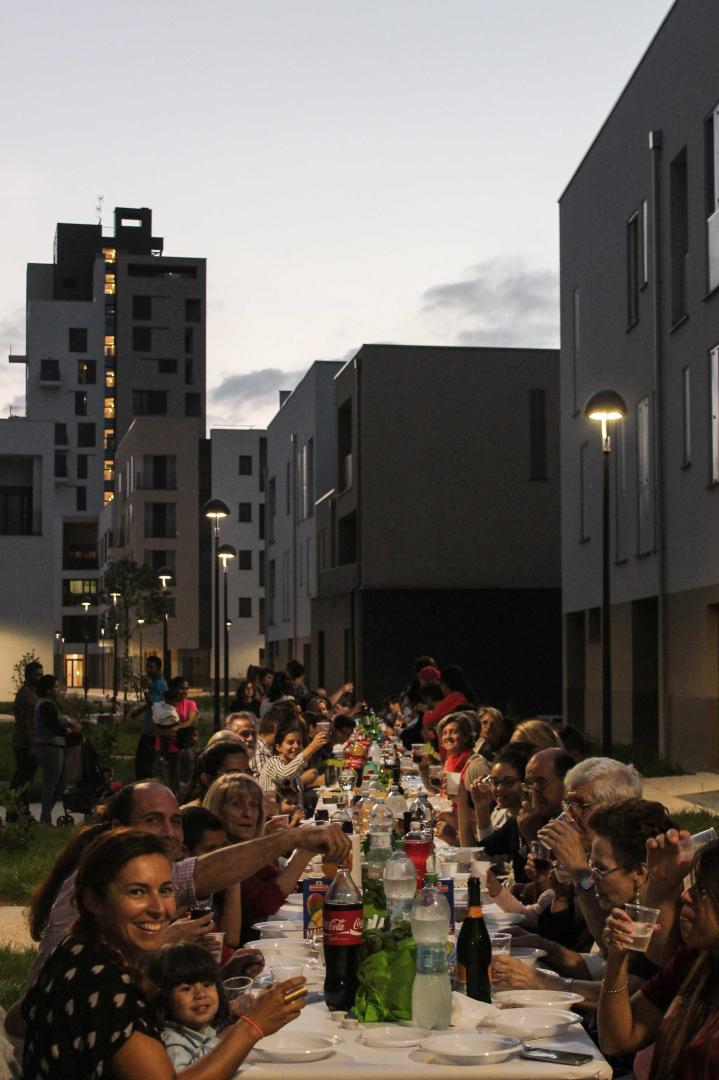
The attention given to the design of common, public and semi-public spaces reflects one of the main aims of the project, that of promoting a new culture of collaborative and sustainable living. Indeed, the presence of shared spaces and services enables residents to organize and share everyday activities with their own neighbors, transforming them into key active players in the reinforcement of their living conditions and context.
Key objectives for sustainability
Ensuring the long-term sustainability of the social housing complex was one of the main aims from the beginning of the project. Indeed, Borgo Sostenibile was developed through an integrated approach, structured around an understanding of sustainability on more dimensions: not only environmental but also cultural, social and economic.
From an environmental point of view, the social housing complex is sustainable in several ways: the buildings have a high energy performance and their heating and cooling system is powered through renewable energies, thanks to a ground water heat pump. The residents can rely on a Neighborhood App integrated with a Smart Metering system to monitor their energy consumption, which they are incentivized to reduce through gamification instruments proposed within the app.
Environmental sustainability is ensured not only through the physical characteristics of the buildings, but also through the promotion of a culture of sustainable and circular living among the residents. The presence of open spaces and pedestrian paths allows for a widespread sustainable mobility network, further promoted through the collaborative bike-repair service developed by the inhabitants. Additionally, the project includes community gardens directly managed by the residents. The community start-up path (described in following sections) facilitates the birth of such collaborative activities. One further example is the creation of purchasing groups, allowing the residents to save money while at the same time buying sustainable local products.
Furthermore, the social and economic sustainability of the project is ensured through the creation of a social mix. Borgo Sostenibile proposes multiple housing typologies available with different rental options, graduated according to people needs and economic capacity. In this way, people with different social and economic backgrounds live in the same buildings, generating a strong community and support network.
Key objectives for aesthetics and quality
The Borgo Sostenibile project aimed at providing more than affordable and functional homes: the idea behind the neighborhood’s masterplan was that of creating an entire district, characterized by a system of public, semi-public, shared and green spaces that would allow the residents to live in a sustainable, beautiful and stimulating environment, designed in synergy with the local context.
The masterplan was the result of an international competition. Four proposals were selected and the planning teams were asked to work together to integrate the best elements of each project. Once the masterplan was collectively shaped, each team took care of developing one section of the complex. Such an approach allowed for a rich variety in forms, volumes and materials, which makes the area more vibrant, while also ensuring a balance among the different sections.
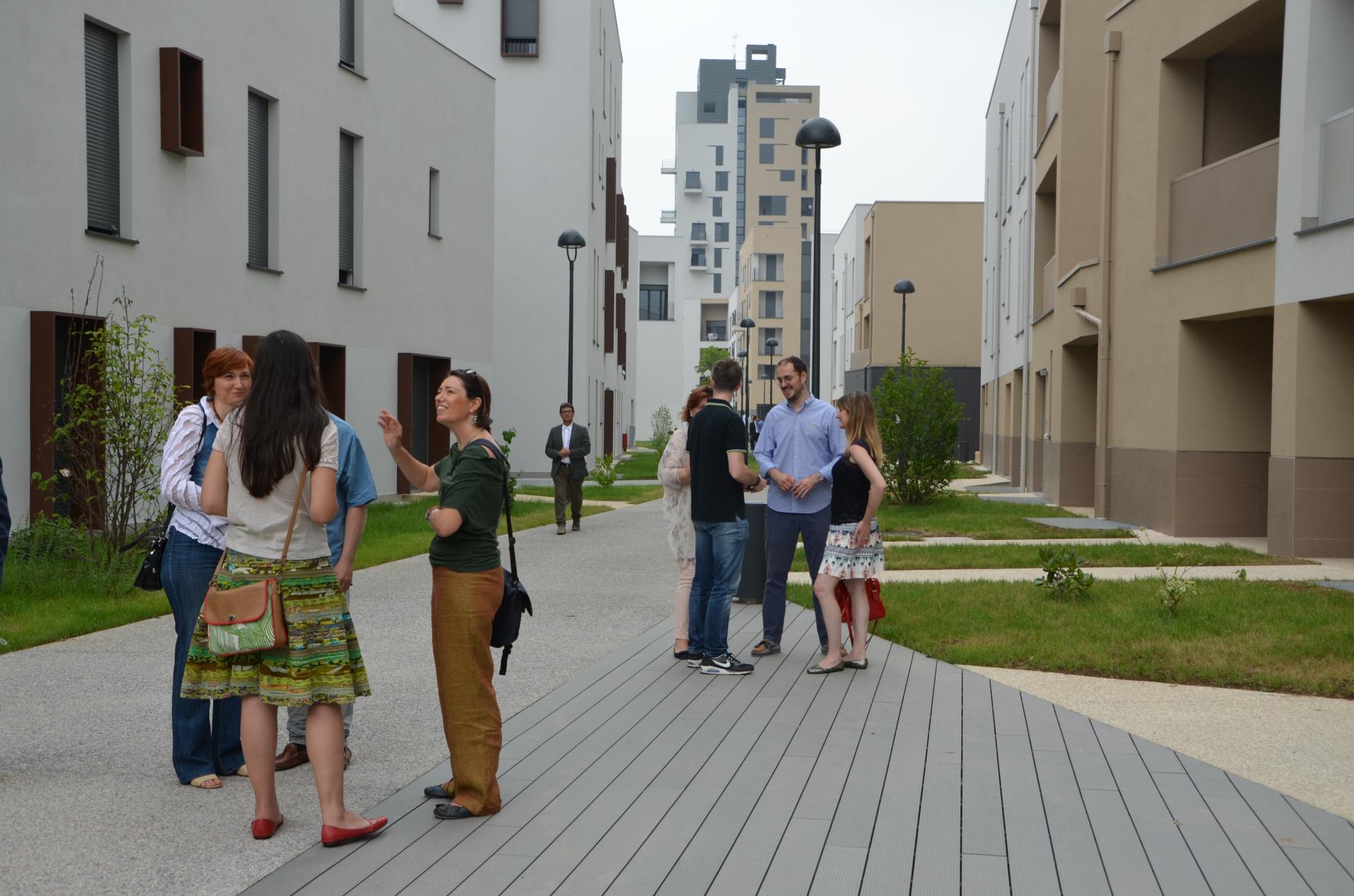
The neighborhood design followed a people-centred approach, which is particularly evident in the open spaces. Indeed, the system of courtyards and pedestrian paths and the integration of the new district in the local environment (through a promenade leading to the historical village and a linear park opening into the agricultural area) contribute to making the project more liveable. The focus on sustainable mobility and the absence of cars within the complex’s perimeter ensures a feeling of safety and quietness. All these elements encourage encounter and collaboration among residents.
A study was conducted also on housing typologies, with the aim of optimizing spaces, promoting flexibility in their use and providing a diversified offer. One interesting example are the “Casa Bottega”, apartments located on the central promenade, offering extra rooms to be used as offices. Additionally, the apartments were designed to have access to a balcony, terrace and a series of intermediate spaces. In this way, the home expands beyond the living room, allowing for participation in the neighborhood’s life from a protected space.
Key objectives for inclusion
The project aimed at creating an affordable housing district, offering a wide range of housing choices, varying both in terms of typology and rental options. Alongside with apartments dedicated to the low-middle income population (affordable rent or rent-to buy formulas), the projects dedicates around 10% of its housing units to social rent and another 10% to the development of residential services for fragile subjects.
The residential services are managed by third sector associations and were launched thanks to an outright grant by Fondazione Cariplo. Such services offer an accommodation to people in a condition of housing emergency: from elderly subjects to young adults, single parents or recently divorced. An example is the “Senior Cohousing”, a service with 10 shared apartments offering a temporary accommodation to seniors in a condition of economic and social fragility.
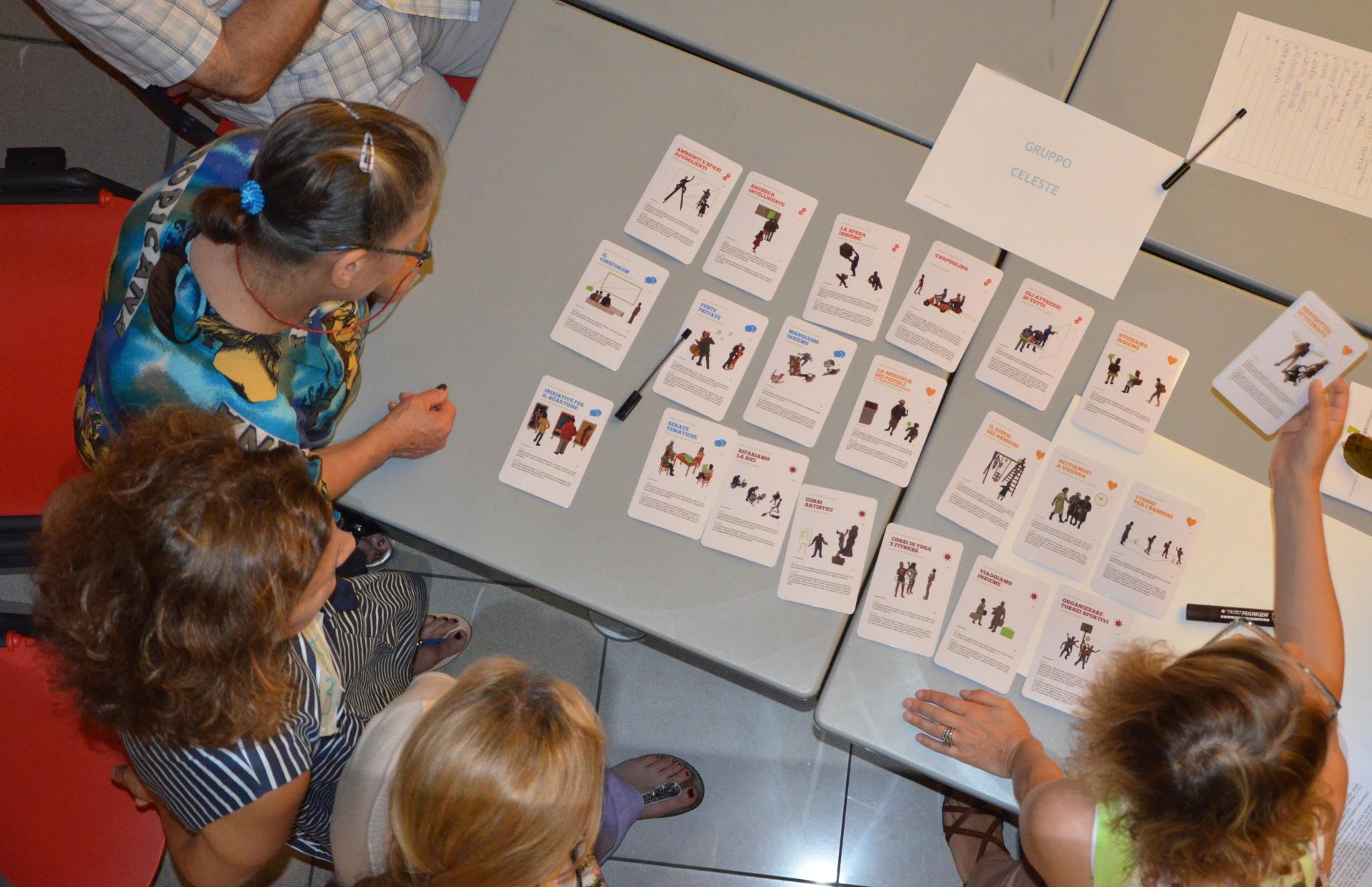
The project’s inclusivity is reinforced by the presence of common spaces for the inhabitants and by the community start-up path. The programme consists in a series of interactive laboratories aiming to provide the residents with the tools to co-design collaborative activities and to define together the rules governing the common spaces. In this way, inhabitants can share resources, competences and time in order to improve their daily lives and those of their neighbors.
Additionally, the local urban services contribute to making the neighborhood more inclusive by offering a series of spaces, services and activities open to the community. Some examples are: the social library and café “Spiazza”; the association “Domo lingue e Culture”, using foreign languages to connect people; “Grace”, an integrated service offering a day care centre for Alzheimer patients in a multi-generational context with a co-working space, a cluster flat for young people and the “WeMi Figino” point, part of a system of local contact points developed by Milan’s Municipality to connect citizens to available services.
Results in relation to category
The project consisted in the transformation of an area located on the city’s western fringe, where the built environment fades into the countryside. In designing the project’s concept, the focus was directed towards the integration of the social housing complex within the local contest. Such integration was achieved by working on two scales. On one side, focusing on the relationship with the existing historic village of Figino, characterized by a compact urban tissue, low or mid-rise buildings and a series of characteristic elements, such as the fontanili (traditional fountains). On the other side, expanding the focus to the surrounding territory, consisting of a system of parks and peri-urban agricultural areas (part of the Parco Agricolo Sud Milano). Such an approach created the conditions for a positive interaction between the new and the existing neighborhood and allowed to maintain and reinforce the peculiar identity of the place.
The outlined planning approach translates into several features of the Borgo Sostenibile project. To begin with, there is a balance among the new buildings’ volumes and the low-rise buildings of Figino. The public spaces of the social housing complex are accessible to new and old inhabitants alike through a system of pedestrian paths, connecting the public and semi-public spaces of the new intervention to the historic village centre.
Additionally, the social mix and the distribution of functions and services in Borgo Sostenibile were defined according to an analysis of the characteristics and needs of the local community. The existing social networks were valorised, synergies were created among local stakeholders and new neighborhood services were developed. For instance, given the presence of a significant share of seniors, a series of residential and health services dedicated to the elderly were put in place. Furthermore, in building the new community, attention was put on attracting young families to enrich the social mix.
How Citizens benefit
The integration of Borgo Sostenibile within the local context of Figino was one of the project’s aims. For this reason, the local stakeholders, represented in particular by the neighborhood committee, were involved from the early planning stages. They were introduced to the project’s concept and their requests played an important role in shaping the district’s service system.
The historic neighborhood was characterized by a modest demographic weight, a relevant share of seniors in the population and a physical distance from Milan, which penalized the area in terms of its endowment of services and generated a shared sense of perceived isolation. Even if the social fabric was lively, with several associations and organizations animating the area, the inhabitants complained about the lack of a series of basic services and facilities: a bank, a post office, a supermarket, a library and adequate healthcare services.
In developing the service system of Borgo Sostenibile, these elements were kept into account: the new district was equipped with a cash machine, a social library and health care facilities devoted to the elderly. Alongside with this, the presence of public spaces and new commercial activities, connected to the historic centre through a promenade, contributed to making Figino more vibrant. Moreover, the new residents played a role in activating the area: some of them created the association Figino Lab, promoting activities for the neighborhood, while others directly manage some of the shops located in the project’s ground floor.
Additionally, local features contributed to shaping the new social mix: the project favoured the presence of a senior population, which could benefit from the new services, but also attempted to balance the mix by attracting young couples to the area. This choice had the positive consequence of increasing the number of kids living in the area, making it thus possible for the local school to gain new students and remain open.
Innovative character
Borgo Sostenibile Figino is recognized as a pioneering project that contributed to shaping the social housing sector in Italy. Indeed, it introduced multiple experimental features.
To begin with, it was among the first projects financed through the FIL1, the first ethical real-estate fund based in Lombardy, part of the broader Integrated Funds System (SIF). Another innovative element was the PPP involving the Municipality of Milan (landowner), the FIL1 and the fund manager Redo Sgr (former Polaris), Fondazione Cariplo (a philanthropic organization supporting the project on several levels) and Fondazione Housing Sociale (social and technical advisor).
Additionally, the Borgo Sostenibile concept itself was experimental in many ways. It was developed through an International Architectural Contest aiming at starting a discussion on how to design and build social housing and it followed an integrated planning approach, focusing not only on architectural features but also on urban, social and cultural dimensions. It dedicated 1.800 sqm to local and urban services, that strengthen the relationship between the new complex and the existing neighborhood, and it included 250 sqm for collaborative residential services targeting the most fragile. It envisaged a system of public and semi-public spaces and a series of pedestrian paths, favouring encounters and social relations.
Furthermore, the project experimented the set up of new management tools and models through the figure of the Social Manager, taking care not only of the buildings but also of the tenants' community. Community development was further facilitated through the presence of common spaces dedicated to the community and through the introduction of the start-up path (described in previous sections). Additionally, Borgo Sostenibile was the ground for implementing the first evaluation model composed of social rating and social value as measurement tools for the social performance of housing projects.