De Ceuvel
Basic information
Project Title
Full project title
Category
Project Description
A polluted plot in Amsterdam was transformed into an urban oasis through a community-driven development. Completed in June of 2014, De Ceuvel is a city playground for innovation, experimentation and creativity that aims to make sustainability tangible, accessible and fun.
Project Region
EU Programme or fund
Description of the project
Summary
De Ceuvel is an affordable and sustainable workplace for creative and social enterprises on a former shipyard in the North of Amsterdam. In 2012, the land was secured for a 10-year lease from the City of Amsterdam after a group of architects and citizens won a tender to turn the site into a regenerative urban oasis. Completed in June of 2014, De Ceuvel is a city playground for innovation, experimentation and creativity that aims to make sustainability tangible, accessible and fun.
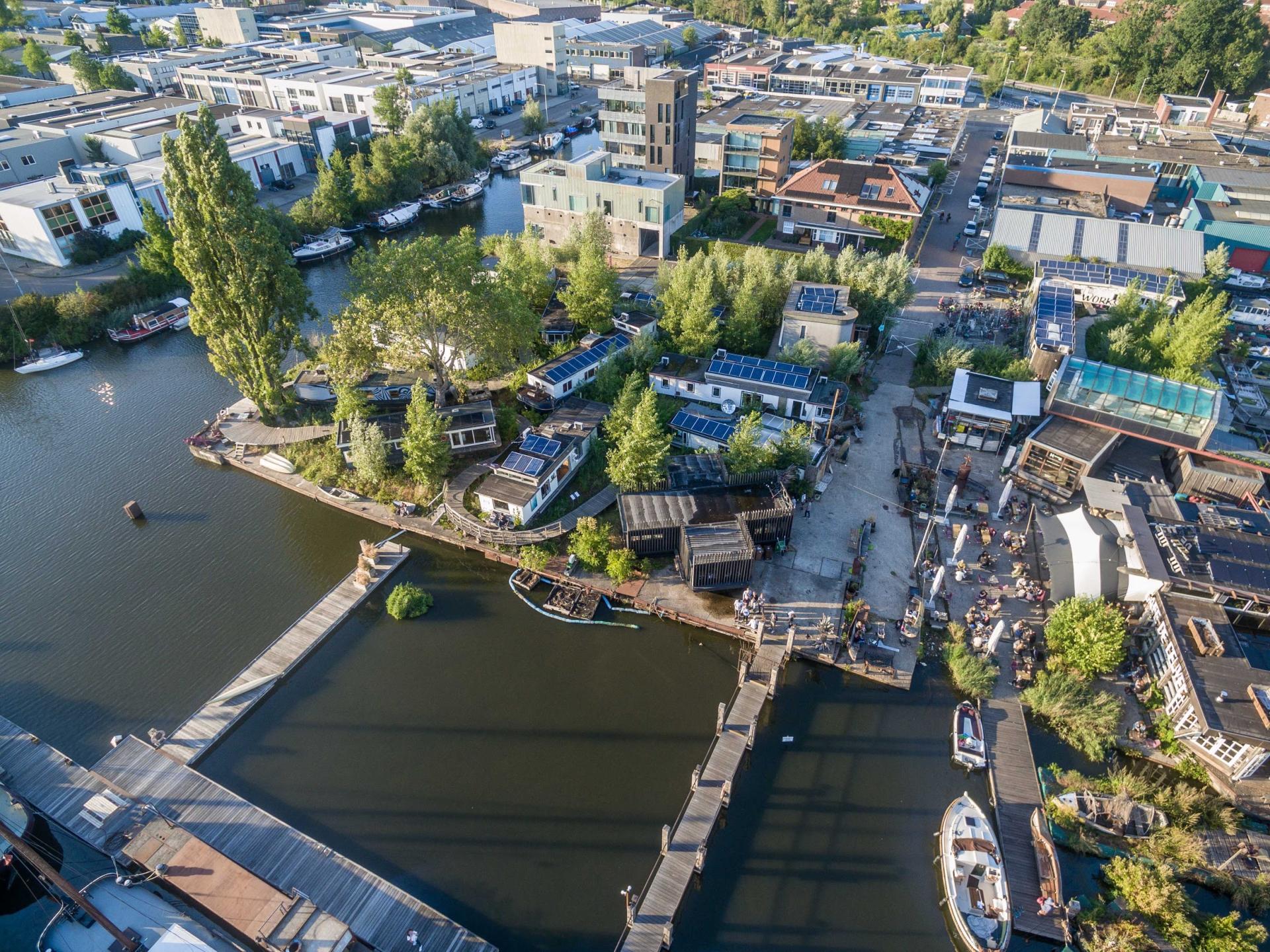
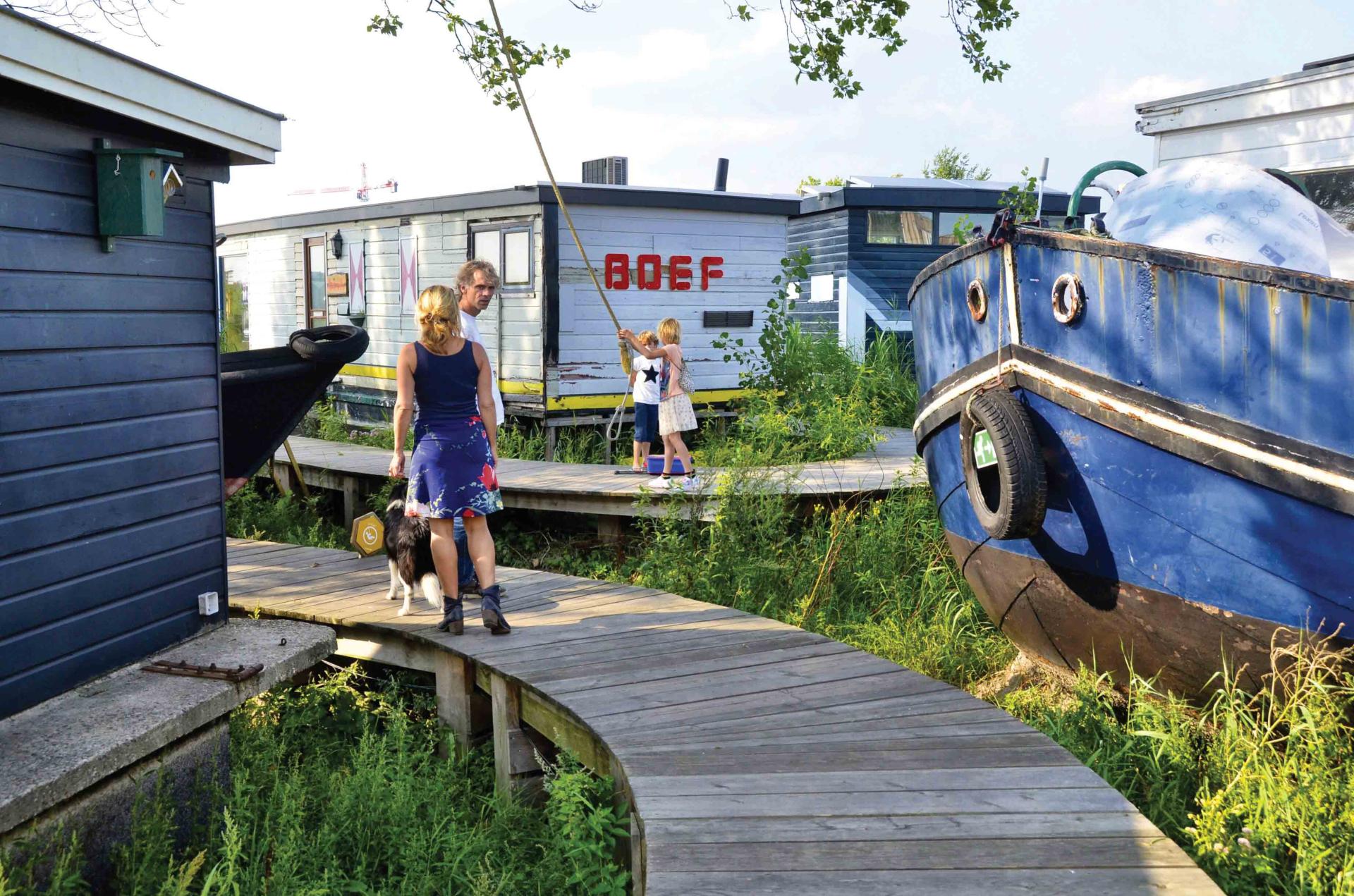
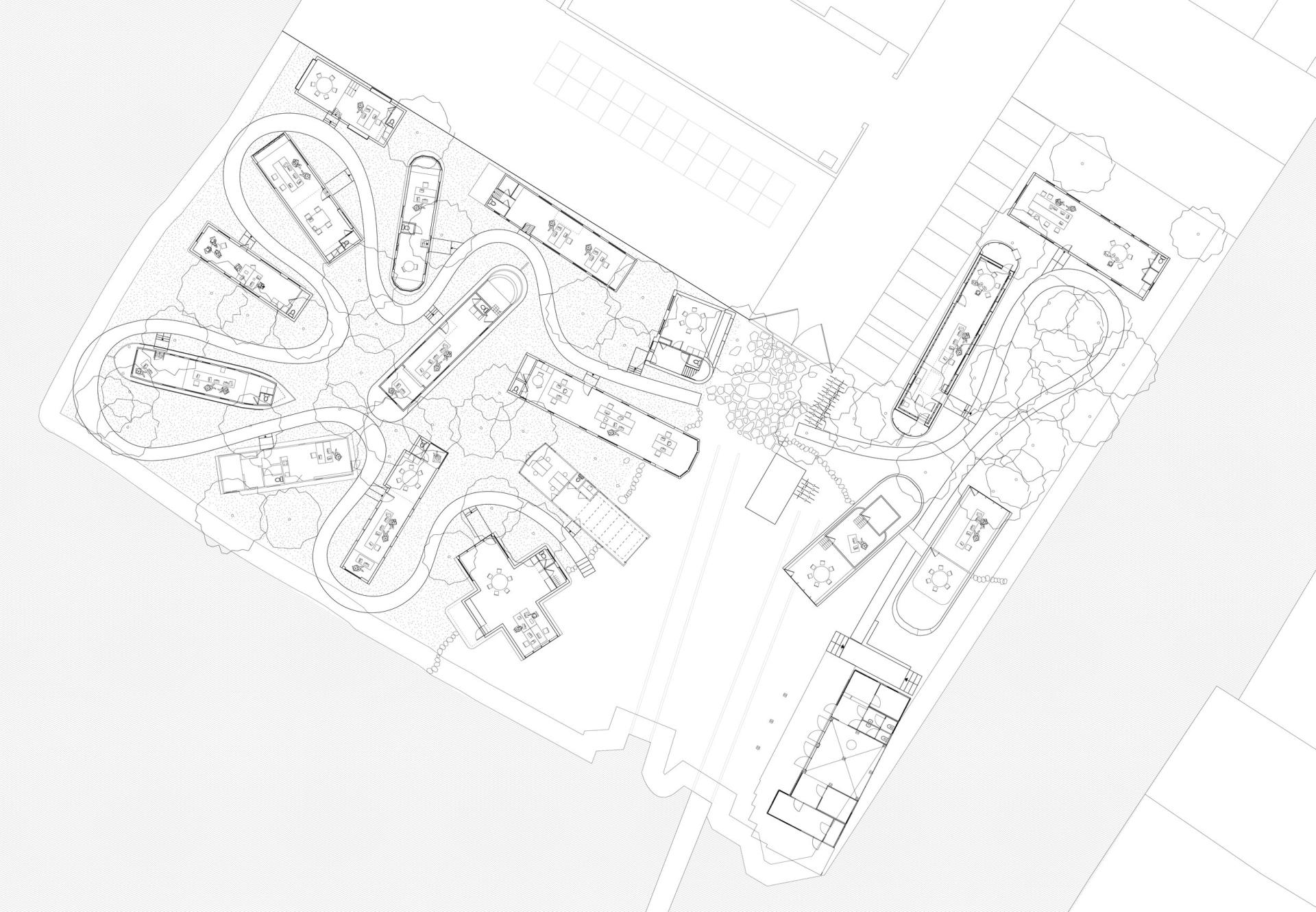
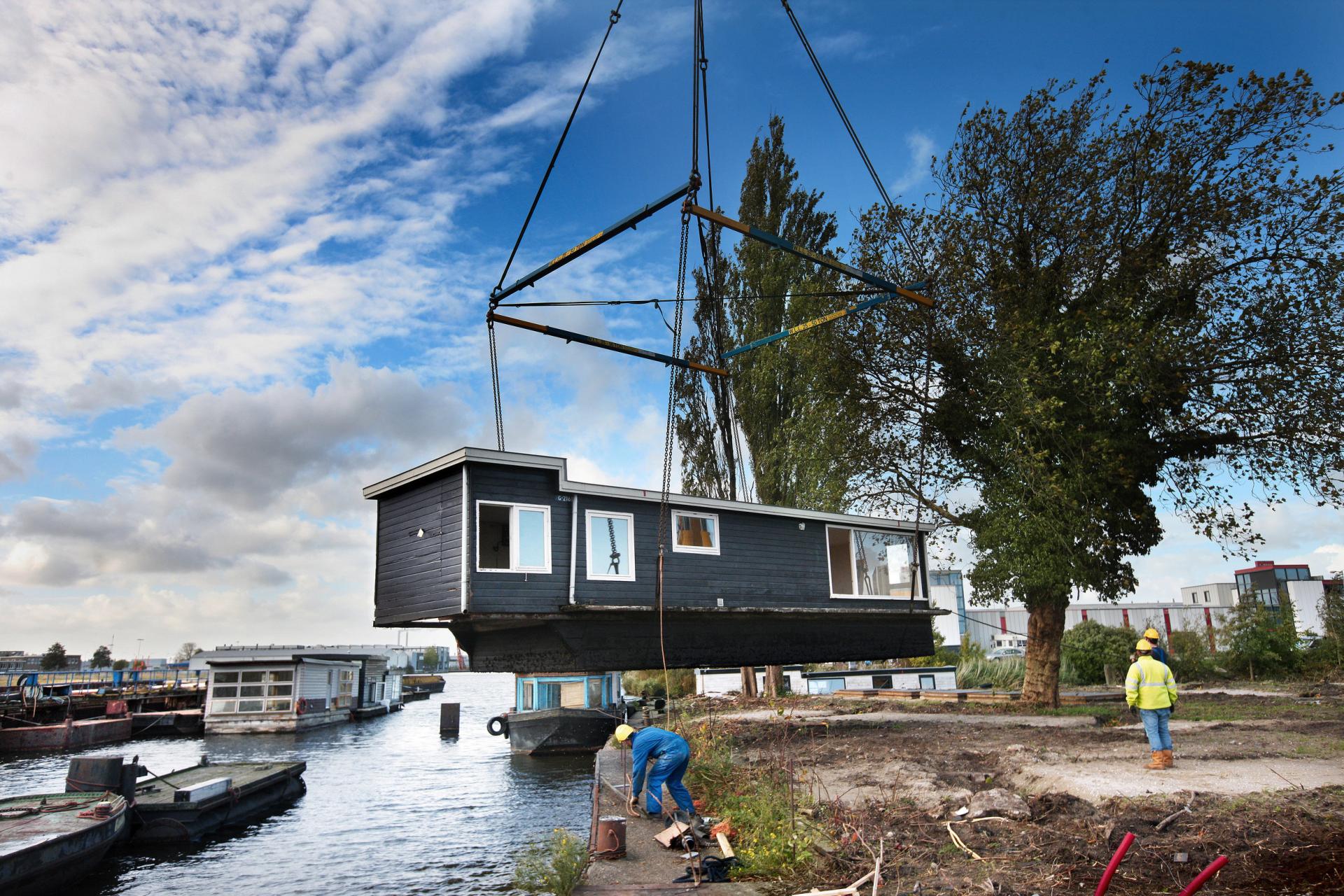
A diverse group of citizens, experts, and volunteers developed and built this project from the ground up. We transformed what was once a polluted and inaccessible part of Amsterdam into an ecohub for creative and social enterprises. De Ceuvel provides visitors with a unique experience from the moment they first lay eyes on its buildings: beautifully retrofitted houseboats placed on the land, surrounded by soil-cleaning plants and connected via a winding jetty.
This project is a test site for closed-loop and regenerative urban development. De Ceuvel makes use of clean technologies for water management, energy, sanitation, and food production and simultaneously contributes to the creation and dissemination of knowledge about these technologies. A carefully curated selection of plants is used to clean the polluted soil via a technique called phytoremediation. De Ceuvel is uniquely regenerative, leaving behind cleaner soils and water, producing rather than consuming resources and enhancing existing community structure and economic activity.
Since 2014, the former industrial plot has been home to a thriving community of entrepreneurs and artists, where all involved have lent a hand to build Amsterdam’s first circular office park. The plot hosts creative workspaces, a cultural venue, a sustainable café, spaces to rent, and a floating bed & breakfast. The social and innovative aspects of De Ceuvel attract hundreds of visitors every week.
Key objectives for sustainability
[Objectives] Sustainability objectives were developed in detail by Metabolic in 2013. The final targets to be achieved at De Ceuvel were as follows: 100% renewable heat and hot water supply, 100% renewable electricity, 100% wastewater and organic waste treatment, 100% water self-sufficiency, 60-80% nutrient recovery, 50-70% reduction in electricity demand over conventional offices, 10-30% vegetable and fruit-production using locally recovered nutrients, sensor network and real-time system performance displays.
[Achievements] Since its opening in 2014, De Ceuvel has worked towards achieving many of the listed sustainability goals; even the ones that haven’t been or couldn’t be achieved were tackled in one way or another. Each boat at De Ceuvel is equipped with a compost toilet. Each office boat has a heat pump and an air-to-air heat exchange ventilation system. As warm air leaves the boat, over 60% of the heat is captured and circulated back inside. We process wastewater from kitchen sinks in decentralized helophyte filtration systems placed adjacent to each office-houseboat. De Ceuvel is equipped with over 150 Photovoltaïc (PV) panels that generate energy from the sun. The panels are installed on the majority of the office boats and produce around 36.000 kWh of power yearly. This covers the electricity demand of the heating systems of the offices, along with a part of the remaining electricity needs. While the soil at De Ceuvel is not suitable for the growing of edible plants, this problem was turned into an opportunity by setting up a greenhouse with an aquaponic installation. Herbs and edible flowers for Cafe De Ceuvel are grown in this greenhouse, which is also designed as a space in which people can learn about farming and aquaponic systems.
Key objectives for aesthetics and quality
[Objectives] The initiators of De Ceuvel wanted to create a sustainable, creative and dynamic place that was preserved and honoured the plot’s history. It was designed to be a place that would bring people together so that they could learn from each other, and that would foster creativity and innovation. Everybody that was involved in the design of the project was greatly inspired by the area’s unique history and wanted to merge the old with the new.
[Achievements] Approaching the de Ceuvel site by boat from the south, we see a slowly densifying sea of small floating islands in the water covered in flowering plants and reeds. Darting among these islands are birds and insects. Closer to shore, some of the green platforms are enclosed with bubbles of transparent plastic, serving as micro greenhouses with growing edible crops.
The edge of the land is densely planted with low growing vegetation, all of which has been carefully selected to clean the soil of pollution. A winding wooden boardwalk wraps throughout the site, guiding visitors to the various offices and ateliers placed along the path. It tells the story of De Ceuvel and provides people with a unique, memorable and inspiring experience.
The upcycled houseboats are designed to reflect the distinct style and character of each office and were retrofitted with much care by future tenants; some face the central square inviting people to come in and explore, while others are tucked away so that tenants can work in peace. On the southeast corner of the site is a bustling cafe that accommodates entrepreneurs and visitors alike. Once a week, visitors are offered an experiential tour of the site in which they explore and appreciate the beauty of upcycling.
Key objectives for inclusion
[Objectives] The initiators of De Ceuvel wanted to create an interesting and accessible place for locals in which a wide range of cultural, educational and social events would be organized. While the plants clean the soil, children, artists and entrepreneurs would be given space and freedom in which to experiment with and learn about sustainability. We wanted De Ceuvel to unite people, to inspire them and show them that together we can achieve more than if we work alone.
[Achievements] De Ceuvel is not only a cultural centre for the green innovation community, but also a place where locals (and even visitors from faraway places) can come together to enjoy art and culture, and where they can learn about circularity in an inviting manner. Since its opening in 2014, De Ceuvel has welcomed thousands of people from various backgrounds for a number of reasons: healthy and locally produced drinks and food at De Ceuvel cafe, an experiential tour of the cleantech playground, a meeting in one of the unique offices, a sustainability workshop, a music evening or ‘Trashlessfestival,’ or panels and discussions about circularity, sustainability and urban farming.
De Ceuvel brings people together around sustainability-related topics and introduces them to innovative technologies. Almost all events are focused on engaging cross-sectorial conversations and introducing people to new ideas and ways of thinking. This project provides local artists and small entrepreneurs withl affordable, sustainable working spaces, and densifies the city by transforming an unused space into a cultural hub. We adjust the content and nature of tours depending on the members of the visiting group, be they local adults, students, or companies; everybody is welcome and we work hard to make sure that everybody goes home feeling inspired.
Results in relation to category
The initiators of De Ceuvel were passionate about creating a place that would serve as an example for closing nutrient cycles, clean the soil in a natural way, and experiment with new technologies, all while assuming a role as a community centre in which people from all walks of life can experience and learn about sustainability.
For these reasons and many more, De Ceuvel has been a source of inspiration to countless people both nationally and internationally since it opened its doors in June of 2014. It has featured in countless news articles and travel blogs, been scrutinized and written up by diverse scholars, and been an inspiration to international policy- and decision-makers.
In 2019, for example, the Dutch Ministry of the Interior discussed De Ceuvel is an extensive report on fostering new innovations. More recently, Dutch researchers studied De Ceuvel to better understand the influence of social entrepreneurs in bottom-up initiatives in the Netherlands. They argued that initiatives like De Ceuvel represent the “next step” in shaping alternatives for sustainable future cities. Articles about De Ceuvel from all kinds of people are united by one unforgettable and undeniable impression: there is nothing quite like it.
How Citizens benefit
De Ceuvel is, if anything, a community-driven development. United by shared values, De Ceuvel was and is propelled by people who care deeply about their work, the impact they have on the world and who believe in the transformational power of collaboration.
Future tenants renovated the houseboats that would become their highly eco-efficient offices, and creative entrepreneurs and volunteers built the jetty, levelled the site, planted the remediating plants and further renovated the boats. The result is a unique collection of ateliers and public spaces, which are sometimes even more beautiful on the inside than on the outside.
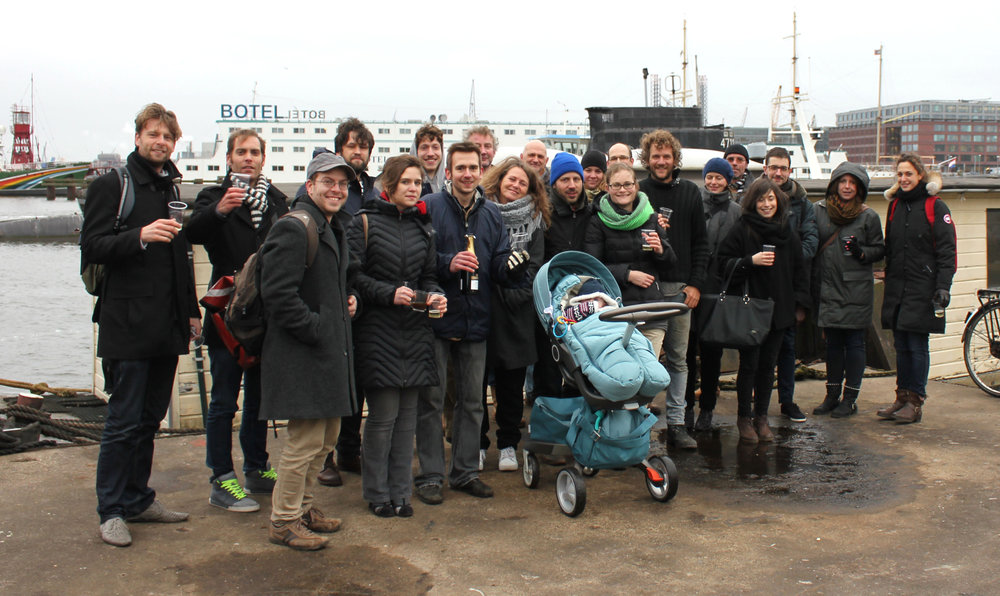
There are regular volunteering days when we citizens are invited to help make De Ceuvel even more inviting and sustainable. Hundreds of volunteers have already come to lend a hand. This openness and willingness and desire to grow characterizes De Ceuvel, and contributes to its reputation as a place where all are welcome and can learn about sustainability.
Next to this, De Ceuvel is supported by a number of public and private organisations like, for example, the City of Amsterdam and Waternet. With their support, what started out as a development project has become a broader opportunity for research, innovation and public education. The relationships, partnerships and research that flows out of De Ceuvel are beneficial for both the surrounding region, Buiksloterham, and the city (and country) as a whole.
Collaborators: Delva Landscape Architects, Metabolic, Transsolar, Bas van Schelven, Witteveen en Bos, Huib Koel, Woodies at Berlin, Jeroen Apers, Studio Valkenier, Waterloft, Smeelearchitecture, Marcel van Wees, Spectral
Innovative character
De Ceuvel is uniquely regenerative, leaving behind cleaner soils and water, producing rather than consuming resources and enhancing existing community structure and economic activity. Given the small budget and temporary nature of the project, we focused on developing a concept that prioritised mobility and reuse. The urban plan was designed in such a way that wasteland and waste materials would be transformed into valuable resources. All buildings on the site are placed temporarily on the surface without significant foundations. The houseboats which will make up the bulk of the built elements on the site are all existing structures rather than new buildings. After the planned ten years of occupancy, the houseboats can be floated to a new location for another round of regeneration, leaving the de Ceuvel site cleaner and mostly unscarred by construction.
De Ceuvel also introduced and popularized several technical solutions that weren’t possible before, amongst them a microgrid, small helophyte filter, a local currency, aquaponic farm, composting toilets, retrofitted houseboats on land, and a true embodiment of circularity principles.