Ne pleure pas
Basic information
Project Title
Full project title
Category
Project Description
“Ne pleure pas ils te guideront dans le noir” is a journey into the heart of a cocoon matrix where, here, in the shadows, under cover, in the cyclical process of life and death, beings grow. Not animal, vegetable, or human, they constitute a space of metamorphosis where the spectator is invited to disappear into it. It’s an installation and art event project in two stages: the public can have the poetic and sensitive experience of the work, before sharing and exchanging over a meal.
Project Region
EU Programme or fund
Description of the project
Summary
“Ne pleure pas ils te guideront dans le noir” is an installation and art event project in two stages. A stage where the public can have the poetic and sensitive experience of the work and a stage of sharing and exchanging over a meal. A student at the École supérieure d’art et de design TALM-Tours, Anaïs Leroy is currently implementing this project under the fifth year of her degree.
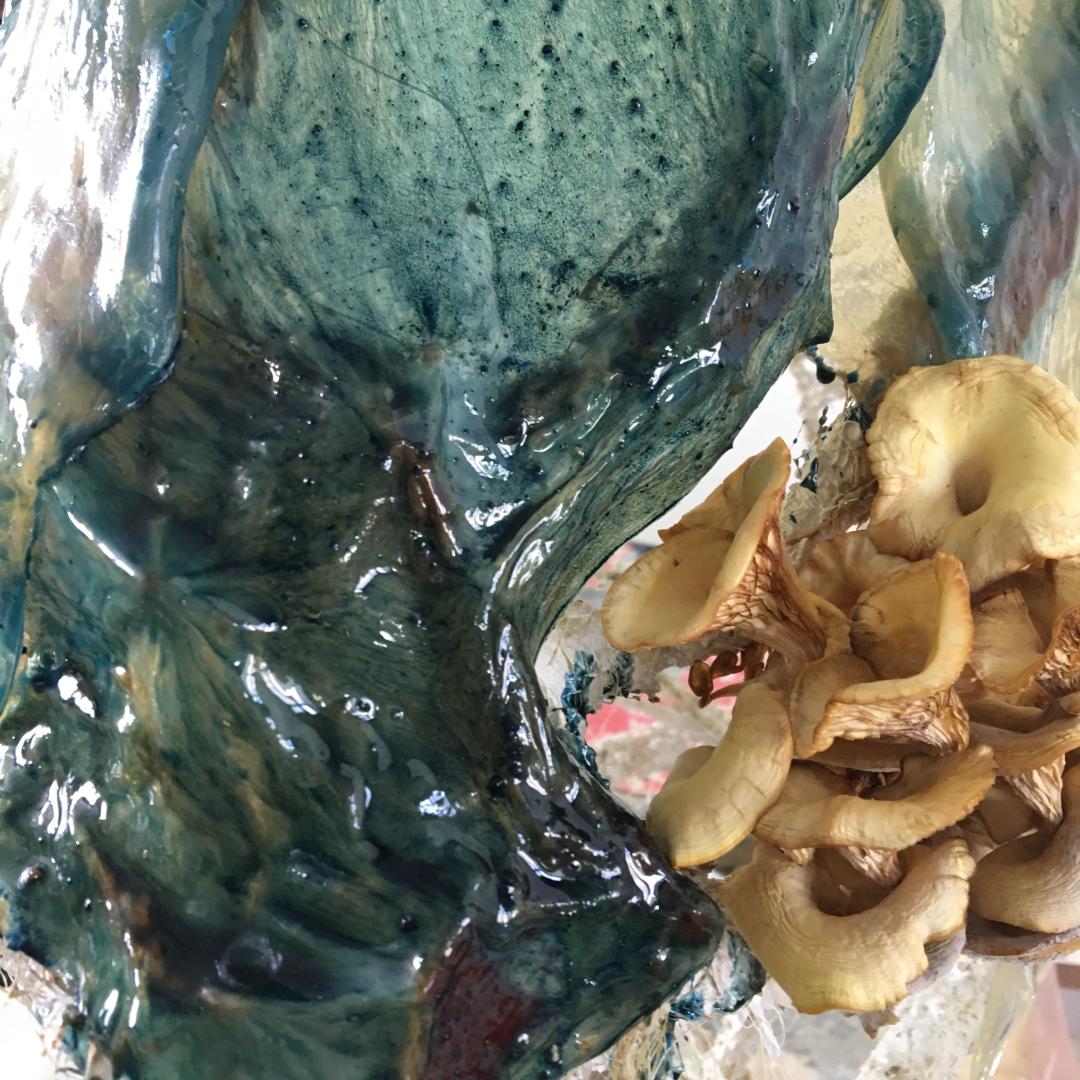
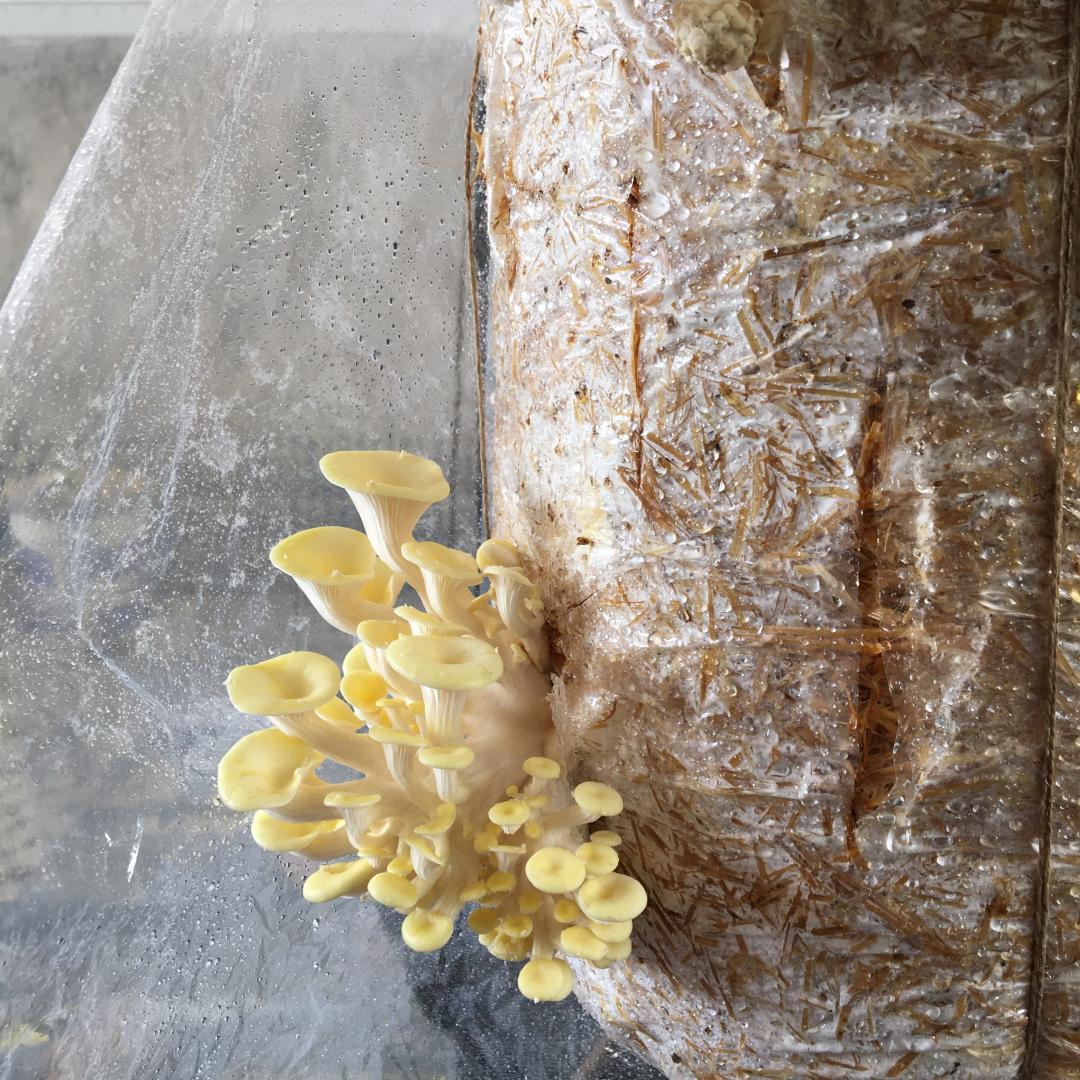
The installation is an immersive project in a greenhouse lit with a black light comprised of sculptures made with a mycelium of oyster mushrooms (pleurotes in French - the origin of the title’s play on words). The meal proposed at the end of this experience will be mushroom-based.
The idea behind this project is to promote the relationship between the public, the work and the artist and to trigger genuine discussions around the shared artistic experience. It also intends to raise questions on our relationship with our environment and our consumption.
The work is entirely made of organic material, raising questions of waste in art, and creates living organisms. It grows edible oyster mushrooms. The meal which follows the installation experience is like a continuation, through the spectator’s body, of the proposed work.
The installation will be illuminated by black light, the public will wander through structures with an aesthetic which is not animal, vegetable, or human. In this unusual space, with a cocoon matrix look, a strange ecosystem develops.
Key objectives for sustainability
This project questions the relationship with materials and waste in artistic production. Created using organic materials which create life, the work is moving - just like living things - and self-generates. It questions our relationship with the cycles of materials, creation and our relationship with consumption. Nothing is lost in the work, which is then consumed. If it’s not sustainable over time in terms of materials because it’s organic and therefore perishable, the work is sustainable in terms of the experience proposed. It’s a vector of discussion and is a permanent fixture for the public through the time shared and through its consumption during the meal.
Key objectives for aesthetics and quality
The installation proposed joins the questions surrounding aesthetics of decomposition and the relational aesthetic. Predominantly sculptural, the work will include a pictorial quality specific to the artist's aesthetics and plastics approach. Blue is very present, it recalls deep waters, matrix, the origin.
There’s a certain mythological end-of-the-world aesthetic in the forms proposed: the forms are strange, seemingly decomposing but here they enter into an approach of defining a new aesthetic of ecological transition.
Key objectives for inclusion
“Ne pleure pas ils te guideront dans le noir” is a project which comes under the inclusion action through the experience proposed. Its intention, during the proposed meal, is to engage in sharing around an experience which will be lived by the body and the senses. It doesn't require great knowledge of art to be accessible.
The meal will be completely vegan and locally sourced to suit the dietary requirements of as many people as possible and falls under a short-circuit rationale.
Innovative character
This project is innovative in several ways. From an artistic point of view, it questions the relationship with sculpture and its materiality. From a social point of view, it creates new social relationships, which are more universal, within art and promotes connections between the public and modern art. It’s also part of an ecological and economic rationale: The materials are completely organic and come from local businesses.
In the forms that it engages aesthetically, this project gives to ecological transition a more unique aesthetic.