Hors-Studio / Material & Surface Design
Basic information
Project Title
Full project title
Category
Project Description
Designers and researchers, the founders of hors-studio, are conducting R&D work through design, on the valorization of waste. The transformation of these "waste resources" is achieved through the mastery of artisanal techniques combined with new technologies.hors-studio accompanies clients in a transversal way in the fields of design. It is within their laboratory workshop that they provides research in new material with recycled, crushed scraps, prototyping and micro-fabrication.
Project Region
EU Programme or fund
Description of the project
Summary
Designers and researchers, Elodie and Rebecca, the founders of hors-studio, are conducting R&D work through design, on the valorization of industrial and artisanal production waste. The transformation of these "waste resources" is achieved through the mastery of artisanal techniques combined with new technologies.
hors-studio accompanies clients in a transversal way in the fields of scenography, product design, fashion and home and the creation of innovative materials.It is within their laboratory workshop that they invest in Material Design with recycled, crushed and micronized scraps, allowing them to create new materials and scenographies for the Luxury and Fashion sectors. hors-studio provides research in new materials, prototyping and micro-fabrication.
In 2020, their work was recognized by the Grand Prix de la Création de la Ville de Paris in the Design category for their projects. They co-founded Precious Kitchen, an open-source transmission platform, in which Art and Design integrate the field of the circular economy, facilitating the pooling of resources available on the territory. The online version offers recipes for materials made with the waste of the project's partner companies. Its offline version is expressed in the form of workshops where off-studio establishes times of research and creation with students, to test materials, share and transmit the new techniques generated.
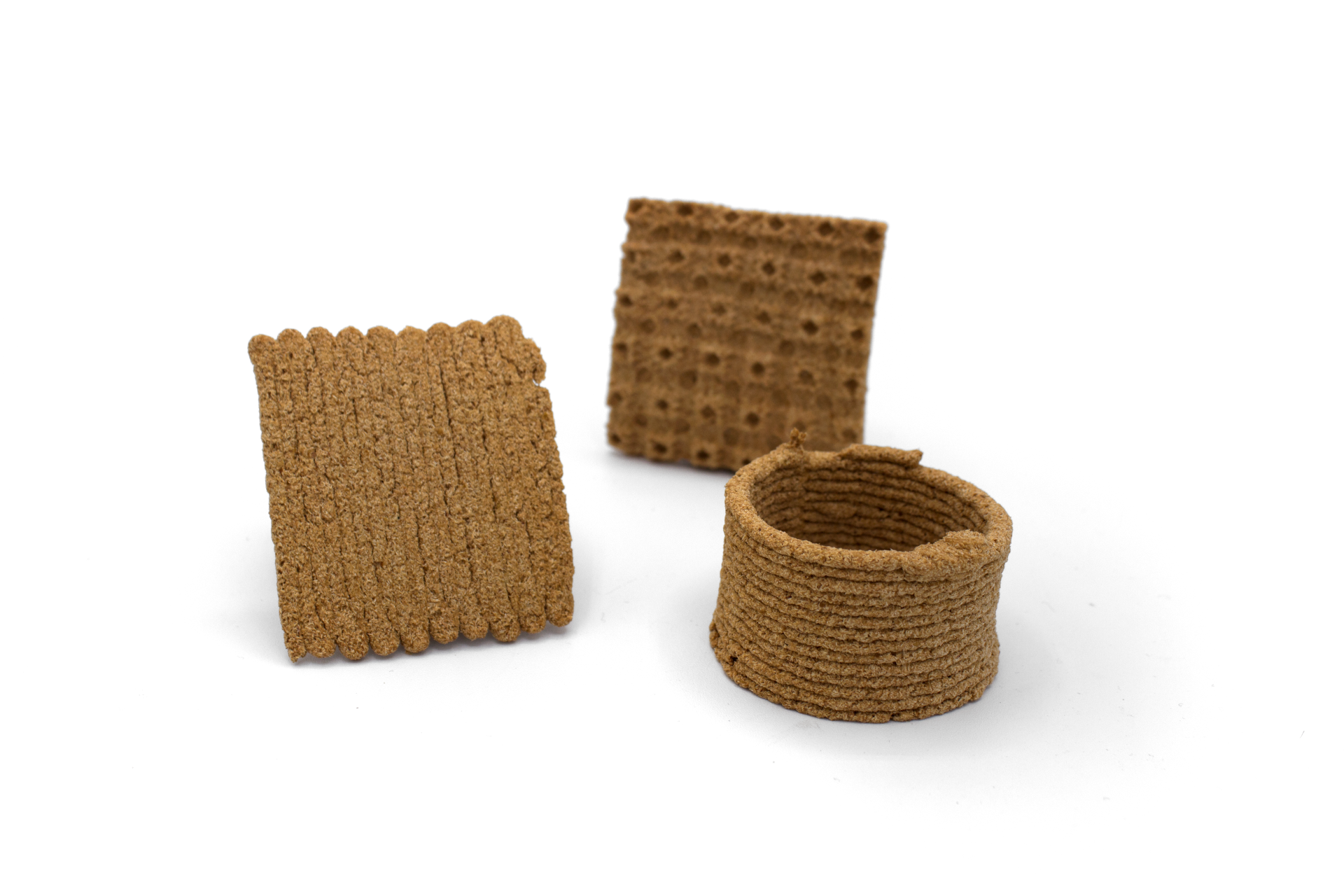
In 2021, they are laureates of the Agora Research Grant for Design and they are investing their practice in the extraction and use of natural binders.Concerned about the life cycle of the material, they propose an alternative to synthetic glues. By specializing in bio-materials, the challenge is to bring solutions to infinite recycling and agglomerate the territory's waste into new materials, based on natural and totally biodegradable glues. The promise of this ongoing research,is to be able to print any of the region's resources by 2023, using 3D extruder robot
Key objectives for sustainability
Hors-studio invests its practice of material designers in transversal fields such as scenography, object design and different applications from scraps and waste of the local territory, in collaboration with companies. The main objective is above all to save the maximum of scraps from the landfill, by privileging those of the small and medium-sized companies which have no or few channels of valorization of their waste.
Hors-studio commits itself not to restrict itself on the various available raw materials in order to exploit their potential of transformation, thanks to the research by the design.
The second objective is to work as much as possible with biodegradable binders of natural origin, in order to think about the life cycle of the material and to considerably reduce the impacts of the end of life of the objects. Hors-studio works in close collaboration with LOUIS FRANCOIS, a French company of food ingredients founded in 1908, and in particular with the chemists of the company, for a new use of binders and texturizers (usually intended for the gastronomy), in order to apply them in new materials for the design, the fashion and the lifestyle.
Today, some twenty local companies have decided to entrust their resources to hors-studio in order to transform them into the fields of scenography and design. The materials worked and transformed range from oyster, mussel and scallop shells, cellulose acetate, single-use plastic, neoprene, leather or even apples...
From these wastes, different applications could be born, in particular with a biodegradable window display made of mussel shells for the house CHAUMET, a wallpaper made of Neoprene powder flocking (coming from crushed surfing and diving suits), a new thermal and phonic coating made of leather powder, or biodegradable packaging made of declassed apples.
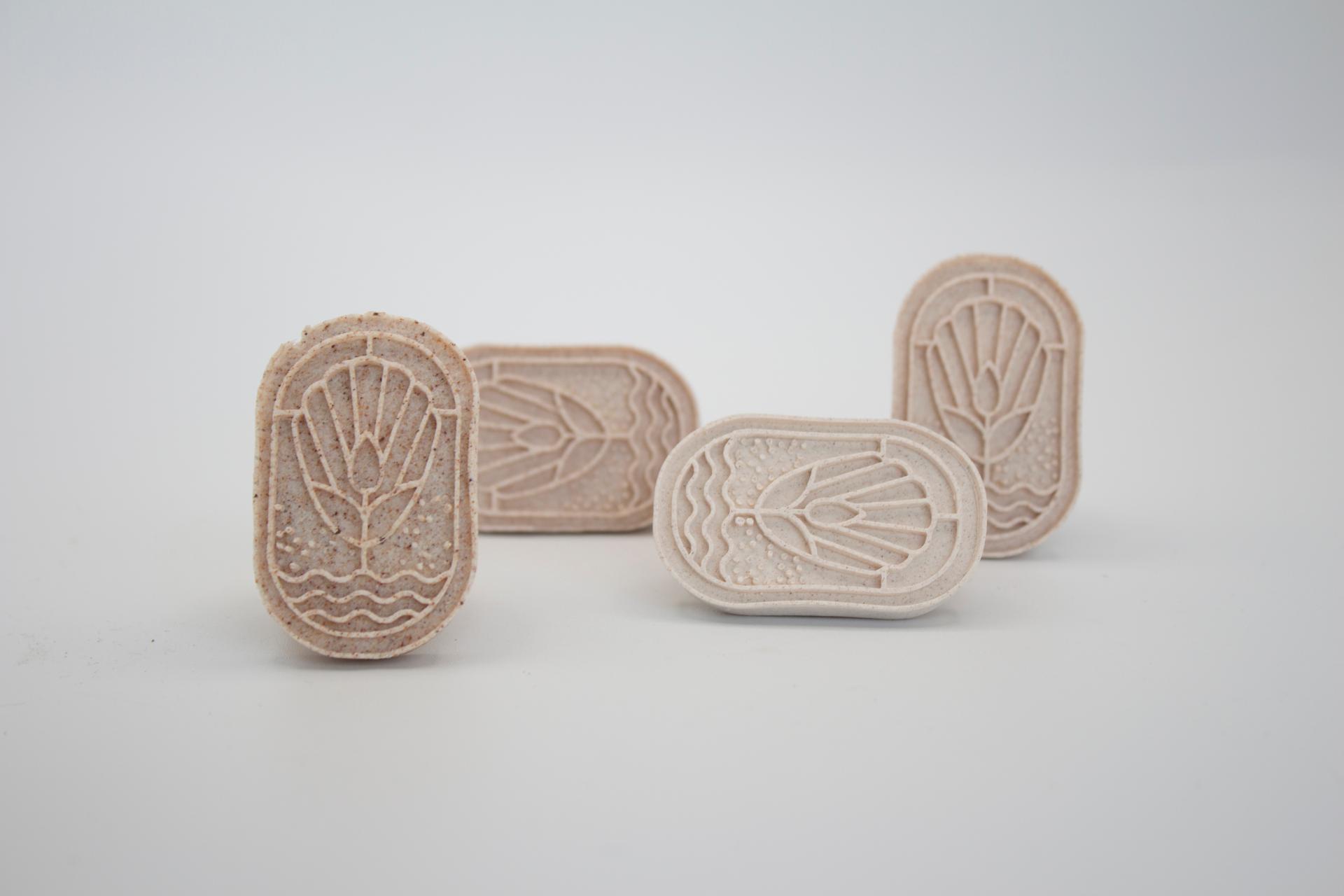
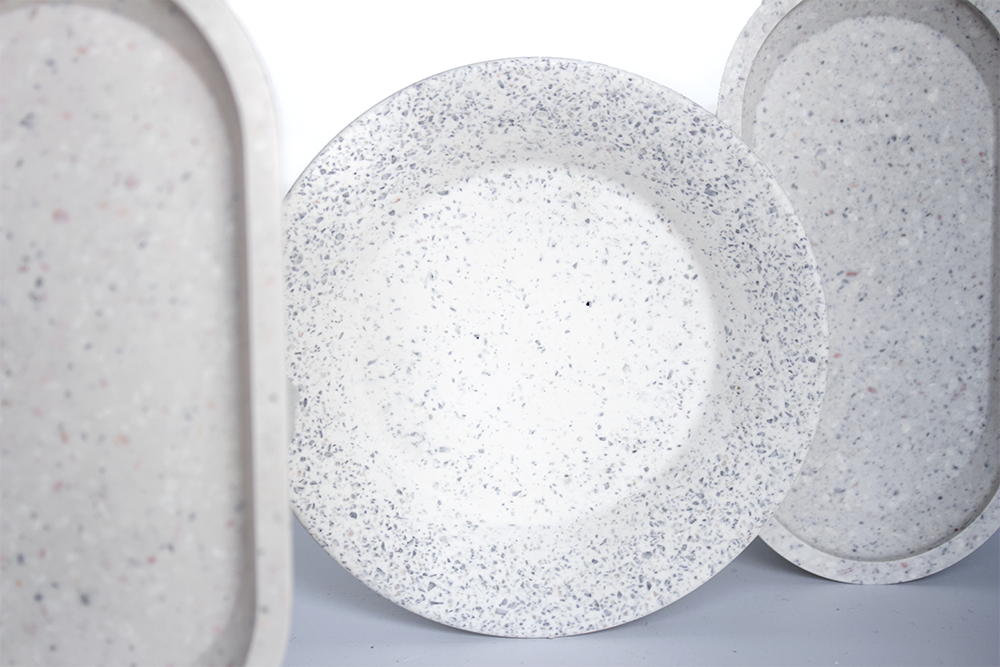
Currently, the studio is developing "pastes" made of waste and natural binders to 3D print objects, hijacking ceramic printing machines.
Key objectives for aesthetics and quality
hors-studio wishes to radically change the way we look at waste so that we consider it as a resource.
The Precious Kitchen Platform, a real support and pedagogical aid, allows hors-studio to sublimate waste through photography. By working with the set designer Ella Perdereau, the waste is valorized and its potential for reuse is revealed. Elodie and Rebecca are convinced of the beneficial impact that an installation or a manifest work can have during exhibitions, in order to let the visitor wonder about the origin and the transformation of the material by the design.
It is a first educational entry through aesthetics that then allows customers to project themselves on more concrete applications or functions for an object, a window display, a covering, etc... The challenge is to convince the maximum number of customers and especially luxury houses, on the creative and aesthetic potential of waste. Since 2018 hors-studio has exhibited in about 15 different places with singular works made only from local waste.
We can note the presence at the Biennale Révélations at the Grand Palais in Paris, at the Biennale du design de Saint-Etienne, at the Biennale Emergences in Pantin, at the Paris Design Week, at the France Design Week, or at the Surface Design Show in London.
Since February 2021 and until January 2022, hors-studio is exhibiting a personal carte blanche at the CCCOD Centre d'Art contemporain in Tours.
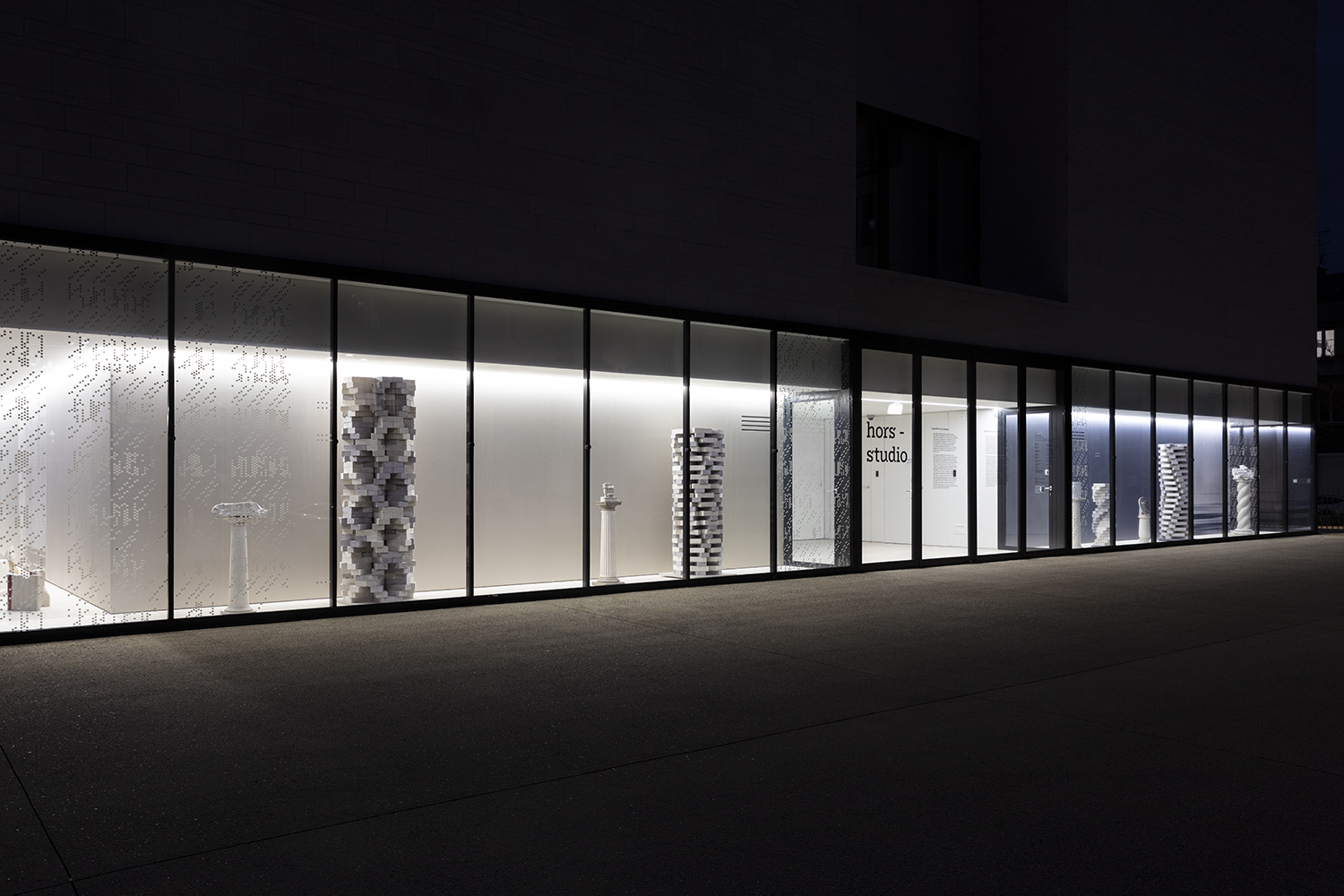
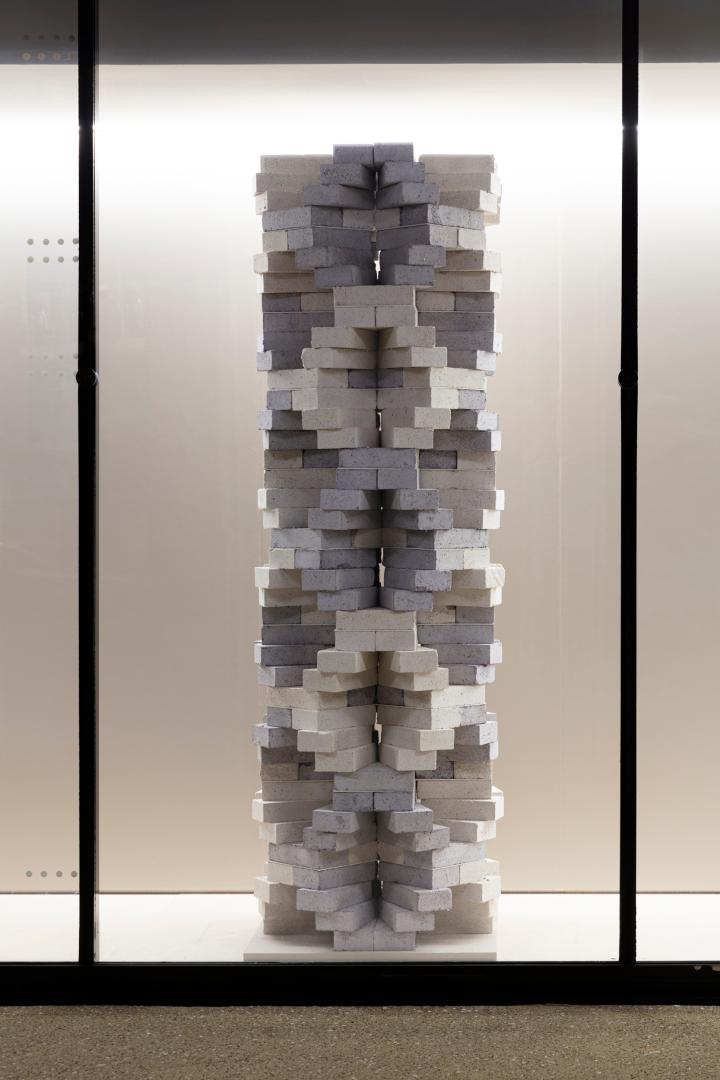
This exhibition shows in particular the work Raw Rows, a set of parametric columns and ornamental moldings made of oyster and mussel shells. The work is ephemeral, the binder used being seaweed, and thus allows at the end of the exhibition a return to the ocean of works.
This research around the creation of materials from waste shells collected in restaurants (one ton of oyster shells and one ton of mussel shells) allows to show a new bio-material, in the service of contemporary art but with interesting properties for the art of living.
Key objectives for inclusion
Thanks to the platform Precious Kitchen hors-studio gives free access to everyone to the scraps and waste of the territory.
This project is intrinsically inclusive because it was incubated at the beginning in the citizen Fab Lab of Tours. It conveys all the pillars of the Social and Solidarity Economy by sharing material resources and knowledge for free.
In September 2021, with the opening of the first Chutothèque de Precious Kitchen, the users, whether they are citizens, artists, students, designers, etc... will be able to come and get supplies in the city center of Tours, with workshops within the FabLab given to facilitate the implementation of the materials and to sensitize as many people as possible to the question of re-use.
Beyond the raw material collected and distributed, it is also thanks to the open-source that hors-studio shares its know-how of material transformation with the platform's users. The pedagogical objective is that as many people as possible can test the transformation of materials at home and in their kitchen and apply them in their daily life or in projects for Culture and Design.
Precious Kitchen is also a support to reconnect the company and their employees to the world of culture, by exposing and communicating on the future of the scraps they have generated.
Results in relation to category
Hors-Studio valorizes waste through artistic installations and exhibitions:
Coming soon :
- October 2021 - Dubai World Expo / In international competition for the realization of a biodegradable showcase for the Tanagra group.
- September 2021 - Paris Design Week / Exhibition of a collection of 3D printed objects and biomaterial paste (shells and natural binder) in collaboration with the BOLD DESIGNERS
- September 2021 - Exhibition Frugal by Ou est le beau, Hôtel de Coulanges, Paris / Creation of tiles/clothing in leather scraps.
- September 2021 - France Design Week Exhibition, Tours / Exhibition of research on the creation of materials based on leather scraps.
Beyond the artistic installations, the research in new materials carried out by hors-studio has led to different applications:
- Creation of a wallpaper made of Neoprene powder flocking for an exhibition at the Drouault Hotel in 2019.
This wallpaper is now being manufactured to cover the walls of a university complex in the Paris area and for the offices of a company in Indre et Loire.
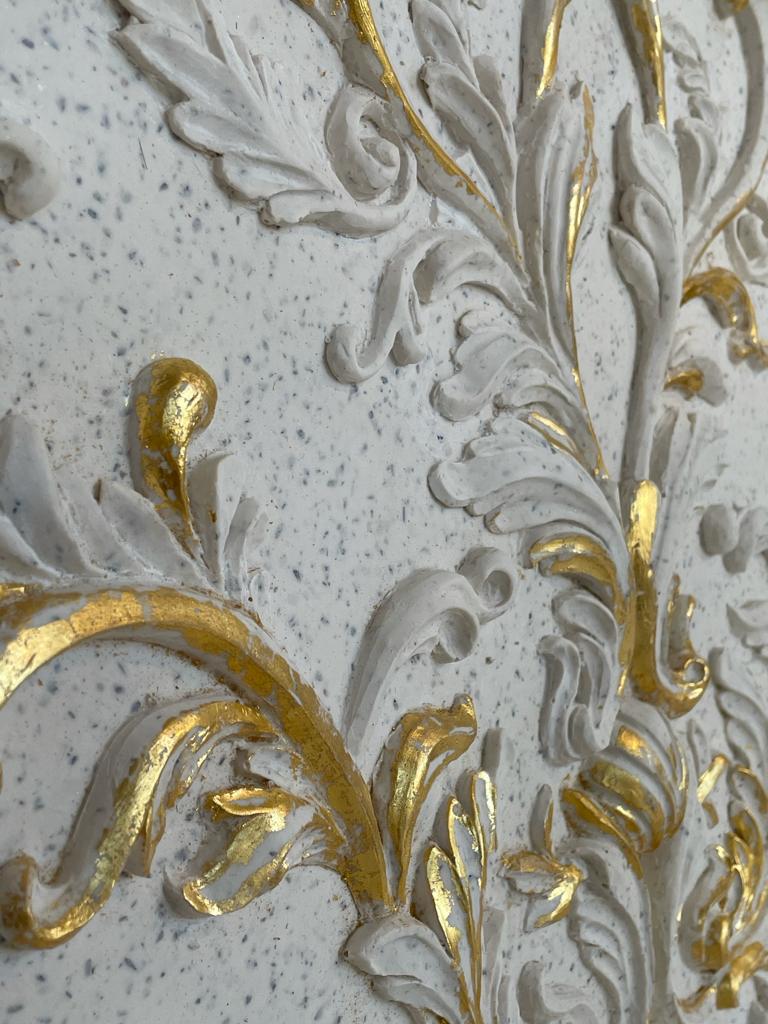
- Creation of two biodegradable window displays for a boutique opening in London for the luxury house Chaumet.
Ornamental molding in mussel shells and biodegradable binder. May 2021 - September 2021
- Creation of a biodegradable perfume cap for a cosmetics company.
Development of a specific recipe based on natural binder and scallop shells.
- Creation of a line of biodegradable packaging from decommissioned apples for an arboriculture company.
The objective was to avoid the use of plastic bags.
- Creation of acoustic and thermal insulation modules for interior design from leather scraps.
Hors-studio is a creative partner in the framework of the EIT Région Centre project (Industrial and Territorial Ecology) on the valorization of an annual regional deposit of 3 tons of leather scraps.
How Citizens benefit
Hors-studio particularly mobilizes the education sector on these topics of reuse.
In 2019 and 2020, within the framework of a Globalized Artistic Project, hors-studio has provided plastic workshops for rural elementary school in the Grand Est region.
These workshops, created in collaboration with Le Signe (Centre Nationale du Graphisme de Chaumont), raised awareness among 120 children from 1st to 5th grade about ocean pollution through the prism of creation. The restitution of the work was then exhibited at the art center with an edition at the end, thus favoring the access to culture to inhabitants of remote areas.
Hors-studio also gives many workshops in art and design schools, in order to transmit the material design process to higher education students, always in connection with partner companies generating scraps.
Through the Precious Kitchen Platform, hors-studio also mobilizes citizens on this issue, notably with the implementation of a creation laboratory at the partner FabLab citoyen. Workshops and conferences are given in the framework of events labeled by the region.
In September 2021, the project will welcome a first civic service who will be able to work on the implementation of the chutotheque and the mediation of the project, to raise awareness of the maximum of potential future users and to make the project grow beyond the region.
Innovative character
In 2019, hors-studio is selected to participate in the MADE Project (MATERIALS DESIGNERS), supported by Creative Europe. During this week in Barcelona, rich in exchanges and sharing, hors-studio becomes aware of the innovative character of creating new materials for applications beyond the artistic installations already undertaken by the studio.
The creation of composite bio-materials remains at an emerging stage in France, and hors-studio wishes to perpetuate the establishment of a more substantial production workshop to ensure the manufacture of larger volumes.The practice of hors-studio means combining skills in new technologies, craftsmanship and chemistry to ensure the viability of projects.Today, hors-studio collaborates with engineers in computational mechanics to adapt numerically controlled machines to the creation of bio-materials.
The implementation of these materials also requires manual and ancestral know-how, and it is a close team of craftsmen who work on the studio's projects.
The Agora du Design research grant, allows the studio to work for two years on binders and extract forgotten natural glues that would allow the end of the material's life while meeting mechanical constraints dedicated to architecture and design. The objective is to be able to print in 3D with the help of robotic bars materials made of scraps and natural binders for large volumes, even constructions.To do this, the studio collaborates with chemistry and plant extraction laboratories as well as engineers specialized in parametric design and 3D printing.
Beyond technological innovation and the crossroads between art and science, hors-studio is convinced of the innovative scope of the Precious Kitchen Project.The platform and its mediation give access to the largest number of people to the research through design necessary to innovate. Sharing recipes and knowledge as much as possible, allows us to anchor these new design practices in a social and solidarity economy.