Easy Home
Basic information
Project Title
Full project title
Category
Project Region
EU Programme or fund
Description of the project
Summary
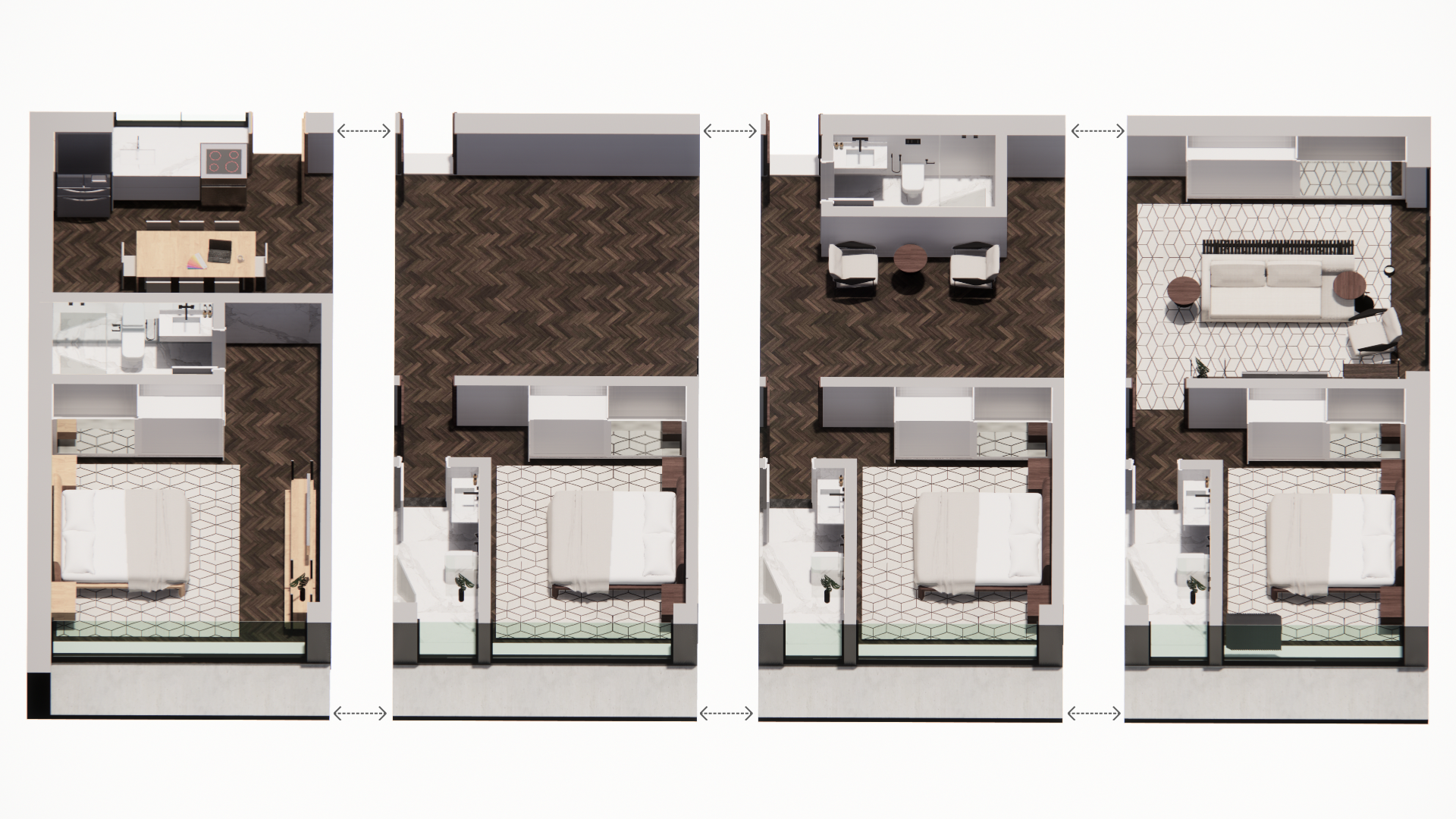
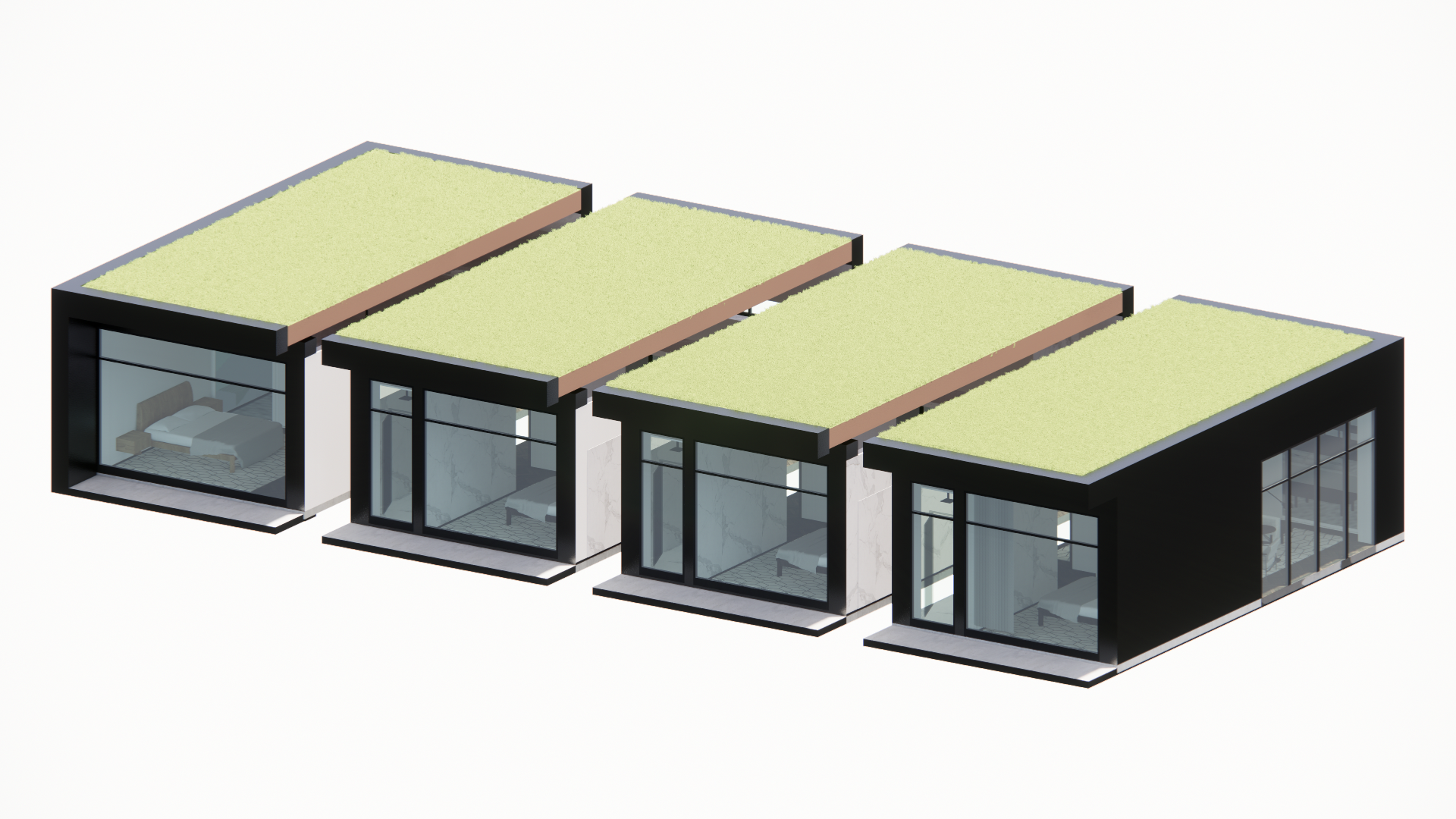
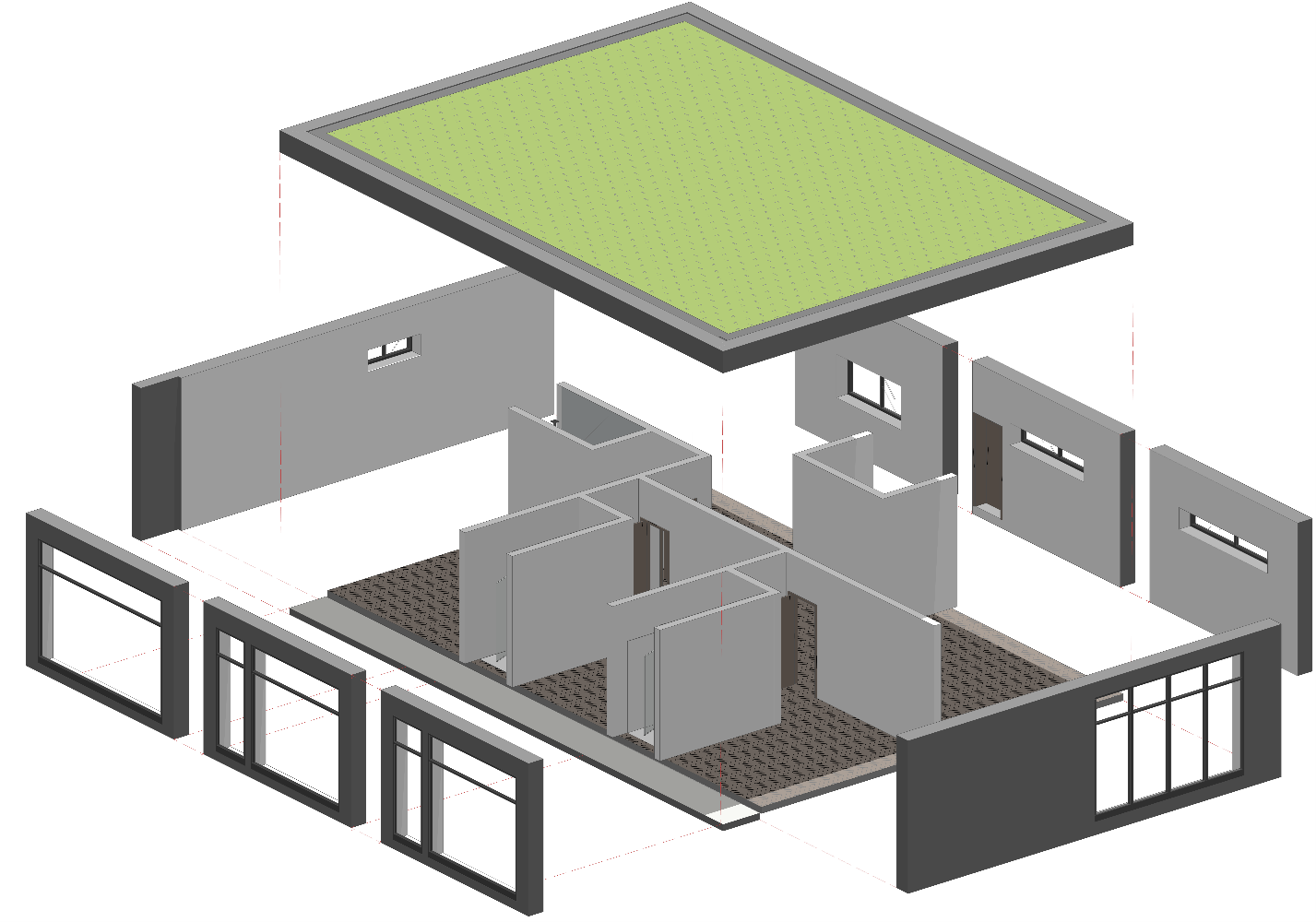
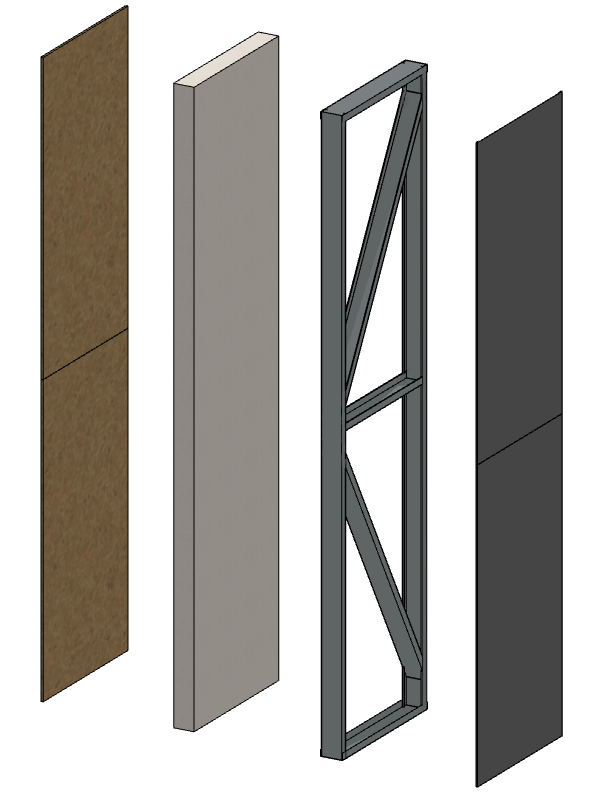
Cities are home to most European populations and are projected to rise significantly until 2050. The goal of the Green Deal includes achieving no net emissions of greenhouse gases by the same date. All this while promoting equality and economic growth detached from resource consumption. According to the European energy poverty observatory report of 2019, in 2017, 33.2% of Portugal inhabitants declared incapable of keeping the house warm. This concept is a prefabricated modular housing designed according to optimisation software. The objective is to promote a sustainable way to accommodate that population growth while decreasing energy consumption, energy poverty and providing a cost-optimal solution that can be easily replicated and adapted for the user needs. The building benefits of the prefabrication advantages of the industrialised production system, the modular adaptable approach to fit the need of its inhabitants, the panelised construction that can be easily assembled and transported without the use of heavy machinery, and the optimised external envelope to ensure that all the material used have its purpose. The opaque envelope panels in a light steel frame to be assembled at the building site considered the usage of recyclable, low embodied emissions, and low embodied CO2 emissions materials. The window to wall ratio and shading is optimised to ensure solar heat gains in winter while blocking the solar gains in summer. The wall insulations were considered and optimised as well to reduce energy consumption during its life cycle. The basic shape of the building and construction technique is designed to lower the overall costs by reducing waste and unnecessary building procedures. Although this building is designed and optimised for the city of Oporto, its idea can be replicated and adapted to promote sustainable, affordable, and comfortable populational growth.
Key objectives for sustainability
The key objective of this concept is to demonstrate the possibility to promote a sustainable and affordable build environment. The building design was carefully thought from the material used, its shading elements and its lifecycle usability to achieve this objective. The base construction would consider using sustainable materials with low life cycle values for embodied non-renewable energy, low embodied greenhouse gas emissions and high recyclability. The structure chose the light steel frame for its recyclability, lightness, and wide available knowledge. As an external façade element, the chosen material was aluminium due to its high recyclability, durability, and low maintenance. The internal material on the panel will be an OSBII board with a structural capacity to reinforce the light steel frame; this material has low embodied energy and emissions. The insulation materials and thickness were optimised in the software DesignBuilder considering their capacity of decreasing heating loads and initial cost. The options were black cork between 60mm to 240mm, XPS from 50mm to 220mm, and Rockwool from 65mm to 240mm. The range varied accordingly to their availability in the market. The simulation resulted that the solution with 220mm Rockwool was the best from a cost-optimal point of view. The best option for the windows and doors was to use products from brands that obey European regulation and available near Oporto to avoid adding embodied energy with long-distance transportation. The ceiling is a thin extended green roof due to its good thermal resistance and negative embodied emissions. The flooring considered Rockwool for insulation with wood flooring on a steel frame; both materials were chosen for their thermal performance, low embodied energy and availability in the Portuguese market. The external building shading reduces the energy need for achieving thermal comfort during the building lifecycle, thus decreasing the building’s energy consumption. This concept
Key objectives for aesthetics and quality
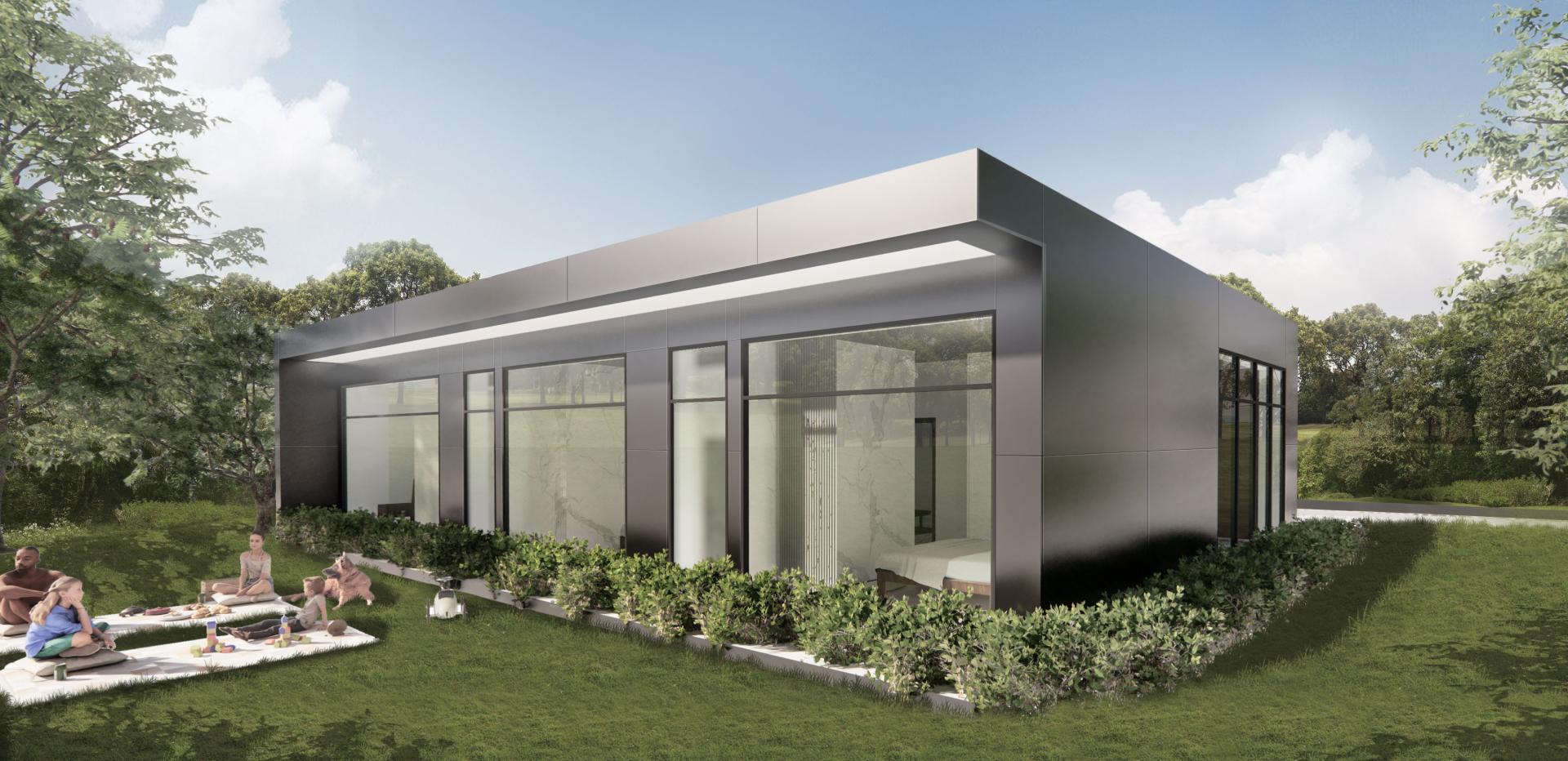
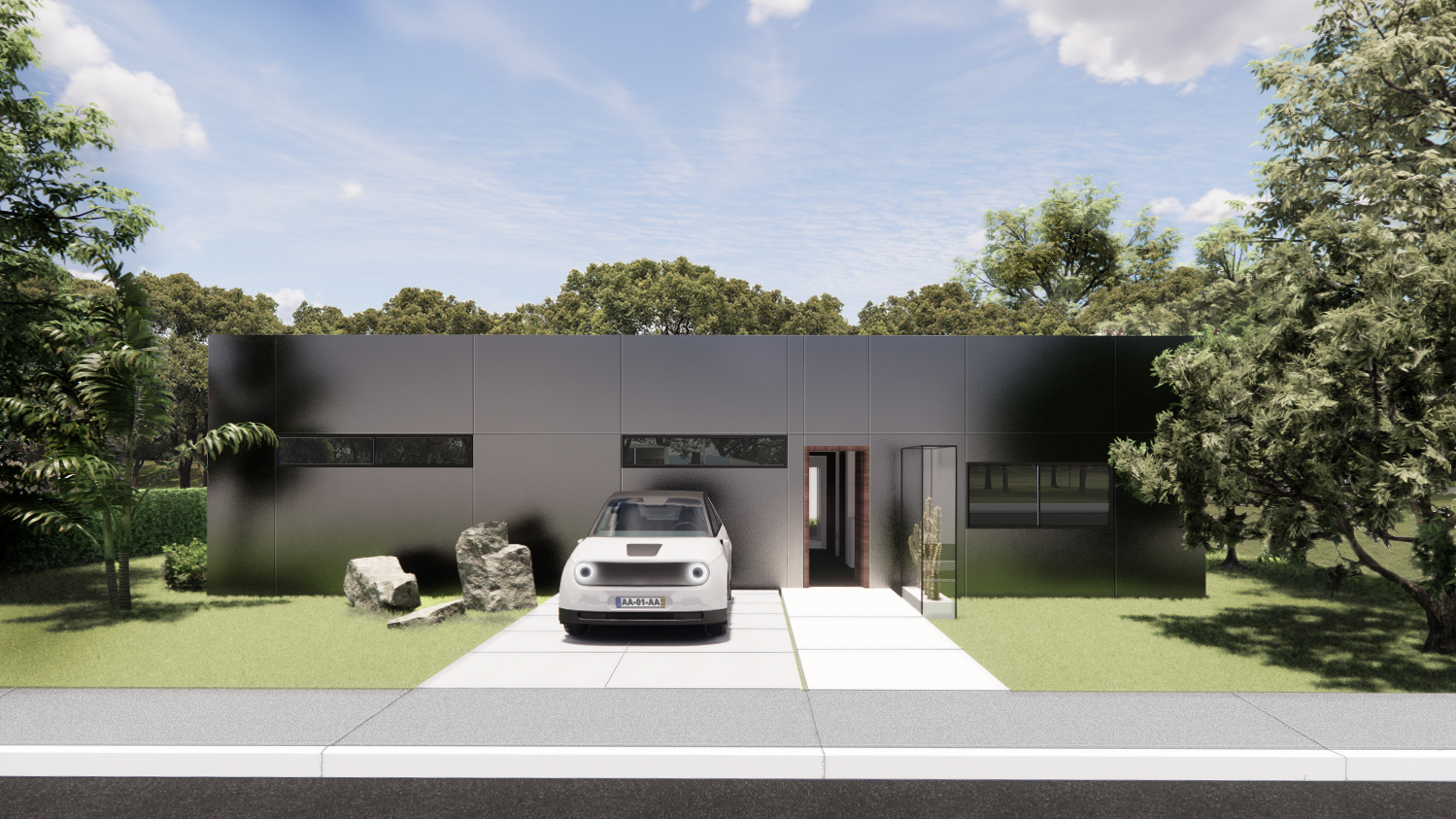
The building aesthetics is aimed to be a contemporary interpretation of the Bauhaus architecture with a more industrial aesthetic to contrast with its bucolic location. The Bauhaus aesthetic is attributed due to its function over form design. The function focused on providing the user with excellent thermal comfort with natural ventilation and direct sunlight while bringing peace of mind to adapt to different needs during its lifecycle and fast construction. The simple building parallelepipedal shape avoids material waste while acting as a contrast to the vegetation that is supposed to exist around the house. The building shading elements were also designed with the Bauhaus aesthetic in mind, and various types and shapes of shadings were tested to achieve the best functional result. The best solution was to have an overhang and a vertical shading in the south façade. The building openings were designed according to the window to wall ratio optimisation that had the building heating load, cooling load and global cost. The concluded result for the specific building design estimated a total of 27% window to wall ratio with the distribution being 46% to the south facade, 36% to the east façade, 14% for the west façade, and 5% to the north façade; thus defining the building openings. The room distribution was defined to make the areas with more occupation hours have more direct sunlight than the less occupied areas, thus enhancing the user experience and decreasing heating needs. An aluminium external façade is a durable option with low maintenance that can reduce the maintenance spends of the building during its lifecycle while maintaining the industrial aspect of the house. A single-vehicle trip can easily do its transportation, and there will be no need for heavy machinery to assemble the housing. Those advantages make the user experience enjoyable while having a fast, easy, affordable and adaptable build experience.
Key objectives for inclusion
The concept was designed to be cost-optimal in the whole building lifecycle, meaning that it has the best overall cost, considering its 30 years of the lifecycle. The building design was optimised to reduce energy needs with heating and cooling. This advantage will make the house more affordable during its lifecycle while decreasing energy poverty ratios. Although the building has a low cost in its lifecycle, the initial cost is also low compared to standard building practice in Portugal. The building modules are prefabricated and use the factory system’s advantages, such as reduced labour cost, more bargaining power, better quality, better material usage, and lower work-related injuries. Prefabricated buildings can reduce the initial cost of the building while being faster than the average construction system. The modules can be fast assembled, and there is no need for heavy machinery to assemble and transport the building, which can also improve the construction cost. The building optimised thermal performance and low maintenance due to the aluminium external façade make considerable improvements in the energy poverty scenario in Portugal while providing an accessible high-quality housing option for Oporto inhabitants.
Innovative character
The innovative character in this concept is optimising the building aiming for an affordable, modular, sustainable, and energy-efficient house. Several projects and studies focus on making energy-efficient housing, affordable housing, or sustainable housing. Although those studies provide high-quality knowledge, the literature about building design aiming to balance all those categories is scarce and needs to be explored. This concept rethinks the standard design process to answer the question “when is it enough?” to avoid unnecessary material usage and provide an optimised, efficient use of materials for the built environment.