rea·dy·made
Basic information
Project Title
Full project title
Category
Project Description
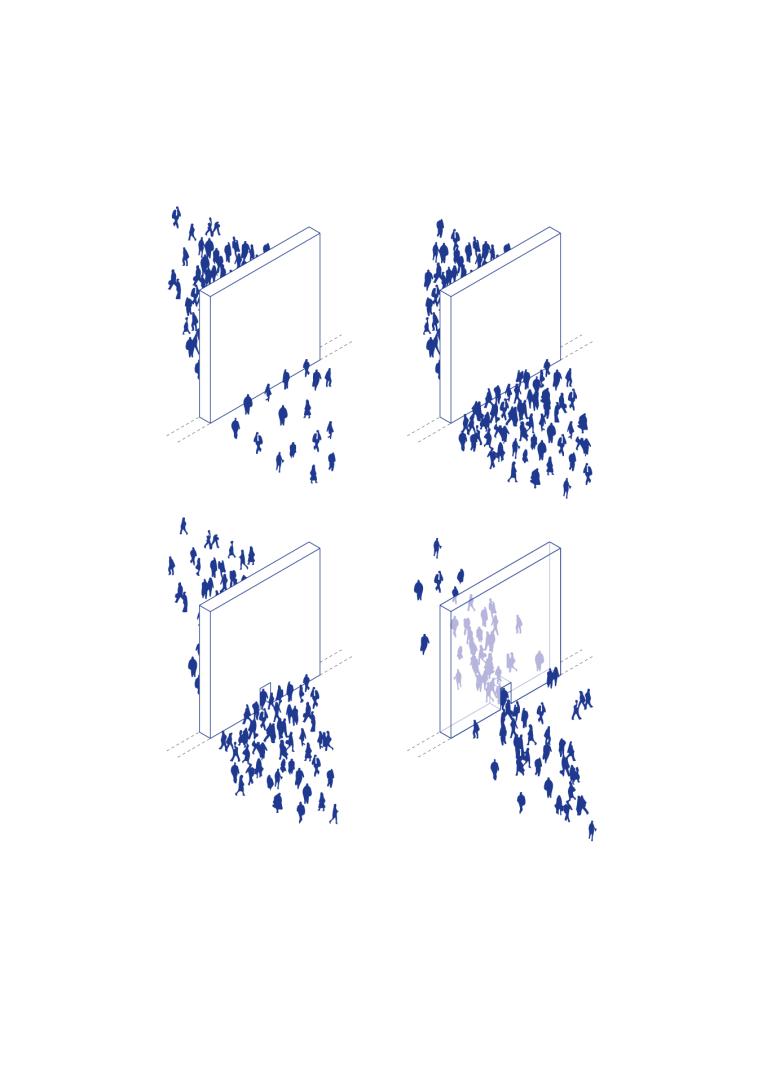
Questioning the classical relationships between actors and spectators in theaters, we put forward the thesis that any human interaction, no matter where, no matter how ordinary it might be, is performance.
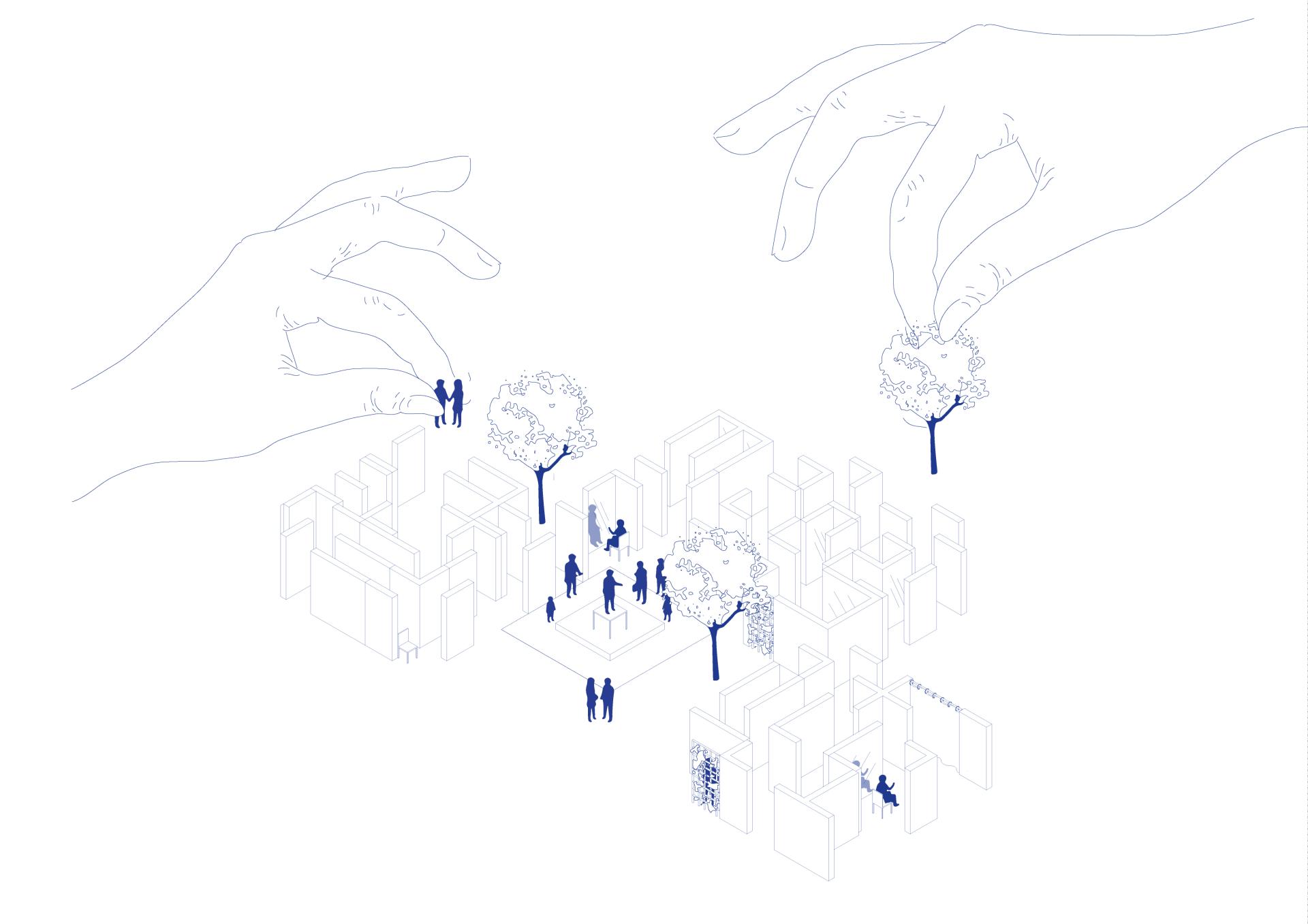
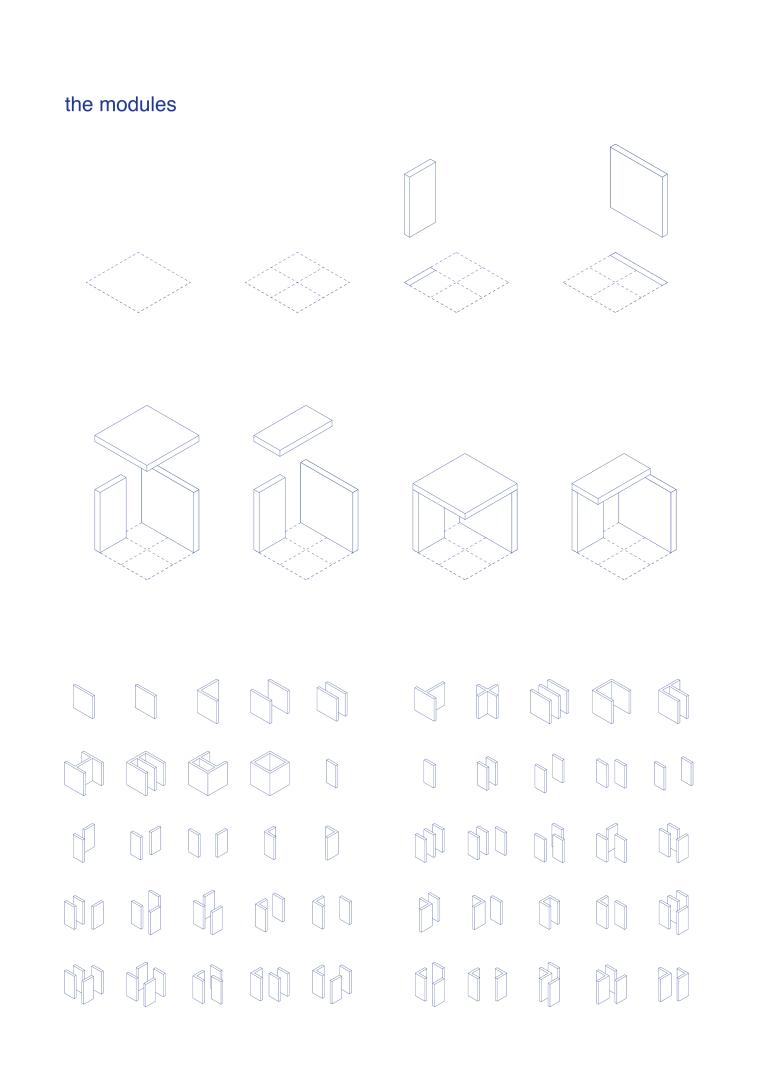
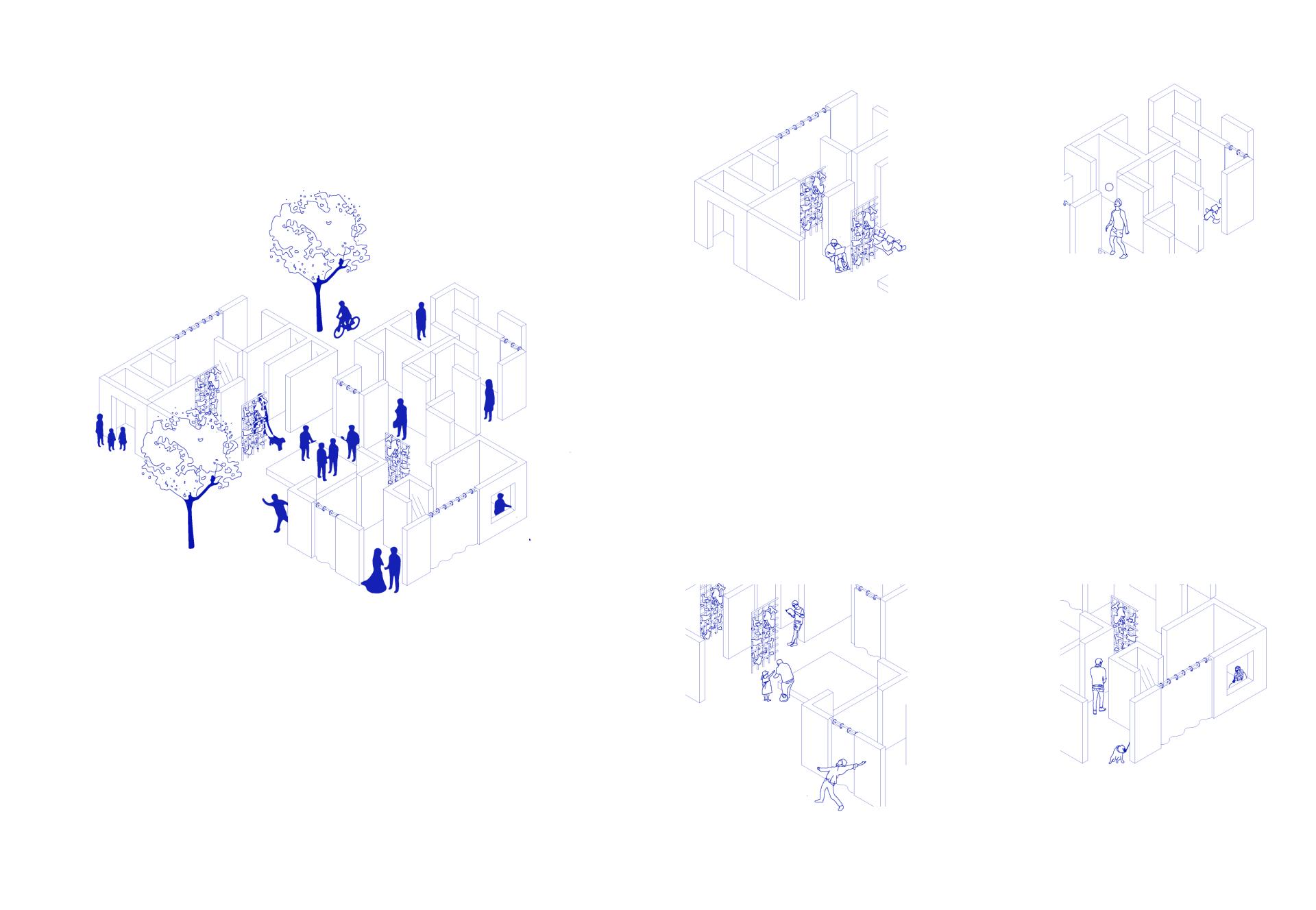
The idea promotes modules that can be combined, repeated, rotated or mirrored in every imaginable way. Depending on their arrangement, the most diverse conditions arise for an unpredictable number of performative situations, framing conscious and unconscious performances of the everday life.
Project Region
EU Programme or fund
Description of the project
Summary
"If we just manage opening our eyes to it."
There are theaters that look like a street, but some streets offer more theater than a stage could ever fit.
Some theaters have as many seats as a subway, but what happens in there in one day, cannot be invented by any director in the world.
Some theaters make you laugh, some make you cry, sometimes both, but some playground might fill ten of those theaters with more noise than they could handle.
Only when we start seeing real life, in its everyday life, to see, appreciate and to learn how to find beauty in insignificance, only then, are we ready to distinguish distorted realities from truth.
Only when we understand that where we are now, everything is somehow not real enough, but still looks real enough not to be exposed, then we are ready for the theater, but we have to open our eyes first.
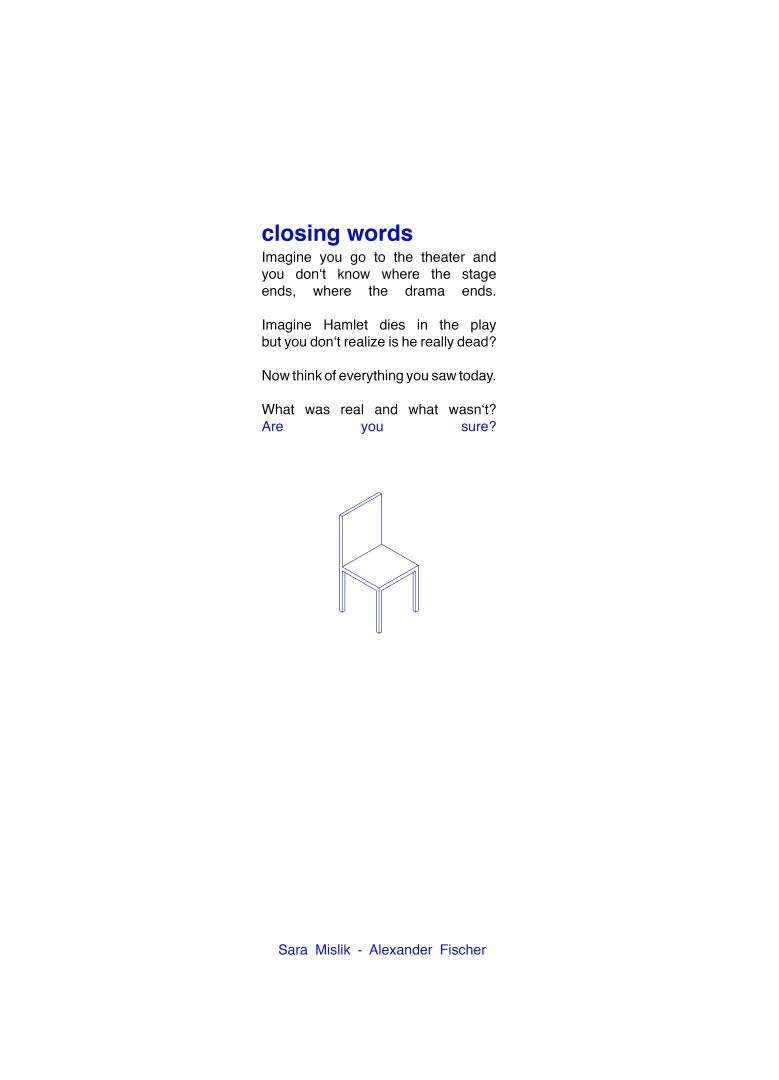
Questioning the classical relationships between actors and spectators in theaters, we put forward the thesis that any human interaction, no matter where, no matter how small and ordinary it might be, is performance.
The idea promotes and supports a modular system, which allows to frame those conscious and unconscious performances of the everyday life.
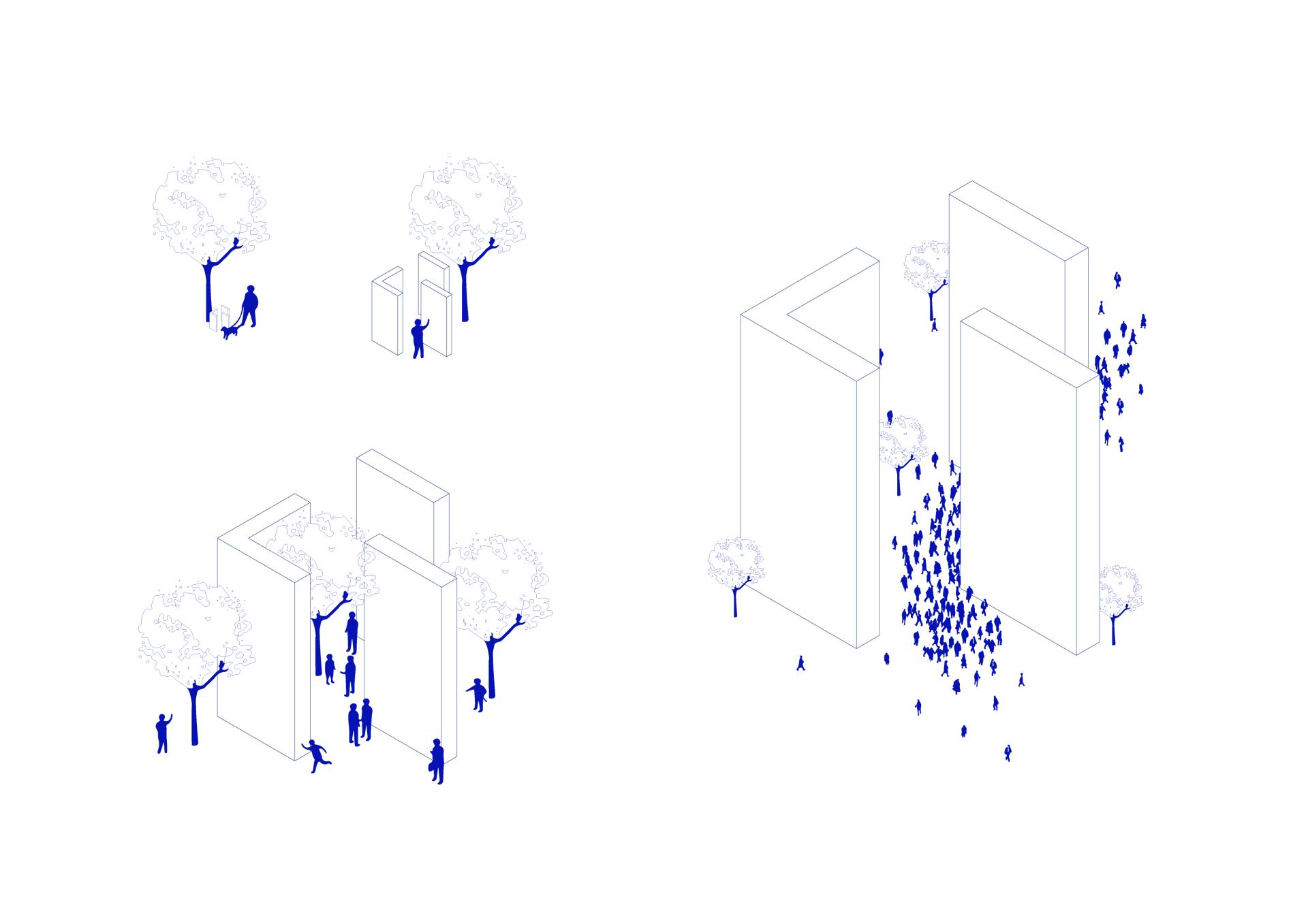
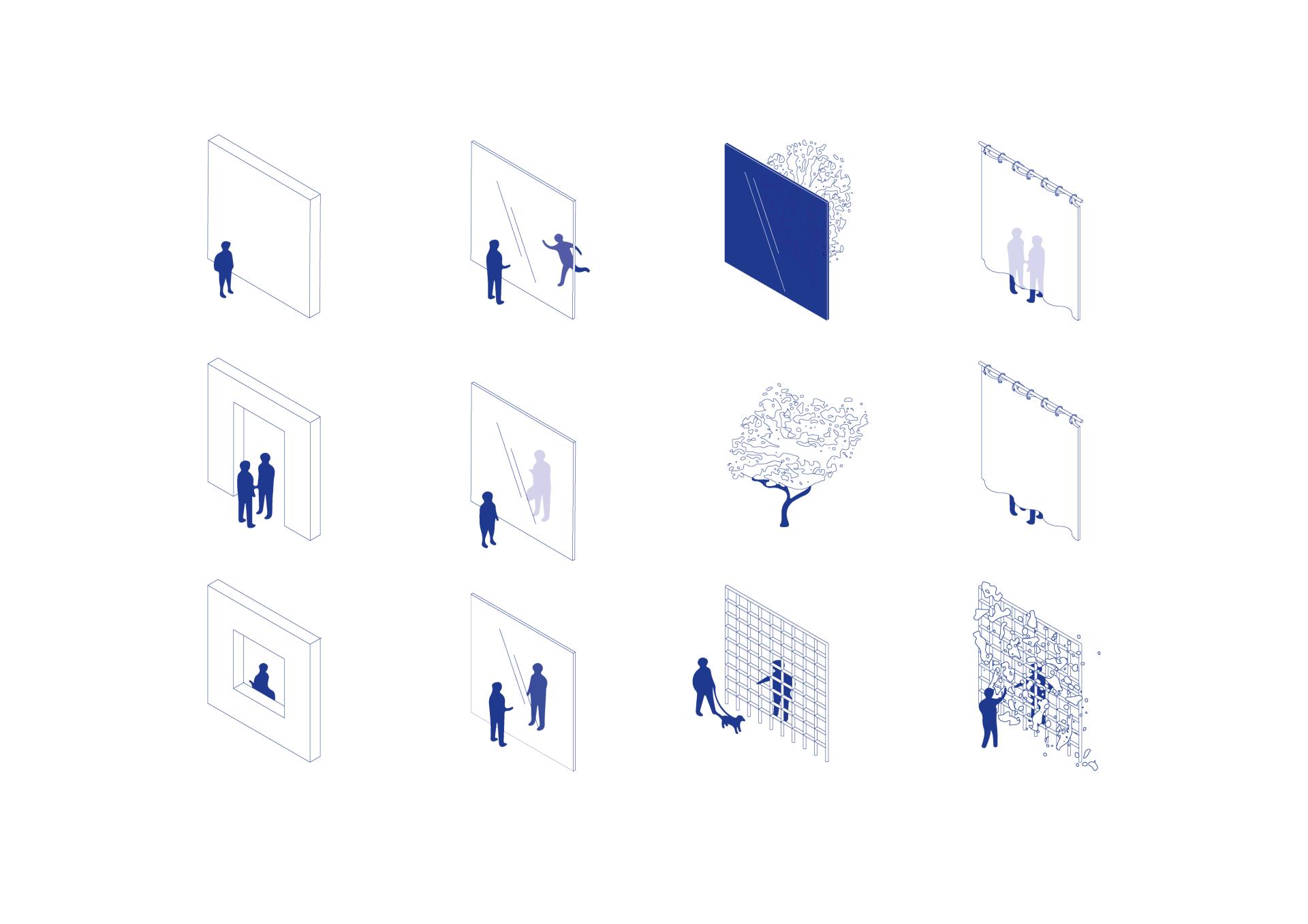
The individual modules, mainly walls of different materialities, can be combined, repeated, rotated or mirrored in every imaginable way. This creates corridors, corners, dead ends or clearings. Depending on the number of modules used and their arrangement, the most diverse conditions arise for an unpredictable number of performative situations.
A wide variety of arrangement typologies are possible depending on the location. The possibilities are unlimited, whether in a public space or in a building, whether temporary or permanent, this theater can be seated anywhere.
Key objectives for sustainability
The modules ,which consist mostly of walls, can be produced in a variety of ways. The main goal is to not create new walls, but to find already existing ones, fitting to the modules, on demolition or renovation sites. In the spirit of circularity, these walls will then be adapted to their needed function.
Reusing the already existing building materials and the application of identical or similar installations with the same set of module arrangements, in different locations, will cut building costs immensly.
Key objectives for aesthetics and quality
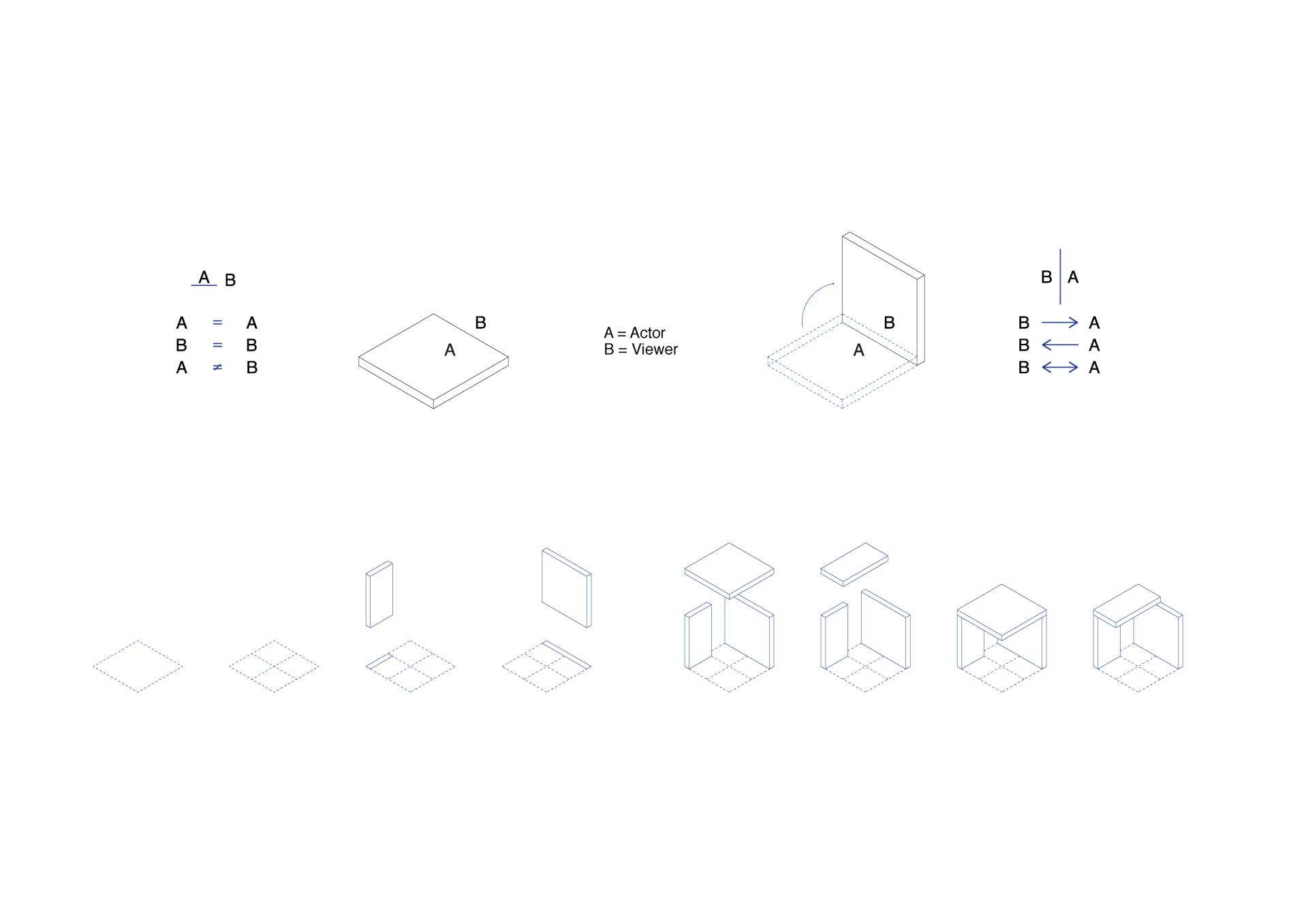
To narrow down the infinite number of ways that walls can be used, we set the following:
A square grid forms a base that is quartered. This results in 12 positions where half walls and 6 positions where whole walls can stand. Any combination of these creates a variety of modules.
In addition, the walls can also be combined with whole and half roof areas. Roofs offer protection and ensure that people gather and spend time together in a small space. Also serving as shelter from changing weather conditions.
Each material offers different infinities of events, each prop provides different infinities of situations.
Stages offer space for conscious or unconscious performances.
Basically everything we have learned from everyday life, turns the walls into a stage set, the space between them into a theater.
Key objectives for inclusion
Depending mostly on social interactions, this idea is the very definition of inclusion.
Everything is tailored, to promote interhuman connections and build new communities and relationships.
By trying to make the idea as universal and applicable to as many locations as possible, it should strive in its function to bring people together.
Innovative character
Did you learn your lines?
No, I don't have to, it comes by itself, it's already there.
But who should play?
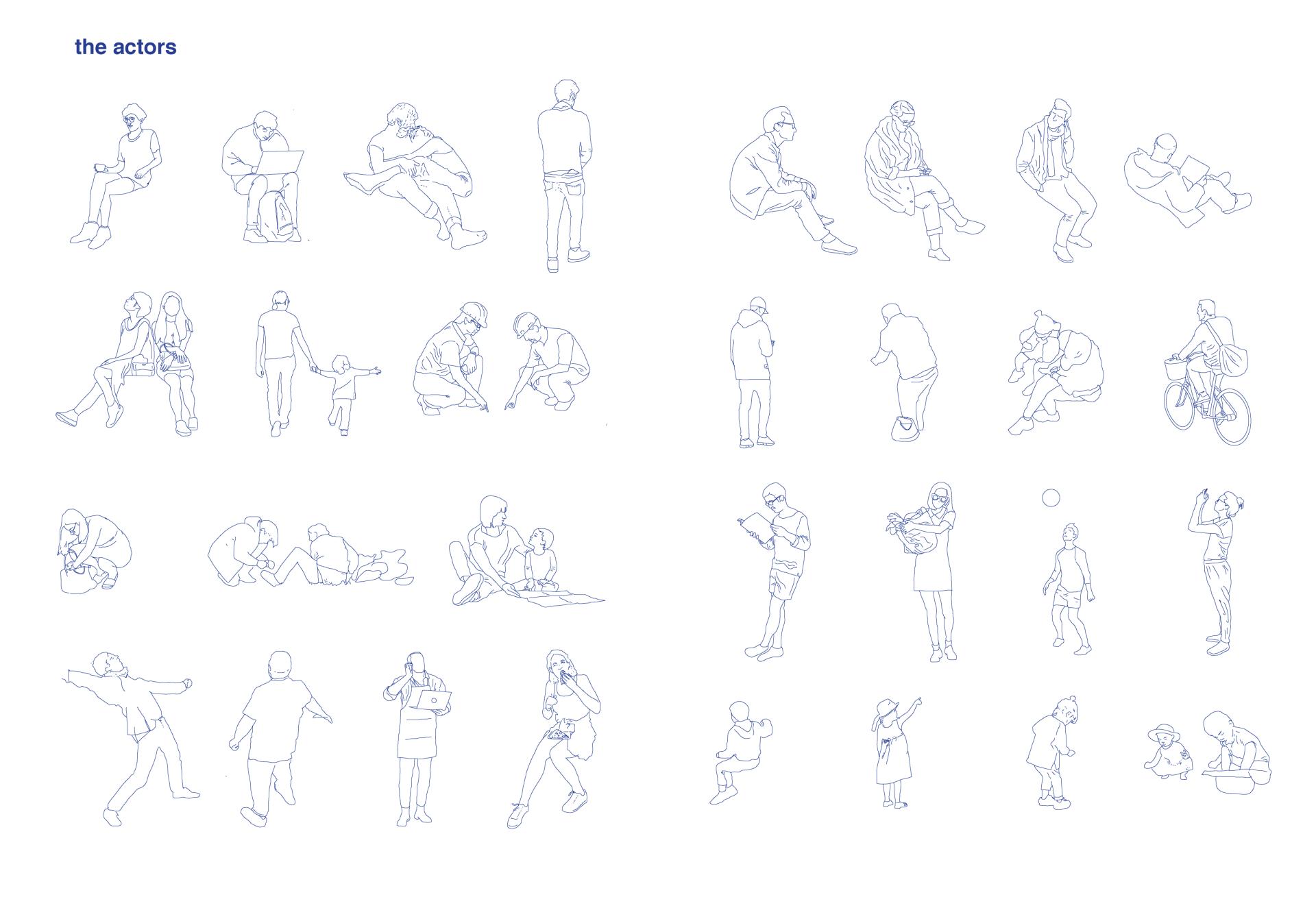
The actors are you and me and all the others.
We still need props!
No problem, look around, take what you like.
But where is the stage?
There are stages everywhere, climb up wherever, climb down, step inside.
But nobody is watching us!
Not yet, because they haven't understood it yet.
How then? It has always been like that and nobody noticed.
But we're putting up walls now, then nobody can overlook it!
By framing the everyday life as performance, a new take on how theater can be experienced is brought forward.