Adriano Community Center
Basic information
Project Title
Full project title
Category
Project Description
The Adriano Community Center (ACC) arises in the context of the Adriano district, a suburban neighborhood in the city of Milan. There, Proges - an important cooperative working in the field of social services - acquired a former home for the elderly hosted in a vast building, entrusting to Shifton an ambitious project: transforming the building into a place open to citizens and deeply interwoven with the social fabric of the neighborhood.
Project Region
EU Programme or fund
Description of the project
Summary
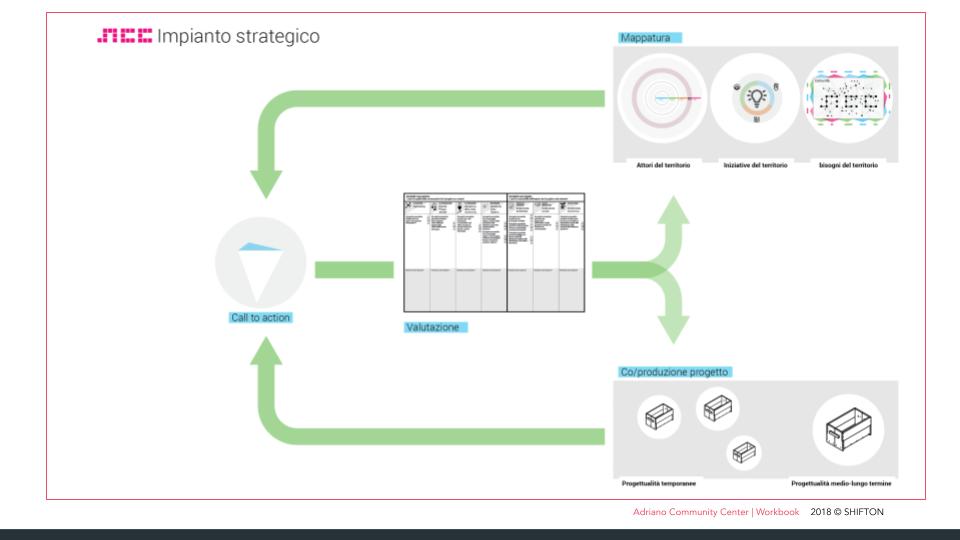
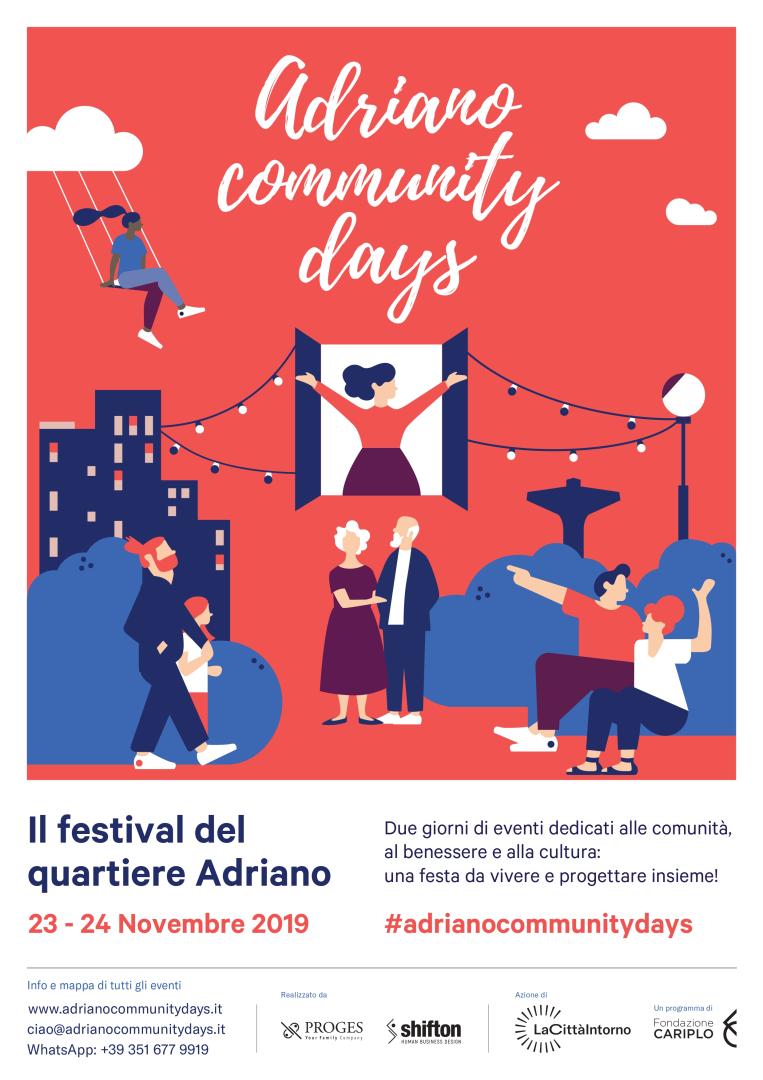
The Adriano Community Center (ACC) arises in the context of the Adriano district, a suburban neighborhood in the city of Milan. There, Proges - an important cooperative working in the field of social services - acquired a former home for the elderly hosted in a vast building, entrusting to Shifton an ambitious project: transforming the building into a place open to citizens. The Adriano neighborhood appears today as a highly fragmented and precarious reality, perceived as a sort of non-place: a place of passage for commuters and a dormitory for its inhabitants. Yet, in this precariousness, it is possible to glimpse the concealed energy of the community and its redemption desire. Seizing this energy represents a significant opportunity for the ACC to enable healthy and flourishing conversations within the neighborhood. Shifton, as a social innovation agency, tackles this challenge by envisioning and designing a community activation path, entailing the direct involvement and active participation of citizens, local associations, local policy makers and Proges' managers. The project, embracing a human-centered design perspective, aims at enabling the emergence of a vibrant and interconnected community within a broader culture-driven regeneration process. In this respect, the project has been articulated in multiple phases, such as context analysis, warm-up interviews, desk research, and co-design workshops, culminating in the structuring of a strategic plant. Aiming at strengthening the existing social fabric and favoring the engagement of heterogeneous local stakeholders, the strategic plan relies on a reiterative call to action mechanism capable of gathering and evaluating initiatives, working both on short and long term projects. The first iteration of such a mechanism gave life to a two days festival - the Adriano Community Days - dedicated to the themes of collective welfare, community, and culture, hosting 63 events in more than 20 neighborhood spaces.
Key objectives for sustainability
The sustainability of the project is reflected in the decision to position a relationship between care and culture. ACC project is a space dedicated to interpreting a renewal in care services through the role of cultural welfare, and a renewal in services and cultural production, through a strong system of sustainability and social cohesion. The ability of the project is to multiply the value of the resources, environmental, social, economic available, in order to create well-being for the community: the population of the neighborhood and the communities connected to it, beneficiaries of the promoting realities and therefore of the realities themselves. ACC focuses on innovative services, producing social impact and change, and puts people's well-being at the center. Regarding the environmental aspect, a circular economy aims at returning the resources used up to from the design stage. The project makes possible to enhance the available economic resources thanks to the reduction of waste in the neighborhood ecosystem. For the social aspect of sustainability, the regeneration process is the key point to consider: the project brings out and maps the actors that the Adriano district is able to attract and activate them in other activities. It provides the infrastructure and support services necessary to activate the players in the area; it promotes practices of social innovation that are able to increase the action capacities of the community that is mobilized; creates new roles and relationships between the actors involved, through the production of resources and underused human capital. For economic regeneration, several initiatives have been developed: local initiatives, the relaunch of neighborhood activities, the creation of strategic territorial hotspots to attract people, which generates relational capital, with innovative and international opportunities. The services provided increases the market attractiveness of the entire ACC.
Key objectives for aesthetics and quality
In addressing the creation of a flourishing and vital community capable of grasping and generating new value, one of the project's key objectives has been the construction of a positive and shared narrative as an aesthetic element capable of leveraging collective identity-building and engagement process. Mainly, Shifton envisaged the construction of such narrative as an opportunity to produce a shift in the perception of the neighborhood, identifying its inhabitants as a community capable of taking care of its collective dimension as a commons.
Furtherly, enacting a reflection on the concept of culture as care, and more broadly, as an instrument for collective welfare, the ACC positions itself as a space with particular regard to the production and curation of qualitative experiences and contents.To achieve this purpose, three macro-tools revealed fundamental:
- Themes: as a glue for emerging relationships
- The strategic matrix: as a pattern on which to construct a positive narrative
- Continuous prototyping: as a constant dialogue fostering collective growth
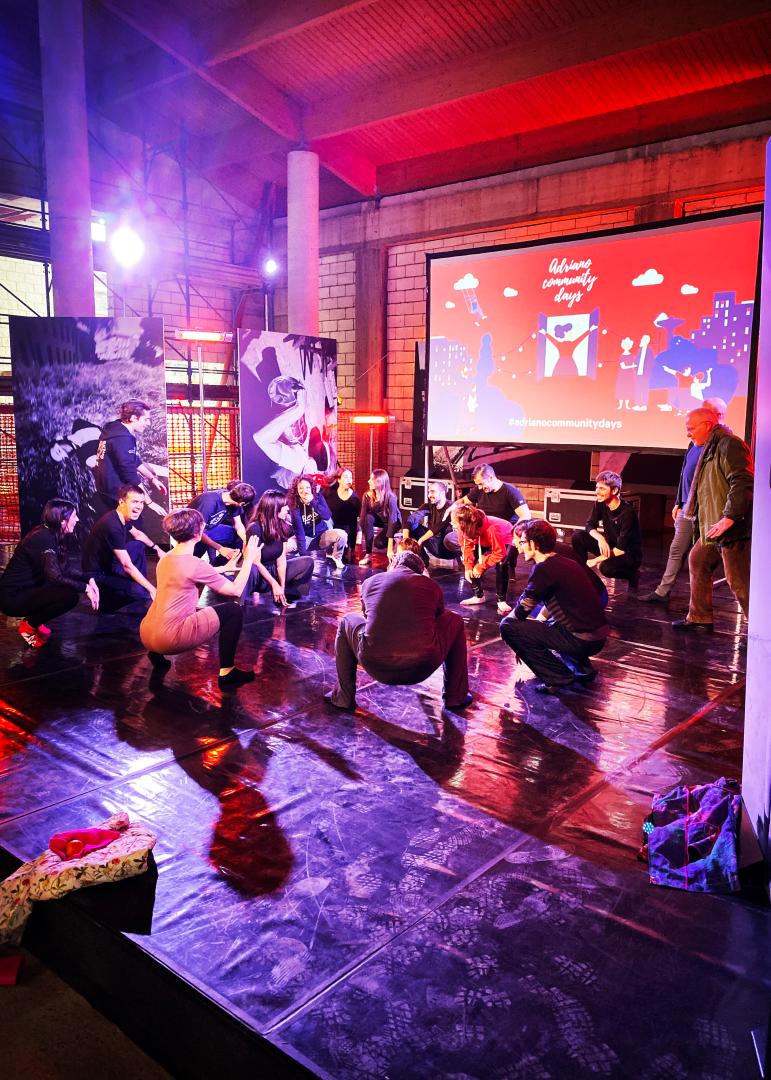
Notably, framing themes as relational nodes rather than bare identifiers or slogans (i.e., the food district, the nightlife district) allowed a focus on the "how" rather than the "what," favoring the emergence of heterogenous initiatives on the territory and privileging the unfolding of relational qualities within the community. Yet, the driving force behind this attempt has been the strategic matrix, a co-designed evaluation tool able to measure and give relevance to the quality of the conversations and experiences activated in the neighborhood. In facilitating the selection process following the call to action, the matrix served to reinforce the building of a consistent and identifying narrative. In this respect, The Adriano Community Days powerfully witnessed this effort, deploying a great aesthetic and performative potential and turning visible the newborn conversations, stimulating new ones.
Key objectives for inclusion
Various actors, activities, and initiatives have been developed for this purpose: the Adriano Community Days are an example of 48 hours of celebration of positive communities through initiatives promoted from below to leave no one behind. These Days arise from the need to bring out and map the actors that the Adriano district can attract and activate in other projects.This urban regeneration process sees citizens as protagonists in making the neighborhood a better place to live.
During the Adriano Community Days citizens, associations, companies, and institutions of the metropolitan city of Milan were asked to propose projects, installations, performances, and other activities to be carried out in public and private/open and closed spaces of the Adriano district.The activities were designed to activate positive conversations and map actors, ideas, and needs to compose further constellations of values: partnerships, projects, entrepreneurial activities, mobilizations. The final aim is to create synergies between potential active actors of the neighborhood and beyond.The strategic design adopted allows us to measure the number of participants interacting with the experience and, at the same time, the time spent together by the participants and the diversity of the participants.
The challenge is the ability to change the narrative of the neighborhood, designing a new model of public-private collaboration. It represents a model of inclusion of citizens, with co-planning actions. Furthermore, involving the elderly and disabled people in the life of ACC and the neighborhood enables to remove the taboos of assistance to the elderly and disabled people by organizing a new care model. It allows the ability to disengage from a bureaucratic approach. The perspective of design ecology gives space and thus reinforces the active subjects in the neighborhood, the construction and consolidation of public, for an emerging offer of social aggregation and cultural activities.
Results in relation to category
The undertaken design path, willing to create a place for wellbeing and explore the possible meanings and opportunities unfolded by this concept, insisted on constructing a constant and daily dialogue with the different existing communities and specific targets. This, coupled with the need to produce engagement and self-recognition patterns within the neighborhood community, led to developing a slow but pervasive strategy capable of transforming habits, rituals, and collective behaviors. I
n this sense, the immediate launch of temporary initiatives addressed at the vastest audience possible allowed the mobilization of a high number of stakeholders and the emergence of new conversations as a first result of the community-activation process.
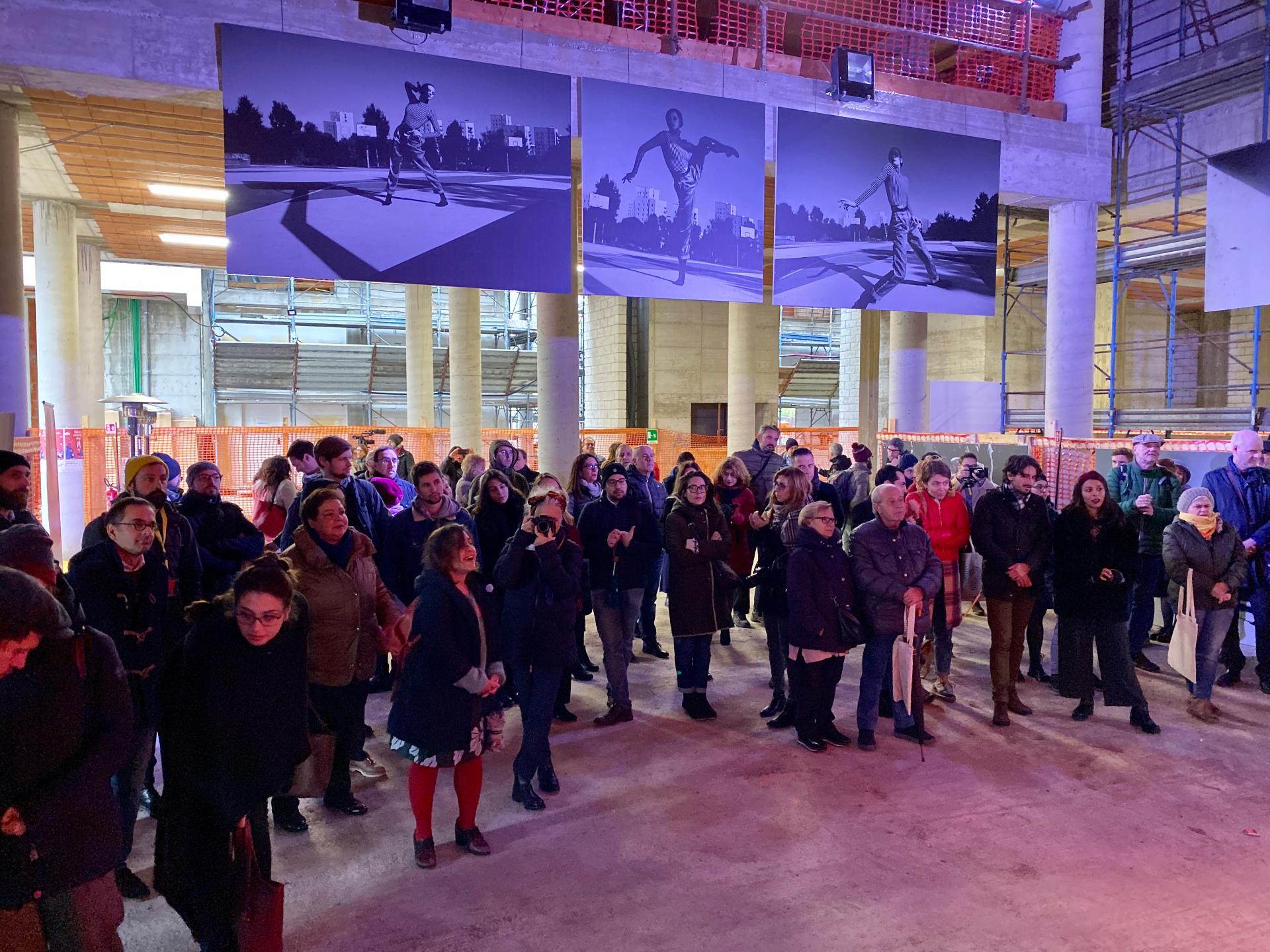
As evidence of this, there is the large number of initiatives gathered through the call to action for the Adriano Community Days and resulted in a two-day collective calendar of bottom-up initiatives rotating around the three key themes of culture, community, and wellbeing. As an inclusive celebration moment, the festival represented an opportunity for social aggregation and a fruitful moment to think about the neighborhood's future.
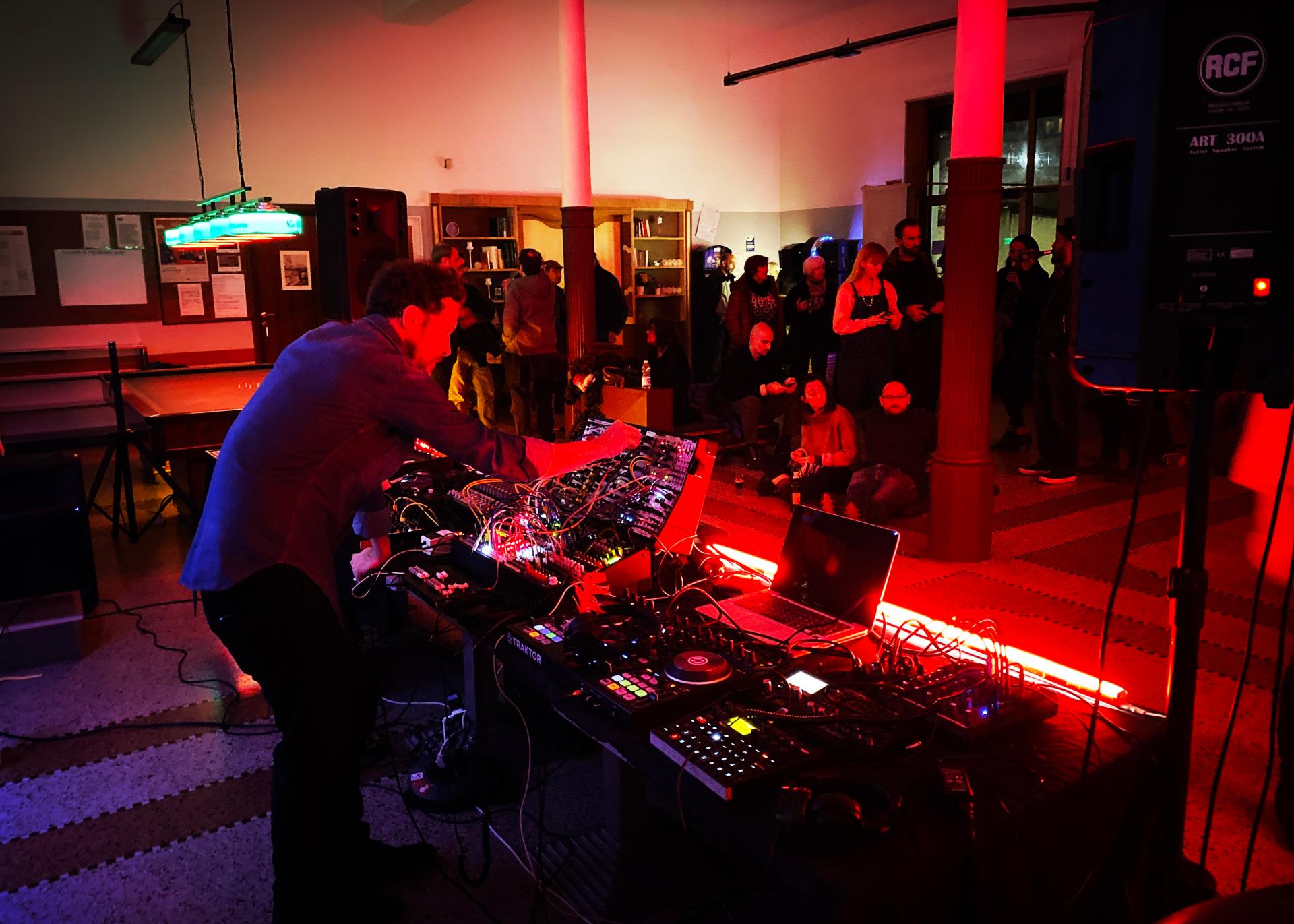
The 63 scheduled events, born from the direct participation of the neighborhood inhabitants and associations, have been hosted in more than 20 spaces - including private houses, shops, bars, gyms, and garages, besides the Adriano Community Center - as a result of the shared enthusiasm for the initiative within the district.
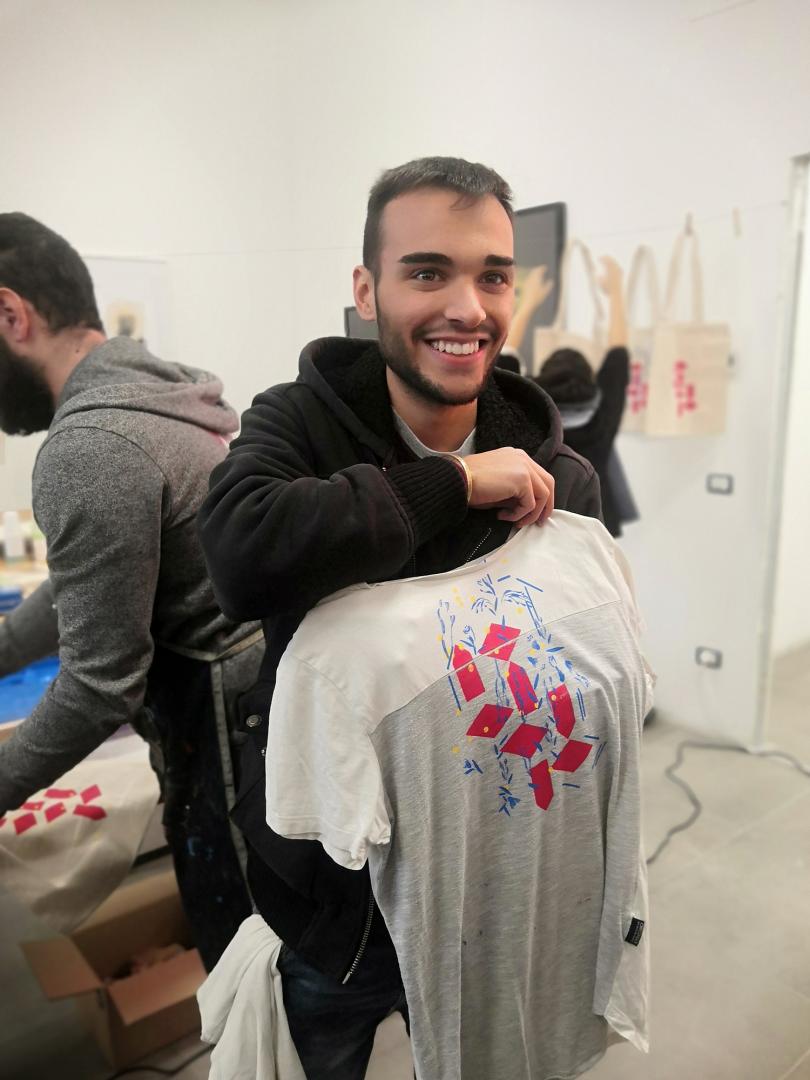
The variety of activities, ranging from itinerant theatre spectacles to photography exhibitions, book readings, film projections, urban explorations, DJ sets, and workshops for kids, as well as an alternative recycling market and meditation sessions, revealed the crucial role played by the notion of culture as a social sustainability driver and as an instrument to promote collective wellbeing.
How Citizens benefit
Adriano Community Days aim at rendering and positioning the ACC as a metropolitan reference space for cultural welfare policies, with a mix of public, multigenerational, and with people coming from different areas of the city and the urban belt. In this multicentric vision, the Adriano district emerges from its isolation and opens up to the ideas, contributions, and initiatives of all citizens for two days of discussion and dialogue. The event believes in the value of diversity, in the experimentation of new urban regeneration practices, in the generation of social impact. Two days of celebration, meetings, experiments and sharing, in which the neighborhood will come alive thanks to a collective calendar of events and initiatives proposed from people's needs, which will activate new relationships within the neighborhood. It permits a way to spread the practice of taking care of the community as a common good.
Expressing the project as an activator of quality conversations for the entire neighborhood, the ACC is to be intended as a recognized interlocutor within the community, for a change that starts from the bottom. Adriano Community Days are part of this regeneration process of the neighborhood. The added value creation enables cultural welfare, research, new formats, new audiences, fight against educational poverty, NEET phenomenon, digital divide, improving social regeneration through new opportunities.
The project also envisages a construction of effective governance, to manage the spaces together. It then strengthens the neighborhood community, bringing innovative solutions and services. In this respect, embracing a human-centered design perspective, Shifton addressed a design process articulated in multiple phases, such as context analysis, warm-up interviews, desk research, participatory workshop, and culminating in the production of design services.
Innovative character
As part of a broader urban regeneration process, the action carried on by Shifton aims to foster the rise of an innovative community-hub model capable of countering contemporary social desertification and disaggregation dynamics reinforced by the current pandemic.
This is mainly done by enacting a community-driven strategy that puts the concept of cultural welfare at its center as a way to innovate and regenerate the currently lacking service offer in terms of culture and care in the neighborhood.
Thus, the refusal to adopt a top-down strategy, in favor of a careful understanding of the socio-cultural context entailing the active participation of citizens, paired with a non-instrumental employment of culture, envisaged as an inclusion and sustainability catalyst, appear significant elements in the project development. It is proper in this attempt to redefine and melt the boundaries between the concept of culture and care that resides in the project's innovative character, aiming at attracting and responding to different marginalized publics' needs.
Specifically, paying particular attention to the elderly, the Adriano Community Center promotes a new and disruptive home of the elderlies model that sees culture as a leverage point to prompt new visions in the healthcare sector. At the same time, in the attempt to contrast educational poverty while guaranteeing accessibility to cultural opportunities to the youngsters, the ACC aims at creating a hybrid and heterogeneous learning community, putting at its center people's wellbeing.