MUHBA, The City Mirror
Basic information
Project Title
Full project title
Category
Project Description
City museums are a very specific kind of museums which have a position between cultural and urban policies, and have a huge potential to create knowledge and heritage, social and cultural cohesion of metropolises. THE CITY MIRROR rethinks the city and its history from from the old town to the contemporary outskirts. THE CITY MIRROR has created an innovative knowledge centre in its core and new cultural nodes in an urban network where history, heritage and citizenship meet together in 15 places.
Project Region
EU Programme or fund
Description of the project
Summary
A new generation of city museums, lying halfway between cultural policies and urban policies, is required to go beyond providing sociocultural revitalization; they are shaping a programme for building knowledge that is open to world and rooted in the city. City museums are required to be a portal to and mirror of the metropolis and its neighbourhoods, connecting spaces and istorical narratives. Thus, the museum can propitiate the exercise of the right to the city, the basis for effective participation in urban life.
Museu d’Història de Barcelona (MUHBA) is now conceived as a “museum with its rooms across the city”. The project weaves criss-crossing views between some fifteen heritage sites, all interwoven with each other and with a core in the foundational headquarters of the museum. There are places of power and the elites (Temple d’August, Palau Reial, Park Güell), testimonies of ancient and mediaeval life, the city of minorities with the Jewish Call, urban areas strained by the Spanish Civil War and the post-war period (air-raid shelter, anti-aircraft battery, the archaeology of shanty towns) and the contemporary metropolis viewed from the periphery,
with the counterpoint of the literary narratives at Vil·la Joana. Casa Padellàs, the organisational hub, is designed as a “shared home for urban history”: Agora museum, school museum, centre for research and debate, and exploratòries exhibitions.
MUHBA is a mirror of and gateway to the city and its neighbourhoods, connecting spaces and historical narratives, enhancing participation in urban life, promoting a more sustainable tourism and, all in all, focusing on the cultural field in a singular way.
Key objectives for sustainability
Balancing urban polarities and reducing mobility needs
- Multi-site museum
The Barcelona museum has been multi-site museum since the time of its foundation (1943), but the leap outside of the old city centre occurred more recently. The proposal of linking together a set of heritage sites to weave an articulated view of the metropolis was intensified with the Strategic Plan of 2008, which advocated a museum “with its rooms distributed across the city” as we already illustrated in the previous section. This model for a museum as a network of interconnected polarities circulates between two decisive fronts: a choral narrative with multiple interlinked hubs and a core connecting hub at Casa Padellàs, at the edge of Plaça del Rei. From the inner city to the outer city and vici versa, with the right to the city understood as the right “to the centre” and the right “to the neighbourhood” at the same time.
- Incorporating the periphery
The accelerated urban growth of the second half of the 20th century preceded, in many European cities, the creation of the public spaces and facilities necessary to cater for the new neighbourhoods and link them to the city. Adding to these initial shortages, there was the impact of the subsequent economic crises, to the point that the integration of the peripheries became one of the key questions for the future of European democracy. Furthermore, it is often overlooked that the social incorporation of urban majorities is a determining factor in achieving respect for the minorities
- Proximity museography
The new paradigma of network of museums helps reaching a poliedric, caring and sustainable city, where most of services are in 15 minutes walk, and where cultural heritage and citizenship appropriation are being distributed around different neighbourhoods. This proximity museum is being attractive for both inhabitants and tourists in Barcelona.
Key objectives for aesthetics and quality
MUHBA sites around Barcelona are located in emblematic buildings that have been renovated following conservative but innovative building strategies, combining aesthetics with functionality and of course creating accessible spaces and projects for all people.
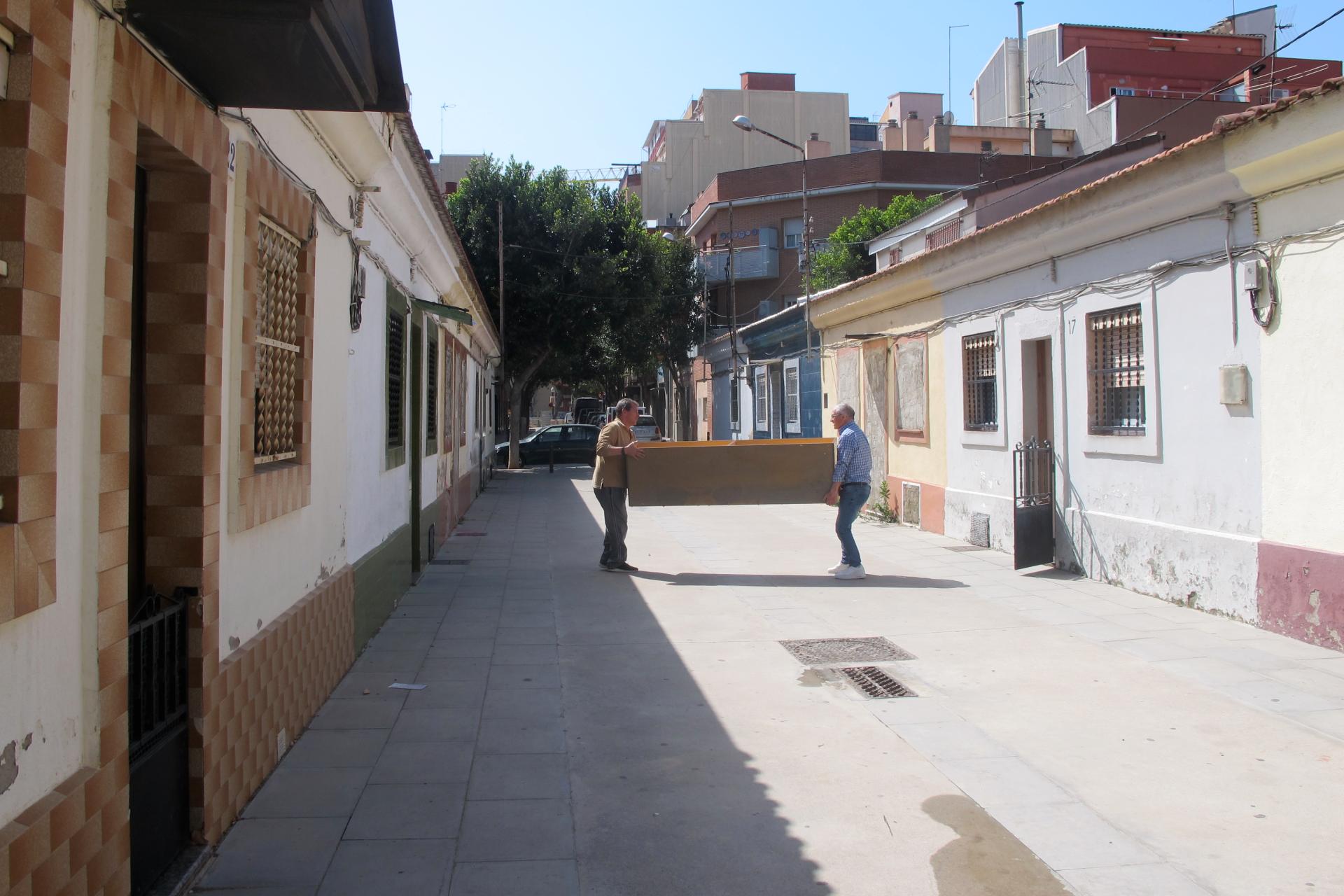
For example one of the last museum sites has converted workers housing into heritage by preserving a block of ‘cheap houses’ in Bon Pastor Neighbourhood, in cooperation with other organisations that shared the aim of conserving the historical memory of the neighbourhood. On one side, four houses have been restored to represent their appearance at different times (1930, 1960, 1980 and 2015), following a historical rather than a synchronous discourse. On the other side of the block, the Museum has converted further four houses into exhibition spaces devoted to the history of housing in Barcelona. The remaining eight residences are housing local services,
with spaces for the partner organisations and other shared facilities, such as a multi-purpose room, meeting room and hall, classroom, workspaces, archives and storage rooms.
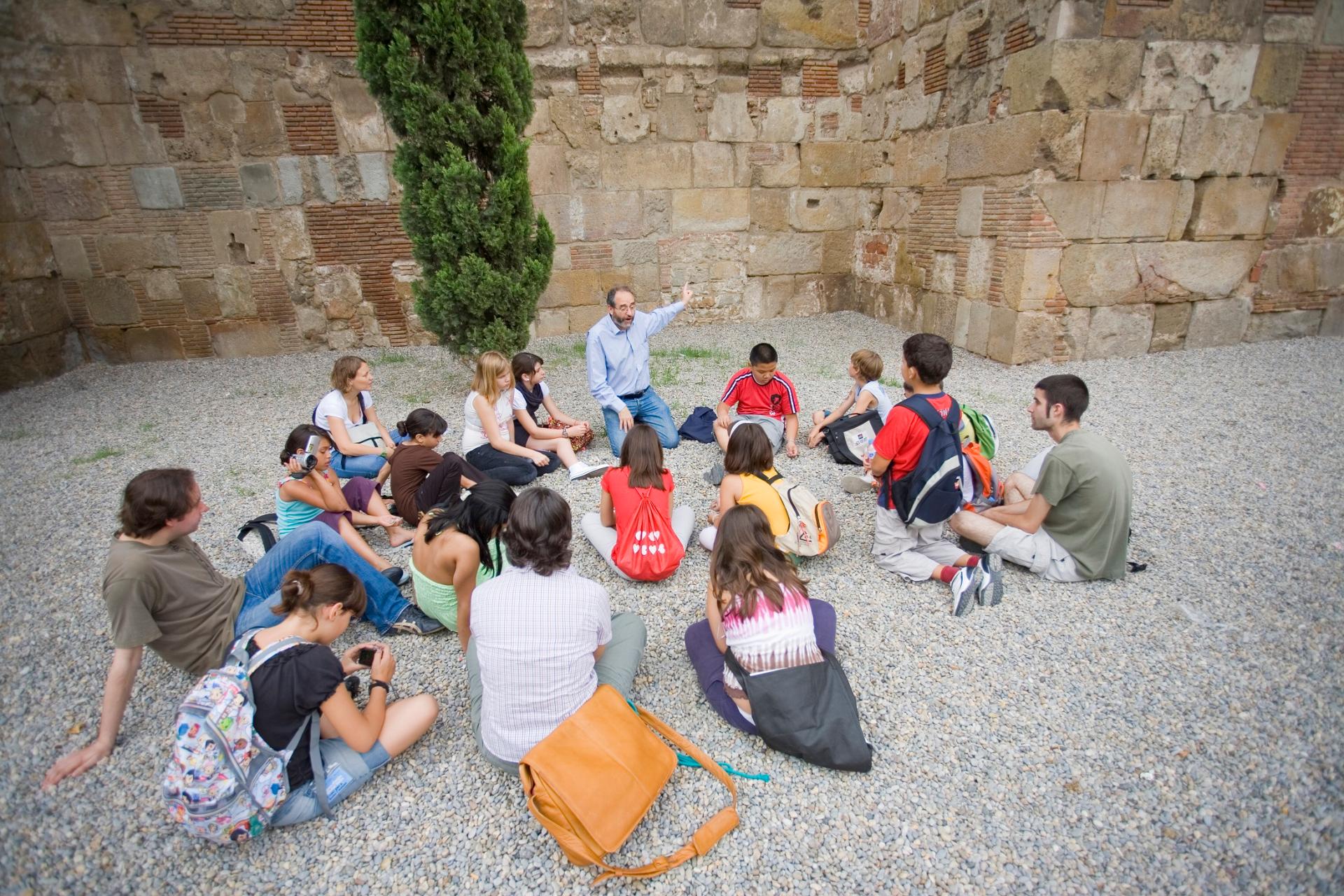
Children activies in MUHBA show another exemple in terms of aesthetics.Through diferent activites kids are invited to feel the emotions that monuments, buildings and públic space are generating to them. Feeling the city and its history helps children to open their eyes to the world of Arts.
Key objectives for inclusion
Participation as a way of breaking down barriers
The MUHBA project has the responsibility, as a city museum, to identify the voice of social diversity, that is, to recount the history of the city through the diversity of its frameworks of reference because there is not one single account; instead, multiple narratives coexist. Therefore, MUHBA aims to show and describe this social construction of the city, making all voices heard and placing them within the urban history, rendering them visible and, thereby, participants in this history.
Recognising diversity and disseminating its interpretation requires work in different formats to cater to the multiple sensibilities that exist. Some specific examples are:
- ‘This is Barcelona. Welcome to the city!’: proposal for the new immigrants in the city to make their arrival warmer and to help them to be connected to the city. By using the most common immigrants’ languages, and working together with NGOs that welcome immigrants, the project guides the person through the history of Barcelona.
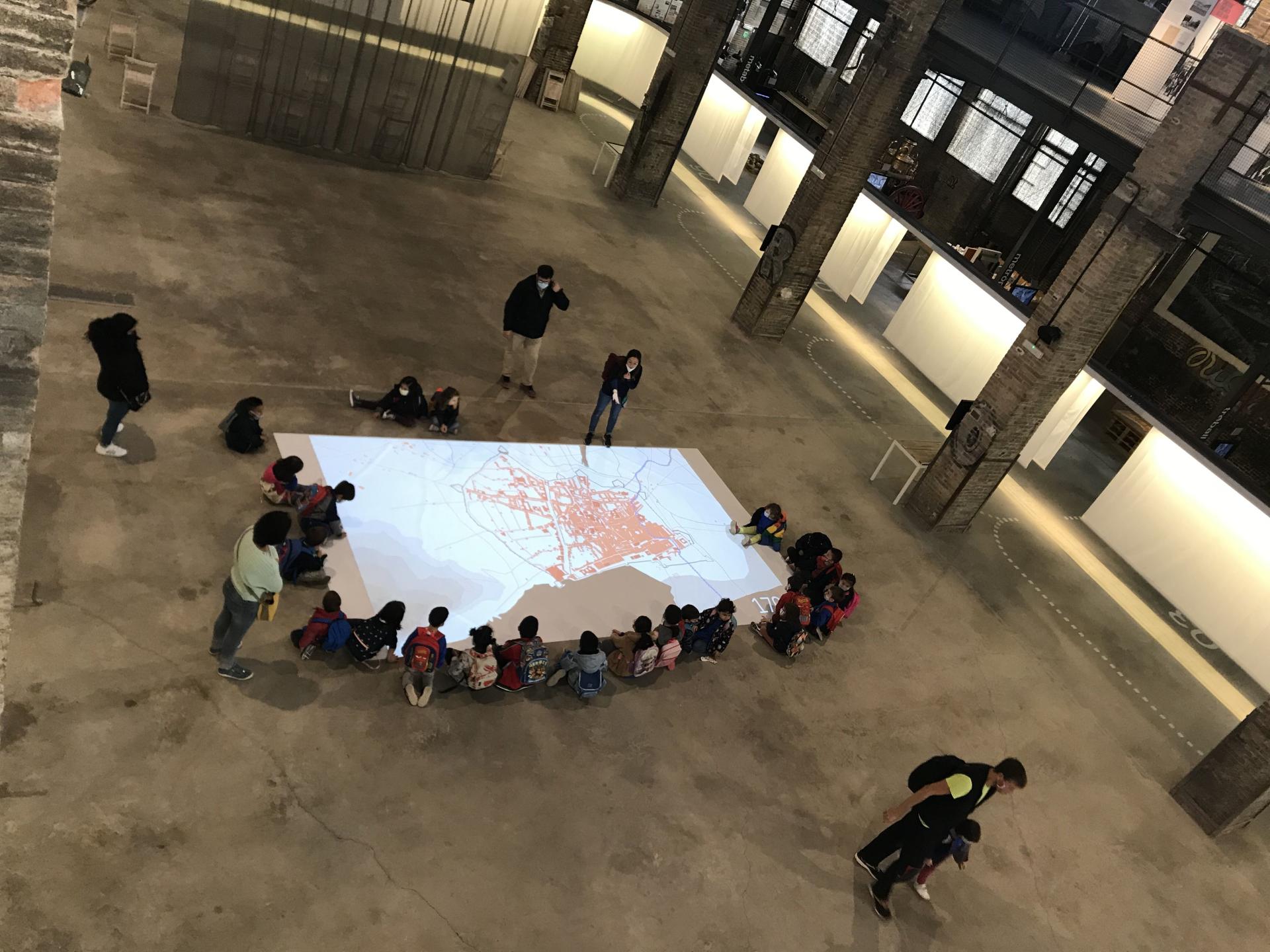
- Children: MUHBA has several activities orientated to kids during school time but also during leisure time. The activities aim to develop personal autonomy through discovering the city by themselves through maps and the identification of monuments, buildings, squares and streets. Getting to know how life was in the past in the city helps to understand the way we live nowadays, and this enforces kids connection to the city.
- Alzheimer programme: in two of the museum sites there are specific activities to help Alzheimer sick people to reconnect emotionally or intellectually with their memories through art and history.
These examples, among others, show how the Museum builds citizenship, constructs knowledge, breaks down the barriers between research and dissemination to generate a more inclusive and, in short, participatory social context.
Results in relation to category
The permanent exhibitions in MUHBA centres registered in 2019 a total of 1,340.000 visitors.
A total of 101,500 people visited one of the 6 temporary exhibitions organized by MUHBA together with local communities. These exhibitions were about:
- Barcelona as Mediterranian capital
- Barcelona flashback (100 objects that show Barcelona history, rethinking the new city museum of XXI century)
- Water, km0 (how the water distribution was held during last centuries)
- Camp de la Bota (where 1,706 people were killed between 1939 and 1952)
- Between the revolution and the desire (clandestinian life during Franco dictatorship)
- Harry Walker (workers' struggle in Barcelona automobile factory)
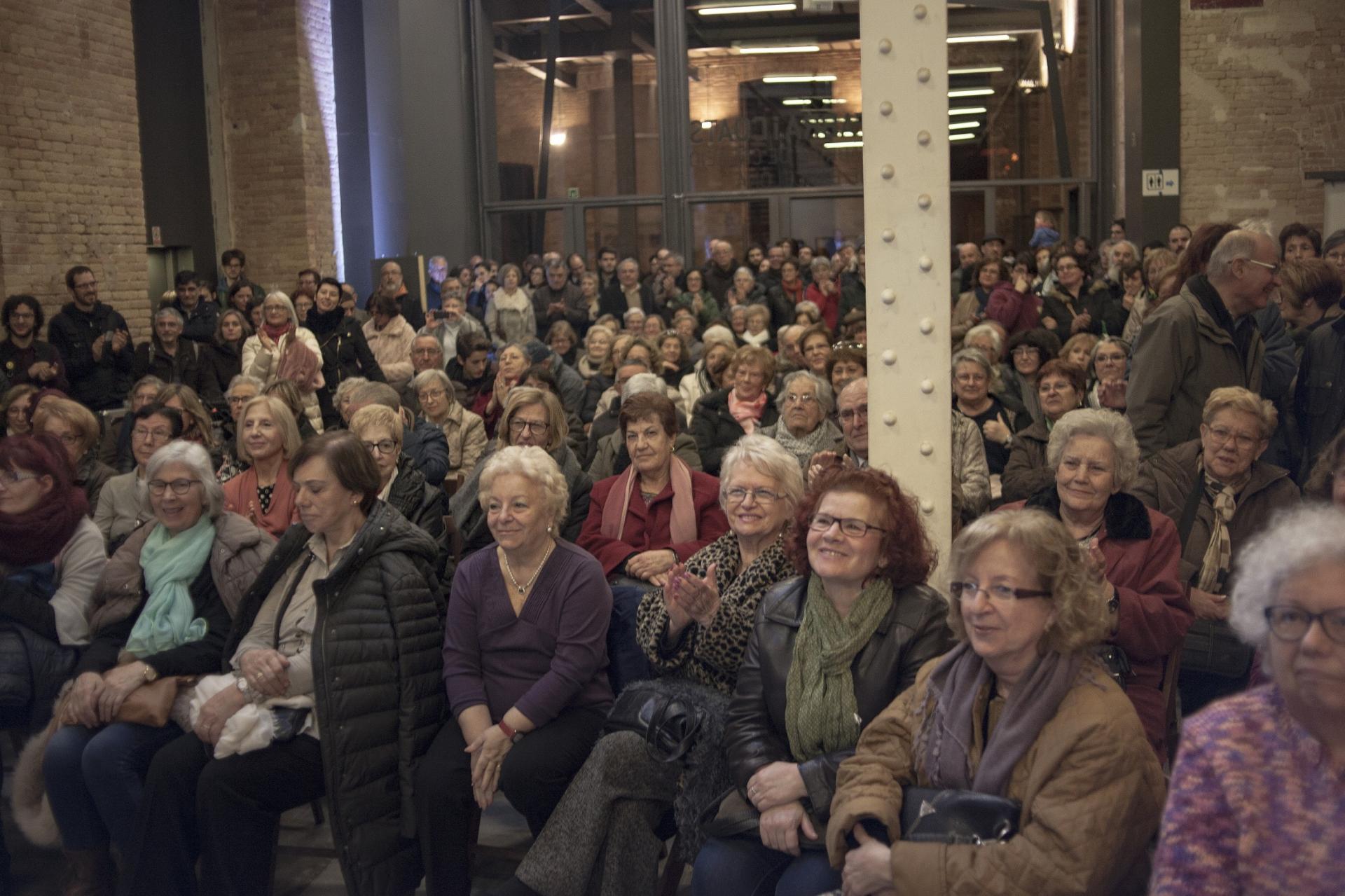
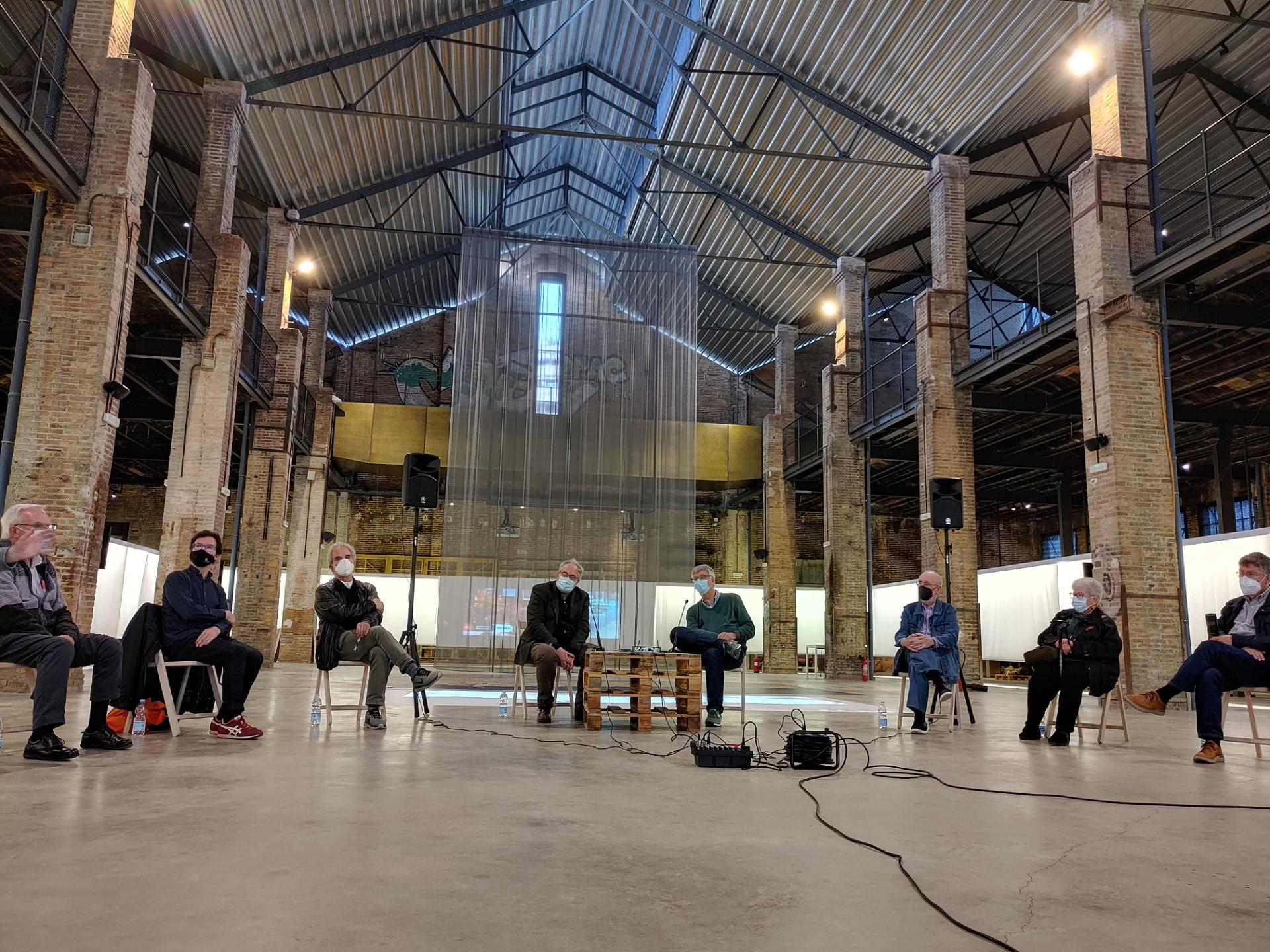
There were 620 other public visits with 14,300 users and more than 1,800 activities with 40,400 kids and teenagers. In 2019 MUHBA organized 56 dialogues (about urban history, arquitecture, heritage and literature), conferences and (books and other) presentations, with a total of 2,400 visitors.
How Citizens benefit
MUHBA has as a main principle the participatory construction of heritage, and this is possible thanks to the experiences of shared management among the Museum, districts and social organizations. MUHBA is:
1) Centre of knowledge, as a hub for research and the socialisation of knowledge about the city and its trajectory and for appreciation of its cultural heritage in multiple formats: from exhibitions and installations to seminars, publications, documentaries, visits and itineraries or urban walks.
2) Centre of heritagization, which creates, systematises and studies collections of tangible and intangible heritage, in connection with the archaeological legacy, the built heritage and the urban landscape.
3) Centre for development, as an RDI agent that innovates, together with other institutions, and exports know-how in numerous heritage specialities and as an institutional agent that contributes towards formulating sustainable touristic practices.
4) Agora museum, as a participatory laboratory on the city and its trajectory for everyone – young and old, inhabitants, newcomer immigrants, refugees, visitors – within an environment of respect for the right of citizenship, social justice and cultural democracy.
5) School museum, with the application of museum methods in schools and vice-versa. Overcoming the barriers between culture and education and between museums and schools must be a fundamental goal.
6) Network museum, weaving a plural and choral narrative between the set of its heritage sites, with a connecting hub that acts as a departure – or arrival – point for questioning the city and its trajectory from diverse perspectives.
7) Dual-scale facility, on a city scale and a local scale at the same time, as an organiser of spaces and narratives and as a connector of neighbourhoods with the city. With an appropriate institutional fit within the municipality, the museum can be an agent of sociocultural cohesion, and a cultural ambassador for the city.
Innovative character
MUHBA, due to its position among urban and sociocultural policies, and because of its sprawl in diferent neighbourhoods, is a great place to test new models of community – public anagement. Each location is considered as a diffent urban lab where citizens can make use of the space.
Participatory approach can be considered as innovative and diverse, as it takes different forms in the MUHBA projects. Firstly, participation as a collaborative model: MUHBA projects become feasible thanks to the collaboration of different organisations in the neighbourhood. Secondly, there is participation as a contributory model. For example the residents of Bon Pastor have contributed directly to the project, bringing vital material to the Museum. Having conserved material evidence, they enabled objects to be recovered that will assist the museum conversion of the houses. Bon Pastor neighbourhood has contributed with many personal effects (furniture, everyday objects, decorative items, photographs, among others) while also sharing their personal experiences. The residents have been generous by sharing their life stories, and this testimony has been key to recover the oral memory of Bon Pastor. Once all the objects were taken into storage, they were inventoried, catalogued, described and identified. The work of systemising information carried out by the Museum curators followed the same protocol as it would be applied at any other archaeological site.
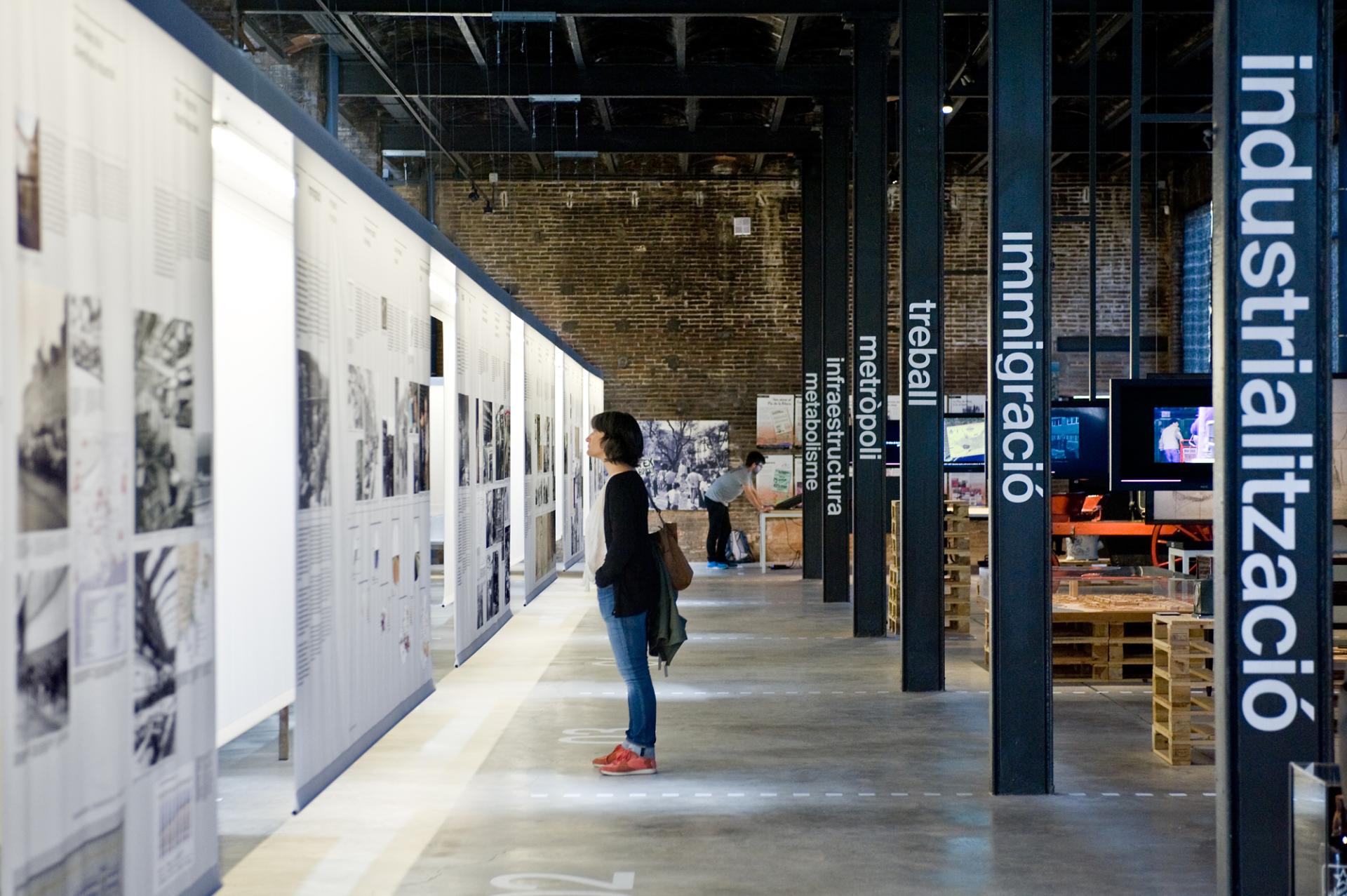
On the other hand, the Museum generates a historical narrative of the city, built up through the relations between its different heritage sites. Methods that have been applied in both historical narrative approach and restoring the buildings can be considered innovative. To give an exemple, in Oliva Artés there is a new museum-lab to introduce the metropolitan dimension, making questions to visitors and participants from the industry times in XIX century to the city challenges in XXI century.