Werkwarenhuis (The Work Warehouse)
Basic information
Project Title
Full project title
Category
Project Description
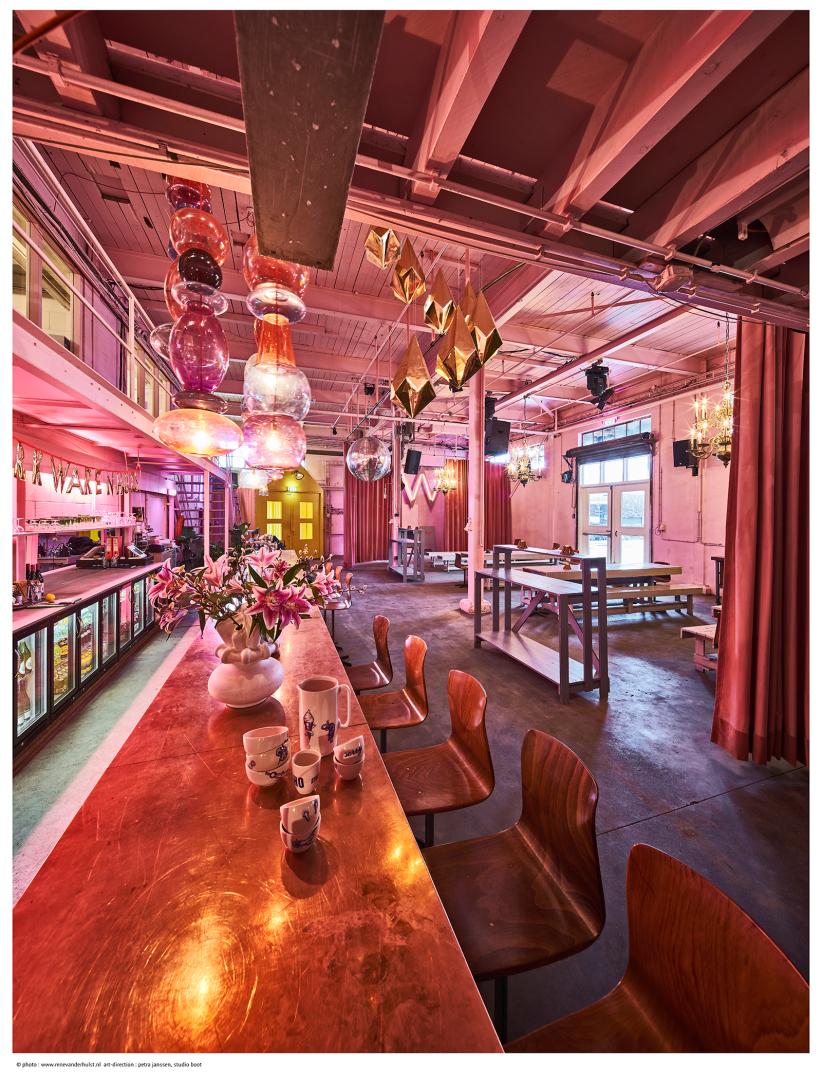
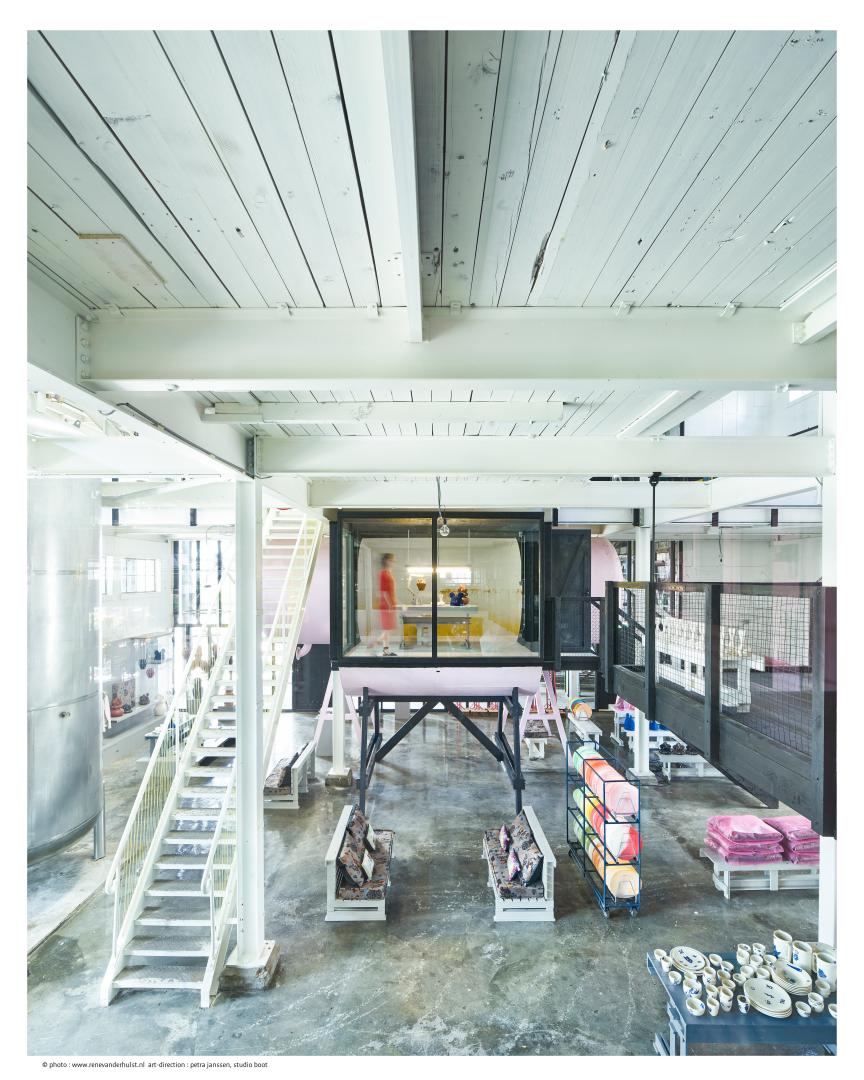
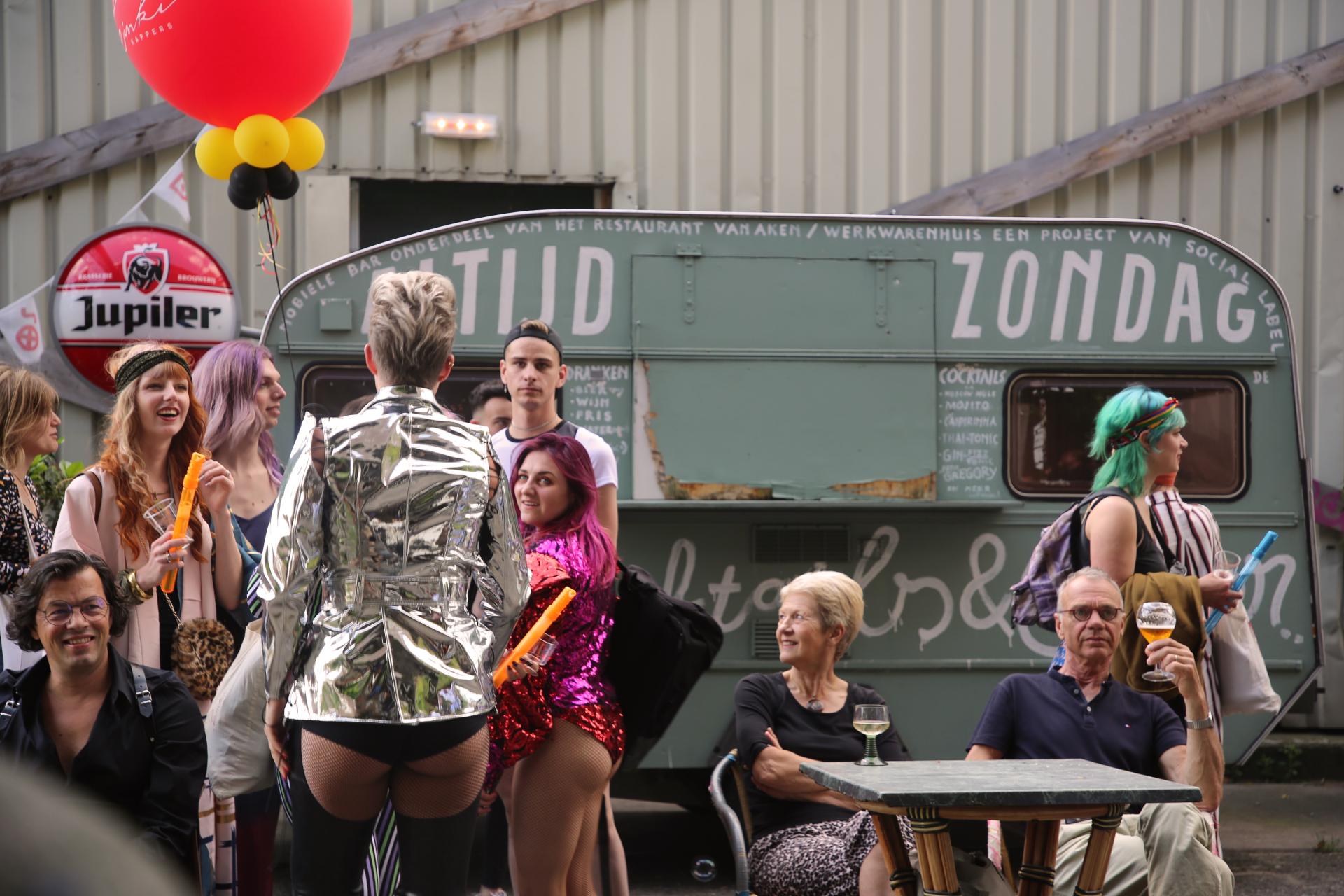
A former factory has been transformed into a conceptstore, meetingplace and halfway house for those distanced from the labour market. The Work Warehouse consists of a designlab for social innovation, club with dance, music and food. Based on the principle of ‘making something from nothing’ and re-use. Studio Boot and C-mone built a ‘Gesamtkunstwerk’ with designers, craftmen and people distanced form the labour market to capture the creativity and activity of the area and share it with the city.
Project Region
EU Programme or fund
Description of the project
Summary
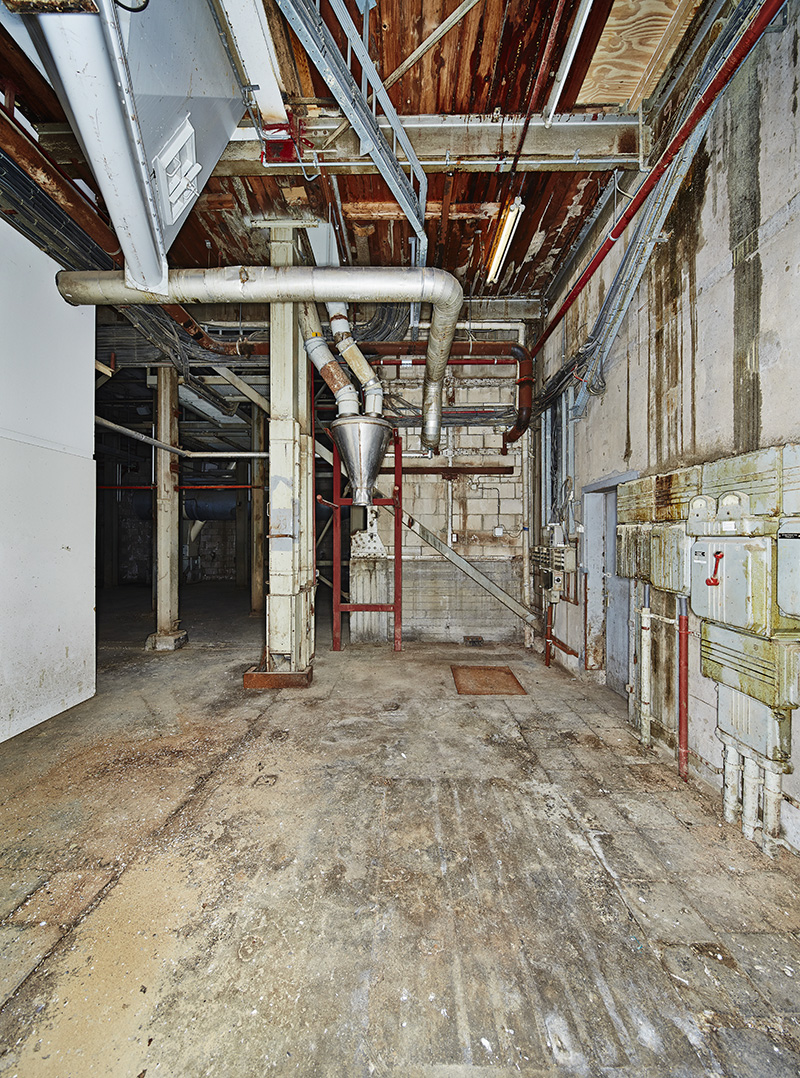
The former animal feed factory in ’s-Hertogenbosch has been transformed into a conceptstore, meetingplace and halfway house for those distanced from the labour market. The Work Warehouse consists of the Social label Lab for social innovation, ClubW performance, dance, music and restaurant. Based on the principle of ‘making something from nothing’. Studio Boot and C-mone built a ‘Gesamtkunstwerk’ with designers, craftmen and people distanced form the labour market to capture the creativity and activity of the area and share it with the city. The human dimension, the power of design and communication form the starting point for all of this.
The Work Warehouse is part of a larger project, and not necessarily intended to ever be completed. The focus lies on the continuous, flexible and fluid investigation process. This is translated into a physical implementation that is consciously informal and loose. As such, the accent lies with the people, the encounters and a playful touch to the project. It is precisely this approach that elevates social workshops out of the social and spatial isolation in which they can usually be found. The flexible character and the bringing together of different people and ideas is particularly intriguing. The fact that the entry is actually a snapshot of a longer process generates more curiosity into further future developments.
(Quote Committee Dutch Design Awards)
— The flexible character and the bringing together of different people and ideas is particularly intriguing.
Key objectives for sustainability
The lasting value of temporary use
The development of a new identity saves an old factory from demolition and creates space for new ideals. We are committed to
the function that we have in the city and the role that we play in the development of people. Adding value: that’s what we do here.
Well-being, creativity and entrepreneurship are the building blocks of our ideals, which reside in former animal feed factory ‘De Heus’. We realize these ideals through work creation, outstanding and sustainable food and our increasing numbers of visitors, through transformation of the building and through our role as cultural hotspot of the Tramkade site. The location is becoming ever more important and this feels like the natural role for the site. Cultural heritage.
Gesamtkunstwerk
As public entrepreneurs/designers, since May 2015 we’ve been working on the development of a public use function for a deserted factory, through the power of design, architecture and communication, with the human dimension as our point of departure. Together with prominent designers, craftspeople and people on the sidelines of the labour market, we are creating a ‘gesamtkunstwerk’, a monument for the future based on re-use with respect for the buildings of yesterday and a new function for tomorrow.
The Jury of Heritage Brabant appreciated the Werkwarenhuis as a cultural experiment on the
site of former cattle feed factory De Heus with a nomination for the Heritage Award 2017.
Nomination Heritage Award
‘The professional jury considers the Werkwarenhuis a good example for bringing heritage to the fore in an innovative, creative and valuable way. ‘What matters is how we treat ‘yesterday’ and at the same guarantee the present a meaningful place. With this biennial prize we want to stimulate innovative and creative heritage projects that deserve a podium.’
Piet Hein Eek, architectural firm
Eek and Dekkers on the architecture: With one intervention, we want to give the building a seccond life.
Key objectives for aesthetics and quality
The Werkwarenhuis, a diverse and barrier-free place for encounters in applied arts.
The Werkwarenhuis has evolved into a creative and social community, established on an industrial location. The diverse and barrier-free program, created with opiniated thinkers and do-ers, adds to a new climate of the city of ‘s Hertogenbosch. An authentic, pleasant and cultural place with an inclusive community that is young at heart. Through placemaking, Studio Boot and C-mone offer a site to the city in which everyone is invited and inspired.
Placemaking
‘Clear use of color and unique solutions create a landscape in which the visitors are part. Our goal was a fresh statement, with which we redeveloped a former engine room into a fully-fledged new concept store and creative workshop.’ The former workshop of the cattle factory became the community place. We work with typography, art, re-use materials that become instaspots in and outside. Each time we add new designs into and outside the building with the money we earned,Edwin Vollebergh, interior design
Programm
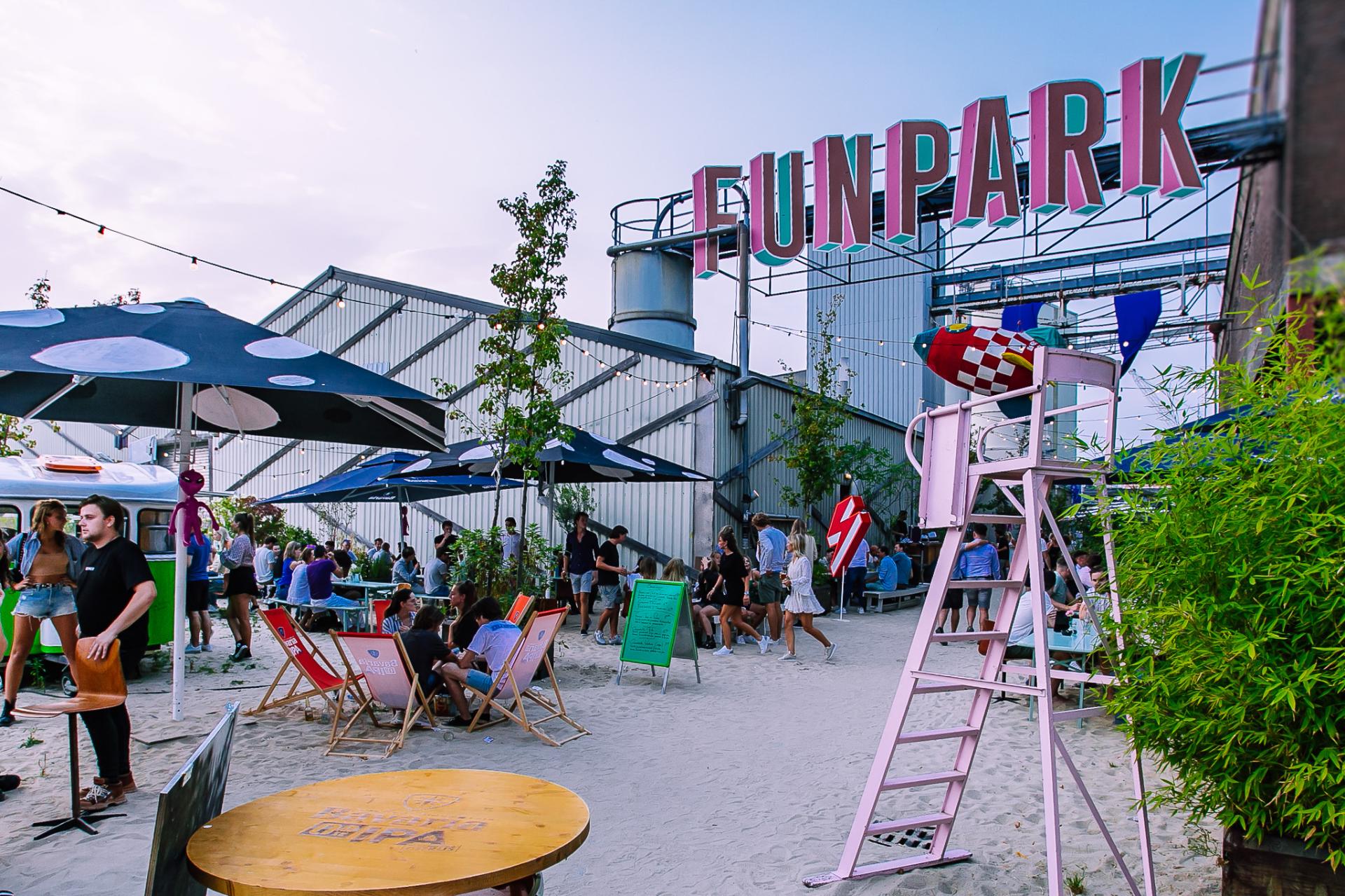
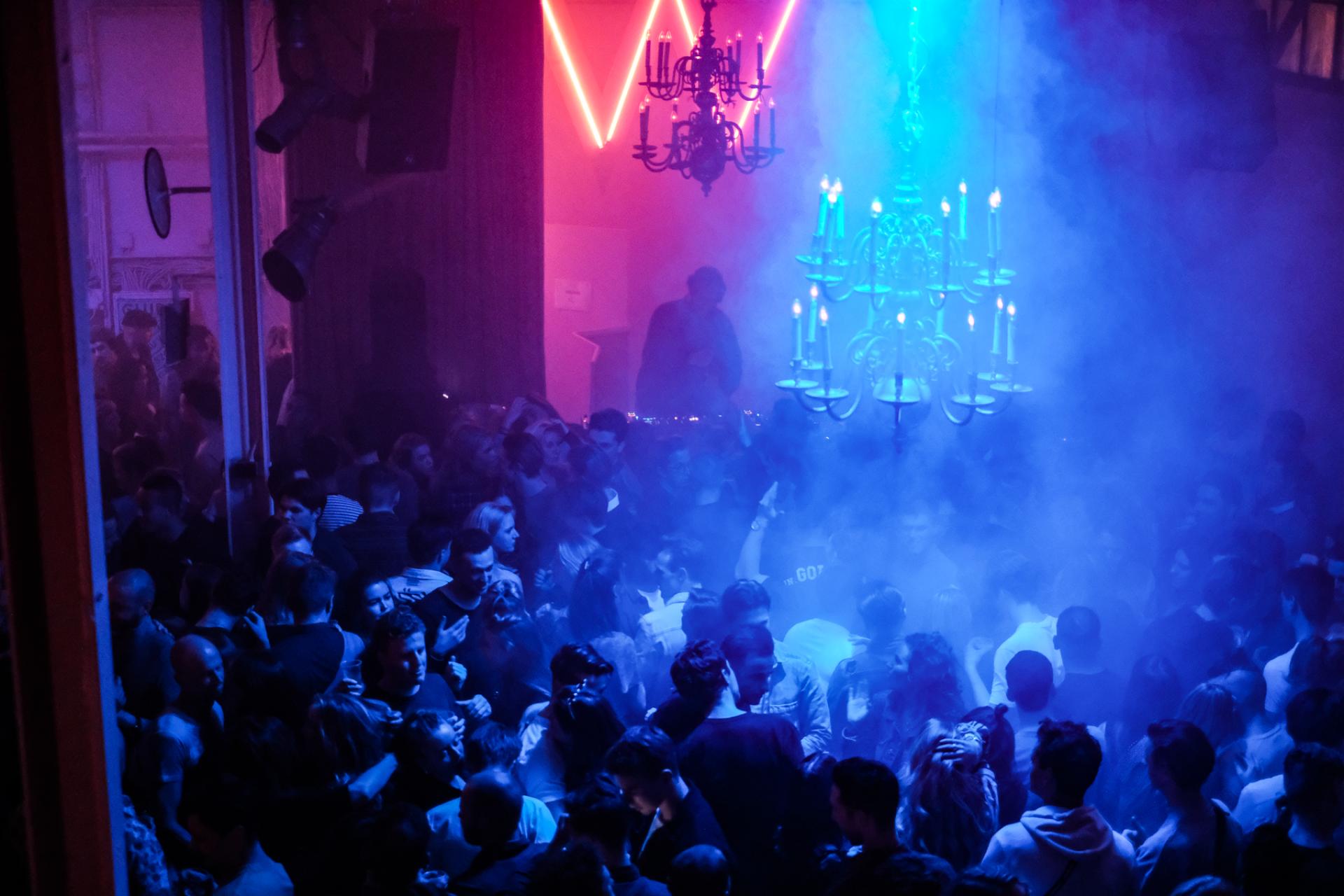
ClubW is a place for experimentation, for trying out ways to bring more design and more art into society. Working with creatives, education and participating Social label workplaces, we are bringing this deserted city district back
to life with one long continuous Make festival, from dance performances and urban events to temporary structures. Creating a hangout where the public is invited to engage. One great example are the legendary dance nightswith Forgotten local DJ heroes and joung talent, which started in July 2016 and its an ongoing program. We are an independant art house.
Key objectives for inclusion
Werkwarenhuis is setting an example of an inclusive society, so that people can not only see but also experience and feel its full potential.
Social buying
In the designshop you can find products from our socially sustainable house. This design collection is made especially for and
by people with poor prospects on the job market. In the shop we are assisted by a group of volunteers. Here, instead of asking what the price of a product is, we look at what its value is. In addition to valuing the quality of the product itself, it is also good to hear about how the product improves society and the economy by being useful and ingenious.
Experimenting and learning lab
The Social label Lab is a meeting place,a development hub and a new workplace all in one. This is where we are working on new and different solutions for work and society. Here, makers, public and designers are challenging each other and learning from each other. At the public lectures we organise for example.
The Doorstroomhuis (‘Flow house’) Work experience placements are filled on a voluntary basis by the participants at the Doorstroomhuis or in consultation with partners such as WeenerXL, Novadic Kentron, GGZ and the UWV. In addition, participating workshops host live workshops every Thursday afternoon and people participate in the sewing studio or job/painting team.
Eating and drinking
In The Werkwarenhuis you can eat from the narrative tableware made by designer Edwin Vollebergh and sit on benches made by Piet Hein Eek and furnished with cushions by Marc Mulders. Meanwhile the delicious meals are served by waiting staff in aprons designed by Borre Akkersdijk, when they are not sweeping floors with the international award-winning designer broom made by Dick van Hoff. It’s a total experience with culinary food
We try to connect various audience groups via design, art and culture. We offer them the opportunity to learn from each other.
Results in relation to category
A DIFFERENT WAY OF MEASURING
Journalist Mijke Pol on added value of the Werkwarenhuis
Journalist Mijke Pol wrote an essay, commissioned by the Werkwarenhuis, about the deeply ingrained need for hard figures and measurable results. But if you truly want to add value, you have to let go of the trusted parameters. That requires courage.
In the Werkwarenhuis we place the emphasis on what cannot be expressed in numbers. Well-being, health, happiness: these are the building blocks of our ideals. These ideals reside in a former factory, where once upon a time everything revolved around metres and kilos. Adding value: that’s what we do here. We show the city that the price per square metre on the scale of happiness can fall outside the realm of the measurable.
In the last few years our budgets have contained numbers. Plans and ideas have to be made concrete. We understand that.
The calculators must have something to add up. Does that in any way tarnish what we’re doing here? No, of course not. But perhaps it’s time to include an extra column in the calculations. The column of happiness, of health and of self-worth.
In order to set out this budget, we started out from what we know, so we can then identify the value that we can add to the place. Can that value be expressed in numbers? Valuing these kinds of former industrial buildings is virtually impossible for the real estate
world. What do you use for your calculations? The value of the kilos of steel? The cost of disposing of all the rubble? In order to cal-
culate what this place is currently worth, you could work out the demolition costs. What remains is the location: the effective square footage and the location in the city, close to all kinds of amenities. That is a value that can be calculated.
The Werkwarenhuis has added value to the place by replacing the function of the place. It connects care with design, social and cultural entrepreneurship. The wheels have been set in motion.
How Citizens benefit
The residents have been involved in building a new place together from the start. From the start, the gesamtkunstwerk has focused on professional young makers from the city, including DJs, performers and designers. We give them assignments and guide young talents in their development and in starting their creative entrepreneurship. Jobs are created through the catering industry, and through cooperation with care institutions we develop participation in art (e.g. live workshops). We create and offer space for art and culture for local artists. In addition, C-mone and Studio Boot deploy their international network for a versatile and barrier-free programme. From 'my mother's old town’ towards a creative hotspot has emerged of which the city is proud: the Werkwarenhuis on Tramkade.
The building was nominated for demolition and through placemaking and transformation it has now been included in the new area development Bossche Stadsdelta of the municipality of 's-Hertogenbosch. This new creative and innovative district is being developed on the basis of the pillars of young spirit, experiment and social sustainability that the Werkwarenhuis has shaped.
The area around the Werkwarenhuis has also been designated as a 'creative harbour'. This will leave room for creativity and development for the future.
Municipal comment: "We also appreciate the way in which the temporary use of the building has been designed. The aspect of permanent change appeals to us greatly and is also one of the most important starting points for the programme for the Bossche Stadsdelta. The area offers space for open and flexible concepts, whereby the programme and the users change regularly. This is, as it were, a continuation of the ideas of the Tramkade experiment. "
Innovative character
Cultural experiment
In 2013 Studio Boot and C-mone sat down with the municipality to revitalise a 'no go area'. The former factory De Heus was transformed into a cultural hotspot. Petra Janssen, Edwin Vollebergh (Studio Boot) and Simone Kramer (C-mone) named the area to be developed Tramkade and christened the middle building on the factory site Werkwarenhuis. In 2015 they received the key and the transformation gradually started. Meanwhile, the 'no go area' has been transformed into a 'place to be' and appeared in various (inter)national publications. In addition, the initiators of this project won several nominations and awards, including Dutch Design Award Habitat for designing a people-oriented attractive living environment (2019) and the nomination for the Heritage Award with the Werkwarenhuis as 'Monument for the Future' (2018). In 2018, Queen Maxima opened the design lab for social renewal. A next phase in the transition from the old factory to the Werkwarenhuis. Halfway through the experiment, we succeeded in preserving the Werkwarenhuis and with it the industrial heritage complex. After the experiment, the Werkwarenhuis will continue to exist as a building within the 'Bossche Stadsdelta', a new district. The sustainable value of temporariness has thus been proven.
Social renewal
New functions of temporary building, making and processes in society have been redesigned. The Werkwarenhuis has developed into a creative social community with its versatile barrier-free programme. A new climate has been added to the city. Applied art in the service of society provides other insights, other forms and is based on the human dimension.
Future
In 2020, the municipality launched the Bossche Stadsdelta area development. The area around the Werkwarenhuis has been designated as a 'creative haven' for the period after 2025. This will leave room for creativity and development for the future.