U-topi-a Venezia.
Basic information
Project Title
Full project title
Category
Project Description
The Citizenship Theatre has been active in Venice for ten years in the streets, hotels, museums, private houses, prisons, studios and theatres, involving institutions and citizens of all generations who, with their personal histories, participate in the regeneration of the city and the community, through theatre. The recent theme to be explored, staged this year, is Utopia and the ideal city, opening up new perspectives to re-think reality, in a time in which everything truly can be re-written.
Project Region
EU Programme or fund
Description of the project
Summary
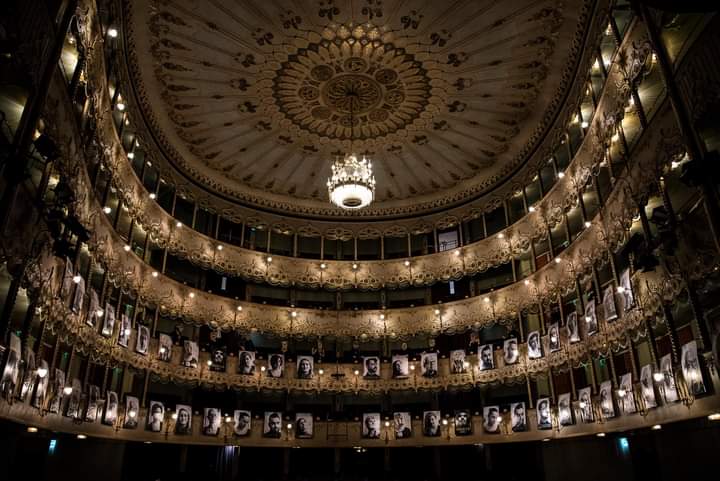
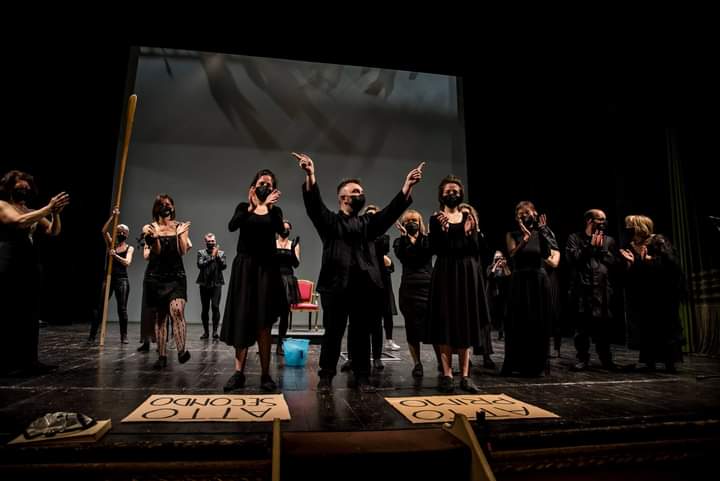
The Citizenship Theatre has been active in Venice for ten years in the streets and in hotels, museums, private houses, gyms, prisons, studios and theatres, involving institutions and citizens of all generations who, with their personal histories, participate in the regeneration of the city and the community, through theatre. The Citizenship Theatre in Venice is experimentation, research and the meeting of bodies and souls constructing their future for a better, more sustainable city. Over the years, many topics have been addressed and the great classics of world literature have been reinterpreted through a contemporary lens, mixing a more literary language with a mode more closely linked with everyday life. The most recent theme to be explored, staged this year, is Utopia and the ideal city, opening up new perspectives to re-think reality, in a time in which everything truly can be re-written. In the metropolis of U-topi-a, during an electoral campaign in which candidates propose their visionary programs for the future city, a U-tope suddenly seizes power and imposes a dictatorship. While some people do not manage to free themselves from the yoke of tyranny and behave like rats, a group of citizens rebel in their own way and devise ways to reconstruct and redesign new parameters for living. Closely linked to a political dimension, in the highest sense, the final act of citizenship of U-tope-a Venezia has been to reopen the Teatro Goldoni, which had been closed for the long period of the pandemic, giving a strong signal to the whole city and to the territory.
Key objectives for sustainability
The theme of sustainability is important to The Citizenship’s Theatre, which incorporates the awareness of individual citizens in common thinking around the topic of caring for places and safeguarding urban spaces and the environment. When they take place outdoors, citizens’ actions are site specific and don’t alter spaces, but adapt themselves instead to various situations, using what already exists and respecting the city of Venice and its physical characteristics, in accordance with a shared principle of urban regeneration. Indoors, on the other hand, including in theatres, all of the equipment used, especially costumes and sets, are made with recycled materials (plastics, paper and cardboard, textiles) or are recuperated from critical conditions (the problem of “aqua alta”, urban waste, etc.) The Citizenship Theatre also promotes constant dialogue on the necessary changes to be undertaken in times like these, marked by environmental and public health problems, and incentivizes conscious and sustainable lifestyles. In the last project, U-topi-a Venezia, first a series of outdoor workshops involved resident citizens and tourists in a sustainable treasure hunt, and then the final performance based the main theme on the recycling.
Key objectives for aesthetics and quality
The experience of the Citizenship Theatre has a powerful effect, above all, on a human level, since every single citizen-performer involved, not coming from a strictly theatrical background, is encouraged to implicate themselves with their body and with their voice in a total experience that resonates with their everyday lives. Opening themselves to theatre, to the stage, to meeting others, becomes an experience that often has a positive impact on the trajectory of their lives and their behaviour, both towards others and towards the places they live.
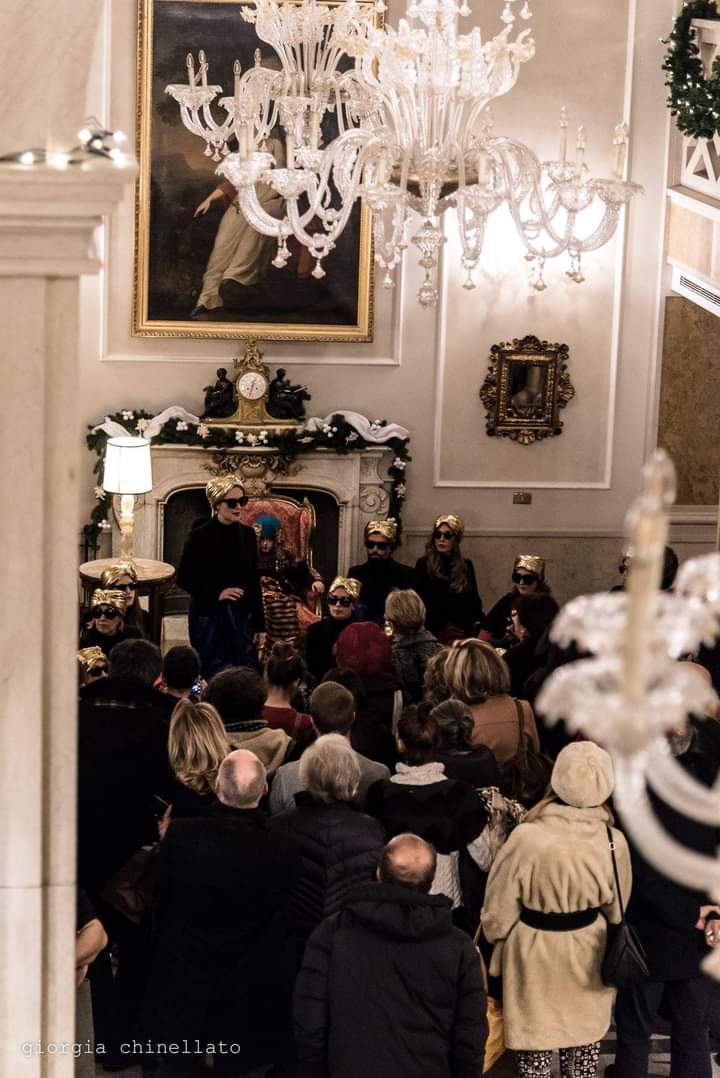
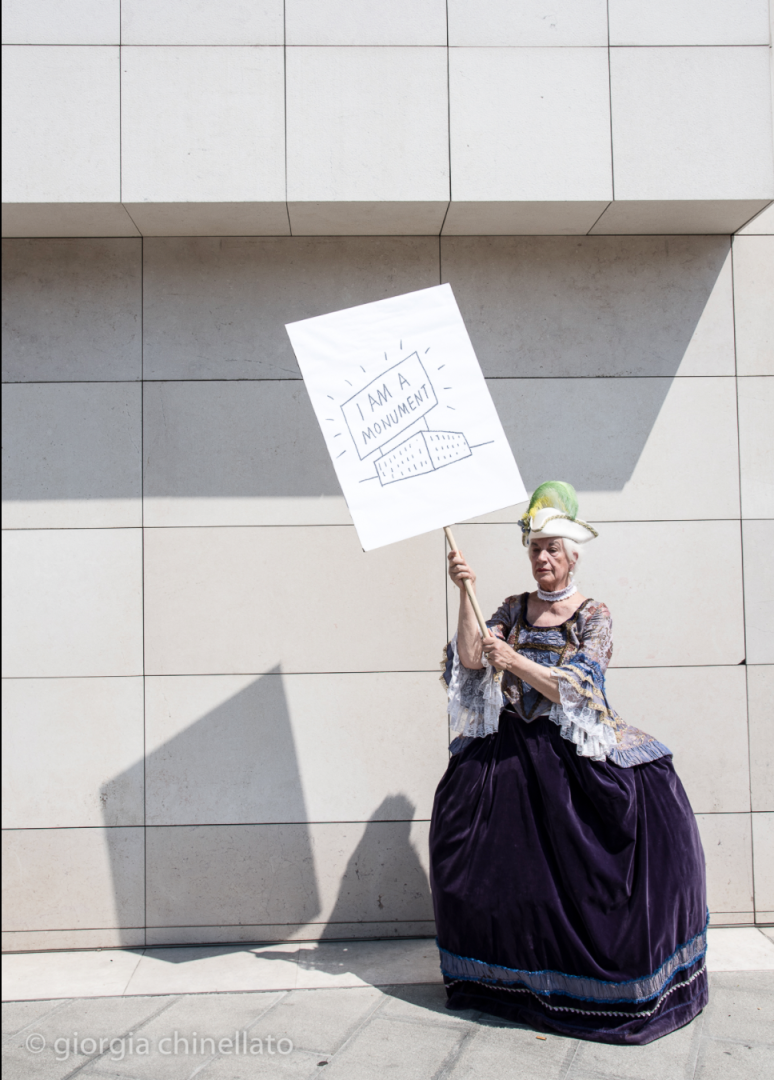
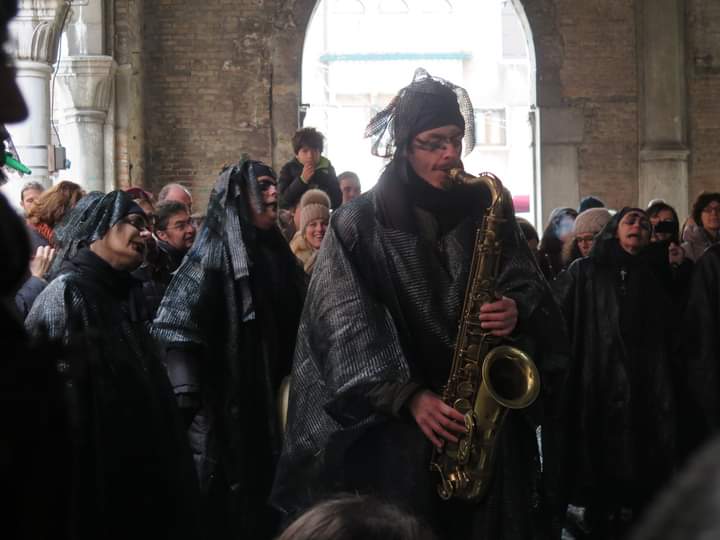
From an aesthetic point of view, the Citizenship Theatre bases its visual research on typical or suggestive elements, re-contextualized in a new way: costumes are made from recycled materials, adapted each time in innovative ways by the characters on stage; the use of masks and head coverings; everyday objects used in the dramatic action. When it takes place in a theatre, as the new U-topi-a Venezia, particular atmosphere is created through the emotive use of coloured lights in a space that is completely engaged in the action, with the stage opening up to the audience. During the performance, the public in attendance are given a dramatic role, making the individual spectator a participant. In this way, the theatre reaffirms a sense of community and becomes, once more, an incentive for togetherness and sharing.
Key objectives for inclusion
In the Citizenship Theatre, everyone participates as a performer at the same level and contributes to the creation of the play through their acting: working adults, children, adolescents and students, retirees and over-80s, differently abled physically or mentally, people suffering from addiction or who have been imprisoned. Every human being has a story to tell that is formed by their personal life experience and all are invited to share their experience with others to find common ground for discussion and interaction, which can also be healing. During annual workshops held by the Citizenship Theatre, themes for reflection are addressed and every participant is encouraged to consider them scenically, putting forward their own point of view. The creation of plays from singular acts of citizenship, in fact, stems from the individual citizens involved, who are encouraged to share their thoughts, ideas and emotions around specific questions, which are different each year. The outcome of this mosaic of unique and multiple narratives, derived from diverse human typologies, creates a discourse on humanity that is founded on inclusion and a sense of welcome. At the heart of the Citizenship Theatre project, in fact, is the idea that diversity is wealth and an important resource.
Results in relation to category
The Citizenship Theatre is supported by many venetian cultural and artistic institutions, both public and private, who, in many cases, have asked to produce ad hoc projects to strengthen their dialogue with the city and the territory. The Citizenship Theatre has connected with various organizations, and collaborations in recent years have included the Teatro stabile del Veneto, the Fondazione Musei Civici di Venezia, the Cultural Events sector of the City of Venice/Teatrino Groggia, Palazzo Grassi/François Pinault Collection, Ca’Foscari University and the Venice Biennale. From a strictly social point of view, the Citizenship Theatre has taken on a more facilitative role with the Santa Maria Maggiore Prison, the Fondazione Opera Santa Maria della Carità, AUSER and Vetrina del volontariato, as well as other non-profit associations that work in social, cultural and artistic areas of interest. Primary schools have often commission specific projects involving children and families as well as teachers and, in some cases, the entire student body.
The connection of such diverse realities through theatre and the community of citizens that enliven it have contributed to restoring a sense of trust towards some institutions, and has brought back to life and united a fragmented community, instilling new ideas of a participatory city. The Citizenship Theatre has created a network of support that is not material, but rather emotional and human, which over time has taken on a connotation that is in some way also political.
How Citizens benefit
With each passing year, the Citizenship Theatre attains higher and higher numbers, as there is great demand from the citizens of Venice to participate. More than one hundred performers have participated in the last few theatrical presentations, and although the numbers have dropped slightly due to the pandemic, more than forty people have been on stage over the past year. But citizens don’t have to participate as performers: the community also mobilizes to participate in the Citizenship Theatre in many different ways. The project involves photographers, who often create images that play a theatrical role in the plays’ action, videographers, who document the various steps, costume and set designers from appropriate schools or university programs, and dancers and choreographers, as well as some theatre scholars who support the theoretical aspect of the project. Last but not least, businesses, hoteliers and restaurateurs who manage the spaces where the theatre takes place are sometimes involved; as are museums, prisons, mental health centres and even rowing clubs, typical of Venice's historic centre. The entire civic society always participates enthusiastically with the tools at its disposal in the Citizenship Theatre, which is now itself also an actual institution supported and appreciated by the city.
Innovative character
The city of Venice, which has seen a succession of theatrical events of various kinds take place in the past, from the 16th Century to the current day, as the innovative stage of the 20th Century avant-garde, and whose essential nature is based on theatre and performance, has found itself, in recent years, lacking a cultural identity linked to the stage. Regardless of major international events, university and the survival of some local theatrical groups, the territory and its inhabitants have been missing an effective link, one that has, in the past, been fundamental to the city’s cultural scene. The Citizenship Theatre has sought to reinforce this connection and to make all citizens aware of the power of the performing arts, and has become, in a short period of time, a vehicle for regeneration and for bringing people together. Returning to create theatre in public spaces, among people and with people, has built a strong community that is giving renewed attention to theatre and to urban spaces, re-imagined and inhabited in innovative ways.