Cambio by Formafantasma
Basic information
Project Title
Full project title
Category
Project Description
Cambio, from the medieval Latin cambium, ‘change, exchange’, is an investigation conducted by Formafantasma into the governance of the timber industry. This extensive research translated into a multidisciplinary exhibition composed of objects, videos, interviews, installations, a catalogue, a website and an Instagram podcast. Cambio highlights the crucial role that design can play in our environment. It was commissioned and exhibited by both the Serpentine-Gallery and the Centro-Pecci.
Project Region
EU Programme or fund
Description of the project
Summary
Cambio, from the medieval Latin cambium, ‘change’, is an investigation into the governance of the timber industry. This extensive research translated into a multidisciplinary exhibition composed of objects, videos, interviews, installations, a catalogue, a website and an Instagram podcast. Cambio highlights the crucial role that design can play in our environment. It was commissioned and exhibited by both the Serpentine-Gallery and the Centro-Pecci.
Cambio looks at the evolution of the timber industry as a form of commerce that has overtime become difficult to regulate. It grew throughout colonial territories, becoming one of the largest industries in the world both in terms of the revenue it generates and the impact it has on the planet’s biosphere.
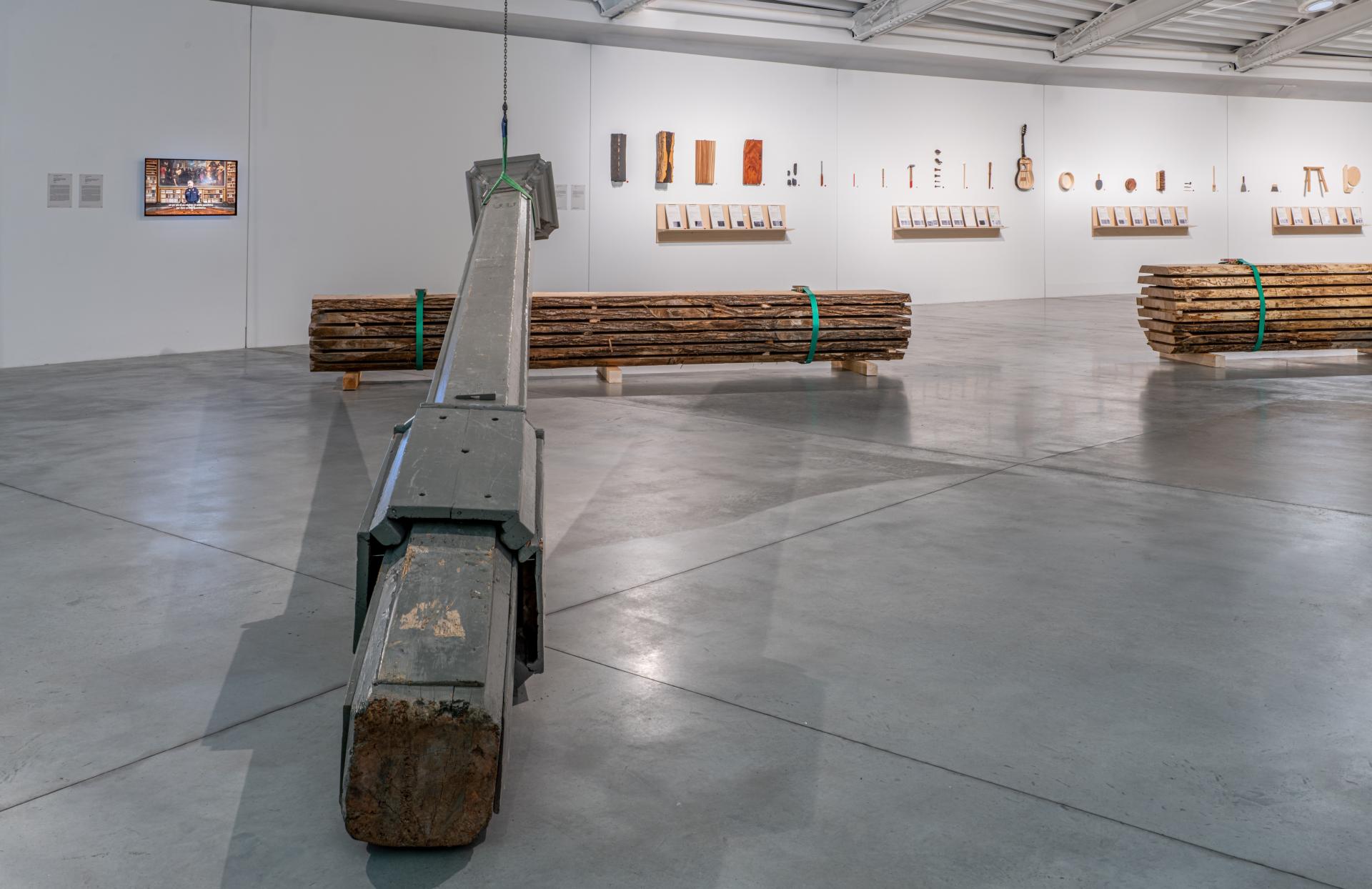
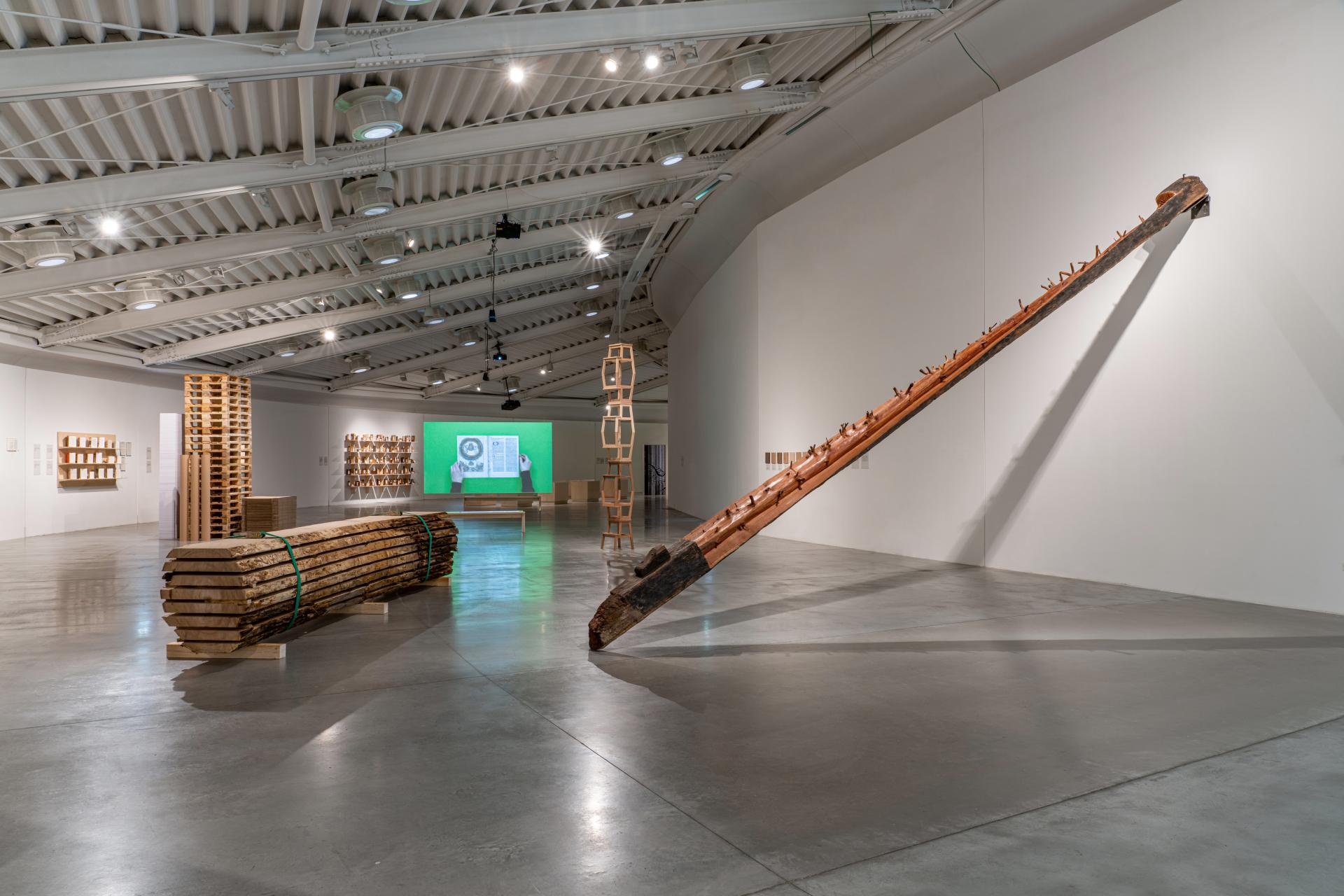
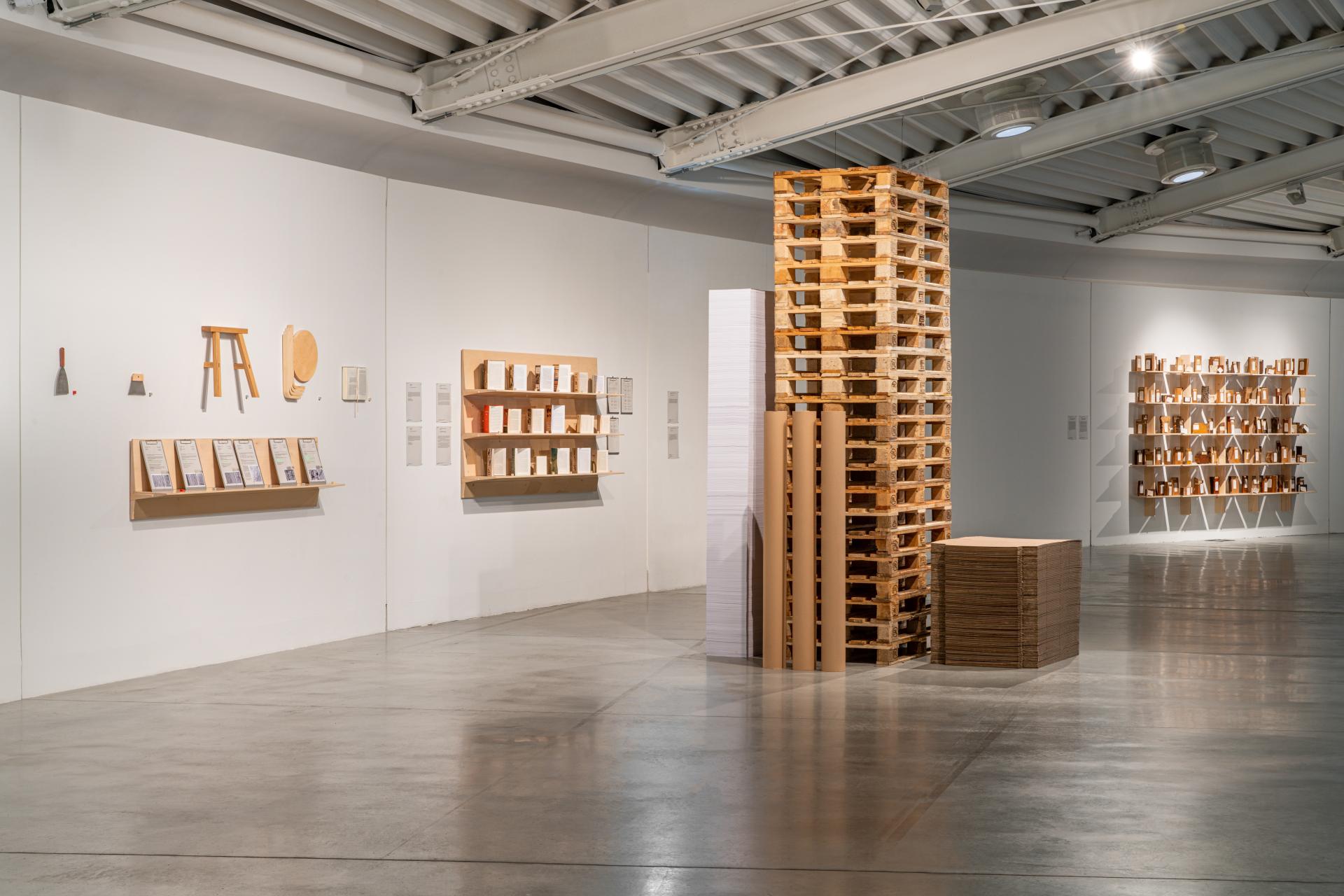
Like the rings of a tree, the exhibition is organized in a circular manner to allow a continuous flow of information, connections and dialogue between the pieces. The exhibition is composed of five sections:
- On the Passing of Time: The exhibition opens with a series of pieces that introduce the physical matter of wood by placing a large cross-section of a tree trunk.
- On the Forensic of Wood: This section of the exhibition takes stock of the quantity of data that can be obtained from the analysis of wooden products from our everyday life.
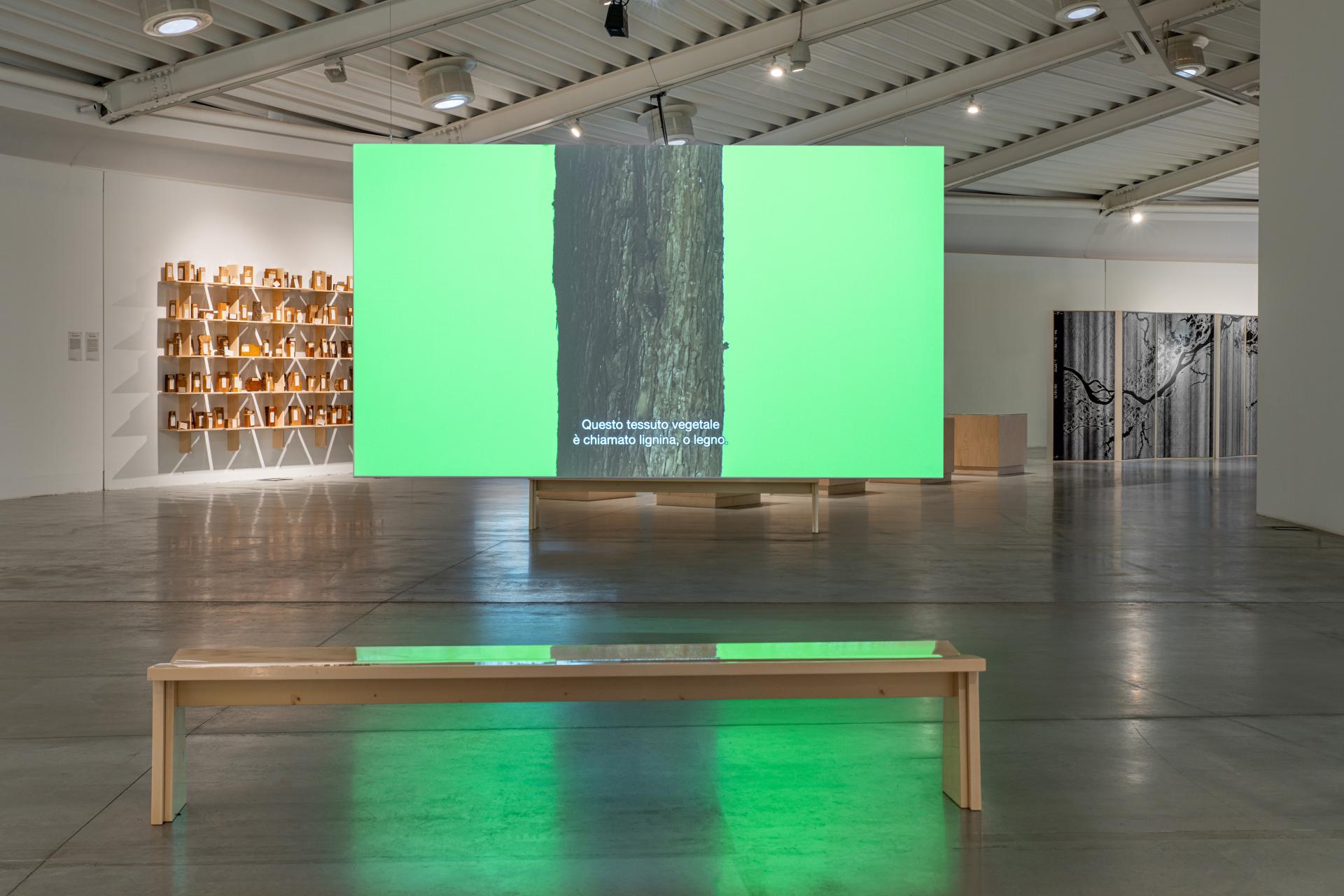
- Cambio Visual Essay: This section is composed of visual essays that investigate the historical evolution of the timber industry, and how a networked understanding of materials can be applied to a more holistic approach to design.
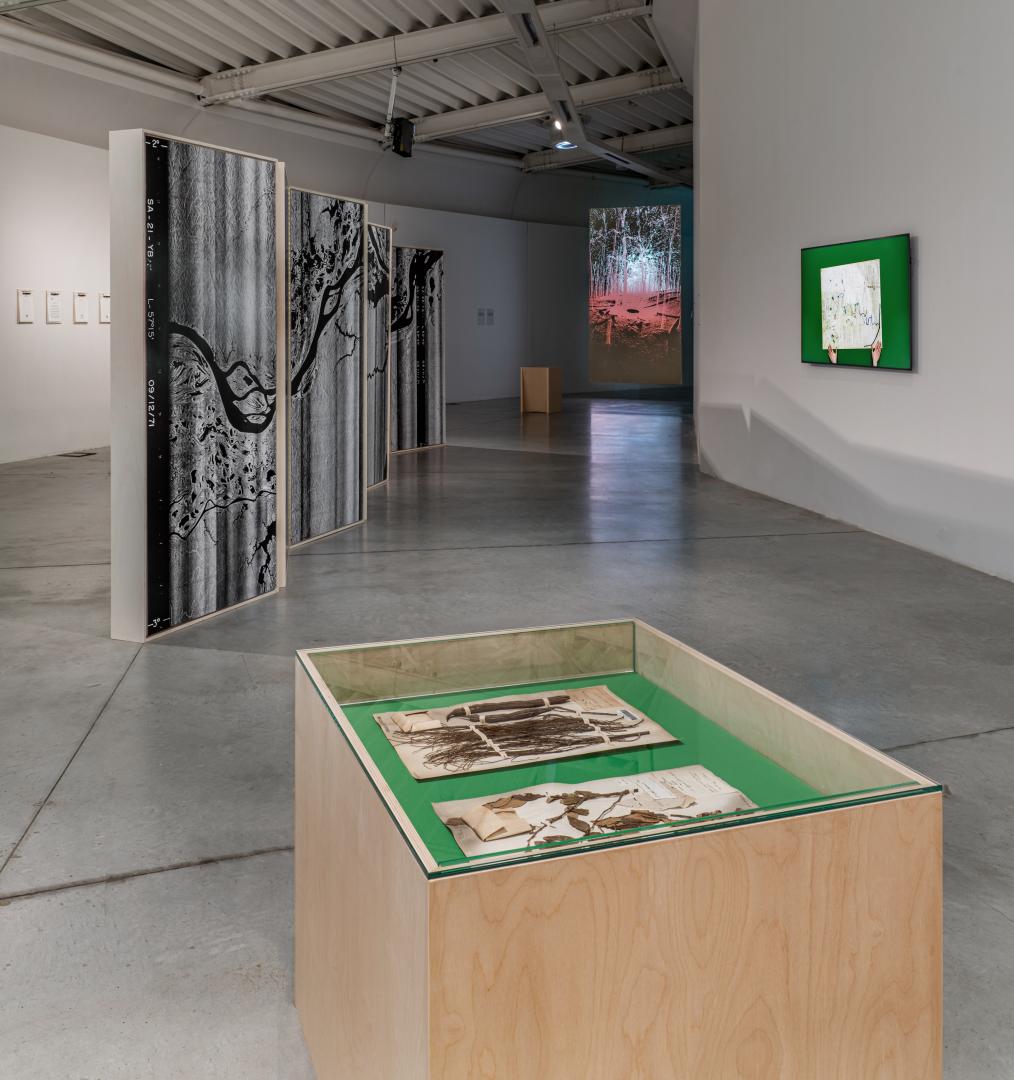
- The Archive of Lost Forests: In this section, a series of wooden samples are displayed as a bearing witness to the bioprospecting that took place for scientific and commercial ends during the colonial era.
- On the Governance of Forests: The combination of images, documents and films in this section of the exhibition attempts to understand the complex ecosystems and legislations contained in forested regions.
Key objectives for sustainability
Reflecting on three different scales of sustainability in design (short-term, medium-term and long-term). It is important when we design objects to go beyond the finished product, to think of the life of the objects after they are made.
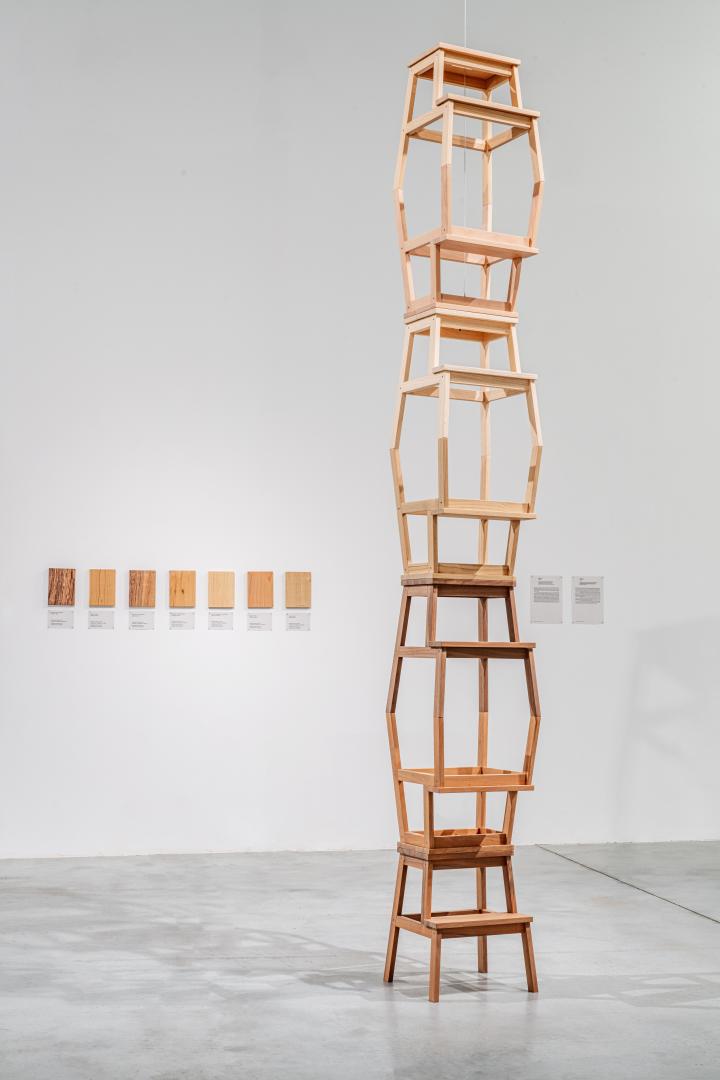
-short term is understanding the material qualities of wood and designing durable products that are well made. For example, in the first section of the exhibition, ‘On the Passing of Time’: We displayed stacked stools that invite viewers to consider the lifespan of the furniture we buy and how we should maintain a healthy relationship between an item’s ‘service’ years and the time it took to grow by using it for longer.
-medium-term is to understand the status-quo of production and extraction of materials today. For example, in the section of the exhibition, ‘On the Forensic of Wood’: The exhibition continues with a forensic research we did with a number of different scientific institution, such as the Thünen Institute in Hamburg. There, everyday objects such as paintbrushes, pencils and tools are analyzed to reveal how many were for example made from illegally-sourced timber.
- long-term is to rethink legislation, techniques and implement visionary processes in design. For example, in the last section of the exhibition, ‘On the Governance of Forests’: we display writings of Philipp Pattberg, a political scientist. His writings suggest future forest governance strategies. These documents constitute a series of speculative proposals that question this notion of longer time scale.
Key objectives for aesthetics and quality
The aesthetics of Cambio derives from the exhibition’s circular flow and content. This allowed us to create visual links and dialogues between the pieces displayed. Cambio attempts to play with the clichés of exhibition design: We took the traditional ways of displaying objects on shelves through taxonomies, placing archival material under glass and we wanted to add another layer to it. In fact, all along the different sections of the exhibition, it is the strong presence of text as an educational tool that gives all the subtle meanings and connections that are important to understand each section.
The display was purposely designed not to be a white plinth which by nature is disposable and almost a symbol of the ephemeral condition of exhibition-making. The idea was to make the pieces so obviously long-lasting so as to outlive the exhibition itself. Each individual element is low key in its appearance, nevertheless it has been brought to exquisite refinement in terms of aesthetic and provenance. The entire exhibition display has been constructed from one pine tree. We had this tree sourced from the Fiemme Valley in Italy, where a storm felled tens of thousands of trees in 2018, and which is also the source of the wood used for Stradivarius violins. This fact led us to think also of musical instrument production as a reference point for the series. Each element is built around an elegant tapered jointing technique that is derived from instrument production and eliminates the need for screws. The furniture pieces are additionally coated in the same finish used for wooden instruments, mixed with some grey, water- based paint to achieve what we call a “foggy” feeling – a way to approximate the studio’s research journey through the timber industry.
Key objectives for inclusion
Inclusion of works and voices of practitioners that are never, or rarely, considered as part of the design conversation: The development of a holistic and inclusive perspective is, we believe, the only way to take the design discipline forward to more responsible and critical levels of engagement. This method simultaneously enriches design culture and makes the discipline more inclusive of narratives that have been all too often overlooked.
We have collaborated with many key institutions such as Environmental Investigative Agency in London, Het Nieuwe Instituut in Rotterdam, Magnifica Comunita di Fiemme in Bolzano, Naturalis Biodiversity Centre in Leiden, Vrije Universiteit in Amsterdam, Kew Royal Botanic Gardens in London, Gaia Amazonas in Bogota, Royal Museum of Central Africa in Brussel, Thünen Institute in Hamburg and the University of Florence.
Our understanding of the timber industry goes from the Amazon forest in Latin America, the Vallombrosa forest in Italy to alternative readings of the forest in Finland. These geographically different voices are all present in Cambio. This is seen clearly in the fifth section ‘On the Governance of Forests’. Here we bring together different approaches to forestry management, from Europe to the Amazon, making comparisons over time and in different geopolitical outlooks. We displayed for instance images of hand drawn maps originate in communities that work with the foundation Gaia Amazonas in the Colombian Amazon. These images highlight important locations for rituals and social gatherings, as well as places of historical interest. These maps do not respect geopolitical boundaries, but reflect the communities’ perception of the region, seen as a single biome. The information is then translated into official maps that support legal documents to recognize the right of the Amazonian communities to live in these areas, and to protect them. These displayed maps were a way to make their claims and aims visible to a larger
Results in relation to category
Cambio, tries to question all the process that come into place when we design, produce and use objects. Today, design does not question enough the consequences and interactions that shape the reality of the field. For us this exhibition is a way to question and inspire designers as well as users/visitors to reflect on these processes around objects. We consider the main points where we can all make efforts and changes is extraction, production, distribution, legislation and simply usage of these objects that shape our world today. In fact, we can only be aware of our political and ethical responsibilities as designers if we are aware of the larger context that influence the lives of our products. As designers we can no longer think that our role is only to fulfil human desires and needs.
Throughout Cambio, information is animated in imaginative formats and brings into the discussion these processes. For instance, the act of learning and interacting with other practitioners that investigate the climate crisis from their own fields was very important for us. We think this kind of interaction can offer new thinking methodologies. This is visible for example in the Cambio catalogue that brings together experts from the fields of science (wood anatomist, wood technologist), conservation, engineering, policymaking and philosophy. The catalogue is composed of texts, interviews with experts and visual investigations that bring forward questions about the role that design can play in translating emerging environmental awareness into informed, collaborative responses.
How Citizens benefit
Cambio has been seen by 10,000 visitors at the Serpentine and just open with a fully reservated first day at the Centro Pecci. The exhibition will also travel to Switzerland and other cities soon.
Cambio, we hope will encourage a greater understanding of the complexities of timber conservation and production, and the choices we make both as consumers and designers. All the resources we used, all the interviews and readings we did are on the website. For us this was important to offer a greater level of transparency, both in the research and thinking of design practice, and in the structure of a global industry.
The Catalogue has been sold over 5,000 copies and we are constantly receiving feedback and comments from visitors and readers. They explain being more and more aware of design and the implication of buying a product not just as a consumer but as a user of this product. The catalogue is now in its third reprint with two new chapters and an Italian reader specially made for the exhibition in Centro Pecci.
The Cambio website has been visited by 200,000 visitors.
The Instagram podcast series ‘Antenna Formafantasma’ series (with over 200,000 listeners)
Innovative character
-Cambio marks the third design-focused exhibition at the Serpentine Gallery and is part of a program of events celebrating the institution's 50th anniversary. This exhibition has in a way allowed the design fields, its methodology and practice to enter spaces that are usually dedicated only to art as a practice.
-The multidisciplinary approach in Cambio is also an attempt to challenge other fields. For instance, scientists who do not usually use design methodologies (such as mapping or 3D softwares to simulate ideas) are challenged in their own fields. We see this in two examples in the section ‘On the Governance of Forests:’
In our movie Quercus, displayed in this section, we attempt to think of trees differently and to give them a voice in a way. The film was produced by manipulating a Lidar scan of an oak forest in Virginia. Lidar technology uses lasers to scan and record large surface areas and has often been used in cartography and archaeology. For the film, the technology has been repurposed as an animation tool to provide an opportunity to consider humans from the point of view of the trees, with a voiceover written by philosopher and botanist Emanuele Coccia. In this more poetic part of the exhibition, visitors find themselves being addressed by a tree: ‘Everything you know, you learned from trees, we fabricate the conditions for your existence’ says the tree in the narrative.
In the display table of this section, we exhibit the writings of Philipp Pattberg, a political scientist. His writings suggest future forest governance strategies. These documents constitute a series of speculative proposals that question this notion of longer time scale. In this part, we also highlight the politics of plants, which imagines a Universal Declaration of Trees’ Rights – Article I: ‘All trees have the legal right to exist, flourish and evolve’. Article 3 suggests that violations be prosecuted at the International Court for the Right of Forest Ecosystems.