BAVO-dorp circular renovation JUST DO!
Basic information
Project Title
Full project title
Category
Project Description
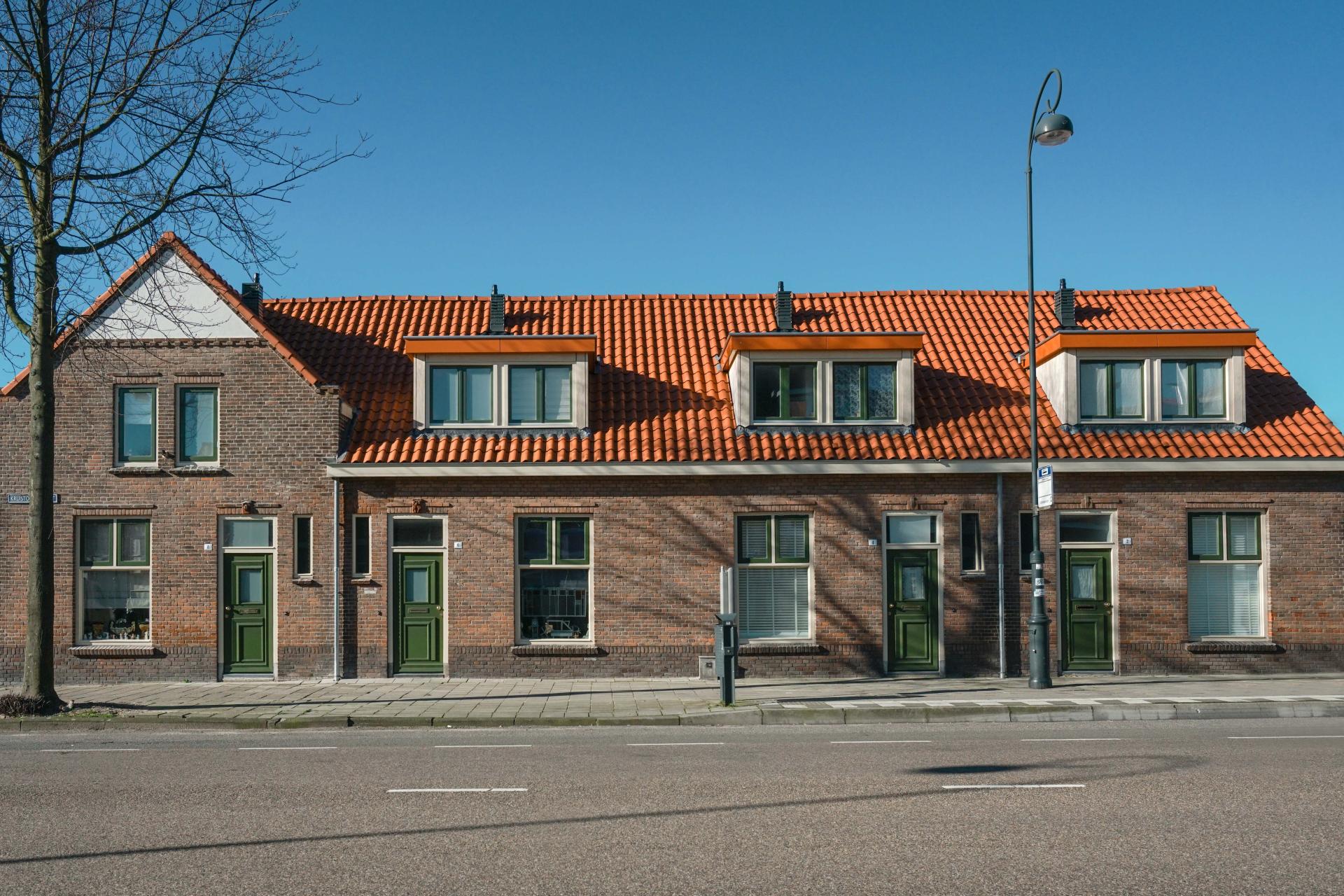
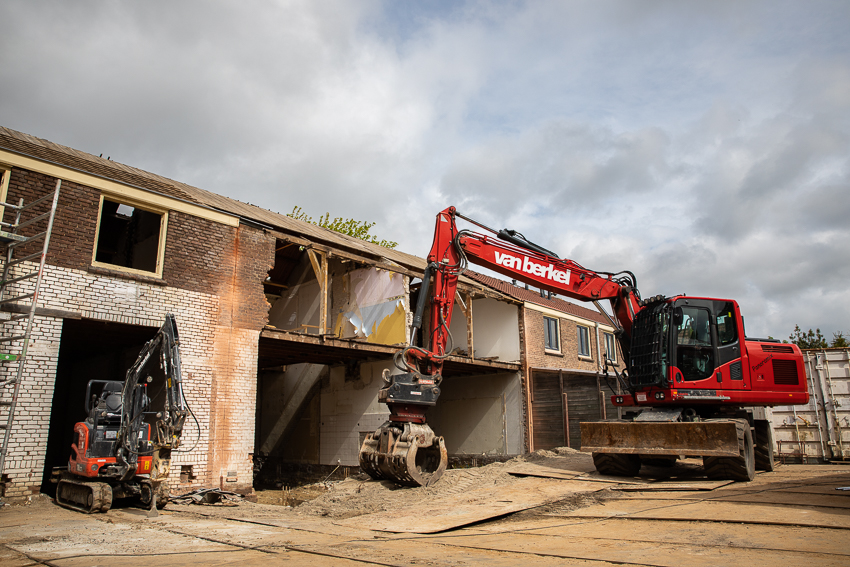
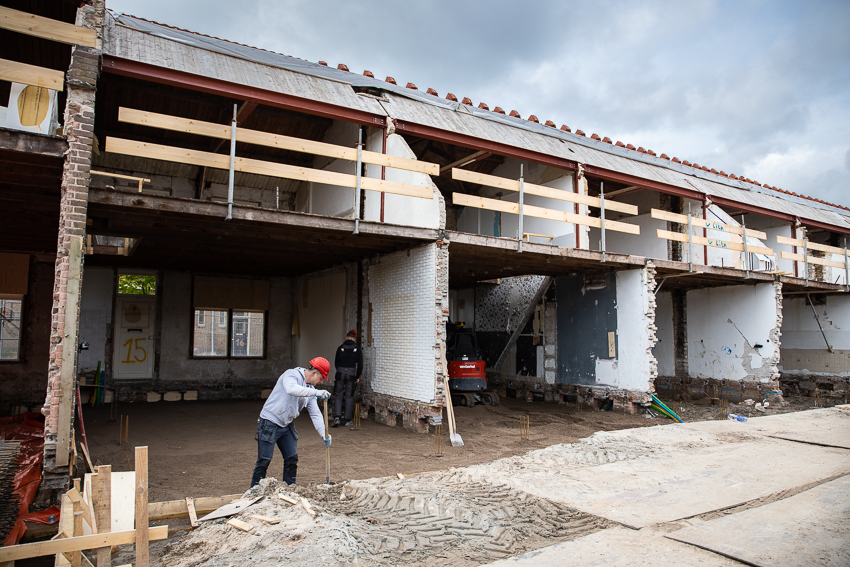
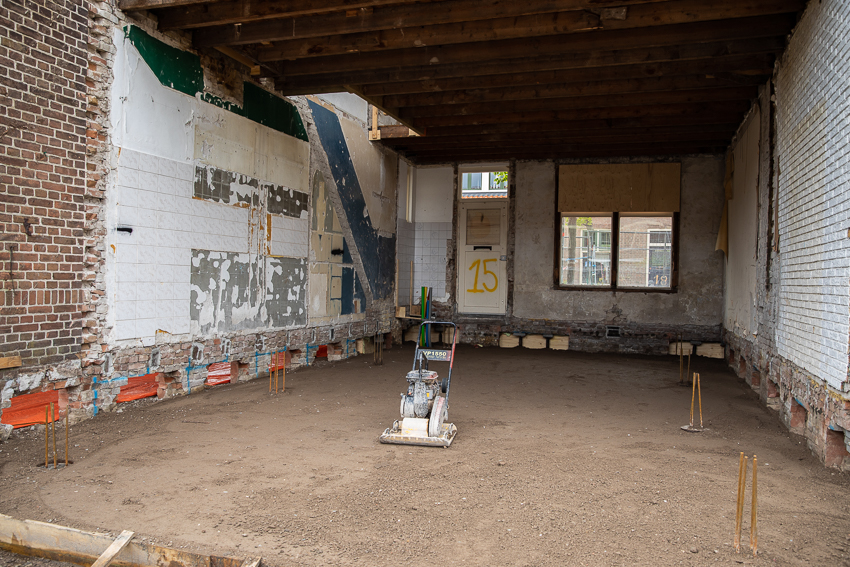
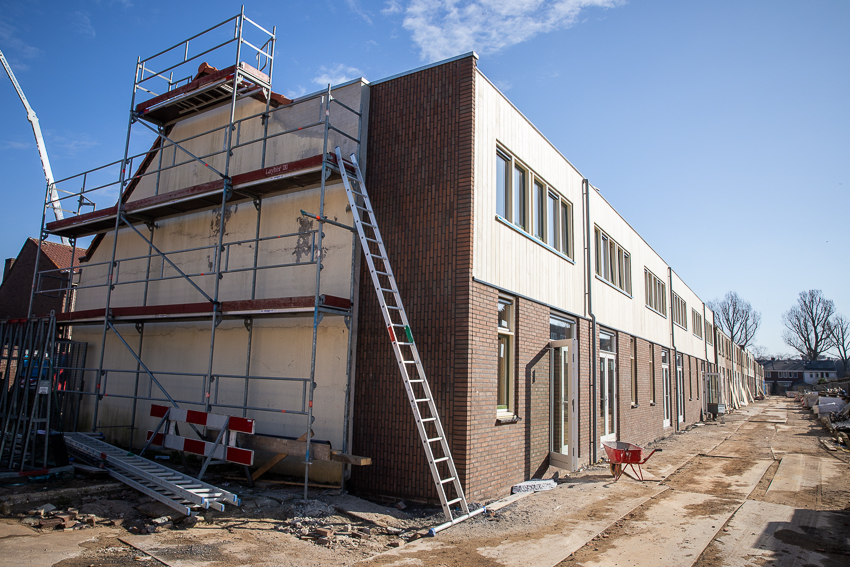
Ymere started the renovation of 288 houses in Haarlem 13 years ago. Currently 151 houses have been completed. The project is due to be finished in 2024. Circularity and climate adaptation methods have been implemented here since 2020. The most extraordinary method being the pulverisation of the concrete roof tiles and the rubble from the rear façade that together have been reprocessed into a work floor. Bavodorp is a model project for 'The Handbook on Circular Renovation' by C-creators.
Project Region
EU Programme or fund
Description of the project
Summary
Bavodorp is located in the Slachthuis neighbourhood of Haarlem where housing association Ymere has been renovating 288 pre-war homes since 2008. The project incorporates circularity and climate adaptation. Circular construction methods are being applied through intensive cooperation with the demolition company and the contractor. Together with its co-makers, Ymere has been looking for affordable and sustainable solutions on the market since 2014. Any knowledge and experience that is gained is shared with other co-makers/contractors and other housing corporations via https://groenehuisvesters.nl and on https://www.platform31.nl/thema-s/wonen/verduurzaming-corporatiewoningen/projectetalage-verduurzaming-corporatiewoningen/bavo-dorp-haarlem
The C-creators consulting agency has collaborated on the 'circular renovation handbook' with the TU Delft and the Netherlands Enterprise Agency (RVO). https://c-creators.org
A FIRST: Removed soil and concrete tiles are used as a work floor under the new foundations: Demolition contractor Roy van Berkel pulverised the concrete roof tiles that had been removed and mixed them with the soil that was excavated for the new extensions. The old concrete tiles - which were at the end of their lifespan - still contain 6% active cement. This combination of materials was then used as a work floor for the new foundations. Normally, foam concrete or Styrofoam is used for the work floor. The (2020) trial for 30 houses was successful; no less than 210 m3 of soil was repurposed. Not only were all the concrete tiles pulverised and reused, but the brickwork of the old rear walls was also pulverised and now lies underneath the new foundation.
In May 2021, thanks to the drive of the director of the demolition company, the next phase of 30 homes will also be built in this way. The process is more labour-intensive but, through perseverance, Roy van Berkel is showing his employees that this is the new way of working. Circularity at its best!
Key objectives for sustainability
Circular measures in Bavodorp focus mainly on the reusing of 'harvested' materials and the application of new materials with a longer life span according to the NIBE environmental classification. Applications are:
- Boilers younger than 5 years are installed in other Ymere homes by Comfort partners;
- Old concrete roof tiles, debris from the rear façade and soil which was dug up for the new extensions are reprocessed into the new work floor;
- Reusing wooden beams from the ground floor for the purlins, wall panels and sleepers around the roof dormers;
- Use of circular concrete for the new foundations, composed of 30% recycled concrete granulate;
- Stairs are preserved as much as possible
- New storage rooms will be placed on top of the old concrete foundations of the old storage room;
- The extension elements, connecting frames and dormers are made of acetylated wood (Accoya) and manufactured locally. They are demountable which boosts their reusability;
This renovation is anchored in the implemented BIM model and the material passport guarantees the information about the origin of the materials used. This serves as the basis for maintenance and future measures.
Climate adaptation. Together with the tenants and the municipality of Haarlem, special attention is paid to:
- Drought: Infiltration crates for rainwater and rain barrels in the gardens as a measure against drought and the low level of groundwater. Tenants are actively advised to place fewer tiles in their gardens and to use a wadi;
- Heat: in order to better regulate heat from the sun, Ymere offers the option of installing sun blinds at the rear of the houses;
- Greenery: The storage sheds will be given a moss sedum roof. Hedges will be placed in the front gardens and the municipality of Haarlem will enlarge the tree beds and explore the possibility of planting more trees;
- Biodiversity: Swallow-friendly eaves will be placed and sparrow roosts will be constructed under the roof tiles.
Key objectives for aesthetics and quality
Bavodorp was traditionally a Roman Catholic working-class neighbourhood and part of the Slachthuisbuurt in Haarlem. In 1919, Haarlem presented a General Expansion Plan, which was drafted by L.C. Dumont. He worked for the municipality and was inspired by Plan Zuid by the architect H.P. Berlage. The expansion plan mainly encompassed working-class houses to be built by the Haarlem housing associations, including those in the Slachthuisbuurt. The Roman Catholic Sint Bavo Housing Association, founded in 1915, built 288 social housing units in three phases between 1917 and 1922. The garden village was named Bavodorp.
The starting point for the renovation is to adapt the houses to modern-day requirements while retaining the original character of the architecture (1917-1921) designed by architect A.J. Prinsenberg. The historical value of Bavodorp as a 'garden village' forms the guiding principle of the plan. Particularly important is the preservation of the recognisability of the original block forms, roof and masonry surfaces and of the detailing of the masonry and the gutters. A key guideline in this regard is the cultural-historical study (2012) that Steenhuis Meurs carried out in consultation with the municipality of Haarlem.
The most immediate reason to start working on these houses was the poor condition of the foundations and the outdated structure of the buildings. The Slachthuis neighbourhood was previously characterised by a one-sided ownership situation and arrangement of housing. The intervention has resulted in a better balance between social and private ownership and more diversity in housing sizes. The choice was made to ensure that the expansions (extensions and parts raised upwards) are always recognisable as new additions where possible. Sustainability considerations influenced the appearance of the renovated houses, such as untreated Accoya.
Key objectives for inclusion
An important objective of this project is to have a diverse group of residents living in this neighbourhood. Both old and young! This is done by achieving a final scenario of 40% owner-occupied homes and extending a large proportion of the houses over two floors. This creates future-proof single-family homes.
Partially due to the sober finish, the product is accessible to a larger target group compared to other houses in Haarlem. But it is also precisely this target group that is willing to turn their own home into a palace. And as their own homes will become more attractive, so will the neighbourhood.
These measures have materialised in cooperation with the residents, the architectural firm Loco-Motief and Van Lith Bouwbedrijf BV. The houses will be extensively renovated over several phases.
At present, 40 of the 60 houses have been sold as shells. Over 100 houses will be extended by two metres over two storeys, which increases the size of the homes from 78 m2 to 98 m3.
We are also doing this for a large proportion of the social housing units, which will have a good-sized three-bedrooms on the first floor as a result, and are consequently extremely suitable for families.
The residents were actively involved in the plans for the renovation and the design of the new floor plans. In addition, Ymere offers its tenants a choice of several different colours of tiles, kitchen finishes and even the location of the kitchen or bathroom in the house. As one of the residents’ committee members says: 'There’s plenty of choice'!
Results in relation to category
Apart from renewing the foundations, we are improving the comfort of the home and its energy performance by installing solar panels on the new extensions. We are also applying 'no regret' measures in preparation for future energy transitions (gas-free-ready): switching to low-temperature heating, electric cooking (laying empty conduits to the kitchen), underfloor heating on the ground floor. A Total Cost of Ownership approach underpins the sustainability choices that have been made.
The project has accomplished many results in terms of circularity and Total Cost of Ownership principles. In addition to the results mentioned earlier, examples of this include:
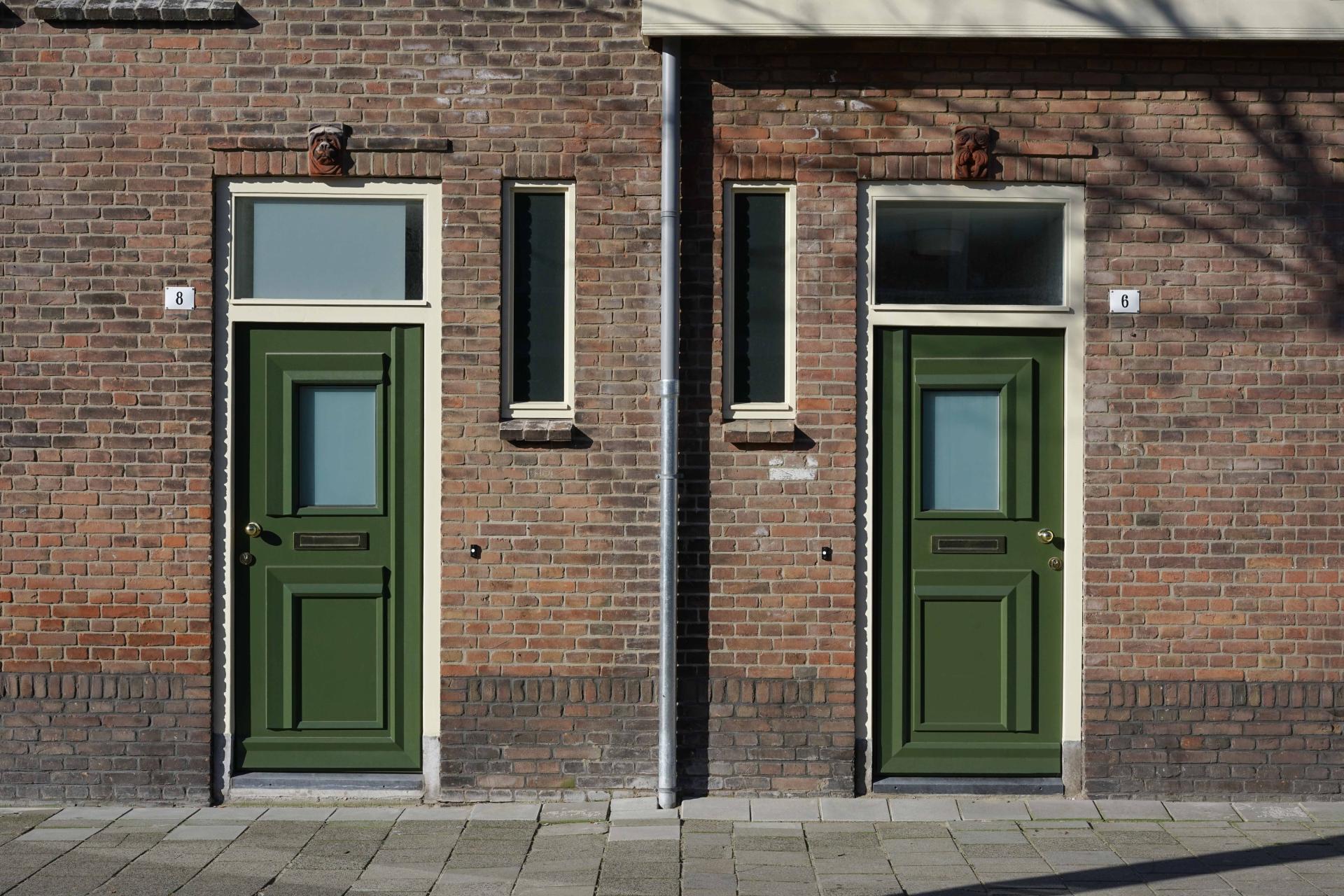
During the first phases (2014) of the project, the front doors were not replaced because they were not yet in need of replacement. In the meantime, seven years later, these doors have now been replaced. They were replaced with a qualitatively good door with extra attention being paid to its appearance. A front door is more than just a 'hinged surface'. Our tenants' homes begin outside the front door. A door is a welcoming element, a decorative feature of the home, and all the doors collectively can be the eye-catchers of the street. The design should relate to the architecture of Bavodorp, but also to that of other garden villages. Lex Pott was commissioned by Ymere to design the new front door, using fair materials and with equal attention paid to both the inside and outside. The supplier Weekamp used existing production methods and sustainable materials to come up with a smart new product design. The doors are 5 cm thick (instead of 4 cm) and placed in the existing frame inside a draught excluder. The residents' committee was involved in the design process and embraced this new door from the outset.
How Citizens benefit
A diverse range of residents and a resilient and self-reliant neighbourhood is being created as a result of the renovation and the choices that have been made.
The diversity of the product (sizes and the mix between social housing and owner-occupied) and the conversion of business premises into homes ensure that a whole new neighbourhood is emerging. A neighbourhood where people really want to live again; where tenants and buyers are proud of their homes!
Encompassing both history and a modern feel, Bavodorp has been put back on the map and is ready for the future.
Innovative character
The innovative character of this project lies in the power of open communication with the partners in the construction team; together, opting for new, sustainable and circular products, materials and working methods. Trusting each other and taking on the challenge together, following the motto of the Ymere project manager: JUST DO IT!
In addition to the usual renovation measures, this project explicitly seeks to work on circularity through the reusing of (construction) materials. With a materials passport and new construction elements that can be disassembled, we are also working on expanding future-oriented possibilities.