"POSITIVE EMPTINESS"
Basic information
Project Title
Full project title
Category
Project Description
APPLICATION OF URBAN AND HOUSING RESEARCH PROGRAM. Empty homes in historic centres are an possibility for cooperative intertwining. The analysis and intervention on residential fabrics in historical and vulnerable spaces must take into account the multiple variables, the numerous factors of attraction, resistance and dynamics, which inevitably condition the urban structure and each of its partssouth Europe ( Andalusia) and Montevideo.
Project Region
EU Programme or fund
Description of the project
Summary
APPLICATION OF URBAN AND HOUSING RESEARCH PROGRAM. Empty homes in historic centres are an possibility for cooperative intertwining. The analysis and intervention on residential fabrics in historical and vulnerable spaces must take into account the multiple variables, the numerous factors of attraction, resistance and dynamics, which inevitably condition the urban structure and each of its part in South Europe ( Andalusia) and South America (Montevideo).
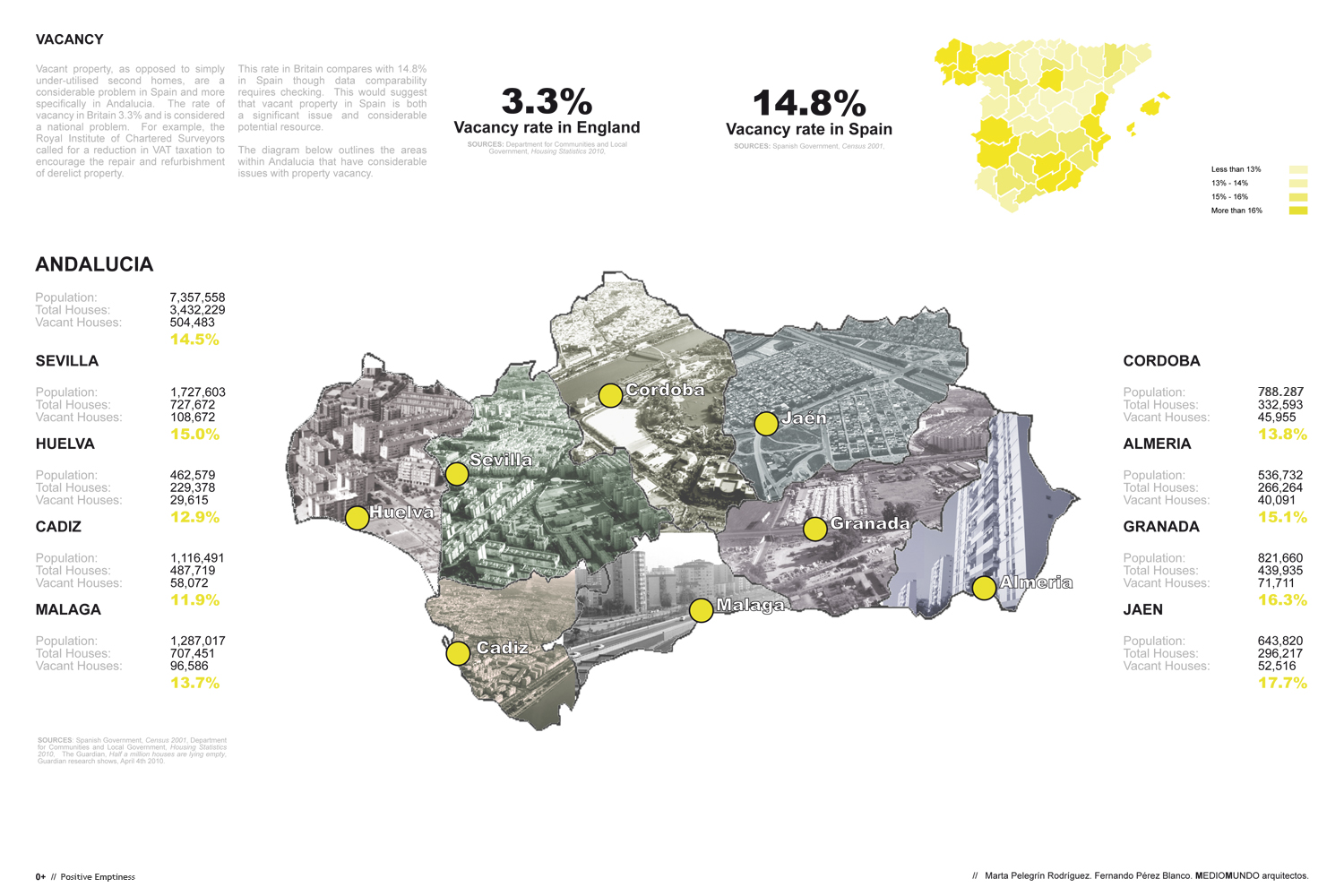
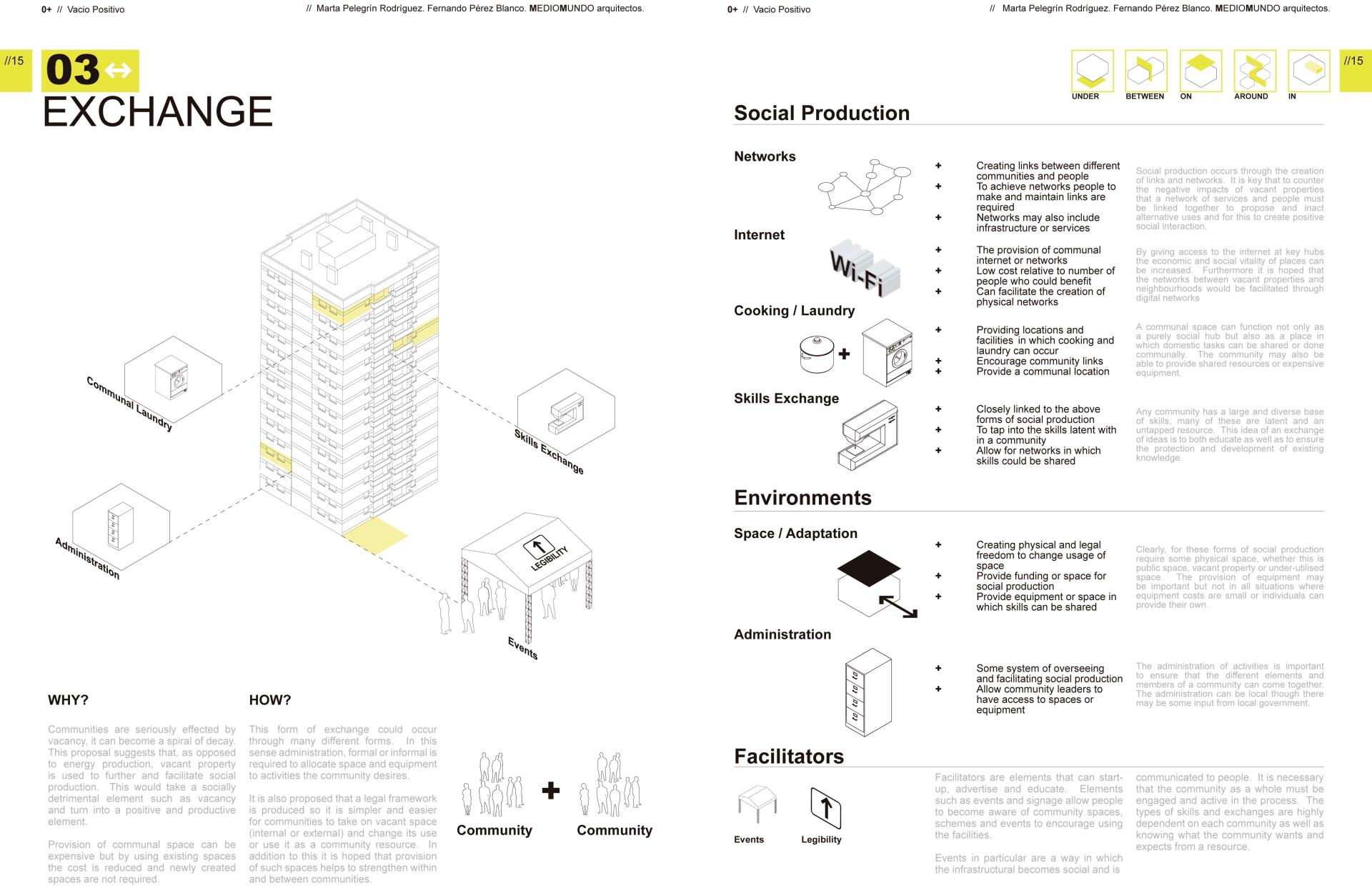
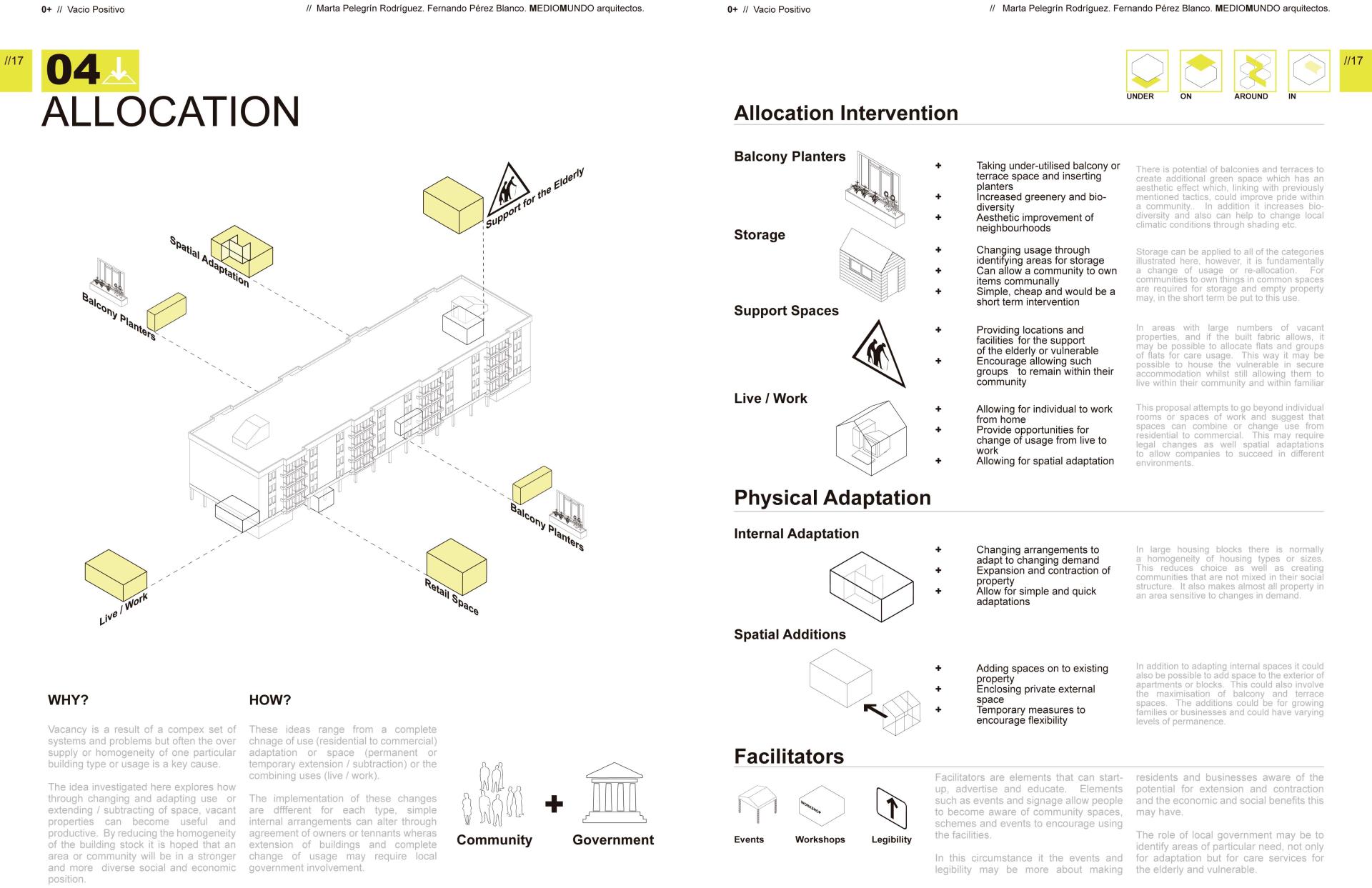
Spain has a higher percentage of empty housing than any other country in the EU. It’s needed to reflect on and work with these ‘empty spaces’. This positive emptiness (0+) is not simply a symptom of exclusion, poor quality construction or speculation. We assigned it a positive potentially to be incorporated into the current system of residential, environmental, energetic and infrastructural resources with in the neighbourhoods to which they belong. We also propose a cooperative and participative management of the empty housing, convinced that they could fulfil the requirements of the local population either temporarily or permanently. Alongside the identification of spaces as positive emptiness, the objective is to put in place a process that can function alongside existing ways of occupancy as well as generate a stimulating urban environment able to compliment and connect housing to its urban context.
As part of a project created at an architectural workshop within the Foro barriadas, nuevos centros urbanos, organized by the Department of Housing and Planning, we proposed a tool whose origin lay in the paradox of increasing numbers of newly constructed or under construction housing as opposed to the high percentage of empty housing, abandonned plots and the lack of suitable communal areas. To help solve the housing problem we proposed pinpointing empty spaces as a way to potentially fulfil the demands and needs of their surroundings by rethinking their purpose.
Key objectives for sustainability
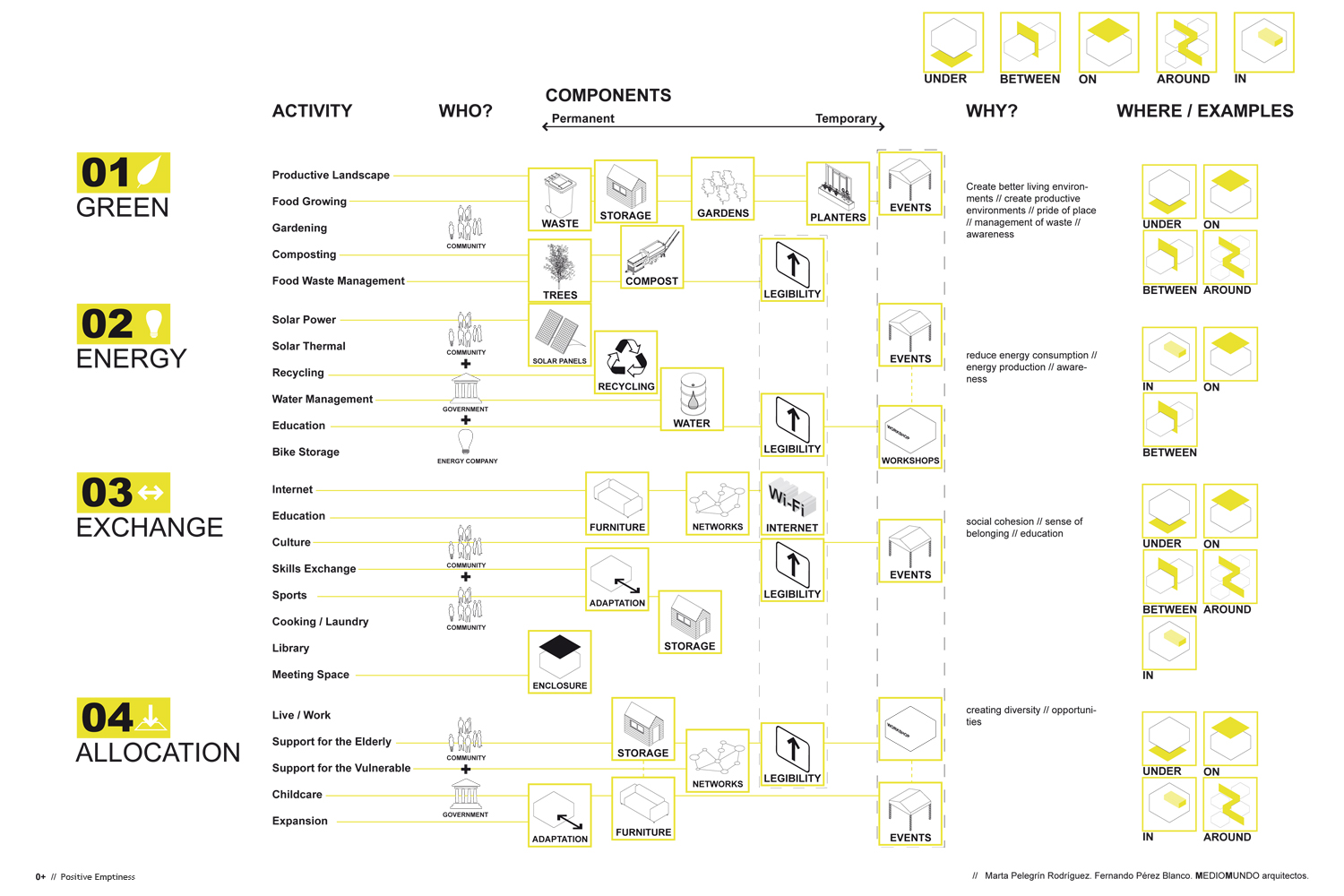
We proposed a comprehensive and participative management of the empty housing, which we term positive emptiness (0+), to be incorporated into the current system of residential, environmental, energetic and infrastructural resources with in the neighbourhoods to which they form a part. In this way they could hopefully fulfil the requirements of the local population either temporarily or permanently. The aim is to think of new formulas for utilizing the latent disparate constellation of built spaces in order that they be distributed throughout the different neighbourhoods to which they pertain in an integrated, connected and qualified manner.
The second main objetive is to stress the importance of the use of collective and communal spaces to ameliorate quality of life, generate social fabric and promote citizenship. In this project we will not only attempt to highlight the importance of self-management in the creation of collective identity and citizenship, but also within architecture itself we will analise its importance and occurance within urban and architectural proposals.
In this way we will open up a debate and express new ideas in order to establish self-managed collective spaces within Andalusia that encourage integration alongside both social and environmental sustainability in future housing developments.
- To explore the potential value of voids for the regeneration of urban life through network interventions that contribute to the improvement of the habitat where they are located.
- (dis)position Discipline. To review the processes and mechanisms of architectural production, as well as the role and position of the technicians (architects) within them; and to enunciate tools and instruments for the architectural project and the work of the technicians within alternative production processes to the traditional one.
- The generation of a "Catalogue of possible actions and transformations of unoccupied properties for management and participation.
Key objectives for aesthetics and quality
The spaces identified as 0+ positive emptiness could potentially become a constellation of intermediate, open and living spaces that form part of a network of culturally representative areas: locations that demonstrate the intelligent city. In other words, by paraphrasing the definition of intelligence, spaces that permit stimulation, amplification and integration of the values of the city with those of both collective and individual citizens.
Positive Emptiness Workshops test a hand-on research methodology by means of workshops, that proposes an integral, cooperative and participative management of the empty houses for their incorporation to the system of residential, environmental, energetic and infrastructural endowments of the neighbourhoods where they are located and thus to attend to the needs of the population in a temporary or permanent way. It is also proposes to quantify and assess the definition and use of common or collective spaces (not only housing) to improve the quality of life and the generation of social fabric and citizenship.
In that sense, the Positive Emptiness Research Program have thus been part of the debate since 2006, stemming from the need to reflect and work on these 'gaps', understanding them not only as symptoms of exclusion, housing obsolescence or speculation, but also assigning them a potential 'positive' value as a way to support possible reactivations.
It bases its value on the self-management for the creation of a collective identity with an inhabitable sense that must reopen the debate and articulate reflections for the implementation of self-managed collective spaces that promote social integration and ecology, as well as the environmental sustainability of current and future housing developments.
Key objectives for inclusion
The approach Positive Emptiness Workshop relates this European experience together with the already cases study in the Latin-American scene. The workshop adapts to the local dynamics, technicians and institutions. It gathers it all in an academicals environment (Foro Barriadas, ETS. Arquitectura Seville, Spain; Seminario Vacio Positivo FADU Montevideo, Uruguay; Taller Vertical, Equipamiento y Ciudad, Universidad del Azuay, Cuenca, Ecuador; so that this approach allows the team to recognize and analyse different international ways in which the phenomenon ‘empty properties and urban rehabilitation’ is approached from the public and academicals policy field. In Montevideo, there is a consensus on the need to control urban expansion, take advantage of existing infrastructure and facilities, reverse the process of expulsion of population from central areas, and intensify and diversify uses, democratize access to urban land and make the best use of the built heritage.It has to be explained that Uruguay has a unique experience in terms of housing policies, the cooperative housing movement, which has been promoting collective self-management housing programmes for half a century, implementing, over time, different modalities of intervention. In that context, Prof. Dr. Marta Pelegrin and Mr. Arq Fernando Pérez (Mediomundo arquitectos) were invited to launch a workshop for the exploration of possibilities of intervention in abandoned properties in the Ciudad Vieja area, to implement residential projects.
Taking into account its implications in the technological, design and management, but also to its potential in relation to urban renewal, there conceptualisation of the "public" and the "common", questioning the plot as determining unit of use and urban morphology. The seminar Vacio Positivo MVD, proposed a new exploration along these lines, , incorporating the international experience of HUM666 Research Group at University of Sevilla
Results in relation to category
The project exploration developed by a heterogeneous group, with a majority of degree students, in a workshop of great intensity and short duration, aims to generate reflections on possible scenarios of transformation in relation to the topic addressed.
The onsite analysis led by specific tasks, such as capture of information, sharing it together with the social actors in a round table in which various perspectives, interests and expectations in relation to the area and the concrete proposal for intervention were discussed, raised the main challenges in relation to social fragmentation, socio-housing vulnerability and unemployment.
The results of the Positive Emptiness Montevideo Workshop are initiatives designed, projects of architecture (in a wider sense) that do not become finished projects. Their nature is exploratory and they unfold in a frontier field between the diagnosis and the proposal.
How Citizens benefit
The management process, so called disperse cooperatives, put forward the potential of cooperativism to transcend the question of housing solutions and generate integration, urban design, social cohesion and citizen culture, extending its capacity for collective management to other dimensions of community life, which are, as trained in the Positive Emptiness Research Workshops instrumentation, answers to the question how to live together.
Publication and impact
Pelegrín Rodríguez, Marta & Pérez Blanco, Fernando, Jornadas Creatividad Urbanas. Un punto de conexión, un punto de encuentro. Pelegrin Rodriguez, Marta & Pérez Blanco, Fernando, Positive Emptiness in Alterarchitectures Manifiesto : observatory of innovative architectural and urban processes in Europe 2012 Paris: Infolio, 2012.
Universidad de Sevilla. Departamento de Proyectos Arquitectónicos, 2011. http://hdl.handle.net/11441/65730
https://fundacion.arquia.com/es-es/convocatorias/proxima/p/ProximaRealizacion/FichaDetalle/?idrealizacion=4321
Innovative character
the focus of the project “Positive Emptiness Research Program” led by Marta Pelegrin and Fernando Pérez, as members of the "HUM666. City, Heritage and Contemporary Architecture Research Group" at University of Seville, is defined to develop a methodology to kick off an urban designing approach by means of an academic workshop, in which scholars, institutions and residents are involved.
The applied research project develops one of the central concepts addressed in the 2010 Toledo Declaration: Integrated Urban Regeneration (IUR) (Document on integrated urban regeneration and its strategic potential for more intelligent, sustainable and socially inclusive urban development in Europe. EU, signed in Toledo, 22nd June 2010[1]), which consists of optimising, preserving and enhancing the value of existing urban capital in cities, while developing the complexity and diversity of their social and economic structures and promoting greater environmental eco-efficiency.
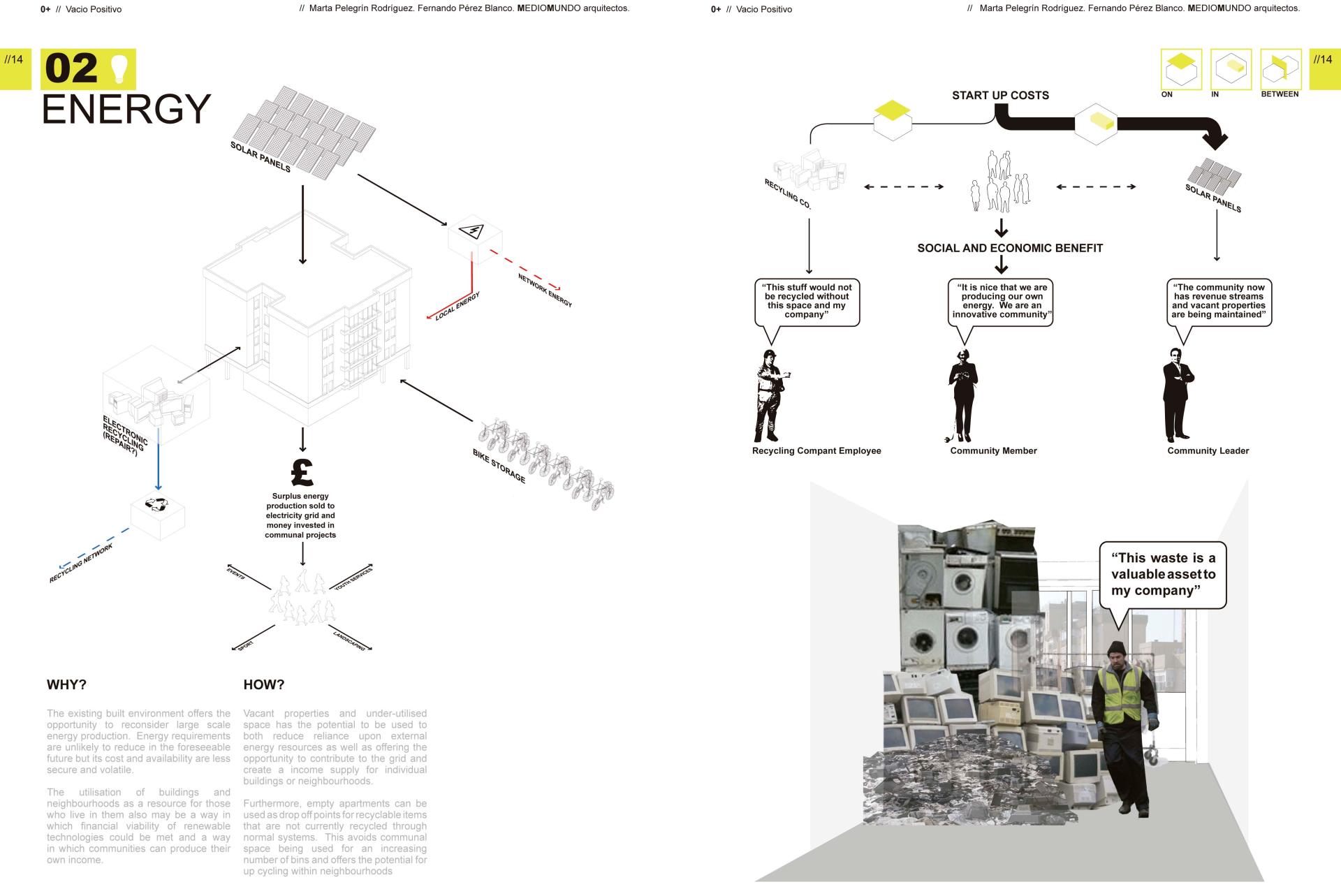
This research project also addresses Challenge 3 "Safe, Efficient and Clean Energy" of the State Plan for Scientific and Technical Research and Innovation 2017-2020. It proposes accelerating the transition to a sustainable and competitive energy supply model in the medium and long term as a priority, especially in the field of buildings, in order to reduce energy dependence and contribute to the fight against climate change. The holistic vision of this work also includes the implementation of solutions that improve the energy efficiency of these neighbourhoods. Similarly, it faces Challenge 6 "Social Sciences and Humanities and Science with and for Society" of the aforementioned Plan, as it is aligned with the principles set out in the "National Research Plan for the Conservation of Cultural Heritage".