VKW
Basic information
Project Title
Full project title
Category
Project Description
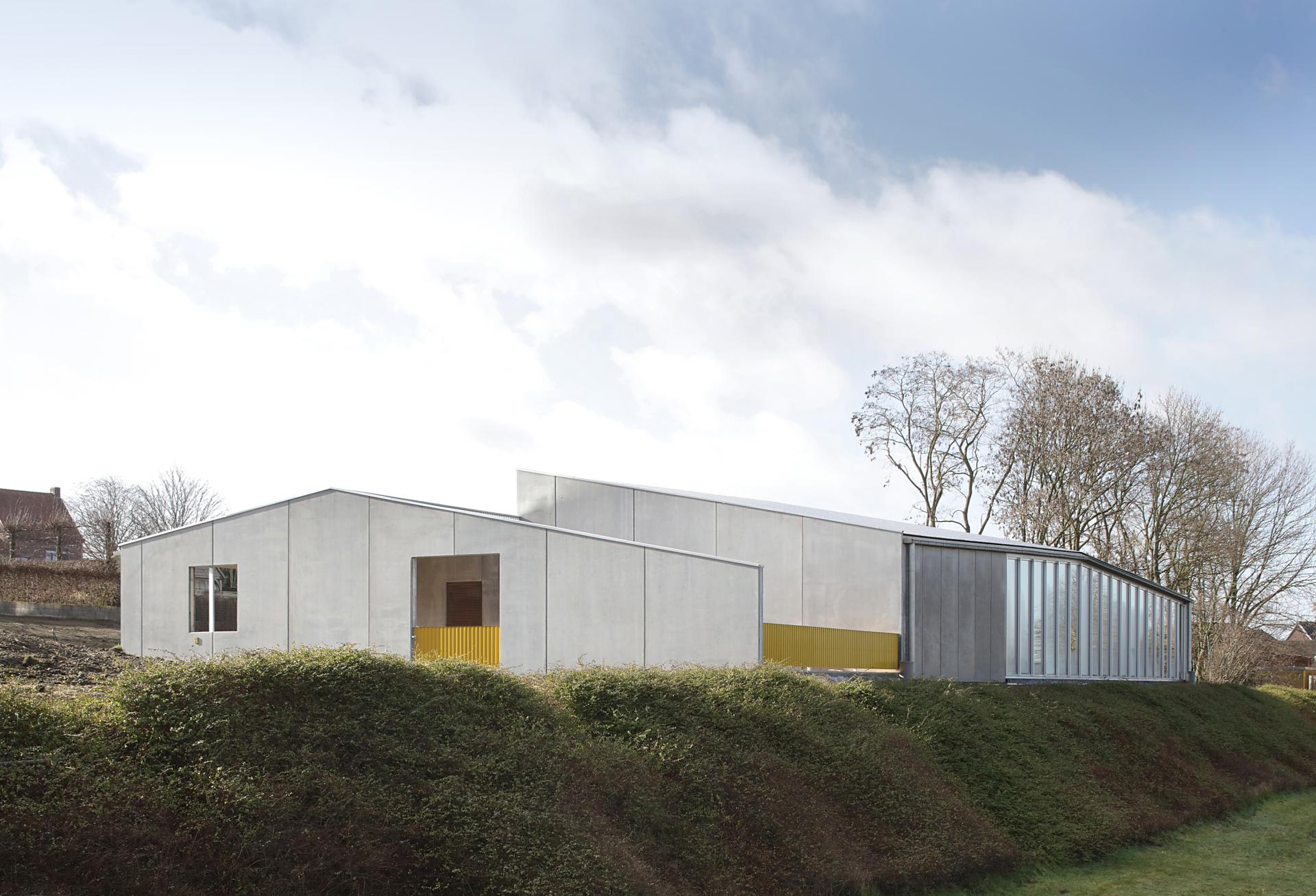
On the border between high and low, stands a community centre. An unusual combination of after-school child care with football canteen and multifunctional hall. The interior walls differ slightly and carry a twin roof that folds along the topography of the site. It creates a domestic interior. The autonomous building is in constant dialogue with its landscape. Inside, the walls interact by making windows and sliding doors. An extra structure is placed and houses the outside play-ground.
Project Region
EU Programme or fund
Description of the project
Summary
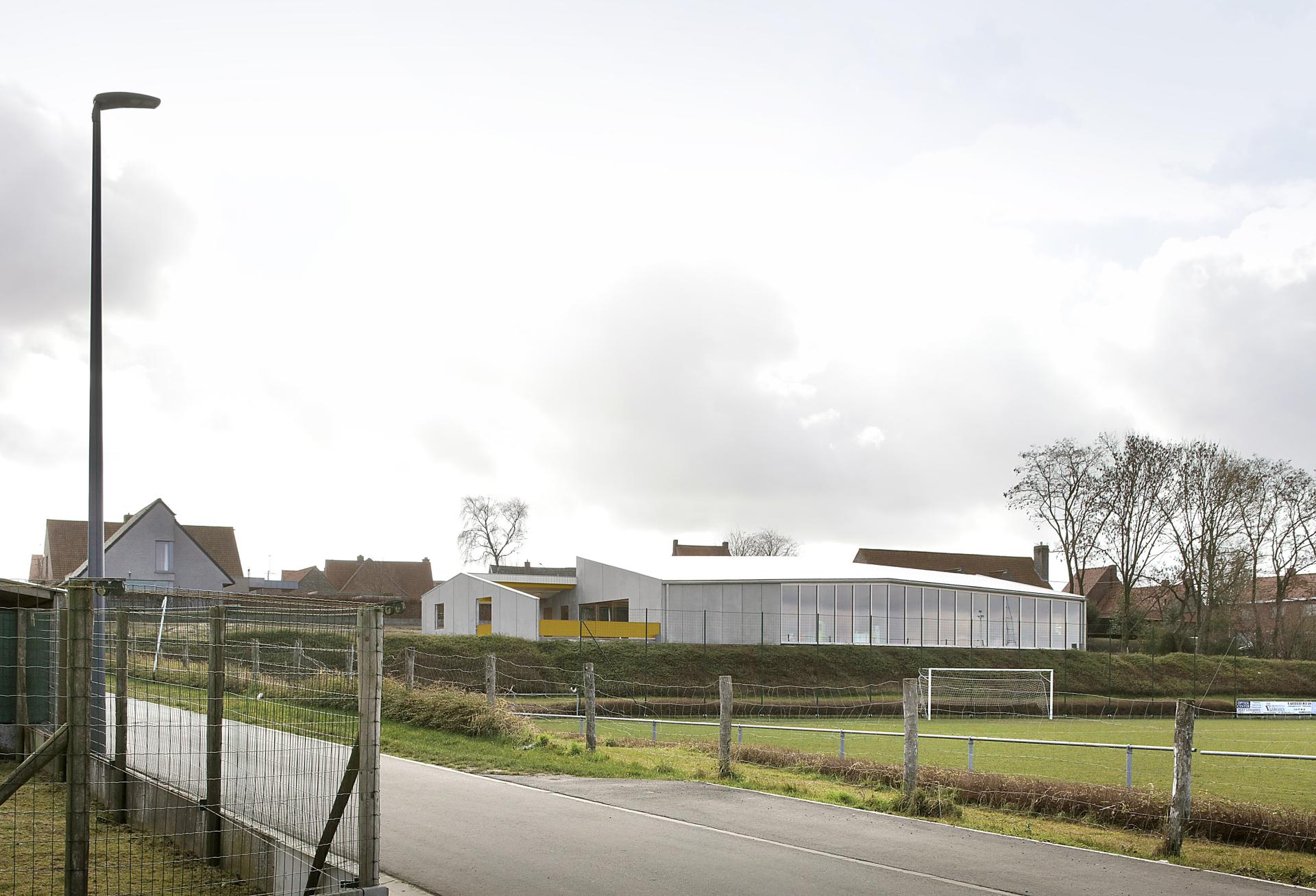
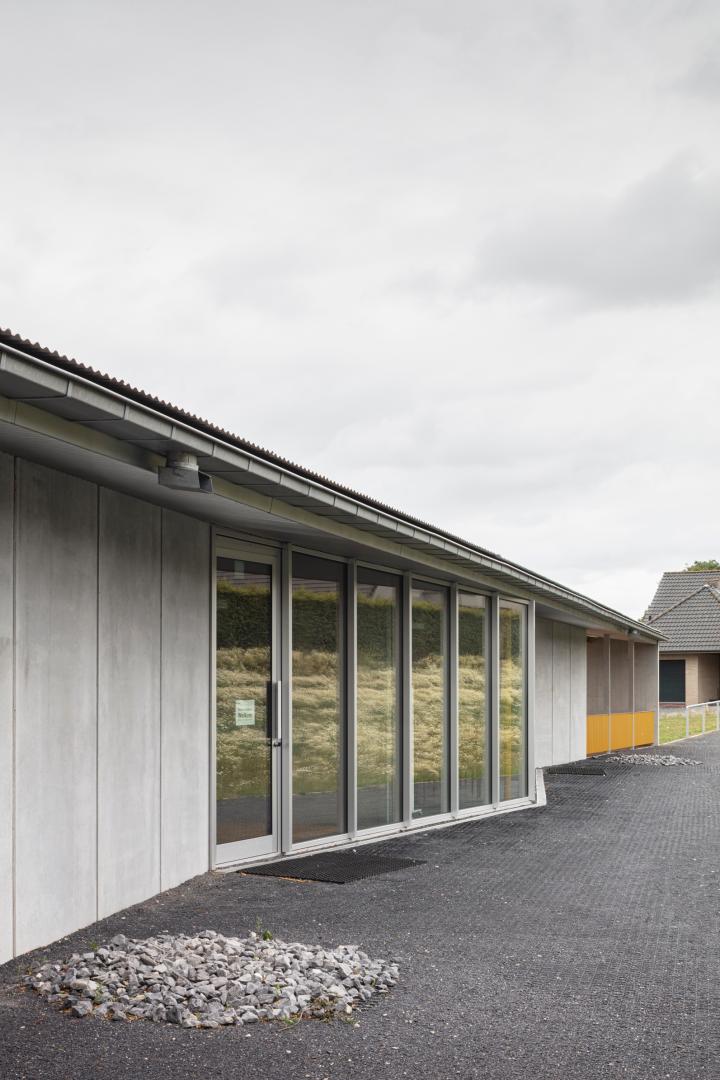
Erected on the edge of an allotment with a crease in the landscape, this small community infrastructure offers a panoramic view of football pitches and agricultural lands. In the design, URA imagines a building as a shed made out of concrete, as so many agricultural building from the region.
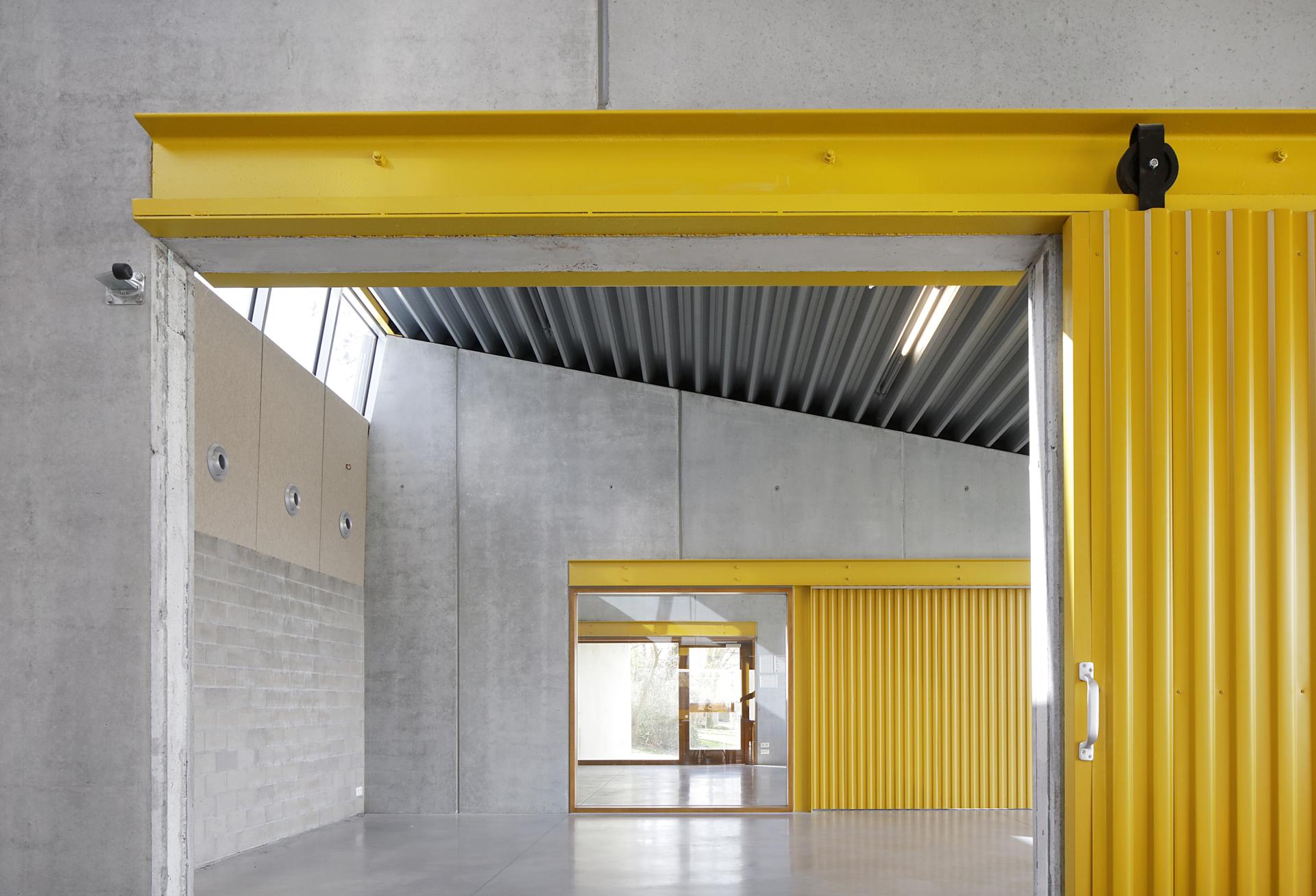
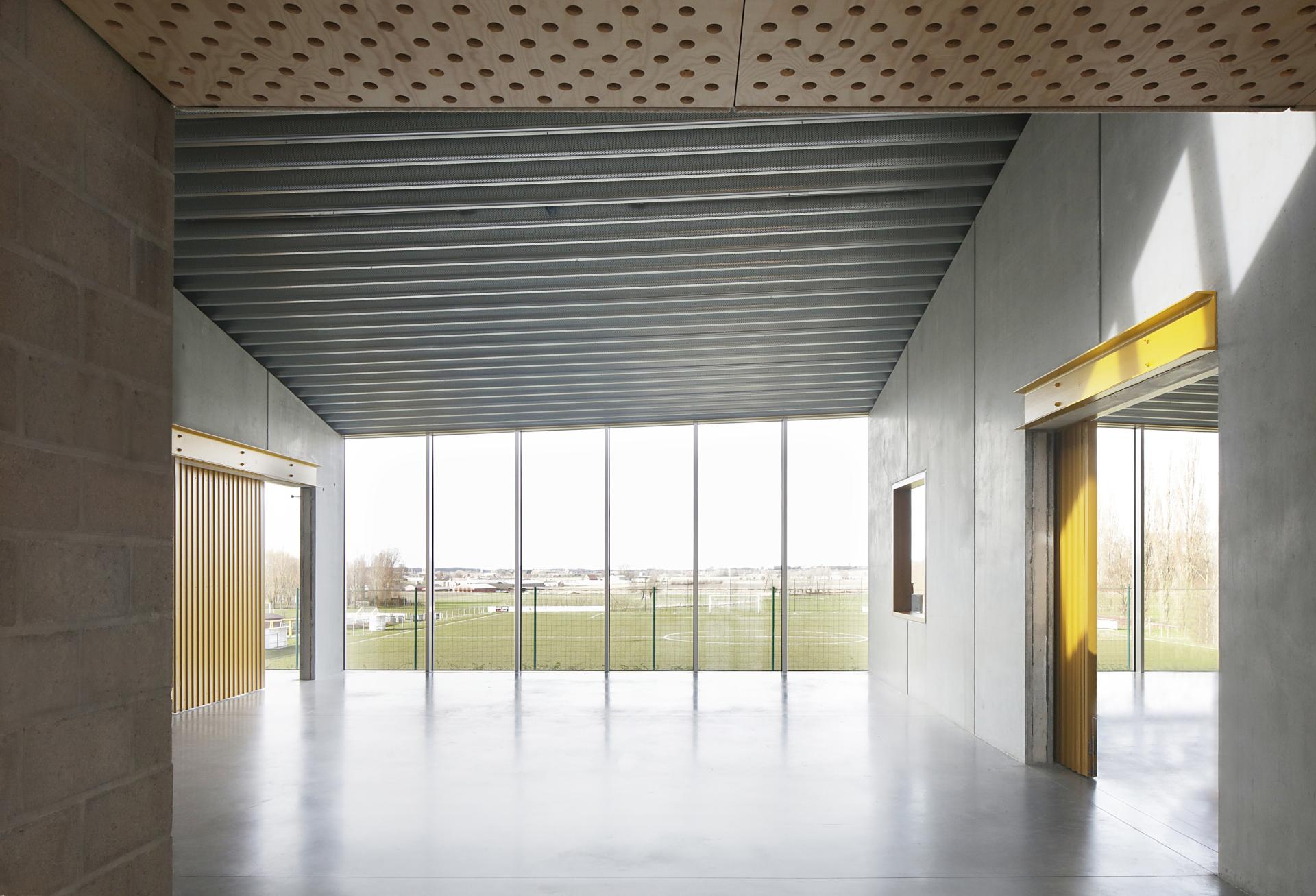
The construction transcends a purely functional logic – on the one hand, because it lets in natural light via a long horizontal skylight on the ridge, and on the other hand, because a complex strategy unfolds inside with a succession of perforated walls that organize and set out the programme, but also play a structural role.
Designed as outdoor façades, these concrete transverse walls, with their ochre-coloured sliding doors, make it possible for the multipurpose space to be annexed by either the football canteen or by one of the two rooms of the after-school child care. A maximum flexible structure is made possible, with framed views to each room and to the landscape.
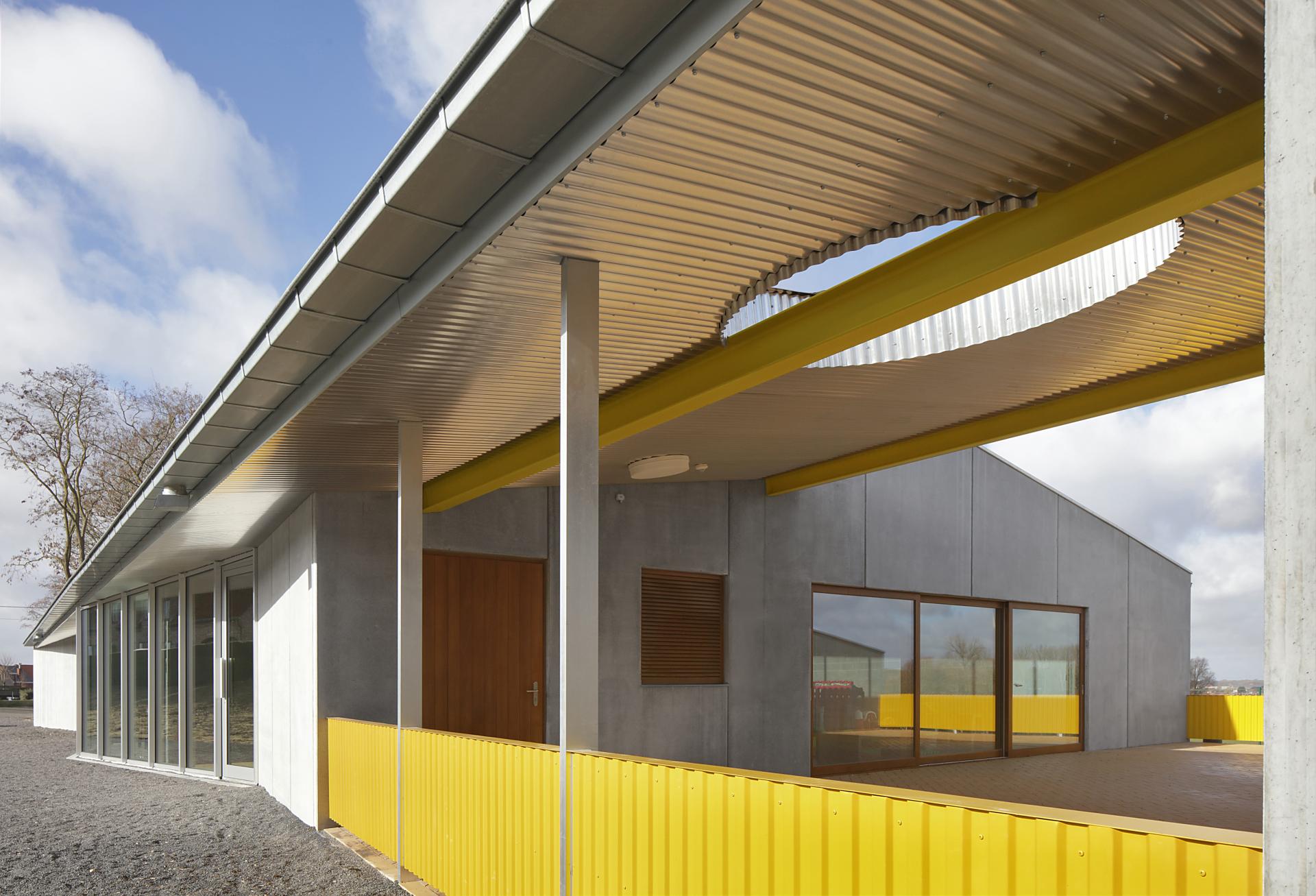
In the last, partly covered bay, an outdoor space is created that is integrated naturally and elegantly within the borders of the built volume and was given a balustrade in the same ochre colour.
The playful round hole in the roof refers to the cylindrical volume that accommodates the technical facilities and is located a bit further on top of the volume. Thanks to a zigzagging façade at the front and the slightly inclined roof at the rear, the building is grafted into its context.
Project is nominated for the European Prize for Architecture – the Mies van der Rohe Award 2022.
Project will be shown in the first solo exhibition by URA Yves Malysse Kiki Verbeeck, in the BOZAR Brussels, begin of november 2021.
Key objectives for sustainability
The project is social and environmental sustainable. By the flexibility of the interior walls, all different activities can be organised inside the stable structure. Small and big groups of people can be gathered in this community centre. Different generations have their place inside the building.
The building is sustainable cause of its fixed structure. In terms of life cycle cost, the structure is being designed to maintain for many many years, will the infill can be changed in a shorter amount of time. This means a healthy hierarchy in construction.
Water is being captured and collected in a very visible way, so it’s educational for the visitors what you can do with rain water.
Key objectives for aesthetics and quality
The building refers to the regional typology of agricultural buildings of the region. In terms of form, it integrates fully with the existing environment. The surprise is being established while approaching the building, where a warm domestic interior gives place to the community to explore the possibilities.
The double pitched roof develops a double atmosphere inside with lower ceiling meeting places and higher public zones, with the view to the landscape around.
The building consists of a mixture of materials, warm and cold, so a good balance between durable materiality and the warm interior.
Project is nominated for the European Prize for Architecture – the Mies van der Rohe Award 2022.
Key objectives for inclusion
The project is accessible for every visitor. The building serves different groups and generations. The building is fully accessible in terms of Universal Design. One layer, without trespasses or levels which can be obstructive for entring the building.
The building plays a lot with materials, so a good and clear tactility adds to the visibility and clarity of the building.
Results in relation to category
The building is the result of long reflexions made by and with the community. The limited budget forces the project to be very budget-smart, while opening up for a maximum of activities and visitors. The new community centres works as a centre for social interaction between young generations, mothers with children, visitors for the sportsfield, and the visitors for the polyvalent room which is used for gathering, events, both cultural and social. The building has become the centerpoint of meeting the inhabitants of the community.
How Citizens benefit
The building is the result of long reflexions made by and with the community. The limited budget forces the project to be very budget-smart, while opening up for a maximum of activities and visitors.
The project is being presented several times inside the community, during 3 participation moments.
The new community centres now works as a centre for social interaction between different generations. The building has become the centerpoint of meeting the inhabitants of the community.
Innovative character
The project is new in its way how to collect different users. By simply structuring the building into different zones, while interacting by means of doors and windows, the project is maximum flexible, and can assemble small and large groups of visitors. It is, within the limited budget, an extreme proposal, which will stand time. This shows the main meaning of sustainability : changing function within a strict structure.
This typology of building can be developed in different contexts, climates and conditions.