VVITA Erasmus+ project
Basic information
Project Title
Full project title
Category
Project Description
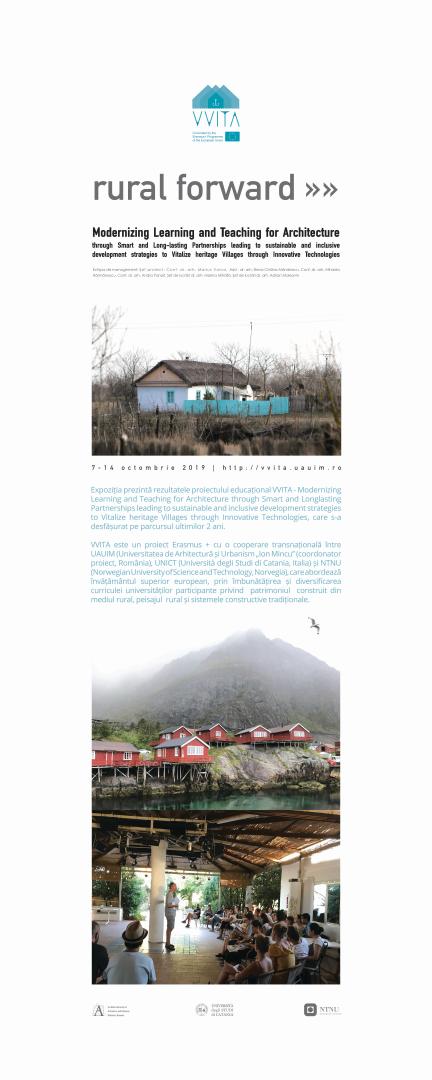
VVITA is an Erasmus+ project with transnational cooperation: UAUIM, UNICT & NTNU, that raises question of European high education and underlines thematic approach of complexity on rural heritage conditions emergencies, actual chances and challenges. The partners experience was for this project in a wide series of valuable domains for a better reading and finding solutions in the territory, defining cultural sustainability for specific territory, promoting social inclusion.
vvita.uauim.ro
Project Region
EU Programme or fund
Which funds
Other Funds
Erasmus+ project, Key Action: Cooperation for innovation and the exchange of good practices, Action: Strategic Partnerships for higher education, Main objective of the project: Development of Innovation, Call: 2017, Period: 2017.11 - 2019.10, Priorities: HIGHER EDUCATION: Enhancing the quality and relevance of students' knowledge and skills, HIGHER EDUCATION: Supporting innovation and creativity, through partnerships and inter- and transdisciplinary approaches, HORIZONTAL: Social inclusion.
Description of the project
Summary
The VVITA project proposes a transnational cooperation between UAUIM, UNICT and NTNU that raises the question of high education in Europe and underlines the thematic approach of the complexity of current rural heritage conditions emergencies, actual chances and challenges where the traditional division of disciplines are outdated. The project offers an INTEGRATE approach that is usually neglected through individual disciplines and aims at strengthening the architectural CURRICULA and teaching to face new TEACHING and LEARNING and to be adapted to the new societal and professional situation.
This international cooperation learns how to deal with INTER-CULTURAL changes and how to deal with different teaching education tradition across cultures. Each partner has identified case studies of ongoing depopulation issues communities, but situated in cultural-touristic-historical potential areal with major significance in a context of territorial limit (Danube Delta in Romania, Filicudi Island in North Sicily, Lofoten village in North Norway). Each case study has major differences of needs, approach themes and solutions in progress to adopt, despite identified critical situations (depopulation) and cultural-vernacular-historic existent potential. In this respect, these were the best places to implement, test and adjust the teaching module and develop the guideline methodology, modernizing learning and teaching for architecture, through smart and long-lasting partnership, leading to develop sustainable and inclusive strategies through innovative technologies.
On long term, the program targeted also specialists that are studying the development of local history and tradition, as well as sociology, ethnography, art or any other field of multicultural diversity, and also other stakeholders that can measure the results of the project.
https://sites.google.com/view/vvita/project-summary?authuser=0
Key objectives for sustainability
Intensive Programmes served as local “teaching laboratories” where it were implemented and tested the INNOVATIVE TEACHING MODULE and developed GUIDELINE METHODOLOGY, which leaded to a sustainable and inclusive development of strategies to vitalize heritage villages. VVITA project is directly addressed to participants of the partner higher education institution: teachers and students in the related disciplines of rural built heritage, but also to the associated partners and different stakeholders in academia and profession.
https://sites.google.com/view/vvita/associated-partners?authuser=0
The third output of the project is our Digital Platform "Rural Forward" with innovative technologies cluster VVITA, which aims to point out the relevance of this interdisciplinary and intercultural project for society, accordingly to the importance of the intersection between architects and engineers, students, stakeholders from non-university society, as well as between specialists and user, which determinates the sustainability of the project.
The purposes of the digital platform as an important intellectual output are: to inform about the project and its results to the broader public; to ensure the sustainability of the cooperation between the project partners and to support their further joint activities; to strength the interdisciplinary dialogue between the representatives of different disciplines and to support their collaboration; to strengthen the network of actors in built environment in sustainable and inclusive development strategies to Vitalize heritage Villages through Innovative Technologies in whole Europe; to provide comprehensive information on tool and methods of interdisciplinary teaching in disciplines of built environment; to give students the chance to explore and share interests and discover new knowledge through participation in joint activities, discussion boards and competitions; to involve different stakeholders in the discussions on the topic.
Key objectives for aesthetics and quality
The project is related to the EU document regarding architecture and urbanism education supporting innovation and creativity, through partnership and inter-disciplinary approach. In this respect, the project lead the unique knowledge transfer between European countries to develop curricula that combine ACADEMIC CONTENT with CIVIC ENGAGEMENT.
Furthermore, the project build a cluster and an European network with further partners possible joining later that gives a unique possibility for countries facing similar challenges to cooperate to enhance the quality and relevance of the students’ knowledge and skills.
Next to the main priorities of the project, the intellectual outputs and architecture curricula adaptation to contemporary and emerging labor market, the choice of the three “teaching laboratories” was also important. All the geographical areas underline a sensitive subject related to the heritage villages: to improve its quality and find solution for some of their daily problems. According this, there were chosen rural isolated areas, that generally have low consideration and with restrictive intervention, being UNESCO candidate or UNESCO world heritage sites with similar natural integration (water, seasonal activities and fishing main activity). Specific activities in terms of aesthetics and quality of experience were done: communication recognizing and facilitation with inhabitants that inherit traditional built techniques; introducing built traditional methods in proposed Guide and in the new learning method, exchanges of knowledge in new building techniques and technologies, finding energy efficient and non-aggressive solutions, using recycled materials, organizing workshops with the local builders.
https://sites.google.com/view/vvita/intellectual-output?authuser=0
Key objectives for inclusion
Priority of social inclusion becomes dominant within the project because this theme is achieved on many levels:
- priority selection for the project of the students from disadvantaged or undeveloped social environments;
- students’ appropriation on the social complexity that implies a certain spatial-architectural typology but also finding some answers and solutions for a quality contemporary approach built space through and with local population involvement;
- local community involvement in the ascertain case studies but also in project proposals regarding functions adapted to new energy criteria and new economic realities, cultural tourism and local priorities; simultaneous students’ and inhabitants education upon traditional-authentic built value using local resources.
More that these, VVITA project has a SOCIAL INCLUSION approach in selected local rural settlements with social-civic-interethnic-intercultural dimension, disadvantaged and remote architectural heritage through activity of Intensive Programmes hosted by each partner institutions.
Results in relation to category
Results and impact attained:
- Teaching staff: The new competences of the staff members were multiplied by involving new teachers in the activities. Pedagogical training was also maintained as the part of network activity.
- Students: Benefited from the innovative program, gaining multicultural exchange, relevant knowledge and practice oriented experience, contributing directly to their employability.
- Faculty management staff: benefited from the synergy across institutional boundaries and could transfer this concept to other fields of study.
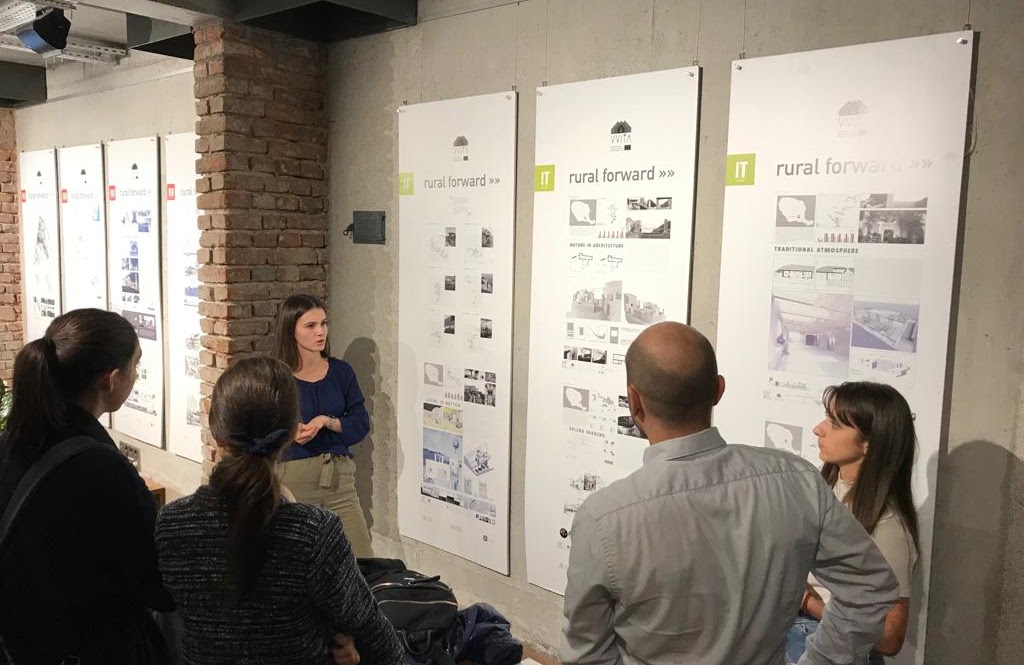
By using common resources, profit was gained on several levels and the results are: academic benefit by exchange of knowledge; cultural benefit by social and intellectual exchange; economic benefit. There were organized exhibitions with posters and video presentations, scientific and educational papers, conference participation and internal exhibition. The results of the VVITA project were transformed into an educational network for the villages heritage vitalization as part of its sustainable strategy.
These three case studies realized in practice manner through direct implication of the students and professors by collecting information, presented needs and finding solutions, majorly contribute to the students’ competencies improvement in education-research-practice approach areal of architecture profession but also on social-civic-intercultural skills development.
The results can be find on the website of the project in the communication and dissemination part but also on the websites of our stakeholders.
https://sites.google.com/view/vvita/communication-dissemination?authuser=0
https://www.anuala.ro/proiecte/2019/284/
How Citizens benefit
There were different activities during the project: learning, teaching and training activity, management activities, communication and dissemination activities. These results are for short term or long term applicable to the participants of the partner universities, other higher education bodies and associate partners.
By using common resources, profit was gained on several levels and the result are of many types: academic benefit by exchange of knowledge; cultural benefit by social and intellectual exchange; economic benefit. The project built knowledge and competences on the following levels: learning by the interference of the disciples and inter-institutional/ international cooperation; multicultural connection and diversity in international environment and networking; cultural heritage approach; exercising innovative technologies; improving academic curricula etc.
Outcomes for the target groups and management team, get the results visible to:
(1) Teaching staff: The new competences of the staff members who participated in the project are multiplied by involving new teachers in the activities. Pedagogical training, in particular in the field of learning were also maintained as the part of network activity.
(2) Students: benefit from the innovative programme, gaining multicultural exchange and relevant knowledge and practice oriented experience, contributing directly to their employability.
(3) Faculty management staff: benefit from the synergy across institutional boundaries and this concept can be transfer to other fields of study.
There were created posters, scientific and educational papers to published, conferences participation and internal exposition. Intellectual outputs results were: METHODOLOGICAL GUIDELINES for teachers, NEW TEACHING MODULE: “Teaching Cross-methods to vitalize villages through innovative technologies” and Digital platform: “RURAL FORWARD” with innovative technologies and VVITA Cluster.
Innovative character
The innovative character was in the case of VVITA project the ability of combining traditional and future techniques in different fields and levels: education, communication with partners, experimenting workshops in real sites, working and living with the community, managing international mixed teams in vernacular projects.
Technology of the project is based on labeling the knowledge and ultimate knowhow in several outputs along the development of the Erasmus+ Program. In applying innovation and technology there are two kinds of outputs: first gathering tutors/ trainers and discussing the detailed curricula and support materials, and second output as dedicated phase in intensive learning programs for teaching assimilating and testing the proposed development habituations and information, that are strengthening the bonds between theory and practice.
More on innovation purposes, the proposed theme on rural specificity setups were meant to increase interest in social and architectural urgencies, culture and tradition and how theory may become action and professional result, through and intensive program. Many issue within the rural contemporary build heritage involve the cooperation of engineer, architects or architects and urban planners in a broader sense, but other different stakeholder’s interferences with this field in reality. The partners have involvement in disciplines about building rehabilitation (UNICT) and risk (UAUIM, UNICT) and Zero Emission Neighborhoods (NTNU, UAUIM) or the need of the European architectural curriculum in the context of labor market (UAUIM) of rural build heritage and sustainability. Therefore, the project strength the interdisciplinary in education by testing the new methods from the interferences disciplines of rural build heritage, providing methodological approach through a guideless for teachers that can be transfer also to another educational fields.