Cloudfactory-Manufacturing Perspectives
Basic information
Project Title
Full project title
Category
Project Description
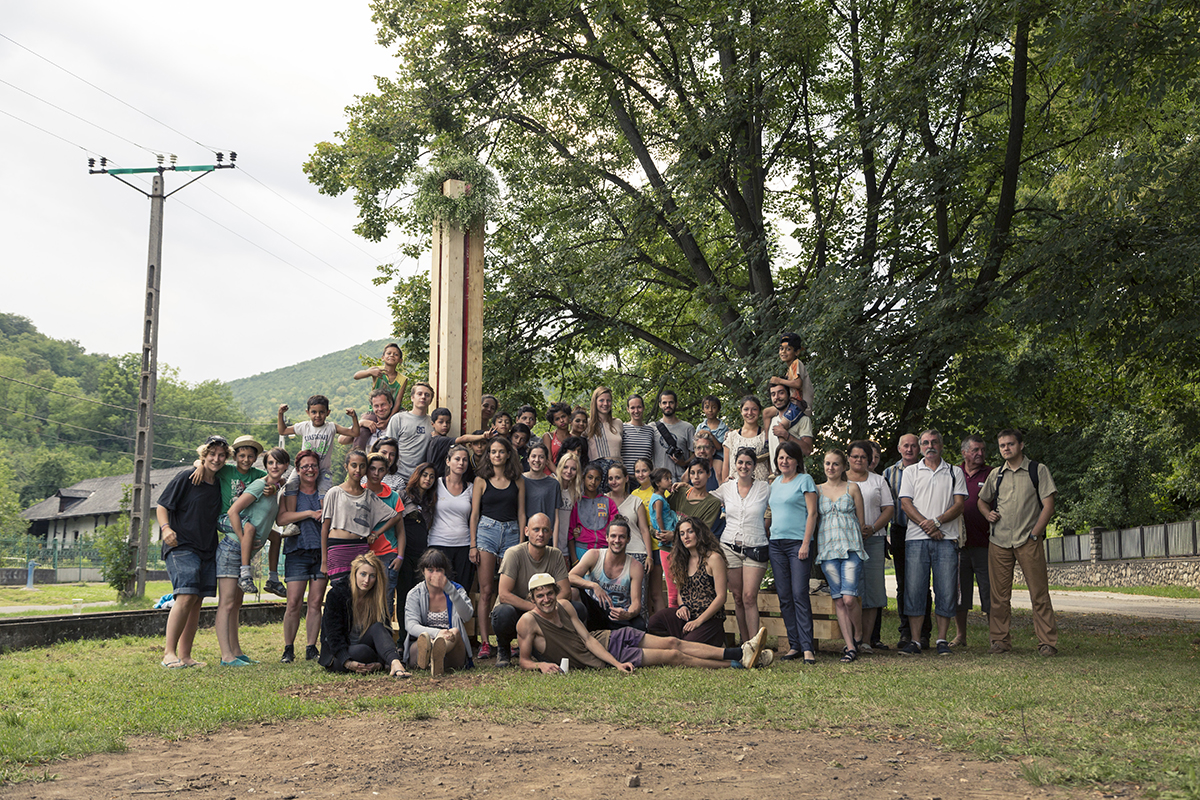
Cloudfactory is a social design and build program developed by MOME Budapest, where marginalised communities can work together with young designers, and strengthen people’s resilience in local communities by social design. The program is realised North-East Hungary one of the poorest regions of Central-Eastern Europe where the every-day challenges are faced by these communities. At the Cloudfactory this collaborative team creates new values and manufacture new perspectives together.
Project Region
EU Programme or fund
Description of the project
Summary
Cloudfactory is a social design and build program launched by former MOME Ecolab, now Creative Sustainability HUB at Moholy-Nagy University of Art and Design Budapest (MOME). The project is located in one of Hungary’s highly disadvantaged areas. The team had a long term collaboration with Roma communities along the Bódva Valley in cooperation with the local elementary school and they developed projects as well as with locally emerged social enterprises like the Roma community of Tomor (Romama Social Cooperative). The people the program focuses on live in well-documented conditions of extreme poverty. They face enduring systemic challenges such as social exclusion, lack of economic opportunity (unemployment) as well as everyday issues of food insecurity. The Cloudfactory program is an attempt to create new perspectives and strengthen people’s resilience in local communities by social design. The Cloudfactory is also an experiment to create a new education framework and methodology at MOME; which would not only improve students’ knowledge and skills, but also shape their social attitudes, sensitivity and sense of responsibility. The Cloudfactory is also a program that focuses on long term engagement with local underserved communities. Furthermore, the Cloudfactory program is an attempt to create a social design program that learns and grows from its own failures and experiences, takes small steps at a time and represents an organic way to develop a long term program. During the programs of Cloudfactory social design workshops local communities collaborate and establish creative processes as their own together with MOME students, alumni and tutors of interdisciplinary backgrounds. During the program at various locations each project takes off based on the challenges and desires of the locals, it relates to the specific context and results in tangible outcomes.
Key objectives for sustainability
The Cloudfactory program is an attempt to create new perspectives and strengthen community’s’ resilience in the North-East part of Hungary by social design and to encourage and empower local communities to start their own local enterprises built on local assets and resources. Besides it is a design and build program crafted to educate future designers of all backgrounds by focusing on real world challenges.The aim of the process is for the communities and for the students to have a mutual experience of the power of their creativity, to accept their ability to change their situation and environment. With this, the Cloudfactory intends to catalyze the resilience of these communities, based on learning by doing and equality of all stakeholders. Using design as a tool and applying it to co-creation methodologies incorporates a direct link towards sustainable community building. Bringing communities together by the act of co-realization in design and creative projects have an imminent support for local cohesion and in a wider sense social inclusion too. The Cloudfactory program primarily focuses on social sustainability and resilience building by boosting creativity among pupils and by empowering adults to realise their own ideas and transform them into social enterprise proposals. Important stakeholders are students and alumni who later implement sustainable design methods as well as work principles into their own endeavours. Resilience, creativity development and empowerment within the phenomena of social sustainability could be the key objectives of the project. Projects are both environmentally and socially sustainable since they are based on local cultural and intangible heritage, focusing on upcycling and circular economy by involving local craftsmen for repair and supply, local material resources and providing a feasible option for community-based initiatives by strengthening the community and its capability for changemaking in order of their living situations.
Key objectives for aesthetics and quality
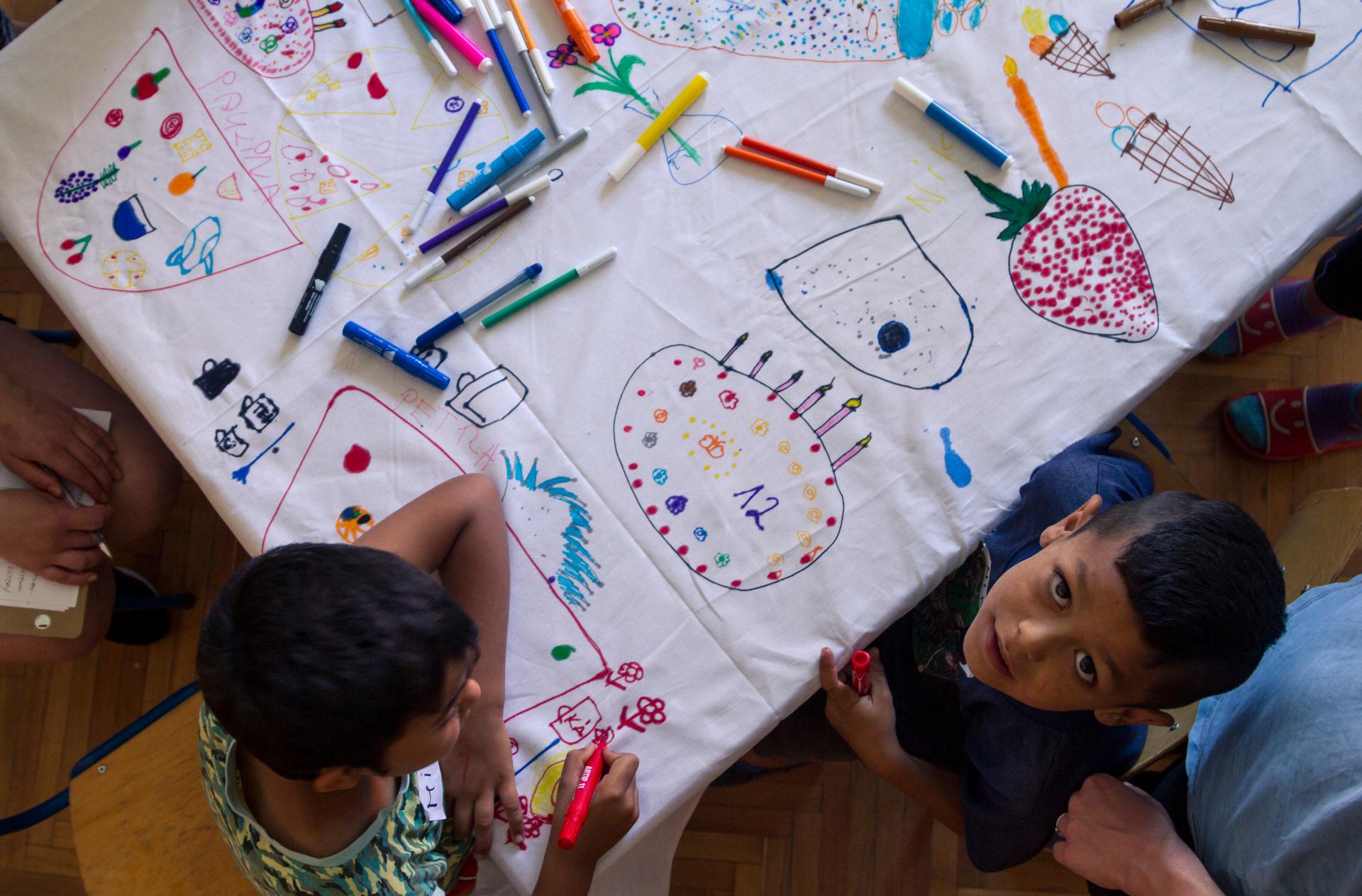
The different elements and sub actions of the Cloudfactory program use aesthetics as an integrated part of the design process. The holistic approach is core in design theory and social design as well, that’s why a well-visualised, articulated object, or a well-structured, user oriented service has a bigger chance to reach its purpose and potential with a greater efficiency. Aesthetics is a relative term, that is why at the Cloudfactory program the key learning point is that aesthetics is as diverse as the people, communities, cultures, backgrounds working together. There is no ‘right’ aesthetic or it can never overrun functionality or local understanding and collaboration principles.One of the first steps of the social design experience is to understand each other in the highest possible way: visual language, obstacles, assets, needs, competences. Thus the key objective of the project in terms of aesthetics is to find a balance, a segment in an interdisciplinary and community setting, create new values together that works for the community, represents the values and heritage of the locals and which can stand its ground in a different environment among designers as well. A good example which represents the merge of the different perspectives is the Cloudbook which is jointly produced as a book, a subjective atlas of clouds floating over the Bódva Valley. These first grade pupils' task was for a month to look up at the clouds, and draw the clouds they see. These illustrated journals were put to verse and prose with additional magical drawings by Hungarian writers and poets. The children then explained their illustrations and their thoughts during personal interviews. The poets grounded their work on this information, but never personally met the children.The result is an exemplary case where the aesthetics of children could blend with the verbal aesthetics of Hungarian poets creating an output legitimately working among the children and the designers community.
Key objectives for inclusion
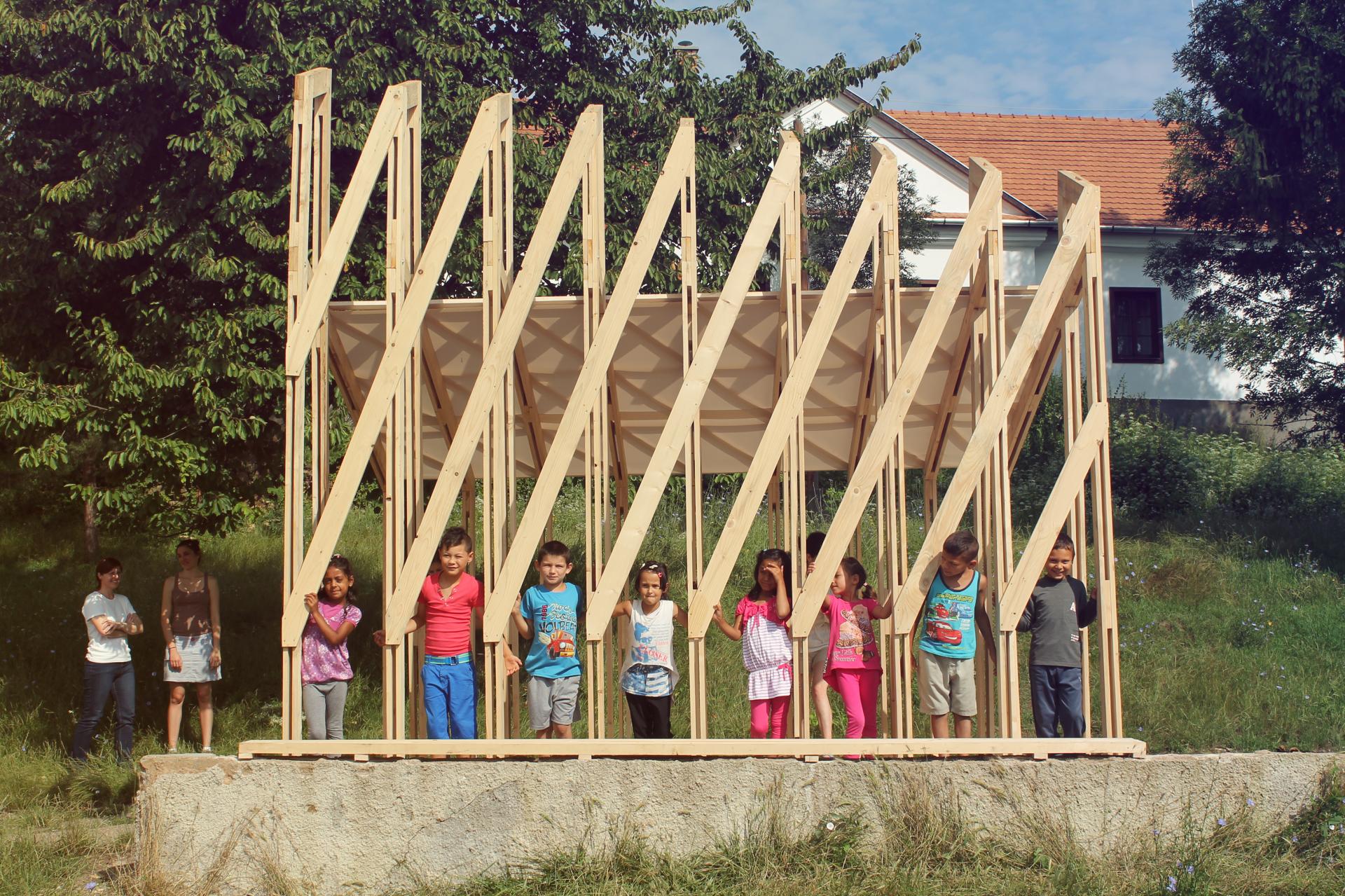
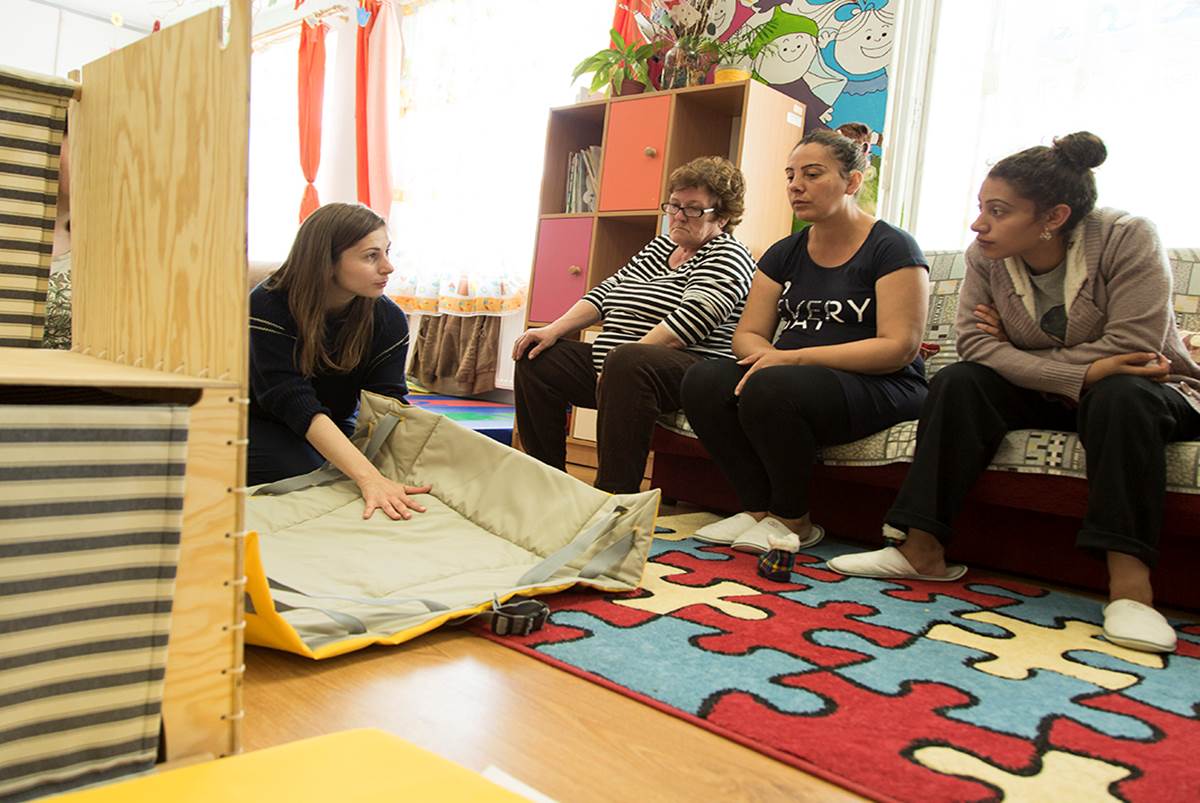
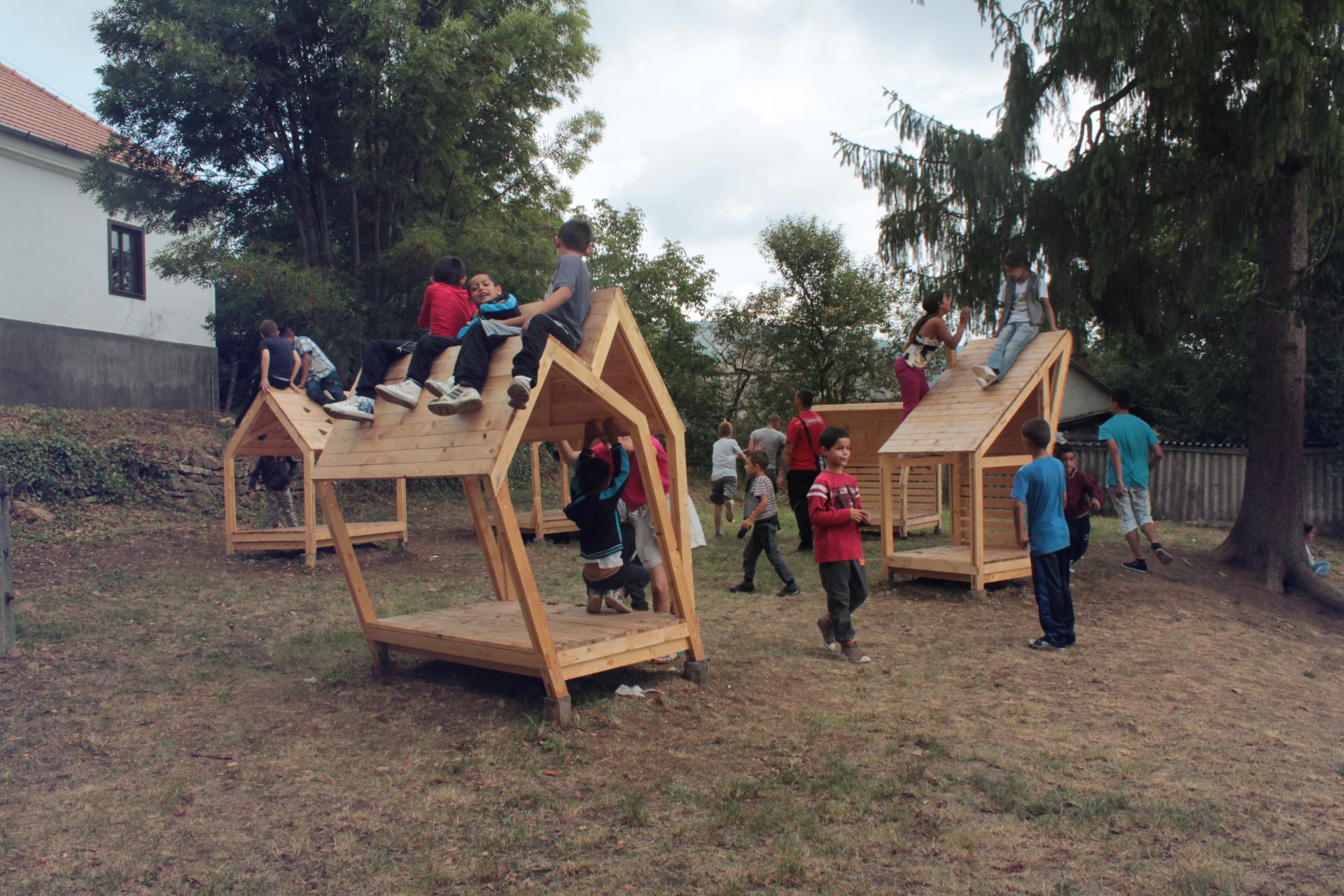
At the Cloudfactory program inclusion appears at the core of the processes by the human-centered approach. In social design the mission of a project or process as such should be available, accessible and affordable for everyone. Moreover design should take under consideration the needs of the majority of the population and has to take into account other species of nature as well. The actions of the Cloudfactory program are not created for but with the communities using human-centered approaches and reflections on real needs and long time present hiatuses. The key objective of the program in terms of inclusion is to overcome ordinary approaches, step out of the comfort zone and create projects where everybody feels welcome, especially those whose voices are usually underrepresented. It is Cloudfactory’s goal to be frequently present at the project site to hear the community in the long run. It is the team’s task to engage locals to be a part of the design process by discovering and mapping their needs and then finding suitable solutions to overcome those barriers using the power of co-realization. In one pillar of the Cloudfactory program the team worked with marginalized elementary school pupils for 8 consecutive years in order to engage a class of students and create a space for creativity, joint design problem solving and knowledge transfer and mutual understanding. The inclusion appeared in shared-ideas, participatory planning activities during the semesters and jointly implemented installations on the school courtyard. Another good practice coming from the Cloudfactory program is the Bódva Pack. Every third infant in the Bódva Valley is raised in poverty and lacks the basic conditions that ensure a safe upbringing. The Bódva Pack is a cheap, durable set of products which offers solutions for highly disadvantaged families. The team, in cooperation with the regional NGOs created a pack ensuring safe sleeping and rest conditions for infants.
Results in relation to category
The project has two major target groups in relation to impact: students and communities the team collaborated with. During the past 8 years, the most significant change in MOME students’ competences were not just in the domains of knowledge and abilities but the transformation of their attitudes. Their motivation, mindset, views and aspirations have changed immensely, so has their degree of taking responsibility.MOME students of the Cloudfactory program kept part of the program in the long run even when they became alumni they tended to deal with social issues, and returned to the region and some of them already initiated their own social design projects or integrated the experiences in their professional activity. This experience resonates with the thoughts of Lászlo Moholy-Nagy: “design is not a profession but an attitude”.“They have grown over the past four years as a result of our cooperation, but they still have a way to go to become all they can be. However, if they can work together as they have already done, and if they can accept each other’s ideas, that is a very positive step. The other important aspects are the expertise, craftsmanship, activities and new methods you introduce to them and place them in their hands. They don’t necessarily meet these at home. While sawing is a quite boyish activity, the girls also enjoy it; as well as sanding and painting. You really have a positive impact on them.” Mrs. Beata Veres Jászter teacher. The best example of the long lasting impact of the program is the ‘Bench’, which strengthened the shared sense of ownership of the space. The team co-designed and co-created an emblematic, sculptural and also comfortable community ‘Bench’ with local Roma children to the main squares of Bódvaszilas where Roma and non-Roma citizens can meet. It became and remains a symbol of mutual understanding.Cloudfactory program in numbers: 13 artefacts created, 47 local adults engaged, 325 local kids engaged, 356 study programs and workshops
How Citizens benefit
The Cloudfactory program is initiated by MOME as an academic entity where the undertaken activities should be utilized by the university citizens as part of the primary beneficiary groups. Informed by soft core measures all MOME citizens benefited from the program by receiving hand-on methodology, theory and professional guidance in the field of social design. Nevertheless the Cloudfactory program could have not been realized without actors, organisations from the wider civic society. At Bódvaszilas the team worked closely together with the community of the Bódvaszilas Elementary School. Linked to the Bódva Pack initiative the civic partners were regional children community houses while in the case of Tomor village, the team cooperated with a local association called Romama Social Cooperative. Those partners functionated as direct links, hubs to wider civic society which they have access towards. This was the way it happened with the Romama where members had connections towards local citizens, neighbouring villages, decision makers and cultural actors as well. Each pillar of the Cloudfactory program worked as a team of networks, different layers connected point by points. The citizens represented by those formations are essential to social design, without the real and meaningful involvement of civic society it is almost impossible to implement a successful socially engaged design intervention. The development of the Cloudfactory program could also be labelled as participatory action research, since the organisations representing the citizens and communities highly influenced the implementation of the project activities. Mainly teamwork exercises, collaborative skills and knowledge transfer were requested by the local partners and the claim to open up the workshops and activities to other grades as well. Based on this need-impact combination a special workshop series and social design summer university format has been developed.
Innovative character
The innovative character of the project is to be interpreted regionally. Socially engaged design interventions are not well-represented in the Central-Eastern European region, especially not at this level, not in the long run and not in an institutionalized format. The utilization of social design and human-centered approaches in rural situations and entrepreneurship development focusing on marginalized communities are still emerging phenomena in the region. The building blocks of the Cloudfactory social design method is frequent presence at the locality, long-term dimensions of projects, powerful co-creational processes with local communities, strong interpersonal connections, peer-to-peer learning, strong mutual understanding and attitude shifts suggests a practice-led approach, which is lesser applied in the regional development oriented or design practice and it is especially underrepresented especially in the higher educational curricula.
These aspects together are the unique, indispensable elements of the Cloudfactory approach. MOME aims to take a leading role in spreading the importance of social sustainability in the region. Undertaking this role and based on the social design experiences and networks gained during the Cloudfactory program the team just initiated the first practice-led and theory based Social Design Network in Europe in order to promote the importance of design in social issues and wicked problems and to develop policy suggestions how social design should be an integrated methodology to facilitate and support research-based decision making processes with the involvement of deprived groups all around Europe.