Robotic Interaction module
Basic information
Project Title
Full project title
Category
Project Description
The Robotic Interaction module prefigured the new Master's degree in Computational Design and Mechatronics (opening in September 2018 at the Ecole supérieure d'art et de design TALM-Le Mans). It offers students from the IUT of Nantes and TALM the opportunity to approach the methods of computational design and robotic manufacturing of the built environment.
Project Region
EU Programme or fund
Description of the project
Summary
The Robotic Interaction module prefigured the new Master's degree in Computational Design and Mechatronics (opening in September 2018 at the Ecole supérieure d'art et de design TALM-Le Mans). It offers students from the IUT of Nantes and TALM the opportunity to approach the methods of computational design and robotic manufacturing of the built environment. This pedagogical configuration invites the students to question the existing bridges between two fields that are specific to them: automation and design.
The partners are :
- TALM-Le Mans, 2nd year of the programme cycle (Bachelor's degree) and 5th year of the project cycle (Master 2) in Space design, city space.
- Nantes IUT : Department of Mechanical and Production Engineering and the LS2N laboratory (University of Nantes)
Key objectives for sustainability
The aim of the module is to offer students the opportunity to immerse themselves in the synergies between design and prospective production.
This multidisciplinary programme combines the challenges of innovation and efficiency, aesthetic renewal and the positive environmental impact of production methods.
Key objectives for aesthetics and quality
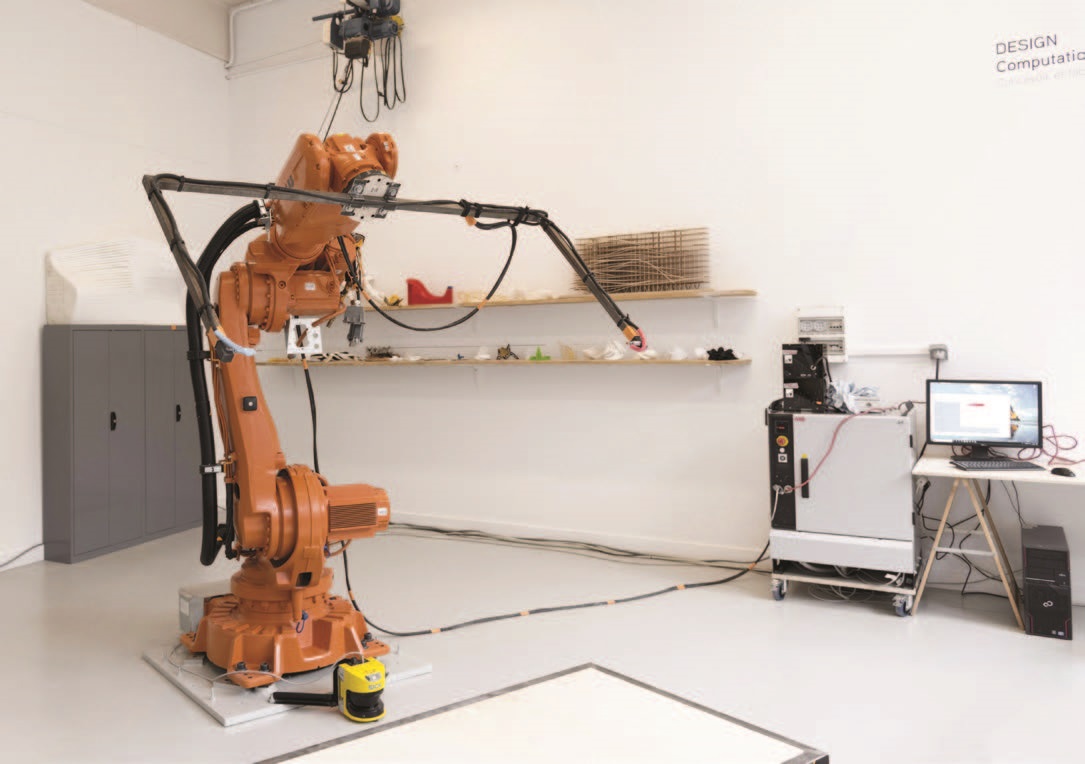
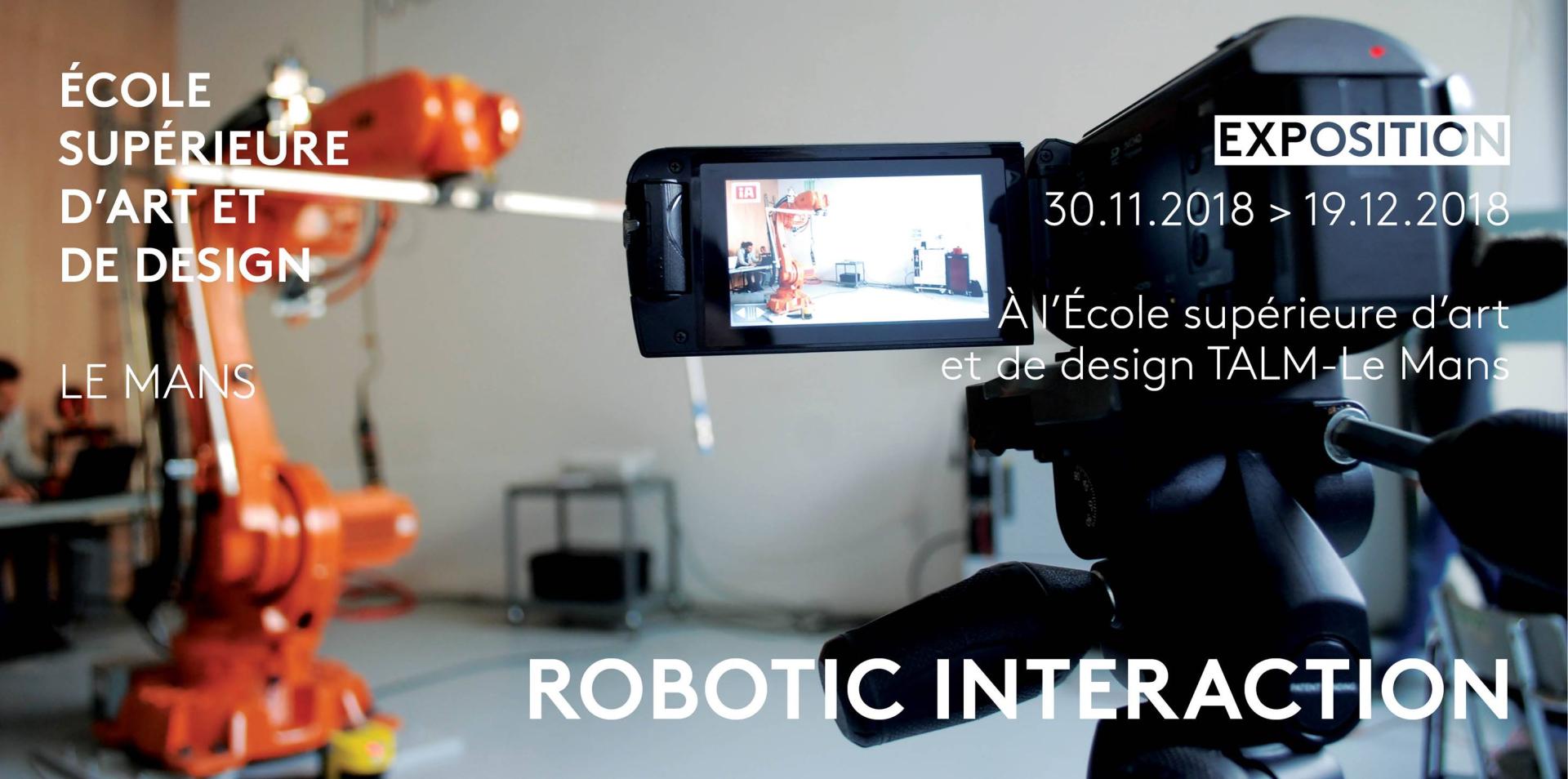
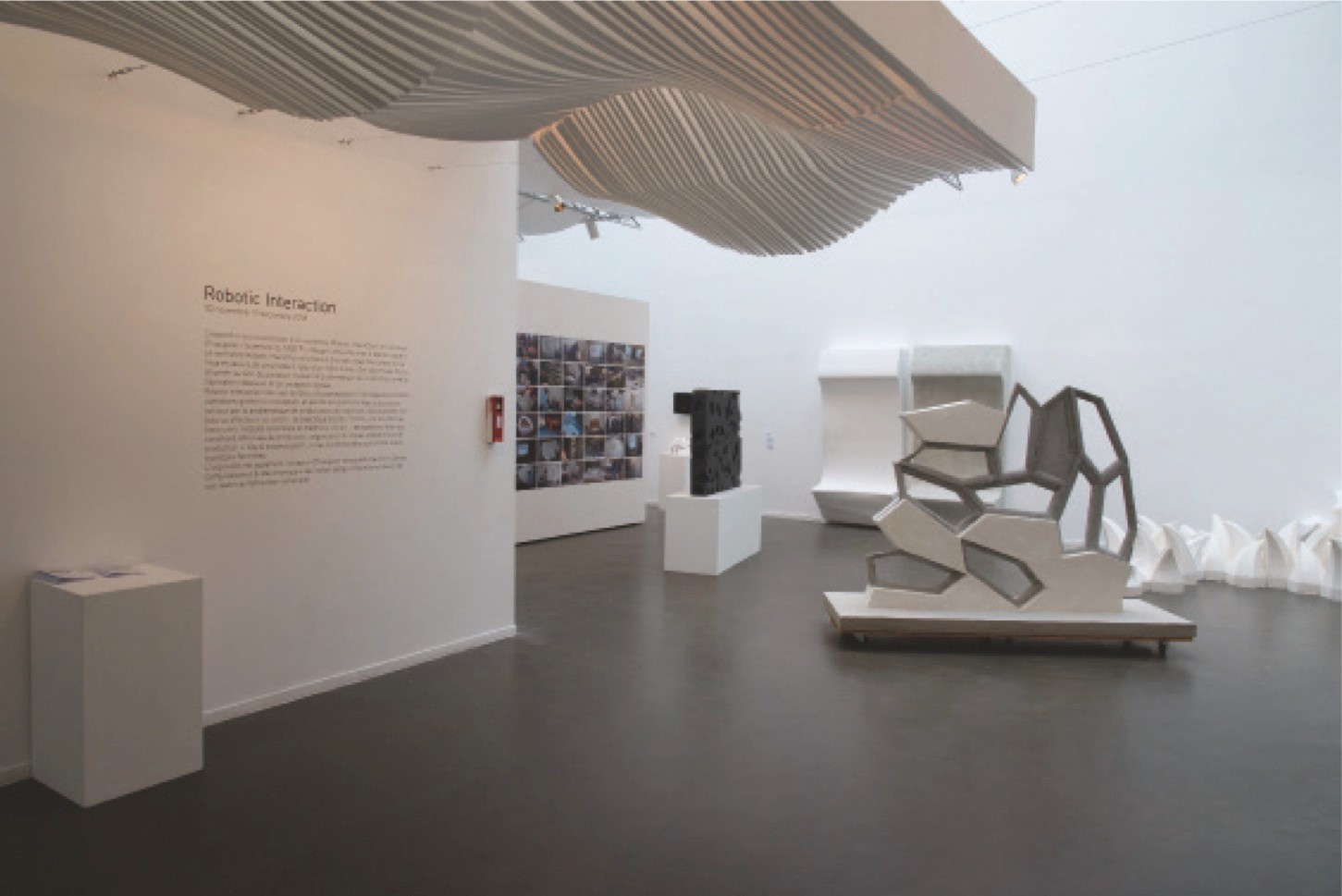
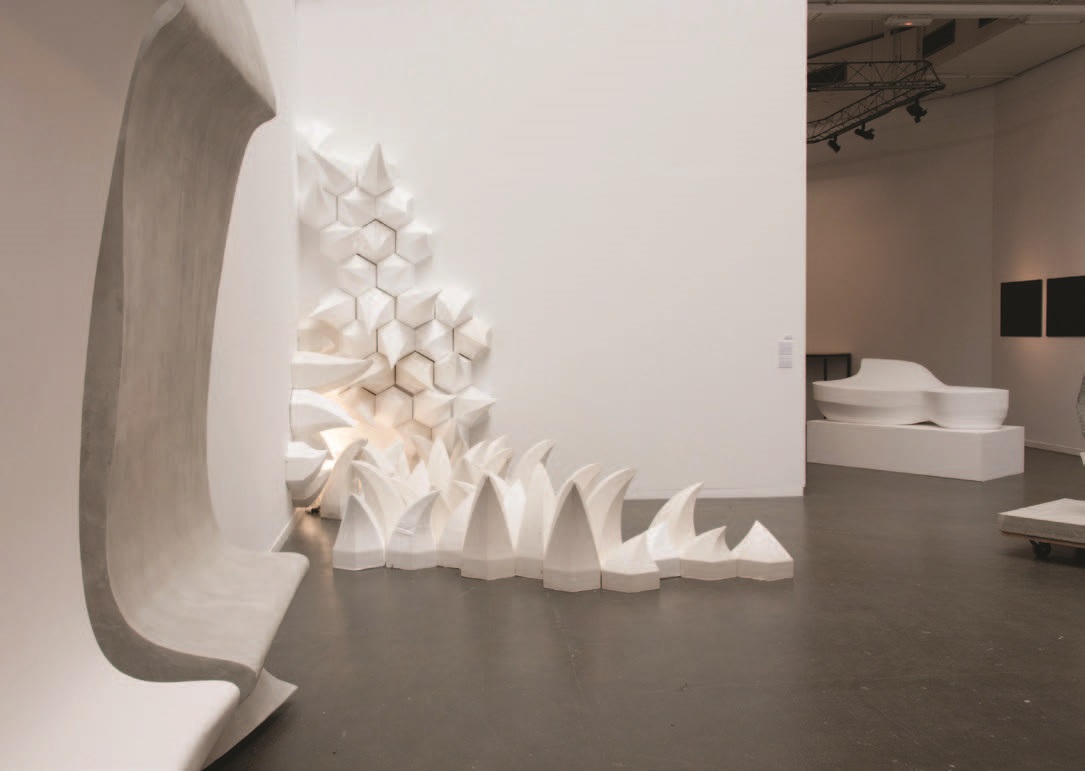
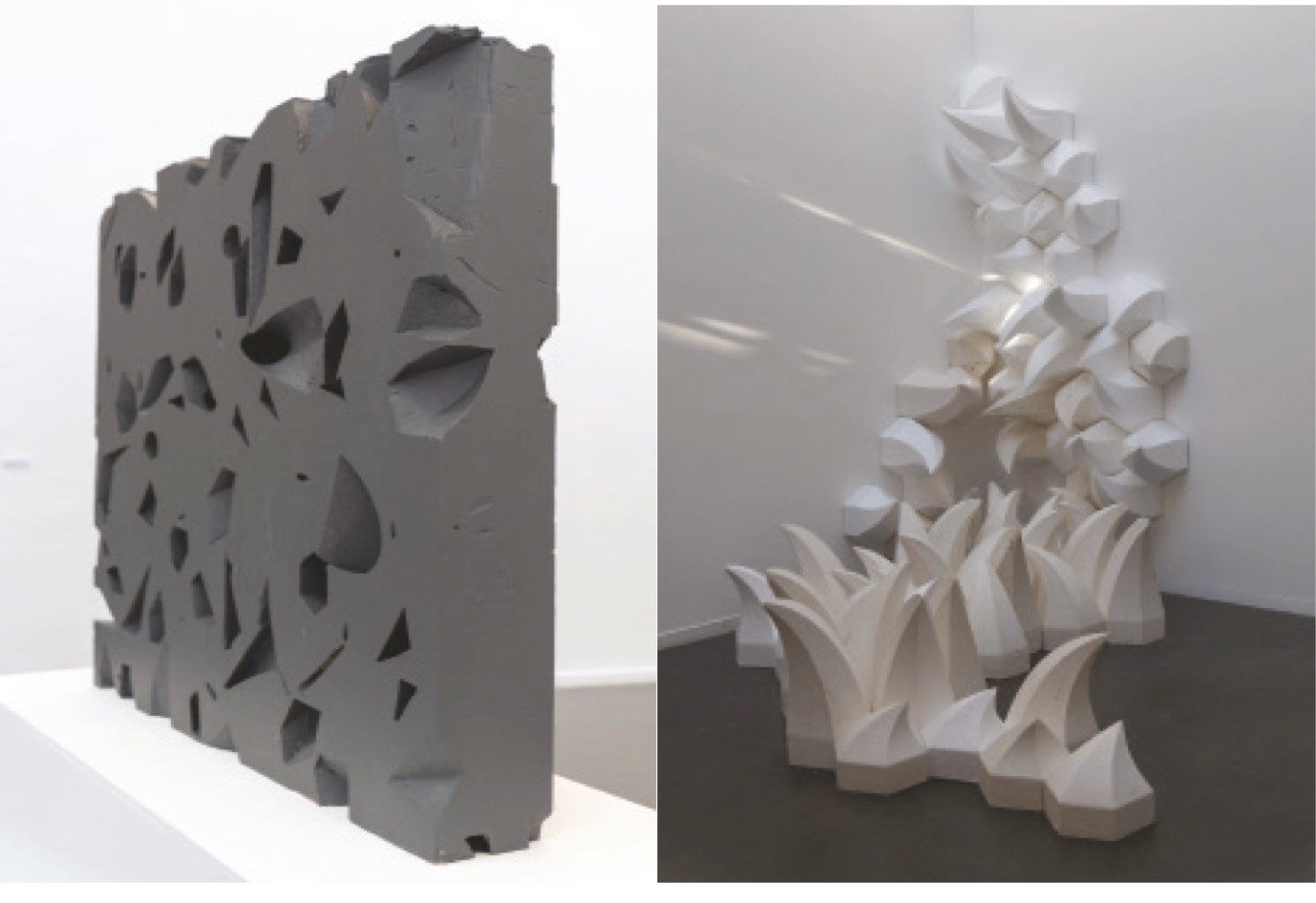
The Robotic Interaction module has resulted in an experimentation exhibition for the implementation of structures crosslinked with the help of a six-axis robotic system, questioning the potential of automated assembly on complex habitable structures. The exhibition took place in TALM-Le Mans from 30 November to 19 December 2018.
Its objective is to question the interaction between robotic manufacture, digital design and environmental challenges. Transdisciplinarity, collaborative project management, machinery manufacture, so many different intelligences for efficient experimentation. The exhibition is the result of this experimentation. The students have worked together on the creation of prototypes, sculptures, structures, large-scale works, sometimes close to monumental, from design to manufacture, verifying the importance of experimentation in the approach of the most modern digital tools. The robot in communication with the computer is the binder between experimentation, creation and innovation.
Key objectives for inclusion
The inclusive dimension of the project is particularly evident in the follow-up of the project. Indeed, the Master degree in Computational Design and Mechatronics that has been created as a result of the module is accessible to very different types of profiles (designers, artists, engineers and others) who wish to integrate the radically new and changing context of design in the digital age.
Results in relation to category
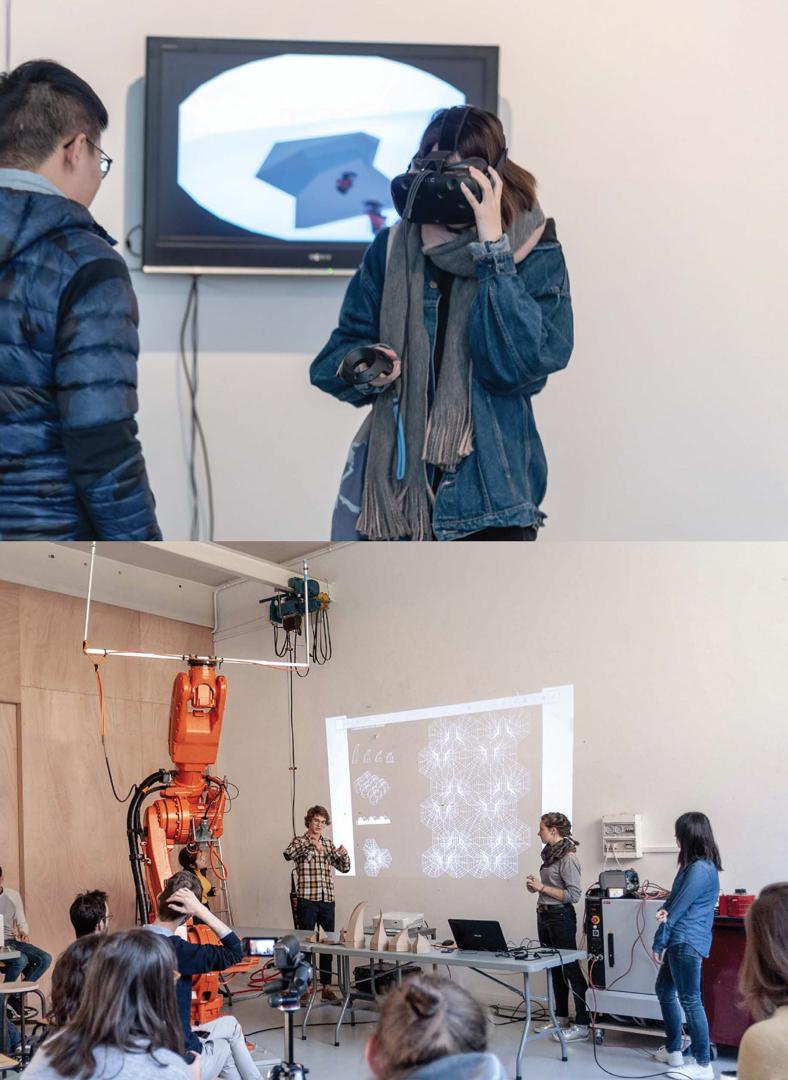
This module is deployed in a three-phase workshop (design & optimisation/fabrication/restitution & exhibition). Robotic Interaction is based on the observation that all the devices associated with design are tending towards radical automation, reducing ever more the amount of human input required for design. The manifest hypothesis of the workshop hinges on the question of the replacement, in design, of gesture by automation, of reason by calculation and, ultimately, of social purpose by statistical play. It aims at experimenting with the implementation of a reticulated robotic structure and questions the potentialities of robotic assembly on complex habitable structures.
Teaching methods
The objectives of this new innovative training course are at the disciplinary crossroads of design, architecture, art and robotics or more widely of mechatronics.
Transdisciplinarity, collaborative project management, machine manufacturing as well as art production and plural intelligence have been the key words of the workshop.
How Citizens benefit
The module prefigured the Master's degree in Computational Design and Mechatronics, which aims to respond to the professional challenges of the sector and is therefore resolutely open to professional environments and, more broadly, to civil society. In this training, the use of computers associated with robots is the primary link between experimentation, creation and innovation. In partnership with other European masters, the training allows students to respond to the constant creation of new professions in connection with the emerging needs of different practical fields: art, design and architecture; engineering and construction; new materials; automotive, aeronautics and consumer products; transport and mobility; high technologies and processes.
Innovative character
This training module won the call for innovative initial education projects 2016 of West Creative Industries. The modules supported prefigure new sustainable training courses that respond to the evolution of skills and creative, engineering and innovation professions.