Dolomiti Care
Basic information
Project Title
Full project title
Category
Project Description
In 2009 the Dolomites became a UNESCO site. And what should people do, in this spectacular context? Improve it, or simply take advantage of it?
Since 2011, we have been facing great, unmoving, difficult sites, to relaunch them. Abandoned former factories, holiday villages, high-quality historic architectures. They are precious resources, which must be made available once more. Through ideas, networks, and strategies, through art and culture: we reignite them, give them new functions.
Project Region
EU Programme or fund
Description of the project
Summary
For ten years we have reignited great, abandoned, underutilised sites inside the Dolomites, a World Heritage Site.
They tell us of a productive past, of a frozen history.
Great, shut-down factories tower over the Dolomites’ landscape: instead of building more, why not recover?
We choose the sites by virtue of their residual potential.
They are extraordinary sites, and they could most definitely go back to being useful for their communities, a propulsive force for the territory.
In the past, they guaranteed work, development, a stable economy.
Today, they are unmoving.
In some cases, even, they were renovated by public authorities.
However, after the renovation, they have not been offered a new beginning.
And that is when Dolomiti Contemporanee intervenes.
After politics, local administration and governance, and architects all have failed in their attempt to rehabilitate the resource, we get in the game.
First, we convince the owners, whether they are a private or public entity, to trust us.
Then, we create a partnership network to support the regenerative effort of the inert site. We involve the territory, the Mayors, the people, the companies, the local action groups. The objective must be a common one: to reignite the resource.
In each site an International Residency is created. From that point on, it houses, for the necessary period of time (months or years, on a case-by-case basis; the process is temporary, either way) a great number of people, all working together, with ideas and practices, on its relaunch.
Artists, architects, designers, scientists, philosophers, mountain and forest experts, economists.
At the end of this transformative path, the site starts up once more.
By virtue of the generated push, sometimes local commercial or productive activities move into it.
Art and culture have brought forth the decisive opportunity for the site’s relaunch.
From 2011 to today we have faced – and relaunched – several important sites, which had l
Key objectives for sustainability
The mountains’ cultural identity is often quite ridiculous, reified.
A place for leisure, tourism, good for a visit on holiday or at the weekend.
In reality there are problems, difficulties, and opportunities here, too.
And there are many disused structures, buildings, vast compounds which all lay, unmoving.
A Heritage, architectural, historic, and cultural.
The objective is simple: to face these still sites, to transform them, to imagine a new contemporary identity which may make them usable again.
Every day we hear about sustainability, of land-use saving.
We have noticed, however, how rarely words are followed by action.
We have a very tight budget, when we face these complex cases of urban (or Alpine) and territorial regeneration.
How do we do it?
We create a shared network, including communities, public authorities, private enterprises, individuals and institutions linked to creativity and science (artists, universities, Foundations and Research Centres).
Inside these still factories, activities flourish again. They perform two functions: a cultural one (to deal with the themes well, in exhibits, seminars, etc.), and a motivational one (to convince people that the Asset is truly re-processable).
Our network includes, presently, more than 500 partners.
We don’t ask money from our partners, but materials, food, manufacturing, logistics.
Thus, while we build the social architecture of the project, we save up to 2/3,000,000 euros each year.
Materials and products are used to equip the Residency, create the art pieces, promote the initiatives.
Over ten years, with this system, we have relaunched four large factories, proving ourselves to be an atypical and experimental project in Italy.
A project where art isn’t a decorative product, but rather an effective method, one that pushes and reawakens awareness and the locations themselves.
As soon as we rehabilitate a large, decommissioned site, we bring development.
Key objectives for aesthetics and quality
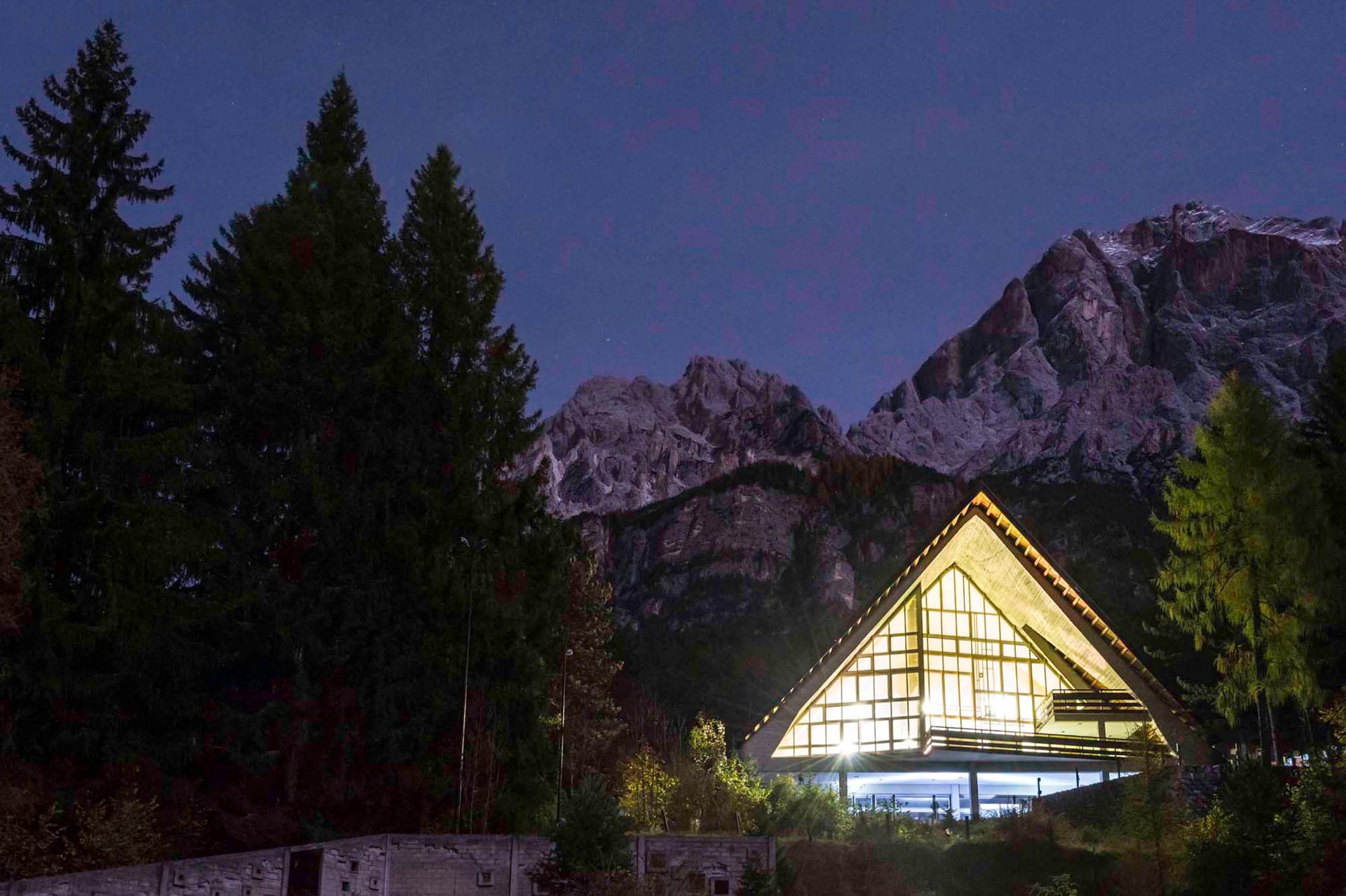
We choose special sites, for the aesthetic quality of the architecture (see, for instance, the case of the former Eni Village of Borca di Cadore (www.progettoborca.net) and for their relationship between architecture and Landscape.
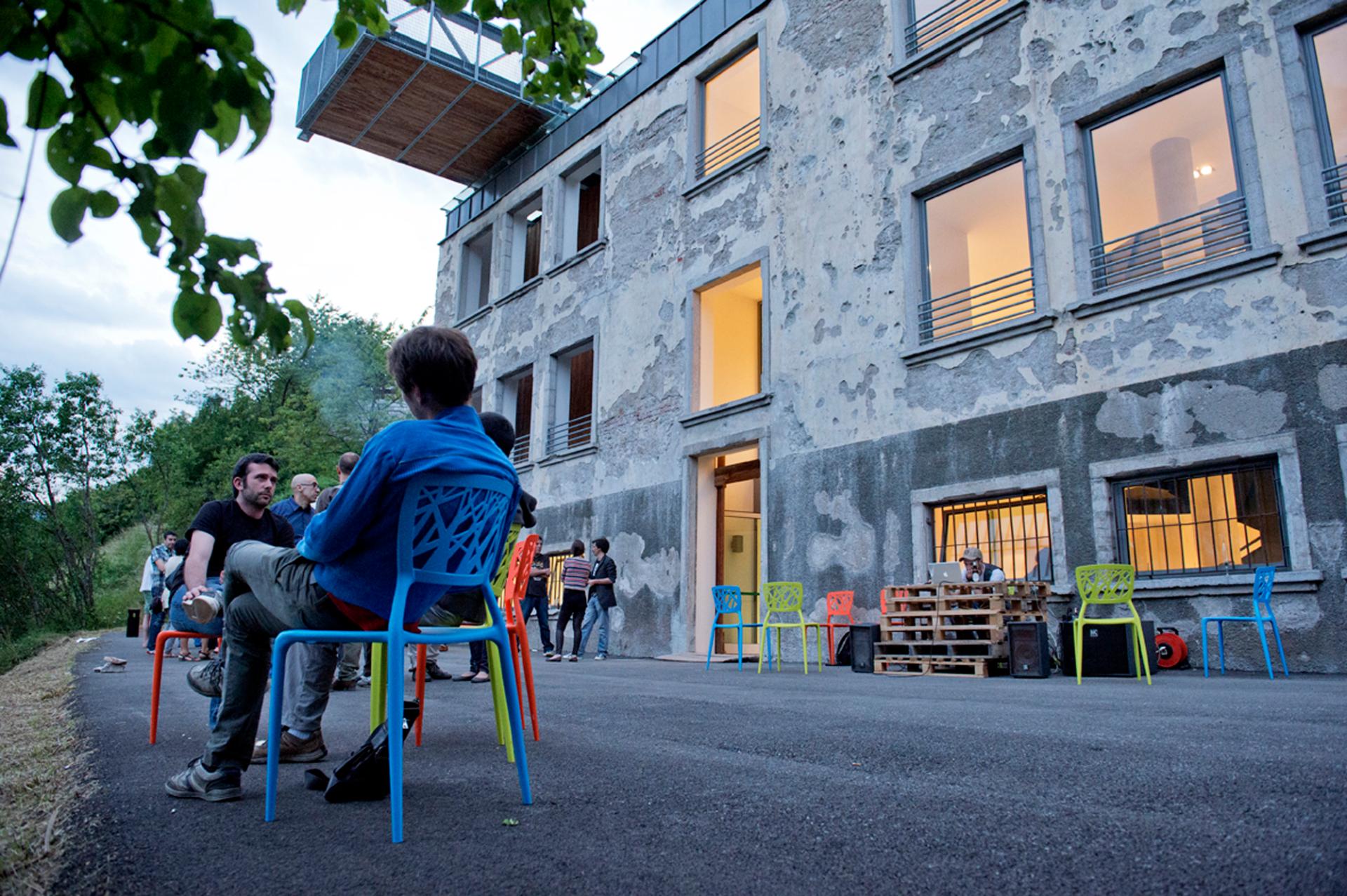
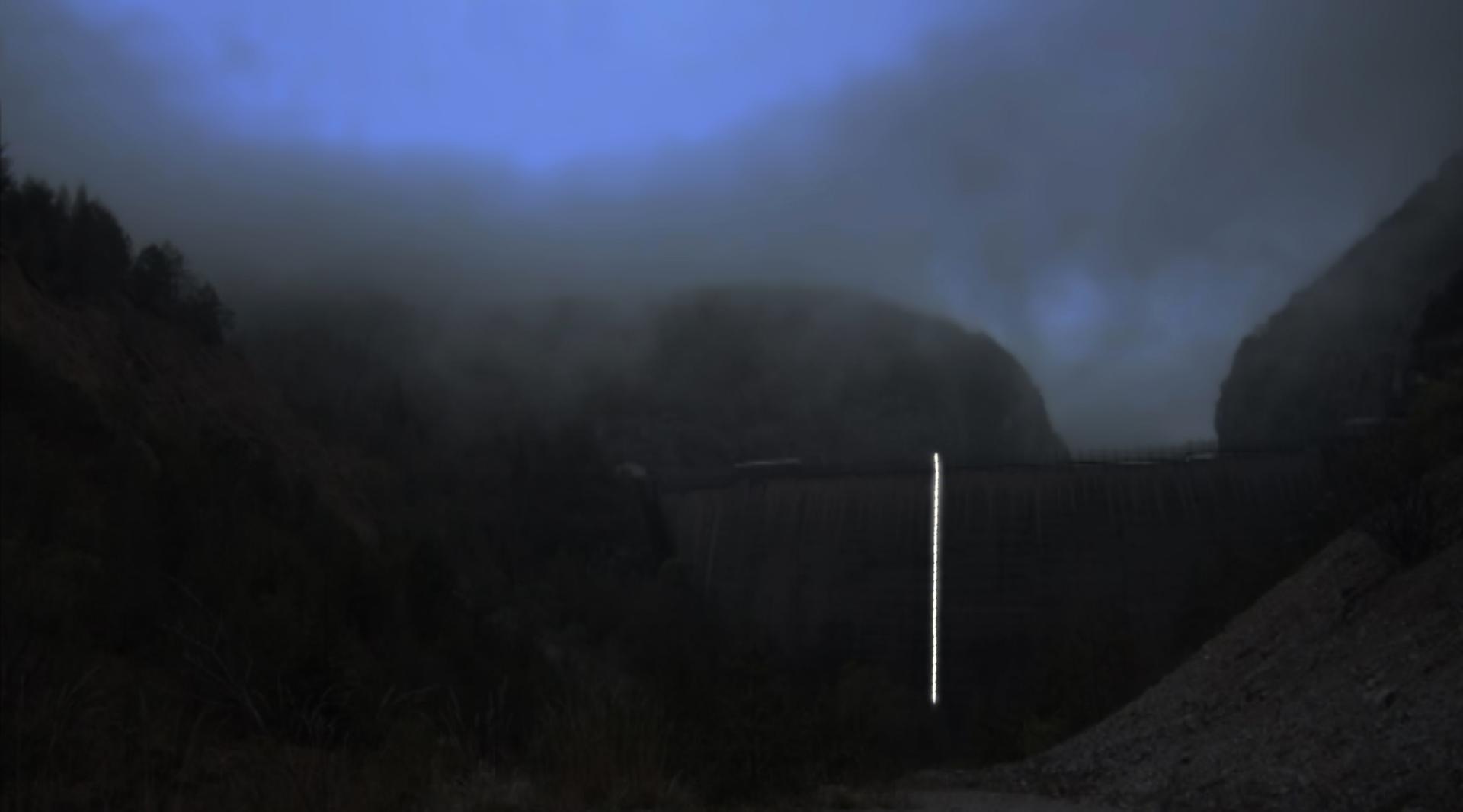
Or, extraordinarily difficult sites, which needed to be revived (as is the case for the Vajont: the Vajont Tragedy – October 1963 – caused the death of 2,000 people. We have reopened a former elementary school in the Vajont area, damaged by the Tragedy, transforming it into the Nuovo Spazio, a Centre for Contemporary Culture of the Mountain and Landscape).
Dolomiti Contemporanee (DC) reignites dead places. In the case of the Vajont, death isn’t a metaphor. Here, in such a complicated location, art and culture bring life.
The aesthetic quality of the Landscape and the Heritage are clear, as is their loss and abandonment.
In our work, we also take on a quality criterion, as the only possible and essential one.
The words “art” and “culture” are a synonym for “quality”. The human spirit is elevated from ignorance through the search for quality.
From 2011 to today, more than 1,5000 artists from all over the world have worked inside DC’s Residencies.
The selection that we make as curators is very careful.
However, if art and culture coincide with quality, then they are functional as well (Plato: beautiful is good).
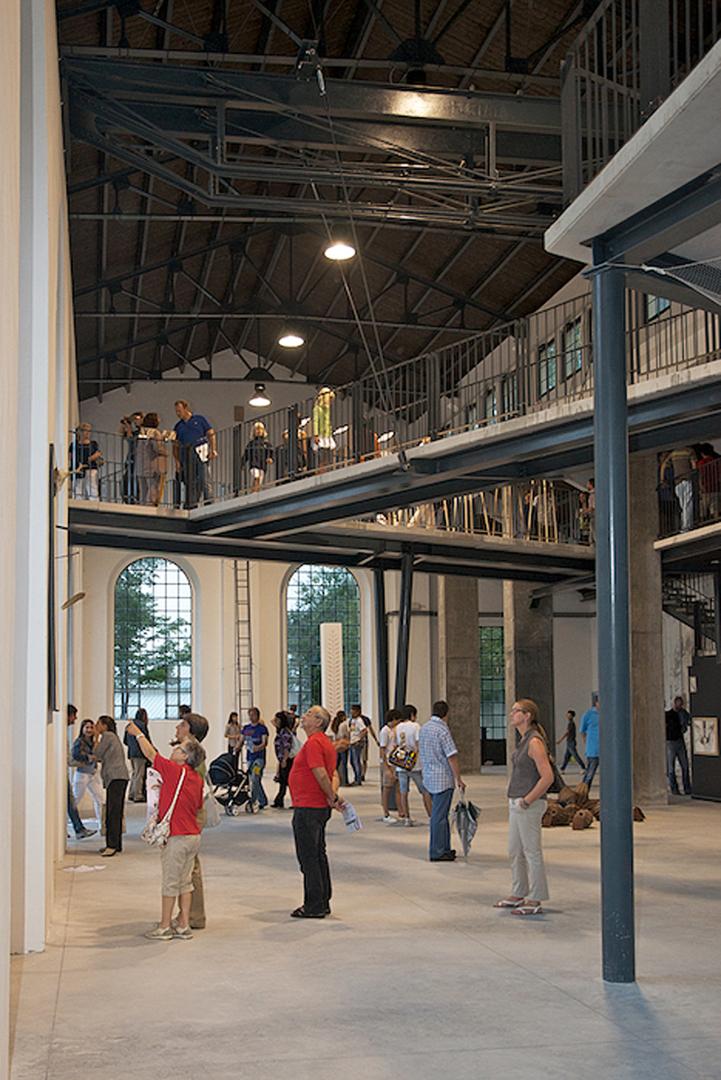
It is through art that we transformed, and have given new function, to the former factory of Sass Muss (2011, Belluno), the former factory in Taibon Agordino (2012), and several other sites.
Art isn’t an extemporaneous support in our project.
It is an authentic driving force, an activator, an enzymatic stimulant.
Together with the other functions of innovative culture, attention and responsibility in regards to care of the resources, it makes it possible to rethink, and shake up, these great, fossilised sites, which are made available for the people once again.
Key objectives for inclusion
Having 500 partners is evidence of the fact that our process is an inclusive one.
Inside the sites we regenerate, transforming them from “craters of the Past”, which they are, into centres for culture and art, people are finally allowed back in.
The sites used to be closed off, unfit for use: nobody had been inside them in years. The Residency makes it possible to frequent them, to understand them from the inside, to live them.
The working team of Dolomiti Contemporanee itself is a fundamental part of this network. About thirty young people – coming from the Dolomites area or other places – develop the projects. These people, most of them young graduates, want to do something for their territory.
Something positive, something not trivial.
The same is true for artists: many of them are young (under 30). They have an opportunity: to work inside challenging contexts and important sites. They are jointly responsible for the success of the projects: their work is synergic to ours, as well as empowering.
Together with art and culture, there are strategies that are developed with the various administrations and with the political sphere, as well as the local authorities.
Without a prudent and “aggressive” strategy, none of what we do would be successful.
These sites are sunken and failed: shaking them up isn’t easy.
Every day we negotiate with the territories’ governance, putting into relation individuals and groups that wouldn’t usually collaborate with one another.
This way, we culturally socialise our work, and we build and heterogeneous and multidisciplinary system, one which has a higher chance of working out, because it is stronger, branched, and cohesive.
DC is a kind of ecologic organism, in a broad sense, which stimulates and implements propulsive reactions and relationships, constantly expanding the scope of its action and the composition of its support group, in favour of the recovery of the common Asset.
Results in relation to category
The chosen category is number 6 “Preserved and transformed cultural heritage”, even though our practice would find great success in categories 4, 7 and 8 as well.
When dealing with great, degraded sites, the objective of preserving the heritage and that of transforming it responsibly, in accordance with the current needs of the territories, coexist.
These sites are paralysed and useless. But the territory’s needs are many and, often, there is a clear lack of spaces where to carry them out. During the years, we have worked in the manner we have outlined above, renewing people’s trust in these lost structures, and contributing to their relaunch.
In some cases, the sites on which we have worked are so special and have such high value (both historic and aesthetic, like the former Eni Village of Borca; or exceptionally emblematic, such as the Vajont), that we decided to transform them into “permanent centres for research linked to the environment-mountain”.
Thus, while after our intervention some factories have simply been recovered by society for new use, in special cases we decided to handle the recovered sites ourselves, and they have therefore become Centres for Culture and Development, transforming them into catalytic ganglia, into the operative centres for our territorial policy, in which we host, each year, hundreds of people, all collaborating with us on the addressing of those themes connected with regeneration as well as Environmental and Landscape care. This reconversion of the infrastructural heritage aims to the recovery of precious societal resources.
The common commitment, and a full schedule, focused on research and quality, guarantee great visibility for all developed projects.
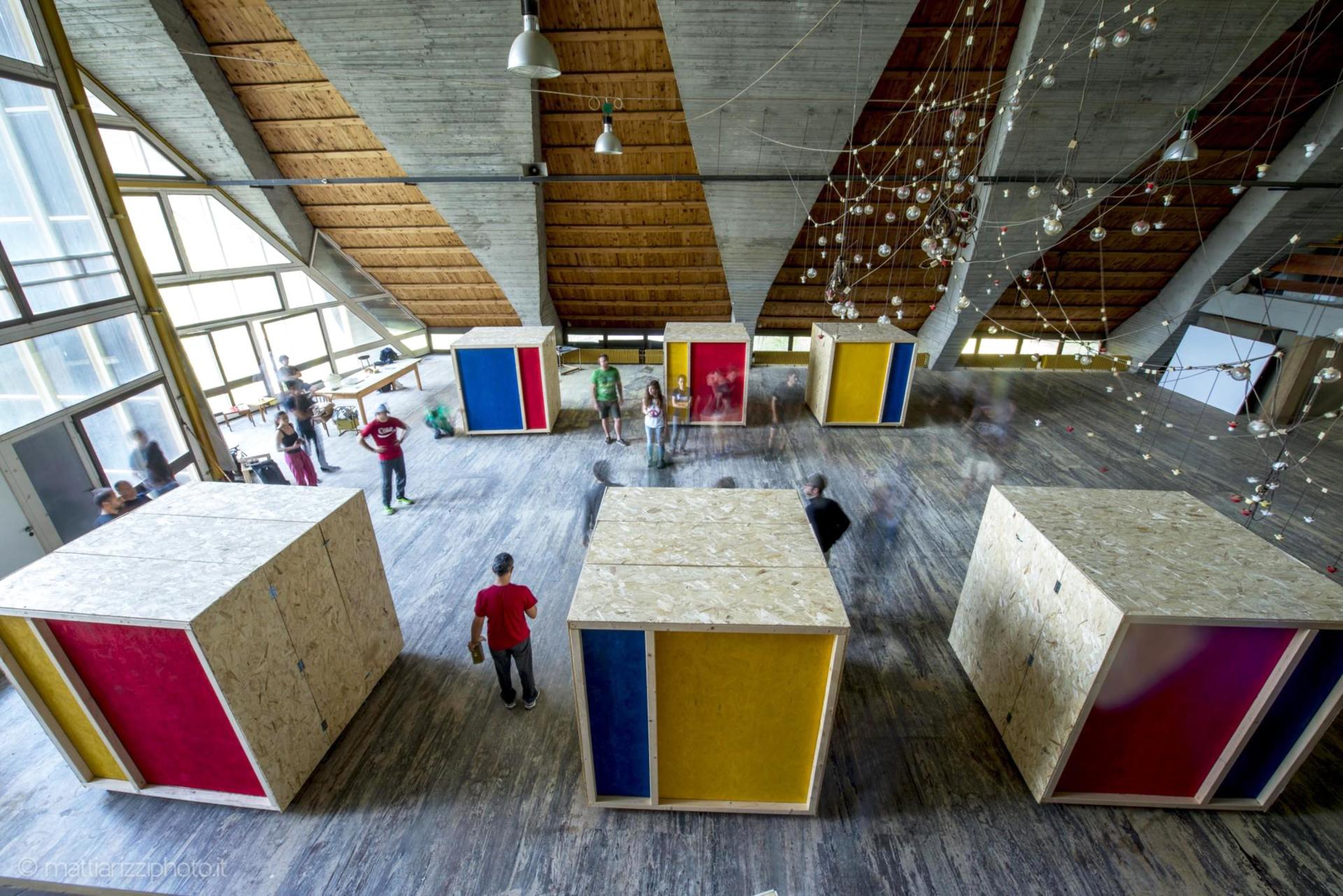
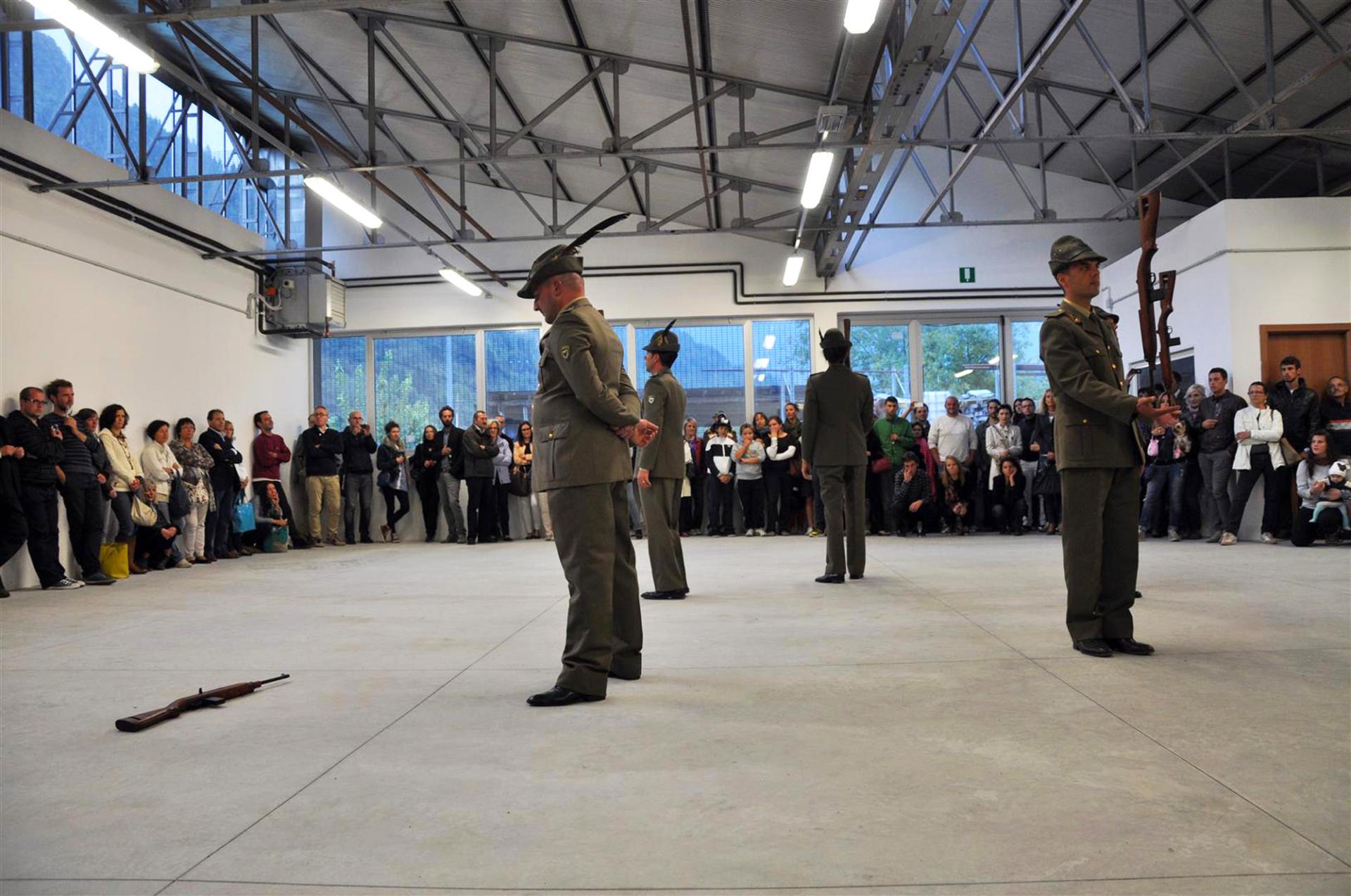
Contemporary art exhibits, self-construction, symposiums, and conferences on environmental, territorial or general themes, workshops and seminars, performances and installations. These are some of the activities which we pursue in the sites are re-activating.
How Citizens benefit
If, in a territory or town, a great structure, unmoving for decades, is finally relaunched, that territory or town earns an active space in place of a dead and lost space.
By virtue of the relationships which we create among individuals on a local level, and of the cultural, artistic and scientific collaborations that we promote inside them, these sites become accelerators.
People meet inside them.
Administrators meet entrepreneurs who, in turn, transfer their activities in the reignited site.
People meet artists and, very often, take part in the creation of the pieces. In dozens of cases, in fact, each artist proposes interactions with people, and this helps to cement and strengthen the new mixed Asset, in which projects, art and culture, personal and social relations, development and work, integrate with one another.
Society, in general, trusts us.
Often it is a Mayor who calls us, asking for an idea for the recovery of a site or structure.
At that point, we begin to build the interaction with people, groups, cultural institutions already present in the territory, work Cooperatives, and local companies, bringing them together for a creative enterprise.
This way, civil society reappropriates a dormant but intact potential, which is made available once again.
Innovative character
In our case, “innovative” is synonymous with “re-innovative”.
It is because we imagine new uses for compromised structures, and then launch practices and build strategies to make it concretely happen.
Dolomiti Contemporanee does not develop theories, but (physically) acts on the territories.
The re-innovation of the Heritage happens following an experimental and pioneering methodology.
It isn’t easy to shake up atavistic inertia. A specific labour is needed, as well as a great capacity to share its intent.
The novelty of DC’s approach and vision are often recognised outside the territories in which we act as well.
This strengthens our position, allowing us to better our action and to continuously broaden our network of supporters.
In April 2021, we were selected for the Ministry of Foreign Affairs and International Cooperation’ IDEAS project (https://ideasitaly.com/dolomiti-contemporanee/), precisely because of the innovative scope of our action.
In the same month, we received a special Mention from MiBACT, for one of the projects we launched in the Vajont area.
It is the International Artistic Contest Two Calls for Vajont (www.twocalls.net), which rethinks the locations of the 1963 Tragedy, to overcome it.
The Mention came following our Candidacy for the European Council’s Landscape Award Contest.
In both cases it was highlighted how our action, though strongly suited to the re-innovation and development of territorial Assets, is responsible and sustainable with respect to cultural and environmental themes.
In 2020, we received the “Green Flag” from Legambiente Italia, who awarded exactly this concern of ours.