DOMINO, smart building envelope
Basic information
Project Title
Full project title
Category
Project Description
DOMINO is an innovative adaptive facade system used in deep renovation actions to promote the ecological transition towards PEB models. The technological solution was developed according to CIRCULAR economy principles through dry-assembled recycled and recyclable materials. The goal is to change the appearance of our cities, improving the indoor and outdoor comfort of the Built Environment.
Project Region
EU Programme or fund
Description of the project
Summary
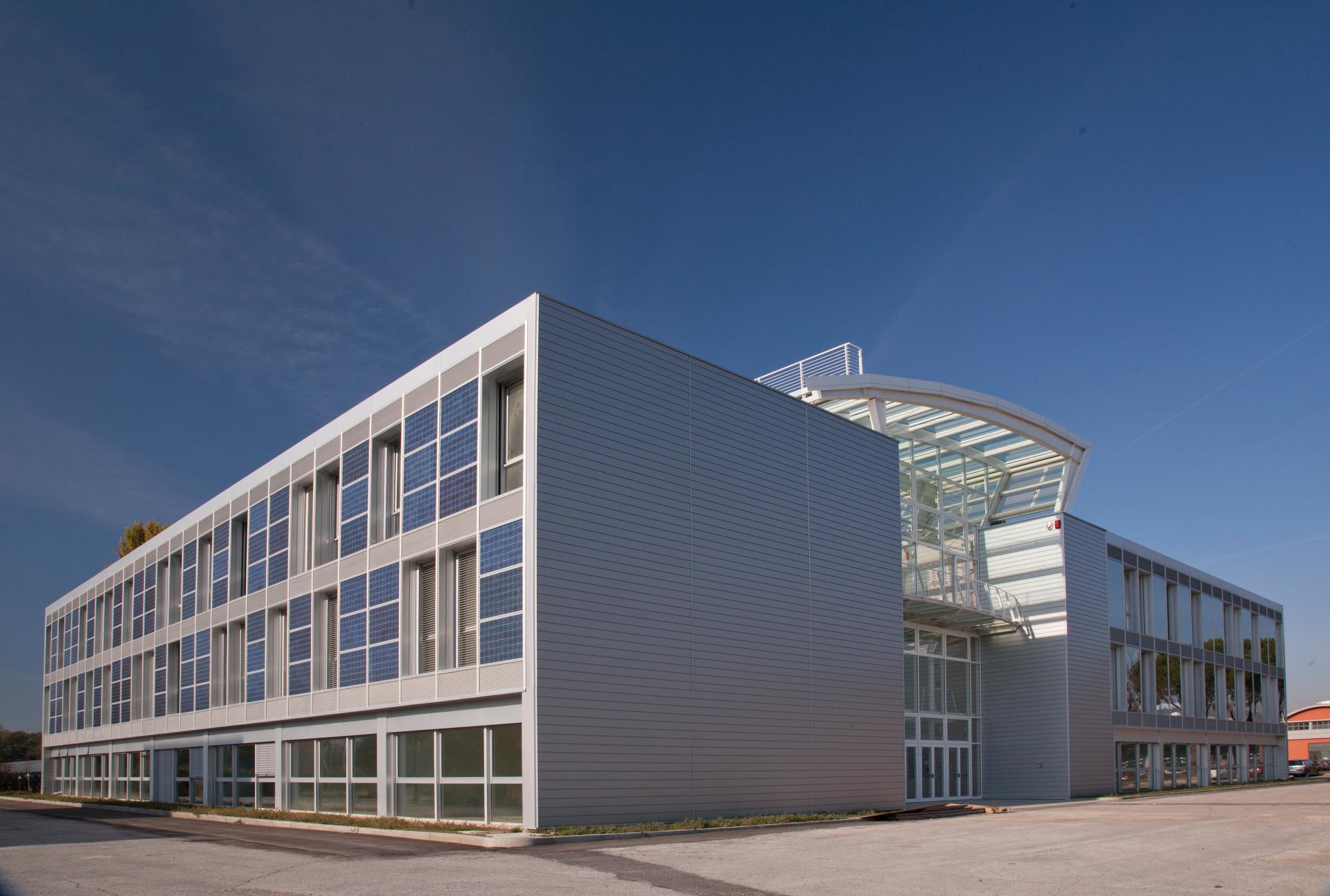
DOMINO is an innovative modular double-skin façade system developed for the Mediterranean climate conditions capable of guaranteeing flexible energy performance, modular and easy assembly, and flexible use. It is the result of a research work initiated by the ABITA Interuniversity Research Center of Florence (prof. M. Sala and arch. R. Roman) in collaboration with the Technical staff of the Lucca Province (arch. F. Lazzari and eng. R. Gaddi) and the SME Davini s.r.l. The subjects involved in the research, worked in synergy for two years to design and evaluate the characteristics of the envelope component and to realize the prototype of the façade element, which was implemented at the New ICT Center of the Lucca’s Chamber of Commerce.
The research and façade development aimed at answering the growing need for innovative, adaptable façade solutions for new or existing buildings in the Mediterranean area. The key starting points for the design were: energy efficiency for the Mediterranean climate, modularity, flexibility, customization, indoor comfort, and circularity. The new vertical opaque component can vary its configuration throughout the year in correspondence with the change of the seasons. The flexibility of the design allows the integration of the different finishing materials and/or PV panels, making it customizable based on the needs and façade orientation.
Implementing the DOMINO facade components in the ICT Centre demonstrated that the energy efficiency in the office buildings could fully meet all the sustainability requirements (architectural, functional, comfort, and control) through the application of innovative, intelligent, and intelligent integrated design. This experimental project contributes to the dissemination of innovative and renewable technologies in public buildings in Italy.
Key objectives for sustainability
The aim of the DOMINO research projects was to realize an innovative facade system that is easy to install, guarantees energy efficiency for the new or existing buildings located in southern Europe, allows incorporating different finishing elements and/or PV panels and green walls is easy to use by the building tenants, and is fully recyclable.
The facade system was developed for the tertiary building sector (offices and commercial) to reduce thermal loads and energy consumptions for heating and cooling and to guarantee:
- Natural lighting
- Natural ventilation
- Night Colling
- Increase in the thermal insulation
- Reduction of indoor overheating in summer months
- Integration of highly efficient plant systems (radiant ceilings, beams cold, heat recovery, etc.)
- Installation of technologies for the production of renewable energy
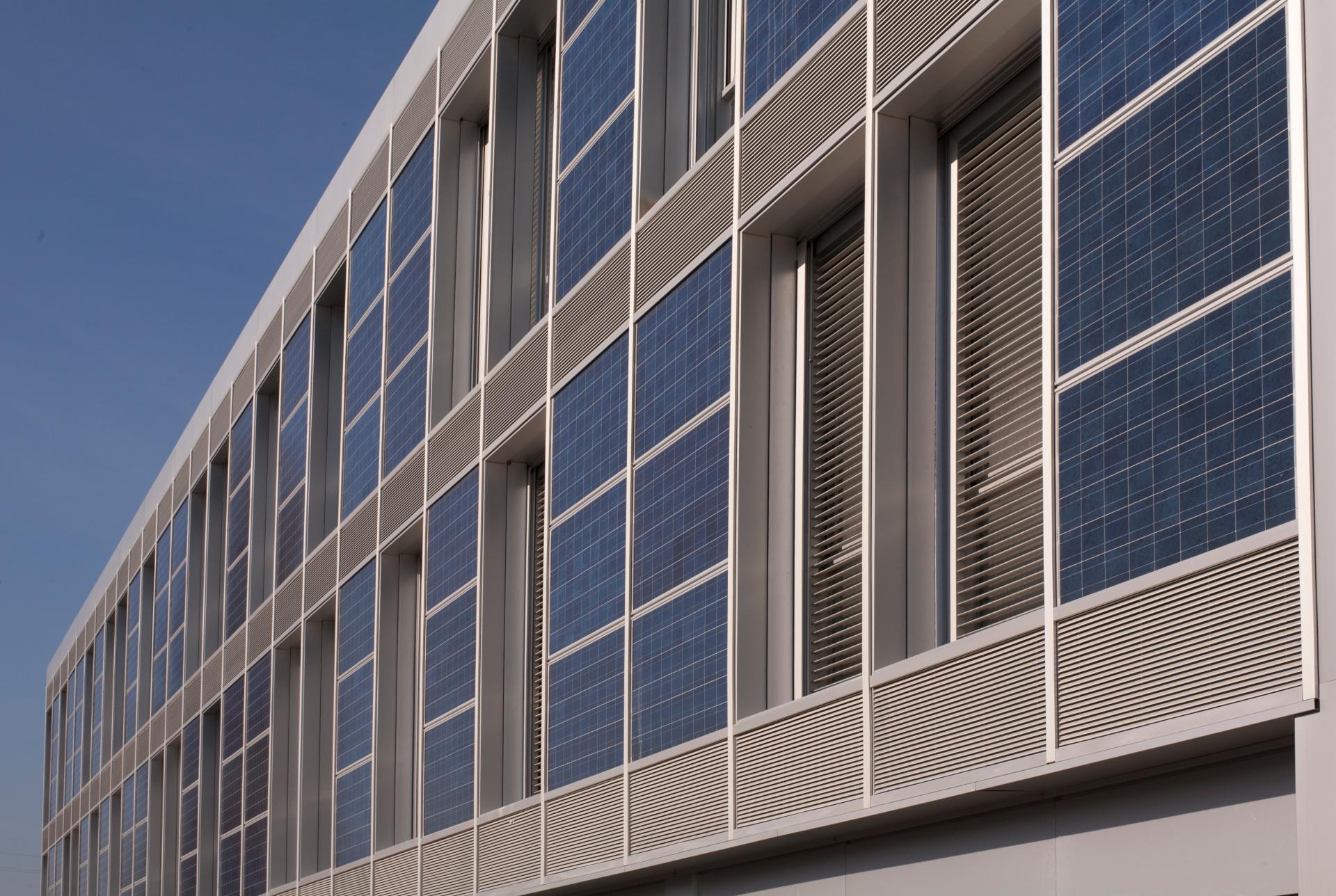
The Smart Façade proposes a combination of components that optimize the factors that influence the internal comfort of the confined space (solar radiation, thermal energy, acoustic energy, etc.) through the peculiarities of the elements and materials used. The external opaque component is a multifunctional module of prefabricated parts that guarantee the integration of photovoltaic panels (or other infill materials) that, in addition to supplying electricity, ensure the production of heat in the ventilated cavity placed adjacent to them.
Furthermore, the façade system can be dry assembled on-site, guaranteeing:
- Ease of assembly
- Reduction of construction times and costs
- Total system reversibility
- Simplicity in maintenance
The component is realized with glass and aluminum elements, both materials are completely recycled and can be provided from the recycling of secondary raw materials. Furthermore, the choice of using a totally dry-assembled solution makes it possible to recover every part of the facade at the end of its life cycle, promoting the concepts of circular economy and sustainability.
Key objectives for aesthetics and quality
The DOMINO adaptive façade system represents an innovative solution, due to its aesthetic and technological characteristics, capable of responding effectively to the market demands for envelope components for European building; market increasingly oriented to propose architecture facade solutions capable of changing color and shape in a short time, guaranteeing energy savings, sound insulation, reduction of production costs.
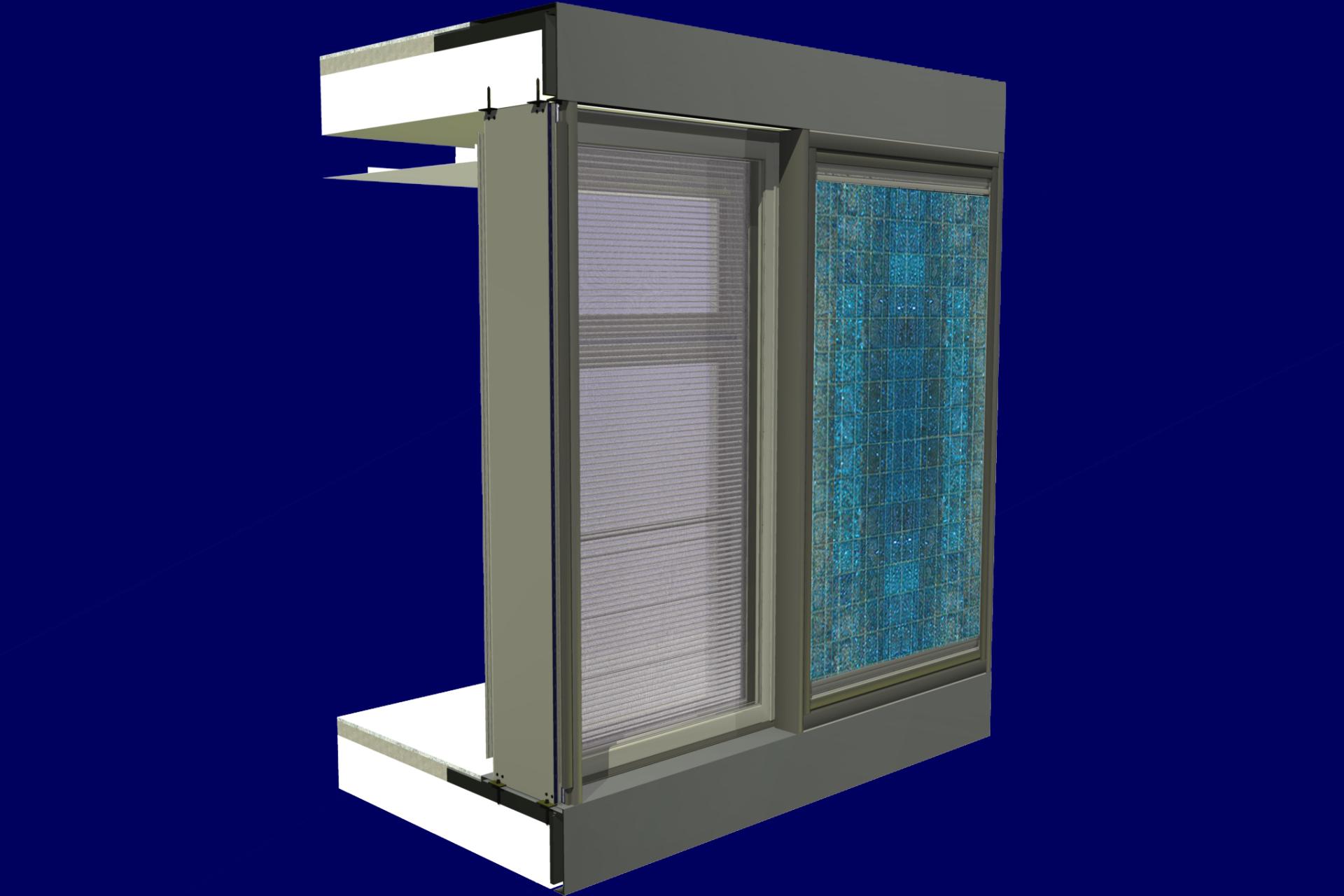
The component was conceived as a modular element of regular shape, characterized by an opaque partition and a transparent partition that can be combined in relation to the designer’s needs. The modularity of the façade element allows architects to manage the usability of the internal space regardless of the geometric shape of the double skin closure system.
If used in deep renovation actions the DOMINO facade system allows the designers, not only to drastically reduce the energy consumption of the existing buildings but also to completely change the aesthetic aspects of the urban environment, promoting a new concept of beauty and sustainability for our city.
Furthermore, the facade DOMINO is developed like a smart technological system, that is able, thanks to the possibility to integrate sensors, to independently manage each of its parts according to the external climatic conditions and user needs. The smartness of the architectural envelope promotes a new quality of the user's experience inside a PEB beyond the functionality of a traditional facade system designed like a static performance. One of the objectives of the DOMINO research, in fact, was developing a new generation of adaptive and kinetic technological solutions able to transform the buildings into a sensitive organism with an envelope that is designed like a skin capable of self-regulating to maintain a constant temperature in the internal environment without consuming too much energy.
Key objectives for inclusion
The key objectives of the DOMINO research projects, in terms of inclusion, were:
- Create a flexible façade system easy to use by the building’s tenants.
- Involve an SME enterprise in the research project to advance the collaboration between the university and the industries.
- Use the project as the showcase to increasing the knowledge on bio-ecological architecture and technological innovation for the environment.
Furthermore, the project was developed in close collaboration with the public administration in order to guarantee the project’s success and simultaneously increase their knowledge on the topic of sustainability.
Results in relation to category
Thanks to its lightness and the simplicity of its design, the DOMINO façade system can be used for new construction or deep renovation of existing buildings. Its production process can be controlled through BIM software, reducing production waste and facilitating its installation. All parts of the façade system can be easily disassembled and recycled at the end of the building's life cycle. Furthermore, the modularity of the system allows it to be easily customized with new components made of innovative ecological materials (photocatalytic coating, organic PCM, etc) or containing plants to improve the urban microclimate of our cities.
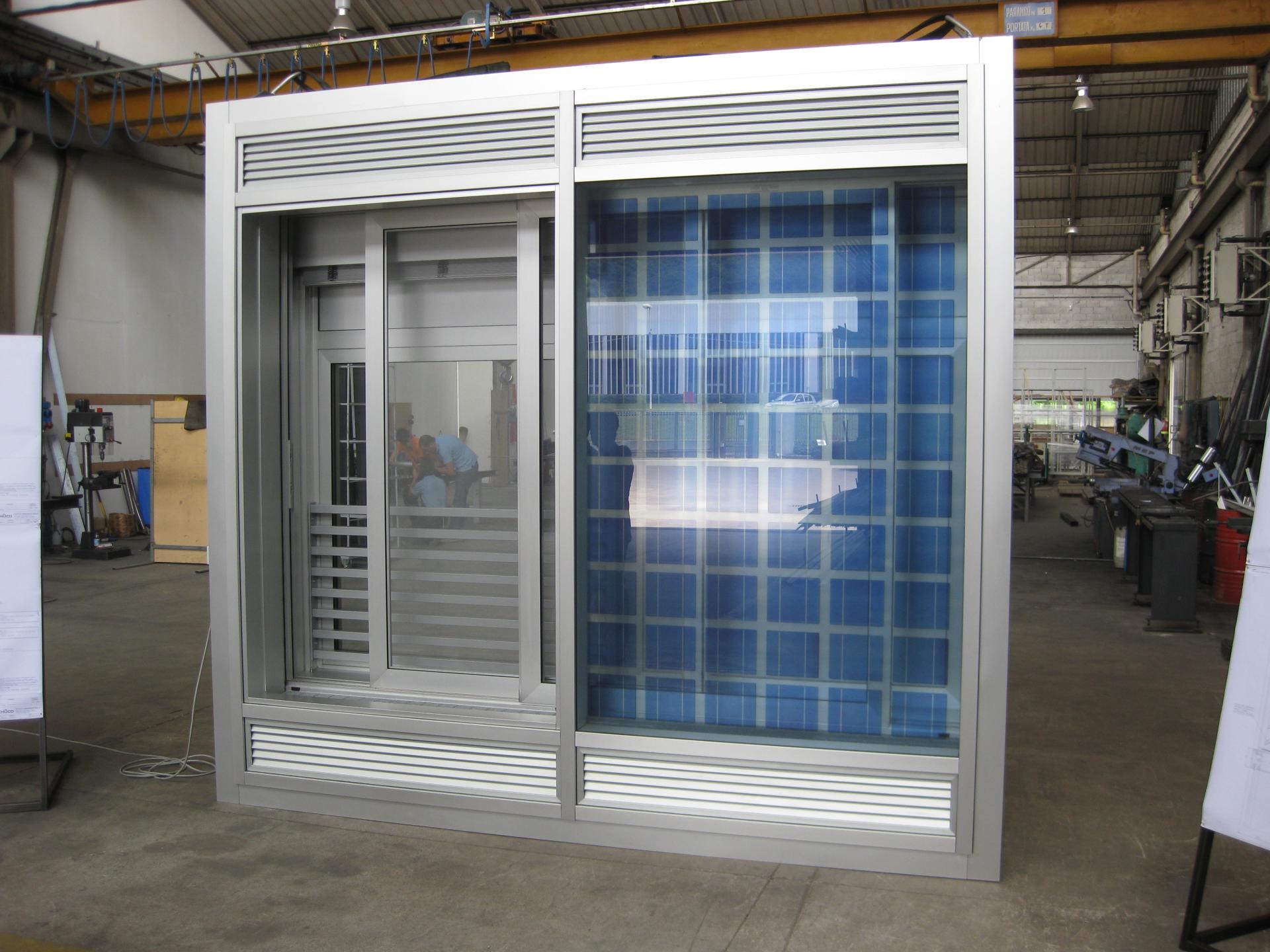
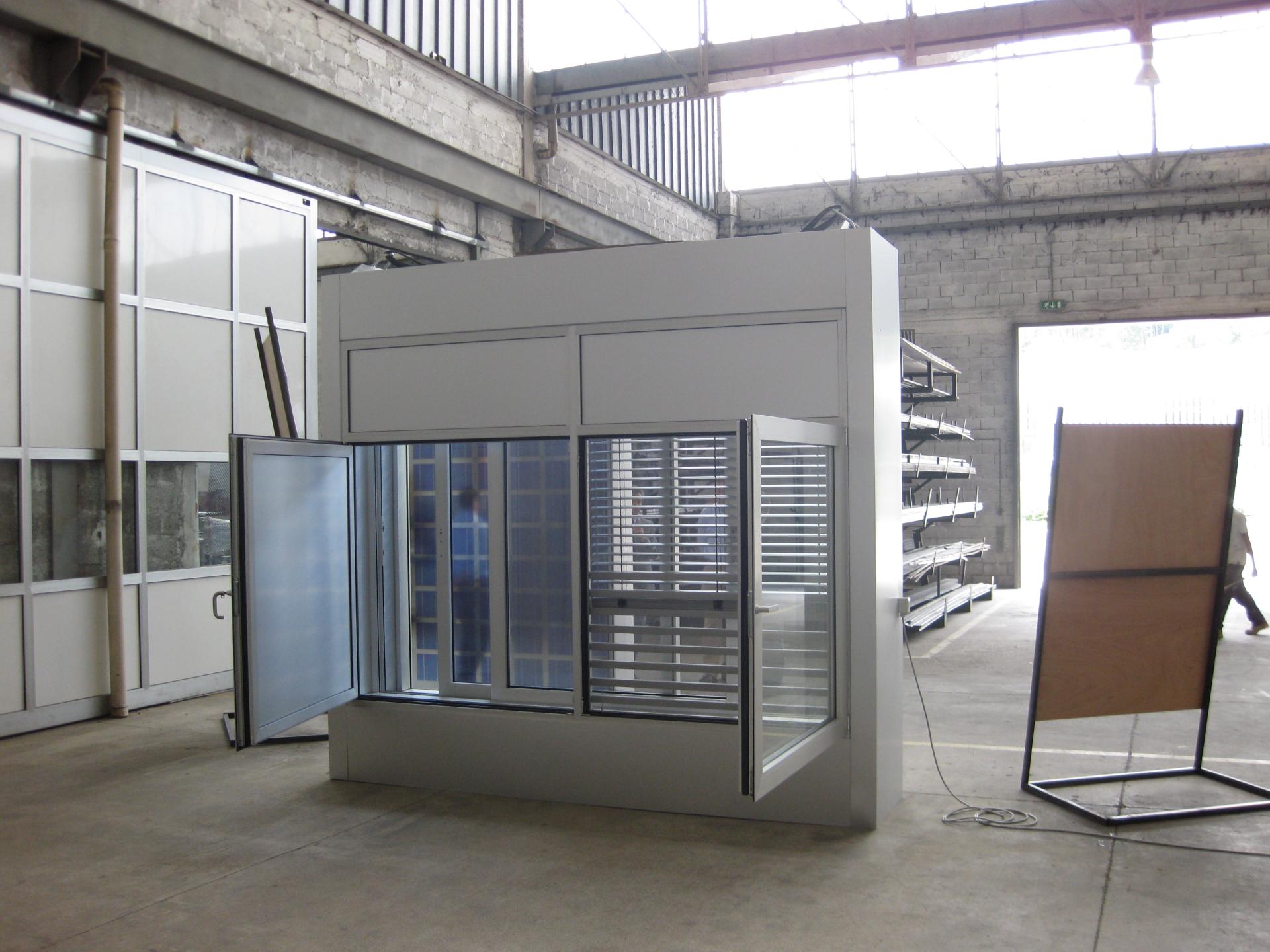
The DOMINO façade system was designed with a simple geometric element characterized by the integration of two modules: one transparent and the other opaque. These two components can be installed with different geometric configuration and in their frames can be placed different technological elements to increase the thermoigrometric performances of the building envelop and/or to produce renewable energy (e.g. PV and solar thermal panels, shading devices, glass or aluminum panels, living walls, etc.).
In winter a mobile glass panel is placed in front of the transparent module. So the smart facade becomes a double skin facade with a buffer zone that increases its U value to 0.6 W/m2K. In this configuration, the façade guarantees good thermal insulation and doesn’t decrease the natural lighting in the workspaces.
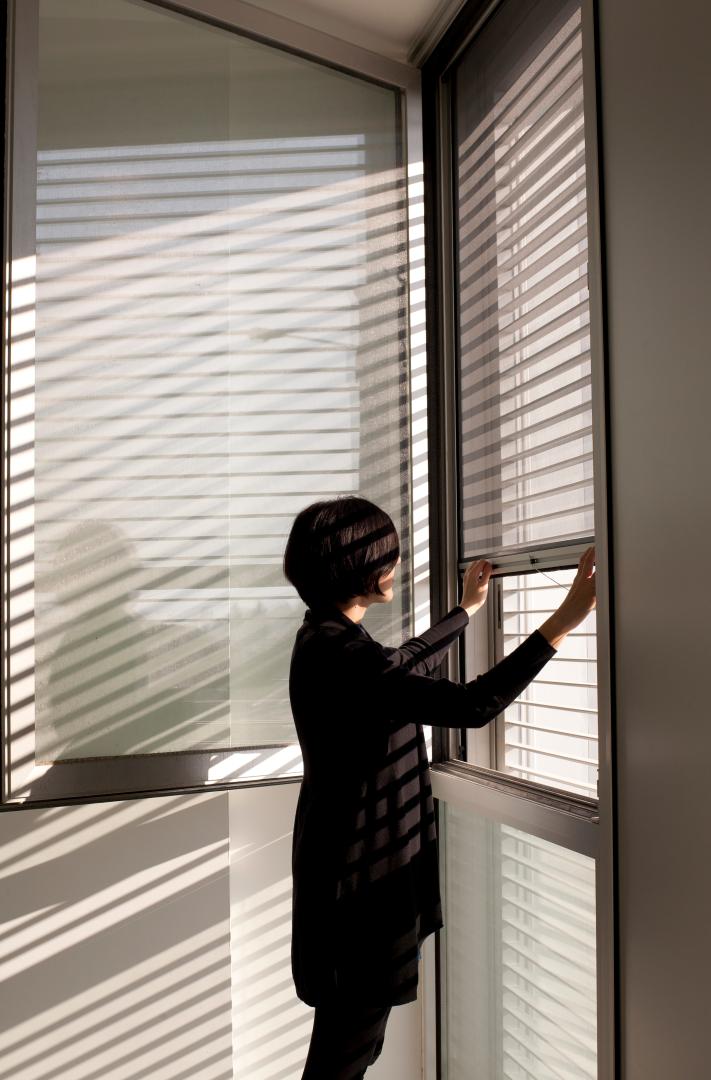
In summer a panel with the shading device is placed in front of the transparent module, regulating direct solar radiation and decreasing heat load in the office. A mosquito net is lowered in front of the window, ensuring good natural ventilation of the interior, especially at night. Both modules consist of fixed and mobile parts that can be operated through automatic or manual controls.
How Citizens benefit
The research DOMINO was developed during the Ph.D. thesis “Smart Envelope - dynamic and innovative technologies for energy saving” and was aimed to design a new facade system for the Mediterranea area, identifying and defining the energy performances of smart envelopes through the analysis of state of the art, related to dynamic building envelope of double skin façade, and the development of a new dynamic façade system.
The research activity involved:
- researchers from the DIdA and the DIEF of the University of Florence, who worked in synergy to analyze the energy and environmental performances of the façade system in the design and prototyping phase;
- The MSA architecture studio, which contributed to the definition of the aesthetic and functional aspects of the solution;
- students of the degree course in the architecture of the DIdA, who developed degree theses on the theme of adaptive facade systems for the Mediterranean climate by increasing their knowledge on envelope systems designed for PEBs;
- The Davini s.r.l. SME, who developed the prototype of the facade system, verifying the technological solution in the concept and construction phases;
- The Province of Lucca which has integrated the DOMINO in the project for the ICT building;
- The Chamber of Commerce of Lucca supported the implementation of the project and the construction of the building in which the DOMINO was integrated.
Furthermore:
- Architects and engineers, public and private stakeholders, students, and citizens have been visiting over the years the building with the aim of increasing their knowledge on bio-ecological architecture and technological innovation for the environment;
- The DOMINO façade and ICT building has been the subject of numerous publications and awarded by 'Legambiente' as an example of sustainable innovation in Italy;
- The users of the building were involved in an investigation campaign in 2012 to understand how to improve the façade in the future.
Innovative character
With regards to the current situation in Italy, the innovation of this project is the introduction of innovative, energy-saving techniques, which set new energy, environmental and health standards for office buildings. Furthermore, the flexibility and the customization opportunities make it a novel example of an innovative, dynamic façade for the Mediterranean climate that can change its technological configuration and energy performance in every season.
The dynamic façade system is an innovative solution and meets the current market needs in the building envelope sector. In the last years, this market sector has been developing envelopes that can change color and form quickly, which can improve the building's energy savings, ensure good thermal insulation, and decrease the production cost.
The dynamic and automatic system can change its configuration without the regulation of building users, decreasing the energy consumption for heating and cooling.