Canoeing training center MOSM in Tychy
Basic information
Project Title
Full project title
Category
Project Description
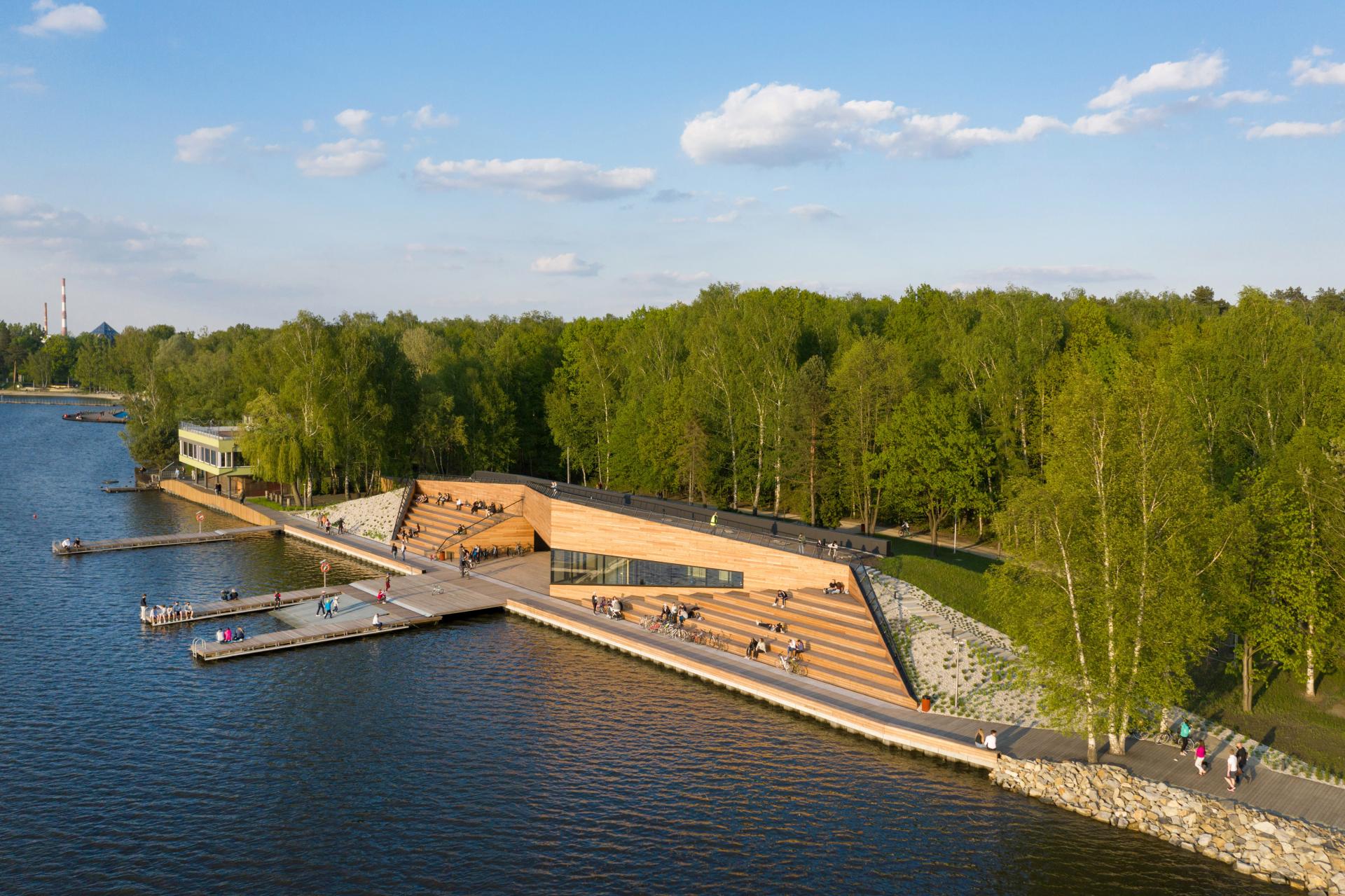
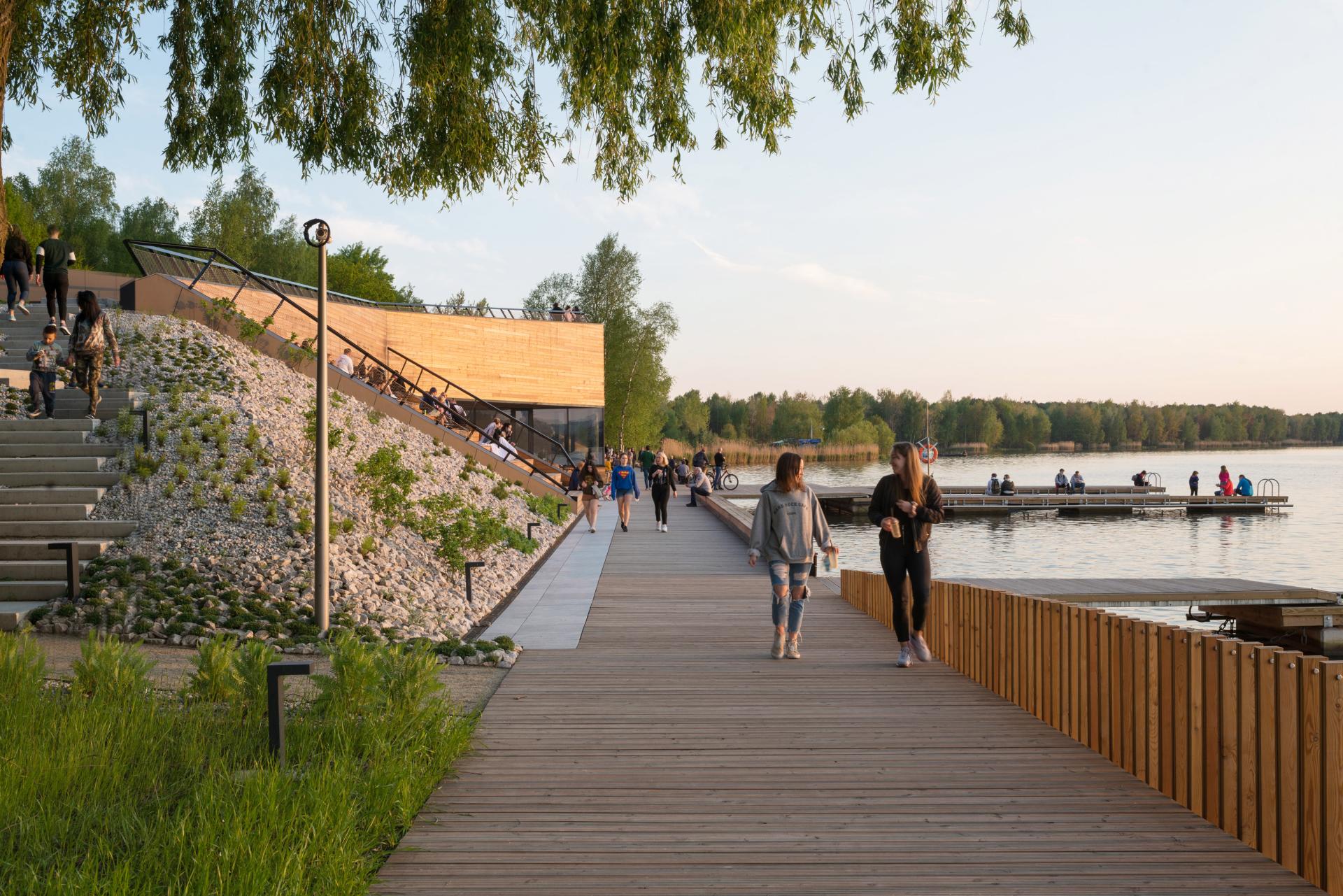
Training center is not only a building. First of all it's a common public space. The building and surronding space were designed as the extension of the public promenade.
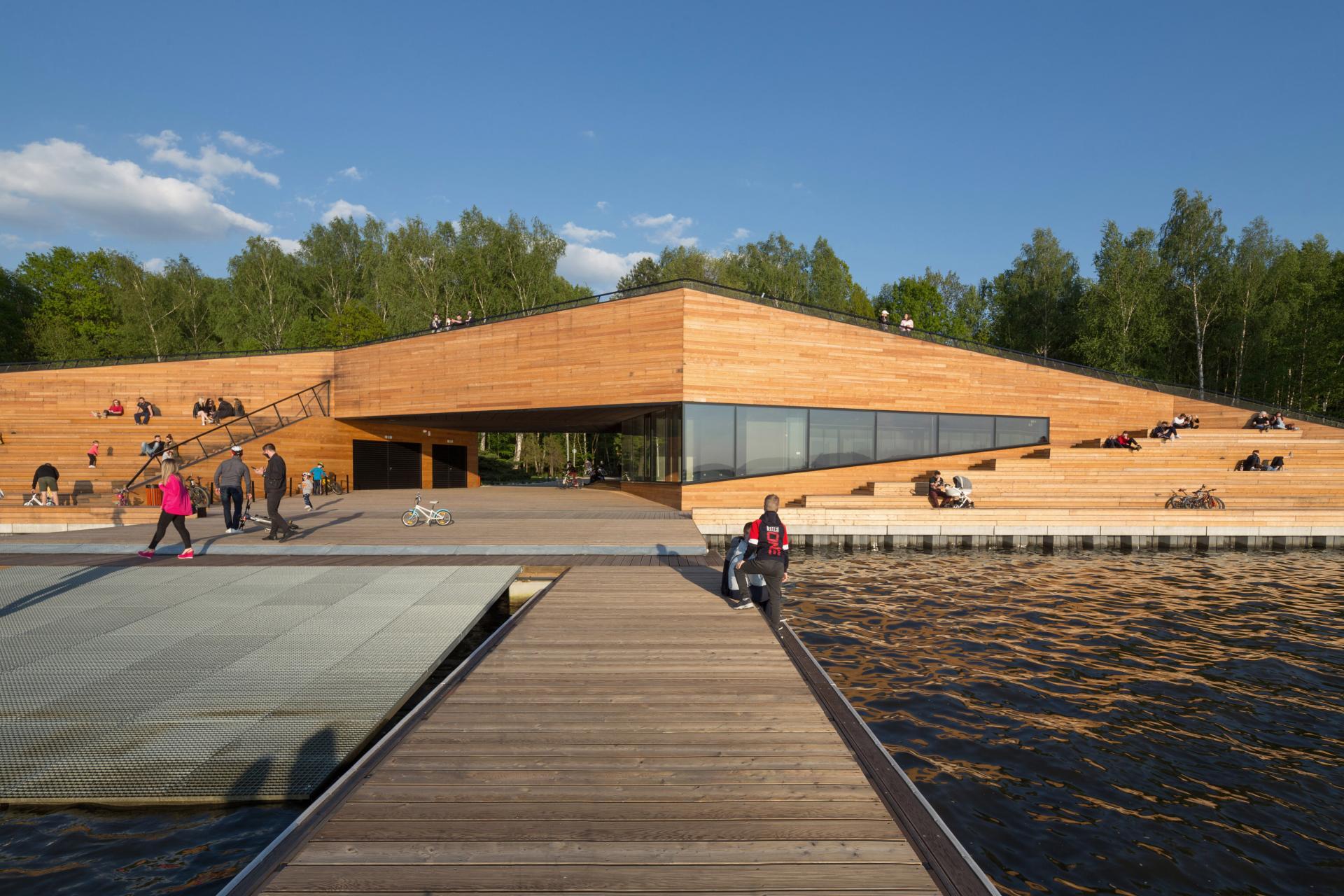
A space in front of building with tribune, covered part and whole roof became attractive public space and next part of wharf important to people. Canoe section gained new audience, fans and potential pupils and its work is becaming visible and transparent.
Project Region
EU Programme or fund
Description of the project
Summary
The Paprocany lake is very important place for inhabitants, mainly for recreational reasons. The wharf which was put into use a few years ago, connects rest center with a part used by many sailing clubs and canoe section MOSM (Municipal Youth Sports Center). Due to bad condition of these building, the city decided to build new sailing marina and object for MOSM.
The first part which was realized is building for canoes. Canoe section has achieved great successes. Karolina Naja, who is double olympic medalist, was member of this section.
As the authors of promanade, we cared about to extend a wharf to planned sailing marina. In consequence of this assumption, new canoeing training center became part of it.
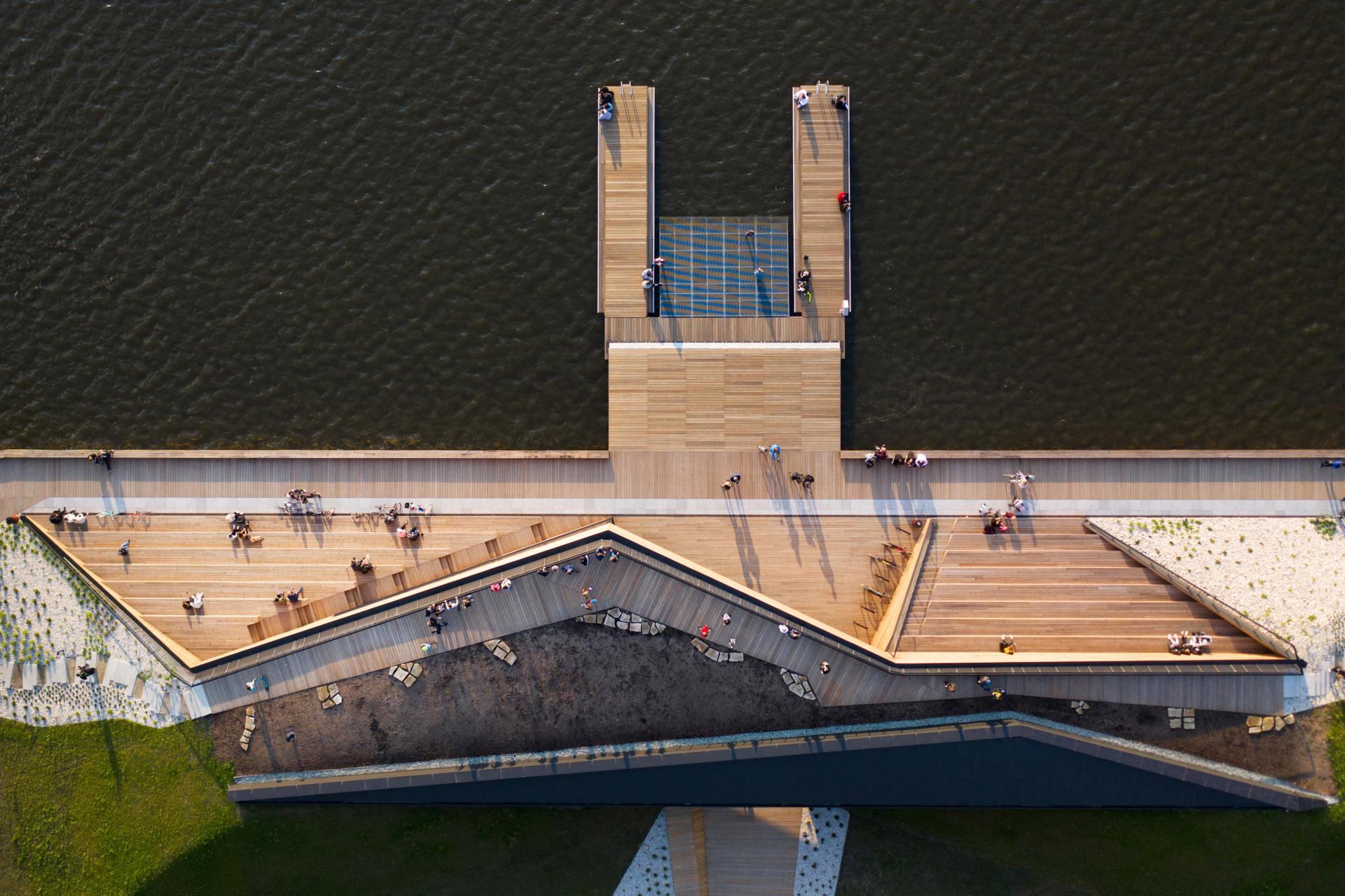
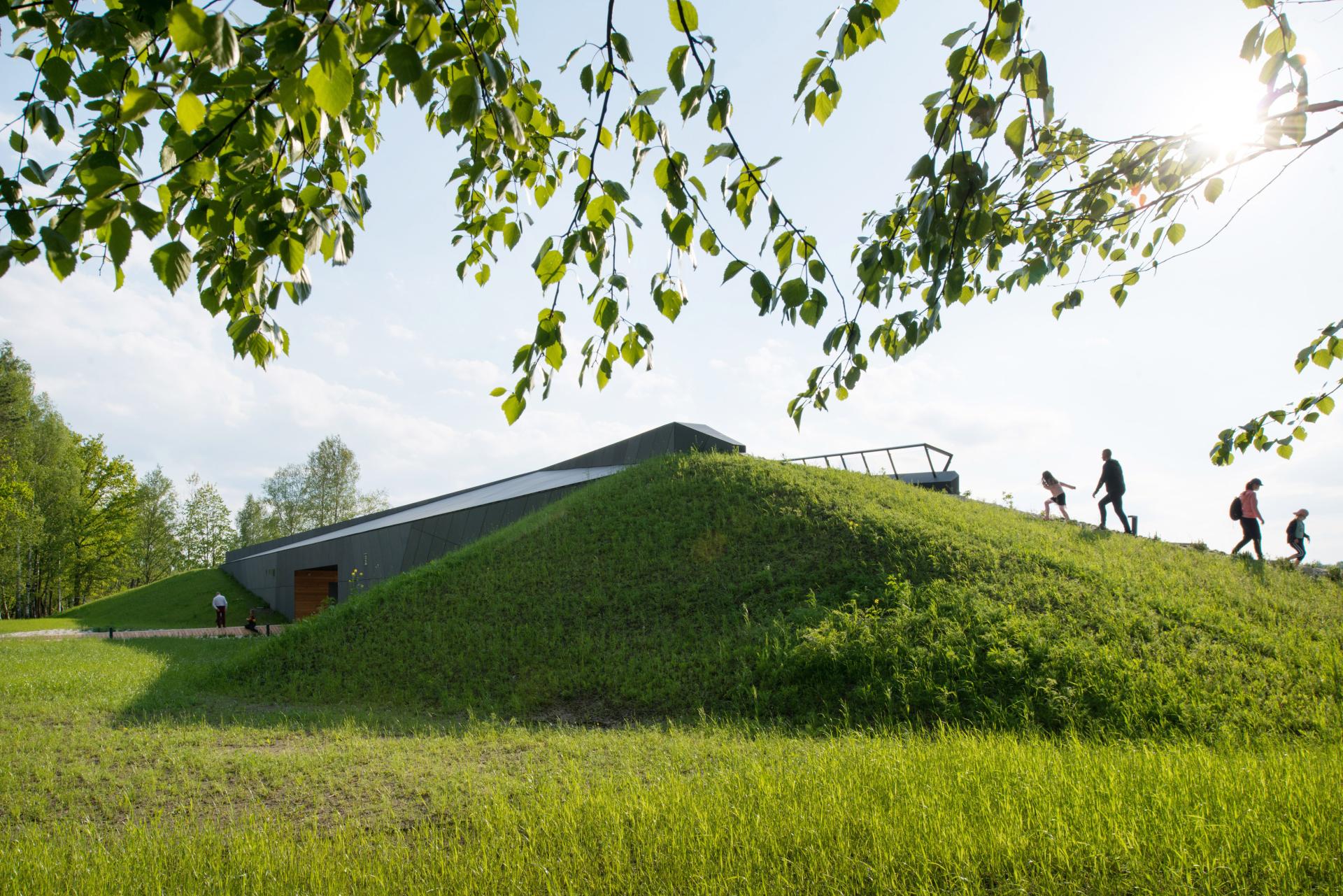
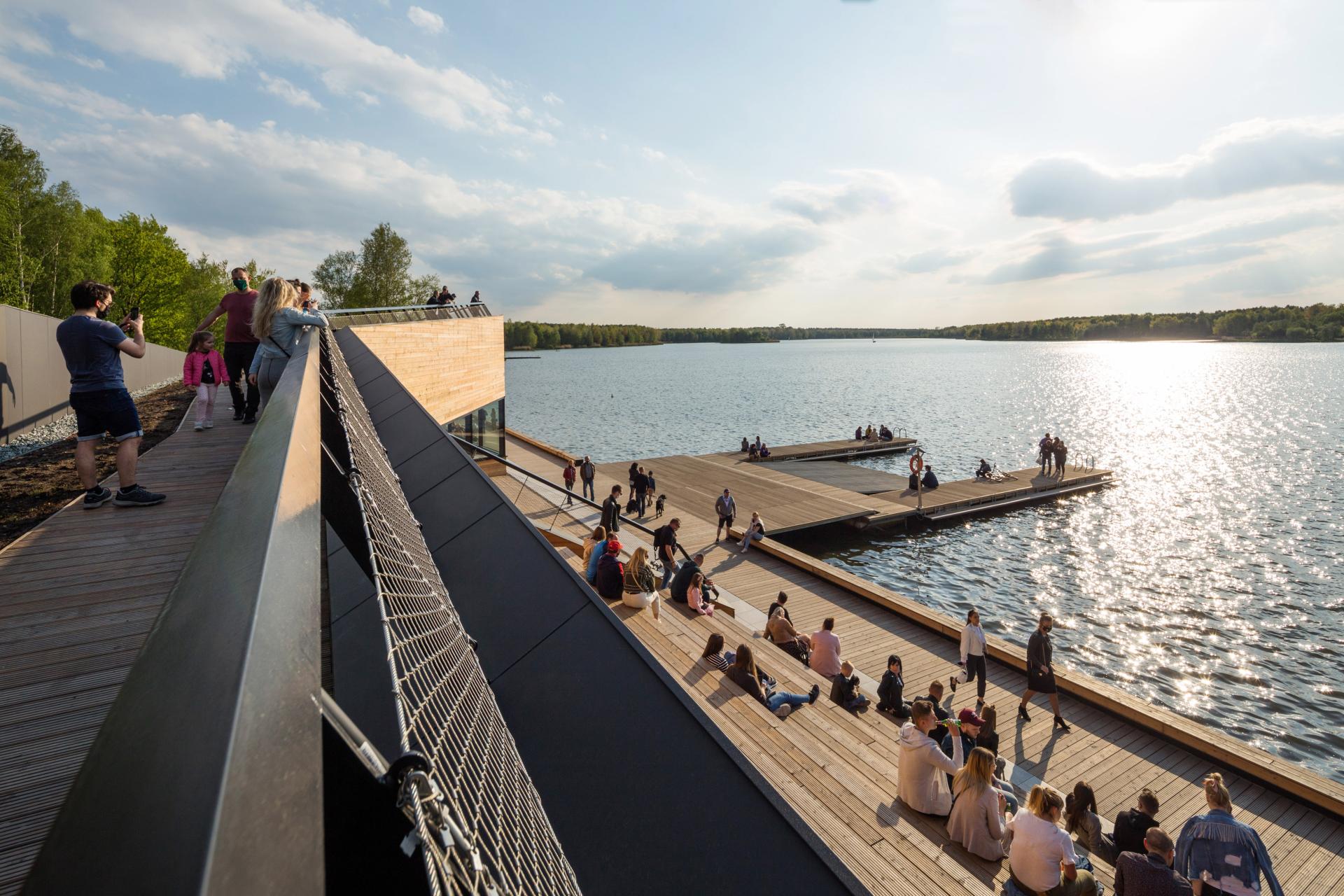
The main path of the promenade is located right next to the water and the walls of object have been withdrawn and hidden behind raised wooden seats, which are used as tribune during canoeing competitions. The back wall obtained a different shape: due to fire requirements, is covered with grey fiber-cement boards. The building is divided into two functional parts - training and storage. They were separated and covered with a common roof covered by plants. On the other sides building was surrounded by green slopes. There is a great view of the lake from the roof, so we decided to take an additional path there.
These solutions caused a space in front of building with tribune, covered part and whole roof became attractive public space and next part of wharf important to people. Canoe section gained new audience, fans and potential pupils and its work is becaming visible and transparent.
Architects: RS+ Robert Skitek
Investor: Tychy Municipality
Location: Tychy, Poland
Design: 2016
Completed: 2020
Area: 393,6 sqm
Author: arch. R.Skitek
Collaboration: architects J. Zygmunt, J. Zieliński, M. Lenart-Zygmunt, W. Zientek
Structure: Lechprojekt
Electrical inst.: ELPRO
Greenery: Ekosystem - Pracownia Architektury Krajobrazu
Photographs: Tomasz Zakrzewski / archifolio.pl
Key objectives for sustainability
Objectives: the building should fit into the surrounding natural landscape as well as possible and not generate unnecessary burdens for the environment. We've kept the existing trees. Due to the fact that the building is partially covered with earth, its heat demand is lower. The building is heated by a heat pump. LED lighting was used in the whole project. The façade of the building is mostly finished with a natural and renewable material - wood. The green roof is mostly grassed. Rainwater flows directly into the lake.
Key objectives for aesthetics and quality
The goal was to enter the volume in the surrounding natural landscape and sensual reception facility by persons residing on it.
The body of the building has been expressively broken to better fit into the natural landscape. It is mostly covered with green slopes and wooden stands - elements elevated from natural terrain. The roof, which functions as an observation deck, is accessed via concrete outdoor stairs, which, when arranged freely, emphasize the landscape, natural character of the place.
Due to fire requirements, the rear façade is covered with durable fiber-cement boards. Despite the fact that this elevation is completely flat, we applied irregular divisions referring to the dynamics of the entire body.
In all the elements where a people can sit or touch a material felt with many senses was used - natural wood, which will burn over time and even better fit the entire object into the surroundings.
Key objectives for inclusion
All functional levels of the building are accessible for disabled people. Also the whole area around, with the exception of the terrain access to the roof - shaped without any architectural obstacles.
Scented plants help visually impaired people perceive the object. In all the elements where a person can sit or touch, a material was used that can be felt with many senses - natural wood.
Results in relation to category
Although the building is fully functional, it was conceived primarily as a meeting place. It has become an extension of the promenade, but also a new social attraction in itself. Wooden stands, apart from the function of the audience during the competition, are every day a place for social meetings at the lake or contemplating the sunsets. The structure of the seats as stands serves mutual interpersonal contacts.
How Citizens benefit
Before the creation of the project (MOSM and the further planned marina), there were long consultations with all interested parties, i.e. members of numerous sailing clubs and the canoeing section. Despite the fact that their activities are public functions, and the access to these areas was open, the inhabitants, apart from those directly interested, rarely visited these places. The most difficult talks concerned the opening of these areas to a wider audience. In the case of the canoeing section, it was agreed to fully open up to residents or tourists by running a promenade in front of the building and providing access to the roof and stands.
Innovative character
The building has been incorporated into the landscape in an innovative way by hiding its volume in green slopes and wooden stands. Above all, however, it combines its activities in an innovative way with public accessibility to all interested parties. It is not a building, but a fully open and attractive public space with a building built into it. It is an object inspired by the natural landscape, as evidenced by the materials used and its expressive geometry.