Cartiera-Let’s make new stories together
Basic information
Project Title
Full project title
Category
Project Description
In the belief that work represents a formidable tool for social inclusion, the ethical fashion workshop Cartiera trains and hires people in disadvantaged conditions, mainly refugees and asylum seekers, engaging them as artisans in the production of fashion accessories in leather otherwise destined for disposal by large companies of the fashion industry. Inclusion, made in Italy, circular economy are the essence of the ethical fashion workshop Cartiera.
Project Region
EU Programme or fund
Which funds
Other Funds
WORTH Partnership Project - COSME: 2nd Call
Description of the project
Summary
With the aim of combating the risk of social exclusion, the ethical fashion workshop Cartiera has as its primary objective the work placement of migrants and asylum seekers, believing in empowerment and work as tools of social inclusion.
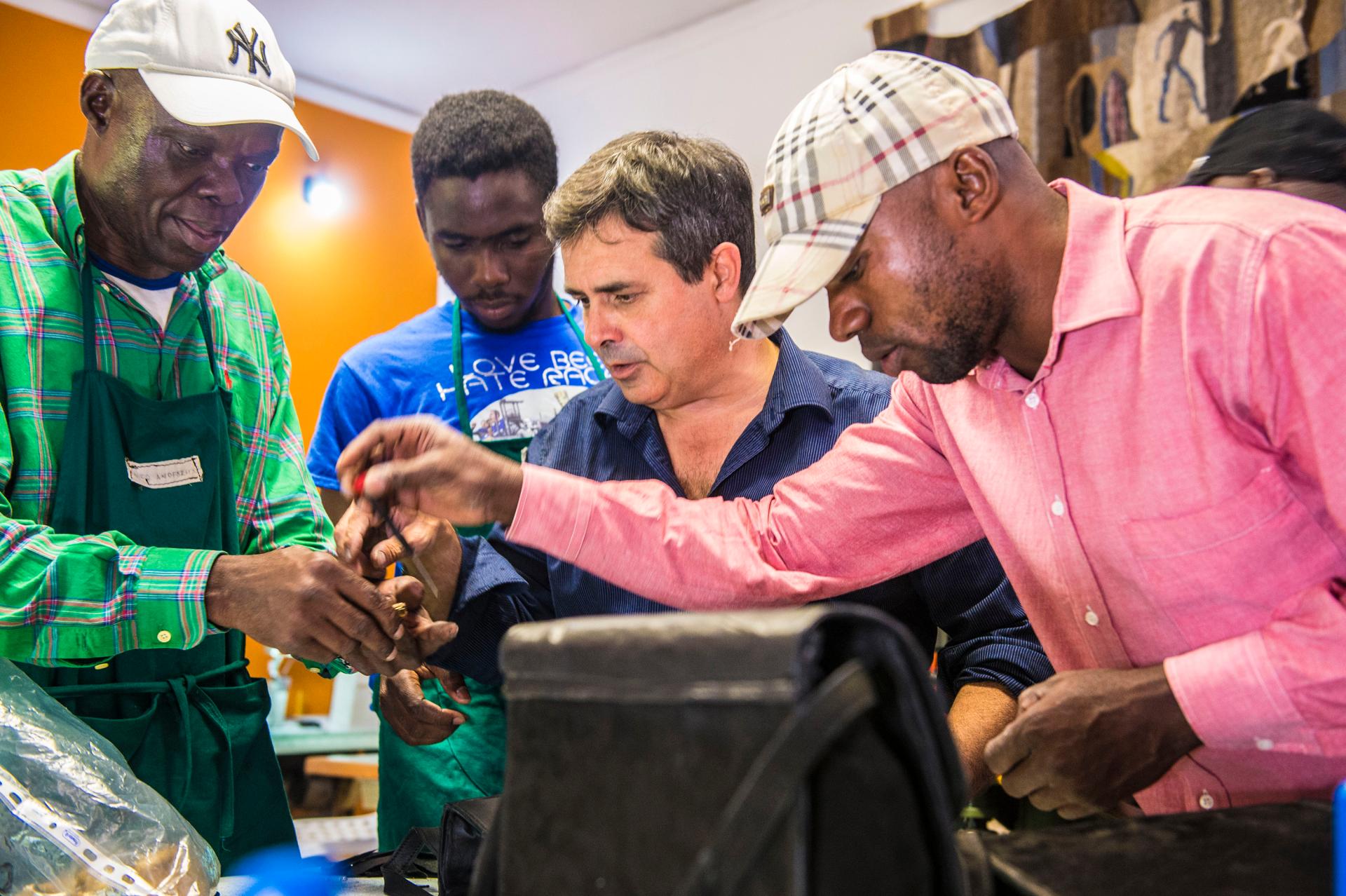
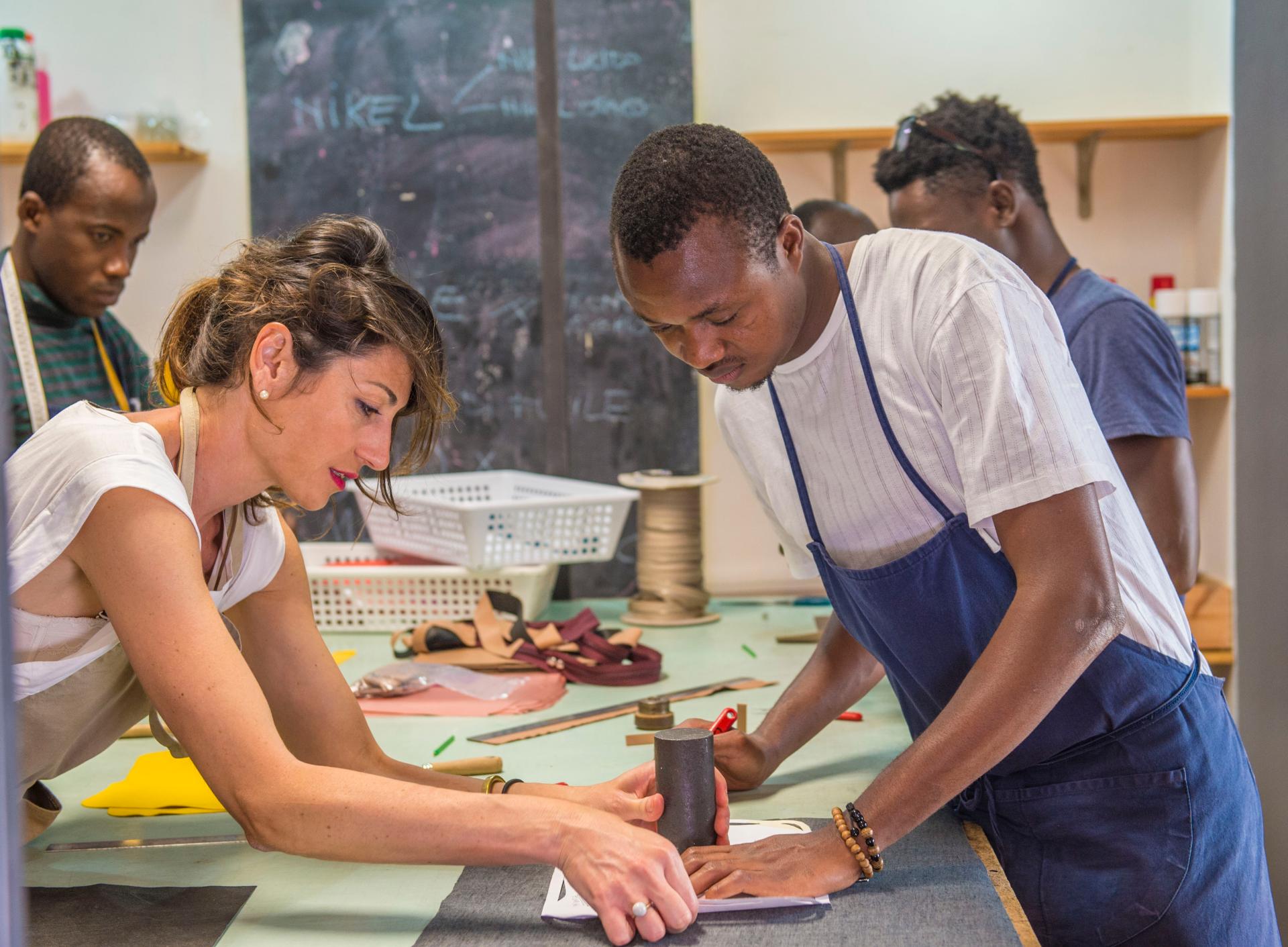
The Cartiera workshop, active since 2017 in the production of leather and fabric accessories, was born from the collaboration between the Lai-momo cooperative and the Ethical Fashion Initiative, a project of the International Trade Center (United Nations) that connects small artisan from countries of the South of the world with major international fashion brands. As evidenced by the national and international awards received, the Cartiera experience immediately stood out for its ability to assist a virtuous model in terms of social inclusion and referring to environmental sustainability, generating value in a territory in strong decline. The Cartiera workshop is committed to training and regular hiring of people at risk of exclusion, in particular refugees and asylum seekers, who collaborate with professional leather artisans, learning the techniques of a profession increasingly at risk of disappearing and relaunching the Made in Italy in a more sustainable way. Cartiera’s accessories are made with leathers and fabrics recovered from major international fashion brands, promoting a process of circular economy.
Key objectives for sustainability
Cartiera's goal is to propose a production model in which the sustainability of environmental and social practices is combined with the development of the territory in which it operates.
The project intends to reduce waste from the high fashion industry in a circular economy perspective, through the recovery of high-quality leather otherwise destined for disposal, using it in the production of accessories made with artisan techniques.
Therefore, the model of the Cartiera workshop intends to promote a real path of socio-cultural development, above all through the involvement and awareness of local actors on the importance of the transition to a circular and socially sustainable economy, supporting the hamlet of Marzabotto / Lama di Reno - an area for decades subject to depopulation and a high risk of poverty – to be included in the dynamics of the on-going ecological transition.
The Cartiera project intends to provide concrete answers in terms of sustainability starting from the Sustainable Development Goals set by the 2030 Agenda:
SDG 9 - Business, innovation and infrastructure
Cartiera produces innovation and promotes responsible industrialization.
SDG 11 - Sustainable cities and communities
Cartiera produces in an area strongly impacted by depopulation and the economic crisis and through its presence contributes to making it more inclusive, safe and sustainable.
SDG 12 - Responsible consumption and production
Cartiera applies sustainable production and consumption models.
SDG 13 - Fight against climate change
Cartiera respects the environment using production scraps otherwise destined for disposal.
Key objectives for aesthetics and quality
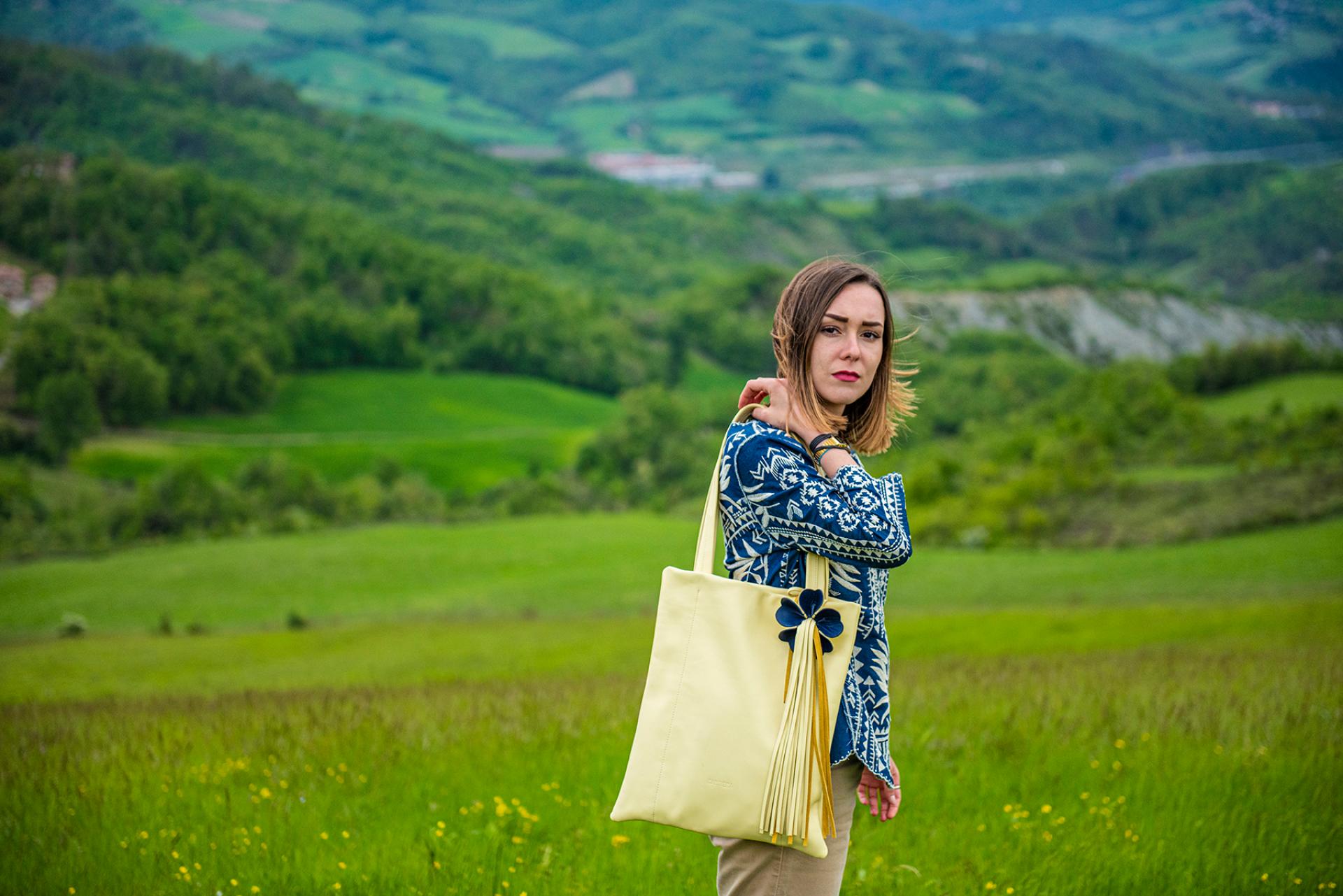
A Cartiera bag is not a simple bag. It is a story made up of people and places. It is an idea of the future.
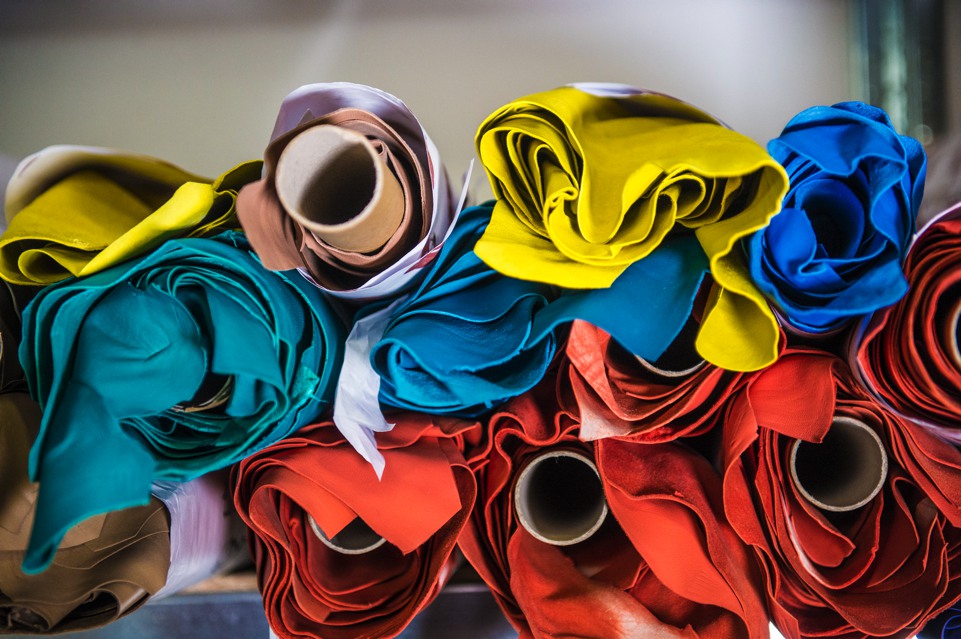
The Cartiera workshop recovers secondary raw materials (leathers and fabrics) from the production chains of major fashion brands to transform them into high quality items. The materials used are therefore of exceptional quality and place Cartiera's products at a particularly high level of excellence.
In addition, thanks to the combined experience of master artisans with thirty years of experience and newly trained artisans, Cartiera products are an expression of Made in Italy craftsmanship, relying on current design and contemporary aesthetics.
Key objectives for inclusion
With the aim of combating the risk of social exclusion, Cartiera’s priority is work placement of migrants, asylum seekers and unemployed people, working in an area characterized by strong depopulation and high poverty risk.
The Cartiera project intends to provide concrete answers in terms of inclusion starting from the Sustainable Development Goals set by the 2030 Agenda:
SDG 1 - Overcoming poverty
Cartiera offers work to people in conditions of economic hardship, including migrants and asylum seekers.
SDG 3 - Health and well-being
Cartiera cares about the training and the individual path of its employees.
SDG 8 - Decent work and economic growth
Cartiera guarantees decent working conditions and encourages lasting, inclusive and sustainable economic growth.
SDG 10 - Reduce inequalities
Cartiera contributes to the social cohesion of its local community and it is a partner of the Ethical Fashion Initiative, a United Nations program that promotes the development of migrants' countries of origin.
SDG 17 - Partnership for the objectives
Cartiera works within an international network that considers migration as a stage in a circular development process.
Results in relation to category
The national and international awards received by Cartiera demonstrate its commitment in the field of social inclusion and environmental sustainability (among the most recent the EU4FairWork award and the Welcome! Working with Refugees award), but most important are the numbers of the project that better explain it: from 2018 to today, Cartiera has activated 15 training internships, hired 7 craftsmen in disadvantaged conditions and recovered 13 tons of leather otherwise destined for disposal.
From a production point of view, the Cartiera workshop consolidated its collaboration with the Canadian customer Goodee during 2020, also obtaining an important recognition from the New York Times on the quality of the products made, and Lamborghini, for which were produced some objects intended for both sale and gifts. Cartiera has also formalized and consolidated the collaboration with Fendi Roma, for which it produces dust-bags for product packaging.
Furthermore, numerous collaborations have been started with other national and international companies including BMW, IKEA, EmilBanca, Granarolo, Camst, Sacchettificio Toscano, IES Foundation, Infinity Global, Rug Solid, Ebarrito.
Starting from 25/11/2020, the Cartiera project has officially become a partner of the Ethical Fashion Initiative, of which it represents one of the reference partners in Europe.
How Citizens benefit
Cartiera aims to generate an impact on consumers by offering them an ethical and responsible experience, thanks to a conscious production chain consisting of development of work paths and integration processes at the local level; great attention to environmental issues and improvement of the level of well-being, not only for individuals, but also for the community.
Cartiera promotes the values underlying its activities also through actions such as the organization of events, open days of the production site to the public and developing social campaigns on environmental and social issues, with the aim of encouraging the development of a more critical approach by consumers and a greater capability to define the value of a product.
Considering the aspects related to production, Cartiera pays the greatest attention to the sustainability of its production cycle: the materials used come both from the end stream of supply chains of major brands in high fashion industry, and from firms linked to the EFI program and located in developing countries. The use of hand-spun fabrics in EFI-supported cooperatives also generates a direct economic impact on the artisans of these companies and, indirectly, on their families and communities in their countries of origin.
The Cartiera project is in line with the SDGs of the 2030 Agenda, approved by the United Nations, in fact it recognizes the importance of the involvement of the private sector in the transfer of culture and entrepreneurial skills, in organizational and technological innovation, in attention to the environment, social sustainability and the guarantee of decent working conditions.
Innovative character
The innovative element of the Cartiera project lies in the systemic approach that combines within the same production model different dimensions aimed at revamping the territory in which it operates, with elements of internationality through the partnership with the Ethical Fashion Initiative (EFI) program of the United Nations, combining environmental and social sustainability.
Starting from this general approach, the Cartiera project intends to generate concrete answers to some challenges of our time: the decrease in employment opportunities, the need for economic integration of asylum seekers and refugees, the loss of artisanal skills, the depopulation of areas such as those of the Bolognese Apennine area, the wastefulness of resources that characterizes the fashion sector. In particular, in response to the Covid-19 emergency, the launch of the "Collezione 56", a new line of bags that the working group wanted to name with the number of days the workshop was closed during the lockdown period, is in line with the reflections that are animating the fashion sector, rethinking how fashion can - and should - address the problems and concerns that mark our time.